

Engineers are plotters of direction and measurements
In 1952, when the private engineering practice of Walter E. Spotts, RS, PE was just 20 years old, clients were treated to a 14 inch by 18 inch hand drawn copy of Homer’s Four Wind Rose.

In 1952, when the private engineering practice of Walter E. Spotts, RS, PE was just 20 years old, clients were treated to a 14 inch by 18 inch hand drawn copy of Homer’s Four Wind Rose.
Mr. Spotts hand lettered the drawing which shows the evolution of what had become the face of the mariner’s compass from the ninth century B.C. beginnings. Direction was determined by the place from which prevailing winds blew. There were four winds in Homer’s world. Boreas, the north wind, blew from Thrace, a wind that rolled up mighty waves. Norus, the south wind, was a stormy petrel bringing sudden squalls, hence dangerous to navigators. Zephryus, the west wind was often represented as a stormy wind but not by Homer who knew the west, where the climate was temperate and the people prosperous. Eurus, the east wind, was seldom mentioned. The wind rose of Homer evolved through the centuries and civilizations to the seventeenth century, 32 point compass face familiar in form, if not by names, to modern navigators. Mr. Spotts, captured that evolution and beauty in his reproduction.
“Engineers are plotters of direction and measurements – on land, sea, in the air and of all physical things. And in a sense, navigators to set a course to solve earthly problems. We are concerned with the direction from which the wind blows and advise our clients so that they might avoid the dangers of unexpected storms. That is on what Spotts, Stevens and McCoy, Inc. based its early traces and which it firmly stands today. To know the direction and measure of elements and to plot a safe course to success is the job of the navigator.”
- Walter Spotts

Engineering Solutions Since 1932
Reflecting on our History . . . from 1932 when it all began to 2017 as we reach new heights . . .

Walter E. Spotts

Lewis J. McCoy, PE

Lou McCoy and Charlie Stevens

Spotts, Stevens and McCoy
Walter E. Spotts, a native of Berks County, started his own professional practice in 1932, which ultimately became Spotts Engineering Associates, Inc.
In 1967 Lewis J. McCoy, PE opened an individual engineering practice in Wyomissing, PA. Mr. McCoy opened his office after 10 years of experience in sanitary engineering with the Pennsylvania Department of Health and a large consulting firm.
In 1968, Charles H. Stevens, PE, CIH, left industry to become a partner in the firm.
As the story goes . . . it was a simple flip of the coin that determined the order of the firms’ name and the business was incorporated in 1969 as Stevens and McCoy, Inc., With expanded industrial engineering services, the firm grew very strongly, serving the needs of local government and industry.
Stevens and McCoy, Inc. acquired Spotts Engineering Associates, Inc., engineers and surveyors, in 1970 and the firm of Spotts, Stevens and McCoy, Inc. was born.
The new company combined Stevens and McCoy, Inc. and the nearly 40 years of experience of Walter Spotts and his staff of 30. It’s because of this Spotts legacy, that Spotts, Stevens and McCoy, Inc. can trace its roots to 1932.
The reputation of the firm expanded and new services and locations were added. Over the years the firm acquired firms in strategic geographic areas, including the Lehigh Valley Office that was opened in 1974. Today, Spotts, Stevens and McCoy continues to be a family-owned regional engineering, environmental, and surveying firm serving local and global clients. We engineer solutions for a better world. Our work touches everyday life; from the water you drink, to the air you breathe, to the buildings and communities where you live, work and play.

Fall is the Time to Prepare for Winter
In the Community . . . At the Office . . . At Home

In the Community
- Sweep the streets and remove leaf piles.
- Clean and repair storm drain systems and concrete channels.
- Inspect and clear drain inlets, drainage pipe outfalls, and drainage trash racks.
- Investigate drainage issues received from residents.
- Get the equipment ready; mount the plows and find the shovels.
- Review snow plowing routes and address potential hazards.
- Check operation of emergency power generators.
At the Office
- Make sure the heating system is ready to go. Replace filters, clean burners, and coils.
- Check that outdoor air dampers are working properly.
- Fix the little maintenance issues that could be problems in the winter. Look out the window to assess: Are the parking lots safe for your employees? Is there a place for the snow to go when you plow? Check the roof for leaks or loose materials. Remove any low-hanging tree branches around the building and parking areas.
- Check thermostat and lighting timers have been adjusted to reflect the recent time change.
- Find your snow shovels. Mark obstructions or other features that could be damaged by snow plows.
- Service your field vehicles.
At Home
- Schedule your annual heating system check.
- Clean gutters and trim any low-hanging branches.
- Check your emergency kit to be sure you have fresh batteries, flashlights or candles, back-up phone power banks, bottled water, and first aid equipment.
- Put the ice scrapers in the car, find your shovel and test your snow blower.
- Reverse the ceiling fans to clockwise. Energy Star says the fan will produce an updraft and push down into the room heated air from the ceiling.
- Cook a few meals and freeze them, just in case you catch the flu or get snowed in.

Mold is a growing problem in buildings – no matter the season
Are your Buildings Ready for Winter? As we approach Winter Break and the potential of snow fall, it’s important to be proactive. Now is the time to plan ahead to avoid problems like mold and legionella.
Are your Buildings Ready for Winter?
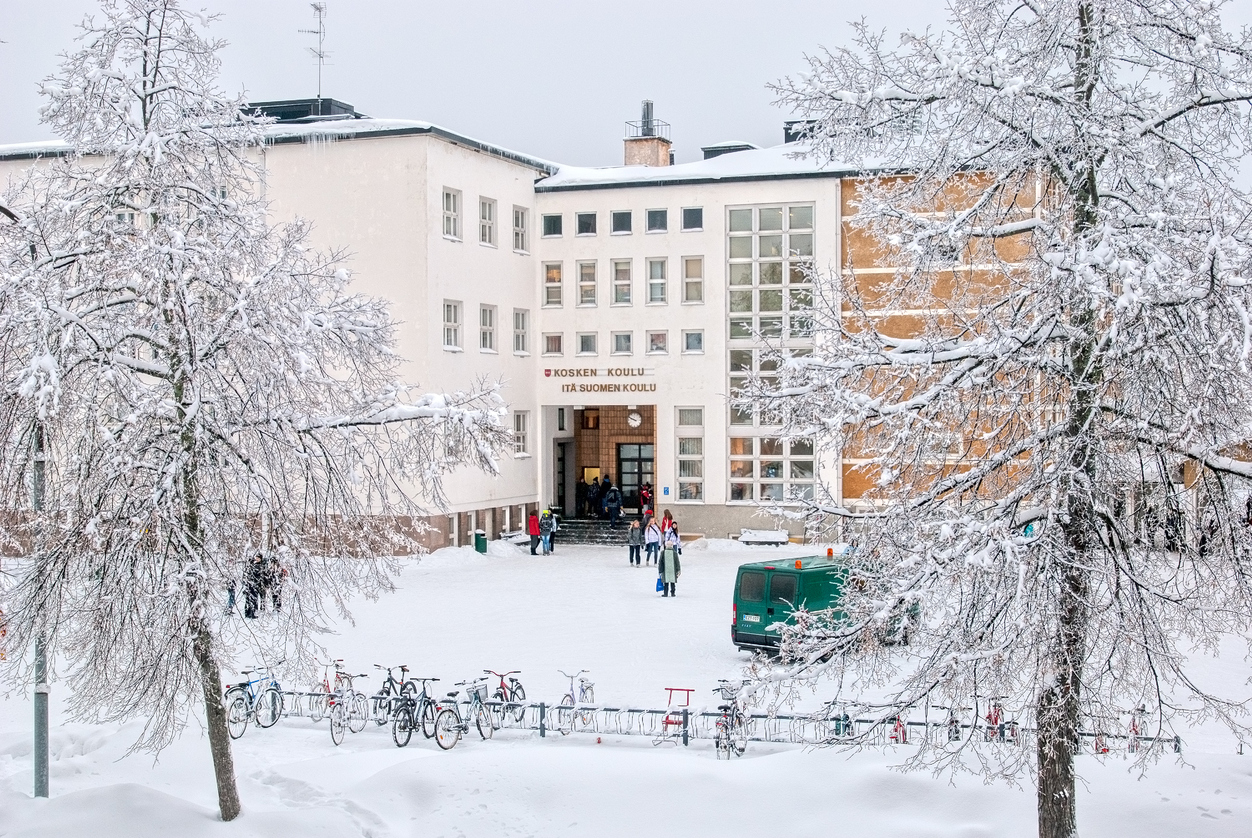
As we approach Winter Break and the potential of snow fall, it’s important to be proactive. Now is the time to plan ahead to avoid problems like mold and legionella.
Address the symptoms before they escalate into problems
- Address roof leaks and poor drainage areas around the building.
- Avoid environmental quality problems with indoor air and water systems by training staff on effective and appropriate means and methods for maintenance and cleaning procedures.
- Minimize conditions that lead to mold growth by operating building ventilation systems to maintain a constant temperature and humidity.
- If portions of your plumbing system are used infrequently, establish a routine flushing program to prevent bacterial growth in your water system.
- Check unoccupied areas frequently for the presence of mold.
- Make sure all the seals on the windows and doors are not compromised and in good-working condition.
- Clean and repair roof gutters to avoid ice dams.
- Make sure the ground around your building slopes away from the foundation so water does pond.
- Act quickly if you see condensation on windows, pipes, or walls inside a building. Dry out the area and determine if the source of the condensation is from a leak or the result of high humidity.
Spotts, Stevens and McCoy has been providing services to schools and industry for more than 75 years. Our focus is to help you minimize the potential for indoor air quality problems with a proactive approach for existing buildings and buildings under construction.

Don't Get Buried This Winter
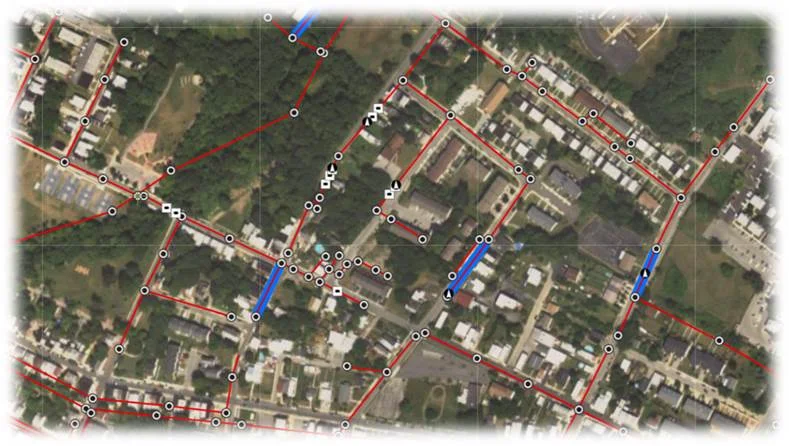
Unleash the power of mobile GIS to locate your assets even if they are beneath several feet of snow.

Will you know where your assets are?
Unleash the power of mobile GIS to locate your assets even if they are beneath several feet of snow.
Last winter, a powerful winter storm blanketed the area with over a foot of snow. The water system field crew, responding to a main break, encountered difficulty locating the nearest valve to isolate the break. The hidden valve was located in a park which was now a pristine field of white snow. Unable to pin point the exact location, the field crew spent eight hours with a backhoe digging in the snow to find the valve. While the maps the crew used to find the valve were accurate, they had trouble locating where they were on the map in the featureless snow field. The experience served the water system a harsh lesson in the value of asset mapping.
Don’t let this happen to you. Liberate your GIS data through the use of web-enabled mobile applications. Transform your water/wastewater infrastructure data into an easy-to-use operations asset management system.
SSM’s GIS Asset Management approach captures vital infrastructure data points with your system with survey-grade accuracy. The data is verified and compiled into a geo-spatial database. By creating customized mobile web applications, the data is accessible to you in the office, or in the field. Field-critical data, such as material description, installation date, inspection reports and service history, available at your finger-tips when you need it most.

Mitigating the Impact of Snow Storms in Your Facilities
Probably one of the most catastrophic losses experienced during winter is roof collapse. In the recent past, this has had more impact on pre-engineered steel buildings, but it can also have an impact on stepped roofs where snow drifts can accumulate.
The first step for a sound prevention plan is to Assess Your Vulnerability.
- Is your area typically hard hit in the winter?
- Does your facility shut down operations during winter holidays or weekends?
- Does your manufacturing process generate heat within the building?
- Have you ever noticed pronounced icicle formation following roof snow accumulation?
- Have you ever noticed doors not closing properly during severe cold snaps?
Probably one of the most catastrophic losses experienced during winter is roof collapse. In the recent past, this has had more impact on pre-engineered steel buildings, but it can also have an impact on stepped roofs where snow drifts can accumulate. In pre-engineered steel buildings, owners should monitor the displacement of the roof should a heavy snow storm affect the area, and have an action plan in place for snow removal. For buildings with flat or stepped roofs, ensure that roof drains are not blocked and are functioning properly. Finally, for older buildings, be on alert for combined snow and rain loads, as earlier buildings’ codes did not fully acknowledge this condition as a possible roof loading.
Possibly a less anticipated form of damage during winter occurs during extended periods of sub-freezing temperatures. This most often will affect manufacturing or process facilities that have operations shut down during the holidays, but this can also affect any area of a building with piping in close proximity to exterior walls. Of utmost importance during these cold snaps is to ensure that someone familiar with building operations is aware of the coming temperature swings.
Preparations should be in place for addressing damage to equipment or piping, especially fire protection systems. Finally, always maintain a consistent and reliable source of heat within the building during operation shut downs.
It is also important to observe the effects of sub-freezing temperatures on the building to build the base of knowledge for future remediation. If you notice significant or concentrated icicle formations, this is usually a sign of a poorly insulated roof, or possibly ineffective roof drains. This is a condition that warrants review so that more significant damage within the building envelope can be prevented. If you notice doors not closing properly or interior walls that crack during a cold snap only to close once temperatures rebound, this is likely a lack of perimeter frost protection. This is a condition that should be corrected so that voids in the soil below do not cause more significant damage to the building.
With good planning in place and a keen eye during severe cold events, you can be well prepared for the worst of winter.

Solar Power Systems and Fire Fighters
According to the Office of Energy Efficiency and Renewable Energy solar power is more affordable, accessible, and prevalent in the United States than ever before. The increased use of solar energy offers numerous benefits across the nation, including a clean energy source, economic growth, and job creation. When photovoltaic (PV) power systems (solar panels) are under consideration for roof top installations, these systems on residential and commercial properties must be designed and installed so that firefighters have safe access to the roof.

According to the Office of Energy Efficiency and Renewable Energy solar power is more affordable, accessible, and prevalent in the United States than ever before.
The increased use of solar energy offers numerous benefits across the nation, including a clean energy source, economic growth, and job creation.
When photovoltaic (PV) power systems (solar panels) are under consideration for roof top installations, these systems on residential and commercial properties must be designed and installed so that firefighters have safe access to the roof.
Understanding the Issues
- Access. Flat solar panels on the roof may hinder the firefighters’ ability to provide vertical ventilation if the solar panels are not arranged per building code requirements. In a structure fire, smoke and gases rise. Cutting a hole in the roof allows these gases and smoke to rise out of the building. Solar panels located and spaced with pathways allow the fire fighters access to open roof areas to provide this ventilation as they fight the fire.
- DC and AC Circuits and Conduits. The solar panels continue to produce DC power as long as the sun is shining or even when bright lights are present, and the DC wiring in conduits from the PV panel arrays to the inverters will remain energized. The AC wiring in conduits from the inverters to the electrical distribution system will be de-energized by opening the main solar AC disconnect switch.
Addressing the Issues in Your System
- During the design phase, follow the guidelines in 2015 NFPA 1 Section 11.12 Photovoltaic Systems for Access, Main Disconnects, Circuit and Conduit Locations, Marking and Labelling; and in the National Electrical Code.
- Locate the solar panels with adequate space along edges, peaks and valleys, and pathways between the solar panel arrays for firefighters to gain access.
- Limit the physical size of the solar panel arrays to the dimensions as required in the code.
- Prominently locate and identify the Main System AC Disconnect Switch so that the disconnect may be readily accessible to d-energize the AC portion of the system.
- Locate conduits to avoid the pathways to reduce trip hazards and maintain open areas for ventilation.
- After installation, diagram your system as installed specifically identifying the location and purpose of all disconnects and equipment. Review and provide a copy to your local fire department for their reference.
- Label your systems clearly. The National Electrical Code (NEC) requires labeling to identify the system's operational characteristics, directs personnel to component locations, and acts as a reminder of PV systems on the premises.
RESOURCE
Fire Fighter Safety and Response for Solar Power Systems
Forward
Today's emergency responders face unexpected challenges as new uses of alternative energy increase. These renewable power sources save on the use of conventional fuels such as petroleum and other fossil fuels, but they also introduce unfamiliar hazards that require new fire fighting strategies and procedures.

Is Your Water System Prepared to Respond to an Emergency?
Every water system is required to have an Emergency Response Plan, but the details of the plan are not entirely defined.

Every water system is required to have an Emergency Response Plan, but the details of the plan are not entirely defined.
So what makes an effective emergency management plan?
There should be an alert system in place to make sure everyone involved in the Emergency Response Plan is informed of spills and clean-up actions as soon as possible. This is essential in minimizing the contamination of the entire water supply, and keeping consumers safe. It was a delayed notification to the water system that created the situation where some residents were unknowingly using contaminated water. Owners of potential contamination sites should be aware of the importance of immediately informing the authorities and local water supply in the case of a contamination.
It’s important to temporarily discontinue use of the intakes, wells, or springs that could be affected. While developing a water system’s Source Water Protection plan, we create models that can be used in such an event to tell where the contaminant will flow, and which sources the contamination will reach in a given time frame. This model was recently used to help a local water system determine which wells to close when a nearby pipeline broke, contaminating their groundwater supply. Closing any sources that could possibly become contaminated will prevent contamination of the entire system.
A crucial step in the Emergency Response Plan is communication between the water system and its customers. Because most contamination events are accidents, it is a requirement for a water system to plan ahead in securing a reliable back up water source to use while remedying the contamination. Backup sources can include purchasing bulk water from local suppliers or opening an interconnection line with a neighboring water system.
Action Elements for Emergency Preparedness
- Identify and understand potential contaminants in the vicinity of your sources.
- Create an emergency alert system with local emergency responders, neighboring water systems, and your customers.
- Plan ahead in securing a backup water supply.
- Determine source impacts and time of travel should a release occur.

Common Questions about Fire Damage
Take a proactive approach to planning, preparing, and training in the case of fire in your home or business.Manage your risk by checking your smoke alarms at least twice a year and having an evacuation route planned with the appropriate fire escape equipment. In addition to common causes of fire be mindful of the risks associated with spontaneous combustion.

Checklist
- Report fire damage to your insurance agent.
- Call a certified restoration company to secure the property and mitigate damages.
- Document damage with photographs.
- Do not enter the premises without permission of the Fire Marshall or Building Inspector.
- Do not attempt to clean soot and smoke-damaged areas with any liquid. Your cleaning could set soot and cause additional damage.
- Do not touch items without gloves. Oils in your hand can permanently set soot causing irreversible damage.
- Do not enter the affected areas. Make sure children and pets do not enter the affected areas.
- Wear appropriate Personal Protective Equipment when on the scene and during repair process. The air can be contaminated, debris may be throughout the premises and overhead dangers may be present.
- Notify your restoration representative immediately of any concerns with items of high sentimental or real value. Survival rates of items that receive immediate restoration attention are much higher.
Take a proactive approach to planning, preparing, and training in the case of fire in your home or business. Manage your risk by checking your smoke alarms at least twice a year and having an evacuation route planned with the appropriate fire escape equipment. In addition to common causes of fire be mindful of the risks associated with spontaneous combustion.
Will the fire damage be covered by my insurance? Fire often affects contents and the structure. Your policy will address coverage and how it will apply to both structure and contents. A representative from your insurance carrier will be able to answer any questions that you have regarding coverage. A certified restoration firm works with you and your insurance company to make the process as smooth as possible.
What are my responsibilities as an insured? To protect your property from further damage. This may include boarding up the property from weather. A restoration firm can provide all necessary emergency and mitigation services 24 hours a day, seven days a week.
What if I cannot live/work in my property? Your policy will address available coverage for “Additional Living Expenses” and/or “Loss of Use.” A representative from your insurance carrier will be able to answer any questions that you have regarding coverage. A restoration firm can assist with any of your relocation needs.
How long will the drying equipment be in my property? Drying equipment will be on-site until the area is completely dry. Even though the area may “look” dry ; it may not be dry. A technician from the restoration company monitors your property’s drying process and will keep you informed of the progress.
What products do you use to clean the damage? Restoration companies use a variety of products depending on the circumstances. You may ask your representative to provide you with Safety Data Sheets (SDS) for any products being used in your property. Advise a representative f you or any members of the property have any chemical sensitivities or other health concerns that may be relevant.
FOR MORE INFORMATION
Lisa Lavender, Chief Operating OfficerBerks • Fire • Water Restorations, Inc.℠
E: llavender@bfwrestorations.com

Fire Protection is Critical to Business Continuity
Fire protection systems are essential to the safety of your employees and protection of your property.

Fire protection systems are essential to the safety of your employees and protection of your property. But more than that, these systems are essential in helping you to manage the risks associated with business continuity. Imagine the impact on your business or organization if a key production line were to go off-line for an extended period of time, if the runoff from a fire event were to cause an environmental impact, or if the assets in your building (from equipment to historical artefacts) were to be destroyed.
An evaluation of your fire protection systems will identify potential risks within your facility or on your campus. The evaluation can address all potential threats from building and fire code compliance to safeguards like alarms, sprinklers, to inventorying the hazardous materials, to modeling the water flow to the hydrants.
Consider Your Facility/Campus
Are you in compliance with local fire codes? Is the fire suppression system in place aligned with the current function of your facility? We can help. Our team of mechanical, electrical and plumbing engineers are experienced in developing fire protection systems.
Emergency Water Supply is critical to Disaster Preparedness
Water supply interruption can be caused by several types of events such as natural disaster, a failure of the community water system, construction damage or even an act of terrorism. Because water supplies can and do fail, it is imperative to understand and address how your facility will be impacted.
PROJECT HIGHLIGHT | CARPENTER TECHNOLOGY CORPORATION
Emergency Water System Evaluation and Distribution System Mapping
SSM recently completed a Water System Analysis project that including preparation of drawings to depict the location of the various water supply mains, fire hydrants, and valves throughout the facility. As a follow-up to the Analysis, and using the data collected, SSM constructed a hydraulic model of the water supply system to simulate various demand and emergency supply scenarios.

Not all Fires are the Same
Different fuels create different fires and require different types of fire extinguishing agents. It’s important to know what risks exist in the workplace and to have the right suppression tool at the right location.
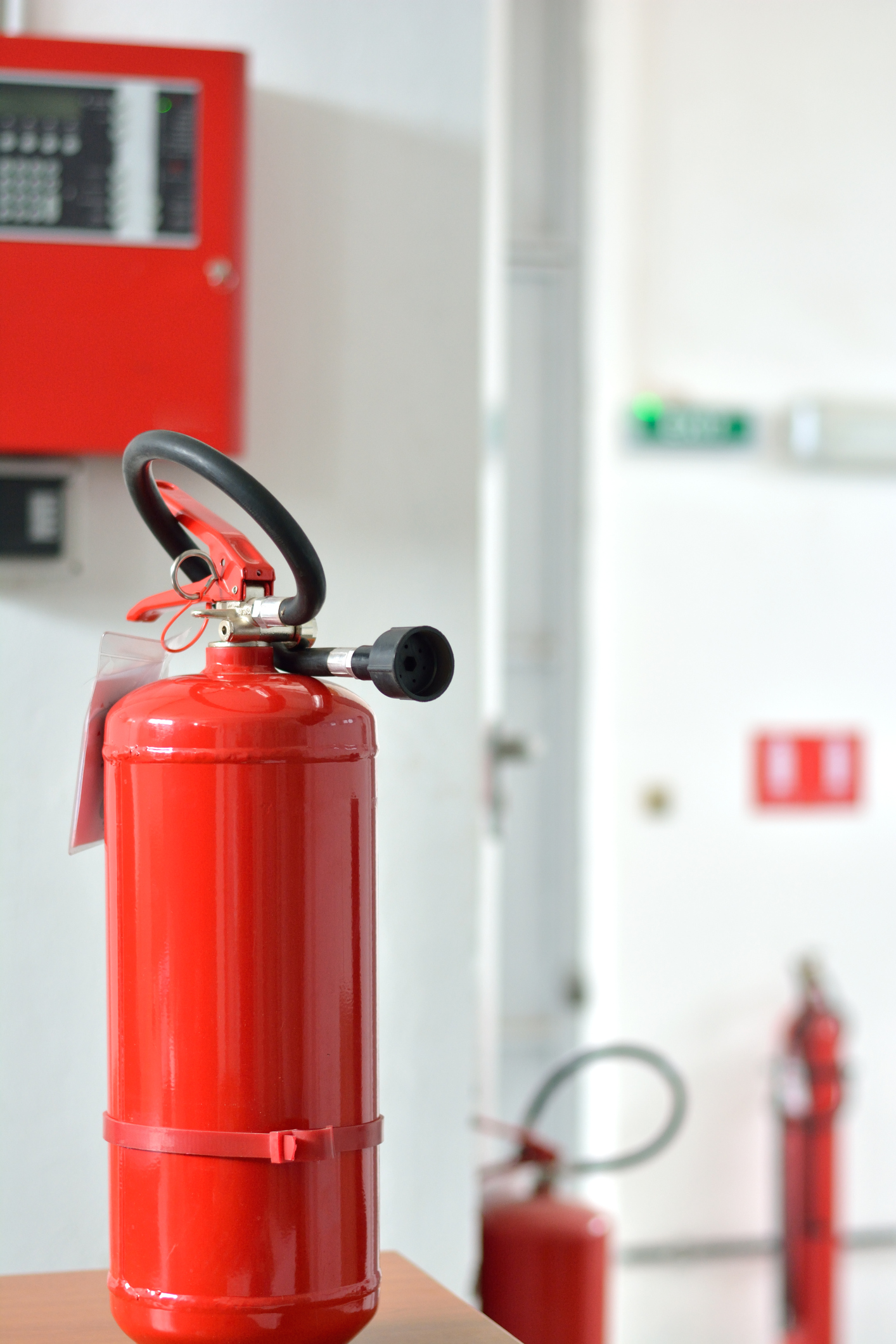
Different fuels create different fires and require different types of fire extinguishing agents. It’s important to know what risks exist in the workplace and to have the right suppression tool at the right location. Equally important is the warning on the extinguisher that alerts the user when the extinguishing agent would be dangerous.
Have the Right Tool for the Job
It is important to use the correct extinguisher for the type of fuel! Using the incorrect agent can allow the fire to re-ignite after apparently being extinguished successfully.
Fire Classifications
- Class A: fires in ordinary combustibles such as wood, paper, cloth, trash, and plastics.
- Class B: fires in flammable liquids such as gasoline, petroleum oil and paint. Class B fires also includeflammable gases such as propane and butane. Class B fires do not include fires involving cooking oils and grease.
- Class C: fires involving energized electrical equipment such as motors, transformers, and appliances.
- Class D: fires in combustible metals such as potassium, sodium, aluminum, and magnesium.
- Class K: fires in cooking oils and greases such as animal fats and vegetable fats.

K-12 | ABCs of Campus Engineering
Whether you manage a single facility or millions of square feet over many locations, your focus is education. Our focus is you.
Ee is for Electrical Engineering
READING HOUSING AUTHORITY | Glenside Elementary
Electrical Service Upgrade and Cogeneration System Modification. SSM electrical engineers designed the new 5 KV underground primary connection and medium voltage cables from the existing Met-Ed aerial line and pole to the Met-Ed Metering Section and Main Fused Switch of the new 5 KV Outdoor Switchgear. Designed the new 5 KV Outdoor Switchgear for installation along the outside southeast wall of the boiler and maintenance building. Designed the concrete pad for the switchgear. Designed the 5 KV medium voltage cable feeders from the new fused feeder switches to supply existing feeder cables and circuits. Re-circuiting of the existing cables will be in the existing electrical vault and possibly within the enclosure of the existing 4800 Volt Switchgear. Evaluated the overall loads of the facility 5 KV feeder circuits, the boiler plant, and the cogeneration based on the FSG data in order to determine the cogeneration spare capacity. Designed the modifications to the Cogeneration Power Distribution circuits and equipment to add an electrically motor operated circuit breakers in order to supply power during a utility outage.
Ii is for Indoor Air Quality
HARFORD COUNTY SCHOOL DISTRICT, Haverford MD
Conducted an asbestos survey and assessment and delivered AHERA Management Plans including review of existing drawings, previous asbestos inspections, and current Management Plans for 60+ buildings including re-locatables. Assessment and documentation of both the condition of any ACM not previously identified and previously identified ACM.
Ww is for Water System
CENTRAL BUCKS SCHOOL DISTRICT
- Water System Evaluation and Feasibility Study - Provided a water system evaluation and feasibility study to address current water needs and provide recommendations to the District for improvements to the system and better service to the schools’ population. SSM’s engineers evaluated the existing wells, the water supply system, and the storage and distribution system for the East High School and Holicong Middle School.
- Potable Water Tank Replacement and Maintenance Building Addition - SSM engineers provided structural, electrical, and mechanical engineering and design services for the removal and replacement of an existing 5,000 gallon potable water storage tank with two new 7,500 gallon storage tanks to be supported on new foundations, and a maintenance equipment room addition for storage of equipment.

Higher Education | ABCs of Campus Engineering
Whether you manage a single facility or millions of square feet over many locations, your focus is education. Our focus is you.
Aa is for Architectural Engineering
MANSFIELD UNIVERSITY | Foor and Associates Architects
Study and preliminary design for the conversion of a 2,400 square foot lecture hall into three separate functional spaces by the installation of moveable partitions. HVAC and electrical systems needed to be reconfigured to function as three individual zones. SSM performed a survey of existing HVAC and electrical systems, determined how to modify these systems to support the new architectural layout for the space, and estimated the cost of construction for the renovations. SSM also evaluated the existing structure to determine if it could support the proposed moveable partitions.
Hh is for High-Definition Scanning
SWARTHMORE COLLEGE | The Scott Amphitheatre
Working for Project Architect Atkin-Olshin, and CVM, the structural engineers responsible for designing a proposed removable canopy and supporting structures for the existing 50-year-old open-air Amphitheatre, SSM utilized high-definition laser scanning equipment and software to quickly and accurately capture the existing structure and landscape conditions. The Revit model and accompanying point cloud allows the team and owner to design and then view the effects their design will have on the multi-terraced levels, stone retaining walls and mature trees. In addition, SSM utilized an existing topographical survey plan that was imported into Revit and used as supplemental background information. SSM delivered the point cloud data, Leica Tru-View of each scanner position and an accurate 3D model of the Amphitheatre developed in Revit.
Mm is for Mechanical Engineering
MARYMOUNT UNIVERSITY| Berg Hall and Rowley Hall
Conversion of two dormitory HVAC Systems from Two-Pipe to Four-Pipe Systems. Berg Hall and Rowley Hall are both dormitory buildings located at Marymount University in Arlington, VA. The existing dorm rooms in each building were served by fan coil units supplied by a two-pipe heating and cooling system. The scope of the project was to replace the existing fan coil units, greater than 270 individual units, and upgrade the existing two-pipe system to a four-pipe system in each building. Work in Berg Hall also included replacement of the existing air-cooled chiller with two new 35-ton water-cooled heat recovery chillers, and the addition of a dry cooler. The existing boilers were also replaced with a new 600 MBH boiler, and new pumps were provided for the heating system as well as the cooling system. SSM performed a detailed field survey of each building. The existing fan coil units were located in extremely tight spaces above the ceiling.
Ss is for Structural Engineering
LINCOLN UNIVERSITY
SSM engineers provided structural engineering for an approximately 15,000 square foot addition to the Student Union and Services Building at Lincoln University. The project included significant upgrades to the existing building area. The existing two-story concrete framed building was expanded on three sides by the addition of a two-story steel framed structure. The upgrades included the addition or modification of a mailroom, bookstore, cinema viewing area, offices, game room, two-story atrium, storage and maintenance areas, and a multi-purpose area. The existing structure was analyzed and reinforced as required for new loads, including new rooftop mechanical equipment. The structural design included design of foundations, ground floor slab, retaining walls, elevated floor slabs, steel framing, and roof deck. Performed construction phase services including structural shop drawing reviews, responding to contractor's “Request for Information” (RFI), and occasional site visits to review construction.

Back to Basics 101: Focus on the Core
More and more organizations are realizing the benefits of expanded consultant relationships for those projects, tasks or activities that are outside of their core area.
Every organization has a core; the primary area or activity on which the organization was founded. And the most successful organizations focus their efforts on that core business, deliberately culling the tasks from their day-to-day operations that are detracting from that focus. As a result, more and more organizations are realizing the benefits of expanded consultant relationships for those projects, tasks or activities that are outside of their core area.
Hiring a Consultant
- Manpower - Resources are limited. Organizations must balance people resources and associated expenses, capital expenditures, and investments in growth with day-to-day operations. Sometimes all you need is some extra horsepower to complete a task. A consultant adds to the size of your staff without adding the long-term commitment of a new hire.
- Expertise - Sometimes the project requires some specialized expertise. It makes sense to bring in a consultant rather than investing in developing the expertise in-house, especially if the project is not a regular focus area for the organization.
- Perspective – When an organization needs an objective third party to help with a challenging situation or maybe a fresh set of eyes on the problem, consultants offer a new way of looking at the situation. Organizations use this resource to facilitate new ideas and share insights based on other similar experiences.
Selecting a Consultant
One of the most important elements of a successful consultant relationship is setting clear expectations at the beginning of the process.
- Task - Define the task by establishing the goals and describe the desired outcome. Simply answer the question, “What do we want the consultant to do?”
- Schedule - Establish a timeframe for the project. Whether the project is a few weeks or a few years in duration, it’s important to have an expectation of milestones and completion dates to measure progress.
- Skills - Define the skill set and experience that the consultant must have to be successful on your project.
- References – Don’t forget to ask for references from other clients that are similar to you in terms of project assignment, industry and size.
- Relationship - How will you and the consultant work together? Identify the parameters for the working relationship and what support the consultant needs from the organization.
- Decision Makers - Identify within the organization who the decision-makers are and who the stakeholders are. Be sure that both groups are involved in the selection process.

Celebrating a Decade of Source Water Protection
SSM is celebrating 10 years of working in conjunction with DEP and Community Water Systems to protect drinking water through the SWPTAP.
Clean and sustainable drinking water is an essential element of the quality of life for any community.

The Source Water Protection Technical Assistance Program (SWPTAP) was created by the Pennsylvania Department of Environmental Protection (DEP) to help community water systems protect their drinking water.
SSM is celebrating 10 years of working in conjunction with DEP and Community Water Systems to protect drinking water through the SWPTAP. Recently the DEP renewed the program and awarded SSM a SWPTAP 5-year contract extension.
SWPTAP is a voluntary program designed to keep drinking water sources clean by eliminating harmful contaminants from the source water. For the community water provider, SWPTAP has economic benefits such as reducing water treatment costs, andreducing the burden of engineering controls to keep drinking water clean. The Program also provides environmental benefits such as clean water for sustaining native ecosystems.
The Source Water Protection Program was initiated in 1996 through federal law emanating from the Safe Drinking Water Act (SDWA). While the initial SDWA focused on water quality at the tap, protecting drinking water sources provides another important layer of protection. Source water protection plans are custom-tailored to accommodate water providers that serve large cities, and also to small systems that serve less than 50 people.
The Environmental Protection Agency (EPA), the main agency responsible for implementing the SDWA, views Pennsylvania’s SWP Program as a leading example for other states to follow.
SWPTAP Highlights
- 3.9 million Pennsylvanians are served by SWPTAP Plans
- SSM has worked with over 300 community water systems
- Protecting source water has direct ties to the helping regulated MS4 stormwater communities
- Grassroots efforts are developing by partners such as County Planning Commissions, County Conservation Districts and watershed organizations throughout the Commonwealth

One Region’s Approach to Water Quality
The River Alert Information Network (RAIN) is serious about water quality in Western Pennsylvania and Northern West Virginia! RAIN is a collaborative effort from dozens of public water supply systems in the Allegheny River Basin, Monongahela River Basin, Beaver River Basin, and the first 36 river miles of the Ohio River.

Adapted from the River Alert Information Network website
The River Alert Information Network (RAIN) is serious about water quality in Western Pennsylvania and Northern West Virginia! RAIN is a collaborative effort from dozens of public water supply systems in the Allegheny River Basin, Monongahela River Basin, Beaver River Basin, and the first 36 river miles of the Ohio River. These systems have banded together to develop regional Source Water Protection Plans in their watersheds, and are implementing shared management strategies to reduce pollution flowing to their water intakes.
RAIN's mission is to serve the public by creating an Early Warning (Spill Detection [EWSD]) System in the Ohio River Basin to address public health issues, watershed protection, and environmental accountability. One key strategy is the proactive water quality monitoring currently conducted by several of the member systems.
All of the RAIN monitoring sites monitor for specific conductance and pH. Conductivity measures how well water can conduct an electrical current (and provides an estimate to the amount of total dissolved solids (TDS) in the river); pH is an indication of the alkalinity or acidity in the river. Water acidity can be increased by acid mine discharges, industrial discharges, and acid rain. Some RAIN sites also monitor for additional water quality parameters, such as turbidity and/or dissolved oxygen, and RAIN plans to expand the parameter list to include organics, bromide, oil and diesel fuel.
Check out RAIN’s new interactive map that shows how and where RAIN monitors the rivers from which most of the region’s drinking water is taken. The map allows the user to see the water data collected in near real-time, and informs the user about general water quality data and the water resources used by public drinking water systems. Access the map on RAIN's website.


Ten Things that help Protect our Water Quality
National Water Quality Month reminds us to take a long, hard look at what our household and community are doing to protect sources of fresh water.
- Don’t use antibacterial soaps or cleaning products when regular soap and water will do the trick. Much of the antibacterial soaps contain a registered pesticide that is known to harm marine life.
- Don't overuse pesticides or fertilizers. Many fertilizers and pesticides contain hazardous chemicals. These can travel through the soil and contaminate ground water.
- Properly dispose of prescription medications. Don’t flush unwanted or out-of-date medications down the toilet or drain. Your local health department can provide information on proper disposal.
- Properly dispose of hazardous products. Don't dump hazardous waste on the ground; it can contaminate the soil, which could also contaminate the ground water or nearby surface water.
- Find a watershed or wellhead protection organization or a source water collaborative in your community and volunteer to help. Help pick up litter on the streets that could end up going down the storm drain or seeping into our waterways.
- Choose nontoxic household products when possible, and take old or unused household hazardous waste to a local collection event. Many counties and communities provide free disposal.
- Pick up after pets.
- Use a commercial car wash - cleaning your car at home flushes dangerous chemicals down the storm drain and directly into our lakes and streams.
- Fix leaks that drop from cars and put liners in driveways to collect oil and other materials.
- Use rain barrels to catch rain water from your roof. The water collected can be used to water garden plants.

Industrial Wastewater: Make the Problems Go Away
In industrial settings, the goal in addressing wastewater problems is precise and concise: make the problems go away.
In industrial settings, the goal in addressing wastewater problems is precise and concise: make the problems go away. Dealing with wastewater problems has little to do with the production of your product. And yet it has everything to do with it; because the smallest wastewater problem can disrupt production and cost you money. Our engineers and environmental scientists understand your industrial wastewater problems. We know you are seeking the right balance between cost-effective solutions and impacts on production. We have a proven track record for swift and cost-effective solutions. Chances are we’ve seen the problem before, and know what to do about it. We look at the entire system for process, pretreatment, and maintenance alternatives. We identify opportunities to eliminate or reduce the wastewater stream at its source, and deliver the solution that balances the needs of the system and the bottom line.
Expertise
- Planning and Engineering
- Treatment and Process Control
- Architectural Engineering
- Collection Systems
- Pump Stations
- Operations and Maintenance Manuals
- Permitting and Regulatory Assistance
- Financial and Grant Application Services
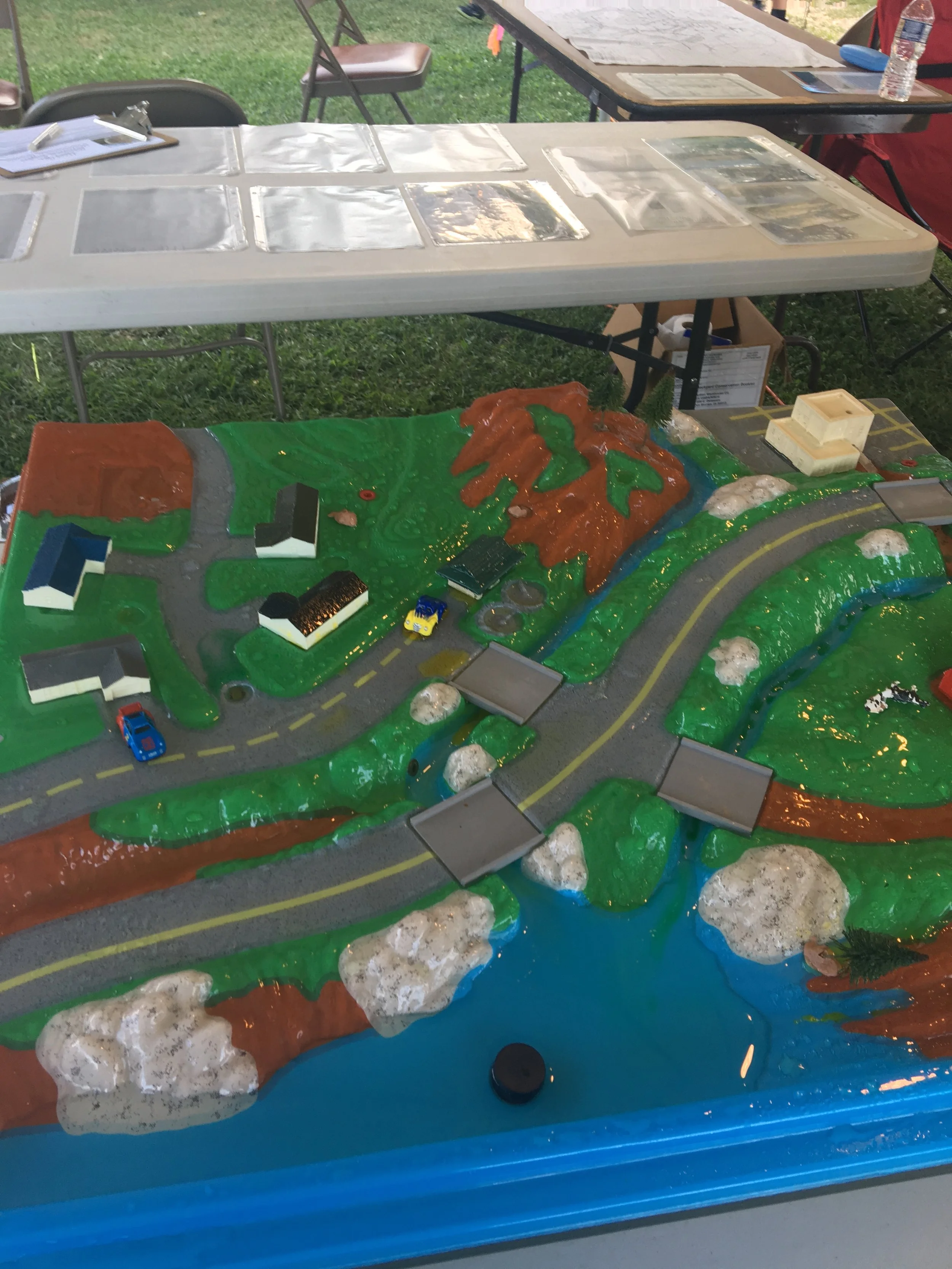
Inaugural Drinking Water Day
On September 27, 2017, the Eastern Lancaster County (ELANCO) Source Water Collaborative (SWC) will hold its Inaugural Drinking Water Day in Terre Hill, PA.

Darrell Belz demonstrates the groundwater model at Terre Hill Days
ELANCO Source Water Collaborative
On September 27, 2017, the Eastern Lancaster County (ELANCO) Source Water Collaborative (SWC) will hold its Inaugural Drinking Water Day in Terre Hill, PA. The event will be split into two sessions; a morning session geared towards school-aged children, and an evening session for adults in the community.
The morning session will feature several educational booths, where school children in the community can learn about where their drinking water comes from, and how it can be protected from contamination. Elementary school children in the public school system, and children who attend school in one-room school houses throughout the region are invited to attend.
The focus of the evening session of Drinking Water Day is a private well water testing opportunity, where members of the community can bring their well water to be tested by Penn State Extension.
The ELANCO region is mostly rural, heavily agricultural, and has a large Amish and Mennonite community. A large portion of residents rely on private wells for household and drinking water.
The ELANCO SWC is an effort consisting of local, state, federal, public, and private organizations, whose goal is to implement source water protection strategies in the ELANCO region. They focus on implementing strategies which reduce pollutants, especially nitrates, in local drinking water sources. SSM has been a collaborative partner since 2012.
The group has been hugely successful in reaching out to the community in their educational efforts, and adding a Drinking Water Day to these efforts will add an interactive element to their educational techniques.
Dog Days of Summer
By carefully selecting your dog park area, fencing properly, providing a clear set of rules, and plenty of trash cans, you can avoid the most common problems associated with dog parks and add value to the residents of your community.

People love parks! From toddlers to the elderly, you will see people playing in the grass, slipping down the slides, shooting a basket, tossing a softball, enjoying a picnic or taking a quiet nature walk. One common visitor who is often overlooked though in the planning phase for a park is the family dog! Creating a dog-friendly space in your neighborhood park would enable man’s best friend to exercise and have a dog day afternoon.
By following a few simple guidelines, Park Directors can offer the public a service that can really benefit all, by giving the dog its day in a secluded environment designed especially for them.
Pick the place. Dogs need lots of space to run, play, and learn to socialize with people and other pets. A dog park may range from one to ten acres in size. Ideally, the area would be fenced to protect the dogs from accidental run-ins with traffic, to keep overly curious pets out of neighbor’s lawns, and control contact with other park visitors. A varied landscape with short and tall grass, shade trees, and gravel near the entry-ways is recommended.
Don’t forget the amenities. A few basic additions can make your dog park successful. Water, for a quick drink, plenty of trash cans for human and doggy waste, fencing or boundary markers, a little shade, a place for owners to sit, and access to park restrooms make for a great day at the park.
Engage the community. Once a location has been selected, and a basic design has been made, it’s time for the park users to create a list of rules for their dog park. Organizing a dog park volunteer committee to hold clean up and hole-filling days helps create a sense of park ownership and general good-will between the park staff, park users and neighbors.
By carefully selecting your dog park area, fencing properly, providing a clear set of rules, and plenty of trash cans, you can avoid the most common problems associated with dog parks and add value to the residents of your community.
Checkout some online resources for more insight into the design of dog parks, their benefits, how they were created, and common issues.
- www.dogpark.com – everything you ever needed to know!
- https://images.akc.org/pdf/GLEG01.pdf - American Kennel Club publication, "Establishing a Dog Park in your Community”
- http://www.doodycalls.com/blog/tentips-for-planning-and-building-a-dog-park-in-your-community/ - Ten Tips for Planning and Building a Dog Park in your Community