

Fall is the Time to Prepare for Winter
In the Community . . . At the Office . . . At Home

In the Community
- Sweep the streets and remove leaf piles.
- Clean and repair storm drain systems and concrete channels.
- Inspect and clear drain inlets, drainage pipe outfalls, and drainage trash racks.
- Investigate drainage issues received from residents.
- Get the equipment ready; mount the plows and find the shovels.
- Review snow plowing routes and address potential hazards.
- Check operation of emergency power generators.
At the Office
- Make sure the heating system is ready to go. Replace filters, clean burners, and coils.
- Check that outdoor air dampers are working properly.
- Fix the little maintenance issues that could be problems in the winter. Look out the window to assess: Are the parking lots safe for your employees? Is there a place for the snow to go when you plow? Check the roof for leaks or loose materials. Remove any low-hanging tree branches around the building and parking areas.
- Check thermostat and lighting timers have been adjusted to reflect the recent time change.
- Find your snow shovels. Mark obstructions or other features that could be damaged by snow plows.
- Service your field vehicles.
At Home
- Schedule your annual heating system check.
- Clean gutters and trim any low-hanging branches.
- Check your emergency kit to be sure you have fresh batteries, flashlights or candles, back-up phone power banks, bottled water, and first aid equipment.
- Put the ice scrapers in the car, find your shovel and test your snow blower.
- Reverse the ceiling fans to clockwise. Energy Star says the fan will produce an updraft and push down into the room heated air from the ceiling.
- Cook a few meals and freeze them, just in case you catch the flu or get snowed in.

Mold is a growing problem in buildings – no matter the season
Are your Buildings Ready for Winter? As we approach Winter Break and the potential of snow fall, it’s important to be proactive. Now is the time to plan ahead to avoid problems like mold and legionella.
Are your Buildings Ready for Winter?
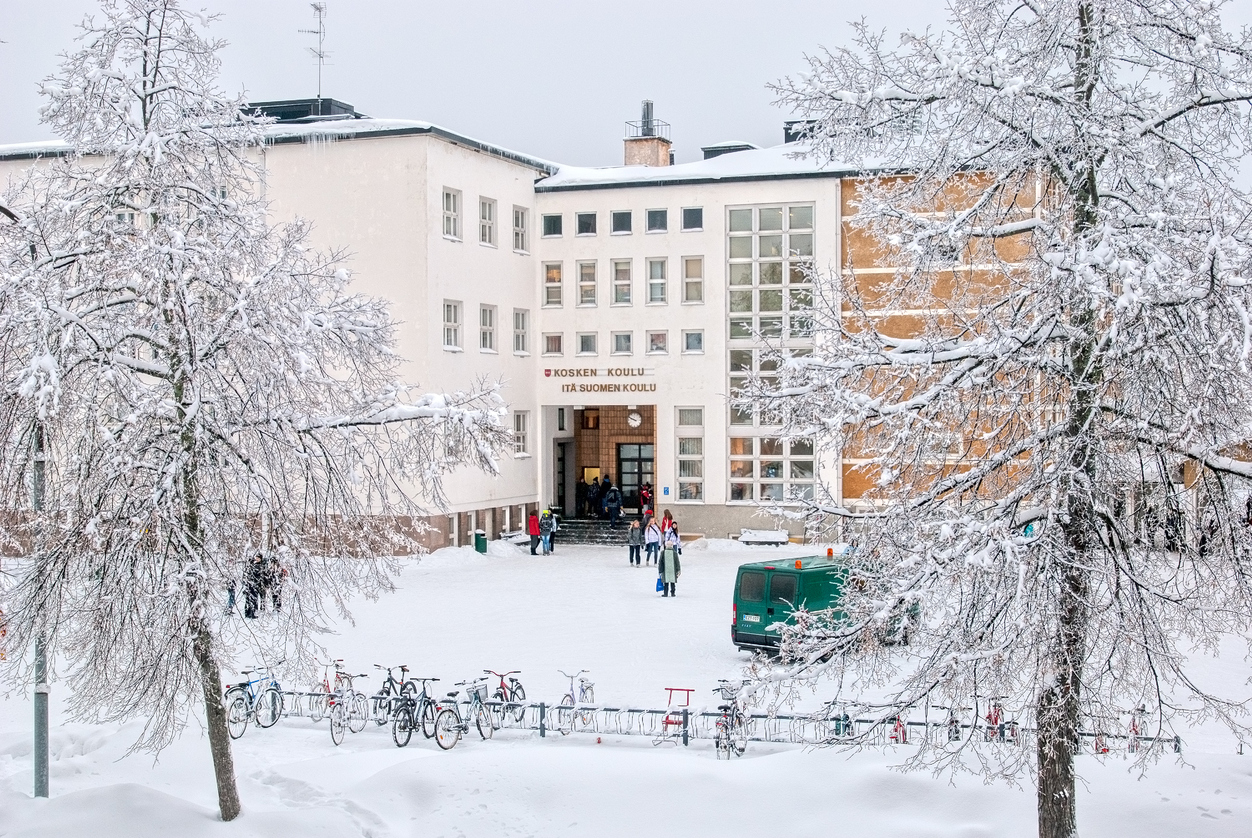
As we approach Winter Break and the potential of snow fall, it’s important to be proactive. Now is the time to plan ahead to avoid problems like mold and legionella.
Address the symptoms before they escalate into problems
- Address roof leaks and poor drainage areas around the building.
- Avoid environmental quality problems with indoor air and water systems by training staff on effective and appropriate means and methods for maintenance and cleaning procedures.
- Minimize conditions that lead to mold growth by operating building ventilation systems to maintain a constant temperature and humidity.
- If portions of your plumbing system are used infrequently, establish a routine flushing program to prevent bacterial growth in your water system.
- Check unoccupied areas frequently for the presence of mold.
- Make sure all the seals on the windows and doors are not compromised and in good-working condition.
- Clean and repair roof gutters to avoid ice dams.
- Make sure the ground around your building slopes away from the foundation so water does pond.
- Act quickly if you see condensation on windows, pipes, or walls inside a building. Dry out the area and determine if the source of the condensation is from a leak or the result of high humidity.
Spotts, Stevens and McCoy has been providing services to schools and industry for more than 75 years. Our focus is to help you minimize the potential for indoor air quality problems with a proactive approach for existing buildings and buildings under construction.

Don't Get Buried This Winter
Unleash the power of mobile GIS to locate your assets even if they are beneath several feet of snow.

Will you know where your assets are?
Unleash the power of mobile GIS to locate your assets even if they are beneath several feet of snow.
Last winter, a powerful winter storm blanketed the area with over a foot of snow. The water system field crew, responding to a main break, encountered difficulty locating the nearest valve to isolate the break. The hidden valve was located in a park which was now a pristine field of white snow. Unable to pin point the exact location, the field crew spent eight hours with a backhoe digging in the snow to find the valve. While the maps the crew used to find the valve were accurate, they had trouble locating where they were on the map in the featureless snow field. The experience served the water system a harsh lesson in the value of asset mapping.
Don’t let this happen to you. Liberate your GIS data through the use of web-enabled mobile applications. Transform your water/wastewater infrastructure data into an easy-to-use operations asset management system.
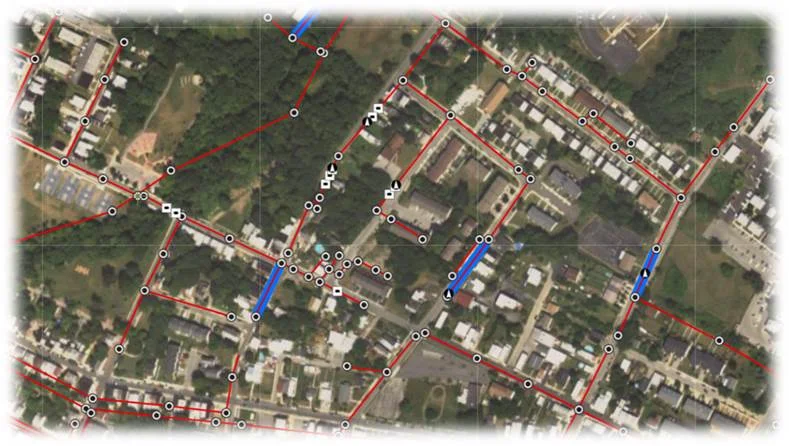
SSM’s GIS Asset Management approach captures vital infrastructure data points with your system with survey-grade accuracy. The data is verified and compiled into a geo-spatial database. By creating customized mobile web applications, the data is accessible to you in the office, or in the field. Field-critical data, such as material description, installation date, inspection reports and service history, available at your finger-tips when you need it most.

Mitigating the Impact of Snow Storms in Your Facilities
Probably one of the most catastrophic losses experienced during winter is roof collapse. In the recent past, this has had more impact on pre-engineered steel buildings, but it can also have an impact on stepped roofs where snow drifts can accumulate.
The first step for a sound prevention plan is to Assess Your Vulnerability.
- Is your area typically hard hit in the winter?
- Does your facility shut down operations during winter holidays or weekends?
- Does your manufacturing process generate heat within the building?
- Have you ever noticed pronounced icicle formation following roof snow accumulation?
- Have you ever noticed doors not closing properly during severe cold snaps?
Probably one of the most catastrophic losses experienced during winter is roof collapse. In the recent past, this has had more impact on pre-engineered steel buildings, but it can also have an impact on stepped roofs where snow drifts can accumulate. In pre-engineered steel buildings, owners should monitor the displacement of the roof should a heavy snow storm affect the area, and have an action plan in place for snow removal. For buildings with flat or stepped roofs, ensure that roof drains are not blocked and are functioning properly. Finally, for older buildings, be on alert for combined snow and rain loads, as earlier buildings’ codes did not fully acknowledge this condition as a possible roof loading.
Possibly a less anticipated form of damage during winter occurs during extended periods of sub-freezing temperatures. This most often will affect manufacturing or process facilities that have operations shut down during the holidays, but this can also affect any area of a building with piping in close proximity to exterior walls. Of utmost importance during these cold snaps is to ensure that someone familiar with building operations is aware of the coming temperature swings.
Preparations should be in place for addressing damage to equipment or piping, especially fire protection systems. Finally, always maintain a consistent and reliable source of heat within the building during operation shut downs.
It is also important to observe the effects of sub-freezing temperatures on the building to build the base of knowledge for future remediation. If you notice significant or concentrated icicle formations, this is usually a sign of a poorly insulated roof, or possibly ineffective roof drains. This is a condition that warrants review so that more significant damage within the building envelope can be prevented. If you notice doors not closing properly or interior walls that crack during a cold snap only to close once temperatures rebound, this is likely a lack of perimeter frost protection. This is a condition that should be corrected so that voids in the soil below do not cause more significant damage to the building.
With good planning in place and a keen eye during severe cold events, you can be well prepared for the worst of winter.