

Solar Power Systems and Fire Fighters
According to the Office of Energy Efficiency and Renewable Energy solar power is more affordable, accessible, and prevalent in the United States than ever before. The increased use of solar energy offers numerous benefits across the nation, including a clean energy source, economic growth, and job creation. When photovoltaic (PV) power systems (solar panels) are under consideration for roof top installations, these systems on residential and commercial properties must be designed and installed so that firefighters have safe access to the roof.
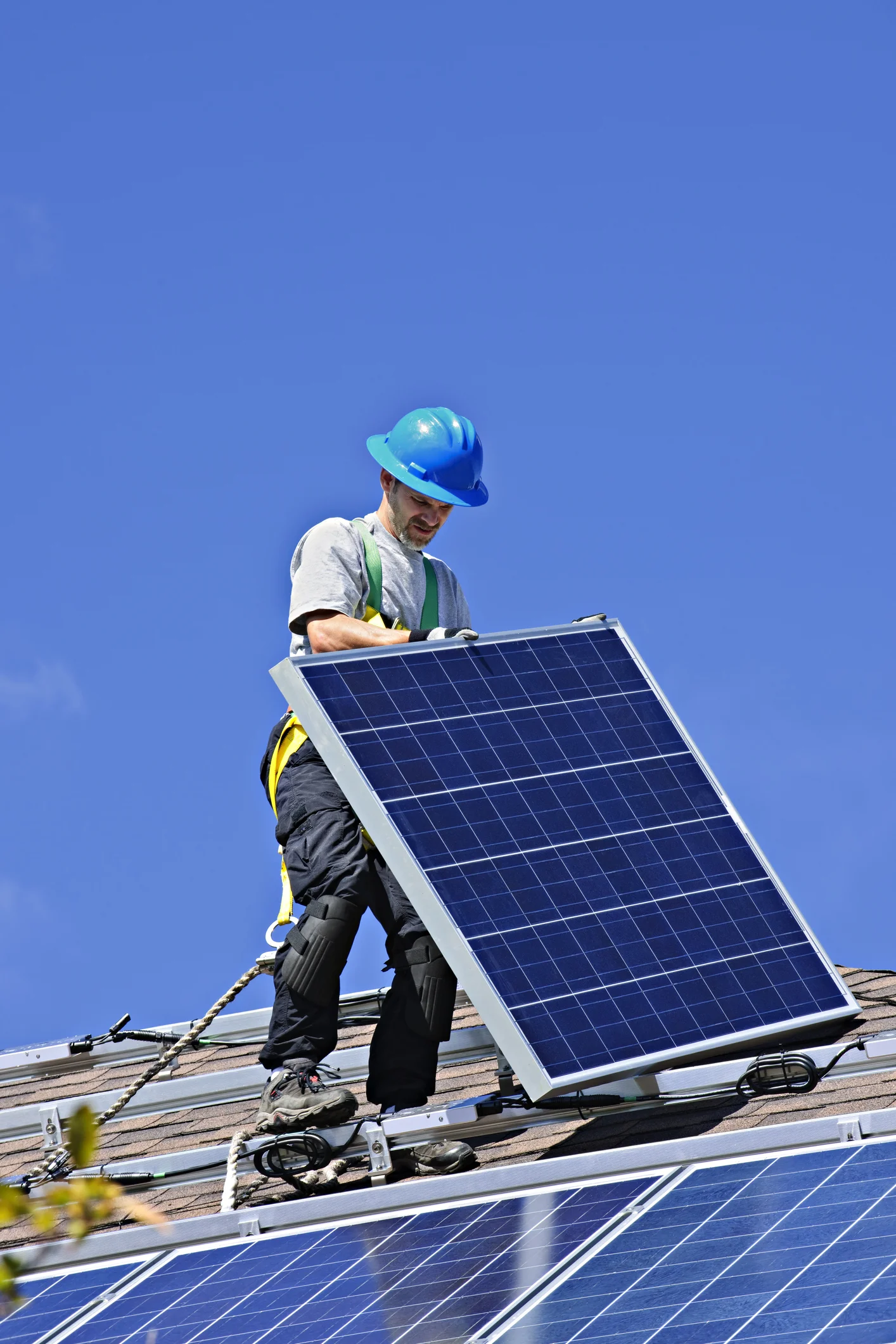
According to the Office of Energy Efficiency and Renewable Energy solar power is more affordable, accessible, and prevalent in the United States than ever before.
The increased use of solar energy offers numerous benefits across the nation, including a clean energy source, economic growth, and job creation.
When photovoltaic (PV) power systems (solar panels) are under consideration for roof top installations, these systems on residential and commercial properties must be designed and installed so that firefighters have safe access to the roof.
Understanding the Issues
- Access. Flat solar panels on the roof may hinder the firefighters’ ability to provide vertical ventilation if the solar panels are not arranged per building code requirements. In a structure fire, smoke and gases rise. Cutting a hole in the roof allows these gases and smoke to rise out of the building. Solar panels located and spaced with pathways allow the fire fighters access to open roof areas to provide this ventilation as they fight the fire.
- DC and AC Circuits and Conduits. The solar panels continue to produce DC power as long as the sun is shining or even when bright lights are present, and the DC wiring in conduits from the PV panel arrays to the inverters will remain energized. The AC wiring in conduits from the inverters to the electrical distribution system will be de-energized by opening the main solar AC disconnect switch.
Addressing the Issues in Your System
- During the design phase, follow the guidelines in 2015 NFPA 1 Section 11.12 Photovoltaic Systems for Access, Main Disconnects, Circuit and Conduit Locations, Marking and Labelling; and in the National Electrical Code.
- Locate the solar panels with adequate space along edges, peaks and valleys, and pathways between the solar panel arrays for firefighters to gain access.
- Limit the physical size of the solar panel arrays to the dimensions as required in the code.
- Prominently locate and identify the Main System AC Disconnect Switch so that the disconnect may be readily accessible to d-energize the AC portion of the system.
- Locate conduits to avoid the pathways to reduce trip hazards and maintain open areas for ventilation.
- After installation, diagram your system as installed specifically identifying the location and purpose of all disconnects and equipment. Review and provide a copy to your local fire department for their reference.
- Label your systems clearly. The National Electrical Code (NEC) requires labeling to identify the system's operational characteristics, directs personnel to component locations, and acts as a reminder of PV systems on the premises.
RESOURCE
Fire Fighter Safety and Response for Solar Power Systems
Forward
Today's emergency responders face unexpected challenges as new uses of alternative energy increase. These renewable power sources save on the use of conventional fuels such as petroleum and other fossil fuels, but they also introduce unfamiliar hazards that require new fire fighting strategies and procedures.

Is Your Water System Prepared to Respond to an Emergency?
Every water system is required to have an Emergency Response Plan, but the details of the plan are not entirely defined.

Every water system is required to have an Emergency Response Plan, but the details of the plan are not entirely defined.
So what makes an effective emergency management plan?
There should be an alert system in place to make sure everyone involved in the Emergency Response Plan is informed of spills and clean-up actions as soon as possible. This is essential in minimizing the contamination of the entire water supply, and keeping consumers safe. It was a delayed notification to the water system that created the situation where some residents were unknowingly using contaminated water. Owners of potential contamination sites should be aware of the importance of immediately informing the authorities and local water supply in the case of a contamination.
It’s important to temporarily discontinue use of the intakes, wells, or springs that could be affected. While developing a water system’s Source Water Protection plan, we create models that can be used in such an event to tell where the contaminant will flow, and which sources the contamination will reach in a given time frame. This model was recently used to help a local water system determine which wells to close when a nearby pipeline broke, contaminating their groundwater supply. Closing any sources that could possibly become contaminated will prevent contamination of the entire system.
A crucial step in the Emergency Response Plan is communication between the water system and its customers. Because most contamination events are accidents, it is a requirement for a water system to plan ahead in securing a reliable back up water source to use while remedying the contamination. Backup sources can include purchasing bulk water from local suppliers or opening an interconnection line with a neighboring water system.
Action Elements for Emergency Preparedness
- Identify and understand potential contaminants in the vicinity of your sources.
- Create an emergency alert system with local emergency responders, neighboring water systems, and your customers.
- Plan ahead in securing a backup water supply.
- Determine source impacts and time of travel should a release occur.

Common Questions about Fire Damage
Take a proactive approach to planning, preparing, and training in the case of fire in your home or business.Manage your risk by checking your smoke alarms at least twice a year and having an evacuation route planned with the appropriate fire escape equipment. In addition to common causes of fire be mindful of the risks associated with spontaneous combustion.

Checklist
- Report fire damage to your insurance agent.
- Call a certified restoration company to secure the property and mitigate damages.
- Document damage with photographs.
- Do not enter the premises without permission of the Fire Marshall or Building Inspector.
- Do not attempt to clean soot and smoke-damaged areas with any liquid. Your cleaning could set soot and cause additional damage.
- Do not touch items without gloves. Oils in your hand can permanently set soot causing irreversible damage.
- Do not enter the affected areas. Make sure children and pets do not enter the affected areas.
- Wear appropriate Personal Protective Equipment when on the scene and during repair process. The air can be contaminated, debris may be throughout the premises and overhead dangers may be present.
- Notify your restoration representative immediately of any concerns with items of high sentimental or real value. Survival rates of items that receive immediate restoration attention are much higher.
Take a proactive approach to planning, preparing, and training in the case of fire in your home or business. Manage your risk by checking your smoke alarms at least twice a year and having an evacuation route planned with the appropriate fire escape equipment. In addition to common causes of fire be mindful of the risks associated with spontaneous combustion.
Will the fire damage be covered by my insurance? Fire often affects contents and the structure. Your policy will address coverage and how it will apply to both structure and contents. A representative from your insurance carrier will be able to answer any questions that you have regarding coverage. A certified restoration firm works with you and your insurance company to make the process as smooth as possible.
What are my responsibilities as an insured? To protect your property from further damage. This may include boarding up the property from weather. A restoration firm can provide all necessary emergency and mitigation services 24 hours a day, seven days a week.
What if I cannot live/work in my property? Your policy will address available coverage for “Additional Living Expenses” and/or “Loss of Use.” A representative from your insurance carrier will be able to answer any questions that you have regarding coverage. A restoration firm can assist with any of your relocation needs.
How long will the drying equipment be in my property? Drying equipment will be on-site until the area is completely dry. Even though the area may “look” dry ; it may not be dry. A technician from the restoration company monitors your property’s drying process and will keep you informed of the progress.
What products do you use to clean the damage? Restoration companies use a variety of products depending on the circumstances. You may ask your representative to provide you with Safety Data Sheets (SDS) for any products being used in your property. Advise a representative f you or any members of the property have any chemical sensitivities or other health concerns that may be relevant.
FOR MORE INFORMATION
Lisa Lavender, Chief Operating OfficerBerks • Fire • Water Restorations, Inc.℠
E: llavender@bfwrestorations.com

Fire Protection is Critical to Business Continuity
Fire protection systems are essential to the safety of your employees and protection of your property.

Fire protection systems are essential to the safety of your employees and protection of your property. But more than that, these systems are essential in helping you to manage the risks associated with business continuity. Imagine the impact on your business or organization if a key production line were to go off-line for an extended period of time, if the runoff from a fire event were to cause an environmental impact, or if the assets in your building (from equipment to historical artefacts) were to be destroyed.
An evaluation of your fire protection systems will identify potential risks within your facility or on your campus. The evaluation can address all potential threats from building and fire code compliance to safeguards like alarms, sprinklers, to inventorying the hazardous materials, to modeling the water flow to the hydrants.
Consider Your Facility/Campus
Are you in compliance with local fire codes? Is the fire suppression system in place aligned with the current function of your facility? We can help. Our team of mechanical, electrical and plumbing engineers are experienced in developing fire protection systems.
Emergency Water Supply is critical to Disaster Preparedness
Water supply interruption can be caused by several types of events such as natural disaster, a failure of the community water system, construction damage or even an act of terrorism. Because water supplies can and do fail, it is imperative to understand and address how your facility will be impacted.
PROJECT HIGHLIGHT | CARPENTER TECHNOLOGY CORPORATION
Emergency Water System Evaluation and Distribution System Mapping
SSM recently completed a Water System Analysis project that including preparation of drawings to depict the location of the various water supply mains, fire hydrants, and valves throughout the facility. As a follow-up to the Analysis, and using the data collected, SSM constructed a hydraulic model of the water supply system to simulate various demand and emergency supply scenarios.

Not all Fires are the Same
Different fuels create different fires and require different types of fire extinguishing agents. It’s important to know what risks exist in the workplace and to have the right suppression tool at the right location.
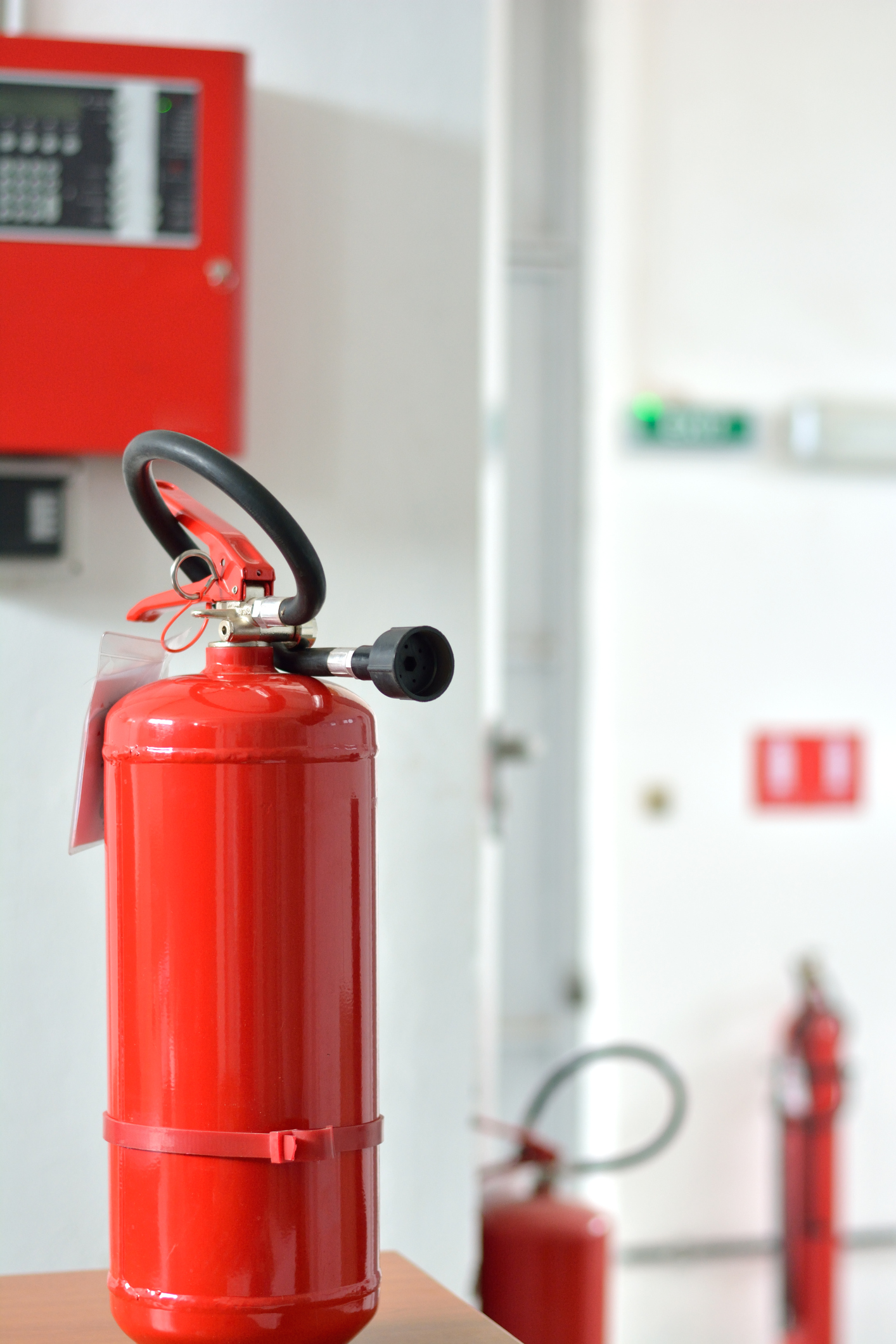
Different fuels create different fires and require different types of fire extinguishing agents. It’s important to know what risks exist in the workplace and to have the right suppression tool at the right location. Equally important is the warning on the extinguisher that alerts the user when the extinguishing agent would be dangerous.
Have the Right Tool for the Job
It is important to use the correct extinguisher for the type of fuel! Using the incorrect agent can allow the fire to re-ignite after apparently being extinguished successfully.
Fire Classifications
- Class A: fires in ordinary combustibles such as wood, paper, cloth, trash, and plastics.
- Class B: fires in flammable liquids such as gasoline, petroleum oil and paint. Class B fires also includeflammable gases such as propane and butane. Class B fires do not include fires involving cooking oils and grease.
- Class C: fires involving energized electrical equipment such as motors, transformers, and appliances.
- Class D: fires in combustible metals such as potassium, sodium, aluminum, and magnesium.
- Class K: fires in cooking oils and greases such as animal fats and vegetable fats.