

First Presbyterian Church set to acquire Wyomissing property
The headquarters of Spotts, Stevens and McCoy at 1047 North Park Road in Wyomissing, is expected to be the new home of the First Presbyterian Church in Reading. The church, founded in 1814, plans to lease space to SSM after purchasing the building from the consulting firm.
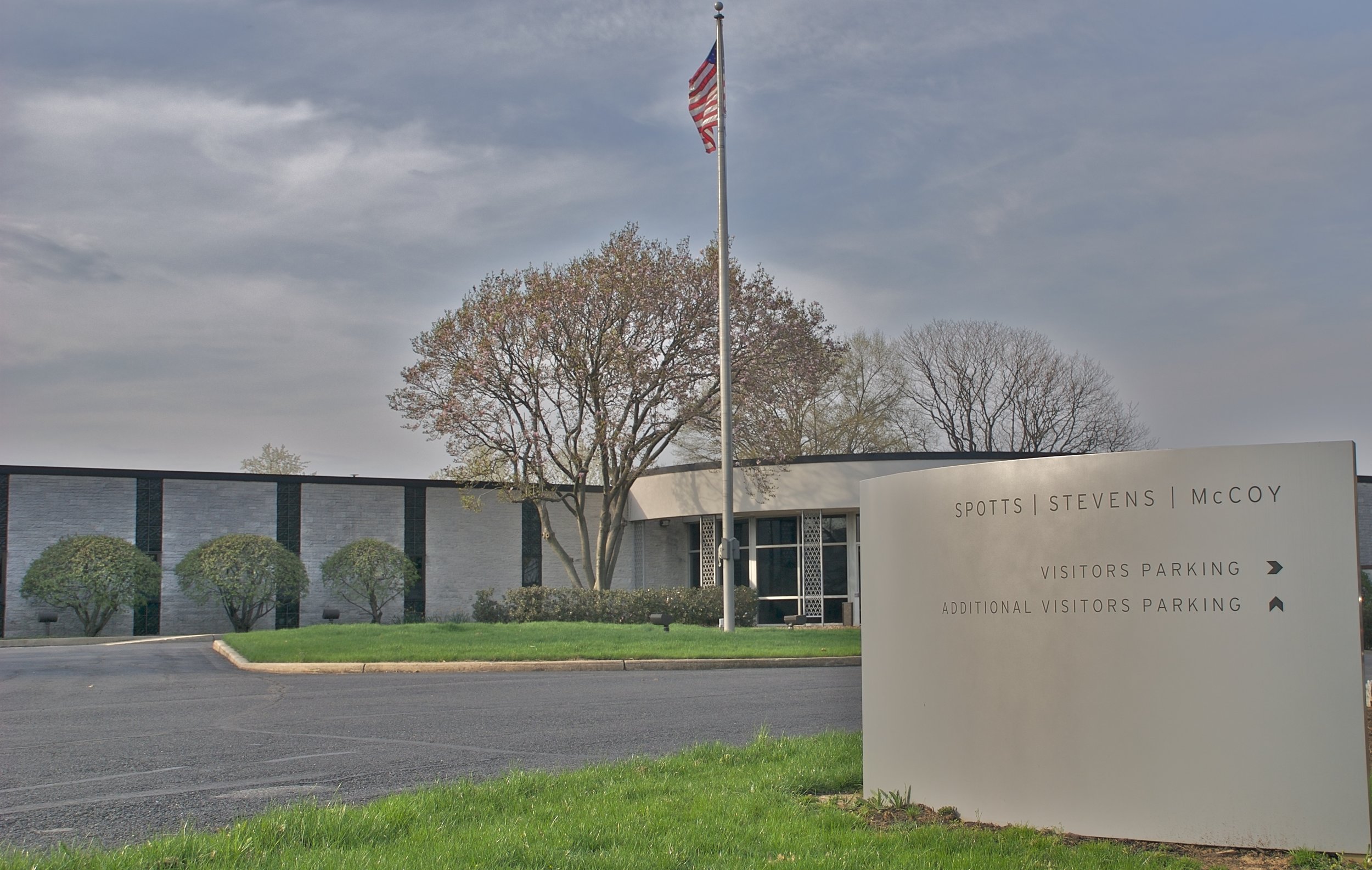
PRESS RELEASE: April 18, 2017
Wyomissing, PA – First Presbyterian Church set to acquire Wyomissing property owned by real estate Limited Partnership affiliated with Spotts, Stevens and McCoy (SSM).
In what is being described by both parties as a ‘union made in Heaven’ First Presbyterian Church, currently located at 37 South 5th Street in Reading and Spotts, Stevens and McCoy are jointly announcing plans for a real estate transaction whereby First Presbyterian Church is set to acquire the 1047 North Park Road, property currently occupied by Spotts, Stevens and McCoy (SSM) with plans to lease approximately half of it back to SSM. The purchase is contingent upon various approvals.
Attorney John Roland, long time member and elder at First Presbyterian Church who is a partner at Roland Stock, LLP, has provided leadership to First Presbyterian’s new site selection efforts. “Our Church is on a mission to expand our outreach efforts. This beautiful, new location will give us that opportunity,” said Roland. “Our congregation has embraced a number of changes in recent years and, following planned renovations, this facility will give us the space we need to support our membership growth goals.” First Presbyterian, founded in 1814, recently left the PC (USA) denomination to affiliate with the PC (ECU) and also just announced the calling of a new Senior Pastor, Christopher DiVietro. “We are very excited about these changes and in many ways, finding this location is an answer to prayers and the final piece of the puzzle,” said Nancy Alley, another church Session member who has been very active in the relocation process.
Brian Kelly, CEO at SSM and a partner in the real estate partnership, had the following to say: “We love our beautiful Wyomissing location and we had no desire to leave it; however, 43,000 square feet is simply more space than we need right now. So when the Church approached us about buying it and told us it was more space than they need at this time, we discussed a possible sale and lease-back situation. The result is that we’ve ended up with an Agreement that is truly a win-win for both parties. This sale unlocks resources that we can use to reinvest in the growth of the business, focusing on adding new technology and equipment and pursuing other strategic initiatives, including potential acquisitions.”
The 1047 North Park Road facility was constructed in 1963 as the world headquarters for Vanity Fair Corporation and it was subsequently renovated in 1998 and occupied by Carpenter Technology. The SSM principals purchased it in 2003. The building has just under 43,000 square feet on two levels and sits on approximately 5.5 acres of prime Wyomissing real estate.
“What makes the transaction so appealing to us is that Spotts, Stevens and McCoy will continue to occupy approximately half of the space as we embark upon our congregational growth plans,” said Roland. Current elder and former Treasurer Paul Eisenhuth notes that Presbyterians are known to be financial conservatives. “A key component of the transaction is that SSM and the Church are entering into a 5-year Lease Agreement which makes the space affordable for us. It also ensures our access to additional space as we grow.”
Spotts, Stevens and McCoy is a family owned and managed regional engineering and consulting firm with roots back to 1932. Two of the principals, Patrick McCoy and Lewis McCoy, Jr., are sons of founder, Lewis McCoy, Sr., and Kelly is a son-in-law. Both First Presbyterian Church and Spotts, Stevens and McCoy have deep roots in the Berks County community.
There are many factors that make this such a uniquely beneficial transaction for both parties:
- The SSM lease-back will provide the Church with an ongoing revenue stream as it embarks upon renovation plans and congregational growth goals. Financing is being provided by Customers Bank as the Church embarks upon a capital campaign to fund both the purchase and planned renovations. The Church will be seeking competitive bids for both design and construction work. No firm timeline for construction or occupancy has been established at this time.
- With a five-year Lease in place, SSM will be able to continue to operate from its existing headquarters location with little or no disruption to business as the Church embarks upon its renovation plans and prepares to move in
- Church offices will be open during the week; however its primary activity will occur on weekends and evenings when parking spaces are likely to be occupied by those attending scheduled worship services. SSM’s primary business activity will occur on week days during normal business hours and its employees will be off on weekends.
An answer to prayers? A partnership made in Heaven? The ‘joining’ of two old and well-established organizations? Laying all spiritual beliefs aside, it certainly appears to be a transaction that capitalizes on every possible benefit for both the Church and SSM. So at a minimum, it’s a win-win!
FOR ADDITIONAL INFORMATION:
- First Presbyterian Church - John Roland, Esq. | 610-372-5588
- Spotts, Stevens and McCoy – CEO, Brian Kelly | 610-621-2000
- Patricia Langiotti, Creative Management Concepts | 610-603-0306

Sam Zook, SIT Receives Certification as Drone Pilot
Sam Zook, SIT is the third surveyor at SSM to receive certification as a Drone Pilot.

Sam Zook, SIT, Surveyor has received his certification as a FAA Certified Remote Pilot. Zook is one of three certified pilots at SSM. He is a 2009 graduate of Pennsylvania College of Technology.
On June 21st, 2016 the FAA finalized a new regulatory framework for small, unmanned aerial systems. Titled Part 107, these new regulations created a new drone certification process that covers the majority of low-risk, commercial UAS flight operations for all commercially operated drones. Commercial refers to any kind of flight operation that can be tied to economic benefit. These new regulations were implemented on August 29, 2016.


Building Safety Month
A three-part series exploring engineering and environmental issues supporting Building Safety. Topics include Electrical Safety, Poor Ventilation: Impact and Solutions, and Crane Structural Safety.
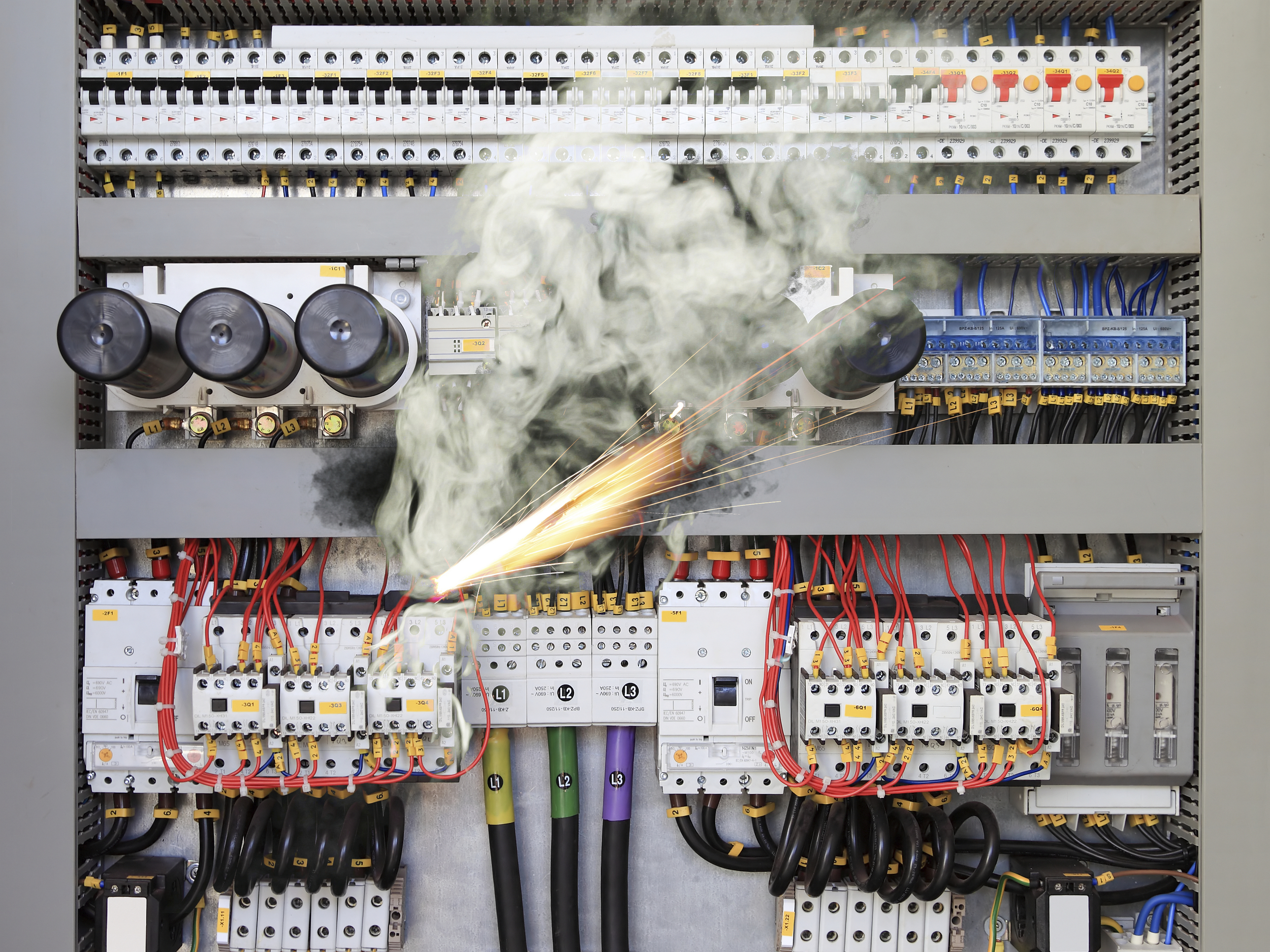
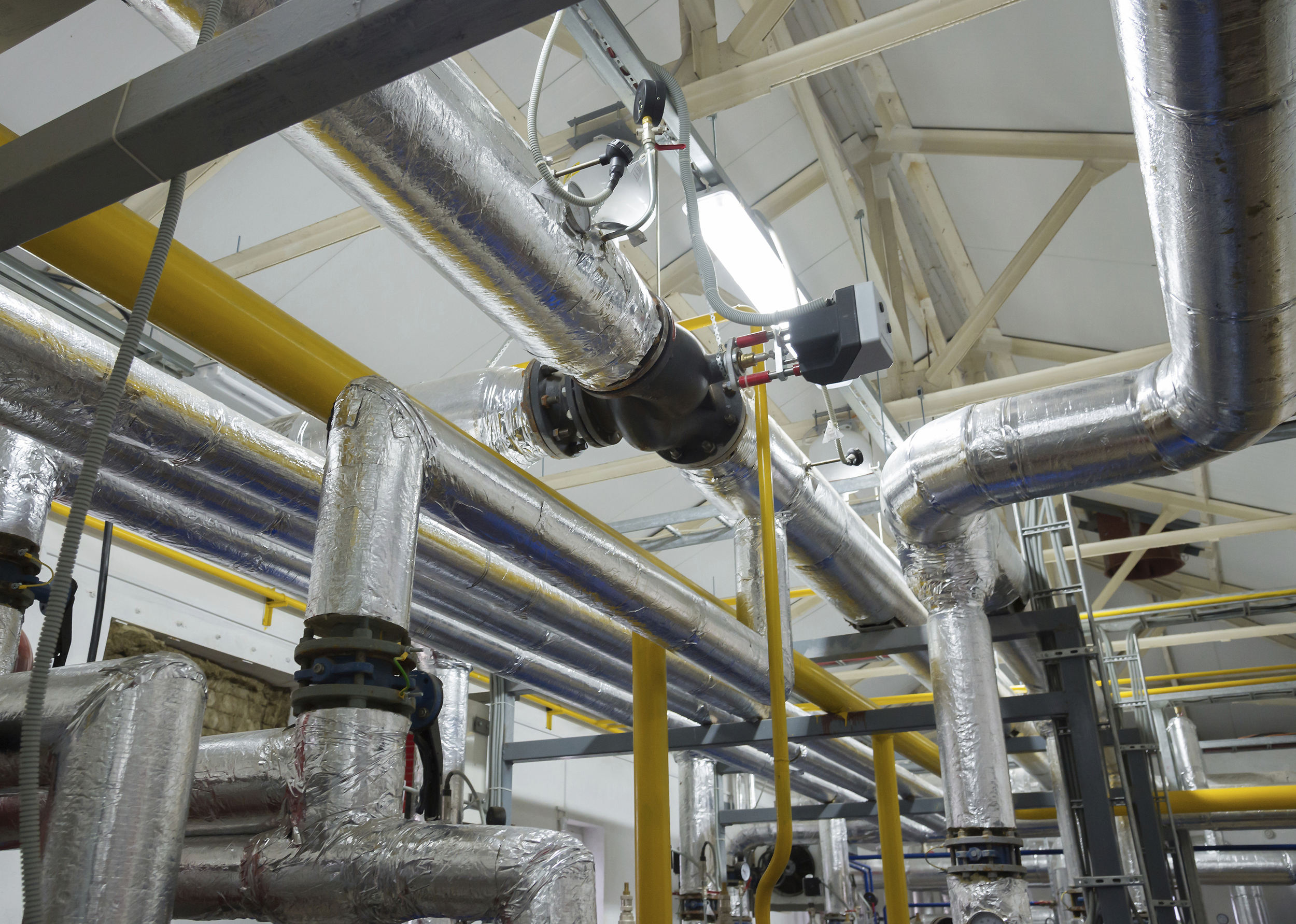
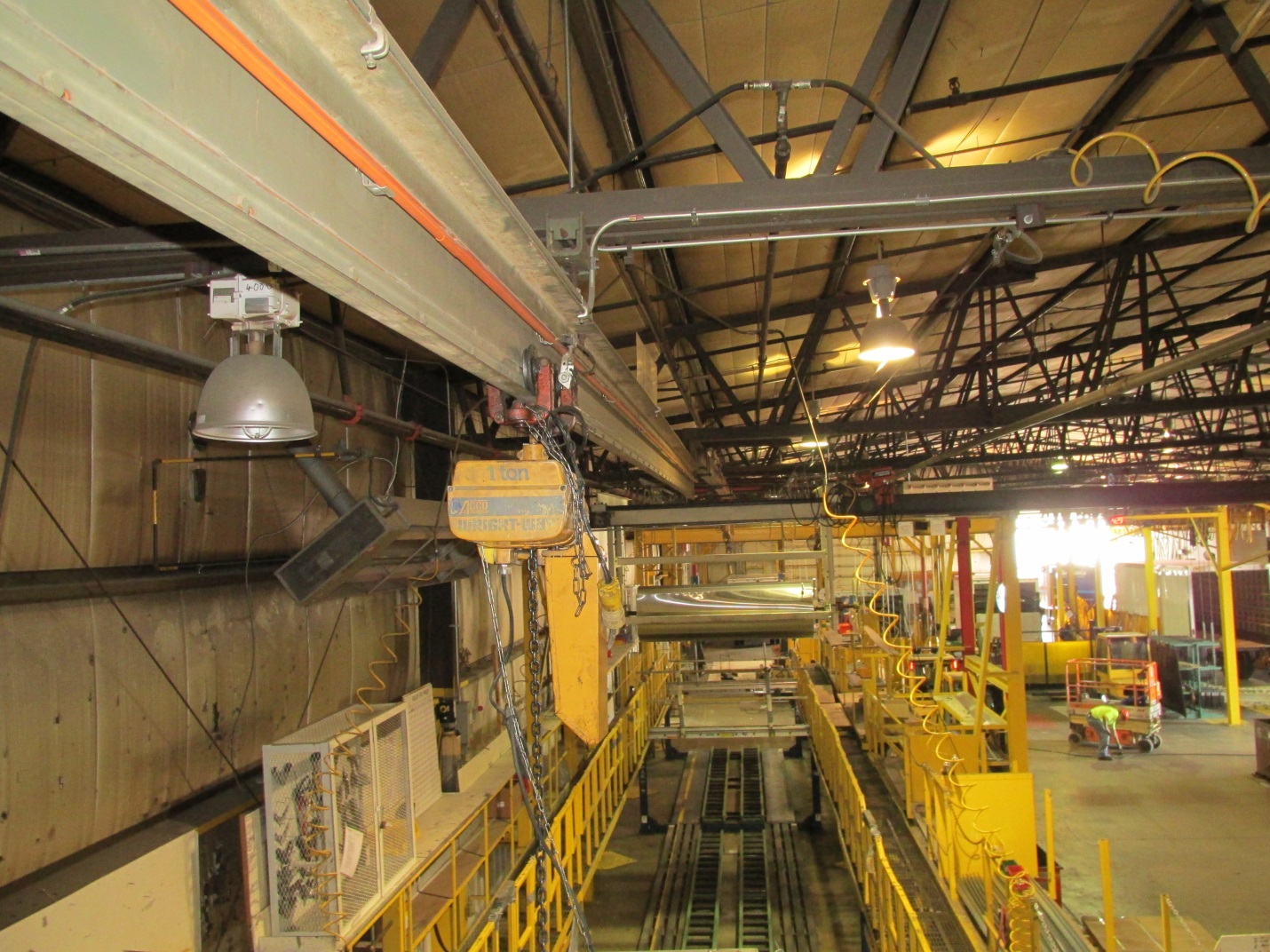
A three-part series exploring engineering and environmental issues supporting Building Safety. Topics include Electrical Safety, Poor Ventilation: Impact and Solutions, and Crane Structural Safety.
Building Safety
Safety in building construction traces to the Code of Hammurabi around 1750 BC, offering rather straightforward dis-incentives of re-work or death. A mere six rules pertained to damages due a builder for his failure to properly construct a home. Building and natural catastrophes like the Great Fire of London (1666), the Great Fire of Chicago (1871), 1906 San Francisco Earthquake, and more recent Hurricane Sandy led to voluminous developments to identify risks, create consistent standards, and changes to reflect new materials and methods.
The International Code Council’s (ICC) 2015 International Building Code contains slightly less than 700 pages; 35 chapters and 13 appendices, with the singular focus of providing a model for minimum acceptable safety standards to protect public health and welfare for every type of building occupancy. Modern codes go one step further and also provided minimum standards for sustainability related to energy consumption. And the IBC is just one of many standards and guidelines we work with in industrial, commercial, municipal projects.
Part 1: Electrical Safety
Opportunities for electrical faults and associated health risks to workers exist throughout industrial, municipal, and institutional facilities, with electrical distribution equipment and large equipment associated with manufacturing, process systems, research, HVAC, and central utility plants. The IBC by reference to the NEC (National Electrical Code) and NFPA (National Fire Protection Association) dictates that an electrical system be evaluated for Arc Flash hazards and that equipment be appropriately labeled according to the protection required. Hazards associated with electricity is a serious workplace hazard; The Electric Power Research Institute (EPRI http://www.epri.com/Pages/Default.aspx ) and National Institute for Occupational Safety and Health (NIOSH http://www.cdc.gov/niosh/) have very good videos (https://www.youtube.com/watch?v=fZP47mlELSc and https://www.youtube.com/watch?v=-RkbMdaeq0o ) describing research into arc flash and stories by those affected by incidents.
Consider your building. Have you completed an ArcFlash Hazard Analysis for the facility? Do you have a defined electrical safety program and proper training and PPE for your employees? Does your electrical equipment have warning labels that comply with NFPA 70E, OSHA, or ANSI Z 535?
We can help. SSM supports numerous clients by performing comprehensive electrical distribution and equipment assessments; conducting short circuit analysis, time current coordination studies and identifying Hazards.
FOR MORE INFORMATION: Emerick Martin, PE, Senior Electrical Engineer
Part 2: Ventilation Design
Since man began using indoor fires for heating, ventilation of indoor air has existed, and still today the primary source of indoor air quality issues result from inadequate ventilation. Contemporary building contaminants, including VOC’s and synthetic fibers from building and furnishing materials; microbials, carbon dioxide, carbon monoxide, radon, asbestos, etc. can trigger discomfort, illness, allergic reactions, and temperature and humidity both impact concentrations of certain contaminants. In broad terms, ventilation design involves natural ventilation, mechanical ventilation, or local exhaust.
Well designed and maintained HVAC systems provide thermal comfort while using outdoor air to ventilate, dilute, isolate, and exhaust odors and contaminants. The ICC, through The International Building Code (IBC), by reference to ASHRAE 55-2010, Thermal Environmental Conditions for Human Occupancy and; 62.1-2010, Ventilation for Acceptable Indoor Air Quality dictates comfort (temperature, humidity, air movement) and ventilation parameters. Comfort and ventilation standards have significantly evolved since the very early part of the 20th century when the first standards for thermal comfort and ventilation became requirements, to reflect changing patterns in building space use, outdoor pollutants, complex variety of chemicals and components in building and furnishing materials, energy conservation goals, to name a few.
Building Standards will continue to transform especially in regards to ventilation, to resolve the seemingly disparate design goals for more ventilation and lower energy consumption. Particularly interesting developments for design integration of energy simulation and CFD (computational fluid dynamics) in the design process, and occupant-specific, dynamic systems, are promising.
FOR MORE INFORMATION: Bruce Bell, PE, Senior Technical Director, Mechanical and Plumbing Engineering
Part 3: Structural Alterations and Additions
The average building life cycle of non-residential structures extends many, many years. In fact, according to the US Energy Information Administration’s (EIA) 2012 report, Commercial Buildings Energy Consumption Survey, “commercial buildings remain in use for many decades. Although about 12% of commercial buildings (comprising 14% of commercial floorspace) were built since 2003, the commercial building stock is still fairly old, with about half of all buildings constructed before 1980; the median age of buildings in 2012 was 32 years.” It’s also true that within a short period of time, buildings become functionally unsuitable, or that facilities constructed for one product or purpose evolves to serve another.
So, distinct from normal operations and maintenance activities, continuous investment in research and development, production and logistics requires that alterations, additions, reuse, reallocation of space be permitted to comply with building safety standards, including structural codes. Like the applicable zoning, electrical, mechanical, plumbing codes, the structural codes are also updated to reflect new or better understood threats to building safety. For instance, it is important that new equipment installation for research or manufacturing tools be evaluated for foundation or floor structural capacity. Similarly, a comprehensive building structural analysis may be necessary with the installation of new overhead cranes or conveying equipment installation where there exists multiple generations of similar equipment; it’s not atypical to discover that over time and staff turnover, historical knowledge of the building changes are lost.
FOR MORE INFORMATION: Patrick McCoy, PE

Sinkholes and Why They Matter
Sinkholes can be dangerous in many ways. They can cause damage to the foundation of a building, they serve as conduits for surficial contaminants to reach groundwater, and they can cause damage to buried services like water lines and electrical conduits according to Conserve Energy Future. Knowing the risk of sinkhole formation is key to minimizing possible damages.

Sinkholes can be dangerous in many ways.

MEASURING SINKHOLE POTENTIAL RISK
Karst is defined as “a terrain, generally underlain by limestone, in which the topography is chiefly formed by the dissolving of rock, and which is commonly characterized by Karren, closed depressions, subterranean drainage, and caves” by the Geological Survey Water-Supply Paper 1899. Each component listed above (Karren, closed depressions, subterranean drainage, and caves) are considered karst features, but most importantly, sinkholes are considered karst features.
Sinkholes can be dangerous in many ways. They can cause damage to the foundation of a building, they serve as conduits for surficial contaminants to reach groundwater, and they can cause damage to buried services like water lines and electrical conduits according to Conserve Energy Future. Knowing the risk of sinkhole formation is key to minimizing possible damages.
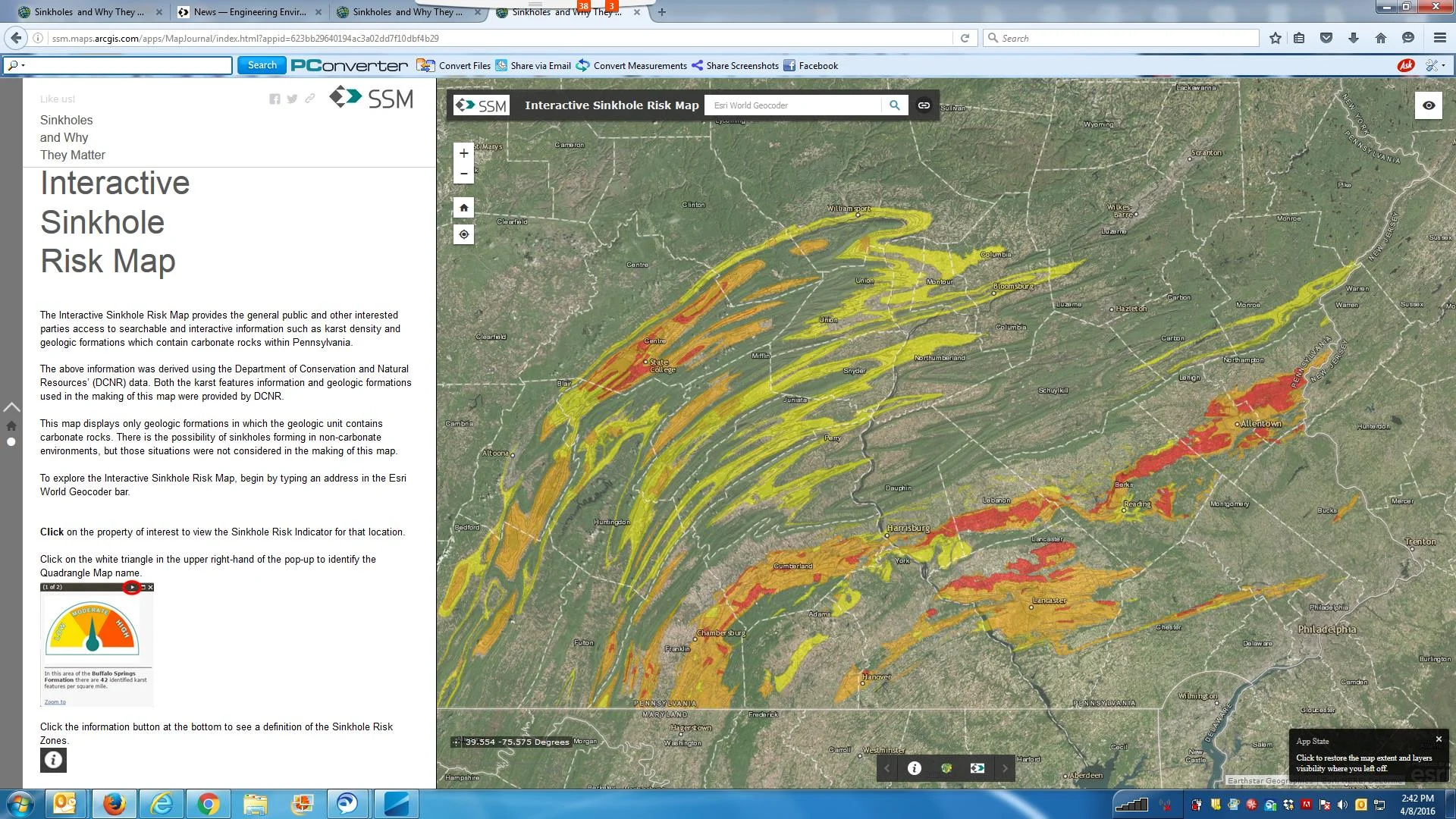
Since the amount of karst features in an area can be related to the occurrence of sinkholes, an interactive sinkhole risk map was created using the density of karst features within a geologic formation.
Interactive Sinkhole Risk Map
The Interactive Sinkhole Risk Map provides access to searchable and interactive information such as karst density and geologic formations which contain carbonate rocks within Pennsylvania. The map displays only geologic formations in which the geologic unit contains carbonate rocks. There is the possibility of sinkholes forming in non-carbonate environments, but those situations were not considered in the making of this map. Explore the Interactive Sinkhole Risk Map to view the Sinkhole Risk for any location.
If a sinkhole evaluation of a location is desired, SSM Group, Inc. has multiple professionals on staff with years of experience in sinkhole risk evaluations. Feel free to contact SSM Group, Inc. to learn more.

PEDA 2016 Spring Legislative Conference
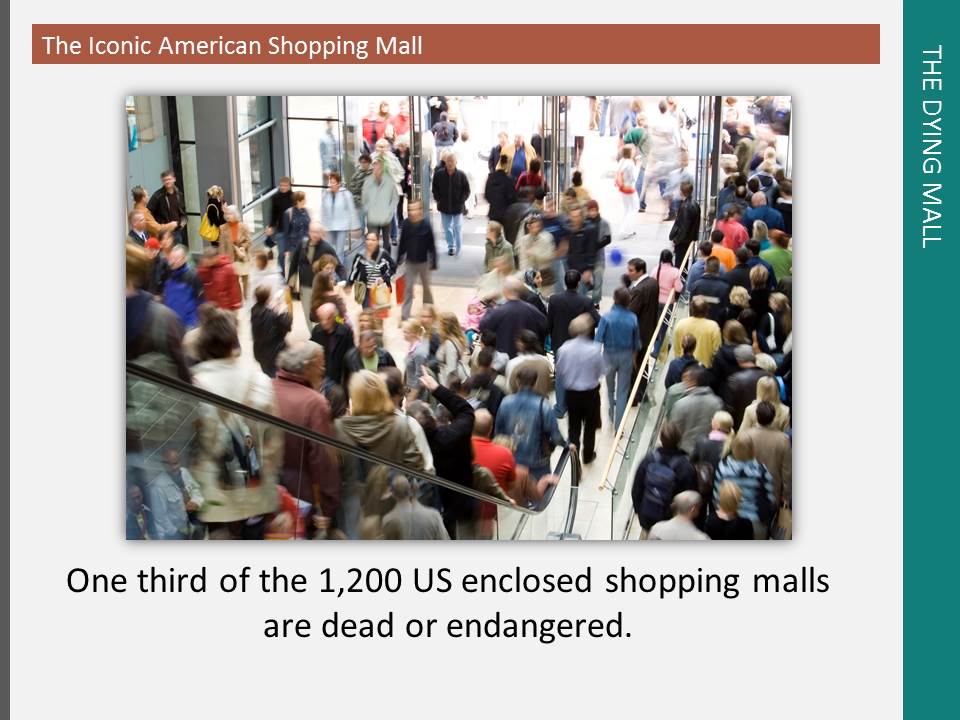
One third of the 1,200 US enclosed shopping malls are dead or endangered.

The Dying Mall: Reinventing Shopping Malls to Revitalize the Community
What’s to become of the shell of America’s shopping mall history?
Malls with high vacancy rates, low consumer traffic, no anchor store, or dated and deteriorating structures are considered ‘dead.’ Green Street Advisors report there are approximately 1,200 enclosed malls across the country and 15% of those malls will fail or be converted into non-retail space within the next 10 years. Online shopping, the recession, and demographic shifts are the key factors leading to this death toll. A change to the way we shop has led some mall owners to change the set-up of their mall, re-arranging like stores together, adding new anchors (like Apple stores) or new features (like daycare or children’s play areas) and changing the food court to a dining terrace with upgrades from fast food to sushi bars. While these approaches may save some shopping malls, the hard truth remains that many of these malls will not return to the glory of their past; but will instead close leaving behind a gigantic concrete shell on an island of macadam.
We'll be talking about the revitalization efforts at the PEDA 2016 Spring Conference!
For more information:
Terry Reed, Vice President Business Development
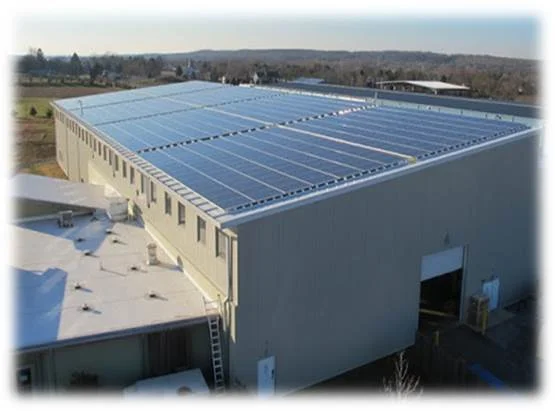
A great time to explore Solar opportunities in PA
Why Solar Now in PA? Prices for solar systems have fallen by nearly 60% over the past five years. The lowered prices combined with incentives currently available make solar particularly attractive.

WHY NOW?
Prices for solar systems have fallen by nearly 60% over the past five years. The lowered prices combined with incentives currently available make solar particularly attractive
SSM Group, Inc and RER Energy Group, LLC are offering a seminar on solar photovoltaic energy for commercial, industrial, and municipal enterprises to explore the current opportunities in Pennsylvania.
WHO SHOULD ATTEND? The seminar will benefitbusiness owners, municipal officials, and all personnel who are responsible for managing electrical energy systems and associated costs.
ON THE AGENDA
Financial Incentives and Options
Federal Tax Credit: 30% of project costs
Accelerated Depreciation: 5 years (50% in the first two years)
Financing Options and PPA’s (Purchase Power Agreements)
Effective cost of energy for businesses: $0.03–$0.05 per kWh for next 25–35 years!
Technology Best Practices and Case Studies
Equipment and Installation Options
Utility Interconnection and Net Metering Considerations
Case Study Examples
SSM Group, Inc. Announces Management Changes - Brian Kelly named President and CEO

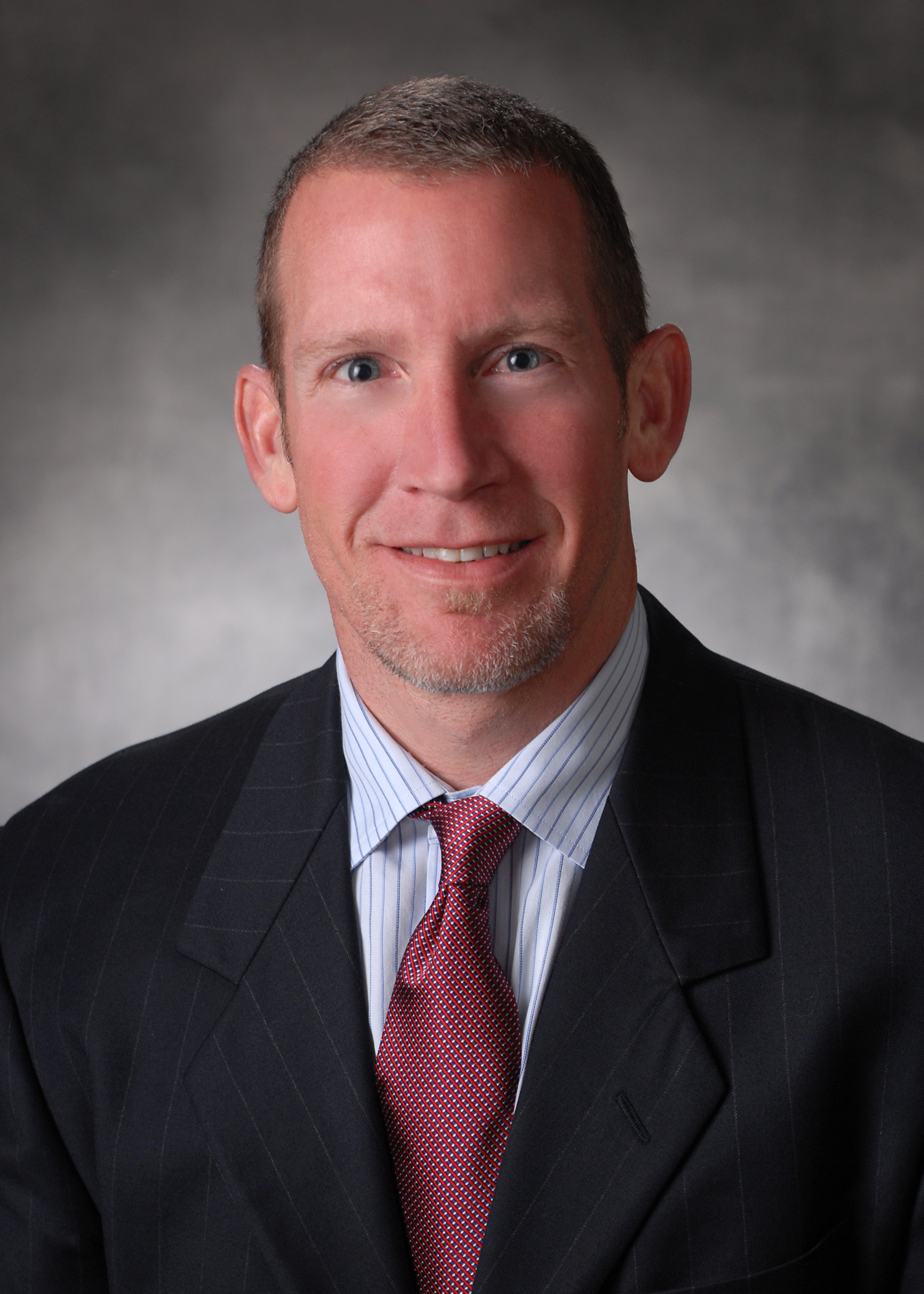

SSM Group, Inc. recently announced a corporate management restructure. Brian R. Kelly has been named President and Chief Executive Officer of the firm. Kelly, who formerly served as the company’s Executive Vice President with responsibility of running the firm’s operations, replaces J. Carlton Godlove, II, who has left the company to pursue other interests.
Kelly is one of four McCoy family members who assumed control and management of the firm in 1996. Kelly has an Associate Degree in Mechanical Engineering Technology from The Pennsylvania State University. Prior to joining the SSM management team, Kelly was employed at AT&T for more than 17 years in various roles. Kelly resides in Reading with his wife, Kay McCoy Kelly, who is a daughter of the company’s founder, Lewis J. McCoy, Sr. In a prepared statement, Kelly said, “I look forward to leading the company as we embark upon strategic growth and expansion. I am very proud of our exceptionally talented senior leadership team and all of our employees, and I am confident that, with their help and support, we will continue to grow the company and succeed at fulfilling our corporate mission – ‘Enhancing the quality of life for our clients, our employees, and all of the people touched by our work.’ Our work is so important because it touches this generation and future generations with a scope broader than we can imagine – and it leaves a legacy that will live far beyond us.”
“Approximately six months ago we appointed a team of independent professionals to work with us as members of an Advisory Board: Thomas A. Beaver, CPA, former managing partner at RKL; Patricia L. Langiotti, President of Creative Management Concepts; and Mike Shor, former executive with Carpenter. These Advisory Board members have played a key role in helping us plan for our future,” Kelly said.
Kelly also announced that shareholder, Patrick M. McCoy, PE, has been promoted to Executive Vice President. “Patrick will lead the company’s business development and sales and marketing efforts and he will be a strong right-hand man,” Kelly said. Patrick McCoy has been with the firm since 1996. He graduated from Drexel University, like his father, and holds Bachelor’s degrees in Civil Engineering and Architectural Engineering. McCoy formerly led the company’s Facilities and Site Engineering Division which provides services to worldwide companies such as IBM. Prior to joining SSM, he was with Ortega Consulting, Media, PA, and Gredell & Associates, Wilmington, DE.
Shareholder Lewis J. (Lou) McCoy, Jr. of Reading, who joined the firm in 1985, will continue in his role as Director of Human Resources.
Catherine (Kitty) Bell, who joined the firm in 2004, is being promoted to Divisional Vice President. Formerly the firm’s Vice President of Facility Engineering, she assumes an expanded role, with additional management responsibility for Site Engineering and Survey and Data Capture disciplines (formerly managed by Patrick McCoy). Bell resides in Reading, PA.
SSM Group, Inc. is an engineering and consulting firm founded by Lewis J. McCoy, Sr. in 1967. The company continues to be family owned and operated. Headquartered at 1047 North Park Road in Wyomissing with satellite offices in Harrisburg and the Lehigh Valley, SSM has just under 100 employees and provides services to various types of local, regional and national businesses that include commercial, industrial, manufacturing and telecommunications as well as healthcare and higher education institutions. The company also provides services to numerous local, regional, and county government entities. While the company’s primary market is a regional footprint including Berks County and the Lehigh Valley, SSM serves clients throughout PA and the Northeastern United States as well as to some international clients.
FOR MORE INFORMATION:
Brian Kelly, President and CEO
brian.kelly@ssmgroup.com | P: 610-621-2000
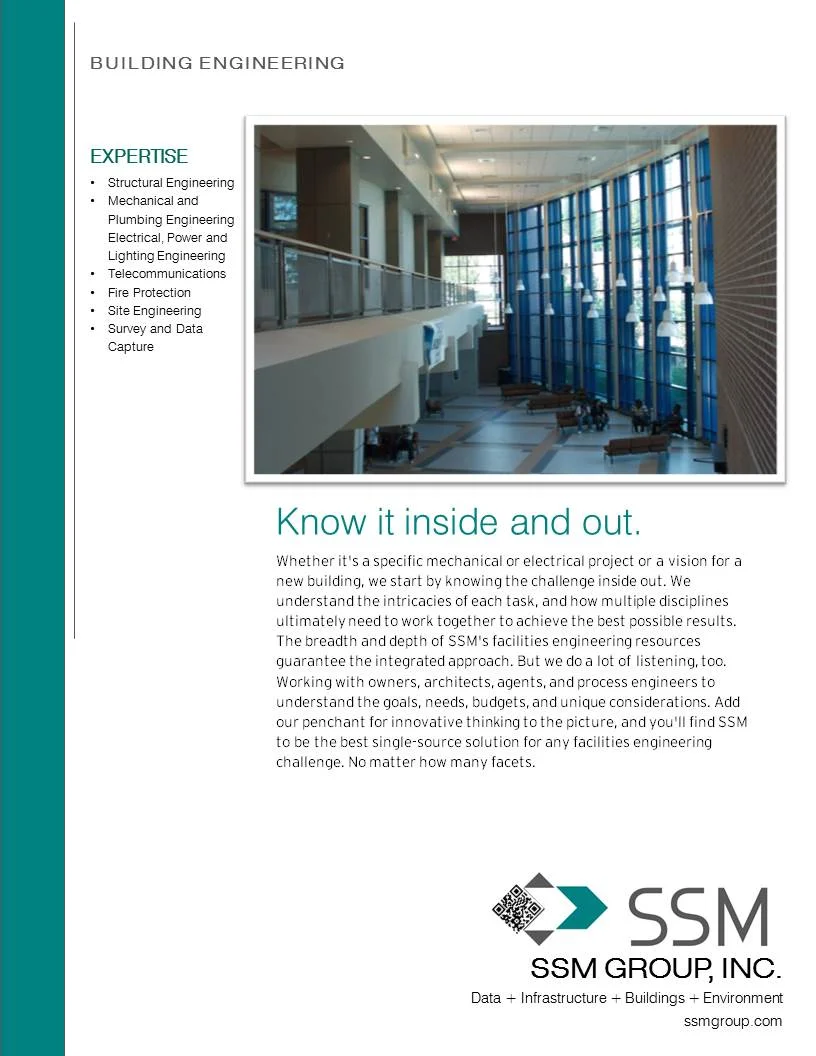
Building Engineering Services
Building Engineering Services
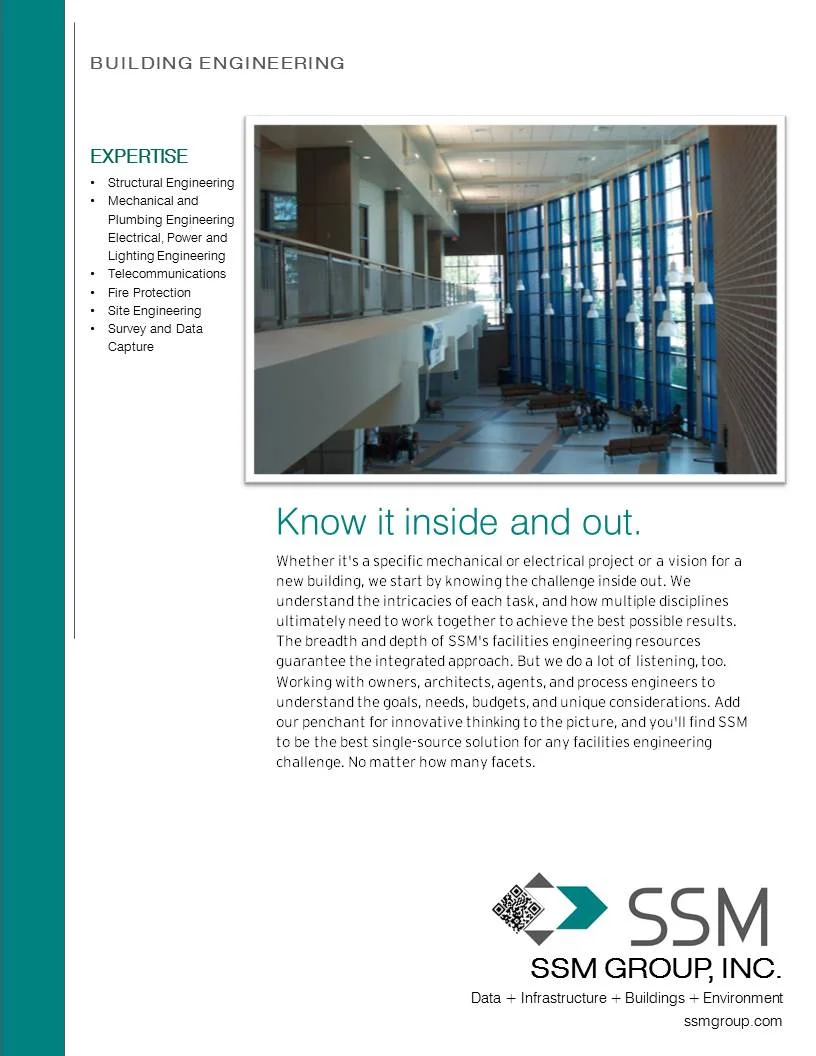
Know it inside and out.
Whether it's a specific mechanical or electrical project or a vision for a new building, we start by knowing the challenge inside out. We understand the intricacies of each task, and how multiple disciplines ultimately need to work together to achieve the best possible results. The breadth and depth of SSM's facilities engineering resources guarantee the integrated approach. But we do a lot of listening, too. Working with owners, architects, agents, and process engineers to understand the goals, needs, budgets, and unique considerations. Add our penchant for innovative thinking to the picture, and you'll find SSM to be the best single-source solution for any facilities engineering challenge. No matter how many facets.