

REGULATORY UPDATE | Disinfection Requirements Rule
The Disinfection Requirements Rule (DRR) was published in the PA Bulletin on April 28, 2018. The amendments are intended to protect public health through a multiple barrier approach designed to guard against microbial contamination by ensuring the adequacy of treatment designed to inactivate microbial pathogens and the integrity of drinking water distribution systems.
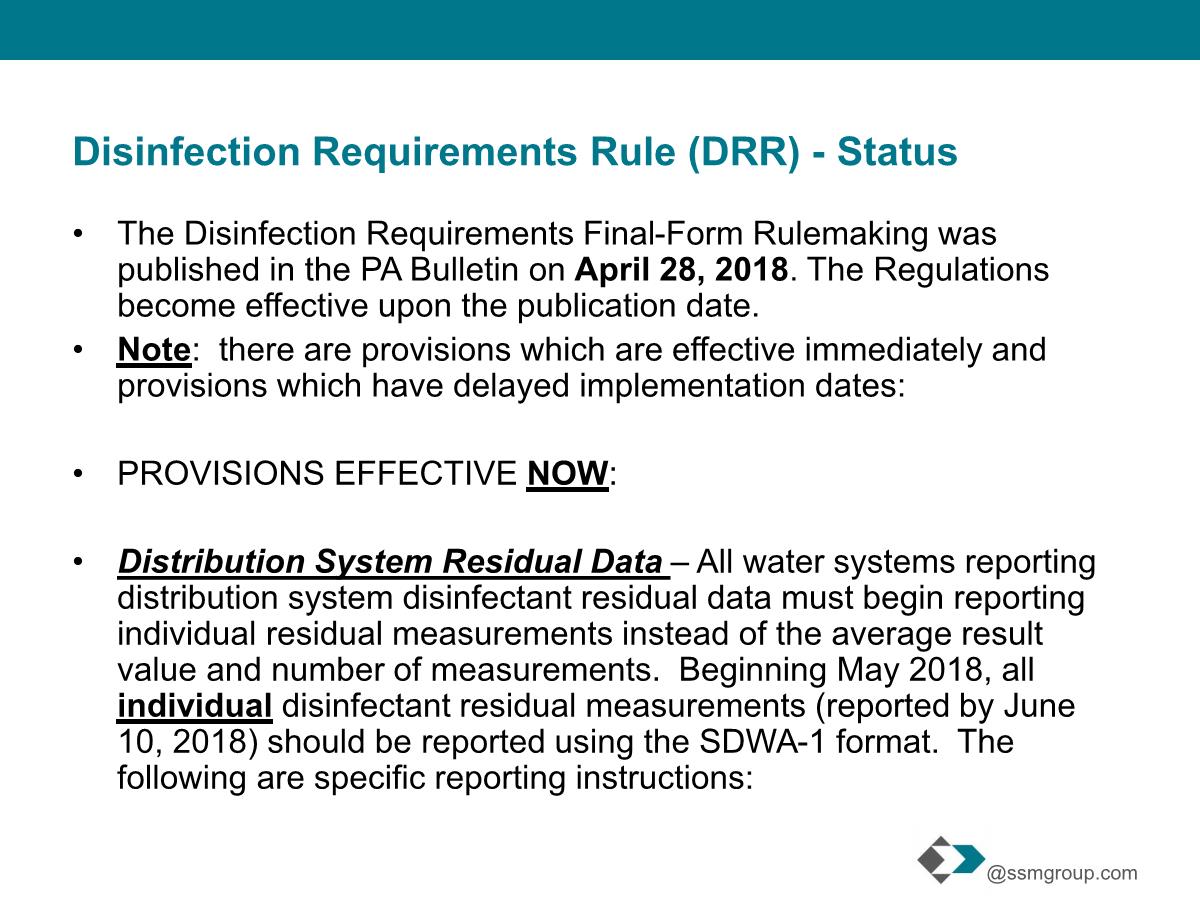
The Disinfection Requirements Rule (DRR) was published in the PA Bulletin on April 28, 2018. The amendments are intended to protect public health through a multiple barrier approach designed to guard against microbial contamination by ensuring the adequacy of treatment designed to inactivate microbial pathogens and the integrity of drinking water distribution systems.
The significant requirements of the DRR fall into two categories: provisions that are effective immediately and provisions that have delayed implementation dates.
Provisions effective now:
- Distribution System Residual Data: All water systems reporting distribution system disinfectant residual data must begin reporting individual residual measurements instead of the average result value and number of measurements.
- Minimum Entry Point Disinfectant Residual: Water systems using filtered surface water (SW) or groundwater under the direct influence of SW (GUDI) sources must maintain a minimum disinfectant residual at the entry point (EP) of at least 0.20mg/L.
- Calculating & Reporting Log Inactivation: Water systems using filtered SW or GUDI sources must calculate the Giardia log (%) inactivation at least once/day during the hour of expected peak flow.
Provisions with delayed implementation:
- Sample Siting Plan: All community water systems, any non-transient non-community water system with chemical disinfection and any transient non-community water system with filtration of SW or GUDI sources or 4-log disinfection of GW sources must develop and submit a DRR sampling plan by October 29, 2018.
- Distribution System Minimum Residual: All community water systems, any non-transient non-community water system with chemical disinfection and any transient non-community water system with filtration of SW or GUDI sources or 4-log disinfection of GW sources must maintain a minimum disinfectant residual concentration in the distribution system of at least 0.2 mg/L (unless a higher number has been specified in a permit) beginning April 29, 2019.
- Nitrification Control Plan: Any community or non-transient non-community water system using chloramines or purchasing water treated with chloramines must develop and implement a nitrification control plan by April 29, 2019.
FOR MORE INFORMATION: Serena DiMagno, Sr. Environmental Consultant
Berks County Water and Sewer Association - Plant Tour
Legislative and Regulatory Update - May 2018


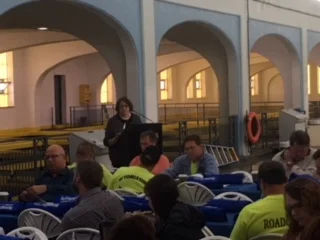
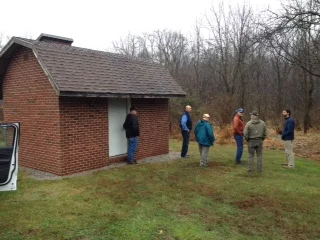
Serena DiMagno | Sr. Environmental Consultant presented a Legislative and Regulatory update at the recent Berks County Water and Sewer Association's Plant Tour at the Reading Area Water Authority Water Treatment Plant.


Matt Smith Receives Certification as Drone Pilot
Matt Smith, Survey Crew Chief has received his certification as a FAA Certified Remote Pilot.

MATT SMITH | Survey Crew Chief
Matt Smith, Survey Crew Chief has received his certification as a FAA Certified Remote Pilot. Smith is one of three certified pilots at SSM. He is a graduate of Pennsylvania College of Technology, Associate of Applied Science and Forest Technology, with over 15 years of surveying and data capture.
On June 21st, 2016 the FAA finalized a new regulatory framework for small, unmanned aerial systems. Titled Part 107, these new regulations created a new drone certification process that covers the majority of low-risk, commercial UAS flight operations for all commercially operated drones. Commercial refers to any kind of flight operation that can be tied to economic benefit. These new regulations were implemented on August 29, 2016.

Drones are a powerful solution for monitoring construction, documenting infrastructure on expansive sites, and capturing hard-to-reach details.

Spottlight on Electrical Safety
The Electrical Safety Foundation International (ESFI) is a non-profit organization dedicated exclusively to promoting electrical safety in the home, school, and workplace. To commemorate National Electrical Safety Month, ESFI spearheads an annual campaign to educate key audiences about the steps that can be taken in order to reduce the number of electrically-related fires, fatalities, injuries, and property loss.


Understanding the Code that Keeps Us Safe
The Electrical Safety Foundation International (ESFI) is a non-profit organization dedicated exclusively to promoting electrical safety in the home, school, and workplace. To commemorate National Electrical Safety Month, ESFI spearheads an annual campaign to educate key audiences about the steps that can be taken in order to reduce the number of electrically-related fires, fatalities, injuries, and property loss.
ESFI's National Electrical Safety Month 2018 campaign features a comprehensive collection of new and updated resources to help facilitate an effective electrical safety awareness campaign for your community, organization, school, or family.
This year's theme "Understanding the Code that Keeps Us Safe," focuses on the importance of the National Electrical Code and its three year cycle.
IN THIS ISSUE


New Water Quality Project Grant Program
The Department of Environmental Protection (DEP) announced the creation of a new water quality project grant program funded by the penalty assessed against the Mariner East 2 (MEII) Pipeline.
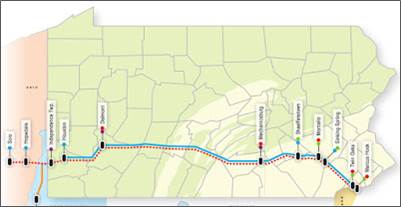
Grants will be awarded for projects that reduce or minimize pollution and protect clean water in the 85 municipalities along the length of the pipeline corridor.
The Department of Environmental Protection (DEP) announced the creation of a new water quality project grant program funded by the penalty assessed against the Mariner East 2 (MEII) Pipeline.
In February, DEP collected the $12.6 million penalty for permit violations related to the construction of the project. The penalty, one of the largest collected in a single settlement, was deposited into the Clean Water Fund and the Dams and Encroachments Fund, in accordance with the provisions of the Clean Streams Law and the Dam Safety and Encroachments Act.
Grants will be awarded for projects that reduce or minimize pollution and protect clean water in the 85 municipalities along the length of the pipeline corridor. These grants will be directed to the municipalities to eliminate pollution and protect the public from unsafe dams, water obstructions, and encroachments.
Eligible grant applicants include the 85 municipalities, county conservation districts, incorporated watershed associations, educational institutions, and non-profit organizations along the length of the MEII Pipeline. The 45-day grant application round will open May 7 and close June 21. DEP anticipates announcing the approved projects in the summer of 2018.
Examples of eligible projects include:
- Projects to improve water quality while enhancing community recreational opportunities, such as restoration and enhancement of natural water resource features at community parks and public properties, including lake restoration and wetland creation.
- Projects to educate future generations about water resource protection, such as demonstration projects that showcase pervious pavement, stormwater runoff management features and systems, bioretention systems, constructed wetland complexes, stormwater runoff collection and reuse projects, stormwater mitigation projects that reduce rate and volume and improve water quality on a school or other public property.
- Projects to improve and/or protect public drinking water sources and infrastructure, such as repairs to drinking water system source facilities that improve resiliency of the water supply, including water supply dam rehabilitation work and upgrades, and repairs to water treatment infrastructure and water intakes.
- Municipal Separate Storm Sewer System (MS4) projects to address rate, volume and/or sediment load, including flood-control project features and retrofits to existing stormwater runoff control infrastructure that reduce rate and volume of stormwater runoff.
- Projects that result in nitrogen, phosphorus, sediment load reductions within the Chesapeake Bay watershed and impaired waters, including stream buffers, stream restoration projects, wetland restoration or enhancement projects.
- Projects that result in water quality improvements in DEP Priority Watersheds and Impaired Watersheds within the 85 municipalities.
FOR MORE INFORMATION
Contact Spotts, Stevens and McCoy: Al Guiseppe, PG, Director, Water Resources
Visit DEP Informational Page:
Eligible applicants can apply via the Commonwealth of Pennsylvania Electronic Single Application website:
Visit Mariner East II Pipeline Webpage:
Contact DEP: R. Scott Carney, Chief Watershed Support Section - 717-783-2944

Governor's Award for Environmental Excellence
Governor’s Award for Environmental Excellence: Berks County Water and Sewer Association: Berks County Source Water Protection Program

Berks County Water and Sewer Association: Berks County Source Water Protection Program
Incorporating new and existing protection zones to maintain safe drinking water in Berks County, this program identifies possible sources of contamination for both surface water and groundwater. The program combines education and water quality improvements to the Chesapeake Bay and Schuylkill River watersheds and covers 266,000 people in Berks County.
The Governor’s Awards for Environmental Excellence are awarded each year by the Pennsylvania Department of Environmental Protection. Each year the Governor’s Awards for Environmental Excellence provide statewide recognition to businesses and organizations involved in a cross-section of environmental initiatives from cleaning up watersheds, saving energy, eliminating pollution, reducing waste and more. The awards highlight those projects that promote innovative technological advances, partnerships, public service and environmental outreach as well as encourage pollution prevention, demonstrate economic impact or employ innovative technology.

Berks County Source Water Protection Program
In 2017, the Berks County Water & Sewer Association and the Berks County Planning Commission completed a County-wide program to combine source water protection and stormwater management strategies that crossed both watershed and municipality boundaries. This program was selected to receive one of the 2018 Governor’s Award for Environmental Excellence by the Pennsylvania Environmental Council (PEC). These awards were presented at a banquet on April 26, with PA Department of Environmental Protection Secretary Patrick McDonnell as the keynote speaker.
Community water systems use a variety of surface waterways and groundwater wells and springs to provide safe, clean drinking water to about 70% of Berks County residents. To help protect the drinking water, these water systems and volunteers from other local agencies, organizations, and businesses worked with the Department of Environmental Protection and other partners to develop a source water protection program. Currently, 16 community water systems have a DEP-approved plan, 5 have plans-in-progress or have registered for the program. An additional 9 plans have also been developed for small systems like mobile home parks. Some of the program’s management strategies include public education, partnering with the Berks County Department of Emergency Services, and working with local businesses to reduce pollutants from entering the watershed.
Along with source water protection, the program will assist participants with some stormwater management solutions required by Municipal Separate Storm Sewer System (MS4) requirements. Staff from the Berks County Conservation District will provide ongoing leadership for the program, which will be funded through donations and fundraisers from the Berks County Water & Sewer Association, which plans to hold a golf tournament in September to support projects through the Berks Watershed Restoration Fund. A copy of the Executive Summary of the program is available on the Planning Commission website.
For more information on the Berks County Source Water Protection Program, please contact the program Coordinator, Kent Himelright.
NFPA 70E Arc Flash Risk Assessment
Although the duty to provide electrical safety in the workplace can be traced to the 1970 Occupational Safety and Health Act, updates and continual revisions to OSHA, National Electrical Safety Code (NESC) and the 2015 Edition of the National Fire Protection Institute (NFPA) 70E represent the basis for requirement for Arc Flash Risk Assessment (formerly a Hazard Analysis) and protective clothing and equipment. Updated Incident Energy Levels should be determined based on any system revisions and 2015 NFPA 70E requirements.

Although the duty to provide electrical safety in the workplace can be traced to the 1970 Occupational Safety and Health Act, updates and continual revisions to OSHA, National Electrical Safety Code (NESC) and the 2015 Edition of the National Fire Protection Institute (NFPA) 70E represent the basis for requirement for Arc Flash Risk Assessment (formerly a Hazard Analysis) and protective clothing and equipment. Updated Incident Energy Levels should be determined based on any system revisions and 2015 NFPA 70E requirements.
Implementing this in a facility generally consists of the following tasks:
- Arc Flash Risk Assessment Data Collection - Review existing data on the electrical distribution system, and survey existing electrical system to collect additional data required to perform a short circuit analysis and a device coordination review for the facility. Both are required to perform the Arc Flash Risk Assessment with the Incident Energy Analysis Method.
- Arc Flash System Modeling - Utilize field-collected data to develop electrical system software models of the electrical distribution. Examine various operating scenarios of the electrical system to determine the worst case personal protective equipment (PPE) requirements.
- Arc Flash System Analysis - Perform system analyses utilizing the Incident Energy Analysis Method, based on Institute of Electrical and Electronic Engineers (IEEE) 1584 “Guide for Performing Arc Flash Calculations” and NFPA 70E “Standard for Electrical Safety in the Workplace®”. Results will identify locations with high levels of incident energy. These are the areas which require PPE Category 1 and higher.
- Arc Flash Hazard Labels - Provide appropriate labels based on the as-surveyed conditions for the switchboard, distribution panels, motor control centers, subpanels, disconnect switches, control panels and transformers.
- Design for the installation of Arc Flash Mitigation Modifications recommended by the Arc Flash Analysis.
- Training of personnel in arc flash awareness or personal protection equipment (PPE) necessary at each location accessed by the technicians or other qualified personnel as determined by the analysis.

Mariner East 2 Pipeline Grant Opportunity
The Department of Environmental Protection (DEP) announced the creation of a new water quality project grant program funded by the penalty assessed against the Mariner East 2 (MEII) Pipeline.

Grants will be awarded for projects that reduce or minimize pollution and protect clean water in the 85 municipalities along the length of the pipeline corridor.

Examples of eligible projects include:
- Projects to improve water quality while enhancing community recreational opportunities, such as restoration and enhancement of natural water resource features at community parks and public properties, including lake restoration and wetland creation.
- Projects to educate future generations about water resource protection, such as demonstration projects that showcase pervious pavement, stormwater runoff management features and systems, bioretention systems, constructed wetland complexes, stormwater runoff collection and reuse projects, stormwater mitigation projects that reduce rate and volume and improve water quality on a school or other public property.
- Projects to improve and/or protect public drinking water sources and infrastructure, such as repairs to drinking water system source facilities that improve resiliency of the water supply, including water supply dam rehabilitation work and upgrades, and repairs to water treatment infrastructure and water intakes.
- Municipal Separate Storm Sewer System (MS4) projects to address rate, volume and/or sediment load, including flood-control project features and retrofits to existing stormwater runoff control infrastructure that reduce rate and volume of stormwater runoff.
- Projects that result in nitrogen, phosphorus, sediment load reductions within the Chesapeake Bay watershed and impaired waters, including stream buffers, stream restoration projects, wetland restoration or enhancement projects.
- Projects that result in water quality improvements in DEP Priority Watersheds and Impaired Watersheds within the 85 municipalities.
The Department of Environmental Protection (DEP) announced the creation of a new water quality project grant program funded by the penalty assessed against the Mariner East 2 (MEII) Pipeline. Grants will be awarded for projects that reduce or minimize pollution and protect clean water in the 85 municipalities along the length of the pipeline corridor. These grants will be directed to the municipalities to eliminate pollution and protect the public from unsafe dams, water obstructions, and encroachments.
In February, DEP collected the $12.6 million penalty for permit violations related to the construction of the project. The penalty, one of the largest collected in a single settlement, was deposited into the Clean Water Fund and the Dams and Encroachments Fund, in accordance with the provisions of the Clean Streams Law and the Dam Safety and Encroachments Act.
Eligible grant applicants include the 85 municipalities, county conservation districts, incorporated watershed associations, educational institutions, and non-profit organizations along the length of the MEII Pipeline.
The 45-day grant application round will open May 7 and close June 21. DEP anticipates announcing the approved projects in the summer of 2018.
For more information about the Program
- Eligible applicants can apply via the Commonwealth of Pennsylvania Electronic Single Application website.
- Mariner East II Pipeline Webpage
- Questions should be directed to R. Scott Carney, Chief Watershed Support Section, 717-783-2944.
2018 Governor's Award for Environmental Excellence
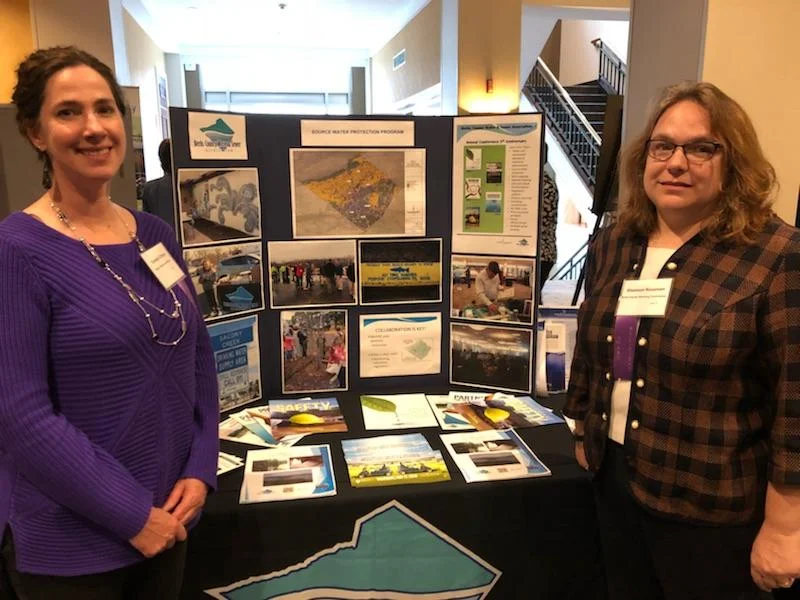
Spotts, Stevens and McCoy as a proud partner with Berks County Water and Sewer Association is excited to announce that the Berks County Source Water Protection Program was a 2018 Governor’s Award for Environmental Excellence recipient.


Lyn O'Hare | SSM and Shannon Rossman | Berks County Planning Commission
Berks County Source Water Protection Program
Spotts, Stevens and McCoy as a proud partner with Berks County Water and Sewer Association, is excited to announce that the Berks County Source Water Protection Program was a 2018 Governor’s Award for Environmental Excellence recipient. The program incorporates new and existing protection zones to maintain safe drinking water in Berks County, identifying possible sources of contamination for both surface water and groundwater. The program combines education and water quality improvements to the Schuylkill River and Chesapeake Bay Watersheds. The program promotes the “One Water” concept, which integrates source water protection with the reduction of stormwater and wastewater impacts.
The Governor’s Awards for Environmental Excellence are awarded each year by the Pennsylvania Department of Environmental Protection. Each year the Governor’s Awards for Environmental Excellence provide statewide recognition to businesses and organizations involved in a cross-section of environmental initiatives from cleaning up watersheds, saving energy, eliminating pollution, reducing waste and more. The awards highlight those projects that promote innovative technological advances, partnerships, public service and environmental outreach as well as encourage pollution prevention, demonstrate economic impact or employ innovative technology.
Spottlight on Communities
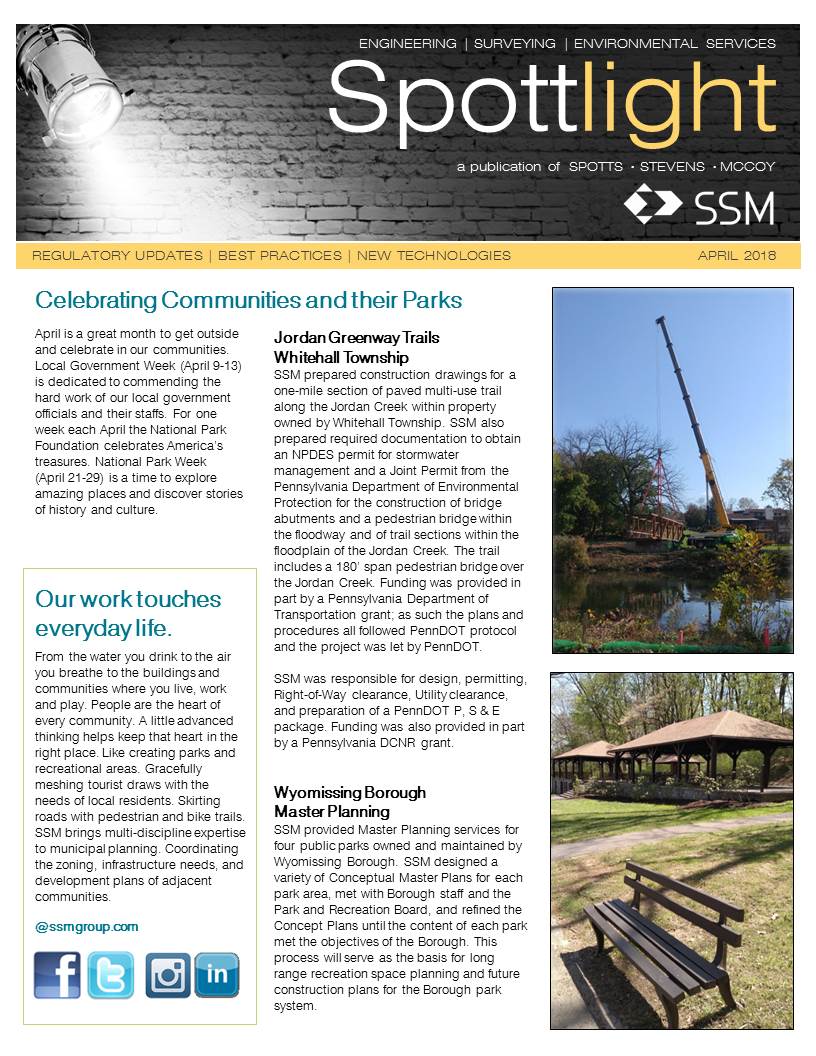
Celebrating Communities and their Parks
April is a great month to get outside and celebrate in our communities. Local Government Week (April 9-13) is dedicated to commending the hard work of our local government officials and their staffs. For one week each April the National Park Foundation celebrates America’s treasures. National Park Week(April 21-29) is a time to explore amazing places and discover stories of history and culture.



Jordan Greenway Trails | Whitehall Township
SSM prepared construction drawings for a one-mile section of paved multi-use trail along the Jordan Creek within property owned by Whitehall Township.

SSM prepared construction drawings for a one-mile section of paved multi-use trail along the Jordan Creek within property owned by Whitehall Township. SSM also prepared required documentation to obtain an NPDES permit for stormwater management and a Joint Permit from the Pennsylvania Department of Environmental Protection for the construction of bridge abutments and a pedestrian bridge within the floodway and of trail sections within the floodplain of the Jordan Creek. The trail includes a 180’ span pedestrian bridge over the Jordan Creek. Funding was provided in part by a Pennsylvania Department of Transportation grant; as such the plans and procedures all followed PennDOT protocol and the project was let by PennDOT.
SSM was responsible for design, permitting, Right-of-Way clearance, Utility clearance, and preparation of a PennDOT P, S & E package. Funding was also provided in part by a Pennsylvania DCNR grant.
Pagoda Upgrades, City of Reading
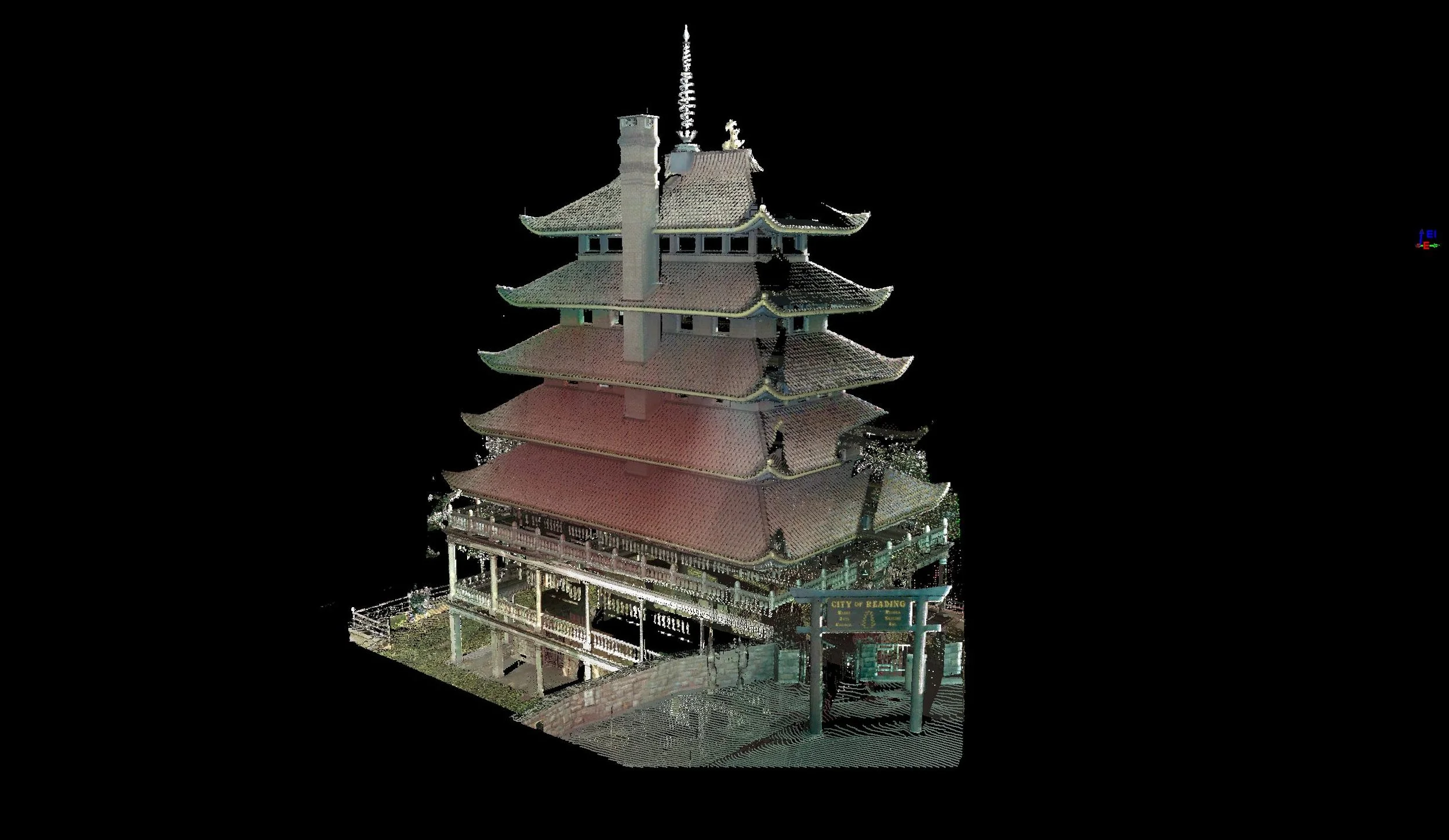
Spotts, Stevens and McCoy (SSM) provided a Topographical and Building survey using conventional and HDS (High Definition Scanning) technology. The job included surveying the areas around the building in order to design and construct a Japanese garden and improve the parking area below the large stone walls that surround the Pagoda.

Standing on the mountaintop at 620 feet above the city of Reading, PA is a Berks County historical claim to fame - the Pagoda.
- Commissioned in 1906 at a cost of $50,000 by William A. Witman, Sr. to cover his stone quarry, the Pagoda was completed in 1908. It was originally intended to be a luxury resort atop Mt. Penn, but due to the bank foreclosure and the denial of a liquor license, Witman never opened the Pagoda. By 1910 the Pagoda and surrounding 10 acres were deeded to local business owner, Jonathon Mould and his wife, Julia (Bell). On April 21, 1911 they "sold" the Pagoda to the City of Reading for the sum of $1. Since then the Pagoda has been owned, loved and cared for by the citizens and City of Reading.
- The Pagoda is 7 stories high, 28 feet wide, and 50 feet long - standing
- 620 feet above the City of Reading. There are a total of 87 steps to the top.
- The walls are 5 feet thick at the base tapering to 2 feet thick at the top of the second floor, from there to the top, they are frame-covered with terra-cotta shingles - there are 60 tons of tiles on the Pagoda.
- Before the days of radio broadcasting, lights flashed as signals to the people of Reading. Morse Code was used to direct fireman, promote fundraising campaigns and give the public results of sporting events. The Code was based on the lights - a white light was a dash, while a red light was a dot.
- The bell on the 7th floor was cast in Japan in 1739. It was purchased by Witman and shipped via the Suez Canal to New York Harbor, and arrived by rail in Reading on May 5, 1907.
- The fish sculptures on the roof are to protect the Pagoda from fire.
- Every year at 9pm on Christmas Eve the Pagoda lights flash to let the children know that Santa is on his way.

Spotts, Stevens and McCoy (SSM) provided a Topographical and Building survey using conventional and HDS (High Definition Scanning) technology. The job included surveying the areas around the building in order to design and construct a Japanese garden and improve the parking area below the large stone walls that surround the Pagoda.
SSM also performed geotechnical investigations in the areas of the existing and future retaining walls at the lower entrance. Designs for the new walls, parking lot expansion and landscaping in the terrace garden were also provided. This included the design of a driveway with parking and handicap accessibility along Duryea Drive and creation of the new garden on the existing terrace. To complete this phase, structural repairs and stabilization designs for the building, walls and landscape would be provided, as well as minor plumbing modifications.
Following these designs, SSM prepared plans to upgrade and expand the Pagoda’s outdated and inefficient HVAC systems, as well as replaced the unique exterior lighting with energy-efficient LED lighting.


Elevated Storage Tank Repainting
After more than 47 years, Muhlenberg Township Authority initiated the enhancement of their townscape by revamping the familiar 1.0 MGAL elevated water storage tank located on Tuckerton Road.


After more than 47 years, Muhlenberg Township Authority initiated the enhancement of their townscape by revamping the familiar 1.0 MGAL elevated water storage tank located on Tuckerton Road.
Spotts, Stevens and McCoy was chosen to provide consulting services to the skyscraping structure and its accessories, which were untouched since its original construction in 1971. The project included preparing bid specifications to publically bid the project and obtain the necessary PADEP permits to paint the interior of the tank.
SSM assisted in coordinating proper removal, disposal, and repainting of the interior and exterior of the tank in the time requested to suit the Authority needs. SSM worked together with the Township, PADEP and the contractor to ensure all processes and material disposal met state, local and federal safety standards. During construction the tank was upgraded to meet OSHA standards.

Source Water Protection
With the need for quality source water and drinking water, the River Alert Information Network (RAIN) is working to expand monitoring, education & outreach, and a network in the region.

Building a Regional Network
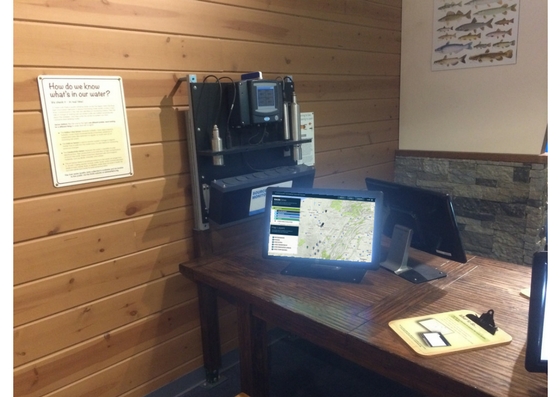
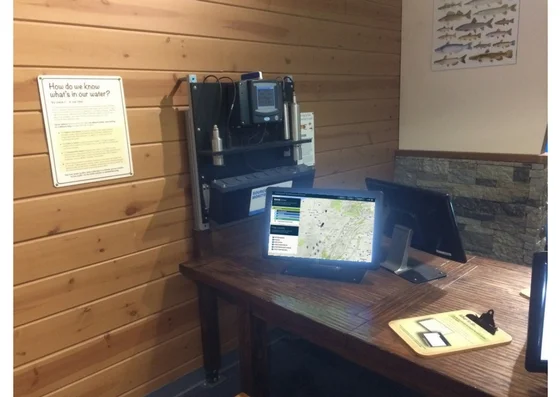
Water is essential for survival and it must be managed sustainably. With the need for quality source water and drinking water, the River Alert Information Network (RAIN) is working to expand monitoring, education & outreach, and a network in the region. A recent relaunch of the RAIN website, rainmatters.org, moves in a more modern direction. On the new website, you can find a blog dedicated to water quality issues and source water protection, the interactive map showing monitoring data, and information about source water in the region. This website gives RAIN an opportunity to grow the network, including water authorities, governmental organizations, local water organizations, and even local emergency response personnel.
The current network of over 50 members supports 23 monitoring sites collecting information on parameters such as pH, conductivity, turbidity, and dissolved oxygen. These parameters collect data that is used to make informed decisions about water treatment for quality drinking water. This data is useful not only for water treatment facilities but also for local organizations interested in water, as the data is available to the public on the website. This data can also be found at the Carnegie Science Center at the new RAIN exhibit within the H2Oh! Exhibit.
RAIN also participates in the development of source water protection plans, helping water authorities in the network prepare for emergencies along the rivers. These plans include recognition of potential sources of contamination and opportunities for education and outreach in each of their communities. RAIN recognizes that if we hope to improve the quality of our water, the network and communities must work together to make it happen.
For more information, visit us at rainmatters.org or contact Tori Kapopoulos at tori.rainmatters@gmail.com.
Staff News - Welcome Aboard!
SSM welcomes new staff.

Chelsea Carl | Marketing Coordinator

Brian Hassinger, PE | Sr. Project Manager
SSM welcomes Marketing Coordinator Chelsea Carl to the firm. Chelsea is a 2014 graduate of The Pennsylvania State University with a Bachelor of Arts in Communications.
SSM welcomes Brian Hassinger, PE to the firm as a Senior Project Manager in the Water and Wastewater Engineering and Operations Department. Mr. Hassinger brings 35 years of civil and water/wastewater design, engineering, operations and management experience to SSM. Hassinger will be providing client management, project management and operations management support and engineering expertise to SSM’s extensive water/wastewater and municipal client base.

Brian Hassinger, PE joins SSM as Sr. Project Manager
Brian Hassinger, PE joins Spotts, Stevens and McCoy as a Sr. Project Manager in the Water/Wastewater Engineering and Operations department.

Spotts, Stevens and McCoy (SSM) welcomes Brian Hassinger, PE as Senior Project Manager to the firm’s Water and Wastewater Engineering and Operations department. Mr. Hassinger brings 35 years of civil and water/wastewater design, engineering, operations and management experience to SSM.
Hassinger will be providing client management, project management and operations management support and engineering expertise to SSM’s extensive water/wastewater and municipal client base. His focus will be maintaining and expanding existing client relationships, helping our clients identify opportunities to increase the efficiency of their operations, fostering new relationships and actively representing and promoting the firm across the water, wastewater and municipal arenas.
Spotts, Stevens and McCoy is a family-owned regional engineering, environmental, and surveying firm serving local and global clients. SSM offers extraordinary experience in the planning, design, and construction management of wastewater and water systems, piping systems, pumping stations, and treatment plants.
Our work touches everyday life; from the water you drink, to the air you breathe, to the buildings and communities where you live, work and play.

Tips for Workplace Eye Wellness Month
March is Workplace Eye Wellness Month
- Look carefully at plant operations, work areas, access routes, and equipment. Study injury patterns to see where accidents are occurring.
- Conduct regular vision testing, as uncorrected vision can cause accidents.
- Select protective eyewear based on specific duties or hazards.
- Establish a mandatory eye protection program in all operation areas.
- Have eyewear fitted by a professional.
- Establish first-aid procedures for eye injuries, and make eyewash stations available, especially where chemicals are in use.
- Make eye safety part of your employee training and new hire orientation.


Spotlight on Surveying | Our work touches everyday life
If you walk down the street, drive on a highway, take off or land at an airport, enjoy a boat ride on the lake, ride a train across the countryside, take your children to the neighborhood park, or ride/walk on public trail that activity has been in some way facilitated by the work of a Professional Surveyor.

Everyone Benefits from the Services of Professional Surveyors
If you walk down the street, drive on a highway, take off or land at an airport, enjoy a boat ride on the lake, ride a train across the countryside, take your children to the neighborhood park, or ride/walk on public trail that activity has been in some way facilitated by the work of a Professional Surveyor.



Celebrating our Professional Land Surveyors
Sam Zook, PLS was a member of the SSM survey team that provided high-definition scanning data of the Ryan/Walter Athletic Center dome roof at Northwestern University in the form of an AutoCAD-driven 5’X5’ grid of point cloud data.

Sam Zook, PLS

Tom Rowe, PLS
National Surveyors Week | March 18-24
Sam Zook, PLS was a member of the SSM survey team that provided high-definition scanning data of the Ryan/Walter Athletic Center dome roof at Northwestern University in the form of an AutoCAD-driven 5’X5’ grid of point cloud data. Sam is also a FAA Certified Remote Pilot, is a 2009 graduate of Pennsylvania College of Technology with an AAS in Surveying Technology and AAS in Civil Engineering Technology.
Chief Surveyor, Tom Rowe, PLS has more than 30 years of experience performing a variety of surveying services and is responsible for QA/QC role on all surveying projects. He is a 1981 graduate of the Pennsylvania State University with an AS Surveying Technology.
Source Water Protection
Gettysburg Municipal Authority has six groundwater wells and an intake in Marsh Creek that provide drinking water to approximately 12,500 people.
Protecting the Drinking Water Sources that Provide Water Supply to the Community
The Gettysburg Municipal Authority (GMA) was awarded DEP-approval of their Source Water Protection Plan (SWPP) in December 2017. The steering committee was chaired by Pat Naugle, president of the Adams County Watershed Alliance. Also represented on the committee are the Adams County Department of Emergency Services (ACDES), Office of Planning and Development (ACOPD), the Conservation District (ACCD), the Penn State Cooperative Extension, and two neighboring townships. GMA is committed to protecting the drinking water sources that provide water supply to the community. Even before completing the SWPP, GMA participated in an emergency response training hosted in Adams County and facilitated by ACDES and the U.S. Environmental Protection Agency. GMA developed a comprehensive list of 33 management options to protect their sources, which includes working ACOPD to develop more of a thorough review process to ensure source water protection is considered in new land development projects and working with the ACCD to promote private drinking water well construction standards throughout the County.

GMA has six groundwater wells and an intake in Marsh Creek that provide drinking water to approximately 12,500 people.
SSM prepared construction drawings for a one-mile section of paved multi-use trail along the Jordan Creek within property owned by Whitehall Township.