

FREE Guide to Opening Your Doors
This resource is perfect for facilities and operations managers who are preparing to bring employees back on site.
We are giving away the FREE Guide to Opening Doors
This resources is perfect for facilities and operations managers who are preparing to bring employees back on site.
Our team of expert engineers thoroughly considered each element of buildings and operations.
Fill out the form and we’ll send it to you!
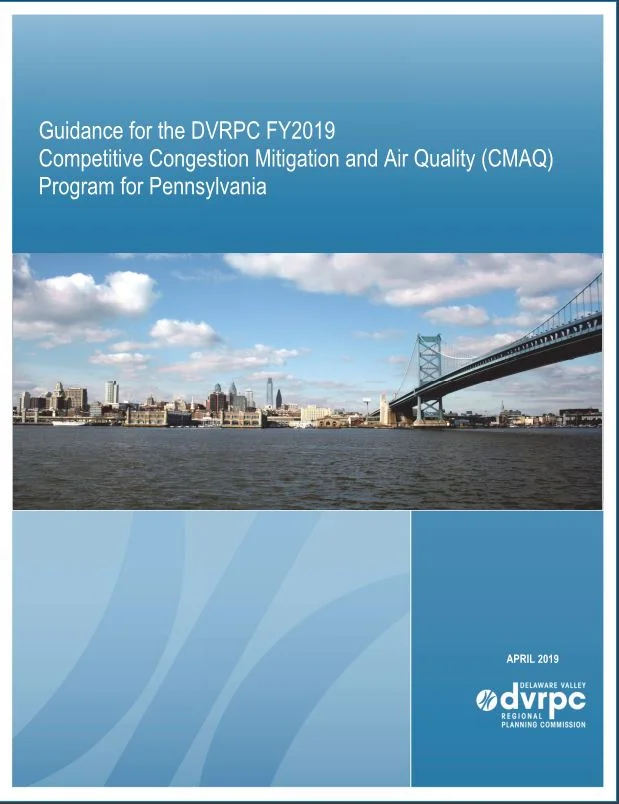
Congestion Mitigation and Air Quality Improvement Program
Congestion Mitigation and Air Quality (CMAQ) funds have been allocated to the Pennsylvania portion of the Delaware Valley Regional Planning Commission (DVRPC) metropolitan area for projects in Pennsylvania’s five counties (Bucks, Chester, Delaware, Montgomery, and Philadelphia) that contribute to the attainment of the Clean Air Axct (CAA) standards by reducing emissions from mobile sources.
FUNDING OPPORTUNITY : Chester and Montgomery County
Congestion Mitigation and Air Quality (CMAQ) funds have been allocated to the Pennsylvania portion of the Delaware Valley Regional Planning Commission (DVRPC) metropolitan area for projects in Pennsylvania’s five counties (Bucks, Chester, Delaware, Montgomery, and Philadelphia) that contribute to the attainment of the Clean Air Axct (CAA) standards by reducing emissions from mobile sources.
The CMAQ Program seeks to fund transportation projects that will improve air quality and reduce traffic congestion in the DVRPC Region. CMAQ eligible projects will demonstrably reduce air pollution emissions and help the DVRPC region meet the federal health based air quality standards.
This CMAQ Program is not a grant program. The sponsor does not receive grant funds to start the project; rather, the sponsor is reimbursed for costs incurred after receiving funding authorization for the project and a notice to proceed. Costs incurred prior to project selection and notice to proceed will not be reimbursed. All awarded projects must authorize federal CMAQ funds by the deadline stated in their award letters. Due to the complexity of managing CMAQ construction projects, DVRPC is requiring a minimum project request be $250,000 for construction projects and $100,000 for transit vehicle acquisitions to expand existing fleet or introduce a new transit service. There is also a soft maximum cap of $4 million for a single application.
What are CMAQ Eligible Projects?
Examples of eligible CMAQ projects include pedestrian and bicycle projects, transit improvement programs, including transit vehicle purchases for fleet expansion or to introduce a new transit service, congestion reduction and traffic flow improvements, and funding of transportation demand management programs, among others. Please refer to DVRPC’s latest CMAQ Guidance document..

DOWNLOAD FAQ

Who is Eligible to Apply?
Public agencies and public – private partnerships with a public agency sponsor are eligible to apply for the Competitive CMAQ Program funds. Project sponsors must comply with all federal requirements, including but not limited to Disadvantaged Business Enterprise (DBE) contract set-asides, consultant selection procedures, the competitive bid process, and the American with Disabilities Act requirements.
The public agency partner is responsible for applying for the CMAQ funds through DVRPC and overseeing and protecting the investment of the federal funds used in a public–private partnership project. Projects will not be eligible if they result in creating a competitive advantage of one private
entity over another. Federal law requires that a legal, written agreement be in place between the public agency and private or non-profit entity before implementing any CMAQ-funded project. Though these agreements need not be finalized at the time the application is submitted, the application must include letters of intent between the parties indicating willingness to enter into such agreement, if the project is selected.
Questions about the Competitive CMAQ Program?
New Jersey | Kwan Hui | P: 215-238–2894
Pennsylvania | Rick Murphy or (215) 238 – 2946
We can help.
Spotts, Stevens and McCoy has the experience to assist you in processing your applications.
FOR MORE INFORMATION
Nicholas Szeredai, PE | Municipal/Civil Project Engineer |nick.szeredai@ssmgroup.com
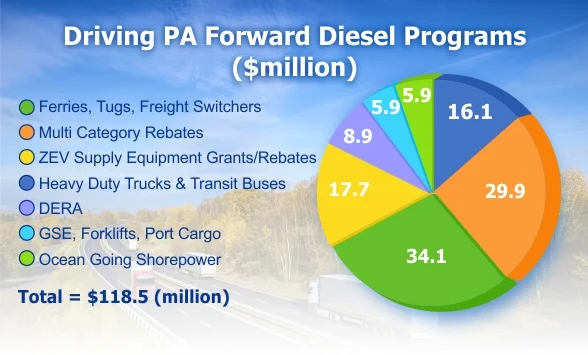
$2.6 million in Grants Available - Diesel-Powered Vehicles
$2.6 million in grants are available to replace, repower, or retrofit fleet diesel-powered trucks, buses, and other vehicles and equipment. The grants are available to public, private and non-profit entities looking to update diesel powered fleet vehicles.
Cleaner Technologies for Cleaner Air
Reducing emissions from diesel engines is one of the most significant air quality challenges facing the Commonwealth of Pennsylvania.
To help Pennsylvania meet its diesel emissions reduction goals, the Wolf Administration has developed new grant and rebate programs to improve air quality in Pennsylvania and drive transformation from older, polluting diesel engines to clean technologies.
Key Dates
A webinar on the Pennsylvania State Clean Diesel Grant Program will be held on February 4, 2019.
PA DEP will accept online applications until 4:00 PM on February 28, 2019.
Replace, Repower, or Retrofit
Diesel-Powered Vehicles
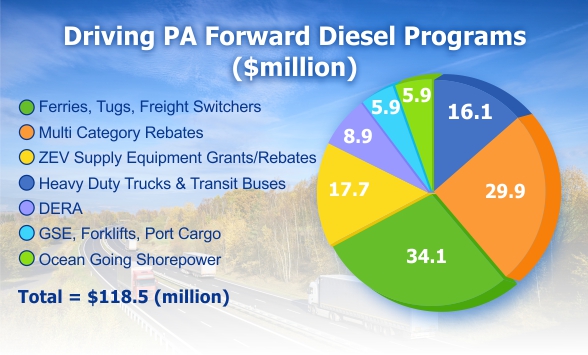
$2.6 million in grants are available to replace, repower,
or retrofit fleet diesel-powered trucks, buses, and other vehicles and equipment. The grants are available to public, private and non-profit entities looking to update diesel powered fleet vehicles.
FOR MORE INFORMATION
For more details on the Driving PA Forward program, please visit: www.dep.pa.gov/drivingpaforward

Mariner East 2 Pipeline Grant Opportunity
The Department of Environmental Protection (DEP) announced the creation of a new water quality project grant program funded by the penalty assessed against the Mariner East 2 (MEII) Pipeline.

Grants will be awarded for projects that reduce or minimize pollution and protect clean water in the 85 municipalities along the length of the pipeline corridor.

Examples of eligible projects include:
- Projects to improve water quality while enhancing community recreational opportunities, such as restoration and enhancement of natural water resource features at community parks and public properties, including lake restoration and wetland creation.
- Projects to educate future generations about water resource protection, such as demonstration projects that showcase pervious pavement, stormwater runoff management features and systems, bioretention systems, constructed wetland complexes, stormwater runoff collection and reuse projects, stormwater mitigation projects that reduce rate and volume and improve water quality on a school or other public property.
- Projects to improve and/or protect public drinking water sources and infrastructure, such as repairs to drinking water system source facilities that improve resiliency of the water supply, including water supply dam rehabilitation work and upgrades, and repairs to water treatment infrastructure and water intakes.
- Municipal Separate Storm Sewer System (MS4) projects to address rate, volume and/or sediment load, including flood-control project features and retrofits to existing stormwater runoff control infrastructure that reduce rate and volume of stormwater runoff.
- Projects that result in nitrogen, phosphorus, sediment load reductions within the Chesapeake Bay watershed and impaired waters, including stream buffers, stream restoration projects, wetland restoration or enhancement projects.
- Projects that result in water quality improvements in DEP Priority Watersheds and Impaired Watersheds within the 85 municipalities.
The Department of Environmental Protection (DEP) announced the creation of a new water quality project grant program funded by the penalty assessed against the Mariner East 2 (MEII) Pipeline. Grants will be awarded for projects that reduce or minimize pollution and protect clean water in the 85 municipalities along the length of the pipeline corridor. These grants will be directed to the municipalities to eliminate pollution and protect the public from unsafe dams, water obstructions, and encroachments.
In February, DEP collected the $12.6 million penalty for permit violations related to the construction of the project. The penalty, one of the largest collected in a single settlement, was deposited into the Clean Water Fund and the Dams and Encroachments Fund, in accordance with the provisions of the Clean Streams Law and the Dam Safety and Encroachments Act.
Eligible grant applicants include the 85 municipalities, county conservation districts, incorporated watershed associations, educational institutions, and non-profit organizations along the length of the MEII Pipeline.
The 45-day grant application round will open May 7 and close June 21. DEP anticipates announcing the approved projects in the summer of 2018.
For more information about the Program
- Eligible applicants can apply via the Commonwealth of Pennsylvania Electronic Single Application website.
- Mariner East II Pipeline Webpage
- Questions should be directed to R. Scott Carney, Chief Watershed Support Section, 717-783-2944.