

Tips for Workplace Eye Wellness Month
March is Workplace Eye Wellness Month
- Look carefully at plant operations, work areas, access routes, and equipment. Study injury patterns to see where accidents are occurring.
- Conduct regular vision testing, as uncorrected vision can cause accidents.
- Select protective eyewear based on specific duties or hazards.
- Establish a mandatory eye protection program in all operation areas.
- Have eyewear fitted by a professional.
- Establish first-aid procedures for eye injuries, and make eyewash stations available, especially where chemicals are in use.
- Make eye safety part of your employee training and new hire orientation.


Celebrating our Professional Land Surveyors
Sam Zook, PLS was a member of the SSM survey team that provided high-definition scanning data of the Ryan/Walter Athletic Center dome roof at Northwestern University in the form of an AutoCAD-driven 5’X5’ grid of point cloud data.
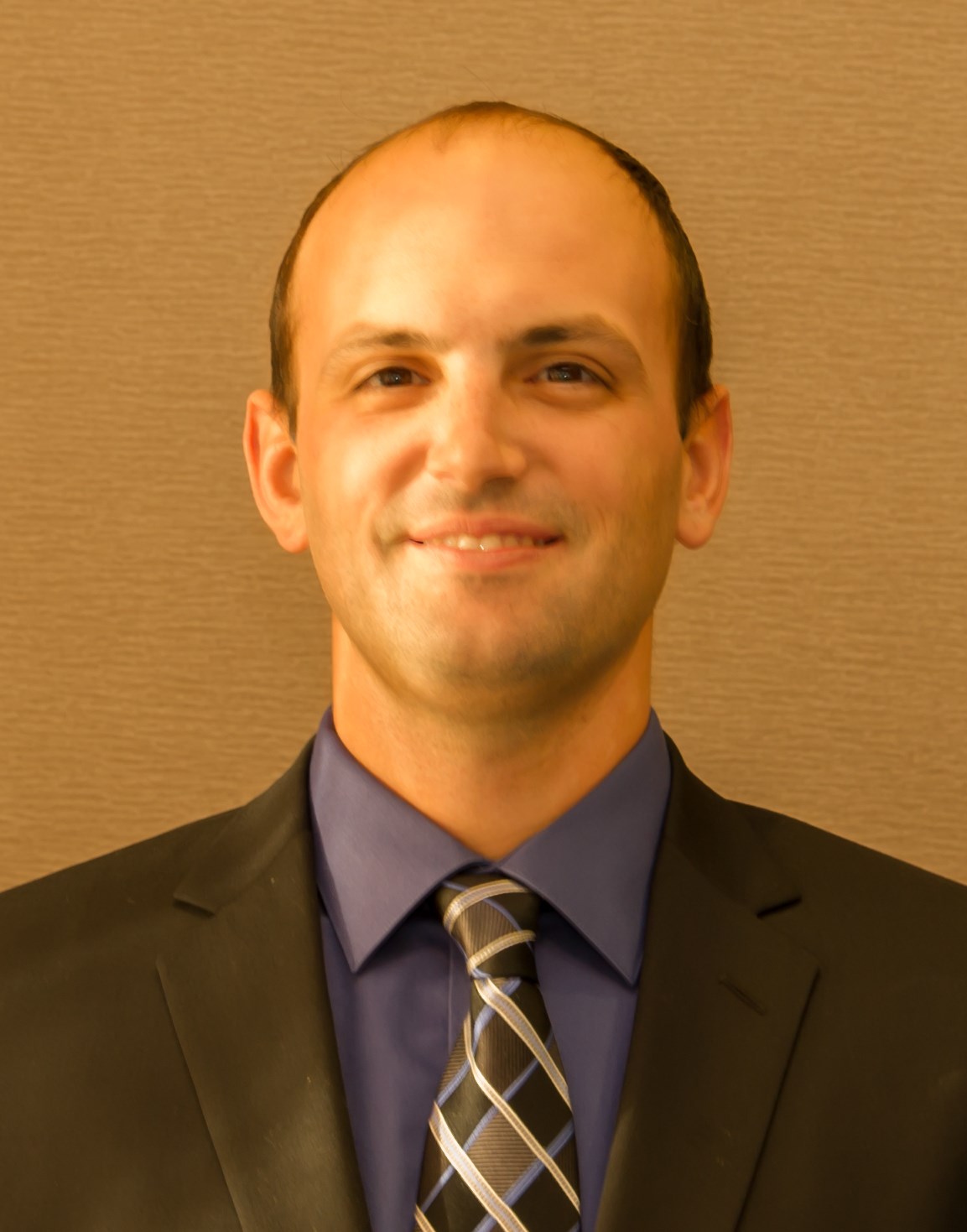
Sam Zook, PLS
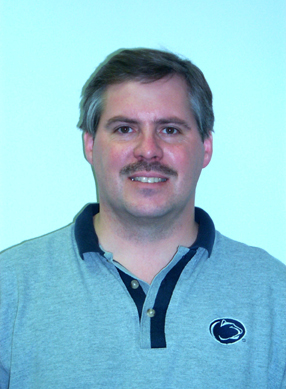
Tom Rowe, PLS
National Surveyors Week | March 18-24
Sam Zook, PLS was a member of the SSM survey team that provided high-definition scanning data of the Ryan/Walter Athletic Center dome roof at Northwestern University in the form of an AutoCAD-driven 5’X5’ grid of point cloud data. Sam is also a FAA Certified Remote Pilot, is a 2009 graduate of Pennsylvania College of Technology with an AAS in Surveying Technology and AAS in Civil Engineering Technology.
Chief Surveyor, Tom Rowe, PLS has more than 30 years of experience performing a variety of surveying services and is responsible for QA/QC role on all surveying projects. He is a 1981 graduate of the Pennsylvania State University with an AS Surveying Technology.
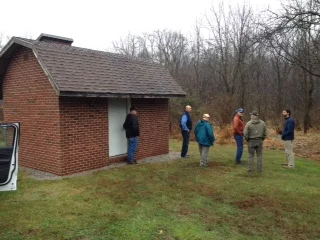
Source Water Protection
Gettysburg Municipal Authority has six groundwater wells and an intake in Marsh Creek that provide drinking water to approximately 12,500 people.
Protecting the Drinking Water Sources that Provide Water Supply to the Community
The Gettysburg Municipal Authority (GMA) was awarded DEP-approval of their Source Water Protection Plan (SWPP) in December 2017. The steering committee was chaired by Pat Naugle, president of the Adams County Watershed Alliance. Also represented on the committee are the Adams County Department of Emergency Services (ACDES), Office of Planning and Development (ACOPD), the Conservation District (ACCD), the Penn State Cooperative Extension, and two neighboring townships. GMA is committed to protecting the drinking water sources that provide water supply to the community. Even before completing the SWPP, GMA participated in an emergency response training hosted in Adams County and facilitated by ACDES and the U.S. Environmental Protection Agency. GMA developed a comprehensive list of 33 management options to protect their sources, which includes working ACOPD to develop more of a thorough review process to ensure source water protection is considered in new land development projects and working with the ACCD to promote private drinking water well construction standards throughout the County.

GMA has six groundwater wells and an intake in Marsh Creek that provide drinking water to approximately 12,500 people.

Surveying, High-Definition Scanning and Plan Preparation Services
SSM provided the surveying, high-definition scanning and plan preparation services for the existing exterior conditions of Caldwell Hall on the historical Catholic University campus in Downtown Washington D.C.

Voith & Mactavish Architects, LLP
Catholic University | Caldwell Hall
The only building in D.C. of its time with Romanesque architecture, the old stone masterpiece has acquired structural imperfections due to factors like aging, settling, construction and the earthquake of 2011. It was the client’s wish to replace all of the intricate windows to fit the altered, uneven masonry openings.
SSM provided the surveying, high-definition scanning and plan preparation services for the existing exterior conditions of Caldwell Hall on the historical Catholic University campus in Downtown Washington D.C.
Utilizing High-Definition Survey (HDS) laser scanning technology to collect data and measurements on the building exterior, SSM was able to generate thirteen (13) different 2-D elevation views illustrating the exact existing conditions of each façade of the building. The illustration elements included water tables and belt courses; inner and outer masonry arches and openings of windows and doors; stairs and inner and outer edges of roofing; cornices and dormers; and a general outline of cupolas and towers. The scanned data was then used to create a detailed window schedule for replacement of each window.
Saving valuable time, costs, and eliminating possibility of human error using scanning technology, the project team at Spotts, Stevens and McCoy was able to meet the budget and time schedule for Voith & Mactavish.
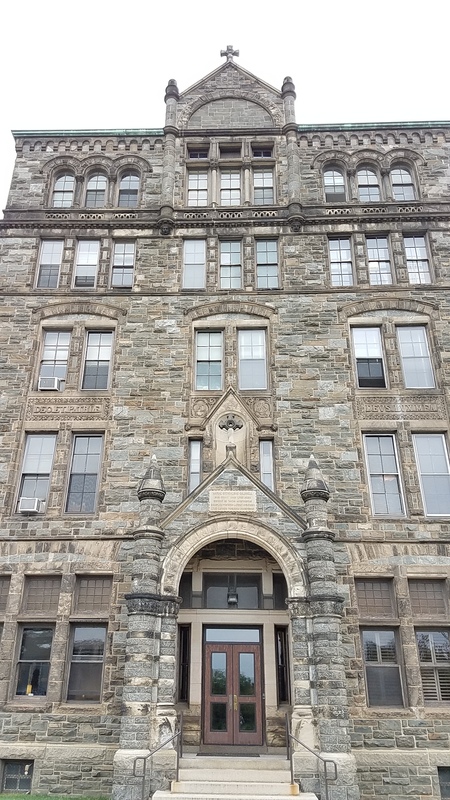
Caldwell Hall | On May 24, 1888, the cornerstone for today’s 4-story Caldwell Hall was laid for building with President Grover Cleveland and Cardinal James Gibbons of Baltimore present.

If you’ve ever sipped well water, you’ve sipped groundwater
Groundwater is the water found underground in the cracks and spaces in soil, sand and rock. It is stored in and moves slowly through geologic formations of soil, sand and rocks called aquifers. It is the world's most extracted natural resource, and it supports our ecosystems.

Established in 1999, National Groundwater Awareness Week provides an opportunity for people to learn about the importance of groundwater, how the resource impacts lives, and how we can protect/conserve it.
Groundwater is the water found underground in the cracks and spaces in soil, sand and rock. It is stored in and moves slowly through geologic formations of soil, sand and rocks called aquifers. It is the world's most extracted natural resource, and it supports our ecosystems.
Groundwater contamination occurs when man-made products such as gasoline, oil, road salts and chemicals get into the groundwater and cause it to become unsafe and unfit for human use.
Materials from the land's surface can move through the soil and end up in the groundwater. For example, pesticides and fertilizers can find their way into groundwater supplies over time. Road salt, toxic substances from mining sites, and used motor oil also may seep into groundwater. In addition, it is possible for untreated waste from septic tanks and toxic chemicals from underground storage tanks and leaky landfills to contaminate groundwater.

Facts about Groundwater
- Only 1% of the water on Earth is useable, 99% of which is groundwater.
- The United States uses 349 billion gallons of freshwater every day.
- Groundwater is 20 to 30 times larger than all U.S. lakes, streams, and rivers combined.
- Groundwater accounts for 33% of all the water used by U.S. municipalities.
- 44% of the U.S. population depends on groundwater for its drinking water supply.
- More than 13.2 million households have their own well, representing 34 million people.
- 53.5 billion gallons of groundwater are used for agricultural irrigation each day.
- The largest U.S. aquifer is the Ogallala, underlying 250,000 square miles stretching from Texas to South Dakota.
- California pumps 10.7 billion gallons of groundwater each day.
- Groundwater is the world’s most extracted raw material with withdrawal rates in the estimated range of 259 trillion gallons per year.
Visit the Groundwater Foundation for more information.

Top 10 Ways to Protect and Conserve Groundwater
National Groundwater Awareness Week | March 11-17
Life as we know it would be impossible without groundwater. It is the world's most extracted natural resource, and it supports our ecosystems.
- Go Native. Use native plants in your landscape. They look great, and don't need much water or fertilizer. Choose grass varieties for your lawn that are adapted for your region's climate, reducing the need for extensive watering or chemical applications.
- Reduce Chemical Use. Use fewer chemicals around your home and yard, and make sure to dispose of them properly - don't dump them on the ground!
- Manage Waste. Properly dispose of potentially toxic substances like unused chemicals, paint, motor oil, pharmaceuticals, and other substances. Many communities hold household hazardous waste collections or sites - contact your local health department to find one near you.
- Don't Let It Run. Shut off the water when you brush your teeth or shaving.
- Fix the Drip. Check all the faucets, fixtures, toilets, and taps in your home for leaks and fix them right away, or install water conserving models.
- Wash Smarter. Limit yourself to just a five minute shower, and challenge your family members to do the same!
- Water Wisely. Water the lawn and plants during the coolest parts of the day and only when they truly need it.
- Reduce, Reuse, and Recycle. Reduce the amount of "stuff" you use and reuse what you can. Recycle paper, plastic, cardboard, glass, aluminum and other materials.
- Natural Alternatives. Materials such as lemon juice, baking soda, and vinegar make great cleaning products, are inexpensive, and environmentally-friendly.
- Learn and Do More! Get involved in water education! Learn more about groundwater and share your knowledge with others.
Visit the Groundwater Foundation for more information.