

Enhancing Piping Longevity: Nitrogen in Fire Sprinkler Systems
For facility owners with dry pipe or pre-action sprinkler systems, upgrading to nitrogen generators is a proactive step toward preserving the integrity and functionality of the piping system.
Fire sprinkler systems play a crucial role in safeguarding facilities from the devastating effects of fires. For building owners who rely on dry pipe or pre-action sprinkler systems, a strategic switch from compressed air to nitrogen proves to be a functional solution for maximizing the lifespan of their piping systems. This article delves into the benefits of this transition, highlighting the vulnerabilities to corrosion, and the positive impact nitrogen generators can have on extending system life.
Understanding your Fire Protection:
Sprinkler systems are a critical part of your fire protection system. Known as an automatic extinguishing system (AES), the risk of injury or death due to a fire is significantly higher in structures without an AES than those with one. The CDC states that between 2015-2019 sprinkler systems were 97% effective in preventing fires. Of the thousands of calls that fire fighters respond to, only 10% had sprinkler systems in place.
The most commonly known setups are wet systems which are connected to several pipes and a high-pressure water system. These systems use a heat sensor bulb that when heat above 165 degrees Fahrenheit is detected, will break and release water, extinguishing a fire in its infancy stage. However, the wet system, while often the least costly, is not conducive to all environments. There are in fact four different types of sprinkler systems that the National Fire Prevention Agency (NFPA) permits: wet, dry, pre-action, and deluge.
Dry Pipe and Pre-Action Sprinkler Systems
Dry pipe systems are often deployed in spaces susceptible to freezing temperatures, such as unheated warehouses, commercial freezers, and outside loading docks. A dry system functions similarly to a wet system, however, the water is not filled in the pipes. Here, the water is held away from the sprinkler behind a dry pipe valve. When the heat bulb is broken, air is released and pressure in the pipes drops which ultimately breaks the valve, releasing the water.
Pre-action systems, on the other hand, find application in data centers, museums, and archive spaces where an added layer or supervision is necessary to prevent unwarranted water discharge. Here, the system is interlocked with a fire detection system so that two events are needed before water is discharged. The heat detection will break first. Then, as temperature increases, the bulb will break, and water will be released in a similar manner as the dry system would. This added step allows for extra protection from unwanted water flow.
Corrosion Challenges:
Corrosion occurs when there is water, oxygen, and metal present. In a sprinkler system, corrosion is a heavy concern as it can lead to pipe leaks, reduced water flow, or even render the system completely unusable.
While most think that wet systems are the only ones at risk for corrosion, in fact dry and pre-action systems that lean on compressed air also hold the same risk. Both dry pipe and pre-action systems have historically relied on compressed air for operation. However, using small air compressors without additional treatment results in wet air inside of the piping. This water vapor will condense in freezing temperatures, leaving water in the metal piping and subjecting pipes to corrosion.
The absence of or limited exposure to any of the three elements corrosion needs (water, oxygen, metal) will slow down or totally prevent the process from occurring.
Nitrogen as a Corrosion Mitigator:
To combat corrosion in dry and pre-action systems, the fire protection industry has turned to nitrogen generators to fill the system with a dry inert gas. Nitrogen, typically dry with a dew point below zero-degree Fahrenheit, eliminates water vapor condensation within the piping. Additionally, nitrogen has minimal oxygen content, further reducing corrosion-promoting elements. This dual action significantly lowers the potential for corrosion, ultimately extending the life of the piping system.
Switching from compressed air to nitrogen in dry pipe and pre-action sprinkler systems provides several advantages. The absence of water vapor and reduced oxygen content substantially mitigates corrosion, enhances the overall longevity and increases the lifespan of this lifesaving piping system. The decision not only addresses corrosion concerns but also aligns with industry best practices for fire protection. As the fire protection landscape evolves, this strategic shift ensures that building occupants can rely on the systems for extended period, fostering a safer and more secure environment.
For additional information contact us:
Andrew Wengerd, PE, CFPS, LEED AP | andrew.wengerd@ssmgroup.com









Spotts, Stevens and McCoy: Bringing Everything to the Table
Our menu is extensive. We are a multi-disciplinary engineering, environmental, and surveying firm specializing in not only simple projects - but the most complex. At SSM, we bring everything to the table.
The SSM Menu: a carefully curated list of services strategically designed to support our clients, communities, and the environment. While also being tailored to the unique expertise and experience of our team members.
We pride ourselves on making sure that whatever needs you have - we’ve got you covered. You might know us best for our Surveying Services. Suppose you come to us every time you have a surveying need. We get it - you stick with what you know. Or maybe Survey isn’t how you joined the SSM family of clients. It could be through our Mechanical Engineering or Water and Wastewater Services. Or maybe you know us best for our Energy and Sustainability team. However you’ve come to know and love us - we’re so glad you’re here.
But the truth is, our menu is extensive. Our list of services - it’s diverse and it’s expansive. At SSM, we bring everything to the table. We are a multi-disciplinary engineering, environmental, and surveying firm specializing in not only simple projects - but the most complex.
We’re confident that as much as you love the team and services you know at SSM - our other teams are just as good. And we think - no, we know - you’ll find them to be a reliable and trusty go-to as well. In fact, we recommend you try them all! Because there isn’t much better than a full table.
But we also know that it isn’t just about the menu. Because even a great menu doesn’t make for a great meal. That’s why we pride ourselves on not only offering a lot - but being experts at those services we provide. We are the fine chefs and skilled crew that pull it all together. It’s about the skills our team has to get you where you need to go. It’s about the inimitable craft that leads the way. It’s about the experience and the care that shines above it all. Because when we take the lead on the engineering side, you get to focus on the core of your business - your purpose - what you do best. After all, our purpose is to help you stick to yours.
Our experience is diverse and our reputation is simple: we achieve success. Tough projects, unique solutions, challenging circumstances - all of these are why clients seek SSM. From the water you drink, to the air you breathe, to the buildings and communities where you live, work and play. No matter the challenge, no matter the complexities, whatever the need - we’re here to help.

PA AWWA North and South Districts & WWOAP Central Section Meeting
Legislative and Regulatory Update
Presented by Serena DiMagno | serena.dimagno@ssmgroup.com
Discussion Topics
Federal Legislative Update
Bipartisan Legislation Draft PFAS Senate Bill
Pennsylvania Legislative Update
House Bill 390 - Plumber and Plumbing Contractors Licensure
House Bill 627 - Senate Bill 866 - Repeal of Act 12 of 2016
Senate Bill 820 - Public Hearings Prior to Acquisition
House Bill 626 - Ratepayer Referendum Prior to Sale of a Public Utility
Senate Resolution 141 - Legislative Budget and Finance Committee Study on the Effects of Act 12 of 2016 and Rate Increases
House Bill 299 - Public Employee OSHA Protection
Senate Bill 286 - House Bill 551 - Spill Reporting
Senate Bill 144 - Fire Fighting Foam Management Act
Senate Bill 767 - LIHWAP Funding
Senate Bill 571 - Legionnaires Disease Risk Management
Federal Regulatory Update
Federal Regulatory Schedule
EPA Final Rule - Enhanced PFAS Reporting
Pennsylvania Regulatory Update
PaDEP Safe Drinking Water PFAS MCL Rule (25 Pa. Code Chapter 109)
PaDEP Plans to Ramp Up PFAS Monitoring
Risk Mitigation Measures


PA AWWA SE & WWOAP Eastern Section Meeting: Legislative and Regulatory Update
PA-AWWA Southeast District and WWOAP Eastern Section Meeting
Legislative and Regulatory Update
Presented by Serena DiMagno | serena.dimagno@ssmgroup.com
Discussion Topics
Federal Legislative Update
Bipartisan Legislation Draft PFAS Senate Bill
Pennsylvania Legislative Update
House Bill 390 - Plumber and Plumbing Contractors Licensure
House Bill 627 - Senate Bill 866 - Repeal of Act 12 of 2016
Senate Bill 820 - Public Hearings Prior to Acquisition
House Bill 626 - Ratepayer Referendum Prior to Sale of a Public Utility
Senate Resolution 141 - Legislative Budget and Finance Committee Study on the Effects of Act 12 of 2016 and Rate Increases
House Bill 299 - Public Employee OSHA Protection
Senate Bill 286 - House Bill 551 - Spill Reporting
Technical Guidance - DEP ID 383-4200-003
Senate Bill 144 - Fire Fighting Foam Management Act
Senate Bill 767 - LIHWAP Funding
Senate Bill 571 - Legionnaires Disease Risk Management
Pennsylvania Regulatory Update
PaDEP Safe Drinking Water PFAS MCL Rule (25 Pa. Code Chapter 109)
PaDEP Plans to Ramp Up PFAS Monitoring
Risk Mitigation Measures

Protecting Water Sources
Learn more about water: where it comes from and why we work to keep it clean!
There is so much to know when it comes to your H2O!
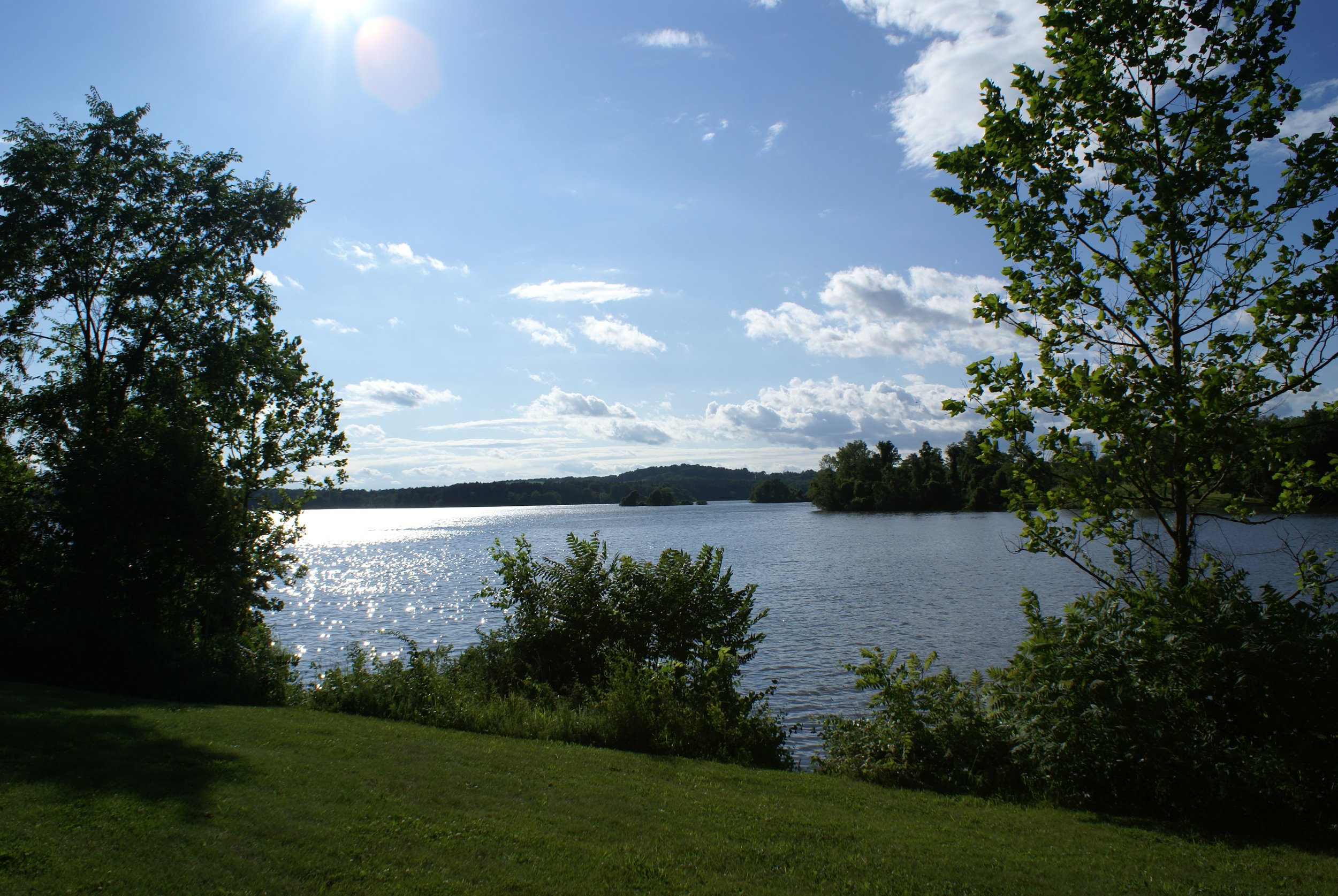
First thing’s first, where does it come from?
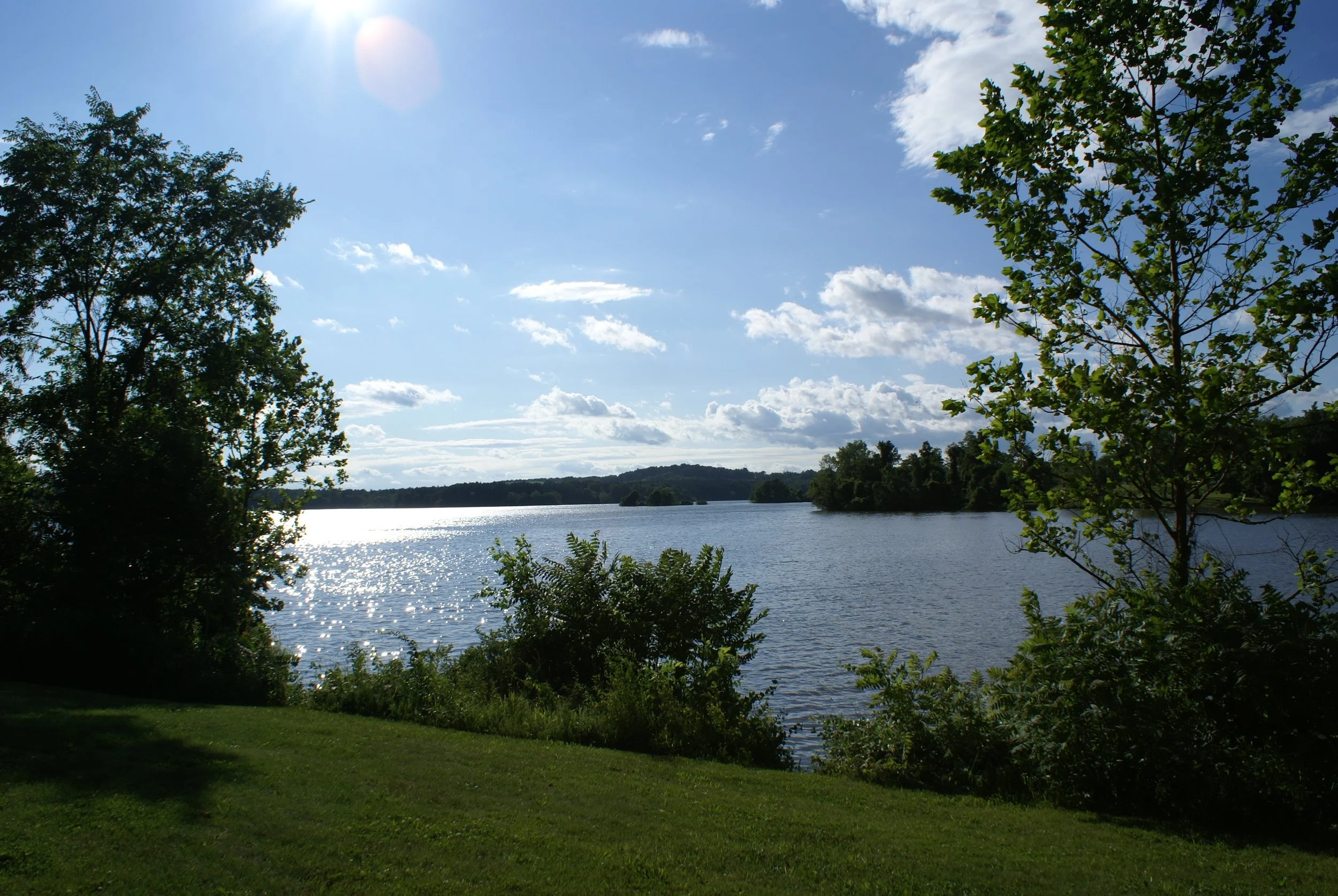
The water you drink can come from a surface water source, like a river, stream, lake, or reservoir, or a groundwater source, such as a well or spring.
When it comes to groundwater sources, wells pump water from an aquifer, or water flows from the aquifer through a spring. An aquifer is recharged when rainwater or snowmelt seeps into the ground and is stored in the rock below.
In the case of surface water sources, an intake structure is constructed in the water body to pump water to a treatment plant. Water flows over the land, from high points to low points, collecting in bodies of water, which continue to flow downgradient. The land and water bodies draining to a single location are collectively called a watershed.
Now that we know where the water comes from, why is it important?
It’s important to know the water source for your community because of the risks that come along with it. Because water travels over and through the land before we collect it, there is a chance of pollutants contaminating the water.
When rain falls and runs over and through the land and into source waters, it can carry trash, bacteria, oil, hazardous chemicals, or any other type of pollutant with it. Even when rain falls on undeveloped regions, fertilizers, pesticides, pet and wildlife waste, and soil erosion can be picked up by the runoff and pollute source water.
So, what can be done to keep our source water clean and safe to drink?
Spotts, Stevens and McCoy is a technical partner of the Source Water Protection Technical Assistance Program (SWPTAP), which is funded by the Pennsylvania Department of Environmental Protection (PaDEP). SWPTAP offers funding and technical assistance to public water suppliers looking to develop a source water protection plan for their sources. Participating communities receive a source water protection plan developed specifically for their water system, at no cost to the water supplier.
Our team of professional geologists and environmental specialists delineate protection areas for each well, spring, or intake, which show the land area that contributes to the source. Once protection areas are delineated, a list of potential sources of contamination within the areas is compiled, and strategies for managing the protection areas are considered.
In addition to our participation in SWPTAP, our team can also develop plans for emergencies at a water system, and investigate and develop back up water supply options in the event they are needed.
The best reason to make sure your water supply is safe is for you!
Benefits of source water source protection include:
Public Health protection- keeps contaminants out of water.
Reduced treatment costs- clean water is less costly to treat and reduces system operation and maintenance costs.
Economic benefits- clean water will enhance your communities’ chances of attracting employers and possibly tourists to the now beautifully clean region.
Environmental stewardship- protecting water will sustain the native ecosystem and improve quality of life for the future.
At Spotts, Stevens, and McCoy we are always looking for new, better ways to protect your drinking water. By protecting your source of drinking water, we protect the future of the environment for generations to come.

WWOAP: Legislative and Regulatory Update
Water Works Operators' Association of Pennsylvania (WWOAP) Annual Conference
Legislative and Regulatory Update
Presented by Serena DiMagno | serena.dimagno@ssmgroup.com
Discussion Topics
Federal Legislative Update
Bipartisan Legislation Draft PFAS Senate Bill
Pennsylvania Legislative Update
House Bill 390 - Plumber and Plumbing Contractors Licensure
House Bill 627 - Senate Bill 866 - Repeal of Act 12 of 2016
Senate Bill 820 - Public Hearings Prior to Acquisition
House Bill 626 - Ratepayer Referendum Prior to Sale of a Public Utility
Senate Resolution 141 - Legislative Budget and Finance Committee Study on the Effects of Act 12 of 2016 and Rate Increases
House Bill 299 - Public Employee OSHA Protection
Senate Bill 286 - House Bill 551 - Spill Reporting
Technical Guidance - DEP ID 383-4200-003
Senate Bill 144 - Fire Fighting Foam Management Act
Senate Bill 767 - LIHWAP Funding
Senate Bill 571 - Legionnaires Disease Risk Management
Pennsylvania Regulatory Update
PaDEP Safe Drinking Water PFAS MCL Rule (25 Pa. Code Chapter 109)
PaDEP Plans to Ramp Up PFAS Monitoring
Risk Mitigation Measures


LSA Grant open for public entities with public interest projects.
LSA Statewide Grant is now open for public entities with projects that meet the public interest. In the past, we helped our clients acquire nearly $3M in funding from the LSA Grants. This year’s application period is now open!
Local Share Account (LSA) - Statewide
Overview | The PA Race Horse Development and Gaming Act provides for the distribution of gaming revenues through the Commonwealth Financing Authority (CFA) to support projects in the public interest within the Commonwealth of Pennsylvania.
Eligible Applicants:
- Counties
- Municipalities
- Municipal Authorities
- Economic Development Agencies
- Redevelopment Authorities
- Land Banks
-Councils of Government
Eligible Projects:
- Projects owned and maintained by an eligible applicant or nonprofit organization
- Eligible projects include projects in the public interest – Projects that improve the quality of life in the community
Eligible Uses of Funds
- Acquisition
- Construction to include renovation and rehabilitation
- Demolition
- Infrastructure
- Purchase of vehicles, machinery and/or equipment
- Planning, consulting and design costs related to planning projects
- Engineering, design and inspection, to include permitting fees
- Contingency costs not to exceed 5% of documented construction and infrastructure costs
Funding Details
- Grants are available for projects with a total eligible project cost of $25,000 or more
- Grant requests shall not exceed $1,000,000 for any project
Applications and Scope
To apply for funding, submission must be made via the online Department of Community & Economic Development (DCED) Single Application for Assistance located at dced.pa.gov/singleapp
Applications will be received from September 1, 2023 to November 30, 2023. The CFA charges a $100 non-refundable application fee for the Local Share Account applications.
Each application must include a cohesive project scope based on a singular project. This may include multiple phases of the same project. Applicants may submit multiple applications.
Grant Submission Assistance
Last year, the SSM team acquired nearly $3,000,000 in project funding from this exact loan distribution. We’re well-versed in assisting out clients with acquiring grant funds for their projects.
Our grant services include preparation and submission on behalf of the entity. We also assist with cost estimates and scope of work definition and description.
For assistance with grant support, contact us:
Jamie Lorah | jamie.lorah@ssmgroup.com | 610-898-3044
We helped our clients acquire nearly $3,000,000 through last year’s LSA funding. Read about it here.

Funding Opportunity: Renewable Energy Systems & Energy Efficiency Improvement Guaranteed Loans & Grants
Guaranteed loan financing and grant funding to agricultural producers and rural small businesses for renewable energy systems or to make energy efficiency improvements.
Project Profile:
Our energy team provided comprehensive energy and sustainability services including grant acquisition services totalling over $500K in funding acquired through the REAP program, and energy analysis aiding in reducing their environmental impact to almost zero.
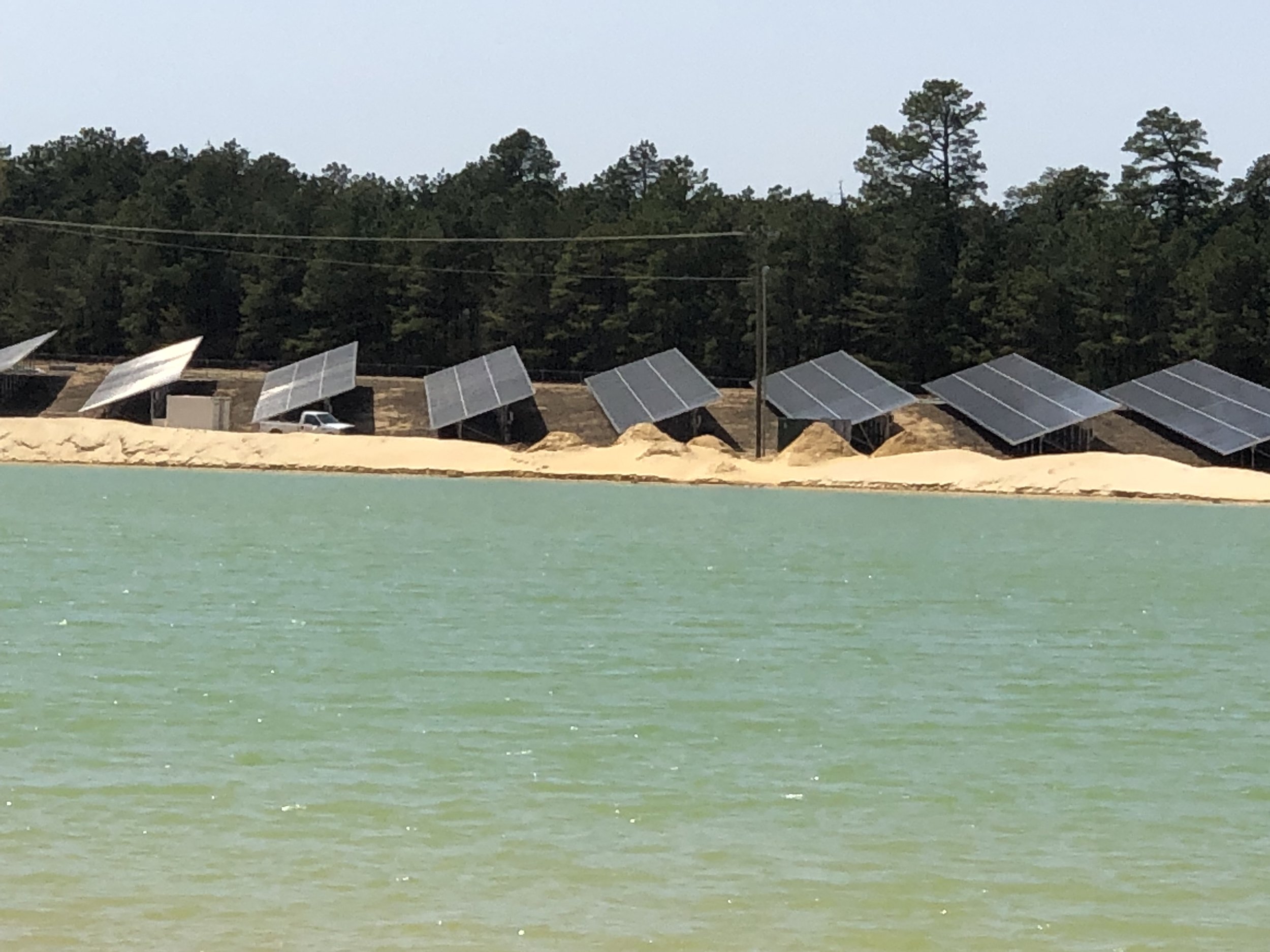
USDA REAP Energy Efficiency Grant | Our team acquired a $250,000 Renewable Energy for America Program (REAP) grant to purchase a new electric pump/dredge, to eliminate diesel fuel use.
USDA REAP Renewable Energy Grant | The second grant our team acquired for the client was in the amount of $327,000 for a solar photovoltaic array to power close to 100% of initial scope and reduce their environmental footprint. Aztec Materials has since expanded their operations, and the solar array covers the majority of the new total electricity demand. This solar array should last 20 to 25 years.
What does this program do? The program provides guaranteed loan financing and grant funding to rural small businesses and agricultural producers for renewable energy systems or to make energy efficiency improvements. Agricultural producers may also apply for new energy efficient equipment and new system loans for agricultural production and processing.
Who may apply for this program?
Agricultural producers – directly engaged in production of agricultural products where at least 50 percent of their gross income comes from agricultural operations
Small business located in eligible rural areas, meeting the Small Business Administration size standards and one of the following – private for-profit entity; a cooperative; an electric utility that provides service to rural consumers and operated independent of direct government control; a tribal corporation or tribal business entities
What is an eligible area?
Projects must be located in rural areas with populations of 50,000 residents or less
Agricultural producers may submit project to be located in non-rural areas should project be associated
with an on-site production operation.
Funds may be used for the purchase and installation of renewable energy systems, such as:

Biomass (for example: biodiesel and ethanol, anaerobic digesters, and solid fuels)
Geothermal for electric generation or direct use
Hydropower below 30 megawatts
Hydrogen
Small and large wind generation
Small and large solar generation
Ocean (tidal, current, thermal) generation
Funds may be used for the purchase, installation and construction of energy efficiency improvements:

High efficiency HVAC
Insulation
Lighting
Cooling or refrigeration units
Doors and windows
Electric, solar or gravity pumps for sprinkler pivots
Switching from a diesel to electric irrigation motor
Replacement of energy-inefficient equipment
What funding is available?
Loan guarantees on loans up to 75 percent of total eligible project costs
Grants for up to 50 percent of total eligible project costs
Combined grant and loan guarantee funding up to 75% of total eligible project costs
For full program details:
Rural Energy for America Program Energy Audit & Renewable Energy Development Assistance Grants in Pennsylvania | Rural Development (usda.gov)
For assistance and to get started: Paul Spiegel, PE, LEED AP | paul.spiegel@ssmgroup.com








New! PECO Incentive for Commercial Solar
Effective June of 2023, PECO has expanded its incentives for commercial, industrial, government and institutional customers with interest in solar energy production.
Effective June of 2023, PECO has expanded its incentives for commercial, industrial, government and institutional customers in the PECO service territory with interest in solar energy production.
Incentive:
The newly introduced incentive offers $0.10 per kWh of organizations’ net solar production over a period of one year. The incentive caps at the total project cost, including equipment and contractor labor costs.
Net solar production is the total or gross solar PV output minus any kWh fed back to the grid. In other words, the incentive pays customers $0.10 for each kWh produced, not including the excess energy returned to the grid.
Eligibility:
All commercial, industrial, government, and institutional (non-residential) customers in PECO’s service territory are eligible.
Eligible projects must meet the following criteria:
Installation and commissioning of a solar photovoltaic (PV) system at their premises
Ability to provide solar production trend data (to include net metering)
Installed, operational, and approved by PECO on or before May 31, 2026
To ensure your project lines up with the PECO commercial solar incentive, be sure to connect with your energy team and/or utility team prior to kicking off your project.
Combining Incentives:
It’s important to note the PECO incentive can be combined with other state and legislative incentives related to energy efficiency. For example, PECO’s $0.10 coupled with the IRA’s 30% tax credit for energy efficiency projects can produce a staggering return on investment within just a few years. And that’s on top of the straightforward savings on energy costs!
As a PECO Trade Ally, our Energy and Sustainability team has been trained on the PECO Ways to Save solutions and incentives. Working with a Trade Ally such as our team is the best way to ensure your project qualifies for financial incentives from PECO.
The best clean energy plans incorporate a variety of incentives and financing opportunities. For assistance in determining your first steps, give us a call.
Paul Spiegel, PE, LEED AP | Director, Energy and Sustainability Services
paul.spiegel@ssmgroup.com | 610-609-8313

Maximizing Solar Savings: A Guide to 3 Key Financial Benefits
Solar system installation is more affordable than ever. Several financial opportunities including rebates, grants, and tax credits combined with expanding financing opportunities make the return on your investment faster and more attainable. Here’s a look at 3 key financial opportunities associated with solar system conversion.

With staggering energy costs and an increasing awareness of the impact of greenhouse gas emissions, home and business owners are leaning into clean and renewable energy opportunities such as solar power generation.
Fortunately, solar system installation is more affordable than ever. Several financial opportunities including rebates, grants, and tax credits combined with expanding financing opportunities make the return on your investment faster and more attainable.
Net Metering
Net metering offers a return on your production of excess energy, ensuring you use the energy you need – and you get paid for the energy you don’t.
Coordinated through your utility company, net metering pays residential and commercial solar system owners for excess electricity that is generated and sent to the utility’s electrical grid. System owners are compensated through payment credits on utility bills, which can be used to offset future bill statements.
Weather and other conditions can impact a solar system’s peak performance. And at times, your energy use will outweigh what you’ve generated. Through net metering, your extra electricity is fed to your utility’s grid – and they give you credits for when you need to draw electricity back out.
The arrangement is symbiotic: clean energy never goes to waste, and you’re compensated for everything your system generates. In turn, you reap significant energy savings and better control over your energy expenses.
Solar Renewable Energy Certificates (SRECs)
While net metering often comes in the form of utility credits and offset of utility bills, SRECs are an additional revenue stream that can accelerate the return of your investment.
Solar Renewable Energy Certificates (SRECs) are earned by home or building owners for every 1,000 kilowatt-hours (kWh) or 1 megawatt-hour (MWh) of solar energy produced. Certificates are then sold to energy suppliers at market value to help meet their mandatory renewable energy requirements. The price for each SREC is dependent on the current market supply and demand.
State energy programs require electricity providers to derive a percentage of their energy from renewable sources. Because your certificates represent a positive environmental impact, utility providers can purchase your SRECs to assist them in reaching this requirement.
Understanding the value and fluctuation of SREC prices, as well as the application and registration requirements are all crucial to making the most out of the SREC program. We encourage working with an experienced team like SSM and Practical Energy Solutions to ensure you’re receiving the highest return for your SRECs.
Solar Investment Tax Credit (ITC)
The Federal Investment Tax Credit offers a steep federal tax credit based off your total solar project cost. The credit is not a deduction or rebate, but rather a dollar-for-dollar reduction in taxes that an individual or company would otherwise owe.
The ITC was enacted in 2006. But passage of the Inflation Reduction Act in 2022 extended the tax credit timeline and successfully increased the credit amount received. Almost all commercial and residential solar projects initiated within the next ten years will return at least 30% of project costs in federal tax credits. However, intentional planning and decision making can bring you a credit return of up to 70% of total project cost.
New! Non-taxable entities and direct payments. With the expansion of the ITC through the Inflation Reduction Act, for the first time ever non-taxable entities can now receive the available tax credits and bonuses in the form of ‘Elective Payment’. This is most applicable to local and state governments, schools, and non-profit organizations. Similarly, tax-paying entities with low tax liability can now sell their tax credit, producing a direct payment option.

How to make the most of financial opportunities
Consider onboarding a solar expert team to ensure you right-size the system and make the most of every incentive available. Proper planning, negotiation, and analysis of rebates and financing opportunities can make installation of a solar system not only a low-risk investment but a high-value opportunity.
Perfecting your financial recipe is what we do. We pair technical engineering backgrounds with unrivaled expertise in the clean energy sector and nearly a decade of experience in energy to ensure your clean energy plan is not only best for a financial return, but also the best for reaching your long-term goals.
For assistance, contact us at: paul.spiegel@ssmgroup.com | 610-609-8313



Inflation Reduction Act: Financial Highlights for Energy Projects
Coined as the largest climate investment in U.S. History, here’s a few highlights you should know about the Inflation Reduction Act as it relates to your energy efficiency projects.
The Inflation Reduction Act (IRA) is the largest climate investment in U.S. History. Designed to mobilize both individuals and businesses towards clean and efficient energy goals, the IRA offers various incentives, finance programs, funding opportunities, and tax breaks in return for efficient-conscious improvements and clean energy projects.
There has quite literally never been a better time to invest in clean energy. Standout elements of the IRA include expanded tax credits and deductions as well as trickle-down grant and program funding. All of which are exceptionally attractive to organizations that have equipment nearing the end of its life, commitments to clean energy, or a curiosity for renewable energy alternatives.
Making sense of the IRA and its impact on your potential projects can be a daunting task at best. Our energy team combines technical expertise with nearly a decade of experience in energy to bridge the gap between your long-term goals and the viable financial opportunities that make them a reality.
Expansion of Federal Investment Tax Credit
Perhaps one of the most exciting pieces of the IRA is the expansion of the Federal Investment Tax Credit (ITC) which offers a dollar-for-dollar tax credit based off project costs.
ITC has been in effect since 2006. But the signing of IRA not only extended the timeline but also expanded the available credits and bonuses for energy projects. It also extended the technologies recognized to a more comprehensive list of energy efficiency technologies.
NEW! For the very first time, the benefits of the ITC have now been made available to non-taxable entities such as school districts, municipalities, and non-profits in the form of direct payments that function much the same as a tax credit does for taxable entities. Read more under “direct pay options”.
The base credit for projects at both <1MW and >1MW is 30% of project costs. (Note that greater than 1MW must meet prevailing wage and apprenticeship requirements.) In other words, at the base credit, the amount of 30% of total project cost will be reduced in federal taxes the individual or company otherwise would owe.
However, with a little bit of extra planning and intentional decision making, projects may be eligible for additional bonus credits totaling up to 70% of total project costs in tax credits. Some of these additional bonuses include use of domestic materials and community or project location.
Projects eligible for ITC
Multiple solar and wind technologies
Geothermal (heat pump & direct use)
Combined heat and power
Municipal solid waste
Energy storage technologies
Microgrid controllers
Fuel cells
Microturbines
Interconnection costs
Direct Pay Options for Low or Non-Taxable Entities
For the first time, the Inflation Reduction Act has extended the benefits of the Investment Tax Credits to also benefit non-taxable entities or entities with low tax liability. There are two new credit delivery options – elective pay (aka direct pay) and transferability.
Now, state, local, and tribal governments as well as non-profit organizations and other tax-exempt entities will be able to receive certain tax credits as direct payments from the IRS in lieu of tax credits.
Additionally, the Act allows tax-paying entities with a low tax liability to transfer (i.e. sell) all or a portion of certain tax credits to another party. This offers a flexible opportunity to still reap the benefits of the ITC in a fashion resembling direct payments.
Additional resources related to funding announcements:
Grants and Financing
Another result of the Inflation Reduction Act is an abundance of additional funding trickling down through several avenues including mandatory grants, competitive grants, loans, and bonds.
Funding is coming down through existing avenues such as the United States Environmental Protection Agency (EPA) as well as the PA Department of Environmental Protection (PA DEP) and through other state agencies. New grant programs are opening up regularly through IRA funding distribution.
Information related to specific funding amounts and deadlines associated with these programs remains dynamic – updating often with new opportunities. However, the team at SSM and Practical Energy Solutions continues to keep a pulse on funding and incentive opportunities that come out of this legislation, ensuring we can help guide our clients towards the best opportunities for their projects.
Improvements recognized 179D
Heat pumps; Chillers; Boilers
VRV & VRF
Windows; weather stripping
Envelope
Lighting and controls
Air sealing; Building insulation
High efficiency ventilation
Extension of 179D Commercial Tax Deduction
Another key provision of the Inflation Reduction Act is the extension of the already existing 179D Commercial Tax Deduction which offers a deduction for energy-efficient building improvements based on building square footage.
Improvements can be as simple as updating weather stripping and insulation to more advanced improvements such as roof replacements and ventilation expansion.
The deduction amount begins with a base of $0.50-$1 per square foot depending on the project’s resulting increase in efficiency. This base credit is increased 5 times – totaling up to $5 per square foot if the project meets prevailing wage and registered apprenticeship requirements
Making the most of incentives
The Inflation Reduction Act presents some of the most expansive opportunities for making clean energy affordable and viable for organizations and building owners of all sizes. Whether your efficiency goals are ambitious or modest, we’re confident there’s a financial recipe that makes reaching them both attainable and affordable.
We’re well versed in capitalizing on financial opportunities for our clients, and ensuring the return on your investment is within sight. By pairing our understanding of legislation such as the IRA with our expertise in financing programs outside of legislation, we’re able to prepare the best clean energy plan for organizations of any size and any goal.
For more information on Energy Services and Financial Opportunities:
Paul Spiegel, PE, LEED AP | Director, Energy and Sustainability Services
paul.spiegel@ssmgroup.com | 610-609-8313
Staff News: Senior Advancements
Ben Pressman, Marika Selzler Williams, and Madison Kaley have recently been promoted to senior level positions.

Marika Selzler williams | Senior energy analyst
Marika Selzler Williams, EIT, CEM, ENV SP was named Senior Energy Analyst in the Energy and Sustainability Services department. In this role, Marika is responsible for performing engineering and financial analysis on building systems to determine options for improving energy performance through operational management, high efficiency retrofits, and addition of renewable energy supply.
Marika holds a Bachelor’s of Science degree in Chemical Engineering. She also holds many technical certifications and additional credentials including Envision Sustainable Professional (ENV SP), Certified Energy Manager (CEM), and she is a qualified tune up specialist for the City of Philadelphia’s Building Energy Performance Program.
Marika’s primary responsibilities include utility analysis and benchmarking, energy audits, building operational assessments and tune-ups, solar feasibility studies, energy modeling, strategic energy planning, energy education programs, rebate and grant support, HVAC assessment and design support, and project management.
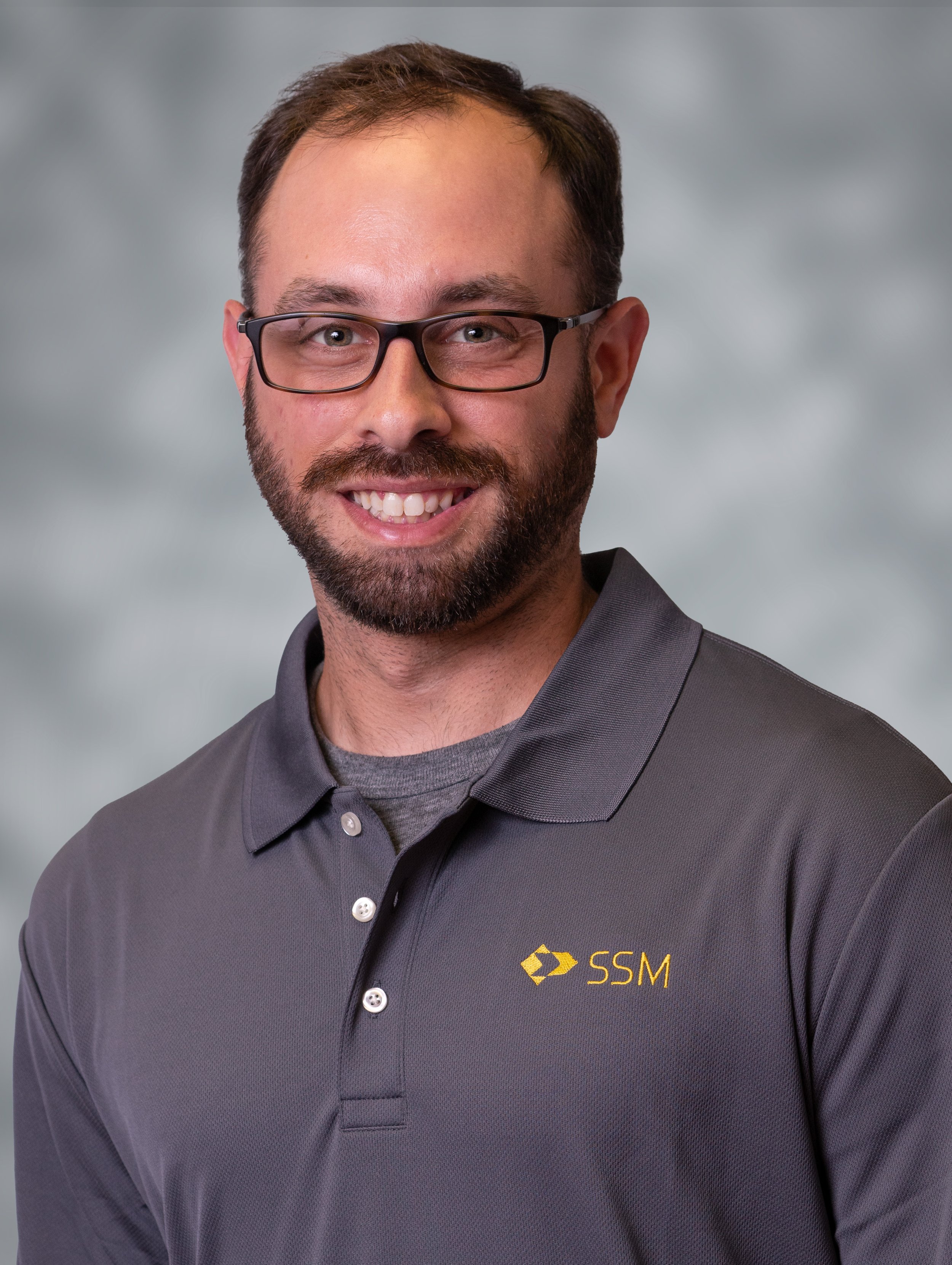
ben pressman, pe | senior mechanical engineer
Ben Pressman, PE has been named Senior Mechanical Engineer in the Energy and Sustainability Services department. Ben has over 11 years of experience in mechanical engineering. He holds a Bachelor’s Degree and Masters Degree in Mechanical Engineering from Johns Hopkins University. He is a licensed Professional Engineer as well as a qualified tune-up specialist for the City of Philadelphia’s Building Energy Performance Program.
Ben’s responsibilities include development and project management of building energy assessments, hourly energy simulations for schematic design as well as accreditation programs such as LEED and NJCEP’s Pay for Performance, and mechanical design and implementation of energy efficient renovations to commercial and municipal buildings.
He has a deep understanding of building modeling software and methodology, energy auditing techniques, and HVAC system operation and design. He also has experience developing strategic sustainability plans for both municipalities and commercial clients, especially concerning long-term renovation strategies to building mechanical systems that support sustainability goals such as renewable energy and fossil fuel reduction.

Madison kaley | senior marketing specialist
Madison Kaley has been named Senior Marketing Specialist in the Marketing and Human Resources team. In this role, Madison is responsible for facilitating the firm’s brand strategy and overall strategic goals as they relate to both external and internal communications as well as employee and client engagement.
Madison’s primary responsibilities include designing communications and engagement initiatives that achieve strategic marketing and business targets. As well as establishing brand and community presence consistently across multi-disciplinary marketplaces and championing company culture and client experience initiatives from design to execution.
Madison has more than 7 years of experience in communications, marketing and program development and coordination. She graduated from Alvernia University with a bachelor’s degree in communications, followed by graduate-level additional education and certification.

Mold Awareness Month
Humid and rainy summer days mean mold could be on its way. We're here to help. SSM offers a staff of industrial hygienists, indoor air quality specialists, and facilities engineers capable of performing the evaluations necessary to assess mold and the extent of mold contamination.

Did you know there are over 10,000 species of mold that exist? Of these, only 5 are commonly found growing indoors. While this may seem like a low number, mold can grow on any wet or damp surface in only 24-48 hours and can be hidden for long periods of time.
For mold to grow, water, oxygen, and an organic source need to be available. Most types of molds are not hazardous to the average person, but for someone with asthma, hay fever, or allergies, their symptoms may worsen. Symptoms of mold presence include a runny nose, eye irritation, aggressive asthma, cough, and congestion.
Indoors mold is commonly grown in bathrooms due to the amount of water found there. Mold can also get into buildings through roof leaks and a poor external draining environment. This can cause wooden frames to be weakened which can cause severe structural damage to a building as it spreads quickly. Furthermore, it can be very costly if your homeowner’s insurance excludes mold damage coverage.
There are, however, ways to prevent mold growth. By keeping indoor humidity below 70%, regularly inspecting your HVAC system, being aware of wet patches, and having a good exterior drainage system, many possible mold growing situations are eliminated.
When returning to school or work in the summer, it is recommended to coordinate summer cleanings and maintenance of the building with a trained and educated staff on maintenance. By having a well-kept outdoor grounds and water system, the chance for mold to creep inside the building is eliminated. Keeping a constant ventilation system working allows the humidity indoors to remain low. Finally, check unoccupied areas by looking and smelling for mold. If you suspect mold is growing, contact your local Environmental Consultant for a mold investigation.
We're here to help. SSM offers a staff of industrial hygienists, indoor air quality specialists, and facilities engineers capable of performing the evaluations necessary to assess mold and the extent of mold contamination. We not only work to fix the problem, but to find the root of it. Give us a call if you are in need of assistance!

Evo Andreatti earns GISP Certification
Evo Andreatti, GISP has earned his Geographic Information Systems Professional (GISP) certification through the GIS Certification Institute (GISCI).

Evo Andreatti, gisp | senior gis analyst
Evo Andreatti, GISP has earned his Geographic Information Systems Professional (GISP) certification through the GIS Certification Institute (GISCI).
A GISP is a designation awarded to a certified geographic information systems (GIS) professional that provides a professional distinction in the GIS profession. Individuals qualifying for the certification must have at least 4 years of professional experience, meet the requirements of the Portfolio Review process, and pass the GISCI Core Technical exam in order to be awarded the GISP Certification.
Andreatti, a member of the Environmental Divison at SSM, has 17 years of experience in Geographic Information Systems (GIS). He is responsible for maintenance, development, and research of data sources for inclusion into the GIS system. He is experienced in creating, modifying, and designing GIS data sets, as well as developing ArcGIS Online/Portal applications for use with desktop computers and iPads.
Andreatti has excelling knowledge, skills, and abilities in cartography, visualization, data management, and needs assessments. His county and municipal experience spans several sectors including public safety, human services, municipal support, planning, and law enforcement. He also holds skills in regulatory filings and reporting, water quality, engineering, and construction support.
Andreatti is a Millersville University graduate of Applied Geography. And, he holds a Pennsylvania State University Certificate in Geographic Information Systems. His professional affiliations include the PA GIS Conference Committee Member.
BCWSA: Legislative and Regulatory Update
Berks County Water and Sewer Association Annual Conference
Legislative and Regulatory Update
Presented by Serena DiMagno | serena.dimagno@ssmgroup.com
Discussion Topics
Federal Legislative Update
Draft PFAS Senate Bill
Regulatory Update
PFAS National Primary Drinking Water Regulation Proposed
Risk Mitigation Measures - Required

DOWNLOAD PRESENTATION
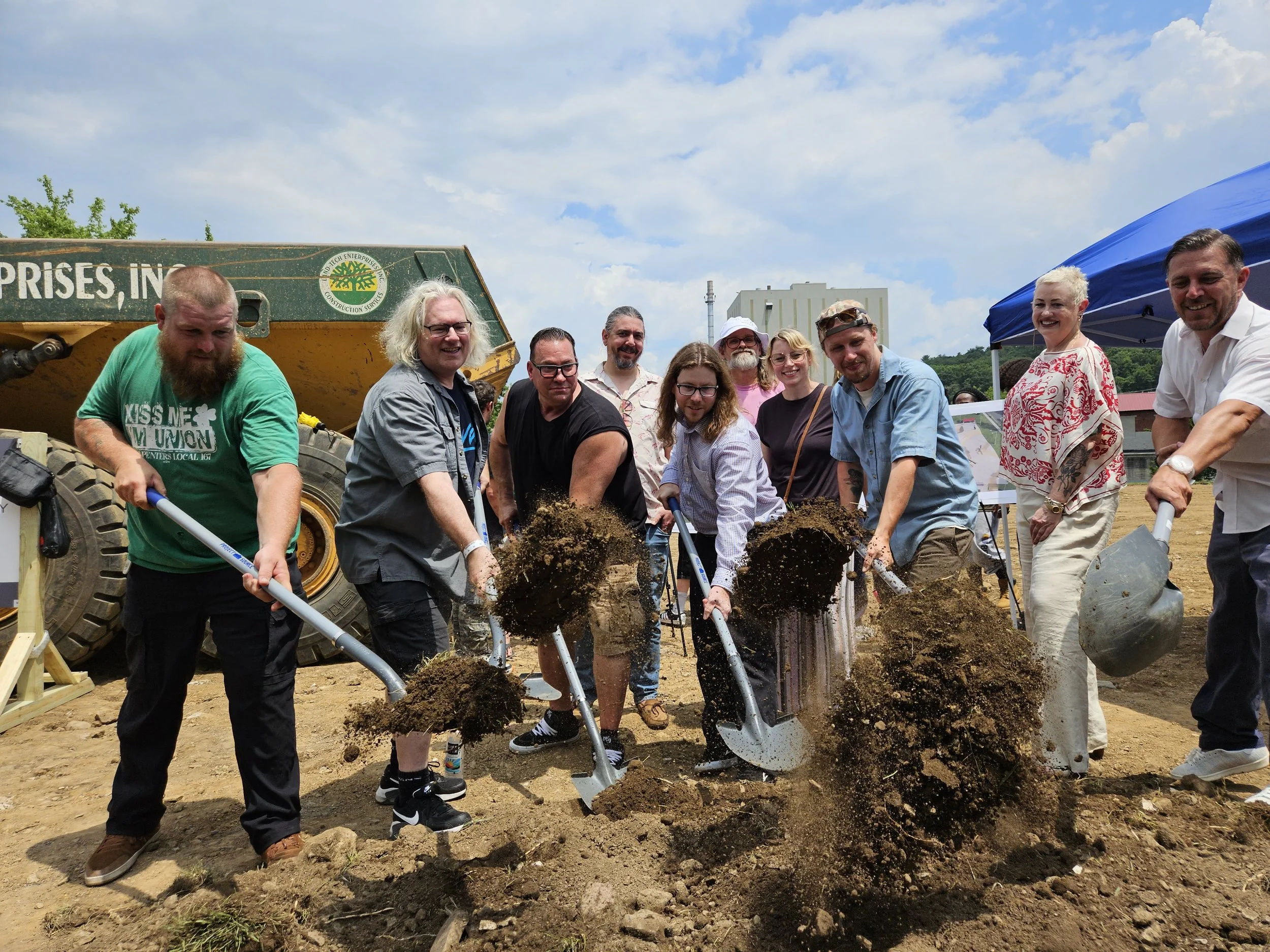
Congratulations Reading Skatepark Association and City of Reading!
The City of Reading and Reading Skatepark Association recently broke ground on the Reading Skatepark at 601 Canal Street. SSM’s Civil Engineering team provided land development services, and more.
On July 6th, 2023 the Reading Skatepark Association and City of Reading held a ceremonial groundbreaking for the Reading Skatepark located at 601 Canal Street in Reading, Pennsylvania.
SSM provided full Land Development services including survey, site design/layout, preparing required City applications for Land Development, subdivision/lot consolidation services, NPDES permitting, stormwater management design of an underground infiltration bed, erosion control design, project coordination, utility design, and stadium lighting design.
SSM also prepared engineering cost estimates and technical specifications for bidding purposes, presented the project to the City of Reading Planning Commission, and provided overall Project Management.
SSM obtained the required development and permit approvals from the City, PaDEP and Berks County Conservation District.
With the skatepark configuration provided by Grindline Skateparks, Inc., SSM provided all associated civil site work in order to accommodate this site. SSM guided Reading Skatepark Association through the City’s land development process. SSM surveyed with ground penetrating radar (GPR) to record a 96” diameter pipe that bisected the site. Deed research revealed the sites’ makeup of 50 lots, which were ultimately consolidated into a single lot.
The proposed project was funded by numerous grants including those from the Pennsylvania Department of Conservation and Natural Resources (DCNR), Department of Community and Economic Development (DCED), Vans the Shoe Company, and local sponsors.
The skatepark is a dream of Holistic Skateshop owner, JD Turner. After years of planning the official groundbreaking is certainly a monumental and exciting moment for all.
In the news… want to read more about the Skatepark? Here’s a few links to check out.




Project Profile: Aztec Materials Electric Dredge and Solar Array
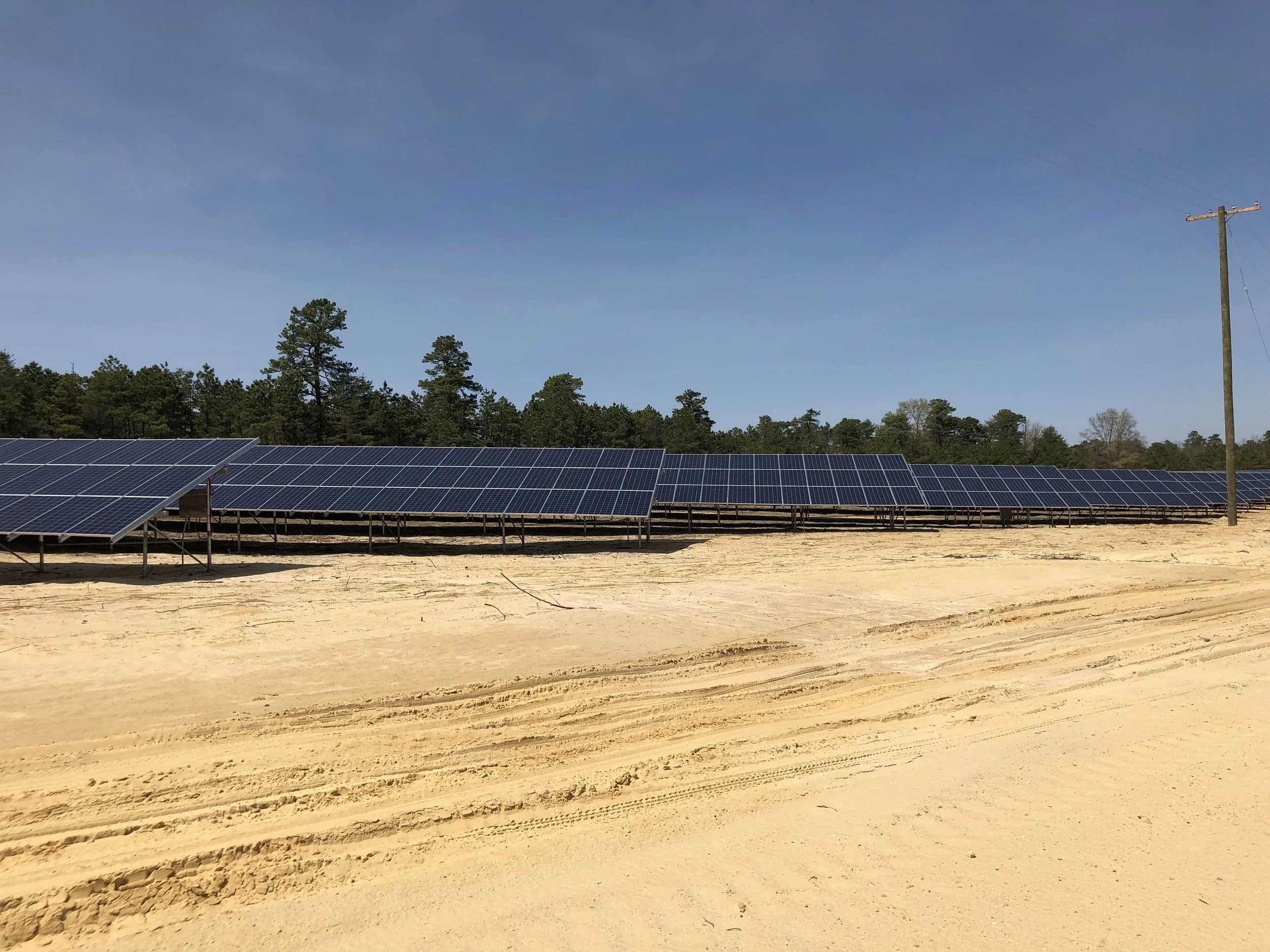
Aztec Materials enlisted Practical Energy Solutions, SSM’s Energy team, to provide comprehensive energy and sustainability services, listed to the right. The site’s operation now leverages an ecologically sound electric dredge powered by a large solar array.
Delaware Valley Concrete, a firm that specializes in producing exceptional-quality concrete and sand products for residential, commercial, and DOT projects. With nine plants located across the region, the firm takes on an impressive initiative to produce the most environmentally friendly concrete they can.
Under the Delaware Valle Concrete umbrella, Aztec Materials, situated on 300 acres of property in Hammonton, NJ is a sand mining operation consisting of a sandpit and, formerly, a diesel crane and dredge. The labor-intensive operation relied heavily on trucks to transport sand across the 300 acre site to screens that filtered our larger pieces.
Aztec Materials enlisted Practical Energy Solutions, SSM’s Energy team, to provide comprehensive energy and sustainability services, listed to the right. The site’s operation now leverages an ecologically sound electric dredge powered by a large solar array.
USDA REAP Energy Efficiency Grant | Our team acquired a $250,000 Renewable Energy for America Program (REAP) grant to purchase a new electric pump/dredge, to eliminate diesel fuel use.
USDA REAP Renewable Energy Grant | The second grant our team acquired for the client was in the amount of $327,000 for a solar photovoltaic array to power close to 100% of initial scope and reduce their environmental footprint. Aztec Materials has since expanded their operations, and the solar array covers the majority of the new total electricity demand. This solar array should last 20 to 25 years.
Project Benefits:
Increased production by around 500%
Reduced energy use and emissions from diesel to electricity
Annual savings of $180,000 in energy costs
Annual savings of $160,000 selling SREC
With energy cost savings, SREC savings and a 30% federal tax credit, the solar array paid for itself in under 4 years. In addition to satisfying a 10-year loan on the solar array, the client will have saved $1.8 million net. Converting the new dredge from grid electricity to solar electricity reduces its environmental impact to almost zero. Considering the towering electricity costs in southern New Jersey, the solar array provides a strong financial and economic benefit for the company, as well as an environmental benefit for the region.
“The solar array paid for itself in under 4 years. Converting the new dredge to solar electricity reduced its environmental impact to almost zero.”

Services Provided:
Grant acquisition services
Calculations on energy savings, energy use reductions and emissions
Engineering analysis
Financial services
Technical and financial review
Cash flow analysis
Life cycle analysis
Land development plan
Erosion and sedimentation control plans
Permitting support
Utility connection coordination
Solar Renewable Energy Credits (SRECs)
Utility contract negotiation
Ongoing SREC quarterly applications
Inspection coordination
Solar array add-ons to monitor output
Reporting

PWEA - PennTec 2023 - Cost Effective Energy Conservation for Your Plant
Explore cost-effective energy conservation opportunities common to many plants, increasing challenges of balancing water and air quality regulations with energy and climate concerns to minimize overall negative impacts, and insight from DEP on the department’s sustainability goals and plans to assist municipalities in reaching their goals.
Presented to: PWEA PennTec2023 Utility Management & Government Affairs Technical Program
Presented by: Ben Pressman, PE
Cost Effective Energy Conservation for Your Plant
Presented to: PWEA PennTec2023 Utility Management & Government Affairs Technical Program
Presented by: Ben Pressman, PE
Explore cost-effective energy conservation opportunities common to many plants, increasing challenges of balancing water and air quality regulations with energy and climate concerns to minimize overall negative impacts, and insight from DEP on the department’s sustainability goals and plans to assist municipalities in reaching their goals.


PWEA - PennTec 2023 - Reed Bed Remediation Utilizing Recycled Glass
Explore cost-effective energy conservation opportunities common to many plants, increasing challenges of balancing water and air quality regulations with energy and climate concerns to minimize overall negative impacts, and insight from DEP on the department’s sustainability goals and plans to assist municipalities in reaching their goals.
Presented to: PWEA PennTec 2023 Biosolids Technical Program
Presented by: Jason Coyle, Lo
Reed Bed Remediation Utilizing Recycled Glass
Presented to: PWEA PennTec 2023 Biosolids Technical Program
Presented by: Jason Coyle, Lo
Explore cost-effective energy conservation opportunities common to many plants, increasing challenges of balancing water and air quality regulations with energy and climate concerns to minimize overall negative impacts, and insight from DEP on the department’s sustainability goals and plans to assist municipalities in reaching their goals.

Municipal Engineering at SSM: 4 Things You Should Know
Spotts, Stevens and McCoy is a recognized leader in Municipal Engineering and Consulting thanks to over 90 years of providing assistance to local governments. Read more about the SSM difference.

#1. Municipal engineering has been at the core of SSM’s business since our founding in 1932.
Spotts, Stevens and McCoy is a recognized leader in Municipal Engineering and Consulting thanks to over 90 years of providing assistance to local governments.
In 1932, when our roots began, Mr. Spotts provided consulting and engineering services to nearly 40 municipalities. Since then, our firm has refined and perfected our expertise while expanding our suite of services - but always maintaining municipal services as a core component of our business.

We provide local governments with multi-faceted, full-service engineering and consulting services, acting as an extension of these governments’ operations. We pride ourselves on becoming a part of our client’s team, part of the community, and most notably - their trusted advisors.

#2. Our multi-discipline firm means we are unmatched by many in the region.
In the SSM team, our clients have a multi-faceted, full-service engineering/consulting firm that acts as an extension of their operations. We know that the challenges community leaders face are rarely one-dimensional. Often, they require expertise from a variety of sources and from several angles. Our founders knew that our clients needed a single-source solution. And so that’s the firm that we are today.
We’re unmatched by many not just for our years of experience, but also for our expertise. We often deploy several members of our team to ensure we best understand and provide the highest quality of service to our municipal clients. The more facets to a challenge, the more our clients appreciate the efficiency of having one single-source solution in SSM.
Our staff encompasses engineers, designers, surveyors, planners, geologists, and landscape architects. Which means every project team is intentionally designed, and every decision is appropriately made.

And while our civil engineering team are leaders in the field, we simply don’t stop there. Several other divisions at SSM have perfected dynamic, and reliable, municipal engineering services. Authorities turn to us, municipalities and counties rely on us, and communities trust us. Whether the need is efficient wastewater treatment, managed stormwater programs, clean water supplies, integrated electrical and mechanical systems, implemented comprehensive plans, or preservation of history - we have a team, and the expertise for that.
#3. Today, we help 100+ municipalities and counties find practical solutions to their challenges and problems.
Some of our existing municipal clients we’ve been proud to serve since the 1970’s. We firmly believe that what makes us unique is not only the range of services we provide, but the attitude with which we provide them.
We care about our clients. We strive every day and, on every assignment, to protect the interests and needs of community members and community leaders. And most importantly, we strive to be a part of their success - seeing ideas all the way from inception to completion. When that means going the extra mile, we do it; when that means being available for a meeting, we’re available; when that means anticipating a need, we anticipate them.
Over the years, we have developed proven standard approaches that are valuable to our clients. We balance that experience with an attitude of flexibility and a passion for service. We excel at paying attention to every single detail, no matter how finite it may be. Because when it comes to your community - we know that every detail matters.
#4. Our Municipal Engineering Expertise:
- Muncipal Engineering and Planning
- Stormwater Engineering, Design and MS4 Services
- Stormwater and E&S Permitting
- Infrastructure Planning, Engineering and Design
- Construction Phase Services
- GIS, Bidding, Infrastructure and Environmental Modeling
- Survey and Data Capture
- Site Planning and Design
- Wastewater Planning, Engineering, Design and Operations
- Water Planning, Engineering, Design and Operations
- Building Engineering
- Energy and Sustainability Services
Discussion Topics:
What is Source Water Protection?
Where to find protection zone information
Concerns with potential contamination issues and follow-up information
Managing Risks
Resources for education of customers and residents