

Enhancing Piping System Longevity: The Role of Nitrogen in Fire Sprinkler Systems
Fire sprinkler systems play a crucial role in safeguarding facilities from the devastating effects of fires. For building owners who rely on dry pipe or pre-action sprinkler systems, a strategic switch from compressed air to nitrogen proves to be a functional solution for maximizing the lifespan of their piping systems.
Fire sprinkler systems play a crucial role in safeguarding facilities from the devastating effects of fires. For building owners who rely on dry pipe or pre-action sprinkler systems, a strategic switch from compressed air to nitrogen proves to be a functional solution for maximizing the lifespan of their piping systems. This article delves into the benefits of this transition, highlighting the vulnerabilities to corrosion, and the positive impact nitrogen generators can have on extending system life.
Understanding your Fire Protection
Sprinkler systems are a critical part of your fire protection system. The CDC states that between 2015-2019 sprinkler systems were 97% effective in preventing fires. According to the National Fire Protection Association (NFPA), compared to reported fires in properties with no automatic extinguishing systems, when sprinklers were present, the civilian fire death and injury rates per fire were 89 percent and 27 percent lower, respectively. The rate of firefighter injuries per fire was 60 percent lower. Additionally, the average loss to a building with sprinklers is 34-68 percent lower than buildings without AES.
The most common systems are wet systems which are connected to high-pressure water distributed by a steel piping system. These systems use a heat sensor to detect extreme heat (above 165 degrees Fahrenheit), triggering the glass bulb to break and release water and extinguish a fire in its early stages. However, the wet system, while often the least costly, is not conducive to all environments. There are in fact four different types of sprinkler systems that the NFPA permits: wet, dry, pre-action and deluge.
Dry Pipe and Pre-Action Sprinkler Systems
Dry pipe systems are often deployed in spaces susceptible to freezing temperatures, such as unheated warehouses, commercial freezers, and outside loading docks. A dry system functions similarly to a wet system, however, the water is not filled in the pipes. Here, the water is held away from the sprinkler behind a dry pipe valve. When the glass bulb is broken, air is released and pressure in the pipes drops which ultimately breaks the valve, releasing the water.
Pre-action systems, on the other hand, find application in data centers, museums, and archive spaces where an added layer or supervision is necessary to prevent unwarranted water discharge. Here, the system is interlocked with a fire detection system so that two events are needed before water is discharged. The heat detection will send an alarm or alert first. Then, as temperature increases, the glass bulb will break, and water will be released in a similar manner as in the dry system. This added step allows for extra protection from unwanted water flow.
Corrosion Challenges
Corrosion occurs when there is water, oxygen, and metal present. In a sprinkler system, corrosion is a serious concern as it can lead to pipe leaks, reduced water flow, or even render the system completely unusable.
While most think that wet systems are the only ones at risk for corrosion, in fact dry and pre-action systems that lean on compressed air also hold the same risk. Both dry pipe and pre-action systems have historically relied on compressed air for operation. However, using small air compressors without additional treatment results in wet air inside of the piping. This water vapor will condense in freezing temperatures, leaving water in the metal piping and subjecting pipes to corrosion.
The absence of or limited exposure to any of the three elements of corrosion (water, oxygen, metal) will slow down or prevent the process from occurring.
Nitrogen as a Corrosion Mitigator
To combat corrosion in dry and pre-action systems, the fire protection industry has turned to nitrogen generators to fill the system with a dry inert gas. Nitrogen, typically dry with a dew point below zero-degree Fahrenheit, eliminates water vapor condensation within the piping. Additionally, nitrogen has minimal oxygen content, further reducing corrosion-promoting elements. This dual action significantly lowers the potential for corrosion, ultimately extending the life of the piping system.
Switching from compressed air to nitrogen in dry pipe and pre-action sprinkler systems provides several advantages. The absence of water vapor and reduced oxygen content substantially mitigates corrosion, enhances the overall longevity, and increases the lifespan of this lifesaving piping system. The decision not only addresses corrosion concerns but also aligns with industry best practices for fire protection. As the fire protection landscape evolves, this strategic shift ensures that building occupants can rely on the systems for extended period, fostering a safer and more secure environment.
For additional information contact us:
Andrew Wengerd, PE, CFPS, LEED AP | andrew.wengerd@ssmgroup.com

Farm to Table: Supporting the Food Industry
Farmers, processors, distributors, and even restauranteurs all turn to SSM. November is all about bringing food to the table. Here’s a little taste at some projects we’ve worked on.
It takes a lot to bring a product to market. Experts in the food industry should focus on just that- food. Because after all, addressing needs such as: regulatory compliance, increased capacity, routine maintenance, and facility expansion shouldn’t take away from doing what they know best. That’s why farmers, processors, distributors, and even restauranteurs all turn to SSM. We help secure prime locations, plan more efficient warehouses and distribution centers, conduct feasibility studies, upgrade utilities and building systems, improve traffic flow, and expand operations. By taking the lead on the engineering side, we enable the food industry to focus more on their core business.
Tyson Foods, Inc. | New Pottsville Truck Repair Facility | Spotts, Stevens and McCoy is providing comprehensive planning, engineering, and design services for the development of a Truck Repair Facility in Schuylkill County for Tyson Foods, Inc. Our scope of work encompasses a wide range of services and a multi-disciplinary team. These services include boundary and topographic surveys, preliminary and final land development plans, stormwater management system design, water and sanitary sewer design, mechanical, plumbing, and fire protection system design, electrical specifications and design, as well as structural retaining wall designs. Additionally, SSM is facilitating coordination of various municipal and regulatory approvals to ensure successful and timely completion of this project.
Joe Jurgielwicz & Son, Ltd. | Farm Electrical Upgrade | Spotts, Stevens and McCoy provided electrical engineering services to Joe Jurgielwicz & Son, Ltd., focusing on Electrical Permit Set of Plans for the Electrical Service Upgrade of a Hamburg, PA facility. The scope of our services included review and verification of existing electrical distribution system, identification of electrical equipment for new power feeds, and determination of locations of additional power feeds from the new system. As part of the electrical upgrade project, SSM provided the Circuit Breaker Settings and Time Current Coordination (TCC) Curves for the new switchboard and in preparation for the NFPA 70E Arc Flash Risk Assessment and Hazard Analysis. SSM’s delivered Electrical Permit Set included a site plan, floor plans, specifications, schedules, and diagrams.
Pepperidge Farm | Trailer Parking Lot Land Development | Spotts, Stevens and McCoy partnered with Pepperidge Farm for the planning and design of a new trailer storage parking lot in Lancaster County, PA. Our comprehensive land development services on this project included property survey services to update existing boundary and topographical data and coordination of a bedrock depth investigation with oversight by a licensed professional geologist. SSM also provided preliminary and final site development plans, as well as a complete stormwater management system design including components needed for receipt of an NPDES permit. And, our electrical engineering team provided design services including design of general lighting, concrete bases, lighting control and installation of underground space conduits.
Liberty Coca-Cola | The energy team at Spotts, Stevens and McCoy provided Liberty Coca-Cola with building tune-up services for several of the company’s buildings located in the Philadelphia region. Our team conducted an evaluation of the building systems, identified opportunities for operational, maintenance, and management improvements, and coordinated implementation of corrective actions. Building tune-up services ensure the building systems are in a state of good repair and improvements generate both energy and water savings all while maintaining occupant comfort. In support of these efforts, a qualified tune-up specialist from the SSM team performed the required evaluations, identified necessary improvements, and produced a final report for the City of Philadelphia’s Office of Sustainability for compliance with the City’s Building Energy Performance Program.
The Hershey Company | Spotts, Stevens and McCoy provided The Hershey Company with review and recommendations to the company-wide Asbestos Operations Plan (Management Plan). Previously, SSM provided The Hershey Company with additional environmental services as well as site engineering and infrastructure specification services.
Godiva Chocolatier, Inc. | Spotts, Stevens and McCoy provided Godiva Chocolatier assistance with revising and updating their Spill Prevention Control and Countermeasure (SPCC) Plan. SSM’s scope of work included a site inspection, as-built drawings for storm and sanitary lines, and review, update, and recertification of the SPCC plan. Previously, SSM provided Godiva Chocolatier with environmental safety services including an air permit application for installation of a new coating process.
Redner’s Markets, Inc. | Spotts, Stevens and McCoy provided Redner’s Markets, Inc. with baseline environmental assessments and reporting. Additionally, SSM previously worked with Redner’s Markets as the primary underground storage tank consultant to manage the removal and closure of USTs at four facilities.
Sunsweet Growers, Inc. | Spotts, Stevens and McCoy provided Sunsweet Growers, Inc. with environmental services to optimize the performance of the facility aerobic digester.
Who else we’ve worked for:
Maier’s Bakery | Site Engineering and Infrastructure
Herr Foods | Water and Wastewater Permit Assistance
Quaker Oats Company | Environmental Health and Safety
Samuel Adams Pennsylvania Beer | Environmental Health and Safety
The Bachman Company | Flood Plain Study
Adelphia Seafood | Environmental Health and Safety
Coca-Cola U.S.A. | Water and Wastewater Services
Dairy Queen | Site Development
Dunkin Donuts | Site Engineering and Infrastructure
Pabst Brewing Company | Environmental Health and Safety
Latrobe Brewing Company | Environmental Health and Safety
Stoudt’s Brewing Company | Water and Wastewater Services
Berks Packing Co., Inc. | Environmental Health and Safety

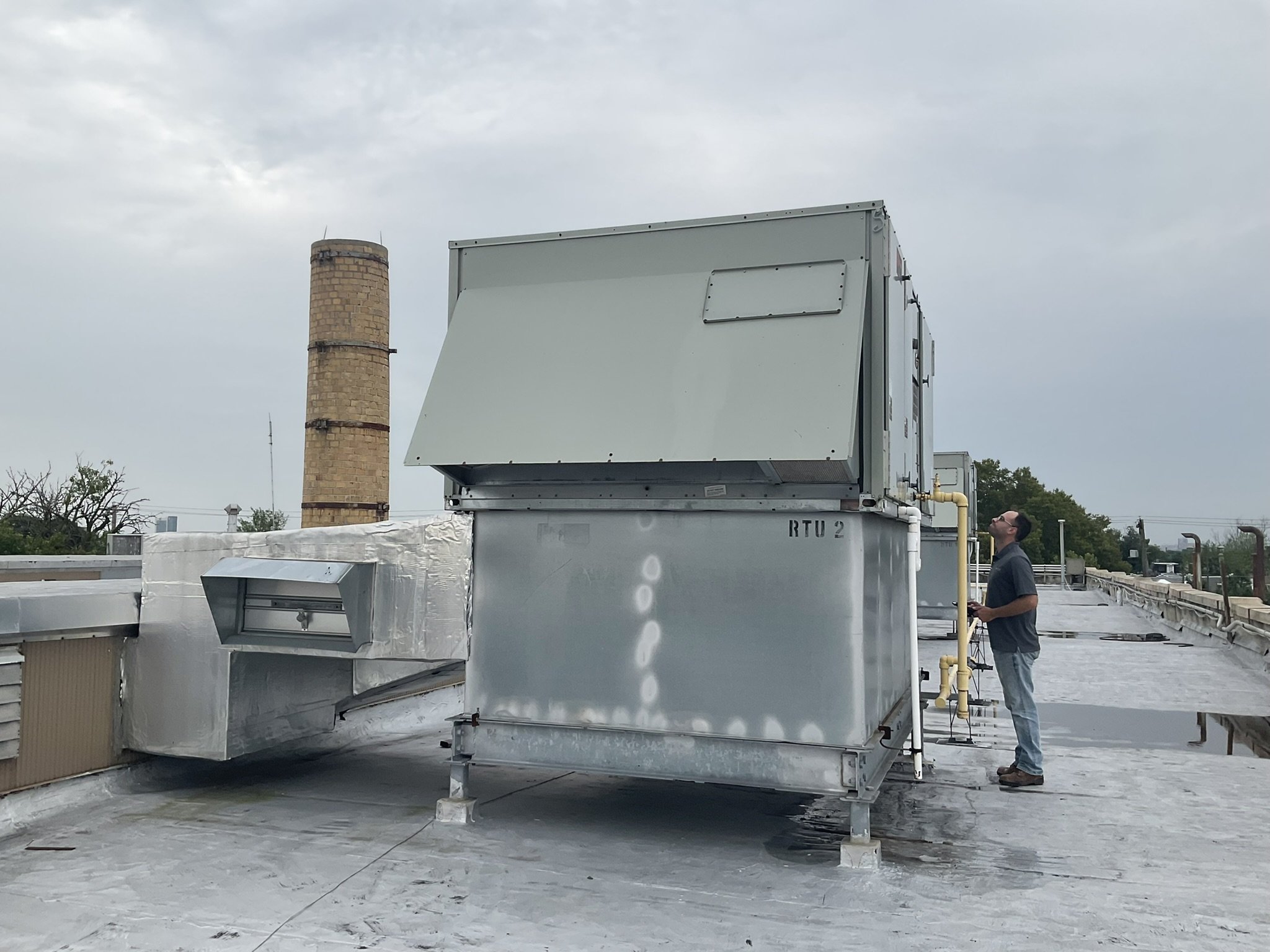


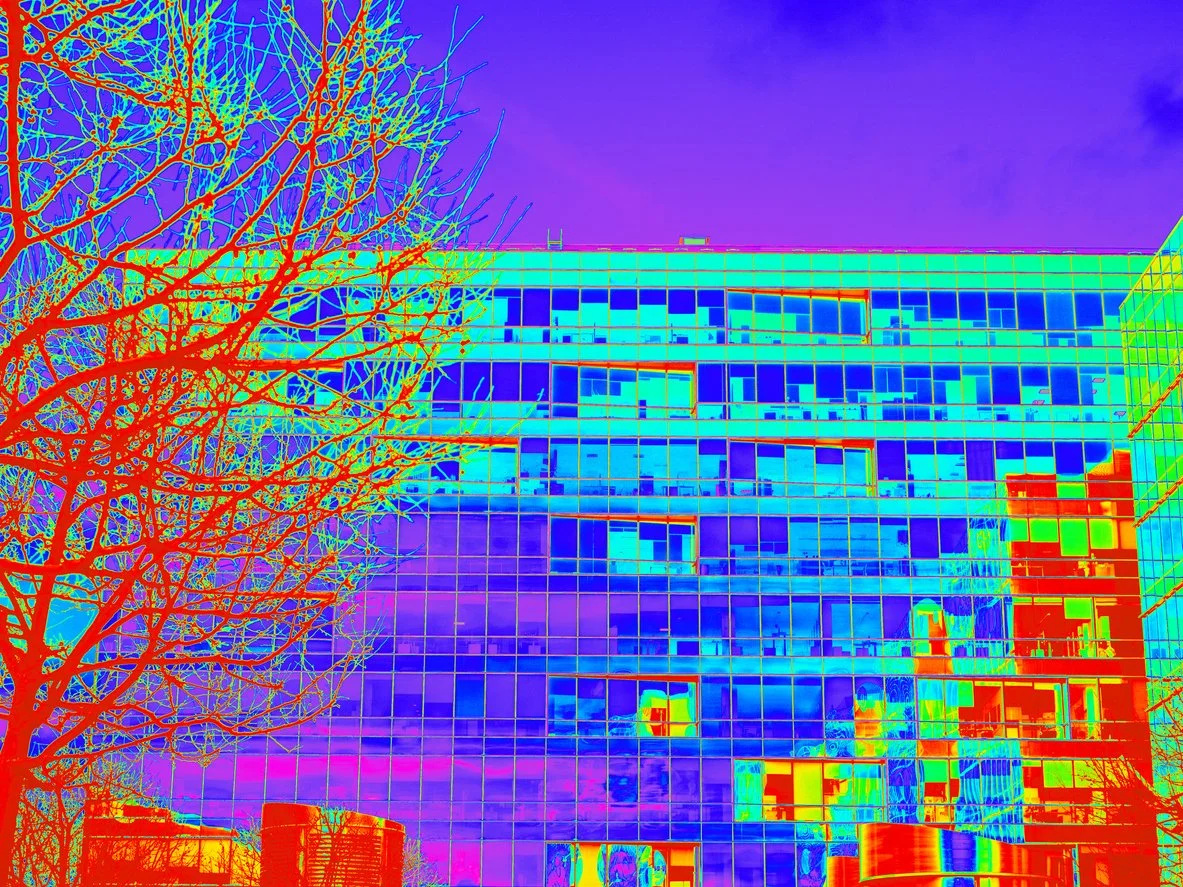







Enhancing Piping Longevity: Nitrogen in Fire Sprinkler Systems
For facility owners with dry pipe or pre-action sprinkler systems, upgrading to nitrogen generators is a proactive step toward preserving the integrity and functionality of the piping system.
Fire sprinkler systems play a crucial role in safeguarding facilities from the devastating effects of fires. For building owners who rely on dry pipe or pre-action sprinkler systems, a strategic switch from compressed air to nitrogen proves to be a functional solution for maximizing the lifespan of their piping systems. This article delves into the benefits of this transition, highlighting the vulnerabilities to corrosion, and the positive impact nitrogen generators can have on extending system life.
Understanding your Fire Protection:
Sprinkler systems are a critical part of your fire protection system. Known as an automatic extinguishing system (AES), the risk of injury or death due to a fire is significantly higher in structures without an AES than those with one. The CDC states that between 2015-2019 sprinkler systems were 97% effective in preventing fires. Of the thousands of calls that fire fighters respond to, only 10% had sprinkler systems in place.
The most commonly known setups are wet systems which are connected to several pipes and a high-pressure water system. These systems use a heat sensor bulb that when heat above 165 degrees Fahrenheit is detected, will break and release water, extinguishing a fire in its infancy stage. However, the wet system, while often the least costly, is not conducive to all environments. There are in fact four different types of sprinkler systems that the National Fire Prevention Agency (NFPA) permits: wet, dry, pre-action, and deluge.
Dry Pipe and Pre-Action Sprinkler Systems
Dry pipe systems are often deployed in spaces susceptible to freezing temperatures, such as unheated warehouses, commercial freezers, and outside loading docks. A dry system functions similarly to a wet system, however, the water is not filled in the pipes. Here, the water is held away from the sprinkler behind a dry pipe valve. When the heat bulb is broken, air is released and pressure in the pipes drops which ultimately breaks the valve, releasing the water.
Pre-action systems, on the other hand, find application in data centers, museums, and archive spaces where an added layer or supervision is necessary to prevent unwarranted water discharge. Here, the system is interlocked with a fire detection system so that two events are needed before water is discharged. The heat detection will break first. Then, as temperature increases, the bulb will break, and water will be released in a similar manner as the dry system would. This added step allows for extra protection from unwanted water flow.
Corrosion Challenges:
Corrosion occurs when there is water, oxygen, and metal present. In a sprinkler system, corrosion is a heavy concern as it can lead to pipe leaks, reduced water flow, or even render the system completely unusable.
While most think that wet systems are the only ones at risk for corrosion, in fact dry and pre-action systems that lean on compressed air also hold the same risk. Both dry pipe and pre-action systems have historically relied on compressed air for operation. However, using small air compressors without additional treatment results in wet air inside of the piping. This water vapor will condense in freezing temperatures, leaving water in the metal piping and subjecting pipes to corrosion.
The absence of or limited exposure to any of the three elements corrosion needs (water, oxygen, metal) will slow down or totally prevent the process from occurring.
Nitrogen as a Corrosion Mitigator:
To combat corrosion in dry and pre-action systems, the fire protection industry has turned to nitrogen generators to fill the system with a dry inert gas. Nitrogen, typically dry with a dew point below zero-degree Fahrenheit, eliminates water vapor condensation within the piping. Additionally, nitrogen has minimal oxygen content, further reducing corrosion-promoting elements. This dual action significantly lowers the potential for corrosion, ultimately extending the life of the piping system.
Switching from compressed air to nitrogen in dry pipe and pre-action sprinkler systems provides several advantages. The absence of water vapor and reduced oxygen content substantially mitigates corrosion, enhances the overall longevity and increases the lifespan of this lifesaving piping system. The decision not only addresses corrosion concerns but also aligns with industry best practices for fire protection. As the fire protection landscape evolves, this strategic shift ensures that building occupants can rely on the systems for extended period, fostering a safer and more secure environment.
For additional information contact us:
Andrew Wengerd, PE, CFPS, LEED AP | andrew.wengerd@ssmgroup.com
Protecting Water Sources
Learn more about water: where it comes from and why we work to keep it clean!
There is so much to know when it comes to your H2O!
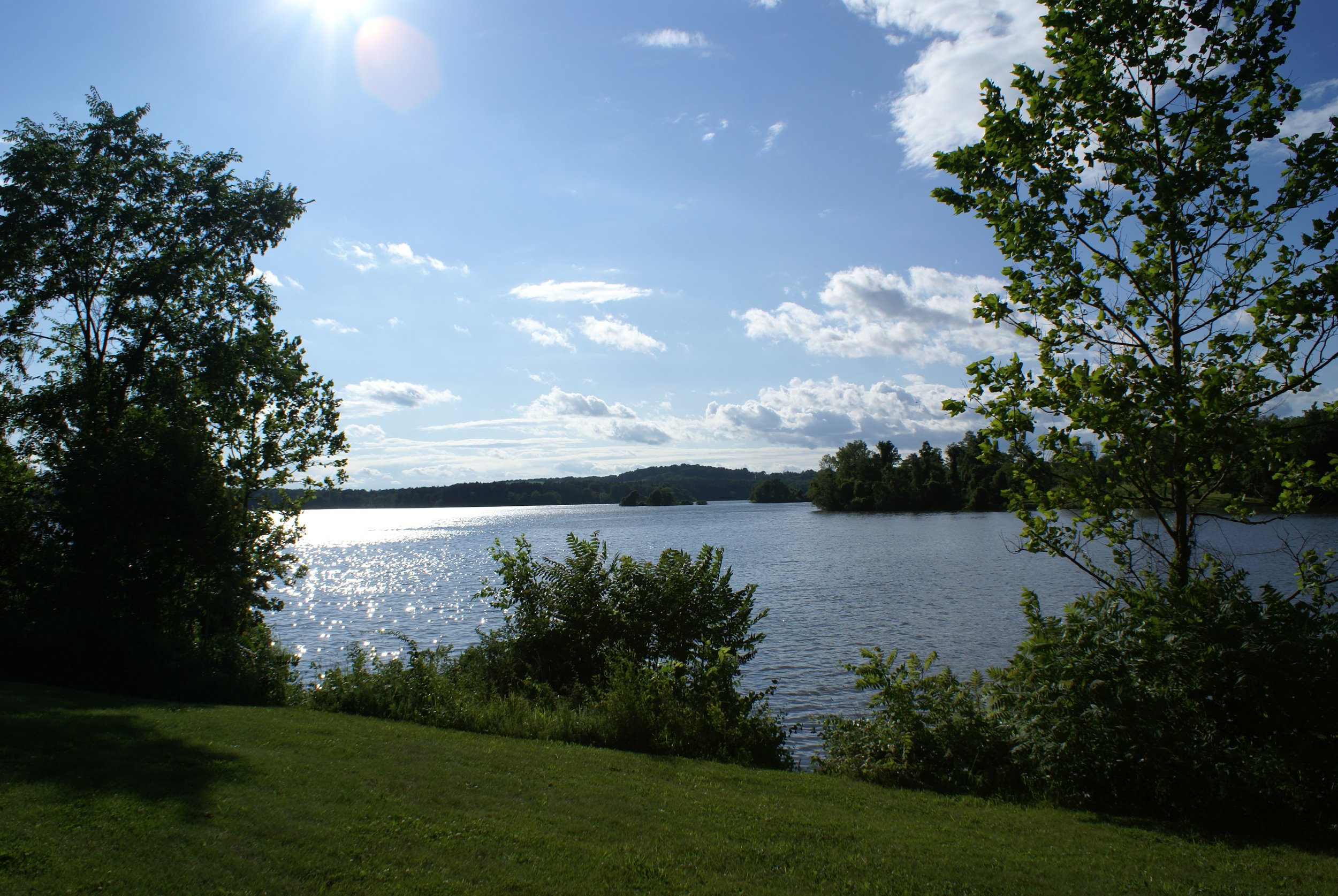
First thing’s first, where does it come from?
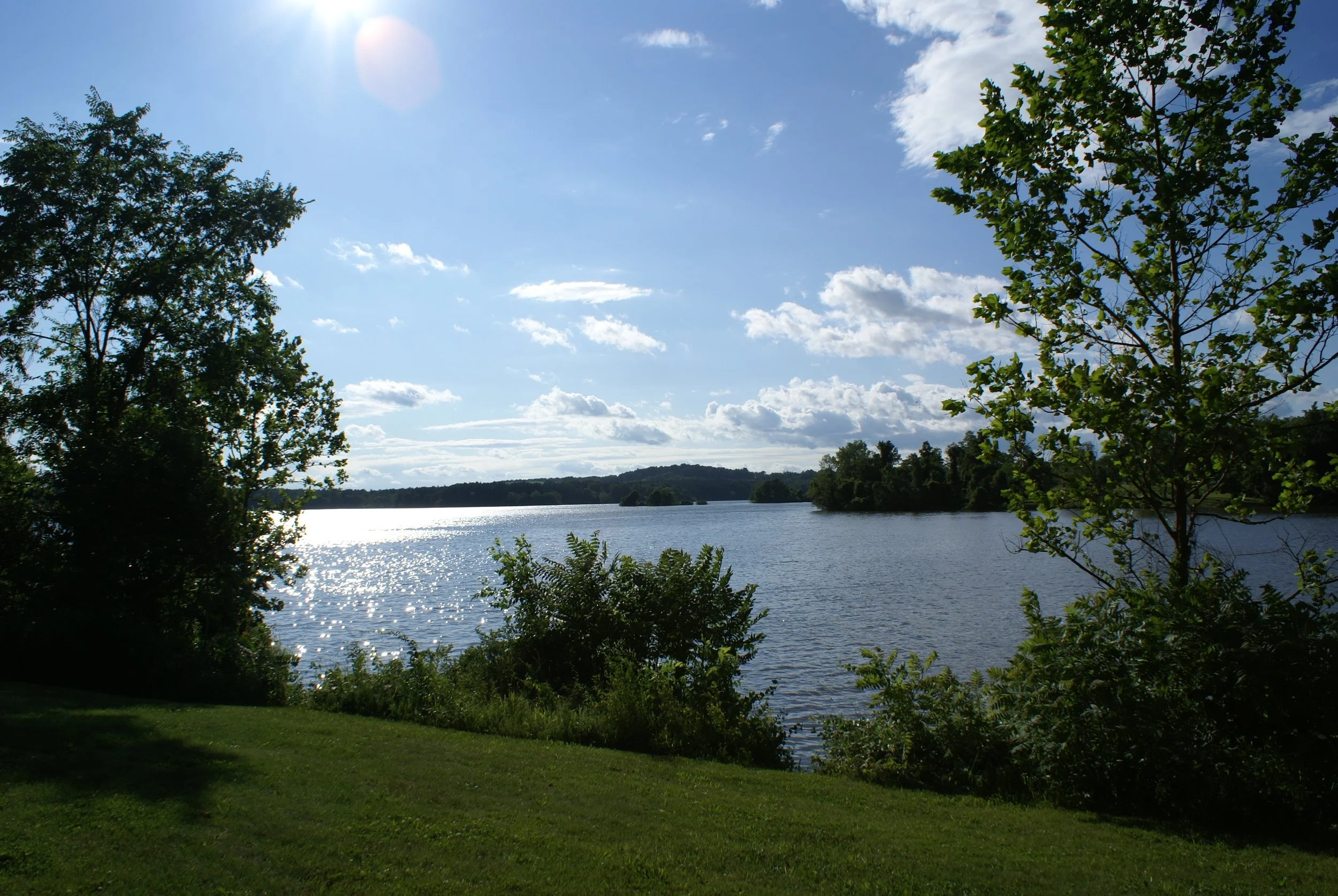
The water you drink can come from a surface water source, like a river, stream, lake, or reservoir, or a groundwater source, such as a well or spring.
When it comes to groundwater sources, wells pump water from an aquifer, or water flows from the aquifer through a spring. An aquifer is recharged when rainwater or snowmelt seeps into the ground and is stored in the rock below.
In the case of surface water sources, an intake structure is constructed in the water body to pump water to a treatment plant. Water flows over the land, from high points to low points, collecting in bodies of water, which continue to flow downgradient. The land and water bodies draining to a single location are collectively called a watershed.
Now that we know where the water comes from, why is it important?
It’s important to know the water source for your community because of the risks that come along with it. Because water travels over and through the land before we collect it, there is a chance of pollutants contaminating the water.
When rain falls and runs over and through the land and into source waters, it can carry trash, bacteria, oil, hazardous chemicals, or any other type of pollutant with it. Even when rain falls on undeveloped regions, fertilizers, pesticides, pet and wildlife waste, and soil erosion can be picked up by the runoff and pollute source water.
So, what can be done to keep our source water clean and safe to drink?
Spotts, Stevens and McCoy is a technical partner of the Source Water Protection Technical Assistance Program (SWPTAP), which is funded by the Pennsylvania Department of Environmental Protection (PaDEP). SWPTAP offers funding and technical assistance to public water suppliers looking to develop a source water protection plan for their sources. Participating communities receive a source water protection plan developed specifically for their water system, at no cost to the water supplier.
Our team of professional geologists and environmental specialists delineate protection areas for each well, spring, or intake, which show the land area that contributes to the source. Once protection areas are delineated, a list of potential sources of contamination within the areas is compiled, and strategies for managing the protection areas are considered.
In addition to our participation in SWPTAP, our team can also develop plans for emergencies at a water system, and investigate and develop back up water supply options in the event they are needed.
The best reason to make sure your water supply is safe is for you!
Benefits of source water source protection include:
Public Health protection- keeps contaminants out of water.
Reduced treatment costs- clean water is less costly to treat and reduces system operation and maintenance costs.
Economic benefits- clean water will enhance your communities’ chances of attracting employers and possibly tourists to the now beautifully clean region.
Environmental stewardship- protecting water will sustain the native ecosystem and improve quality of life for the future.
At Spotts, Stevens, and McCoy we are always looking for new, better ways to protect your drinking water. By protecting your source of drinking water, we protect the future of the environment for generations to come.

LSA Grant open for public entities with public interest projects.
LSA Statewide Grant is now open for public entities with projects that meet the public interest. In the past, we helped our clients acquire nearly $3M in funding from the LSA Grants. This year’s application period is now open!
Local Share Account (LSA) - Statewide
Overview | The PA Race Horse Development and Gaming Act provides for the distribution of gaming revenues through the Commonwealth Financing Authority (CFA) to support projects in the public interest within the Commonwealth of Pennsylvania.
Eligible Applicants:
- Counties
- Municipalities
- Municipal Authorities
- Economic Development Agencies
- Redevelopment Authorities
- Land Banks
-Councils of Government
Eligible Projects:
- Projects owned and maintained by an eligible applicant or nonprofit organization
- Eligible projects include projects in the public interest – Projects that improve the quality of life in the community
Eligible Uses of Funds
- Acquisition
- Construction to include renovation and rehabilitation
- Demolition
- Infrastructure
- Purchase of vehicles, machinery and/or equipment
- Planning, consulting and design costs related to planning projects
- Engineering, design and inspection, to include permitting fees
- Contingency costs not to exceed 5% of documented construction and infrastructure costs
Funding Details
- Grants are available for projects with a total eligible project cost of $25,000 or more
- Grant requests shall not exceed $1,000,000 for any project
Applications and Scope
To apply for funding, submission must be made via the online Department of Community & Economic Development (DCED) Single Application for Assistance located at dced.pa.gov/singleapp
Applications will be received from September 1, 2023 to November 30, 2023. The CFA charges a $100 non-refundable application fee for the Local Share Account applications.
Each application must include a cohesive project scope based on a singular project. This may include multiple phases of the same project. Applicants may submit multiple applications.
Grant Submission Assistance
Last year, the SSM team acquired nearly $3,000,000 in project funding from this exact loan distribution. We’re well-versed in assisting out clients with acquiring grant funds for their projects.
Our grant services include preparation and submission on behalf of the entity. We also assist with cost estimates and scope of work definition and description.
For assistance with grant support, contact us:
Jamie Lorah | jamie.lorah@ssmgroup.com | 610-898-3044
We helped our clients acquire nearly $3,000,000 through last year’s LSA funding. Read about it here.

Funding Opportunity: Renewable Energy Systems & Energy Efficiency Improvement Guaranteed Loans & Grants
Guaranteed loan financing and grant funding to agricultural producers and rural small businesses for renewable energy systems or to make energy efficiency improvements.
Project Profile:
Our energy team provided comprehensive energy and sustainability services including grant acquisition services totalling over $500K in funding acquired through the REAP program, and energy analysis aiding in reducing their environmental impact to almost zero.
USDA REAP Energy Efficiency Grant | Our team acquired a $250,000 Renewable Energy for America Program (REAP) grant to purchase a new electric pump/dredge, to eliminate diesel fuel use.
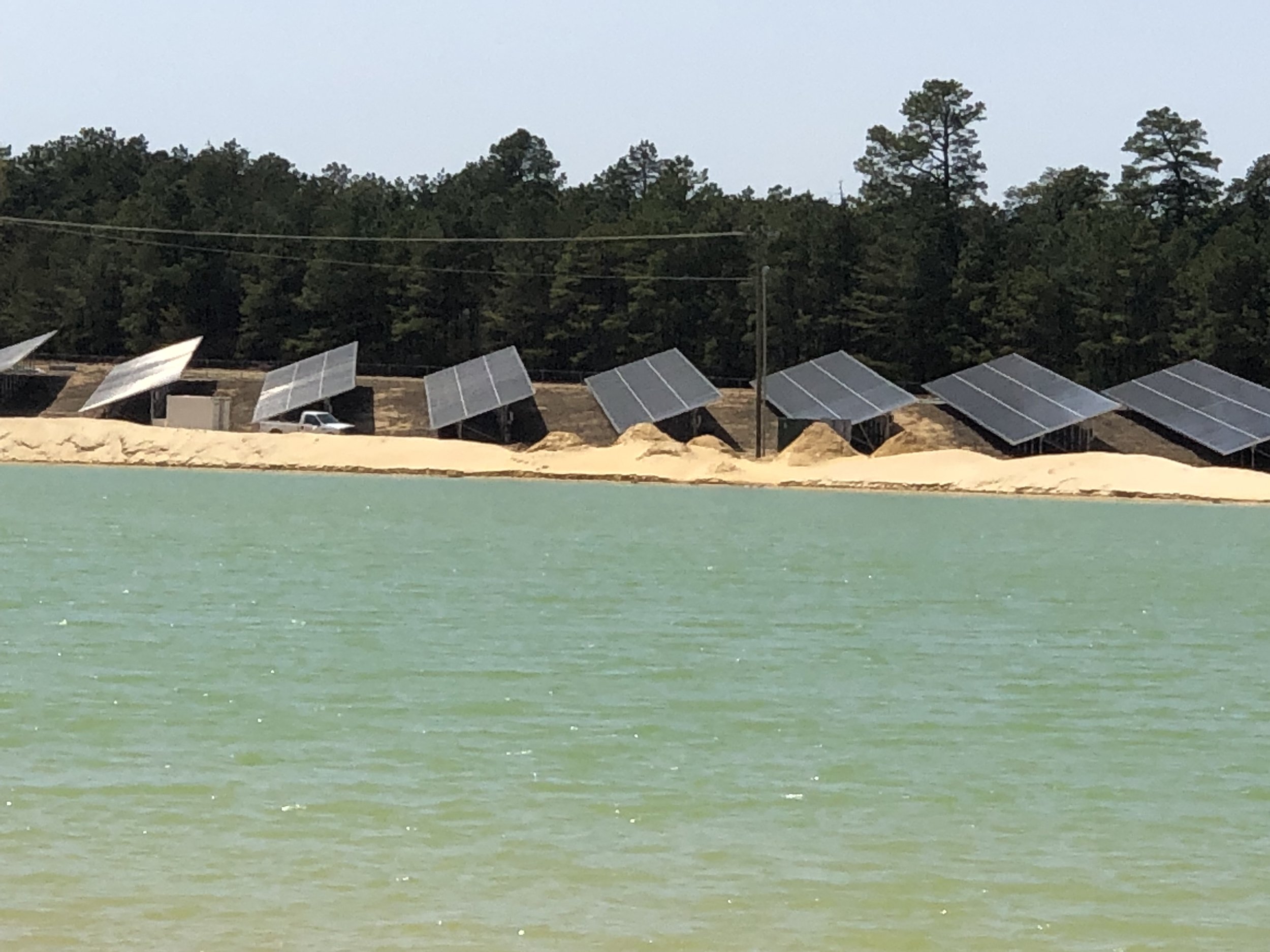
USDA REAP Renewable Energy Grant | The second grant our team acquired for the client was in the amount of $327,000 for a solar photovoltaic array to power close to 100% of initial scope and reduce their environmental footprint. Aztec Materials has since expanded their operations, and the solar array covers the majority of the new total electricity demand. This solar array should last 20 to 25 years.
What does this program do? The program provides guaranteed loan financing and grant funding to rural small businesses and agricultural producers for renewable energy systems or to make energy efficiency improvements. Agricultural producers may also apply for new energy efficient equipment and new system loans for agricultural production and processing.
Who may apply for this program?
Agricultural producers – directly engaged in production of agricultural products where at least 50 percent of their gross income comes from agricultural operations
Small business located in eligible rural areas, meeting the Small Business Administration size standards and one of the following – private for-profit entity; a cooperative; an electric utility that provides service to rural consumers and operated independent of direct government control; a tribal corporation or tribal business entities
What is an eligible area?
Projects must be located in rural areas with populations of 50,000 residents or less
Agricultural producers may submit project to be located in non-rural areas should project be associated
with an on-site production operation.
Funds may be used for the purchase and installation of renewable energy systems, such as:

Biomass (for example: biodiesel and ethanol, anaerobic digesters, and solid fuels)
Geothermal for electric generation or direct use
Hydropower below 30 megawatts
Hydrogen
Small and large wind generation
Small and large solar generation
Ocean (tidal, current, thermal) generation
Funds may be used for the purchase, installation and construction of energy efficiency improvements:

High efficiency HVAC
Insulation
Lighting
Cooling or refrigeration units
Doors and windows
Electric, solar or gravity pumps for sprinkler pivots
Switching from a diesel to electric irrigation motor
Replacement of energy-inefficient equipment
What funding is available?
Loan guarantees on loans up to 75 percent of total eligible project costs
Grants for up to 50 percent of total eligible project costs
Combined grant and loan guarantee funding up to 75% of total eligible project costs
For full program details:
Rural Energy for America Program Energy Audit & Renewable Energy Development Assistance Grants in Pennsylvania | Rural Development (usda.gov)
For assistance and to get started: Paul Spiegel, PE, LEED AP | paul.spiegel@ssmgroup.com






Maximizing Solar Savings: A Guide to 3 Key Financial Benefits
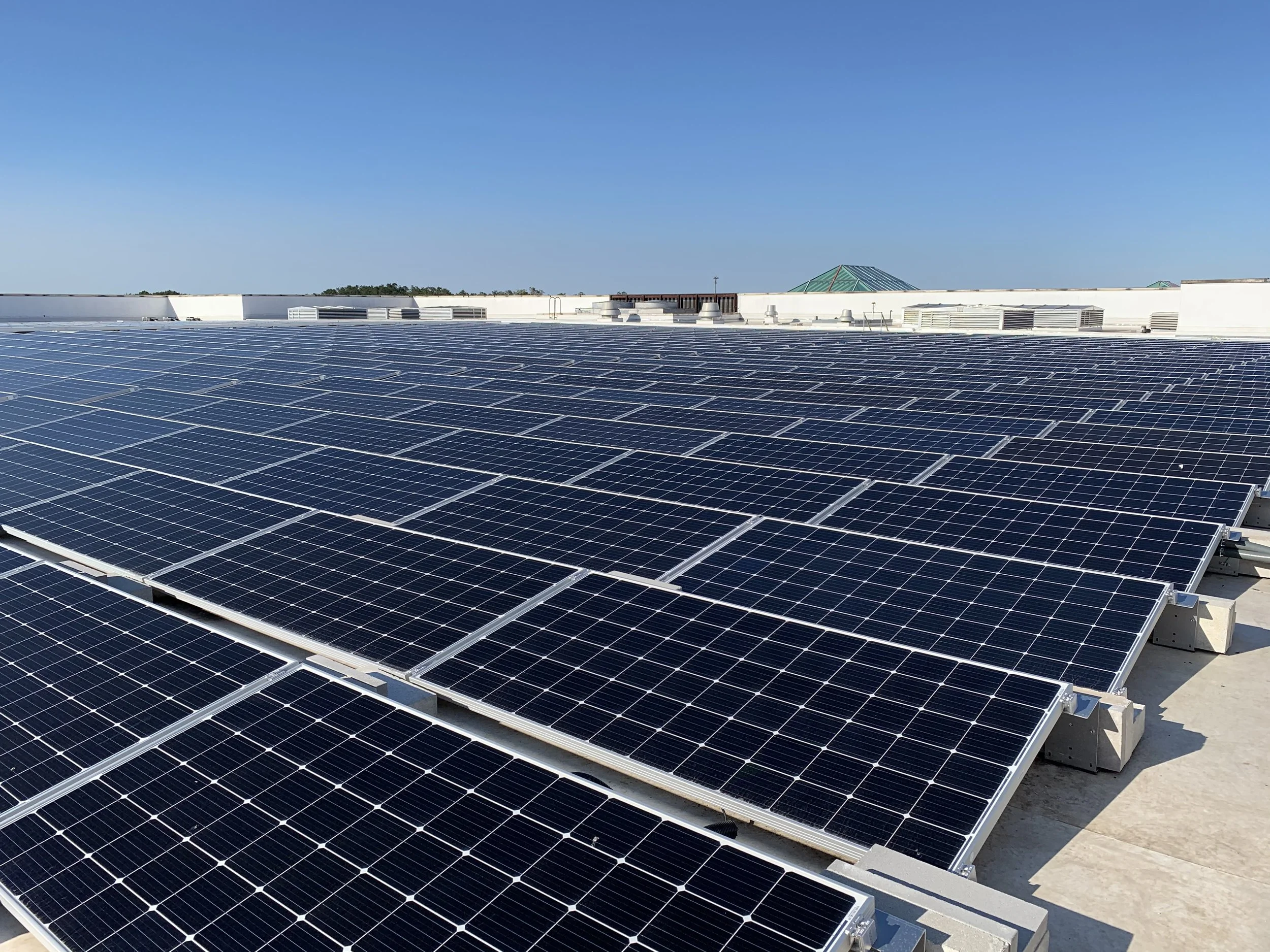
Solar system installation is more affordable than ever. Several financial opportunities including rebates, grants, and tax credits combined with expanding financing opportunities make the return on your investment faster and more attainable. Here’s a look at 3 key financial opportunities associated with solar system conversion.

With staggering energy costs and an increasing awareness of the impact of greenhouse gas emissions, home and business owners are leaning into clean and renewable energy opportunities such as solar power generation.
Fortunately, solar system installation is more affordable than ever. Several financial opportunities including rebates, grants, and tax credits combined with expanding financing opportunities make the return on your investment faster and more attainable.
Net Metering
Net metering offers a return on your production of excess energy, ensuring you use the energy you need – and you get paid for the energy you don’t.
Coordinated through your utility company, net metering pays residential and commercial solar system owners for excess electricity that is generated and sent to the utility’s electrical grid. System owners are compensated through payment credits on utility bills, which can be used to offset future bill statements.
Weather and other conditions can impact a solar system’s peak performance. And at times, your energy use will outweigh what you’ve generated. Through net metering, your extra electricity is fed to your utility’s grid – and they give you credits for when you need to draw electricity back out.
The arrangement is symbiotic: clean energy never goes to waste, and you’re compensated for everything your system generates. In turn, you reap significant energy savings and better control over your energy expenses.
Solar Renewable Energy Certificates (SRECs)
While net metering often comes in the form of utility credits and offset of utility bills, SRECs are an additional revenue stream that can accelerate the return of your investment.
Solar Renewable Energy Certificates (SRECs) are earned by home or building owners for every 1,000 kilowatt-hours (kWh) or 1 megawatt-hour (MWh) of solar energy produced. Certificates are then sold to energy suppliers at market value to help meet their mandatory renewable energy requirements. The price for each SREC is dependent on the current market supply and demand.
State energy programs require electricity providers to derive a percentage of their energy from renewable sources. Because your certificates represent a positive environmental impact, utility providers can purchase your SRECs to assist them in reaching this requirement.
Understanding the value and fluctuation of SREC prices, as well as the application and registration requirements are all crucial to making the most out of the SREC program. We encourage working with an experienced team like SSM and Practical Energy Solutions to ensure you’re receiving the highest return for your SRECs.
Solar Investment Tax Credit (ITC)
The Federal Investment Tax Credit offers a steep federal tax credit based off your total solar project cost. The credit is not a deduction or rebate, but rather a dollar-for-dollar reduction in taxes that an individual or company would otherwise owe.
The ITC was enacted in 2006. But passage of the Inflation Reduction Act in 2022 extended the tax credit timeline and successfully increased the credit amount received. Almost all commercial and residential solar projects initiated within the next ten years will return at least 30% of project costs in federal tax credits. However, intentional planning and decision making can bring you a credit return of up to 70% of total project cost.
New! Non-taxable entities and direct payments. With the expansion of the ITC through the Inflation Reduction Act, for the first time ever non-taxable entities can now receive the available tax credits and bonuses in the form of ‘Elective Payment’. This is most applicable to local and state governments, schools, and non-profit organizations. Similarly, tax-paying entities with low tax liability can now sell their tax credit, producing a direct payment option.

How to make the most of financial opportunities
Consider onboarding a solar expert team to ensure you right-size the system and make the most of every incentive available. Proper planning, negotiation, and analysis of rebates and financing opportunities can make installation of a solar system not only a low-risk investment but a high-value opportunity.
Perfecting your financial recipe is what we do. We pair technical engineering backgrounds with unrivaled expertise in the clean energy sector and nearly a decade of experience in energy to ensure your clean energy plan is not only best for a financial return, but also the best for reaching your long-term goals.
For assistance, contact us at: paul.spiegel@ssmgroup.com | 610-609-8313


Inflation Reduction Act: Financial Highlights for Energy Projects
Coined as the largest climate investment in U.S. History, here’s a few highlights you should know about the Inflation Reduction Act as it relates to your energy efficiency projects.
The Inflation Reduction Act (IRA) is the largest climate investment in U.S. History. Designed to mobilize both individuals and businesses towards clean and efficient energy goals, the IRA offers various incentives, finance programs, funding opportunities, and tax breaks in return for efficient-conscious improvements and clean energy projects.
There has quite literally never been a better time to invest in clean energy. Standout elements of the IRA include expanded tax credits and deductions as well as trickle-down grant and program funding. All of which are exceptionally attractive to organizations that have equipment nearing the end of its life, commitments to clean energy, or a curiosity for renewable energy alternatives.
Making sense of the IRA and its impact on your potential projects can be a daunting task at best. Our energy team combines technical expertise with nearly a decade of experience in energy to bridge the gap between your long-term goals and the viable financial opportunities that make them a reality.
Expansion of Federal Investment Tax Credit
Perhaps one of the most exciting pieces of the IRA is the expansion of the Federal Investment Tax Credit (ITC) which offers a dollar-for-dollar tax credit based off project costs.
ITC has been in effect since 2006. But the signing of IRA not only extended the timeline but also expanded the available credits and bonuses for energy projects. It also extended the technologies recognized to a more comprehensive list of energy efficiency technologies.
NEW! For the very first time, the benefits of the ITC have now been made available to non-taxable entities such as school districts, municipalities, and non-profits in the form of direct payments that function much the same as a tax credit does for taxable entities. Read more under “direct pay options”.
The base credit for projects at both <1MW and >1MW is 30% of project costs. (Note that greater than 1MW must meet prevailing wage and apprenticeship requirements.) In other words, at the base credit, the amount of 30% of total project cost will be reduced in federal taxes the individual or company otherwise would owe.
However, with a little bit of extra planning and intentional decision making, projects may be eligible for additional bonus credits totaling up to 70% of total project costs in tax credits. Some of these additional bonuses include use of domestic materials and community or project location.
Projects eligible for ITC
Multiple solar and wind technologies
Geothermal (heat pump & direct use)
Combined heat and power
Municipal solid waste
Energy storage technologies
Microgrid controllers
Fuel cells
Microturbines
Interconnection costs
Direct Pay Options for Low or Non-Taxable Entities
For the first time, the Inflation Reduction Act has extended the benefits of the Investment Tax Credits to also benefit non-taxable entities or entities with low tax liability. There are two new credit delivery options – elective pay (aka direct pay) and transferability.
Now, state, local, and tribal governments as well as non-profit organizations and other tax-exempt entities will be able to receive certain tax credits as direct payments from the IRS in lieu of tax credits.
Additionally, the Act allows tax-paying entities with a low tax liability to transfer (i.e. sell) all or a portion of certain tax credits to another party. This offers a flexible opportunity to still reap the benefits of the ITC in a fashion resembling direct payments.
Additional resources related to funding announcements:
Grants and Financing
Another result of the Inflation Reduction Act is an abundance of additional funding trickling down through several avenues including mandatory grants, competitive grants, loans, and bonds.
Funding is coming down through existing avenues such as the United States Environmental Protection Agency (EPA) as well as the PA Department of Environmental Protection (PA DEP) and through other state agencies. New grant programs are opening up regularly through IRA funding distribution.
Information related to specific funding amounts and deadlines associated with these programs remains dynamic – updating often with new opportunities. However, the team at SSM and Practical Energy Solutions continues to keep a pulse on funding and incentive opportunities that come out of this legislation, ensuring we can help guide our clients towards the best opportunities for their projects.
Improvements recognized 179D
Heat pumps; Chillers; Boilers
VRV & VRF
Windows; weather stripping
Envelope
Lighting and controls
Air sealing; Building insulation
High efficiency ventilation
Extension of 179D Commercial Tax Deduction
Another key provision of the Inflation Reduction Act is the extension of the already existing 179D Commercial Tax Deduction which offers a deduction for energy-efficient building improvements based on building square footage.
Improvements can be as simple as updating weather stripping and insulation to more advanced improvements such as roof replacements and ventilation expansion.
The deduction amount begins with a base of $0.50-$1 per square foot depending on the project’s resulting increase in efficiency. This base credit is increased 5 times – totaling up to $5 per square foot if the project meets prevailing wage and registered apprenticeship requirements
Making the most of incentives
The Inflation Reduction Act presents some of the most expansive opportunities for making clean energy affordable and viable for organizations and building owners of all sizes. Whether your efficiency goals are ambitious or modest, we’re confident there’s a financial recipe that makes reaching them both attainable and affordable.
We’re well versed in capitalizing on financial opportunities for our clients, and ensuring the return on your investment is within sight. By pairing our understanding of legislation such as the IRA with our expertise in financing programs outside of legislation, we’re able to prepare the best clean energy plan for organizations of any size and any goal.
For more information on Energy Services and Financial Opportunities:
Paul Spiegel, PE, LEED AP | Director, Energy and Sustainability Services
paul.spiegel@ssmgroup.com | 610-609-8313
Congratulations Reading Skatepark Association and City of Reading!
The City of Reading and Reading Skatepark Association recently broke ground on the Reading Skatepark at 601 Canal Street. SSM’s Civil Engineering team provided land development services, and more.
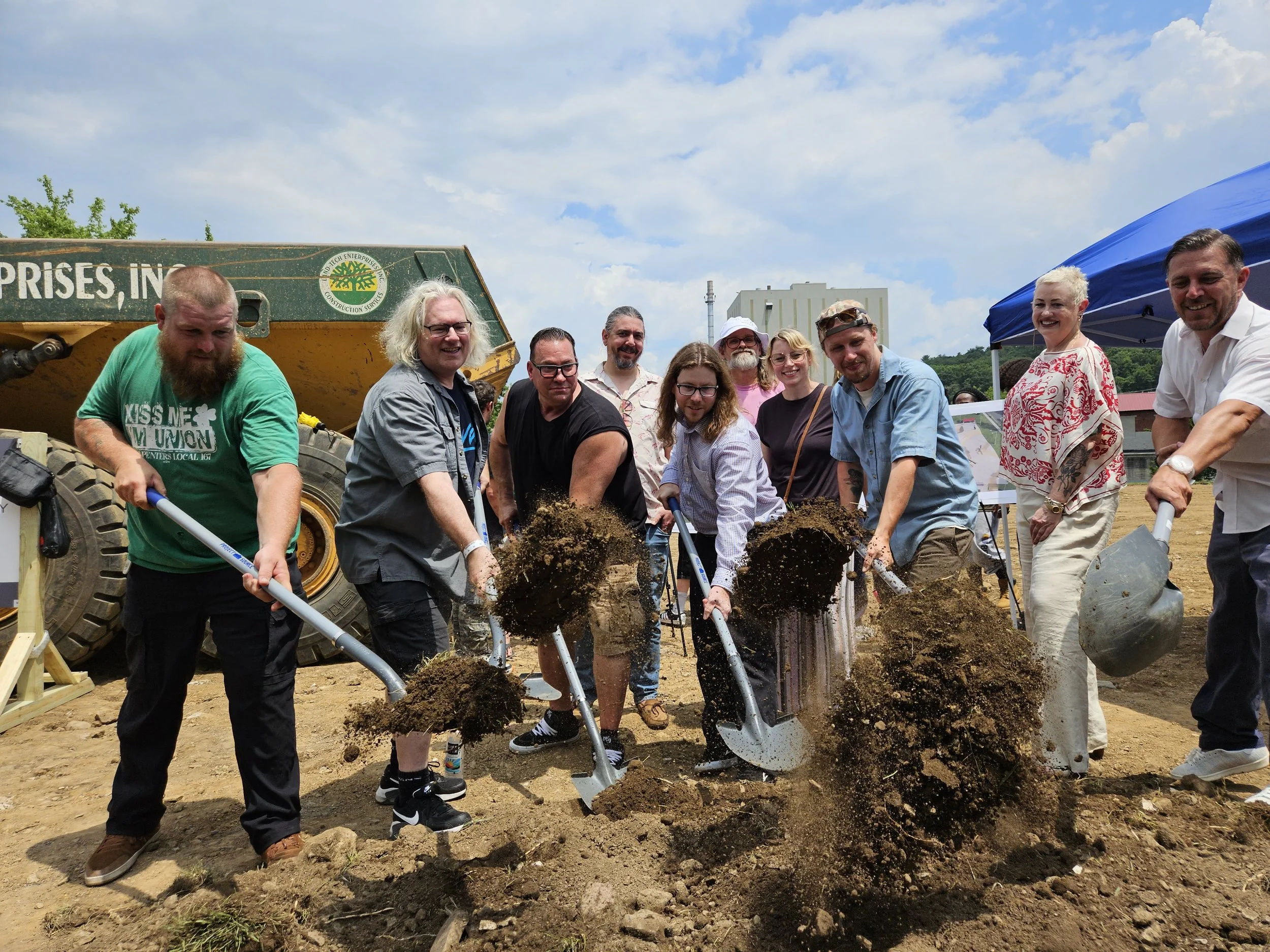
On July 6th, 2023 the Reading Skatepark Association and City of Reading held a ceremonial groundbreaking for the Reading Skatepark located at 601 Canal Street in Reading, Pennsylvania.
SSM provided full Land Development services including survey, site design/layout, preparing required City applications for Land Development, subdivision/lot consolidation services, NPDES permitting, stormwater management design of an underground infiltration bed, erosion control design, project coordination, utility design, and stadium lighting design.
SSM also prepared engineering cost estimates and technical specifications for bidding purposes, presented the project to the City of Reading Planning Commission, and provided overall Project Management.
SSM obtained the required development and permit approvals from the City, PaDEP and Berks County Conservation District.
With the skatepark configuration provided by Grindline Skateparks, Inc., SSM provided all associated civil site work in order to accommodate this site. SSM guided Reading Skatepark Association through the City’s land development process. SSM surveyed with ground penetrating radar (GPR) to record a 96” diameter pipe that bisected the site. Deed research revealed the sites’ makeup of 50 lots, which were ultimately consolidated into a single lot.
The proposed project was funded by numerous grants including those from the Pennsylvania Department of Conservation and Natural Resources (DCNR), Department of Community and Economic Development (DCED), Vans the Shoe Company, and local sponsors.
The skatepark is a dream of Holistic Skateshop owner, JD Turner. After years of planning the official groundbreaking is certainly a monumental and exciting moment for all.
In the news… want to read more about the Skatepark? Here’s a few links to check out.




Project Profile: Aztec Materials Electric Dredge and Solar Array
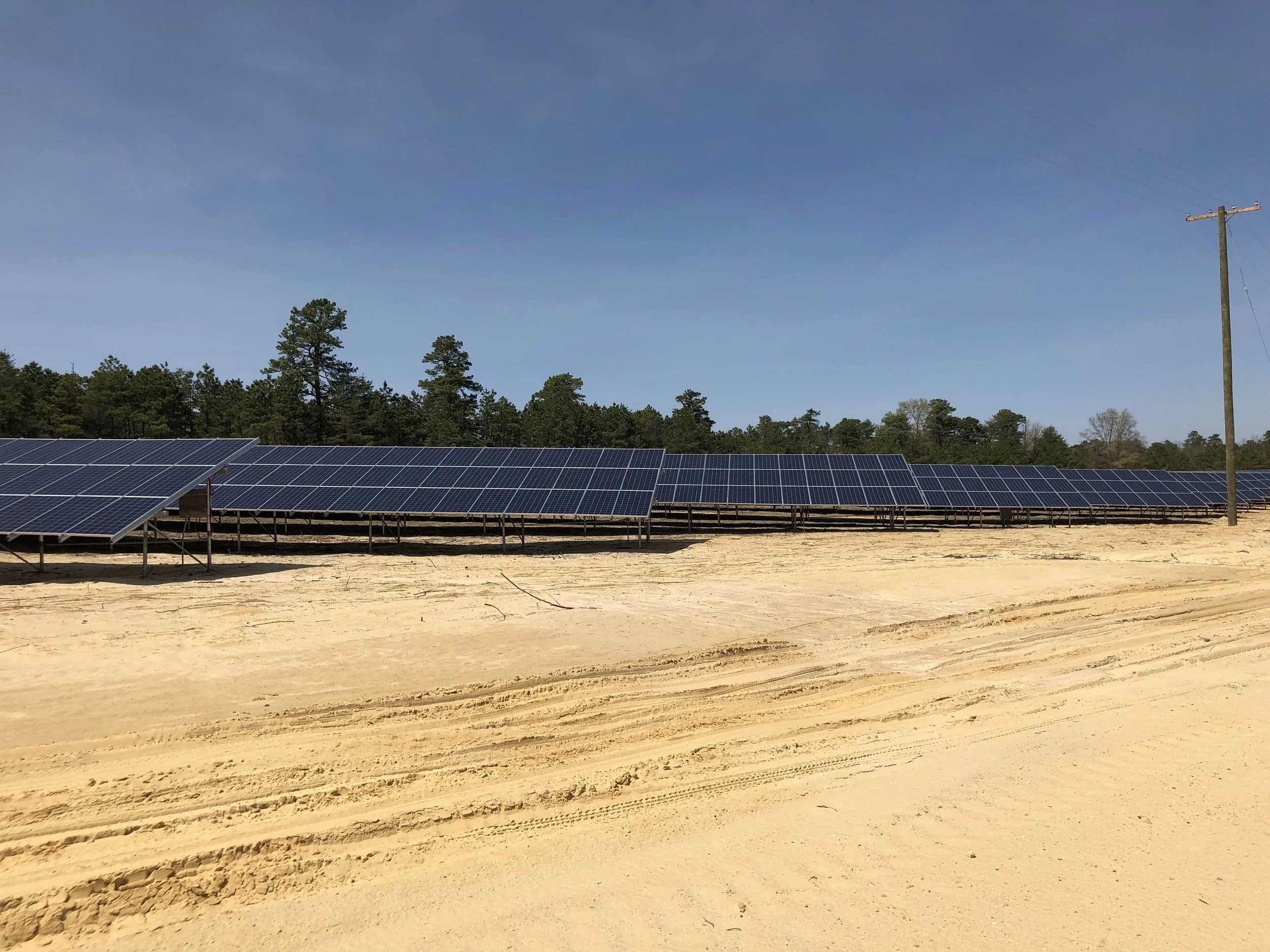
Aztec Materials enlisted Practical Energy Solutions, SSM’s Energy team, to provide comprehensive energy and sustainability services, listed to the right. The site’s operation now leverages an ecologically sound electric dredge powered by a large solar array.
Delaware Valley Concrete, a firm that specializes in producing exceptional-quality concrete and sand products for residential, commercial, and DOT projects. With nine plants located across the region, the firm takes on an impressive initiative to produce the most environmentally friendly concrete they can.
Under the Delaware Valle Concrete umbrella, Aztec Materials, situated on 300 acres of property in Hammonton, NJ is a sand mining operation consisting of a sandpit and, formerly, a diesel crane and dredge. The labor-intensive operation relied heavily on trucks to transport sand across the 300 acre site to screens that filtered our larger pieces.
Aztec Materials enlisted Practical Energy Solutions, SSM’s Energy team, to provide comprehensive energy and sustainability services, listed to the right. The site’s operation now leverages an ecologically sound electric dredge powered by a large solar array.
USDA REAP Energy Efficiency Grant | Our team acquired a $250,000 Renewable Energy for America Program (REAP) grant to purchase a new electric pump/dredge, to eliminate diesel fuel use.
USDA REAP Renewable Energy Grant | The second grant our team acquired for the client was in the amount of $327,000 for a solar photovoltaic array to power close to 100% of initial scope and reduce their environmental footprint. Aztec Materials has since expanded their operations, and the solar array covers the majority of the new total electricity demand. This solar array should last 20 to 25 years.
Project Benefits:
Increased production by around 500%
Reduced energy use and emissions from diesel to electricity
Annual savings of $180,000 in energy costs
Annual savings of $160,000 selling SREC
With energy cost savings, SREC savings and a 30% federal tax credit, the solar array paid for itself in under 4 years. In addition to satisfying a 10-year loan on the solar array, the client will have saved $1.8 million net. Converting the new dredge from grid electricity to solar electricity reduces its environmental impact to almost zero. Considering the towering electricity costs in southern New Jersey, the solar array provides a strong financial and economic benefit for the company, as well as an environmental benefit for the region.
“The solar array paid for itself in under 4 years. Converting the new dredge to solar electricity reduced its environmental impact to almost zero.”

Services Provided:
Grant acquisition services
Calculations on energy savings, energy use reductions and emissions
Engineering analysis
Financial services
Technical and financial review
Cash flow analysis
Life cycle analysis
Land development plan
Erosion and sedimentation control plans
Permitting support
Utility connection coordination
Solar Renewable Energy Credits (SRECs)
Utility contract negotiation
Ongoing SREC quarterly applications
Inspection coordination
Solar array add-ons to monitor output
Reporting

Refined Practices: Survey Technology through the Years
Since 1932 we’ve consistently refined our practices and pioneered into the newest technology, ensuring our survey data is always collected proficiently and accurately.


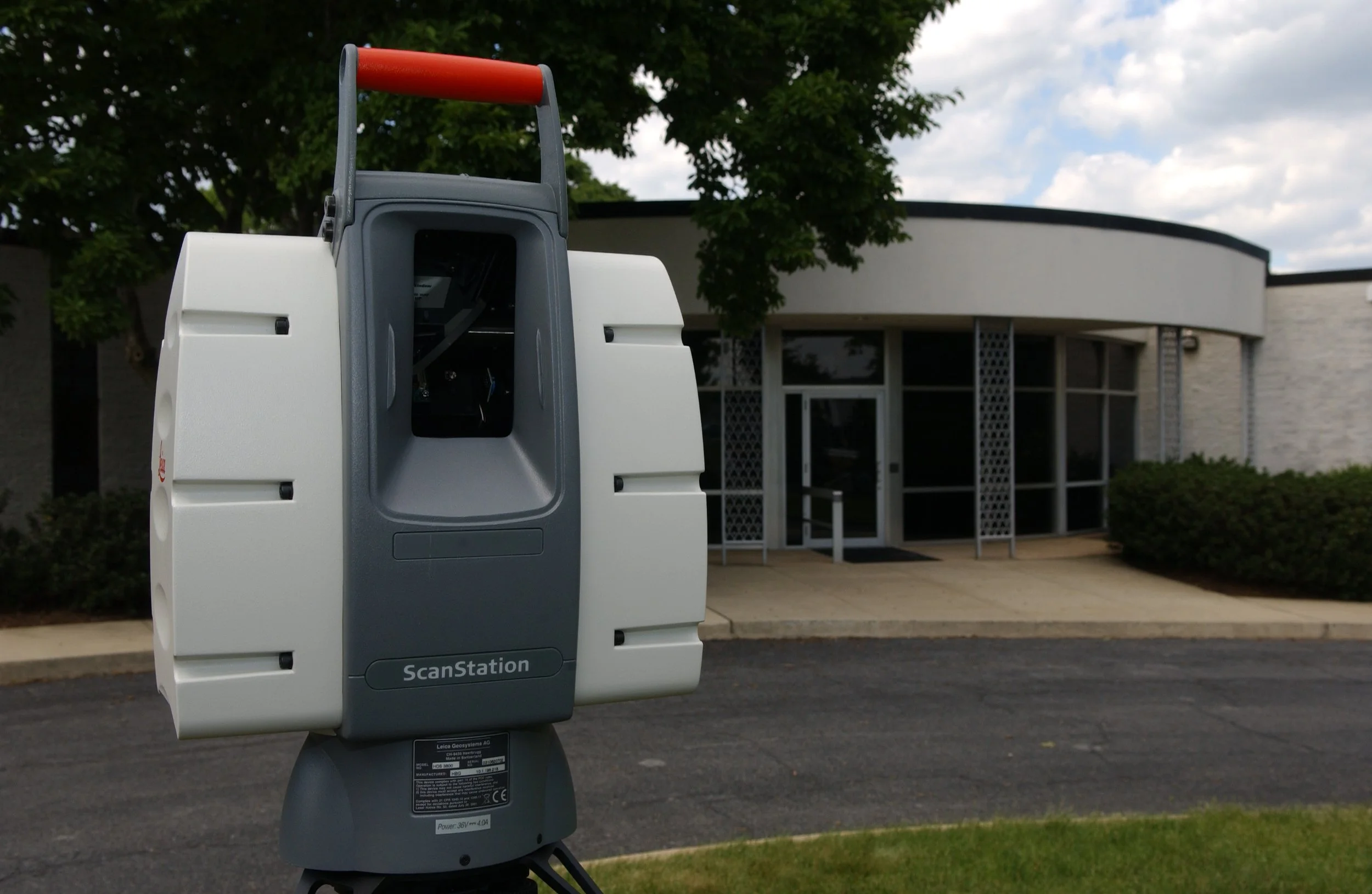


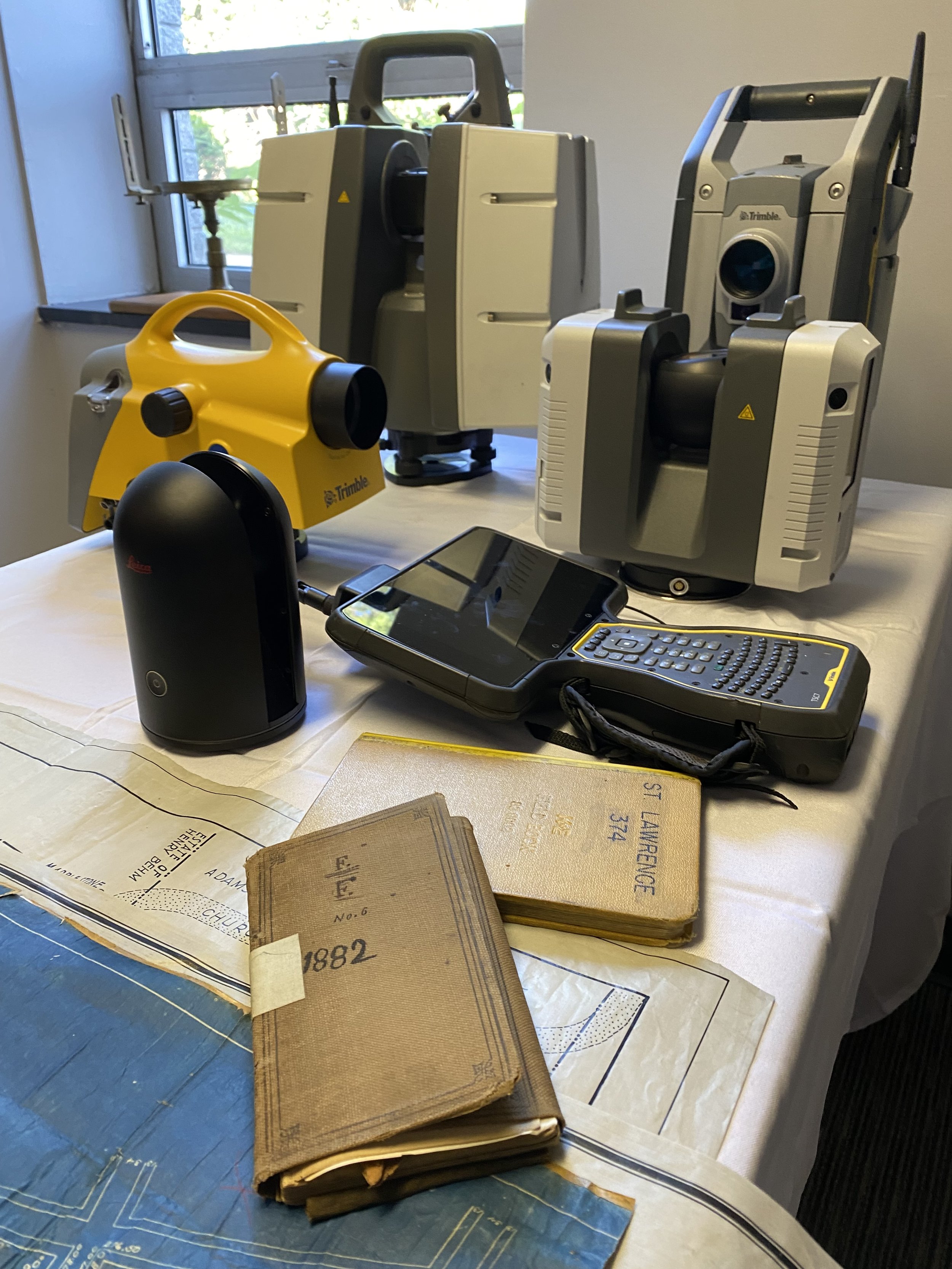


SSM has been at the forefront of surveying expertise since 1932. Since then, we’ve consistently refined our practices and pioneered into the newest technology, ensuring our survey data is always collected proficiently and accurately. With each new advancement in technology, we are able to decrease the potential for human error and increase precision. That’s why we find it so important.
Some of our notable survey and data capture technology upgrades throughout the years:
1932 | In 1932, engineering and surveying was a manual process. It started with paper and pencil, capturing data and measurements in the field and then drawing out plans and designs by hand.
1972 | Hewlett Packard's 3800A Distance Meter opened a new era in surveying for Spotts, Stevens and McCoy, Inc. This new equipment allowed measurements to be made up to 10,000 feet with an accuracy of +(0.01 feet +0.01 ft. per 1000 ft.). This instrument replaced the measuring tape when large tracts of land were to be surveyed.
1994 | CADD Department Upgrades Equipment: Our team added 5 new CADD stations and replaced its old Calcomp pen plotter with a new HP650C Design Jet color printer reducing printing time from 1 hour to six minutes.
1995 | SSM added state-of-the-art Trimble Global Positioning System (GPS) equipment. GPS uses satellite telemetry to obtain precise three-dimensional positions on the earth's surface. Since GPS does not rely on optical line of sight conditions, it can be used day or night, over long distances and under all weather conditions. This equipment now gave SSM the capability of providing land development control, groundwater monitoring well locations, and aerial photography orientation points as well as three-dimensional networks for municipal mapping and GIS applications.
2007 | SSM purchases its first high-definition scanner. Coined Lucille by the staff, the high-definition laser scanning technology provided a non-intrusive method to obtain three-dimensional geometry measurements and models of existing structures and sites for both large and small-scale projects. Today our scanners have evolved, some capturing 1,000,000 data points in just a second.
2012 | SSM purchases its first drone and invests in training/certifying staff as FAA Certified Remote Pilots. We use Drone Flight Services and High-Definition Laser Scanners to obtain models and measurements of existing structures and sites. This non-intrusive technology saves time while raising the bar for high-definition precision all size projects such as campus master planning, historic building preservation and industrial development or impact sensitive agricultural and preserved lands.
2022 | In addition to our Leica P40 scanner, our most recent scanner upgrade, the Leica RTC360, empowers our scanner team to document and capture project data in 3D, while improving efficiency and productivity in the field. Our implementation of Leica Cyclone and Register 360 post processing software allows our scanner team to export point cloud data in a variety of formats.
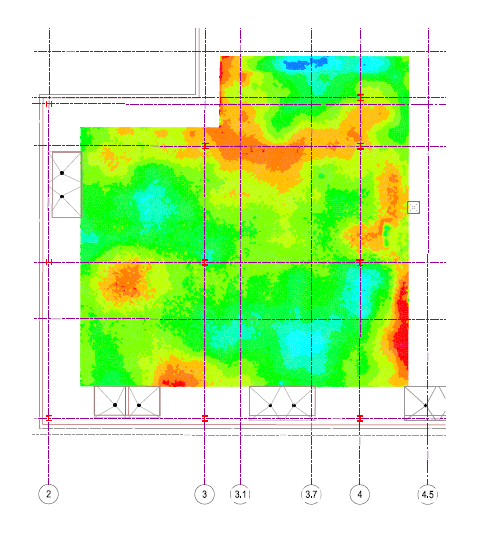
High-Definition Laser Scanning to Measure Floor Flatness
High definition laser scanning offers the best precision, efficiency, and accuracy to the process of measuring floor flatness. With speed unlike manual measurement, and collection of millions of points, digital scans identify and distinguish exactly where floors stand- competitively outshining historical practices.
Getting to the Bottom of It
Experienced building teams from construction supervisors to developers and managers - all know well the impact that floor flatness can have on timeline and long-term utility of a facility. Exact flatness in concrete floors is essential for efficient facility functioning, maximum floor tolerance, maintaining operations, and successful architectural design.
Down to minute measurements, just 1/16th of an inch, floors that are not exceptionally flat can cause major disruptions to existing facilities, or even halt construction of new ones. Although rarely noticeable to an untrained eye, the impacts of a floor that is not flat are impossible to ignore.
For industrial facilities- machinery and vertical storage all require precise floor flatness. Lack thereof can increase chance of injury, loss of product, and damage to large equipment.
For buildings being rehabilitated or revitalized - settled concrete can cause a severe disruption to the future utility.
High definition laser scanning offers the best precision, efficiency, and accuracy to the process of measuring floor flatness. With speed unlike manual measurement, and detailed collection including millions of points - digital scans identify and distinguish exactly where floors stand- competitively outshining other tactics.
Increasing Precision, Accuracy and Efficiency
It wasn’t long ago that technicians would lay a 10-foot straightedge on a finished floor, identifying gaps and using these to calculate flatness. More recently, crews are deployed to walk slabs of concrete, take a variety of measurements, and generate a resulting calculation. These methods not only leave great room for human error, but also require extensive manual labor and time requirements.
Utilizing high-definition laser scanning to measure floor flatness dramatically increases the three core areas of concern: precision, efficiency, and accuracy. Too often, building teams are forced to accept that accurate, precise results mean extended timelines. But with laser scanning, neither time nor accuracy must be sacrificed.
Here’s how it works:
Our survey and data collection technicians deploy cutting-edge scanners to the construction site.
In only a few minutes, the floor space is scanned, collecting millions of single data points that together form a digital rendition of the space at precise measurements.
This is repeated a number of times, each time utilizing the same control or benchmark within the space - increasing accuracy of each collection point.
The scans are transferred to digital format, creating a 3D point cloud- all of the multiple scans, millions and millions of individual data points, layered on top of one another, and anchored by the control.
Digital scans of the space offer elevation information- clearly highlighting the floor’s flatness. We are also able to take these precise measurements and calculate a F-Score just as manual labor did in the past.
21st century facilities shouldn’t be built with last century tactics. By collecting millions of points in minimal periods of time, laser scanning outshines manual labor and calculations. We’ve decreased the chance of human error and decreased the amount of time it takes to collect your information - getting you what you need in a better way, a faster way, and a more effective way.
Looking to talk more about using scanning to measure floor flatness? Our Survey team would be happy to help. Send us an email at information@ssmgroup.com
Read more about Survey and Data Capture.



Spring Highlight: Drone Data Collection
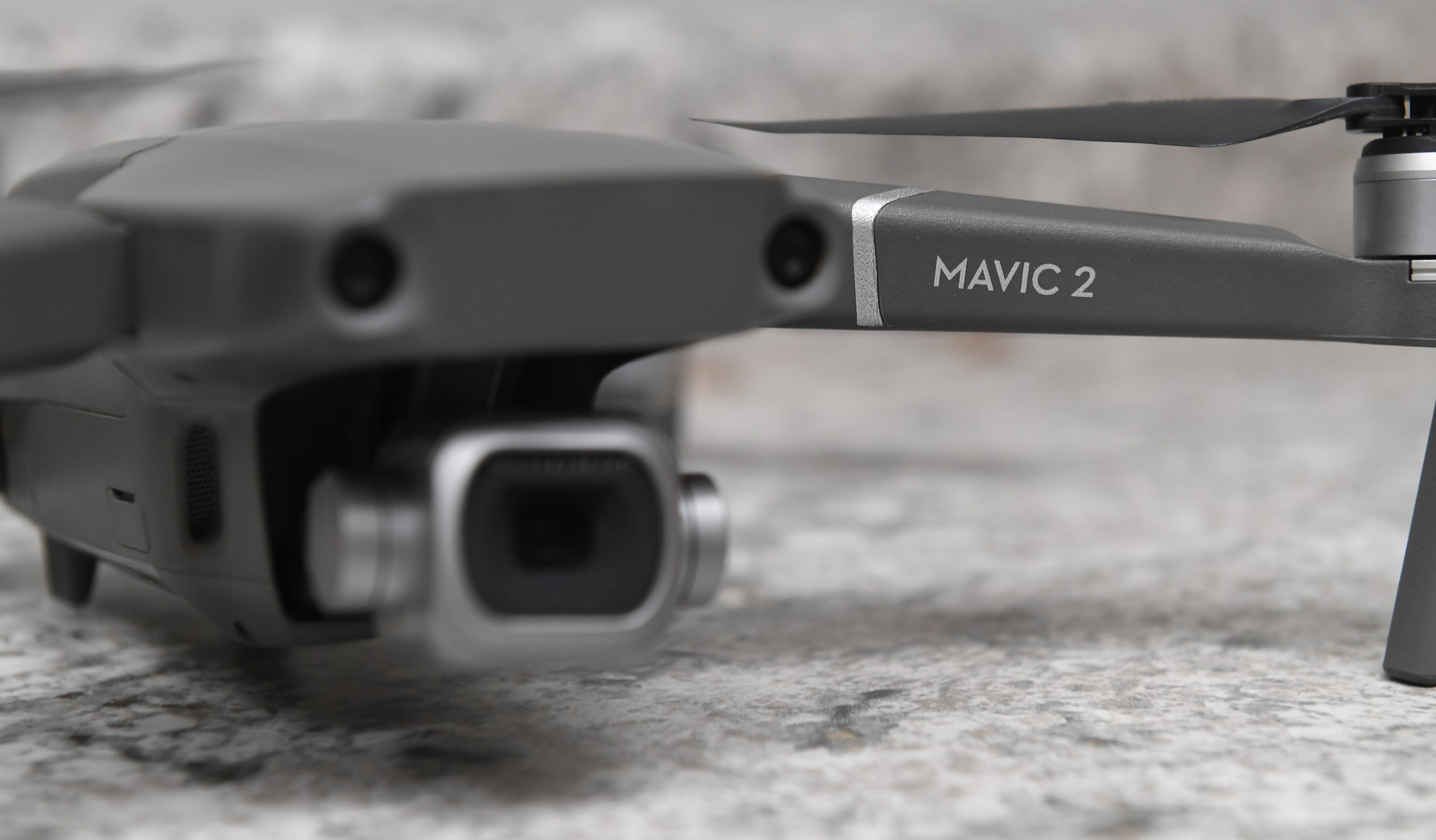
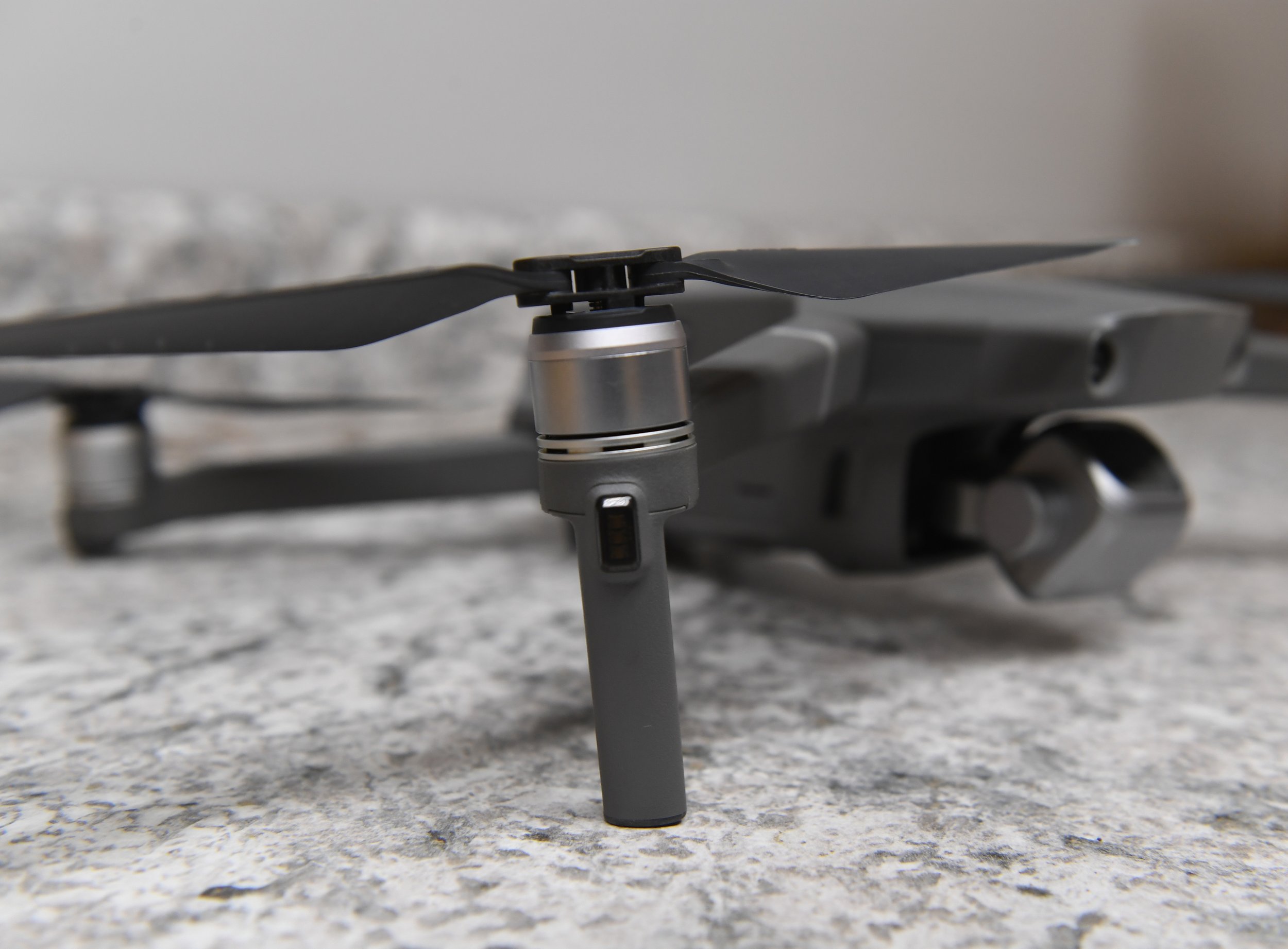
Spring is one of the best times to deploy drone technology for data and information collection. Snow-free, leaf-free and sunny conditions allow us to get the best picture and the most accurate information for our clients. At SSM, we have three certified FAA Remote Pilots on our team.


Above It All
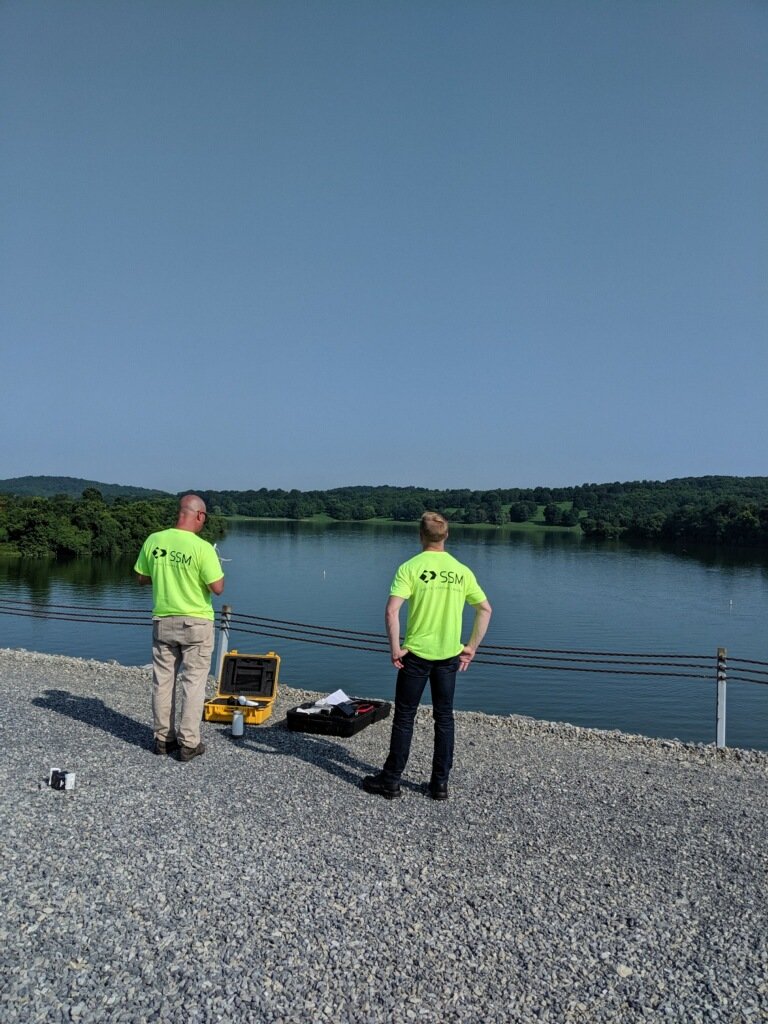
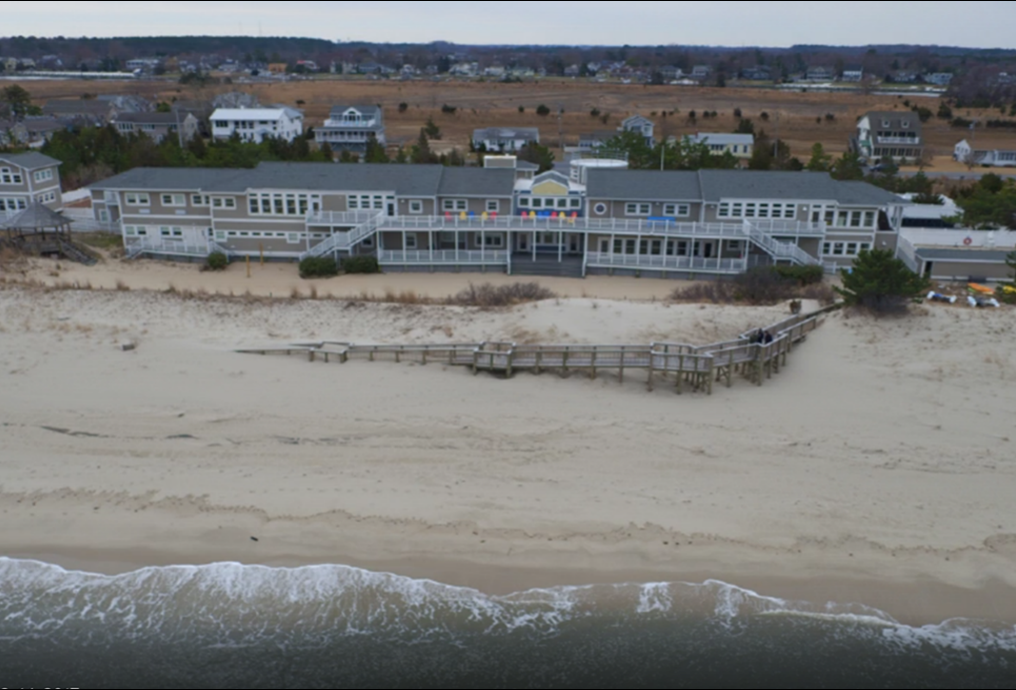
With drone flight technology, we are able to measure things that could never be measured before. By capturing information from the air, we help our clients establish images of existing conditions, create reference points for future site considerations, see areas of concern that are hard to reach, and make educated decisions that we previously could not make.
At SSM, we have three certified FAA Remote Pilots on our team. Drone photography offers a powerful solution for monitoring progress on construction sites, capturing hard-to-reach details on elevated structures, roof inspections and documenting infrastructure on expansive sites.
Spring Flying Season
Spring is one of the best times to deploy drone technology or conventional aerial photography from fixed wing aircraft for point data and image collection. Snow-free, leaf-free and sunny conditions allow us to get the best picture and the most accurate information to enhance our clients’ projects.
Now is the best time to get your aerial mapping projects scheduled.
Common Applications:
Construction Monitoring
Volumetric Computations
Site Design and System Layout
Promotional Imagery
Litigation Support
Aerial Site Evaluation and Progress Reports
Rooftop Condition Assessment
Erosion and Damage Assessments

Congratulations to our clients!
We helped our clients acquire nearly $3,000,000 in project funding!
We helped our clients acquire nearly $3,000,000 in project funding!
The Commonwealth Financing Authority (CFA) recently announced the approval of funding from the Local Share Account (Statewide). With the assistance of our team, several of our clients have received funding for projects that benefit the public interest of Pennsylvania.
Our grant services include preparation and submission on behalf of the entity. We also provide cost estimates and scope of work definition and description. Whether our client needs full range grant assistance, or just one piece of a bigger picture -we’re here to help.
Read about the great projects that received funding below:
Reading Area Water Authority | SCADA and IT Upgrade Project | $165,649
Through grant preparation and submission services, SSM helped Reading Area Water Authority (RAWA) obtain $165,649 for upgrades to network security. The funds will be used to offset costs associated with the procurement and implementation of hardware, software, licensing, programming, and SCADA upgrades. The completion of this project will allow RAWA to continue to protect its water supply, treatment, and distribution systems into the future.
Upper Montgomery Joint Authority | 2022 Wastewater Treatment Plant Improvements | $149,952
SSM helped secure $149,952 in funding for upgrades to the Upper Montgomery Joint Authority’s (UMJA) wastewater treatment plant. The funding will offset costs associated with the procurement and installation of process, treatment, pumping, and security equipment for the plant. Of these include two new primary sludge transfer pumps and sludge blanket level sensors, as well as rebuild of the existing final clarifier and installation of security equipment throughout the plant. All of these upgrades will significantly improve the wastewater treatment plant and reduce long-term costs to the authority.
Bern Township Municipal Authority | Leiscz’s Bridge Road Pumping Stations Project | $210,366
With the assistance of SSM’s grant services, Bern Township Municipal Authority secured $210,366 for the construction of two new pumping stations which will connect into the existing sanitary sewer system and is transported to the wastewater treatment plant for treatment. This project will allow the authority to provide service to the surrounding homes and businesses as well as allow for additional future development in this area of the system.
Perkiomen Township Municipal Authority | Lodal Creek Sanitary Sewer Repair Project | $211,494
SSM assisted with grant preparations and submission, securing $211,494 for Perkiomen Township Municipal Authority for permanent repair work to a section of sewer main that was damaged as a result of the flooding from Hurricane Ida. Some of the damages include a broken section of the concrete encasement that protects the sewer main in the creek, creek gravel around the encasement, and the gabion basket wall that protects a manhole, leaving the manhole partially exposed to the creek. Repairs planned with received funding include replacing the gabion basket wall, lining a section of the sanitary sewer main with CIPP lining, and repairing the concreate encasement that protects the sanitary sewer main at the creek crossing. The permanent repair work and CIPP lining will allow the authority to continue providing reliable service to its customers. It is also expected to reduce inflow and infiltration (I/I) within the collection system.
Perkiomen Township Municipal Authority | Television Inspection System Equipment | $101,530
Perkiomen Township Municipal Authority (PTMA) obtained $101,530 in funding with the assistance of SSM’s grant team. Funds will be used to purchase Television Inspection System Equipment for use with the Authority’s ongoing inflow and infiltration (I/I) work. This equipment is critical for PTMA to perform inspection work in its sewer collection system. It allows for identification of issues within the system that could lead to collapse. It also will allow PTMA to prioritize areas of the system for repair. By resolving issues in the system and reducing I/I, PTMA can increase system capacity, allowing for future development of the township and surrounding area.
Leesport Borough | Water System Emergency Generator Project | $119,983
Leesport Borough was granted $119,983 with the assistance of SSM’s grant services. These funds will be utilized for emergency generators to be located at the two largest producing wells in the public water system. The Borough Hall building will also receive an emergency generator due to its housing of the water system controls, alarms, and SCADA system. There are currently zero emergency generators installed in the water system, requiring the system to operate on storage capacity when there is no power to run the wells. This can present limitation in the case of drought or fire flow events. The emergency generator project will help to decrease service interruptions and secure the ability to provide full fire flow service to the system customers.
Manheim Area Water and Sewer Authority | 2022 Sanitary Sewer Interceptor CIPP Lining Project | $880,993
SSM aided Manheim Area Water and Sewer Authority (MAWSA) in securing $880,993 for continued sewer interceptor rehabilitation. The rehabilitation work includes closed-circuit televising of the main interceptor piping to determine pipe condition. Then, the interceptor will be repaired and restored through the installation of CIPP lining. The sewer rehabilitation and repair of the interceptor piping is expected to significantly reduce the amount of inflow and infiltration (I/I) that enters the sanitary sewer system and wastewater treatment plant. This will not only protect this valuable infrastructure, but will enable MAWSA to serve future commercial, residential, and industrial development.
Manheim Area Water and Sewer Authority | Systemwide Water Meter Replacement Project | $1,000,000
SSM also helped Manheim Area Water and Sewer Authority (MAWSA) secure $1M in funding to offset costs associated with the procurement and systemwide installation of water meters and associated equipment for use in MAWSA’s water distribution system. Installation of new water meters will allow the authority to provide reliable service to water customers, as well as accurately capture water consumption and withdraw - necesarry for both customers and regulatory agencies. Accurate water meter readings will also allow for future expansion and development.
Walnutport Municipal Authority | Sewer Pump Station Repair | $75,000
SSM aided in grant preparation and submission, securing $75,000 for Walnutport Municipal Authority’s proposed pump station improvements. The existing pump station, constructed in 1978 and updated in 1995, presents some limitations. The proposed improvements include new submersible pumps installed on a rail system inside the existing wet well as well as a new grinder inside a concrete manhole outside of the wet well. A new valve vault and meter pit with a pemanent bypass pumping connection will also be installed, allowing for bypass pumping capabilities in an emergency situations.
Financing Opportunity: Pennsylvania C-Pace (Commercial Property Assessed Clean Energy)
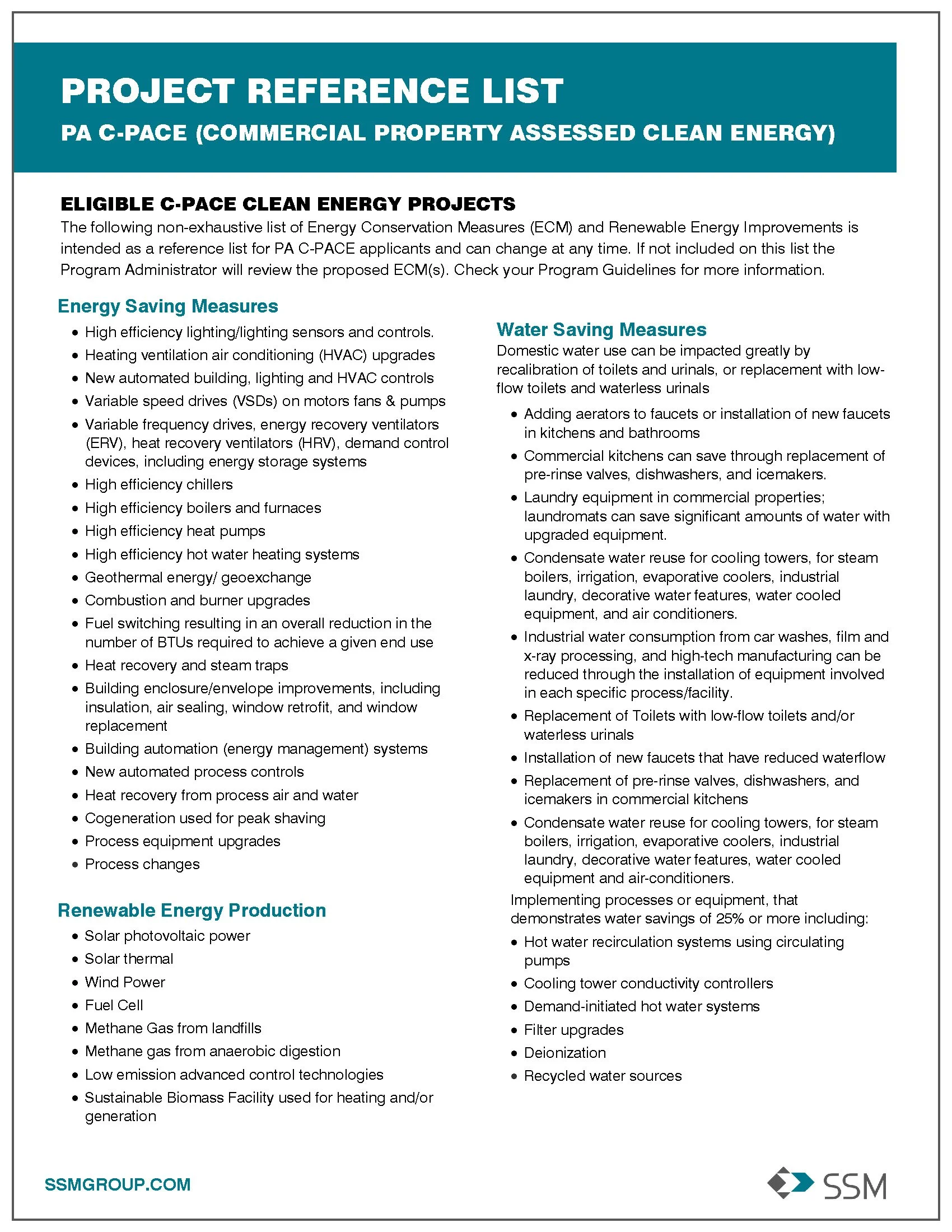
About the program: Commercial Property Assessed Clean Energy (C-PACE) is a financial tool for property owners to obtain low-cost, long-term financing for energy efficient equipment, renewable energy, and water conservation projects.
Commercial Property Assessed Clean Energy (C-Pace)
About the program:
Commercial Property Assessed Clean Energy (C-PACE) is a financial tool for property owners to obtain low-cost, long-term financing for energy efficient equipment, renewable energy, and water conservation projects.
About the program:
With C-PACE, building owners can enjoy the advantages of energy upgrades immediately and pay for them over time through a voluntary assessment lien that is repaid annually along with municipal property taxes. C-PACE can provide up to 100% funding of total project costs including equipment, labor, and soft costs. Because C-Pace is attached to a property assessment, it is a very secure form of financing.
Properties eligible for C-PACE in Pennsylvania:
Commercial, industrial and agricultural properties can access C-PACE if the county has adopted the C-PACE resolution.
The program guidelines adopted by a county will set forth the parameters for how a clean energy project can qualify for both new construction and a retrofit of qualified properties.
Finance:
Loans through the C-PACE program can be made to any property owner in good standing located in a participating county. Funding for the loan can come from “any public or private financing note, mortgage, loan, deed of trust, instrument, refunding note, or other evidence of indebtedness or obligation used to finance a qualified project.” While loans in other states are generally made from private equity capital providers, Pennsylvania is an open market so the property owner can borrow from a firm of their choice.
Administration:
Owners of commercial and agricultural properties that would like to improve their properties to save energy, conserve water, and/or generate renewable electricity should check the Sustainable Energy Fund (SEF) website or ask your Energy Consultant if C-PACE financing is available in your county or area. (Note: The Program Administrator for City of Philadelphia properties is Philadelphia Energy Authority, not SEF)
Here to Help:
The SSM Energy and Sustainability team provides technical support for C-Pace Philadelphia and is a partner of the Sustainable Energy Fund’s Service Provider Network.
Paul Spiegel, PE, LEED AP | paul.spiegel@ssmgroup.com
Funding Opportunity: Renewable Energy Systems & Energy Efficiency Improvements
What does this program do? The program provides guaranteed loan financing and grant funding to agricultural producers and rural small businesses for renewable energy systems or to make energy efficiency improvements. Agricultural producers may also apply for new energy efficient equipment and new system loans for agricultural production and processing.

FUNDING OPPORTUNITY
Rural Energy for America Program Renewable Energy Systems & Energy Efficiency Improvement Guaranteed Loans & Grants
Program Period | Open for Fiscal Year 2023
Applications due October 31, 2022 (set-aside) and March 31, 2023
What does this program do?
The program provides guaranteed loan financing and grant funding to agricultural producers and rural small businesses for renewable energy systems or to make energy efficiency improvements. Agricultural producers may also apply for new energy efficient equipment and new system loans for agricultural production and processing.
Who may apply for this program?
- Agricultural producers with at least 50 percent of their gross income coming from agricultural operations.
- Small businesses in eligible rural areas.
What are the borrowing restrictions for loan guarantees?
- Individual borrowers must be citizens of the United States or reside in the U.S. after being legally admitted for permanent residence.
- Private-entity borrowers must demonstrate that loan funds will remain in the U.S.
What is an eligible area?
- Businesses must be in located in rural areas with populations of 50,000 residents or less.
- Check eligible business addresses.
- Agricultural producers may be in rural or non-rural areas.
How may the funds be used?
Funds may be used for renewable energy systems, such as:
- Biomass (for example: biodiesel and ethanol, anaerobic digesters, and solid fuels).
- Geothermal for electric generation or direct use.
- Hydropower below 30 megawatts.
- Hydrogen.
- Small and large wind generation.
- Small and large solar generation.
- Ocean (tidal, current, thermal) generation.
Funds may also be used for the purchase, installation and construction of energy efficiency improvements, such as:
- High efficiency heating, ventilation and air conditioning systems (HVAC).
- Insulation.
- Lighting.
- Cooling or refrigeration units.
- Doors and windows.
- Electric, solar or gravity pumps for sprinkler pivots.
- Switching from a diesel to electric irrigation motor.
- Replacement of energy-inefficient equipment.
Agricultural producers may also use guaranteed loan funds to install energy efficient equipment and systems for agricultural production or processing.
What funding is available?
- Loan guarantees on loans up to 75 percent of total eligible project costs.
- Grants for up to 40 percent of total eligible project costs.
- Combined grant and loan guarantee funding up to 75% of total eligible project costs.
FOR MORE INFORMATION:
Rural Energy for America Program Energy Audit & Renewable Energy Development Assistance Grants in Pennsylvania | Rural Development (usda.gov)
The SSM Energy and Sustainability Team is well-versed in aiding clients with acquisition of funding for their energy projects.
For more information or assistance with acquiring REAP funds, contact our team.
Paul Spiegel, PE, LEED AP | paul.spiegel@ssmgroup.com
Building Energy Performance Program deadline is approaching
If you are a commercial building owner in the City of Philadelphia, you may be required to comply with a recent regulation called the Building Energy Performance Program (BEPP). This ordinance requires owners of buildings over 50,000 sf to do a "building tune-up" every 5 years. The tune-up is a review of maintenance and operations of primary energy using equipment like HVAC and lighting. The deadline for buildings over 100,000 sf is coming fast - September 30, 2022.
The Building Energy Performance Program, created through Building Energy Performance Policy aims to achieve efficient energy and water use in the largest non-residential buildings in Philadelphia.
Like cars, buildings need occasional tune-ups to keep them running smoothly and efficiently. A building tune-up requires a review of energy systems and controls and minor tweaks to bring them up to a good state of performance. On average, these tweaks result in 10–15% annual energy savings for a building. They also provide a more comfortable space for tenants. This policy is projected cut carbon pollution in Philadelphia by nearly 200,000 metric tons. This reduction is equivalent to taking 40,000 automobiles off our roads.
Who is impacted?
Owners of any non-residential building with indoor floor space of at least 50,000 square feet of indoor floor space must comply with the policy.
Who is not included?
- Residence halls, dormitories, and other non-transient large lodging places
- Parking lots and parking garages, or the portions of otherwise covered buildings used for parking
How do I comply?
Buildings must comply every 5 years from their compliance date.
Buildings have three options for compliance.
- Conduct a “tune-up” of existing building systems
- Certify high performance
- Receive an exemption
Qualified tune-up specialists:
If conducting tune-ups, building owners must hire approved tune-up specialists to lead their building system assessments and sign off on tune-up reports. In-house or contracted service providers may complete the corrective actions, however, the final tune-up report must be verified and signed by the qualified tune-up specialist.
Spotts, Stevens and McCoy has four certified tune-up specialists on our staff, ready and able to assist in compliance with this regulation.
What is a building tune-up?
The Building Tune-Up is an assessment of existing base building systems and corrective actions to bring the systems up to a state of good repair. The assessment includes all systems of the building that use energy or impact energy consumption.
- HVAC Operations and Controls
- Lighting System Assessment
- Building System Maintenance and Repairs
- Domestic Hot Water and Water Usage
- Building Envelope
The tune-up includes:
- Billing analysis.
- Assessment of Elements: HVAC Operations and Controls, Lighting System Assessment, Building System Maintenance and Repairs, Domestic Hot Water and Water Usage, and Building Envelope
- Determination and Implementation of Corrective Actions
- Post implementation assessment
- Final Tune-up Report
Here to Help:
Energy and Sustainability Services
Paul Spiegel, PE, LEED AP | paul.spiegel@ssmgroup.com
Discussion Topics:
What is Source Water Protection?
Where to find protection zone information
Concerns with potential contamination issues and follow-up information
Managing Risks
Resources for education of customers and residents