

Regulatory Update: America's Water Infrastructure Act of 2018
New Requirements for Drinking Water Utilities
On October 23, 2018, America’s Water Infrastructure Act (AWIA) was signed into law requiring community water systems serving more than 3,300 people to complete a risk assessment and develop an emergency response plan.
America’s Water Infrastructure Act of 2018: Risk Assessments and Emergency Response Plans
New Requirements for Drinking Water Utilities
On October 23, 2018, America’s Water Infrastructure Act (AWIA) was signed into law requiring community water systems serving more than 3,300 people to complete a risk assessment and develop an emergency response plan.
RISK AND RESILIENCE ASSESSMENT REQUIREMENTS
Applies to each community water system serving a population of greater than 3,300 persons.
Requires an assessment of the risks to, and resilience of, its system.
Elements of the Assessment:
The risk to the system from malevolent acts and natural hazards.
The resilience of the pipes and constructed conveyances, physical barriers, source water, water collection and intake, pretreatment, treatment, storage and distribution facilities.
The cyber security of electronic, computer and other automated systems which are used by the system.
The monitoring practices of the system.
The financial infrastructure of the system.
The use, storage, or handling of various chemicals by the system.
The operation and maintenance of the system.
The assessment includes an evaluation of capital and operational needs for risk and resilience management for the system.
EMERGENCY RESPONSE PLAN REQUIREMENTS
Applies to each community water system serving a population of greater than 3,300 persons.
Requires an emergency response plan that incorporates the findings of the assessment within 6 months of certifying completion of its risk and resilience assessment.
Elements of the Response Plan:
Strategies and resources to improve the resilience of the system.
Plans and procedures that can be implemented, and identification of equipment that can be utilized, in the event of a threat to the ability of the community water system to deliver safe drinking water.
Actions, procedures and equipment which can prevent or lessen the impact of a malevolent act or natural hazard on the public health and the safety and supply of drinking water.
Strategies that can be used to aid in the detection of malevolent acts or natural hazards that threaten the security or resilience of the system.

We can help.
Spotts, Stevens and McCoy has the experience to assist you in assessing your system and preparing your response plans.
FOR MORE INFORMATION
Dan Standish, Sr. Operations Specialist, Water and Wastewater Engineering
daniel.standish@ssmgroup.com


Regulatory Update: America's Water Infrastructure Act of 2018
New Requirements for Drinking Water Utilities
On October 23, 2018, America’s Water Infrastructure Act (AWIA) was signed into law requiring community water systems serving more than 3,300 people to complete a risk assessment and develop an emergency response plan
Risk Assessments and Emergency Response Plans
New Requirements for Drinking Water Utilities
On October 23, 2018, America’s Water Infrastructure Act (AWIA) was signed into law requiring community water systems serving more than 3,300 people to complete a risk assessment and develop an emergency response plan
RISK AND RESILIENCE ASSESSMENT REQUIREMENTS
Applies to each community water system serving a population of greater than 3,300 persons.
Requires an assessment of the risks to, and resilience of, its system.
Elements of the Assessment:
The risk to the system from malevolent acts and natural hazards.
The resilience of the pipes and constructed conveyances, physical barriers, source water, water collection and intake, pretreatment, treatment, storage and distribution facilities.
The cyber security of electronic, computer and other automated systems which are used by the system.
The monitoring practices of the system.
The financial infrastructure of the system.
The use, storage, or handling of various chemicals by the system.
The operation and maintenance of the system.
The assessment includes an evaluation of capital and operational needs for risk and resilience management for the system.
EMERGENCY RESPONSE PLAN REQUIREMENTS
Applies to each community water system serving a population of greater than 3,300 persons.
Requires an emergency response plan that incorporates the findings of the assessment within 6 months of certifying completion of its risk and resilience assessment.
Elements of the Response Plan:
Strategies and resources to improve the resilience of the system.
Plans and procedures that can be implemented, and identification of equipment that can be utilized, in the event of a threat to the ability of the community water system to deliver safe drinking water.
Actions, procedures and equipment which can prevent or lessen the impact of a malevolent act or natural hazard on the public health and the safety and supply of drinking water.
Strategies that can be used to aid in the detection of malevolent acts or natural hazards that threaten the security or resilience of the system.

We can help.
Spotts, Stevens and McCoy has the experience to assist you in assessing your system and preparing your response plans.
FOR MORE INFORMATION
Dan Standish, Sr. Operations Specialist, Water and Wastewater Engineering

Baby It's Hot Outside!
This month we tip our hats to mechanical engineer Willis Haviland Carrier and celebrate the idea that helped make those long, hot days a little more comfortable: air conditioning.
Oh those lazy days of summer . . . The longer days filled with trips to the beach, cookouts with garden-fresh vegetables, and evenings in the park. This month we tip our hats to mechanical engineer Willis Haviland Carrier and celebrate the idea that helped make those long, hot days a little more comfortable: air conditioning.

Weightman Hall was originally constructed as a field house. It houses offices of the Penn Athletic Department and the Penn Sports Medicine Center.
Ventilation Study at the University of Pennsylvania
SSM completed a study to provide options to ventilate the “attic” space of Weightman Hall. The space contained two air conditioners discharging hot condenser air into the space. The existing ventilation of this space was not sufficient to remove the heat leading to an increased load on the air conditioners and decrease in performance of the units which are rated at ambient temperatures of 95 degrees F. Temperatures in the attic space were believed to exceed 120 degree F.
SSM explored options to ventilate the space housing the air conditioners to provide a satisfactory ambient condition or modify the installation to mitigate the impact of being installed in an interior space. SSM mechanical engineers surveyed the site and documented existing conditions including several existing and apparently abandoned duct systems in the vicinity of the air conditioners and the space in which the units are housed and the surrounding areas in sufficient detail to develop ventilation options. The final report included three options for creating a satisfactory environment for the operation of the air conditioning units and budgetary construction costs for each scenario.
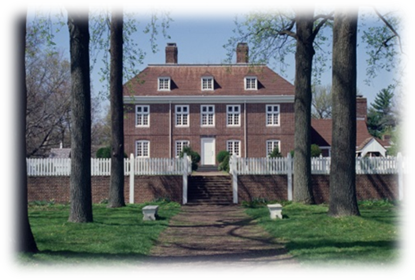
Pennsbury Manor is a historic recreation of William Penn’s 17th century estate, it is located along the Delaware River and open to the Public for tours. There are several other buildings located on the 43-acre property including a Visitor’s Center, and the Crozier House which is currently used as office space.
Exploring Alternative Technologies for Cooling Historical Structures at Pennsbury Manor
Known as “William Penn’s Country House”, Pennsbury Manor includes several buildings recently included in a design project to replace and upgrade existing HVAC systems on the campus with geothermal systems. Working closely with the Department of General Services and The Pennsylvania Historical and Museum Commission, the multi-discipline mechanical, electrical, and hydrogeology staff of Spotts, Stevens and McCoy, along with architectural and archaeological partners took on the challenges often presented by similar historic and sensitive structures. Outdated HVAC, plumbing and electrical systems are common limitations that can be resolved with innovative application of new technologies. SSM designed the HVAC systems within the buildings, electrical and plumbing systems in support of the HVAC system design, coordinated with Agency Fire and Security and Controls consultants, and developed a preliminary construction phasing plan for the project. In addition we analyzed the assessment reports and developed a preliminary abatement plan.
The Manor House – It was imperative for the mechanical system to integrate with the existing architecture. A whole house ventilation system was designed to attempt to improve the indoor environment during the cooling season. Geothermal water source heat pumps were located in the basement to draw outdoor air into the building and supply it through floor registers at existing chases. The air was then exhausted by fans located in the attic space. A geothermal boiler was also installed to replace two electric boilers. The geothermal boiler and geothermal heat pumps used an open loop ground system to transfer heat to and from the ground water.
The Visitor’s Center – The open loop system was also used at the Visitor’s Center. The existing system consisted of an air-cooled chiller, a gas boiler, fan coil units, and DX air handling units. The existing chiller was replaced with a geothermal heat recovery chiller. The chiller is capable of making heating water and chilled water simultaneously so there is no longer a need for the existing oil-fired boiler. The existing DX cooling coils and electric heating coils were replaced in the air handling units and fan coil units so the entire system can run off the new geothermal heat recovery chiller.
The Crozier House – The existing heating system at the Crozier House was an oiled-fired boiler with radiator units located throughout the space. There was no existing air conditioning system. The new mechanical system design is a VRF system that will be able to provide heating or cooling simultaneously to each space.

Let Your Nerd Flag Fly
Mr. Zip was introduced in 1963 as a way of acclimating Americans to the new Zip Code System.

Mr. Zip was introduced in 1963 as a way of acclimating Americans to the new Zip Code System.
Fifty years ago, on July 1, 1963, the United States Postal Service (USPS) introduced the Zone Improvement Plan Codes, more commonly known as ZIP Codes. Aimed at providing a more efficient way of sorting through billions of pieces of mail each year, ZIP Codes were created in order to divide the country into coded delivery zones. From 1943 to 1963, annual mail volume had doubled to 66.5 billion pieces. Today, On average, the Postal Service processes 20.2 million mailpieces each hour, 336,649 each minute and 5,611 each second.
With the fiftieth anniversary of the ZIP Code, the Office of the Inspector General at the USPS has released a paper exploring ways to improve the ZIP code, “both to save postal costs and to enhance the opportunity for third party innovators to discover new uses and applications.” Check out the “The Untold Story of the ZIP Code”, the executive summary recommends linking the USPS address database with GIS to create a more efficient ZIP Code system.

Spottlight on Summer
This month we tip our hats to mechanical engineer Willis Haviland Carrier and celebrate the idea that helped make those long, hot days a little more comfortable: air conditioning.
REGULATORY UPDATE: America’s Water Infrastructure Act of 2018 - Risk Assessments and Emergency Response Plans
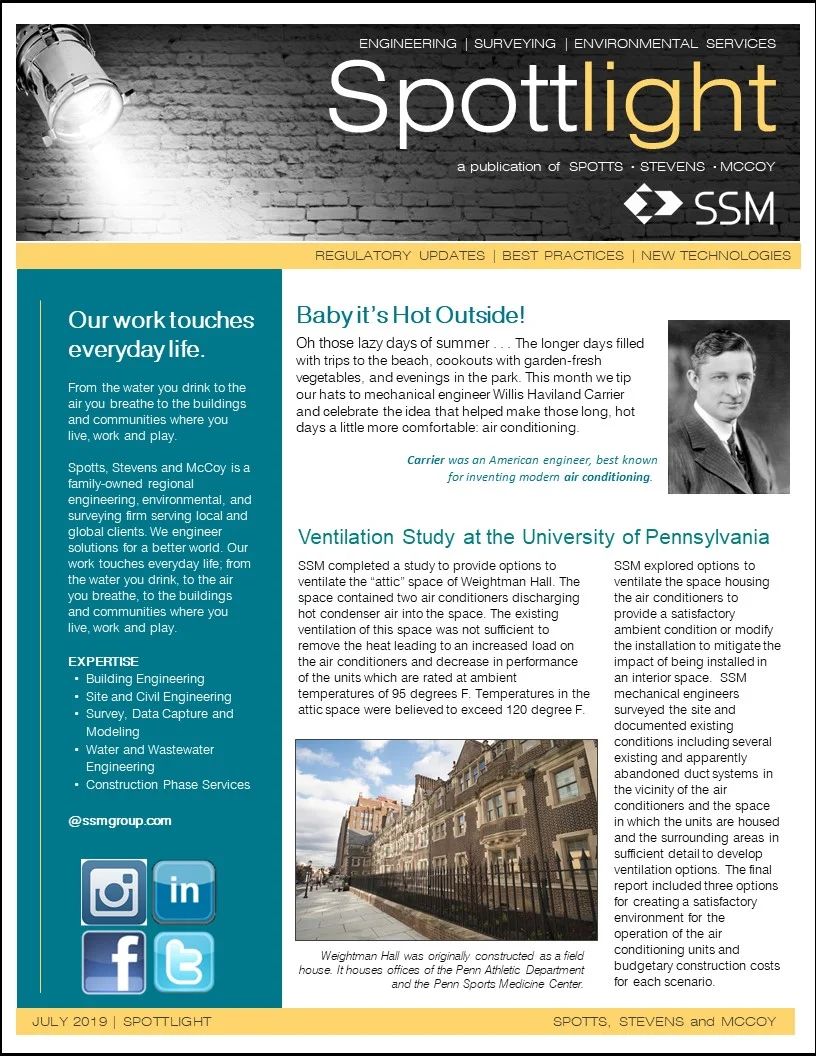
Baby it’s Hot Outside!
Oh those lazy days of summer . . . The longer days filled with trips to the beach, cookouts with garden-fresh vegetables, and evenings in the park. This month we tip our hats to mechanical engineer Willis Haviland Carrier and celebrate the idea that helped make those long, hot days a little more comfortable: air conditioning.
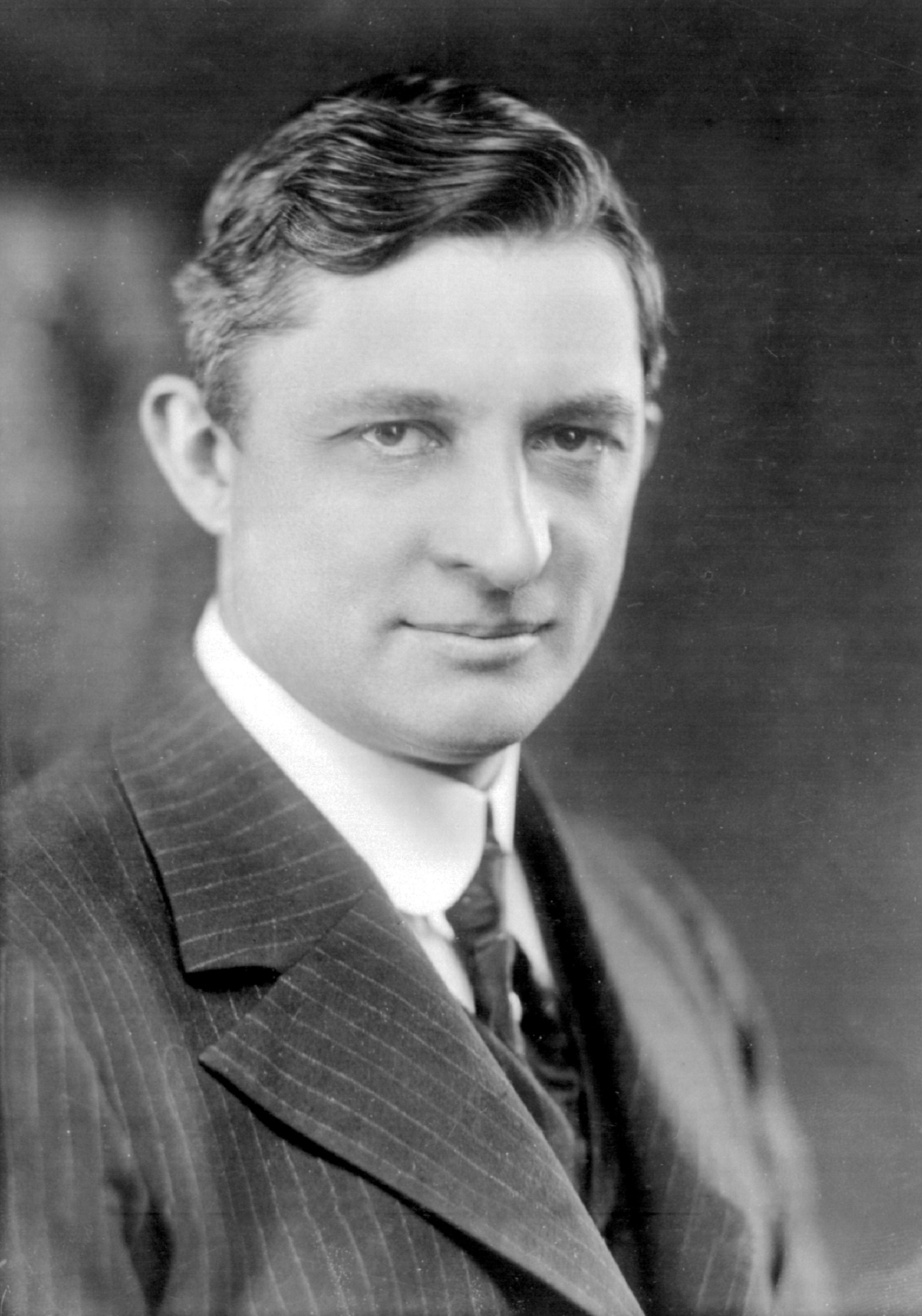
Willis Haviland Carrier was an American engineer, best known for inventing modern air conditioning.
Regulatory Update
America’s Water Infrastructure Act of 2018 Risk Assessments and Emergency Response Plans
New Requirements for Drinking Water Utilities
On October 23, 2018, America’s Water Infrastructure Act (AWIA) was signed into law requiring community water systems serving more than 3,300 people to complete a risk assessment and develop an emergency response plan.


Spottlight on Workplace Safety
Every year, more than 4.1 million workers suffer a serious job-related injury or illness.

June is National Safety Month!
According to the Department of Labor In the four decades since the Occupational Safety and Health Act (OSH Act) was signed into law, workplace deaths and reported occupational injuries have dropped by more than 60 percent. Yet the nation's workers continue to face an unacceptable number of work-related deaths, injuries and illnesses, most of them preventable:
Every day, more than 12 workers die on the job – over 4,500 a year.
Every year, more than 4.1 million workers suffer a serious job-related injury or illness.
In This Issue:


Recognizing the Hazards in the Office
What can go wrong when you’ve minimized your strenuous activities, sit in a climate-controlled building with no heavy machinery or equipment in the vicinity? Surprisingly, there are a large number of hazards present in an office setting.

You might think that an office building is the last place where workplace safety issues arise. What can go wrong when you’ve minimized your strenuous activities, sit in a climate-controlled building with no heavy machinery or equipment in the vicinity? Surprisingly, there are a large number of hazards present in an office setting. According to data from the Bureau of Labor Statistics, 80,410 private-industry office and administrative workers suffered on-the-job injuries in 2008. Many of these injuries could have been prevented had workers or supervisors recognized the risks and implemented simple workplace modifications to help mitigate them.
Top 3 Areas of Concern
Falls - Slips, trips and falls, the most common type of office injury. Several hazards contribute to these injuries, although most can be significantly reduced, often by raising awareness among employees. In other words, stay clutter-free and keep materials safely stored out of walkways.
Struck/caught by - According to the CDC, office workers are often struck by objects, bump into objects themselves, or get caught in or between objects, and as a result, are injured. Some typical contributors to the danger zones include poor office layouts, inattention, and poor housekeeping. Take a look around your office and remove the potential for objects falling from cabinet tops, doors opening unexpectedly, and cabinets that fall over if not properly balanced.
Ergonomics injuries – Since office workers spend the most of their day seated at a desk and working on a computer, they are prone to strains and other injuries related to posture and repetitive movement. Remember, one size does not fit all in office workstations. Explore the benefits of adjustable workstations and make sure that your employees know how to use it. Keep their feet on the floor and their mouse beside the keyboard.
Mold Can Grow Almost Anywhere
Mold can grow almost anywhere. The main cause of mold is damp conditions mixed with a warm environment .
Is it a growing problem in your buildings?
Mold spores exist everywhere in the environment. Did you know that mold can grow in as little as 24-48 hours? Mold can grow almost anywhere there is water damage, high humidity, or dampness. For mold to grow, it needs moisture or water, oxygen, and an organic source.
According to OSHA, concern about indoor exposure to mold has increased along with public awareness that exposure to mold can cause a variety of health effects and symptoms, including allergic reactions. Although most types of molds that are routinely encountered are not hazardous to healthy individuals, overexposure can result in symptoms like cough, congestion, runny nose, eye irritation, and aggravation of asthma. Depending on the amount of exposure and a person’s individual vulnerability, more serious health effects such as fevers and breathing problems can occur.
Additionally, if not treated, mold can eventually cause structural damage to a wood-framed building, weakening floors and walls as it spreads.
What can you do to prevent indoor mold growth?
Be aware of water damage. Walk through the workplace to identify any condensation or wet spots and repair plumbing problems immediately.
Keep the building’s humidity level below 70% and regularly inspect your building’s HVAC system.
Ensure adequate drainage around your building sloping away from the foundation.
We can help. SSM offers a staff of industrial hygienists, indoor air quality specialists, and facilities engineers capable of performing the evaluations necessary to assess mold and the extent of mold contamination. We understand that immediate response is critical to identify and eliminate the source of moisture and to controlling mold and its growth. Our approach includes a detailed remediation work plan and specifications, provisions of oversight and final clearance testing. SSM has the years of experience, depth, knowledge, and responsiveness necessary to successfully complete your projects before they become crises.

When the Workplace isn’t a Building
Mold can grow almost anywhere and spread quickly and easily which means company vehicle fleets are at risk of mold growth just like your facilities. The main cause of mold is damp conditions mixed with a warm environment, which can easily occur in a vehicle. Leaks from a cracked window or open sunroof during a rain storm, spilled liquids or even wet clothes/towels may provide just enough moisture for mold to grow. Once there’s mold in the vehicle it has the potential to ruin the car’s interior. Getting it professionally cleaned might be the only option in some cases.
SSM Industrial Hygienists have recently worked with ServPro of Easton, Bethlehem & Whitehall to provide services related to possible mold in vehicles. Our team collects tape lift samples and evaluates the results from an AIHA accredited microbiology laboratory analytical results.
FOR MORE INFORMATION
Jeff Thoms, PE | Sr. Structural Engineer
Kevin Conrad | Manager, Indoor Environmental Quality
Reducing Fire Risk
According to the National Fire Protection Association, every 24 seconds, a fire department in the United States responds to a fire somewhere in the nation.
According to the National Fire Protection Association, every 24 seconds, a fire department in the United States responds to a fire somewhere in the nation.
Some routine inspections around the office can help reduce the risk of fire.
Never block fire sprinklers - A good recommendation is that objects should never be placed higher than 18 inches below sprinkler heads to allow a full range of coverage.
Inspect space heaters - If employees use space heaters, verify the devices are approved for commercial use and have a switch that automatically shuts off the heater if the heater is tipped over.
Space Heaters in the Summer?
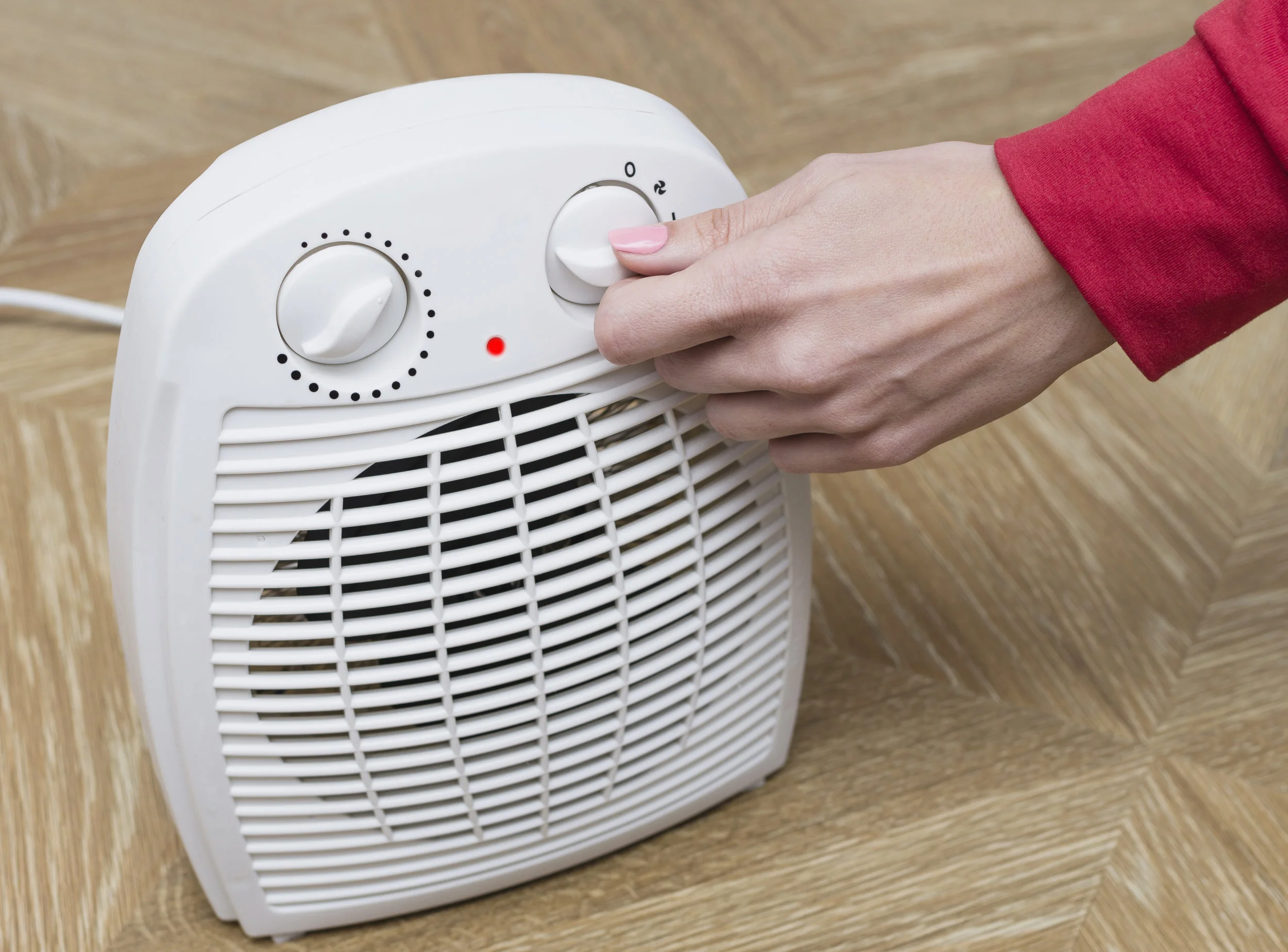
Many workplaces end up with people using space heaters because the HVAC controls aren’t working correctly, the HVAC system isn’t zoned correctly, or isn’t properly sized for the present occupancy or use of the space. Research in the industry has indicated that HVAC control devices are not performing as intended within as little as 2 years. Night setbacks aren’t coordinated with Daylight Savings Time, power outages disrupt Building Management Schedules and often times result in systems returning to a default state on restart that does not reflect modifications made to suit the occupancy. Another cause is that often space layout and space use changes (walls get moved, room use changes, people are added or subtracted) with no consideration to the impact on the HVAC system. People adapt and one adaptation is the use of individual space heaters. If you’re noticing heaters in the summertime, you may have a performance issue. Our mechanical engineers can provide analysis of your system with particular attention to complaints in performance.
FOR MORE INFORMATION
Bruce Bell, PE | Director, Mechanical and Plumbing Engineering
Protecting your employees from Arc Flash Hazards
Without an Arc-Flash Hazard Analysis, employers cannot properly protect their personnel from arc-flash.
Arc Flash Hazard Analysis
Identifying the levels of incident energy throughout the system
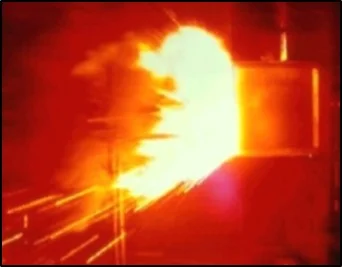
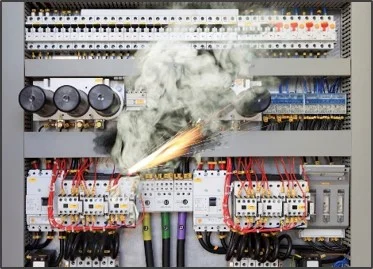
An arc flash is the result of a rapid release of energy (light and heat) due to an arcing fault between electrical conductor(s) and another electrical conductor(s) or ground with enough electrical energy to cause damage or fire, and injury. During an arc fault air becomes the conductor. A massive amount of energy discharges during the arc flash or blast. This energy burns the conductors, vaporizing the copper and thus causing an explosive volumetric increase, the arc blast. This explosion propels deadly shrapnel and molten metal as it dissipates. This rapid release of energy can cause debilitating burns, other injuries and even death. Without an Arc-Flash Hazard Analysis, employers cannot properly protect their personnel from arc-flash.
Elements of the Hazard Analysis
Short Circuit Study - The short circuit study calculates the maximum short circuit current the electrical power system may be subjected to at each equipment location through out the distribution network from the sources such as utilities, generators, and motors. The equipment includes substations, switchgear, motor control centers, and panels with their respective over current protective devices; generators; transforms; motors; and UPS equipment. The short circuit results determine the required ratings for electrical equipment to adequately sustain the fault current capacity of the system. If a short circuit occurs, the electrical power system’s available energy is directed to the point of the fault in amounts that greatly exceed the normal operating currents, and the equipment must have the ability tow withstand and interrupt these large currents until the protective device opens to clear the faulted portion of the circuit.
.Protective Device Evaluation - The protective device evaluation study determines if the equipment ratings needed to sustain the fault currents calculated by the Short Circuit Study are adequate. Each circuit breaker, bus, etc., is reviewed in regards to the available short circuit to determine that the equipment can adequately withstand the fault current.
The Protective Device Time Current Coordination - The protective device time current coordination study reviews the relay and circuit breaker trip settings, fuses, and their operating time and current characteristics in order to properly coordinate these settings with upstream and downstream devices so that any faults are isolated to the location of the fault; hence, limiting the impact to the remaining portions of the system. The coordination study is used in an Arc Flash study to determine the length of time an arc would occur which is directly related to the incident energy associated with an arc flash event.
What the Analysis Reveals
The Hazard Analysis will identify the locations which require PPE greater than Category 0. The review determines if there are possible arc flash mitigation recommendations that can be implemented to reduce the incident energy levels. Such recommendations might include device setting changes, replacement of molded case type circuit breakers with static trip type circuit breakers, changing fuse types, or installation of additional fused disconnects or circuit breakers. As a result of reducing the incident energy levels the corresponding Category of PPE required to work on the equipment while energized is reduced.
FOR MORE INFORMATION

2019 PennTec Annual Conference
Outfall Field Screening Report & Data management through ArcGIS Online

GIS Tools for MS4 Compliance Reporting
Municipal Separate Storm Sewer Systems (MS4)
Outfall Field Screening Report
Data management through ArcGIS Online
Field data collection through mobile apps
Report generation through Microsoft mail-merge tools
Record keeping through GIS-based infrastructure asset management program
Presented by Alfred C. Guiseppe, PG, Director, Water Resources
al.guiseppe@ssmgroup.com

Spottlight on Schools
Whether you manage a single facility or millions of square feet over many locations, your focus is education. Our focus is you. SSM answers the multi-faceted needs of educational campuses with a single source for engineering and consulting services.

Whether you manage a single facility or millions of square feet over many locations, your focus is education. Our focus is you. SSM answers the multi-faceted needs of educational campuses with a single source for engineering and consulting services. We understand what institutions of learning need, and we deliver cost-effective, sustainable services. We’re solution-oriented.


SSM Welcomes New CFO, Cheryl Light, CPA to the Firm
We are excited to welcome Cheryl Light, CPA to the firm as Vice President and Chief Financial Officer.

CHERYL LIGHT, CPA
SSM welcomes Cheryl Light, CPA to the firm as Vice President and Chief Financial Officer. She assumes the role from Edwin Hostetter, II CPA, CGMA, who retired from the firm after 26 years as Vice President and Chief Financial Officer. As CFO, Light will lead SSM’s financial operations to support and achieve the firm’s strategic objectives.
Light is a member of American Institute of Certified Public Accountants (AICPA), the Pennsylvania Institute of Certified Public Accountants (PICPA), and Greater Reading Chamber Family Business Alliance Advisory Board. She holds a Bachelor of Science in Accounting from Albright College and an Associate Degree in Business Administration from The Pennsylvania State University, Berks Campus.

Sam Zook, PLS assumes role of Director of Surveying and Data Capture
Congratulations to Sam Zook, PLS who assumes the role of Director of Surveying and Data Capture for the firm.

SAM ZOOK, PLS
SSM announced that Sam Zook, PLS assumed the role of Director of Surveying and Data Capture for the firm. Zook will be responsible for the management of the staff, operation of the department, and QA/QC role on all surveying projects. A licensed Professional Land Surveyor in Pennsylvania and New York, Sam is a 2009 graduate of Pennsylvania College of Technology with an AAS in Surveying Technology and AAS in Civil Engineering Technology. He is also a FAA Certified Remote Pilot.
In addition, the firm announced the promotion of Kevin Hoffman, SIT to Survey Crew Chief. Kevin is a 2016 graduate of Pennsylvania College of Technology with an A.A.S. in Surveying Technologies. He is responsible for conducting field topographical and property surveys, engineering surveys, records research, preparing plots, calculations and legal descriptions for properties; establishing field control; construction stakeout; and monumentation. He is trained in using Trimble GPS equipment, Trimble robotic instruments, Leica ScanStation, AutoCAD and Cyclone.

KEVIN HOFFMAN
It’s Not Too Early to Begin Preparing Your Buildings for the Fall
Now is the time to plan ahead to avoid typical last-minute problems like mold and legionella. Although the students are vacationing and the classrooms are empty, school buildings and grounds continue to be a busy place during the summer months.

Now is the time to plan ahead to avoid typical last-minute problems like mold and legionella. Although the students are vacationing and the classrooms are empty, school buildings and grounds continue to be a busy place during the summer months. In addition to finalizing budgets and overseeing summer construction and renovations, it’s important to take proactive steps to avoid problems in the fall.
We recommend addressing the symptoms before they escalate into problems. Each year we are called to investigate various indoor environmental situations, many of which result in expensive clean-up costs. You can avoid many of those non-budgeted expenses by taking proactive steps during the summer months. A few suggested steps are included in our Summer Checklist.
Summer Checklist
Work with teachers and staff to prepare classrooms for summer cleaning and maintenance.
Avoid environmental quality problems with indoor air and water systems by training staff on effective and appropriate means and methods for maintenance and cleaning procedures.
Maintain grounds and landscaping to avoid the introduction of contaminants to the indoor air environment.
Minimize conditions that lead to mold growth by operating building ventilation systems to maintain a constant temperature and humidity.
Eliminate the potential for growth of bacteria by maintaining appropriate procedures for your buildings water systems.
Check unoccupied areas frequently to avoid the propagation of mold.
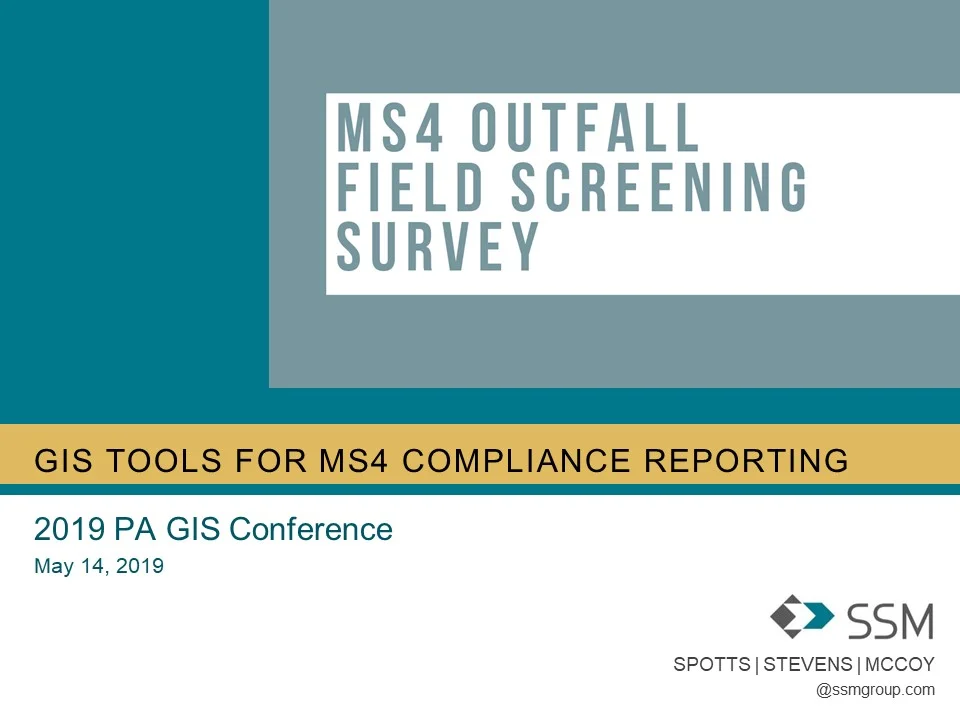
2019 PA GIS Conference - GIS Tools for MS4 Compliance Reporting
GIS Tools for MS4 Compliance Reporting

GIS Tools for MS4 Compliance Reporting
Municipal Separate Storm Sewer Systems (MS4)
Outfall Field Screening Report
Data management through ArcGIS Online
Field data collection through mobile apps
Report generation through Microsoft mail-merge tools
Record keeping through GIS-based infrastructure asset management program
Presented by Alfred C. Guiseppe, PG, Director, Water Resources
al.guiseppe@ssmgroup.com
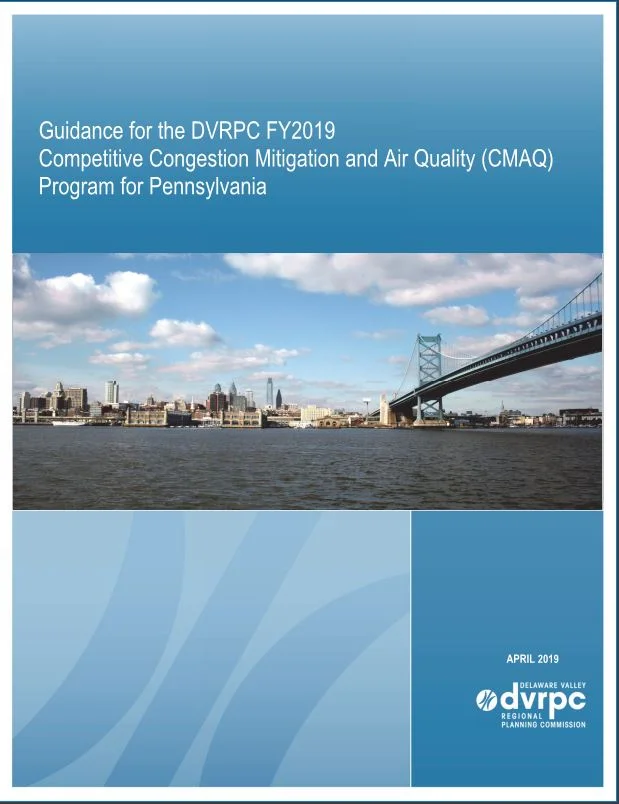
Congestion Mitigation and Air Quality Improvement Program
Congestion Mitigation and Air Quality (CMAQ) funds have been allocated to the Pennsylvania portion of the Delaware Valley Regional Planning Commission (DVRPC) metropolitan area for projects in Pennsylvania’s five counties (Bucks, Chester, Delaware, Montgomery, and Philadelphia) that contribute to the attainment of the Clean Air Axct (CAA) standards by reducing emissions from mobile sources.


FUNDING OPPORTUNITY : Chester and Montgomery County
Congestion Mitigation and Air Quality (CMAQ) funds have been allocated to the Pennsylvania portion of the Delaware Valley Regional Planning Commission (DVRPC) metropolitan area for projects in Pennsylvania’s five counties (Bucks, Chester, Delaware, Montgomery, and Philadelphia) that contribute to the attainment of the Clean Air Axct (CAA) standards by reducing emissions from mobile sources.
The CMAQ Program seeks to fund transportation projects that will improve air quality and reduce traffic congestion in the DVRPC Region. CMAQ eligible projects will demonstrably reduce air pollution emissions and help the DVRPC region meet the federal health based air quality standards.
This CMAQ Program is not a grant program. The sponsor does not receive grant funds to start the project; rather, the sponsor is reimbursed for costs incurred after receiving funding authorization for the project and a notice to proceed. Costs incurred prior to project selection and notice to proceed will not be reimbursed. All awarded projects must authorize federal CMAQ funds by the deadline stated in their award letters. Due to the complexity of managing CMAQ construction projects, DVRPC is requiring a minimum project request be $250,000 for construction projects and $100,000 for transit vehicle acquisitions to expand existing fleet or introduce a new transit service. There is also a soft maximum cap of $4 million for a single application.
What are CMAQ Eligible Projects?
Examples of eligible CMAQ projects include pedestrian and bicycle projects, transit improvement programs, including transit vehicle purchases for fleet expansion or to introduce a new transit service, congestion reduction and traffic flow improvements, and funding of transportation demand management programs, among others. Please refer to DVRPC’s latest CMAQ Guidance and FHWA web links for further details.
Who is Eligible to Apply?
Public agencies and public – private partnerships with a public agency sponsor are eligible to apply for the Competitive CMAQ Program funds. Project sponsors must comply with all federal requirements, including but not limited to Disadvantaged Business Enterprise (DBE) contract set-asides, consultant selection procedures, the competitive bid process, and the American with Disabilities Act requirements.
The public agency partner is responsible for applying for the CMAQ funds through DVRPC and overseeing and protecting the investment of the federal funds used in a public–private partnership project. Projects will not be eligible if they result in creating a competitive advantage of one private
entity over another. Federal law requires that a legal, written agreement be in place between the public agency and private or non-profit entity before implementing any CMAQ-funded project. Though these agreements need not be finalized at the time the application is submitted, the application must include letters of intent between the parties indicating willingness to enter into such agreement, if the project is selected.
Questions about the Competitive CMAQ Program?
New Jersey | Kwan Hui | P: 215-238–2894
Pennsylvania | Rick Murphy or (215) 238 – 2946
We can help.
Spotts, Stevens and McCoy has the experience to assist you in processing your applications.
FOR MORE INFORMATION
Nicholas Szeredai, PE | Municipal/Civil Project Engineer

Lancaster Conservancy: Water Connects Us All
Visit lancasterwaterweek.org for more information about Lancaster Water Week events.


Visit lancasterwaterweek.org for more information about Lancaster Water Week events.
Lancaster Water Week was conceived along the banks of the Conestoga River by friends Fritz Schroeder (Lancaster County Conservancy) and Spike Brant (Nimblist). While kayaking along the river offers much beauty and solace, it is also a front row seat to the amount of erosion, pollution, and disregard some have for this amazing fresh water resource.
With this in mind, they set out to create a campaign that celebrates the unique waterways of Lancaster County, educates the public about the challenges we face and opportunities we can create, and activates people to take action in their watersheds and communities.
Lancaster County is blessed with 1,500 stream miles, but 47% of these streams are polluted and cannot support their original aquatic life. Waterways are at the core of Lancaster County. They drive economic opportunity and growth that benefits our local economy and agriculture. Our rivers and streams are the source of our drinking water and recreation to be enjoyed by all. To protect these waters, we want to strengthen the sense of stewardship in Lancaster County. Water connects us all!

Don't forget the Sunscreen
What we put into our rivers, lakes and streams matter.

71% of our planet is water.
3% of that water is freshwater.
1% of that freshwater is water we can actually use.
If the world’s freshwater supply amounted to a full bathtub, the amount easily accessible to humanity (what we have available to us regularly) would fill a thimble. It doesn’t seem like much. Yet even this little thimble full of water is, in theory, enough to sustain all life on our planet. Fresh waters contain elements like calcium, magnesium, sodium, potassium, carbon, chlorine, and sulfur—as well as plant nutrients such as nitrogen, silicon, and phosphorus. Matter breaks down naturally into these elements and keeps a healthy balance. But introduce skin care, and that environment is affected. Understanding how our choices for skin care affects marine environments that we love is the first step to choosing better.
What we put into our rivers, lakes and streams matter.
Check out the eco-conscious products available at stream2sea.com.
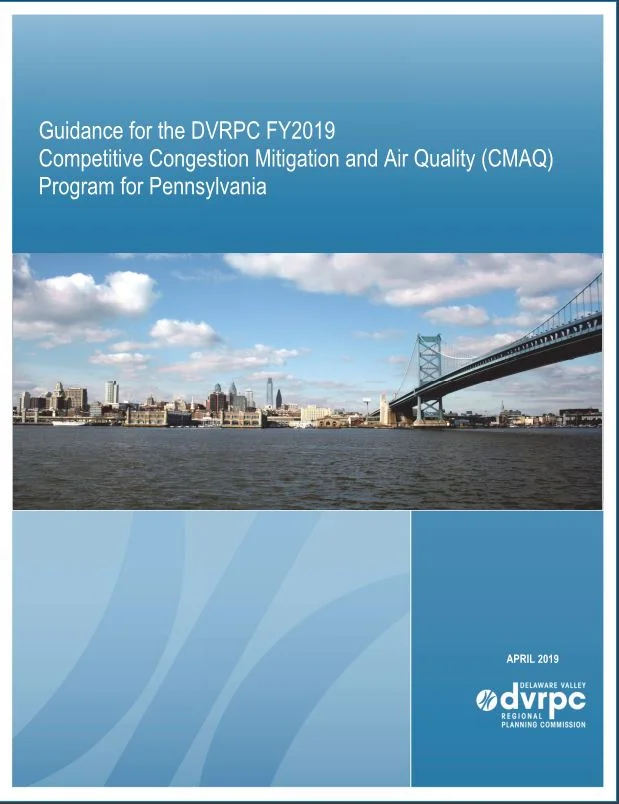
Congestion Mitigation and Air Quality Improvement Program
Congestion Mitigation and Air Quality (CMAQ) funds have been allocated to the Pennsylvania portion of the Delaware Valley Regional Planning Commission (DVRPC) metropolitan area for projects in Pennsylvania’s five counties (Bucks, Chester, Delaware, Montgomery, and Philadelphia) that contribute to the attainment of the Clean Air Axct (CAA) standards by reducing emissions from mobile sources.
FUNDING OPPORTUNITY : Chester and Montgomery County
Congestion Mitigation and Air Quality (CMAQ) funds have been allocated to the Pennsylvania portion of the Delaware Valley Regional Planning Commission (DVRPC) metropolitan area for projects in Pennsylvania’s five counties (Bucks, Chester, Delaware, Montgomery, and Philadelphia) that contribute to the attainment of the Clean Air Axct (CAA) standards by reducing emissions from mobile sources.
The CMAQ Program seeks to fund transportation projects that will improve air quality and reduce traffic congestion in the DVRPC Region. CMAQ eligible projects will demonstrably reduce air pollution emissions and help the DVRPC region meet the federal health based air quality standards.
This CMAQ Program is not a grant program. The sponsor does not receive grant funds to start the project; rather, the sponsor is reimbursed for costs incurred after receiving funding authorization for the project and a notice to proceed. Costs incurred prior to project selection and notice to proceed will not be reimbursed. All awarded projects must authorize federal CMAQ funds by the deadline stated in their award letters. Due to the complexity of managing CMAQ construction projects, DVRPC is requiring a minimum project request be $250,000 for construction projects and $100,000 for transit vehicle acquisitions to expand existing fleet or introduce a new transit service. There is also a soft maximum cap of $4 million for a single application.
What are CMAQ Eligible Projects?
Examples of eligible CMAQ projects include pedestrian and bicycle projects, transit improvement programs, including transit vehicle purchases for fleet expansion or to introduce a new transit service, congestion reduction and traffic flow improvements, and funding of transportation demand management programs, among others. Please refer to DVRPC’s latest CMAQ Guidance document..

DOWNLOAD FAQ

Who is Eligible to Apply?
Public agencies and public – private partnerships with a public agency sponsor are eligible to apply for the Competitive CMAQ Program funds. Project sponsors must comply with all federal requirements, including but not limited to Disadvantaged Business Enterprise (DBE) contract set-asides, consultant selection procedures, the competitive bid process, and the American with Disabilities Act requirements.
The public agency partner is responsible for applying for the CMAQ funds through DVRPC and overseeing and protecting the investment of the federal funds used in a public–private partnership project. Projects will not be eligible if they result in creating a competitive advantage of one private
entity over another. Federal law requires that a legal, written agreement be in place between the public agency and private or non-profit entity before implementing any CMAQ-funded project. Though these agreements need not be finalized at the time the application is submitted, the application must include letters of intent between the parties indicating willingness to enter into such agreement, if the project is selected.
Questions about the Competitive CMAQ Program?
New Jersey | Kwan Hui | P: 215-238–2894
Pennsylvania | Rick Murphy or (215) 238 – 2946
We can help.
Spotts, Stevens and McCoy has the experience to assist you in processing your applications.
FOR MORE INFORMATION
Nicholas Szeredai, PE | Municipal/Civil Project Engineer |nick.szeredai@ssmgroup.com