

Recognizing the Hazards in the Office
What can go wrong when you’ve minimized your strenuous activities, sit in a climate-controlled building with no heavy machinery or equipment in the vicinity? Surprisingly, there are a large number of hazards present in an office setting.

You might think that an office building is the last place where workplace safety issues arise. What can go wrong when you’ve minimized your strenuous activities, sit in a climate-controlled building with no heavy machinery or equipment in the vicinity? Surprisingly, there are a large number of hazards present in an office setting. According to data from the Bureau of Labor Statistics, 80,410 private-industry office and administrative workers suffered on-the-job injuries in 2008. Many of these injuries could have been prevented had workers or supervisors recognized the risks and implemented simple workplace modifications to help mitigate them.
Top 3 Areas of Concern
Falls - Slips, trips and falls, the most common type of office injury. Several hazards contribute to these injuries, although most can be significantly reduced, often by raising awareness among employees. In other words, stay clutter-free and keep materials safely stored out of walkways.
Struck/caught by - According to the CDC, office workers are often struck by objects, bump into objects themselves, or get caught in or between objects, and as a result, are injured. Some typical contributors to the danger zones include poor office layouts, inattention, and poor housekeeping. Take a look around your office and remove the potential for objects falling from cabinet tops, doors opening unexpectedly, and cabinets that fall over if not properly balanced.
Ergonomics injuries – Since office workers spend the most of their day seated at a desk and working on a computer, they are prone to strains and other injuries related to posture and repetitive movement. Remember, one size does not fit all in office workstations. Explore the benefits of adjustable workstations and make sure that your employees know how to use it. Keep their feet on the floor and their mouse beside the keyboard.

Mold Can Grow Almost Anywhere
Mold can grow almost anywhere. The main cause of mold is damp conditions mixed with a warm environment .
Is it a growing problem in your buildings?
Mold spores exist everywhere in the environment. Did you know that mold can grow in as little as 24-48 hours? Mold can grow almost anywhere there is water damage, high humidity, or dampness. For mold to grow, it needs moisture or water, oxygen, and an organic source.
According to OSHA, concern about indoor exposure to mold has increased along with public awareness that exposure to mold can cause a variety of health effects and symptoms, including allergic reactions. Although most types of molds that are routinely encountered are not hazardous to healthy individuals, overexposure can result in symptoms like cough, congestion, runny nose, eye irritation, and aggravation of asthma. Depending on the amount of exposure and a person’s individual vulnerability, more serious health effects such as fevers and breathing problems can occur.
Additionally, if not treated, mold can eventually cause structural damage to a wood-framed building, weakening floors and walls as it spreads.
What can you do to prevent indoor mold growth?
Be aware of water damage. Walk through the workplace to identify any condensation or wet spots and repair plumbing problems immediately.
Keep the building’s humidity level below 70% and regularly inspect your building’s HVAC system.
Ensure adequate drainage around your building sloping away from the foundation.
We can help. SSM offers a staff of industrial hygienists, indoor air quality specialists, and facilities engineers capable of performing the evaluations necessary to assess mold and the extent of mold contamination. We understand that immediate response is critical to identify and eliminate the source of moisture and to controlling mold and its growth. Our approach includes a detailed remediation work plan and specifications, provisions of oversight and final clearance testing. SSM has the years of experience, depth, knowledge, and responsiveness necessary to successfully complete your projects before they become crises.

When the Workplace isn’t a Building
Mold can grow almost anywhere and spread quickly and easily which means company vehicle fleets are at risk of mold growth just like your facilities. The main cause of mold is damp conditions mixed with a warm environment, which can easily occur in a vehicle. Leaks from a cracked window or open sunroof during a rain storm, spilled liquids or even wet clothes/towels may provide just enough moisture for mold to grow. Once there’s mold in the vehicle it has the potential to ruin the car’s interior. Getting it professionally cleaned might be the only option in some cases.
SSM Industrial Hygienists have recently worked with ServPro of Easton, Bethlehem & Whitehall to provide services related to possible mold in vehicles. Our team collects tape lift samples and evaluates the results from an AIHA accredited microbiology laboratory analytical results.
FOR MORE INFORMATION
Jeff Thoms, PE | Sr. Structural Engineer
Kevin Conrad | Manager, Indoor Environmental Quality

Reducing Fire Risk
According to the National Fire Protection Association, every 24 seconds, a fire department in the United States responds to a fire somewhere in the nation.
According to the National Fire Protection Association, every 24 seconds, a fire department in the United States responds to a fire somewhere in the nation.
Some routine inspections around the office can help reduce the risk of fire.
Never block fire sprinklers - A good recommendation is that objects should never be placed higher than 18 inches below sprinkler heads to allow a full range of coverage.
Inspect space heaters - If employees use space heaters, verify the devices are approved for commercial use and have a switch that automatically shuts off the heater if the heater is tipped over.
Space Heaters in the Summer?
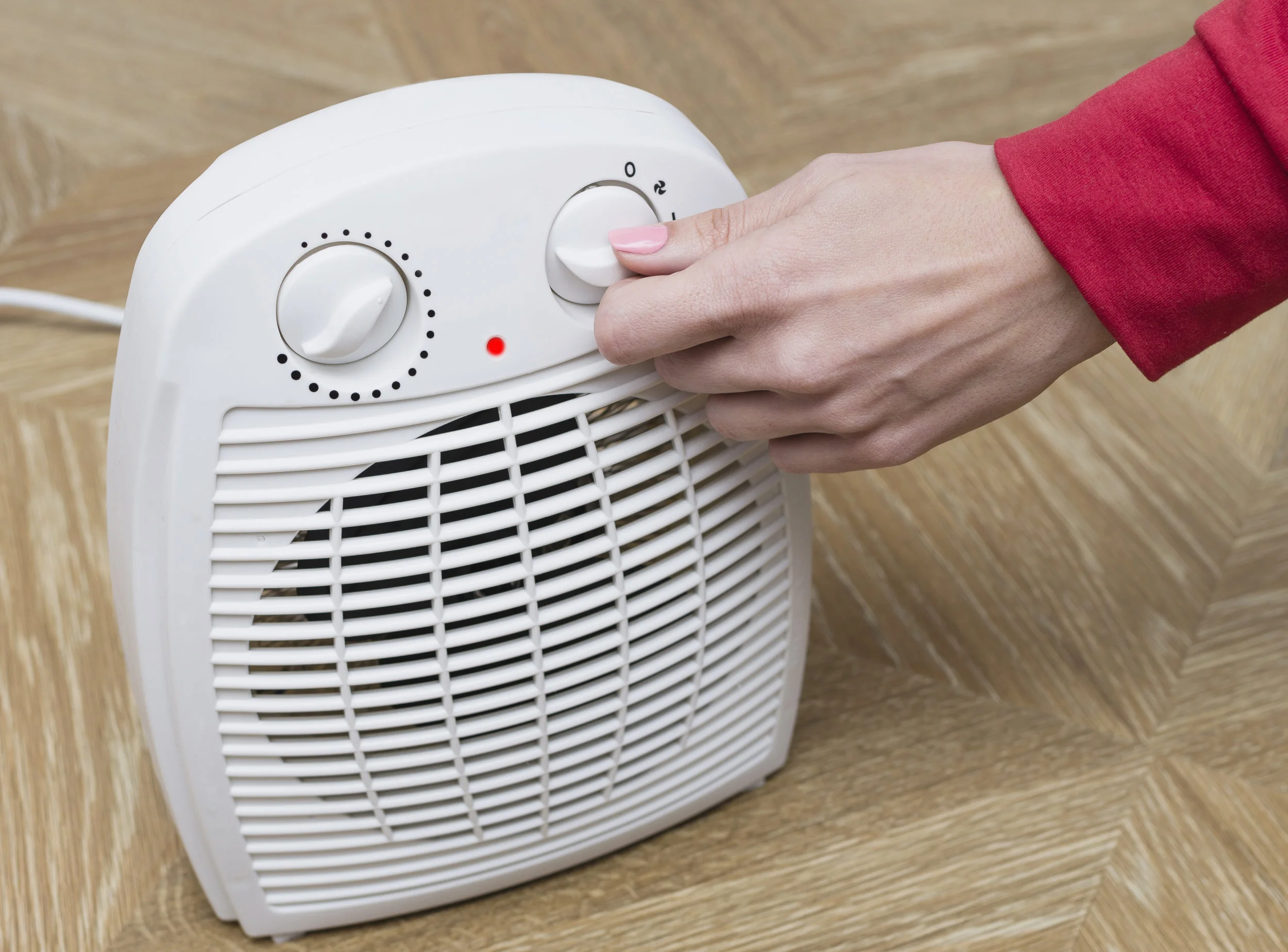
Many workplaces end up with people using space heaters because the HVAC controls aren’t working correctly, the HVAC system isn’t zoned correctly, or isn’t properly sized for the present occupancy or use of the space. Research in the industry has indicated that HVAC control devices are not performing as intended within as little as 2 years. Night setbacks aren’t coordinated with Daylight Savings Time, power outages disrupt Building Management Schedules and often times result in systems returning to a default state on restart that does not reflect modifications made to suit the occupancy. Another cause is that often space layout and space use changes (walls get moved, room use changes, people are added or subtracted) with no consideration to the impact on the HVAC system. People adapt and one adaptation is the use of individual space heaters. If you’re noticing heaters in the summertime, you may have a performance issue. Our mechanical engineers can provide analysis of your system with particular attention to complaints in performance.
FOR MORE INFORMATION
Bruce Bell, PE | Director, Mechanical and Plumbing Engineering
Protecting your employees from Arc Flash Hazards
Without an Arc-Flash Hazard Analysis, employers cannot properly protect their personnel from arc-flash.
Arc Flash Hazard Analysis
Identifying the levels of incident energy throughout the system
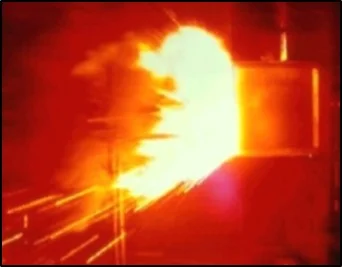
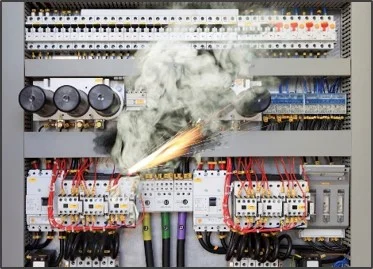
An arc flash is the result of a rapid release of energy (light and heat) due to an arcing fault between electrical conductor(s) and another electrical conductor(s) or ground with enough electrical energy to cause damage or fire, and injury. During an arc fault air becomes the conductor. A massive amount of energy discharges during the arc flash or blast. This energy burns the conductors, vaporizing the copper and thus causing an explosive volumetric increase, the arc blast. This explosion propels deadly shrapnel and molten metal as it dissipates. This rapid release of energy can cause debilitating burns, other injuries and even death. Without an Arc-Flash Hazard Analysis, employers cannot properly protect their personnel from arc-flash.
Elements of the Hazard Analysis
Short Circuit Study - The short circuit study calculates the maximum short circuit current the electrical power system may be subjected to at each equipment location through out the distribution network from the sources such as utilities, generators, and motors. The equipment includes substations, switchgear, motor control centers, and panels with their respective over current protective devices; generators; transforms; motors; and UPS equipment. The short circuit results determine the required ratings for electrical equipment to adequately sustain the fault current capacity of the system. If a short circuit occurs, the electrical power system’s available energy is directed to the point of the fault in amounts that greatly exceed the normal operating currents, and the equipment must have the ability tow withstand and interrupt these large currents until the protective device opens to clear the faulted portion of the circuit.
.Protective Device Evaluation - The protective device evaluation study determines if the equipment ratings needed to sustain the fault currents calculated by the Short Circuit Study are adequate. Each circuit breaker, bus, etc., is reviewed in regards to the available short circuit to determine that the equipment can adequately withstand the fault current.
The Protective Device Time Current Coordination - The protective device time current coordination study reviews the relay and circuit breaker trip settings, fuses, and their operating time and current characteristics in order to properly coordinate these settings with upstream and downstream devices so that any faults are isolated to the location of the fault; hence, limiting the impact to the remaining portions of the system. The coordination study is used in an Arc Flash study to determine the length of time an arc would occur which is directly related to the incident energy associated with an arc flash event.
What the Analysis Reveals
The Hazard Analysis will identify the locations which require PPE greater than Category 0. The review determines if there are possible arc flash mitigation recommendations that can be implemented to reduce the incident energy levels. Such recommendations might include device setting changes, replacement of molded case type circuit breakers with static trip type circuit breakers, changing fuse types, or installation of additional fused disconnects or circuit breakers. As a result of reducing the incident energy levels the corresponding Category of PPE required to work on the equipment while energized is reduced.
FOR MORE INFORMATION