
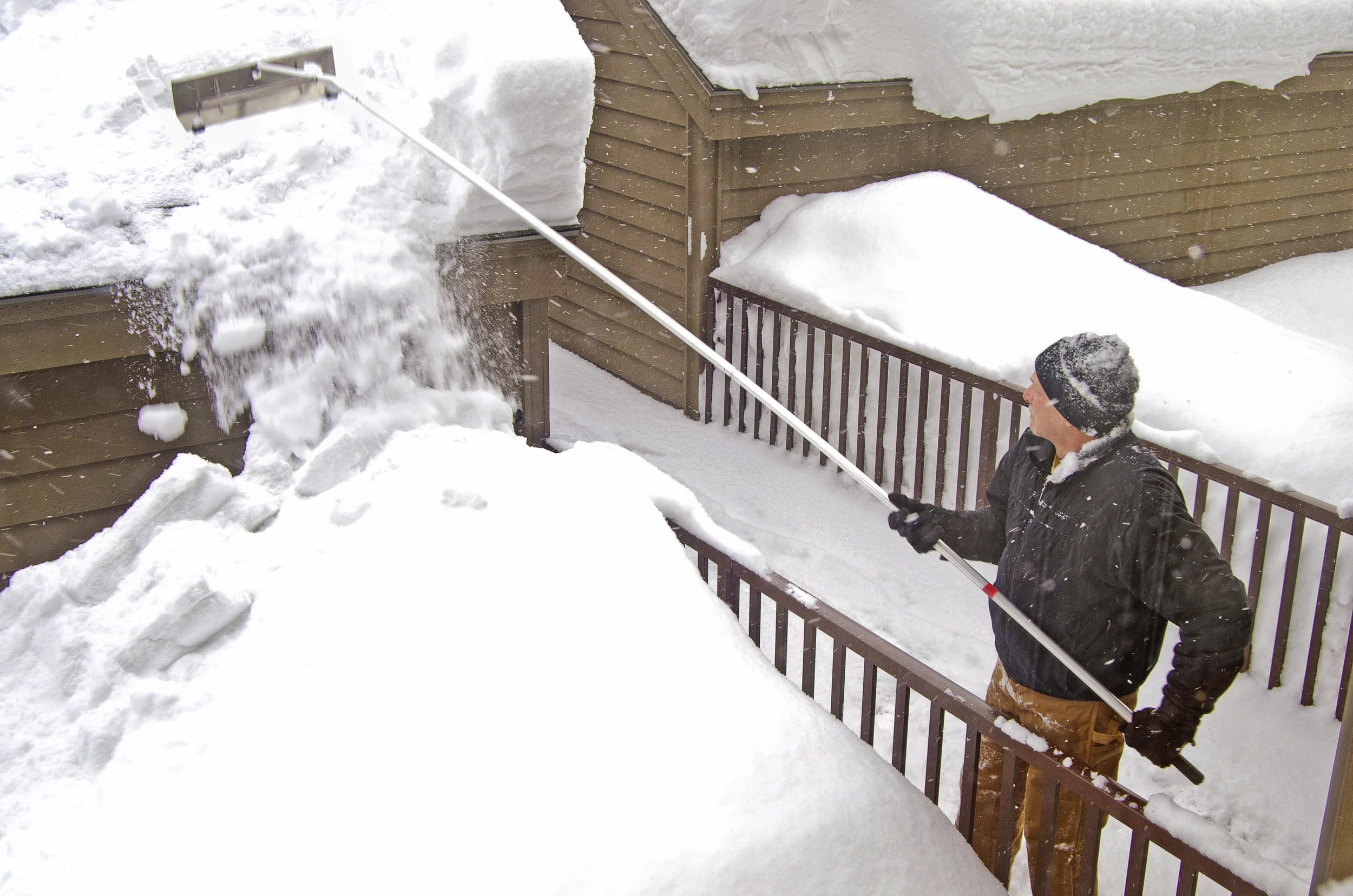
Snow and Your Roof
The snow is deep and as the weather begins to creep out of freezing, the addition of rain or snow melt into the mix can become a real threat. While all exposed roofs could be at risk, older flat roofs and roofs with poor drainage are the most susceptible to collapse due to snow.

With winter weather well under way, we can't help but raise our eyes to our roofs, and notice the snow piling up. The snow is getting deeper, and as the weather begins to creep out of freezing, the addition of rain or snow melt into the mix can become a real threat. While all exposed roofs could be at risk, older flat roofs and roofs with poor drainage are the most susceptible to collapse due to snow.
Newer roofs should have been designed for the minimum snow load as prescribed in the International Building Code, and the ASCE 7 – Minimum Design Loads for Buildings and Other Structures. Typically in the Berks County area, the design ground snow load is 30 pounds per square foot (PSF), which equates to just over 20 inches of dense snow. Additional snow load needs to be considered where snow from an adjacent sloped roof can slide onto a lower roof. Also, additional load from drifting snow must be considered when portions of the roof abut parapets, roof top equipment or higher roofs. Lastly, rain-on-snow surcharge can add 5 PSF for every inch of rain that is retained on the roof by the snow or poor drainage.
If you think your roof is at risk, you should contact a structural engineer to evaluate your roof condition. It may be necessary to remove some of the accumulated snow, clear roof drains, or provide temporary shoring to lessen the burden on the structural members. The removal of snow can be very dangerous, and is a job best left to a professional.
SSM Group, Inc. Announces Management Changes - Brian Kelly named President and CEO

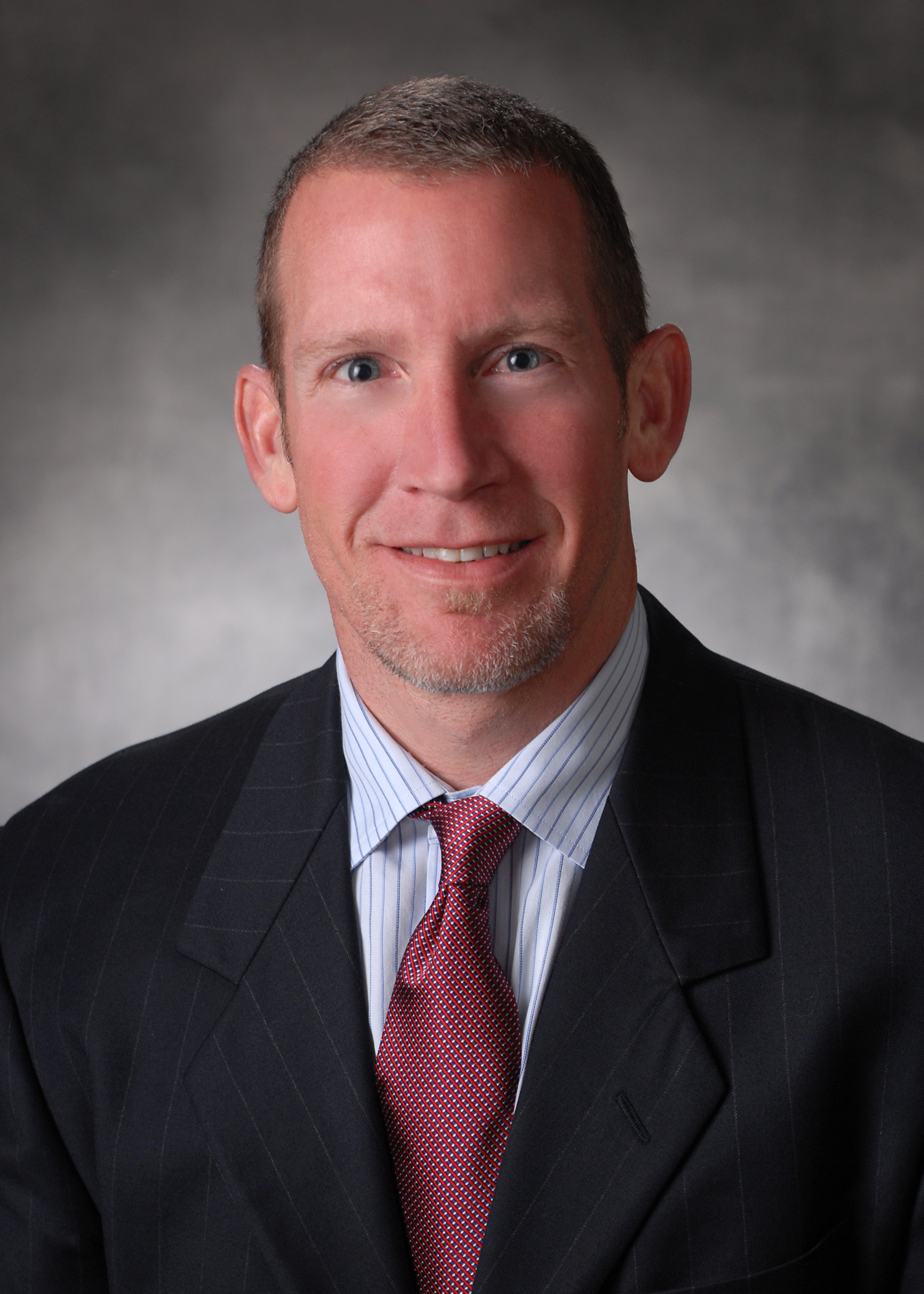

SSM Group, Inc. recently announced a corporate management restructure. Brian R. Kelly has been named President and Chief Executive Officer of the firm. Kelly, who formerly served as the company’s Executive Vice President with responsibility of running the firm’s operations, replaces J. Carlton Godlove, II, who has left the company to pursue other interests.
Kelly is one of four McCoy family members who assumed control and management of the firm in 1996. Kelly has an Associate Degree in Mechanical Engineering Technology from The Pennsylvania State University. Prior to joining the SSM management team, Kelly was employed at AT&T for more than 17 years in various roles. Kelly resides in Reading with his wife, Kay McCoy Kelly, who is a daughter of the company’s founder, Lewis J. McCoy, Sr. In a prepared statement, Kelly said, “I look forward to leading the company as we embark upon strategic growth and expansion. I am very proud of our exceptionally talented senior leadership team and all of our employees, and I am confident that, with their help and support, we will continue to grow the company and succeed at fulfilling our corporate mission – ‘Enhancing the quality of life for our clients, our employees, and all of the people touched by our work.’ Our work is so important because it touches this generation and future generations with a scope broader than we can imagine – and it leaves a legacy that will live far beyond us.”
“Approximately six months ago we appointed a team of independent professionals to work with us as members of an Advisory Board: Thomas A. Beaver, CPA, former managing partner at RKL; Patricia L. Langiotti, President of Creative Management Concepts; and Mike Shor, former executive with Carpenter. These Advisory Board members have played a key role in helping us plan for our future,” Kelly said.
Kelly also announced that shareholder, Patrick M. McCoy, PE, has been promoted to Executive Vice President. “Patrick will lead the company’s business development and sales and marketing efforts and he will be a strong right-hand man,” Kelly said. Patrick McCoy has been with the firm since 1996. He graduated from Drexel University, like his father, and holds Bachelor’s degrees in Civil Engineering and Architectural Engineering. McCoy formerly led the company’s Facilities and Site Engineering Division which provides services to worldwide companies such as IBM. Prior to joining SSM, he was with Ortega Consulting, Media, PA, and Gredell & Associates, Wilmington, DE.
Shareholder Lewis J. (Lou) McCoy, Jr. of Reading, who joined the firm in 1985, will continue in his role as Director of Human Resources.
Catherine (Kitty) Bell, who joined the firm in 2004, is being promoted to Divisional Vice President. Formerly the firm’s Vice President of Facility Engineering, she assumes an expanded role, with additional management responsibility for Site Engineering and Survey and Data Capture disciplines (formerly managed by Patrick McCoy). Bell resides in Reading, PA.
SSM Group, Inc. is an engineering and consulting firm founded by Lewis J. McCoy, Sr. in 1967. The company continues to be family owned and operated. Headquartered at 1047 North Park Road in Wyomissing with satellite offices in Harrisburg and the Lehigh Valley, SSM has just under 100 employees and provides services to various types of local, regional and national businesses that include commercial, industrial, manufacturing and telecommunications as well as healthcare and higher education institutions. The company also provides services to numerous local, regional, and county government entities. While the company’s primary market is a regional footprint including Berks County and the Lehigh Valley, SSM serves clients throughout PA and the Northeastern United States as well as to some international clients.
FOR MORE INFORMATION:
Brian Kelly, President and CEO
brian.kelly@ssmgroup.com | P: 610-621-2000
Tim East joins SSM Group

SSM welcomes Timothy East as Graduate Engineer in our Mechanical, Electrical and Plumbing Engineering Department. Tim is responsible for mechanical design and preparation of scope, plans, and specifications for industrial, commercial and institutional building projects. He received his BS in Mechanical Engineering from Wilkes University.
Aaron Pysher, GIT Joins SSM Group

SSM welcomes Aaron Pysher, GIT as Graduate Geologist. Aaron is a Geologist-In-Training (GIT) responsible for field and technical support of various water resources projects including public water supply development, infiltration testing, sinkhole investigations, and groundwater modeling and analysis. He received his BS in Professional Geology from Bloomsburg University of Pennsylvania
The Source - November 2015

Regulatory and legislative updates, best practices, and new technologies.
WHAT’S INSIDE
- Unassessed Waters Project Successful in Berks County
- Strategies for Successful Implementation
- Consider the Source Campaign
- New Faces in Sourcewater Protection
- Good Water = Good Life
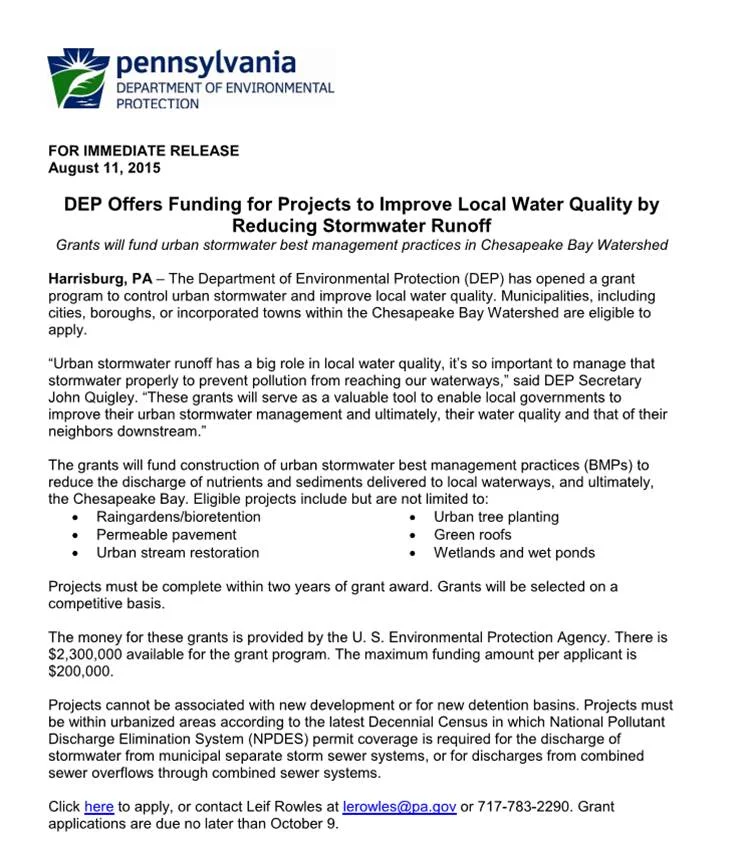
DEP Offers Funding for Projects to Improve Local Water Quality by Reducing Stormwater Runoff
Grant Opportunity: Municipalities, including cities, boroughs, or incorporated towns within the Chesapeake Bay Watershed are eligible to apply.

Grants will fund urban stormwater best management practices in Chesapeake Bay Watershed
HARRISBURG, PA -- The Department of Environmental Protection (DEP) has opened a grant program to control urban stormwater and improve local water quality. Municipalities, including cities, boroughs, or incorporated towns within the Chesapeake Bay Watershed are eligible to apply.
“Urban stormwater runoff has a big role in local water quality, it’s so important to manage that stormwater properly to prevent pollution from reaching our waterways,” said DEP Secretary John Quigley. “These grants will serve as a valuable tool to enable local governments to improve their urban stormwater management and ultimately, their water quality and that of their neighbors downstream.”
The grants will fund construction of urban stormwater best management practices (BMPs) to reduce the discharge of nutrients and sediments delivered to local waterways, and ultimately, the Chesapeake Bay. Eligible projects include but are not limited to:
• Raingardens/bioretention
• Permeable pavement
• Urban stream restoration
• Urban tree planting
• Green roofs
• Wetlands and wet ponds
Projects must be complete within two years of grant award. Grants will be selected on a competitive basis.
The money for these grants is provided by the U. S. Environmental Protection Agency. There is $2,300,000 available for the grant program. The maximum funding amount per applicant is $200,000.
Projects cannot be associated with new development or for new detention basins. Projects must be within urbanized areas according to the latest Decennial Census in which National Pollutant Discharge Elimination System (NPDES) permit coverage is required for the discharge of stormwater from municipal separate storm sewer systems, or for discharges from combined sewer overflows through combined sewer systems.
Grant applications are due no later than October 9.
FOR MORE INFORMATION
COMMONWEALTH OF PENNSYLVANIA
Dept. of Environmental Protection
Commonwealth News Bureau
Room 308, Main Capitol Building
Harrisburg PA., 17120
CONTACT: Amanda Witman, DEP, 717-787-1323
CONTACT: Leif Rowles at lerowles@pa.gov or 717-783-2290.
SSM GROUP: Mark Stabolepszy, PE, Vice President Municipal Engineering and Planning
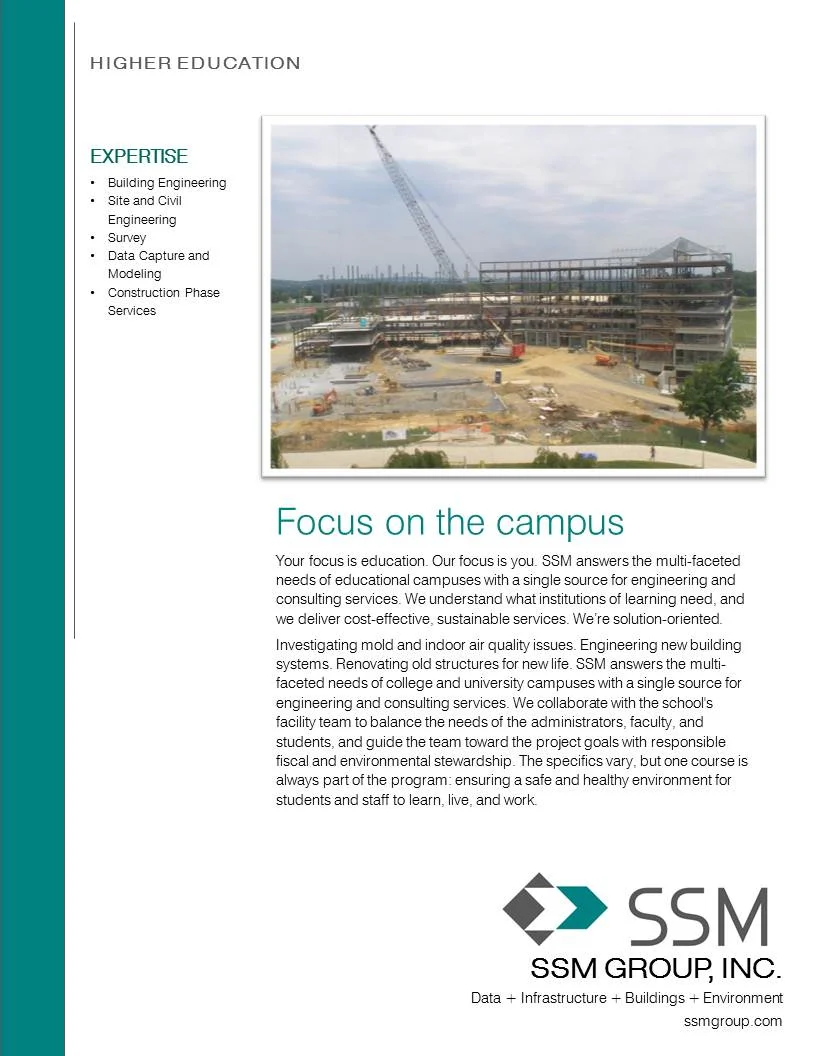
Higher Education
Focus on the Campus.
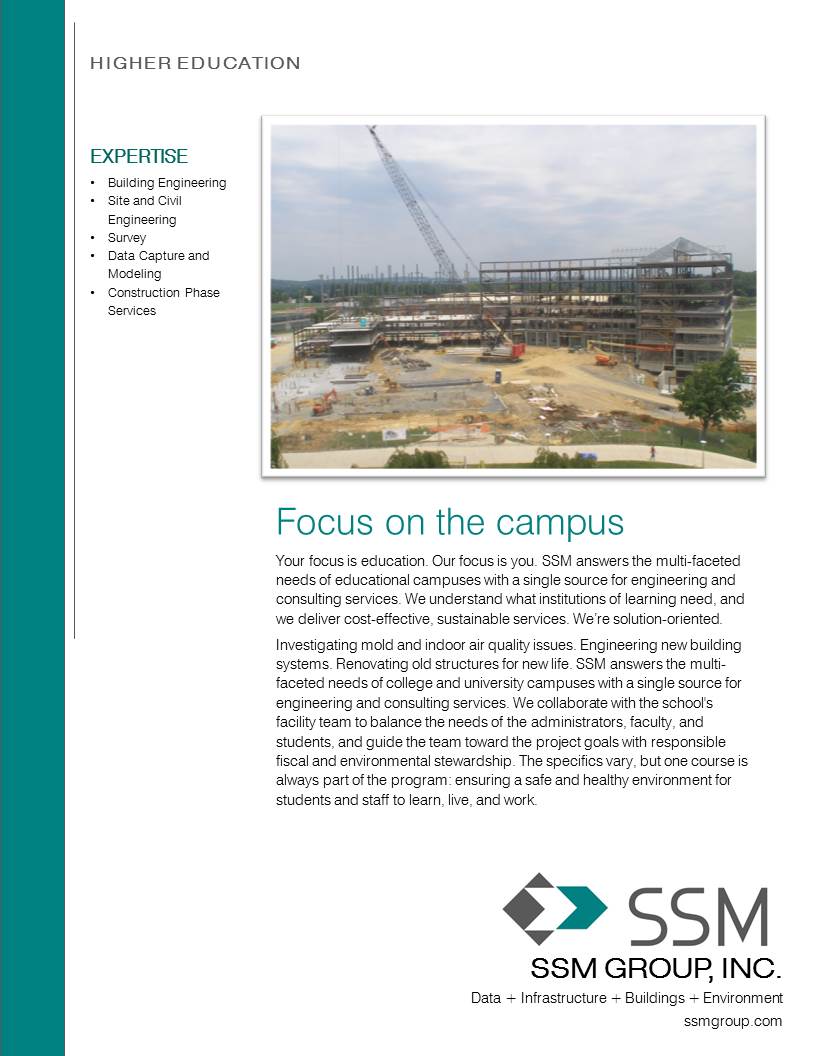
Focus on the campus
Your focus is education. Our focus is you. SSM answers the multi-faceted needs of educational campuses with a single source for engineering and consulting services. We understand what institutions of learning need, and we deliver cost-effective, sustainable services. We’re solution-oriented.
Investigating mold and indoor air quality issues. Engineering new building systems. Renovating old structures for new life. SSM answers the multi-faceted needs of college and university campuses with a single source for engineering and consulting services. We collaborate with the school's facility team to balance the needs of the administrators, faculty, and students, and guide the team toward the project goals with responsible fiscal and environmental stewardship. The specifics vary, but one course is always part of the program: ensuring a safe and healthy environment for students and staff to learn, live, and work.
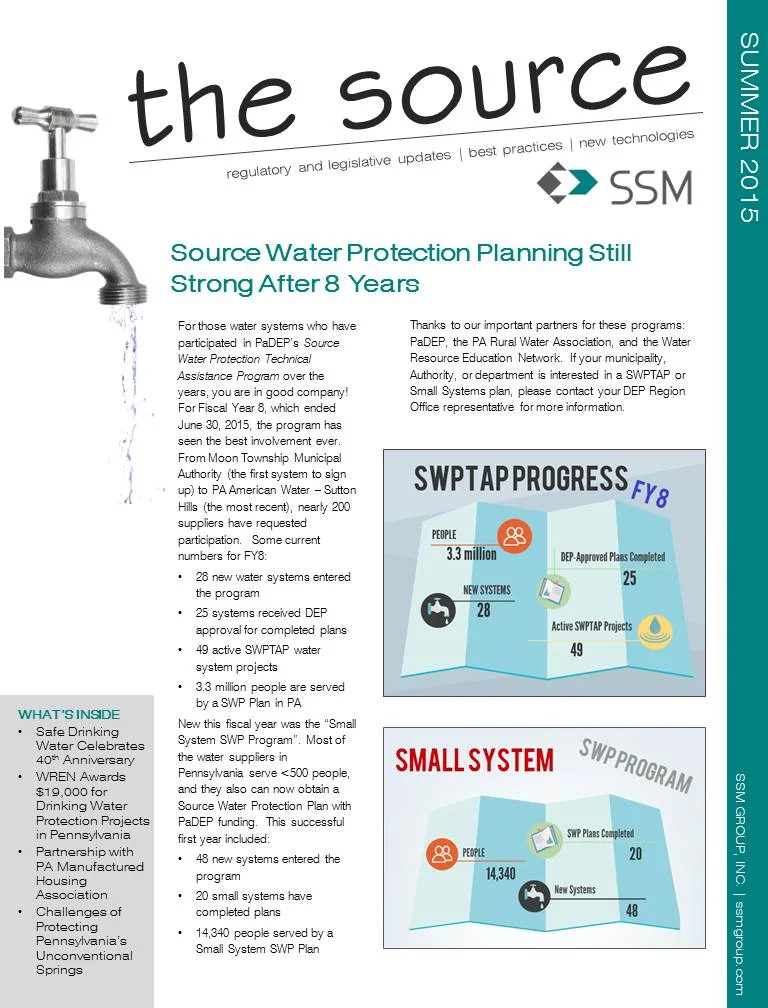
The Source - July 2015
July 2015 Inside this Issue:
- Safe Drinking Water Celebrates 40th Anniversary
- WREN Awards $19,000 for Drinking Water Protection Projects in Pennsylvania
- Partnership with PA Manufactured Housing Association
- Challenges of Protecting Pennsylvania’s Unconventional Springs
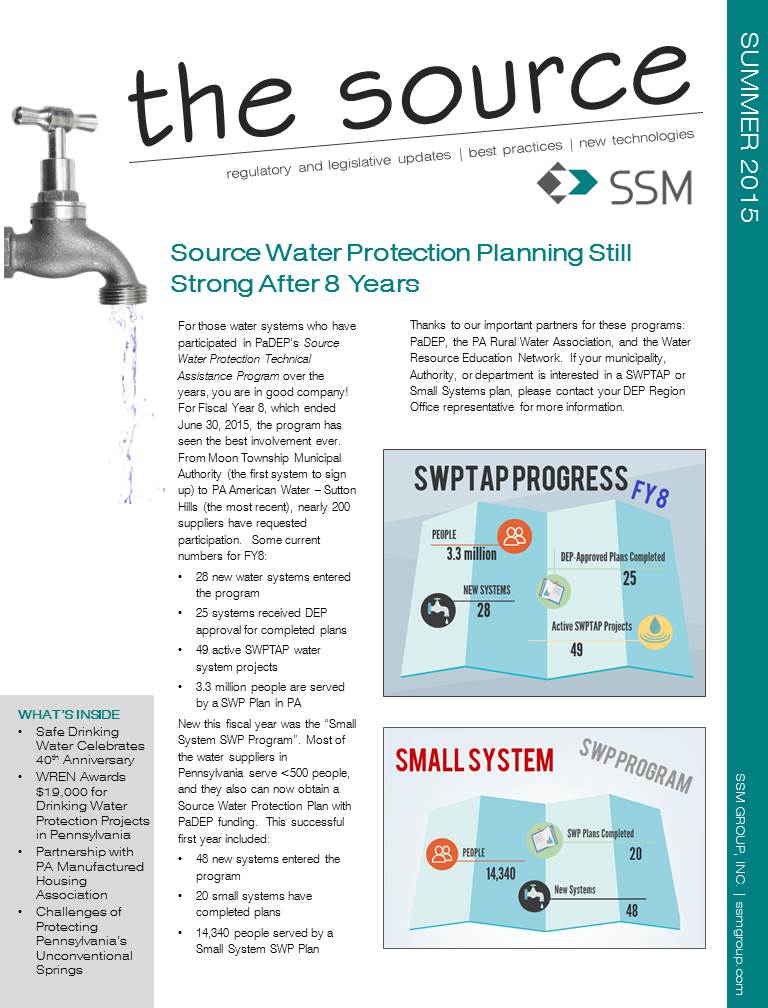
JULY 2015 | The Source
Regulatory and legislative updates, best practices, and new technologies.
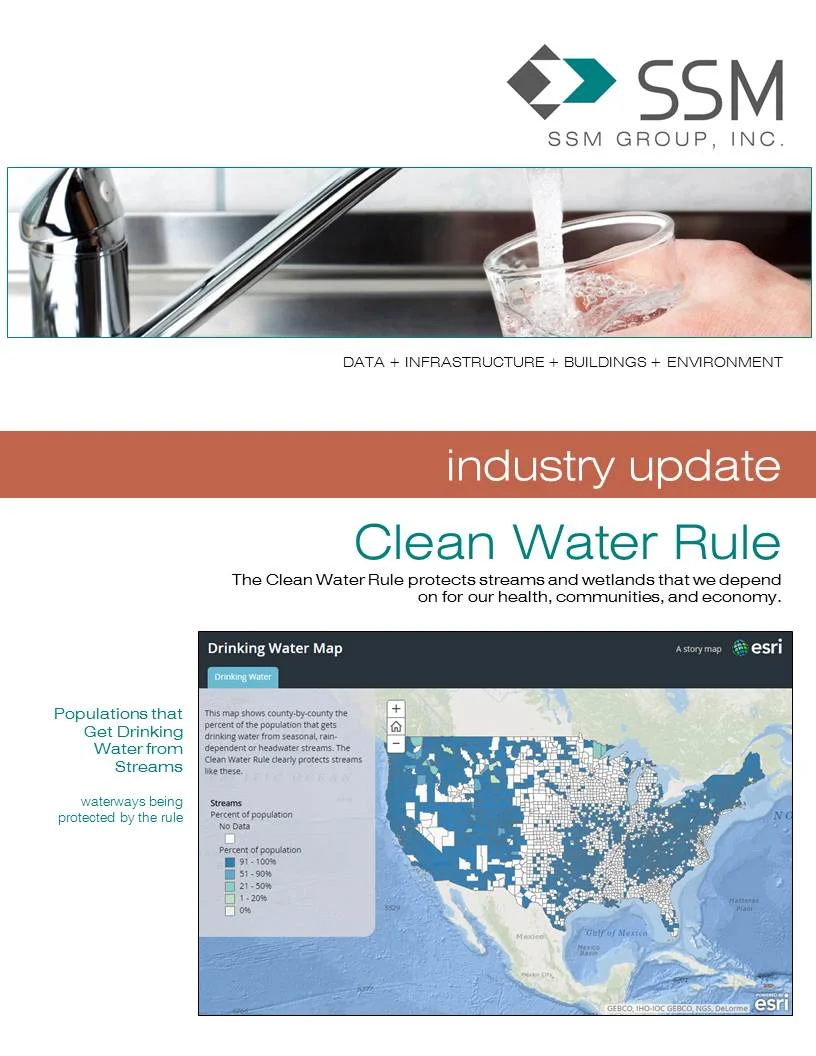
Clean Water Rule
The Clean Water Rule protects streams and wetlands that we depend on for our health, communities, and economy.

INDUSTRY UPDATE: Clean Water Rule

There’s been much buzz surrounding the Clean Water Rule, recently issued by the U.S. Environmental Protection Agency and U.S. Army Corps of Engineers. While the rule aims to clarify permitting regulations already in place with the Clean Water Act of 1972, many are worried it will create new stringent and burdensome regulations. Sixteen states have filed lawsuits against the U.S. Environmental Protection Agency over the rule. In an attempt to protect streams and wetlands, the Clean Water Rule simply enhances the Clean Water Act, responding to more than a decade’s worth of requests to more clearly define the water bodies and waterways referenced in the Clean Water Act.
According to the U.S. Environmental Protection Agency, clarification of the definitions of the waters protected by the Clean Water Act, will protect valuable water resources and help make permitting less costly, easier, and faster for business and industry. This is because it eliminates much confusion over which waterways are regulated, and how they are to be regulated. This reduces the time and resources required to submit and approve a permit. While environmental groups and some businesses support the rule, claiming the clean water is central their operations, other interests have mounted opposition to the rule, citing it as an example of burdensome federal overreach.
The Clean Water Rule is the result of more than 400 meetings with stakeholders from all over the country, over 1 million public comments, and the latest scientific research showing that the health of small tributaries and wetlands play an integral role in the health of larger, downstream bodies of water. By ensuring that our smaller tributaries and wetlands are covered by Clean Water Rule, the drinking water sources of more than 117 million Americans will now be protected that may not have had sufficient coverage under the Clean Water Act alone.
Only types of waters already addressed by the Clean Water Act are included in the Clean Water Rule, which does not create any new permitting requirements for agriculture. It also maintains all previous exemptions and exclusions, including activities like planting, harvesting, and moving livestock. The rule does not regulate most ditches, groundwater, shallow subsurface flows, or tile drains, and only requires a Clean Water Act permit if a protected water is going to be polluted or destroyed by an activity. Moreover, the rule does not place regulations on land use.
Not only is the rule important for the health of the surface water sources we utilize for drinking water, the water ways protected by this rule are beneficial to many aspects of our communities. Wetlands and streams trap floodwaters, recharge groundwater supplies, filter pollution, provide habitat for fish and wildlife, and are important for recreation and commercial value.
FOR MORE INFORMATION
Alfred Guiseppe, PG

Katie Baltzley joins SSM Group, Inc.
Katie Baltzley joins SSM Group, Inc.

SSM Group, Inc., a multi-disciplined engineering and consulting firm based in Reading PA, welcomes Katie Baltzley as a GIS Technician in the Water Resources Department. Baltzley will be responsible for creating and managing GIS data in support of a variety of environmental, municipal, and industrial projects including producing maps and customized GIS applications for our Water Resources, Source Water Protection, and Comprehensive Planning projects. She received her BA degree in Geography from Millersville University.
Source Water Protection
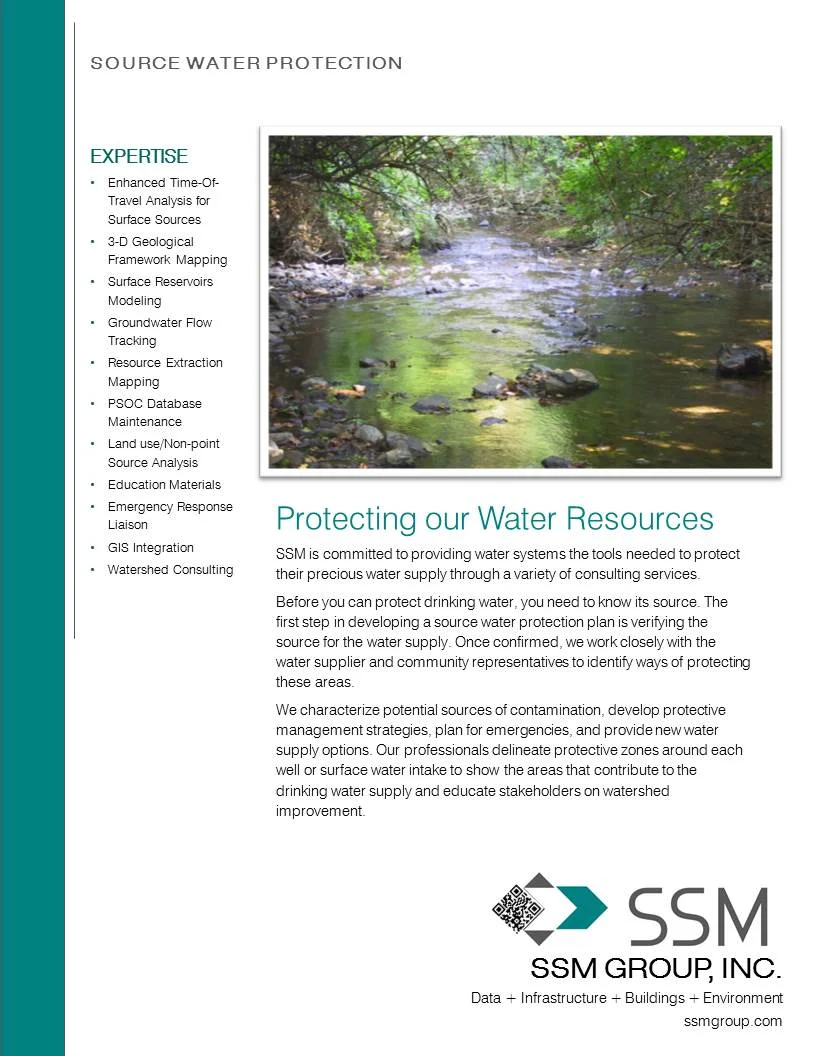
Protecting our Water Resources
SSM is committed to providing water systems the tools needed to protect their precious water supply through a variety of consulting services.
Before you can protect drinking water, you need to know its source. The first step in developing a source water protection plan is verifying the source for the water supply. Once confirmed, we work closely with the water supplier and community representatives to identify ways of protecting these areas.
We characterize potential sources of contamination, develop protective management strategies, plan for emergencies, and provide new water supply options. Our professionals delineate protective zones around each well or surface water intake to show the areas that contribute to the drinking water supply and educate stakeholders on watershed improvement.
Municipal Planning Services
Municipal Planning Services
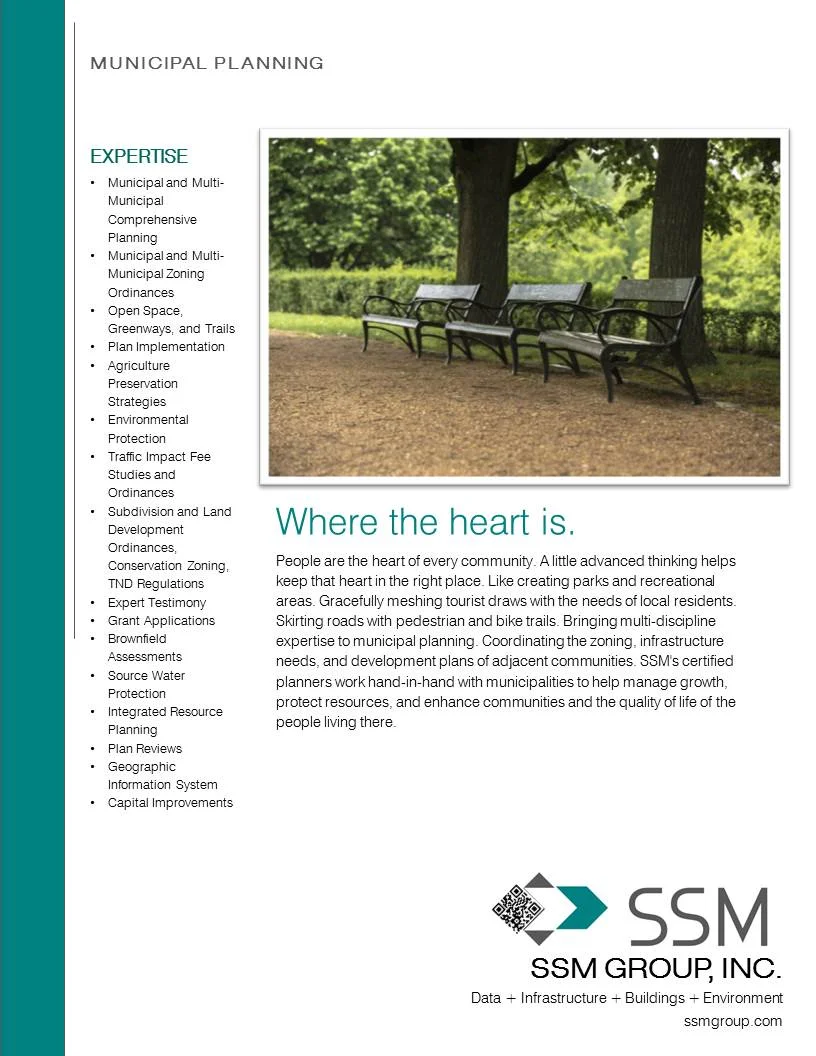
Where the heart is.
People are the heart of every community. A little advanced thinking helps keep that heart in the right place. Like creating parks and recreational areas. Gracefully meshing tourist draws with the needs of local residents. Skirting roads with pedestrian and bike trails. Bringing multi-discipline expertise to municipal planning. Coordinating the zoning, infrastructure needs, and development plans of adjacent communities. SSM's certified planners work hand-in-hand with municipalities to help manage growth, protect resources, and enhance communities and the quality of life of the people living there.
Municipal Engineering
Municipal Engineering Services
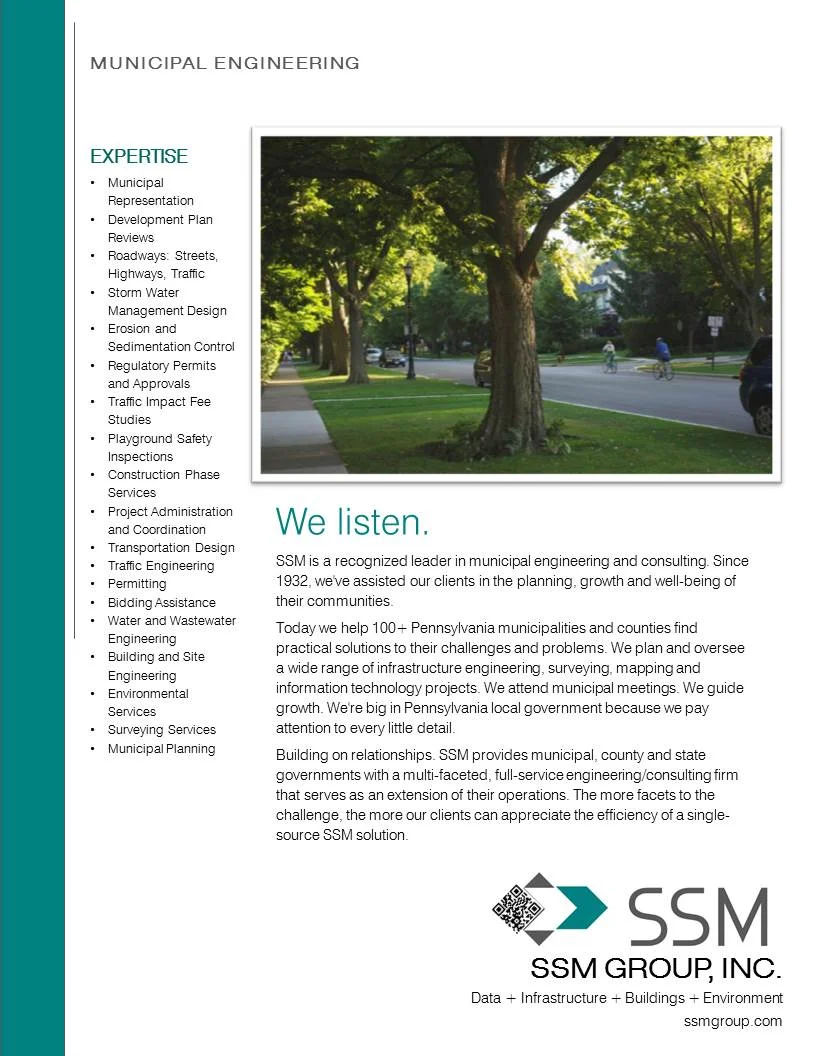
We listen.
SSM is a recognized leader in municipal engineering and consulting. Since 1932, we've assisted our clients in the planning, growth and well-being of their communities.
Today we help 100+ Pennsylvania municipalities and counties find practical solutions to their challenges and problems. We plan and oversee a wide range of infrastructure engineering, surveying, mapping and information technology projects. We attend municipal meetings. We guide growth. We're big in Pennsylvania local government because we pay attention to every little detail.
Building on relationships. SSM provides municipal, county and state governments with a multi-faceted, full-service engineering/consulting firm that serves as an extension of their operations. The more facets to the challenge, the more our clients can appreciate the efficiency of a single-source SSM solution.
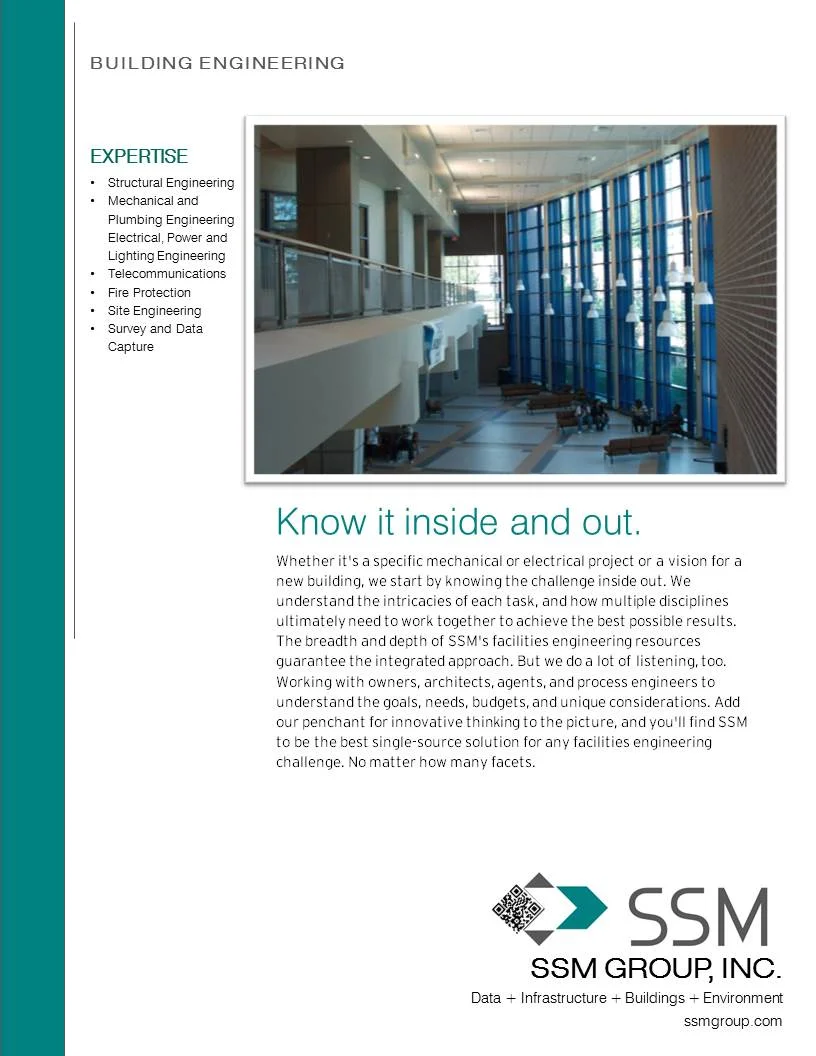
Building Engineering Services
Building Engineering Services
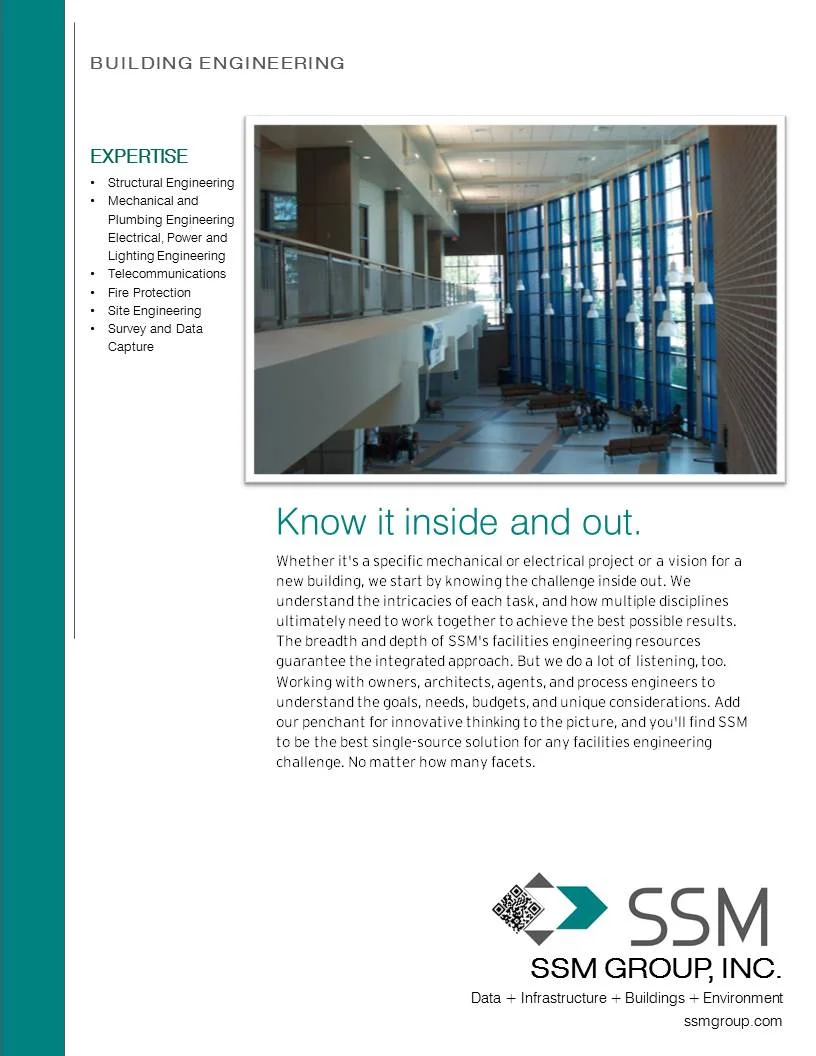
Know it inside and out.
Whether it's a specific mechanical or electrical project or a vision for a new building, we start by knowing the challenge inside out. We understand the intricacies of each task, and how multiple disciplines ultimately need to work together to achieve the best possible results. The breadth and depth of SSM's facilities engineering resources guarantee the integrated approach. But we do a lot of listening, too. Working with owners, architects, agents, and process engineers to understand the goals, needs, budgets, and unique considerations. Add our penchant for innovative thinking to the picture, and you'll find SSM to be the best single-source solution for any facilities engineering challenge. No matter how many facets.

Wastewater Planning, Engineering and Design
Wastewater Planning, Engineering and Design
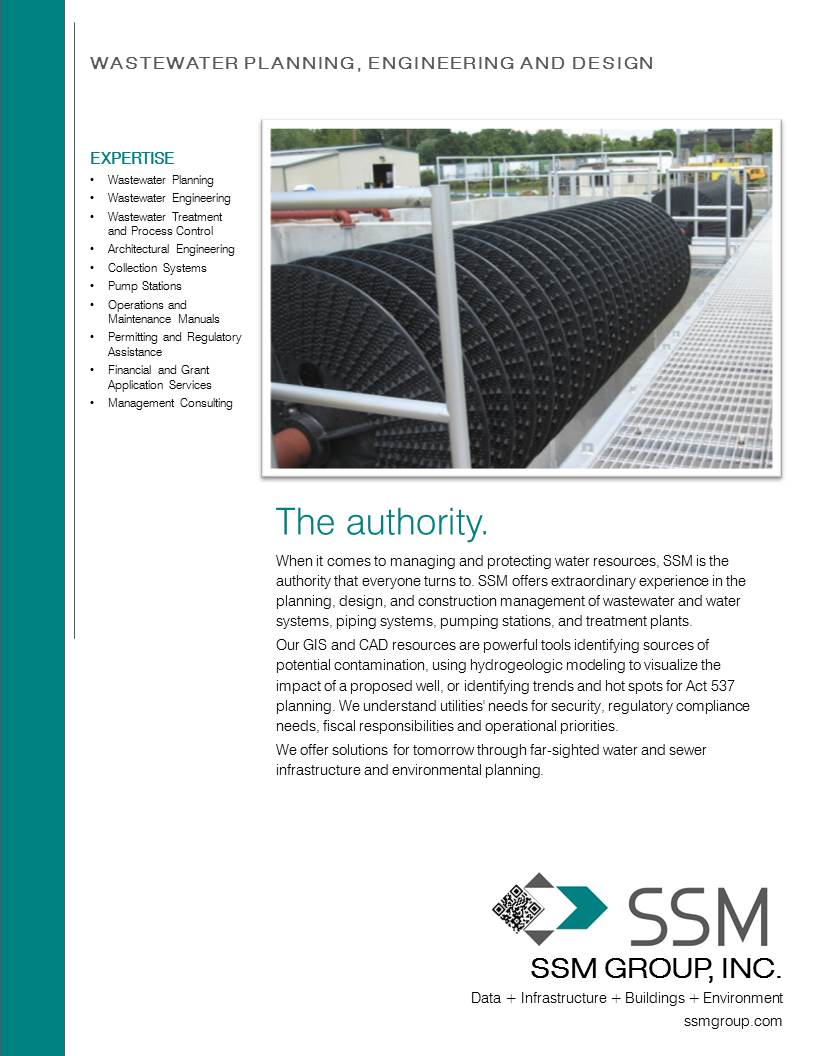
The authority.
When it comes to managing and protecting water resources, SSM is the authority that everyone turns to. SSM offers extraordinary experience in the planning, design, and construction management of wastewater and water systems, piping systems, pumping stations, and treatment plants.
Our GIS and CAD resources are powerful tools identifying sources of potential contamination, using hydrogeologic modeling to visualize the impact of a proposed well, or identifying trends and hot spots for Act 537 planning. We understand utilities' needs for security, regulatory compliance needs, fiscal responsibilities and operational priorities.
We offer solutions for tomorrow through far-sighted water and sewer infrastructure and environmental planning.
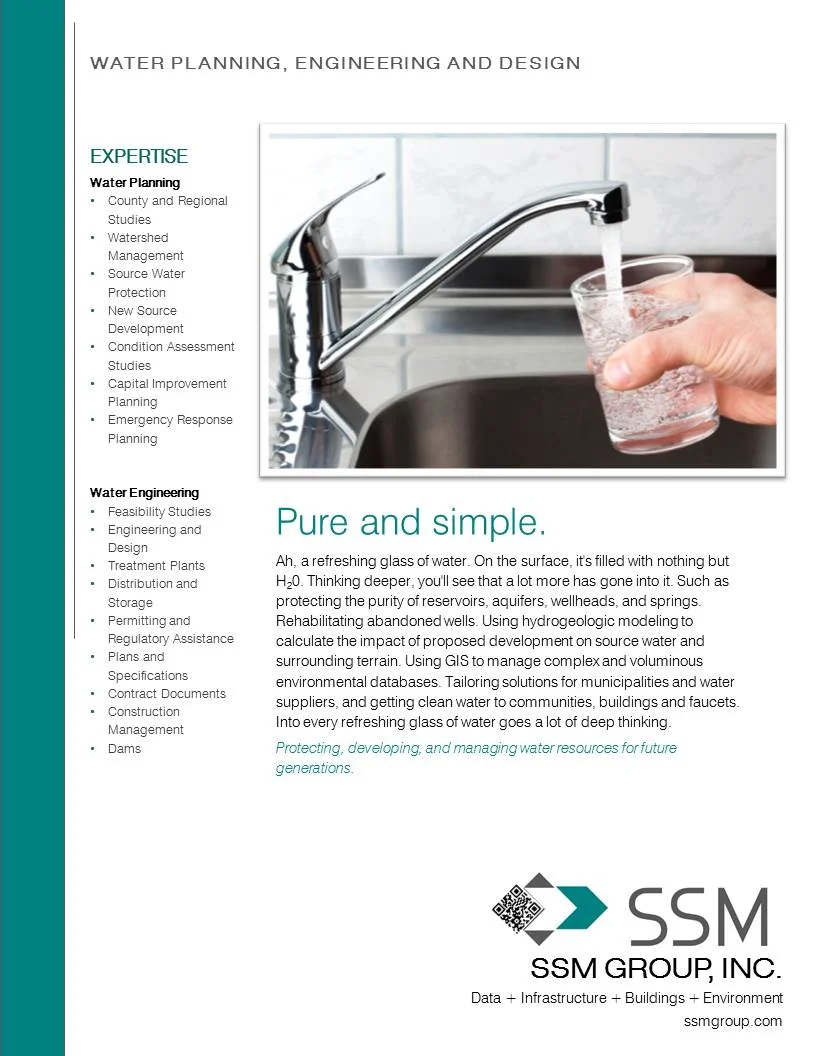
Water Planning, Engineering and Design Services
Water Planning, Design and Engineering Services
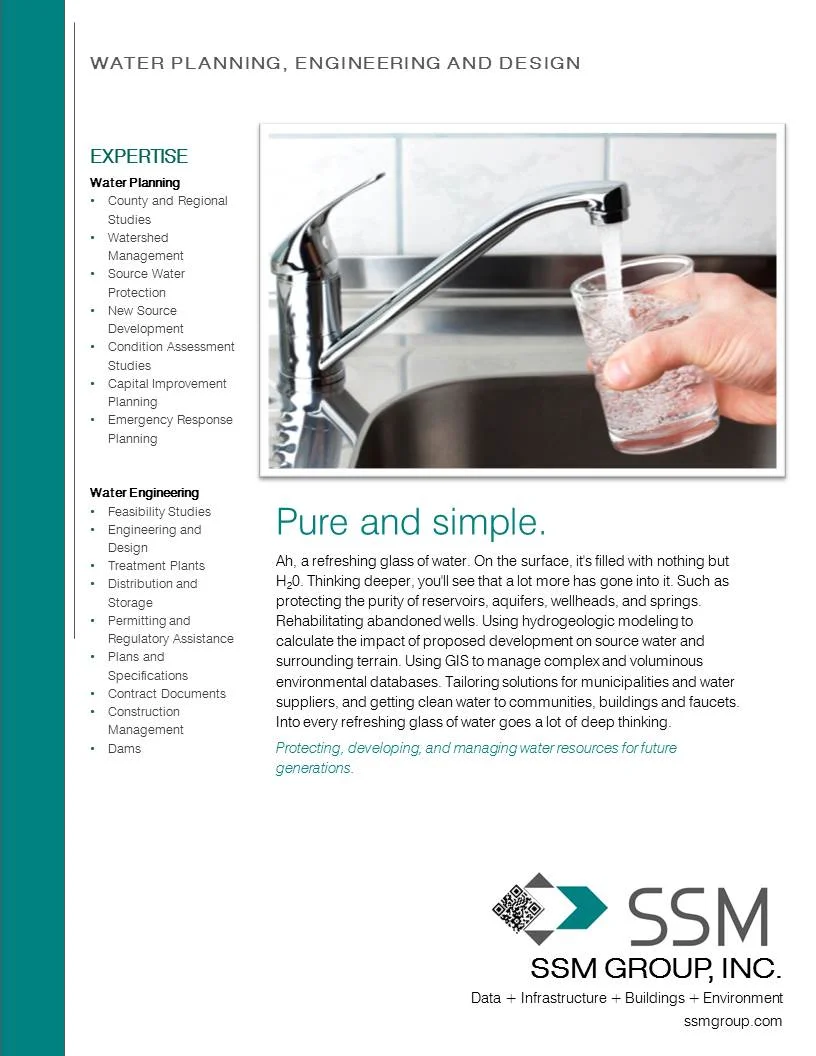
Pure and simple.
Ah, a refreshing glass of water. On the surface, it's filled with nothing but H20. Thinking deeper, you'll see that a lot more has gone into it. Such as protecting the purity of reservoirs, aquifers, wellheads, and springs. Rehabilitating abandoned wells. Using hydrogeologic modeling to calculate the impact of proposed development on source water and surrounding terrain. Using GIS to manage complex and voluminous environmental databases. Tailoring solutions for municipalities and water suppliers, and getting clean water to communities, buildings and faucets. Into every refreshing glass of water goes a lot of deep thinking.
Protecting, developing, and managing water resources for future generations.
SSM Group Overview of Services
SSM Group Overview of Services
Solutions
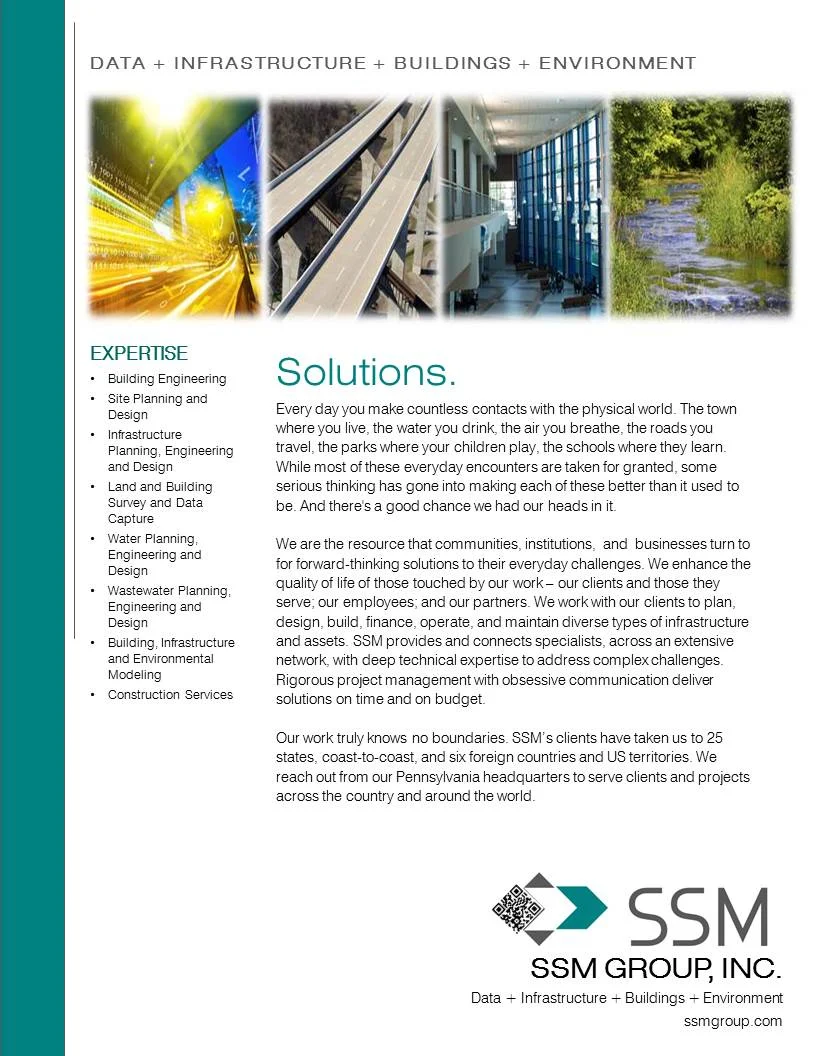
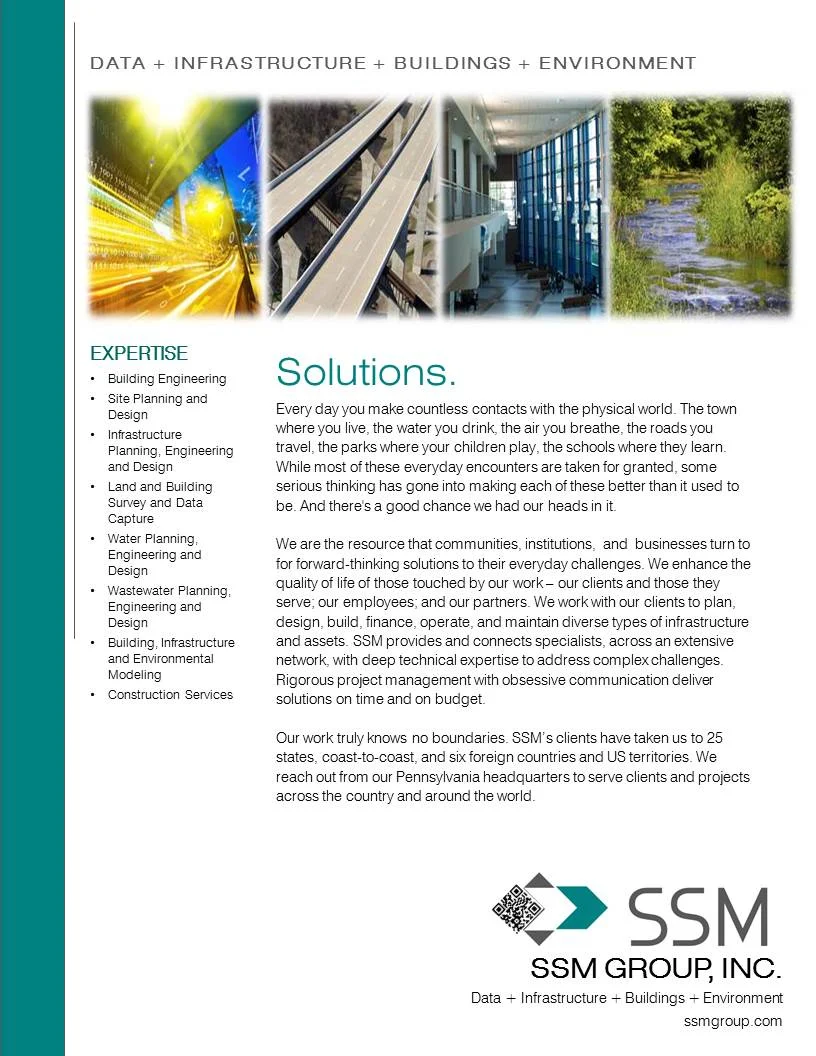
We are the resource that communities, institutions, and businesses turn to for forward-thinking solutions to their everyday challenges. We enhance the quality of life of those touched by our work – our clients and those they serve; our employees; and our partners. We work with our clients to plan, design, build, finance, operate, and maintain diverse types of infrastructure and assets. SSM provides and connects specialists, across an extensive network, with deep technical expertise to address complex challenges. Rigorous project management with obsessive communication deliver solutions on time and on budget.
Our work truly knows no boundaries. SSM’s clients have taken us to 25 states, coast-to-coast, and six foreign countries and US territories. We reach out from our Pennsylvania headquarters to serve clients and projects across the country and around the world.
Laser Scanning Terminology
Definitions associated with 3D Laser Scanning
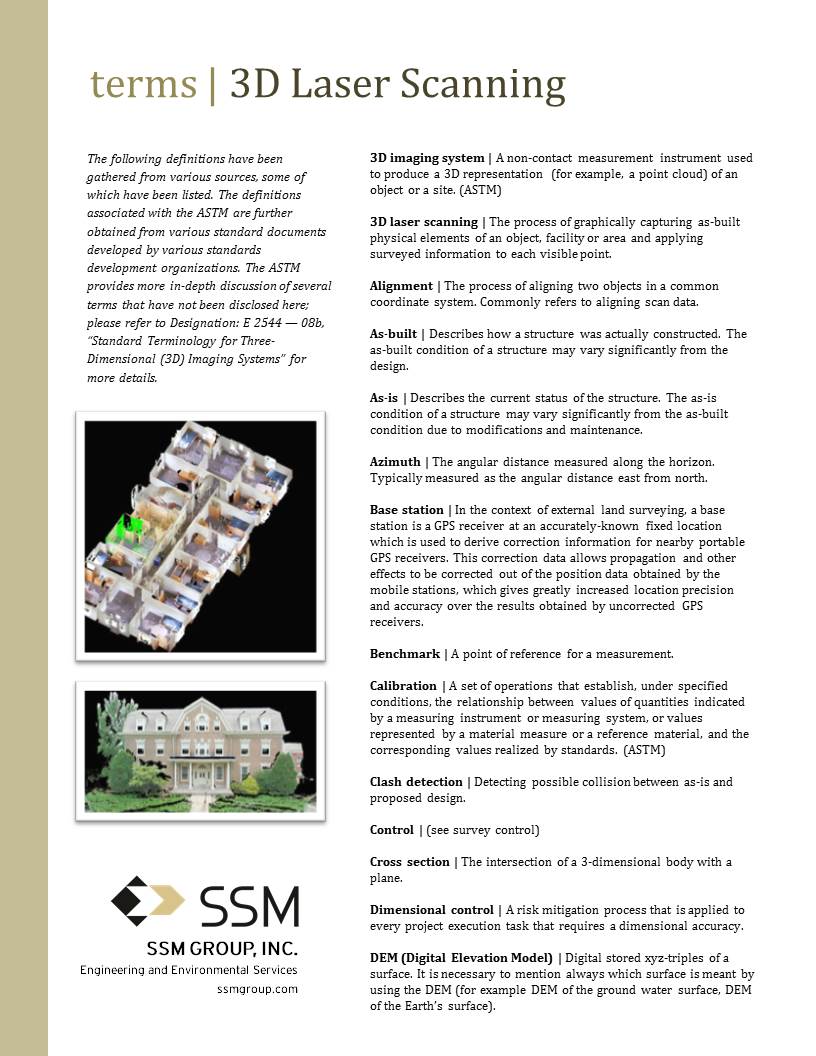
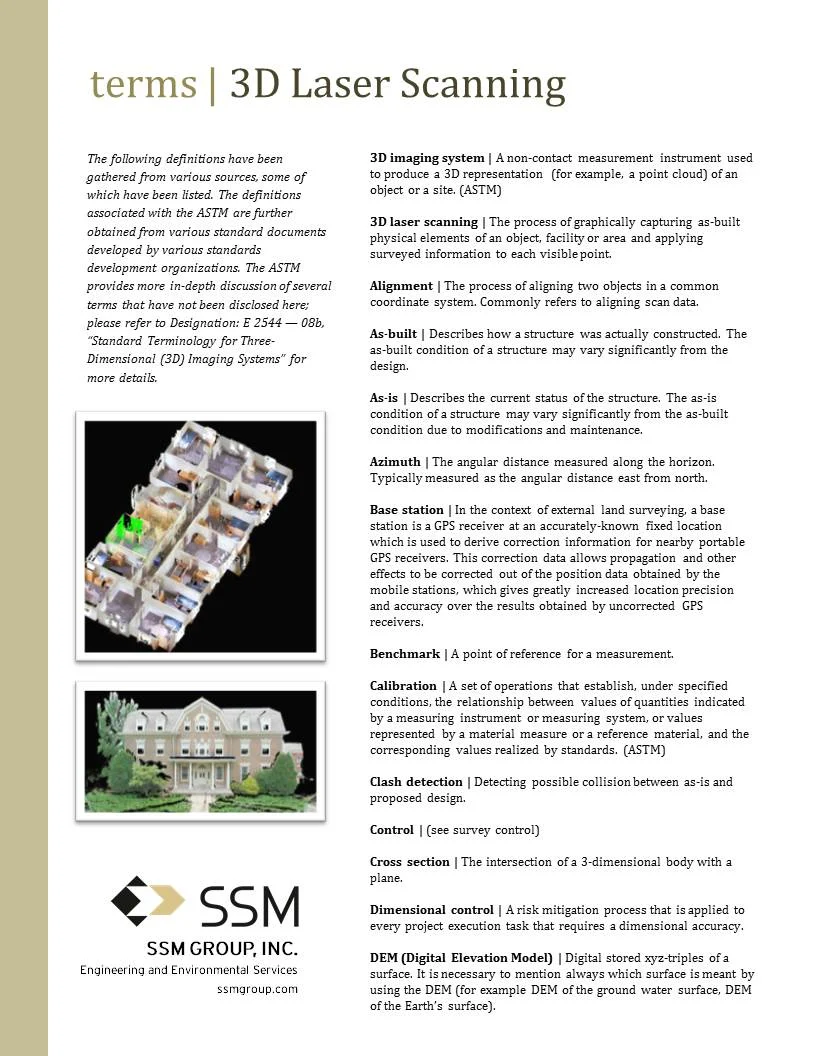
These definitions have been gathered from various sources, some of which have been listed. The definitions associated with the ASTM are further obtained from various standard documents developed by various standards development organizations. The ASTM provides more in-depth discussion of several terms that have not been disclosed here; please refer to Designation: E 2544 — 08b, “Standard Terminology for Three-Dimensional (3D) Imaging Systems” for more details.
Quality Air Is Fundamental
It is vital to maintain a sterile environmental in health care facilities to prevent the spread of infection as well as the threat of exacerbating preexisting conditions. Poor indoor air quality only exacerbates the issue.

QUALITY AIR IS FUNDAMENTAL | ICRA
The majority of an individual’s day is typically spent indoors which makes maintaining good indoor air quality essential to a person’s overall health.
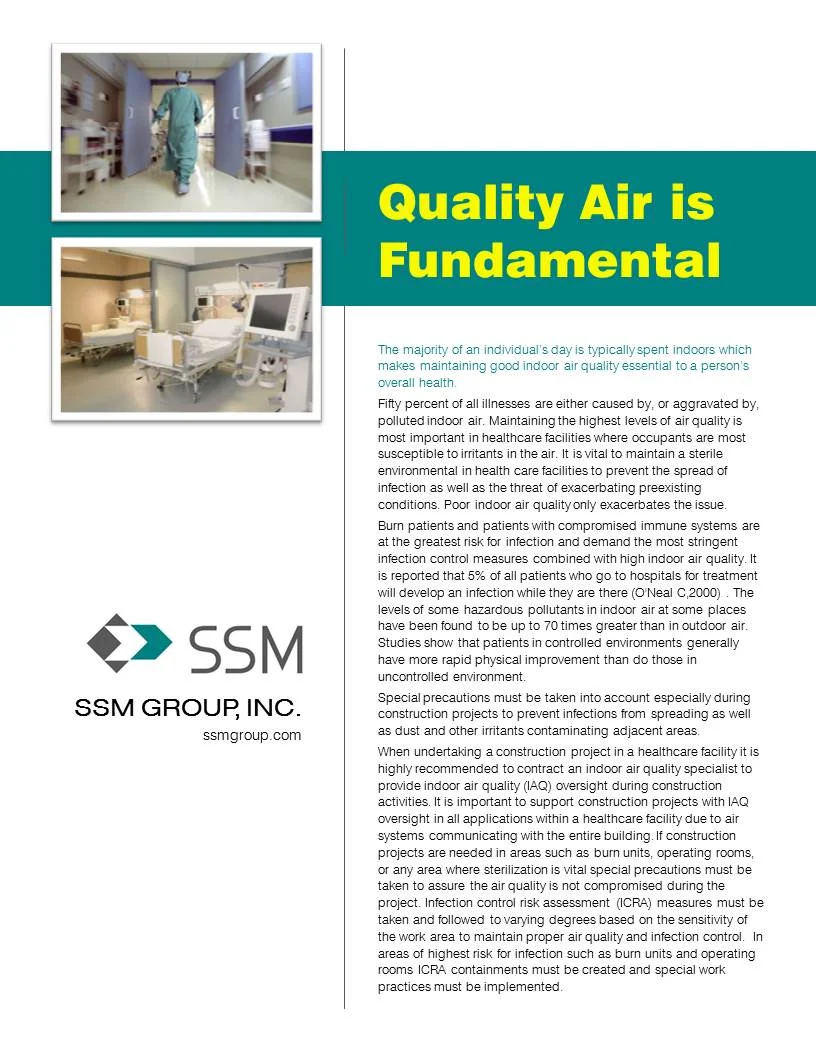
Fifty percent of all illnesses are either caused by, or aggravated by, polluted indoor air. Maintaining the highest levels of air quality is most important in healthcare facilities where occupants are most susceptible to irritants in the air. It is vital to maintain a sterile environmental in health care facilities to prevent the spread of infection as well as the threat of exacerbating preexisting conditions. Poor indoor air quality only exacerbates the issue.
Burn patients and patients with compromised immune systems are at the greatest risk for infection and demand the most stringent infection control measures combined with high indoor air quality. It is reported that 5% of all patients who go to hospitals for treatment will develop an infection while they are there (O'Neal C,2000) . The levels of some hazardous pollutants in indoor air at some places have been found to be up to 70 times greater than in outdoor air. Studies show that patients in controlled environments generally have more rapid physical improvement than do those in uncontrolled environment.
Special precautions must be taken into account especially during construction projects to prevent infections from spreading as well as dust and other irritants contaminating adjacent areas.
When undertaking a construction project in a healthcare facility it is highly recommended to contract an indoor air quality specialist to provide indoor air quality (IAQ) oversight during construction activities. It is important to support construction projects with IAQ oversight in all applications within a healthcare facility due to air systems communicating with the entire building. If construction projects are needed in areas such as burn units, operating rooms, or any area where sterilization is vital special precautions must be taken to assure the air quality is not compromised during the project. Infection control risk assessment (ICRA) measures must be taken and followed to varying degrees based on the sensitivity of the work area to maintain proper air quality and infection control. In areas of highest risk for infection such as burn units and operating rooms ICRA containments must be created and special work practices must be implemented.
ICRA Special Work Practices
- Isolate the HVAC system in the area where work is being done to prevent contamination of the duct system. Complete all critical barriers i.e. sheetrock, plywood, plastic, to seal area from non work areas or implement control a cube method (cart with plastic covering and sealed connection to work site with a HEPA vacuum for vacuuming prior to exit) before construction begins.
- Maintain negative air pressure within the work site utilizing HEPA equipped air filtration units. Seal holes, pipes, conduits, and punctures.
- Construct anteroom and require all personnel to pass through this room so they can be vacuumed using a HEPA vacuum cleaner before leaving work site or they can wear cloth or paper coveralls that are removed each time they leave work site.
- All personnel entering the work site are required to wear shoe covers. Shoe covers must be changed each time the worker exits the work area.
A thorough sampling protocol must be created by an indoor air quality specialist to provide data that the work areas were properly contained and all construction generated particulates were being contained. Upon completion of the work in a contained area an experienced industrial hygienists will perform a visual inspection and additional particulate sampling to confirm the area was suitable for re-occupancy. Through expert design of the sampling protocol and analysis of all data collected by the indoor air quality specialists it can be definitively shown that the air quality was not compromised during the construction project. As always, the goal is to establish the highest level of indoor air quality to promote a healthy working environment as well as maintaining a sterile environment for patients to heal.
Celebrating National Parks Week
Structural Design for Gun Display

Pennsylvania Military Museum
Pennsylvania Military Museum
Structural Design for Gun Display
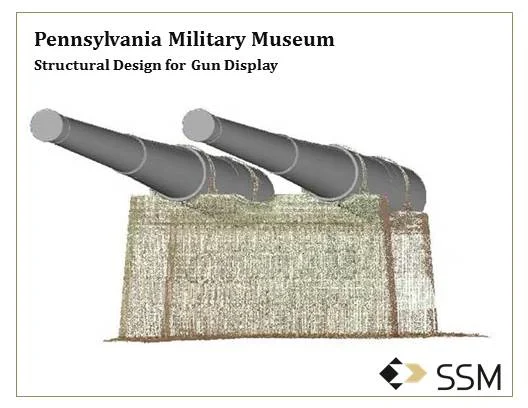
- Provided engineering services to support the installation of two, 14-inch diameter, 53-foot-long gun barrels from the Battleship USS Pennsylvania (BB-38) on a concrete pedestal.
- Oversaw a geotechnical investigation and prepared structural designs to design pedestal that would approximate the manner in which the guns appeared on the ship, including a 28’diameter disc that replaces the ship’s turret.