

First Presbyterian Church set to acquire Wyomissing property
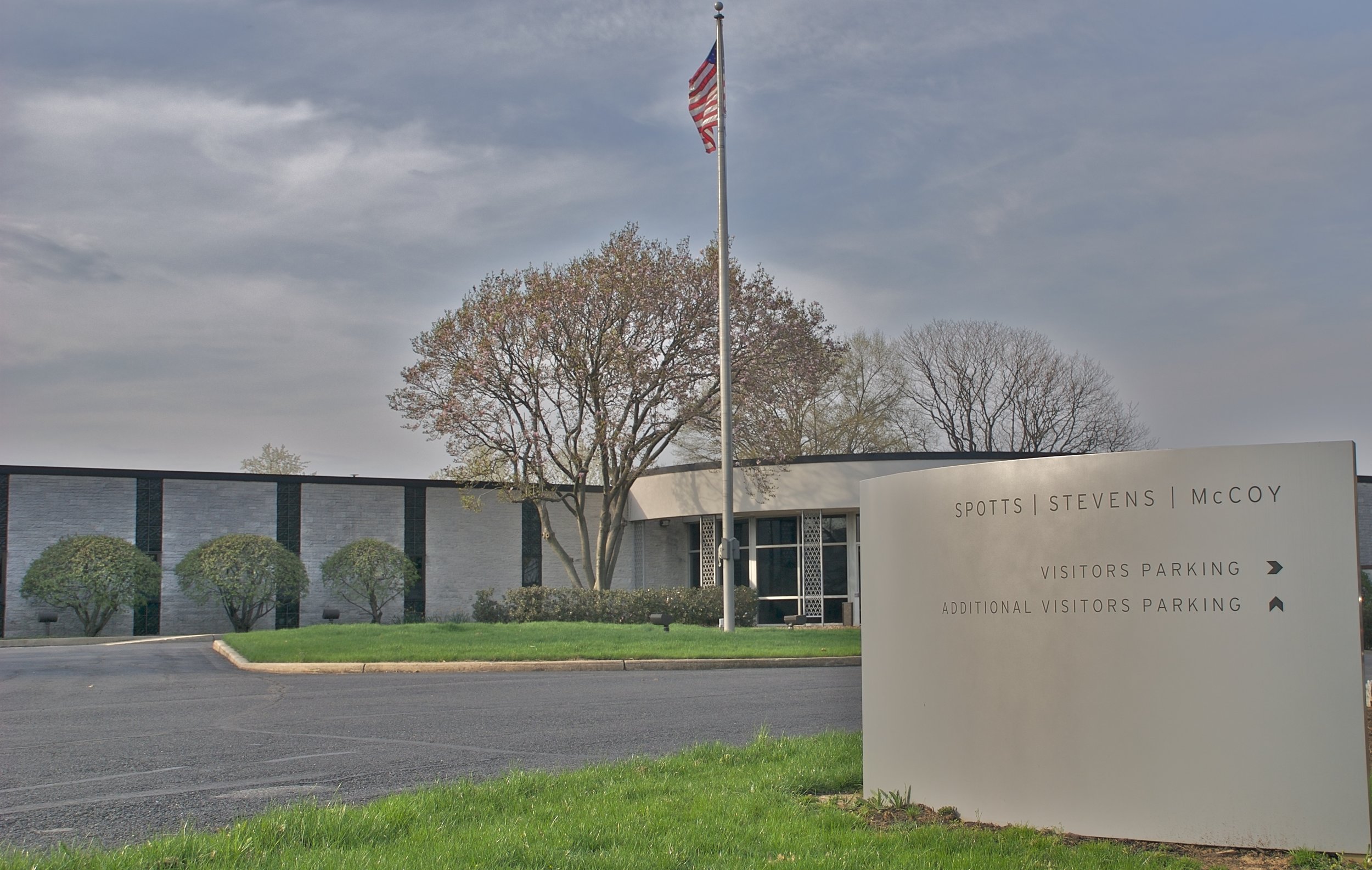
The headquarters of Spotts, Stevens and McCoy at 1047 North Park Road in Wyomissing, is expected to be the new home of the First Presbyterian Church in Reading. The church, founded in 1814, plans to lease space to SSM after purchasing the building from the consulting firm.
PRESS RELEASE: April 18, 2017
Wyomissing, PA – First Presbyterian Church set to acquire Wyomissing property owned by real estate Limited Partnership affiliated with Spotts, Stevens and McCoy (SSM).
In what is being described by both parties as a ‘union made in Heaven’ First Presbyterian Church, currently located at 37 South 5th Street in Reading and Spotts, Stevens and McCoy are jointly announcing plans for a real estate transaction whereby First Presbyterian Church is set to acquire the 1047 North Park Road, property currently occupied by Spotts, Stevens and McCoy (SSM) with plans to lease approximately half of it back to SSM. The purchase is contingent upon various approvals.
Attorney John Roland, long time member and elder at First Presbyterian Church who is a partner at Roland Stock, LLP, has provided leadership to First Presbyterian’s new site selection efforts. “Our Church is on a mission to expand our outreach efforts. This beautiful, new location will give us that opportunity,” said Roland. “Our congregation has embraced a number of changes in recent years and, following planned renovations, this facility will give us the space we need to support our membership growth goals.” First Presbyterian, founded in 1814, recently left the PC (USA) denomination to affiliate with the PC (ECU) and also just announced the calling of a new Senior Pastor, Christopher DiVietro. “We are very excited about these changes and in many ways, finding this location is an answer to prayers and the final piece of the puzzle,” said Nancy Alley, another church Session member who has been very active in the relocation process.
Brian Kelly, CEO at SSM and a partner in the real estate partnership, had the following to say: “We love our beautiful Wyomissing location and we had no desire to leave it; however, 43,000 square feet is simply more space than we need right now. So when the Church approached us about buying it and told us it was more space than they need at this time, we discussed a possible sale and lease-back situation. The result is that we’ve ended up with an Agreement that is truly a win-win for both parties. This sale unlocks resources that we can use to reinvest in the growth of the business, focusing on adding new technology and equipment and pursuing other strategic initiatives, including potential acquisitions.”
The 1047 North Park Road facility was constructed in 1963 as the world headquarters for Vanity Fair Corporation and it was subsequently renovated in 1998 and occupied by Carpenter Technology. The SSM principals purchased it in 2003. The building has just under 43,000 square feet on two levels and sits on approximately 5.5 acres of prime Wyomissing real estate.
“What makes the transaction so appealing to us is that Spotts, Stevens and McCoy will continue to occupy approximately half of the space as we embark upon our congregational growth plans,” said Roland. Current elder and former Treasurer Paul Eisenhuth notes that Presbyterians are known to be financial conservatives. “A key component of the transaction is that SSM and the Church are entering into a 5-year Lease Agreement which makes the space affordable for us. It also ensures our access to additional space as we grow.”
Spotts, Stevens and McCoy is a family owned and managed regional engineering and consulting firm with roots back to 1932. Two of the principals, Patrick McCoy and Lewis McCoy, Jr., are sons of founder, Lewis McCoy, Sr., and Kelly is a son-in-law. Both First Presbyterian Church and Spotts, Stevens and McCoy have deep roots in the Berks County community.
There are many factors that make this such a uniquely beneficial transaction for both parties:
- The SSM lease-back will provide the Church with an ongoing revenue stream as it embarks upon renovation plans and congregational growth goals. Financing is being provided by Customers Bank as the Church embarks upon a capital campaign to fund both the purchase and planned renovations. The Church will be seeking competitive bids for both design and construction work. No firm timeline for construction or occupancy has been established at this time.
- With a five-year Lease in place, SSM will be able to continue to operate from its existing headquarters location with little or no disruption to business as the Church embarks upon its renovation plans and prepares to move in
- Church offices will be open during the week; however its primary activity will occur on weekends and evenings when parking spaces are likely to be occupied by those attending scheduled worship services. SSM’s primary business activity will occur on week days during normal business hours and its employees will be off on weekends.
An answer to prayers? A partnership made in Heaven? The ‘joining’ of two old and well-established organizations? Laying all spiritual beliefs aside, it certainly appears to be a transaction that capitalizes on every possible benefit for both the Church and SSM. So at a minimum, it’s a win-win!
FOR ADDITIONAL INFORMATION:
- First Presbyterian Church - John Roland, Esq. | 610-372-5588
- Spotts, Stevens and McCoy – CEO, Brian Kelly | 610-621-2000
- Patricia Langiotti, Creative Management Concepts | 610-603-0306

Sam Zook, SIT Receives Certification as Drone Pilot
Sam Zook, SIT is the third surveyor at SSM to receive certification as a Drone Pilot.

Sam Zook, SIT, Surveyor has received his certification as a FAA Certified Remote Pilot. Zook is one of three certified pilots at SSM. He is a 2009 graduate of Pennsylvania College of Technology.
On June 21st, 2016 the FAA finalized a new regulatory framework for small, unmanned aerial systems. Titled Part 107, these new regulations created a new drone certification process that covers the majority of low-risk, commercial UAS flight operations for all commercially operated drones. Commercial refers to any kind of flight operation that can be tied to economic benefit. These new regulations were implemented on August 29, 2016.

Is Your Community Connected?
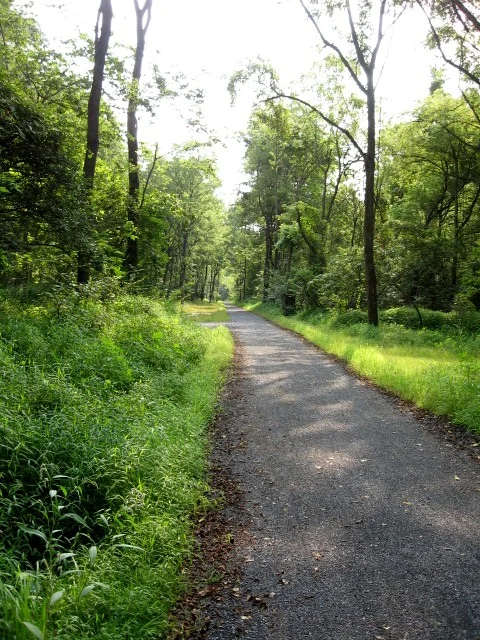
A greenway, open space and trail network connects people to nature, each other, village and town centers, parks, historic sites, and the other resources found in your community.

A greenway, open space and trail network connects people to nature, each other, village and town centers, parks, historic sites, and the other resources found in your community. It also helps connect us to ourselves by providing opportunities for quiet time and reflection.
Individual health is promoted by providing opportunities for walking, bicycling and jogging; but providing green infrastructure also promotes community health by increasing the quality of life, contributing to economic development, providing an alternative means of transportation, protecting landscapes, and protecting wildlife habitats.
Planning a greenway, open space and trail network provides opportunities for your residents and visitors to stretch their legs, but is also vital to protecting natural resources and can contribute to economic revitalization, and encourage tourism. Such planning can be done as a component of a comprehensive plan or as a stand-alone plan.
A greenway is a corridor of open space, and can take the form of a conservation greenway, recreational greenway, riparian buffer, landscape corridor, or greenbelt around a developed area. Ideally, there will be a continuous system of greenways planned throughout the community.
The network plan itself includes an inventory of existing resources, a vision, mapping of the network and destinations, and an action program to realize the vision. The action program is critical to implementing the plan, and typically includes recommendations for zoning and subdivision and land development ordinance amendments to protect open space and facilitate completion of the trail system, official mapping of target open areas, recreational facilities, and trails, and other greenway preservation and trail construction strategies.
SSM can help you keep your community connected.

For an Energetic and Strong Community: Let SSM be your Personal Trainer
Let SSM be your personal trainer. Take advantage of our experience to build a strong and healthy community park system.
Let us be your personal trainer. Take advantage of our experience to build a strong and healthy community park system.
Just like athletes follow a training regimen to keep their muscles strong, your community maintains its strength by developing a recreational plan with goals and measurable achievements. Your community is unique. The level of service you provide to your residents must be tailored to the appropriate range, quantity and quality of recreation facilities within your fiscal limits. Both active and passive opportunities are essential to the development and the maintenance of a strong community.
A trainer builds an exercise regimen based on the desired outcomes; specific exercises, targeted at muscle groups, elicit specific results. Your park system should work the same way. It is maintained and strengthened by integrating various park sizes and types to meet the specific needs of your community. The key to developing a strong park system is to determine your needs and then develop a plan that provides the appropriate types of recreational opportunities in the right locations.
Are you flexing the right park muscles to meet your community’s fitness plan?
- A mini-park is used for isolated or limited recreational needs. These are small parks (less than an acre) and are found in a residential setting. These could be found in a subdivision or at a senior center or daycare center.
- If the community muscle you need to flex focuses on informal active or passive recreation, then a neighborhood park may need to be added to your park system. The neighborhood park covers a larger area, ideally between 5 and 10 acres, serving a specific neighborhood of up to a half mile service area.
- Community parks serve a broader purpose than neighborhood parks. These parks are designed to accommodate a variety of activity and community-based recreation needs. They typically are between 25 and 50 acres and serve two or more neighborhoods within a three mile service area.
- Regional parks are generally large parks that draw visitors from a region or several communities that can be an hour or more away. These parks sometimes have historic significance or a unique attribute that make them special and often have a commercial component as well.
SSM can help you maintain your community strength by working with you to achieve your park and recreation goals.

Source Water Plan Updates
If your source water protection plan was developed four or more years ago, new tools and technology can improve your plan and make a positive impact on source water protection.

Over the last 10 years, many community water systems participated in various source water protection programs offered by the PA Department of Environmental Protection.
These programs provided free technical assistance for a rigorous delineation of multiple water sources, identification of potential sources of contamination, and the development of a professional plan to address water quality issues. As these plans become older, many aspects of the plan become outdated or not applicable to current practices. If your plan was developed four or more years ago, new tools and technology can improve your plan and make a positive impact on source water protection.
SSM offers a menu of services that keeps your Source Water Protection Plan relevant to your system’s present needs. By using technology advances such as improved Geographic Information Systems (GIS) capability and new publicly-available information, your plan can be on the cutting edge of protection strategies.
- Enhanced groundwater and surface water computer modeling. Is there a particular concern in your area? SSM can use your plan delineation to model flow from a particular operation, or use a more rigorous computer model to track specific contaminants to your water sources.
- Review and update potential sources of contamination (PSOC) inventory. PSOCs can change quickly. Using updated databases, we will help you identify and analyze important changes in PSOCs that may affect your water sources.
- Resource extraction mapping for oil & gas wells and mining areas. SSM can research unconventional well development in your area for the best protection of your groundwater sources.
- Land-use analysis. Current sources of information can help map existing non-point source activities in your protection zones, such as residential, agriculture, and industrial areas.
- Review and add management options that update your system’s strategies for protecting your water sources. Management strategies should be evaluated regularly to ensure they are effective in protecting your water sources.
- Reinvigorate your steering committee. SSM can assist with organizing and conducting strategy meetings that brings new ideas and partners together to improve your plan.
- Contingency planning. After the January 2014 contamination incident in the Elk River and other events , Disaster Planning is the new hot topic. SSM staff can help develop partnerships with emergency responders and early warning networks through training and GIS assistance.
- Update your plan components. SSM can write an addendum to your existing plan, bringing all of your priorities and updates together in one, concise report.

PEDA 2016 Spring Legislative Conference
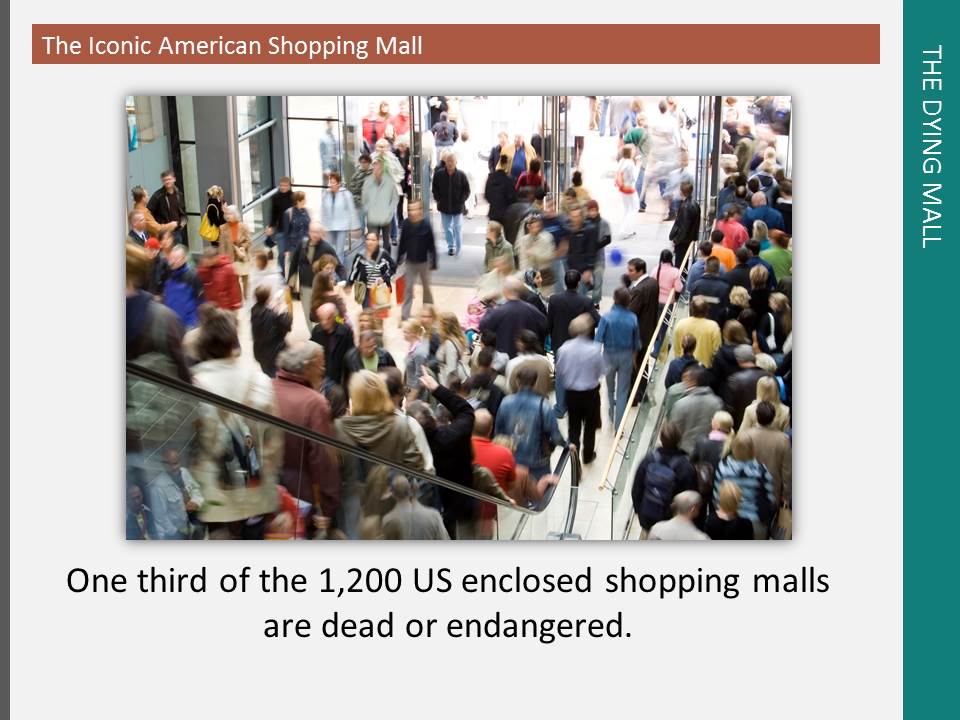
One third of the 1,200 US enclosed shopping malls are dead or endangered.

The Dying Mall: Reinventing Shopping Malls to Revitalize the Community
What’s to become of the shell of America’s shopping mall history?
Malls with high vacancy rates, low consumer traffic, no anchor store, or dated and deteriorating structures are considered ‘dead.’ Green Street Advisors report there are approximately 1,200 enclosed malls across the country and 15% of those malls will fail or be converted into non-retail space within the next 10 years. Online shopping, the recession, and demographic shifts are the key factors leading to this death toll. A change to the way we shop has led some mall owners to change the set-up of their mall, re-arranging like stores together, adding new anchors (like Apple stores) or new features (like daycare or children’s play areas) and changing the food court to a dining terrace with upgrades from fast food to sushi bars. While these approaches may save some shopping malls, the hard truth remains that many of these malls will not return to the glory of their past; but will instead close leaving behind a gigantic concrete shell on an island of macadam.
We'll be talking about the revitalization efforts at the PEDA 2016 Spring Conference!
For more information:
Terry Reed, Vice President Business Development
SSM Group, Inc. Announces Management Changes - Brian Kelly named President and CEO

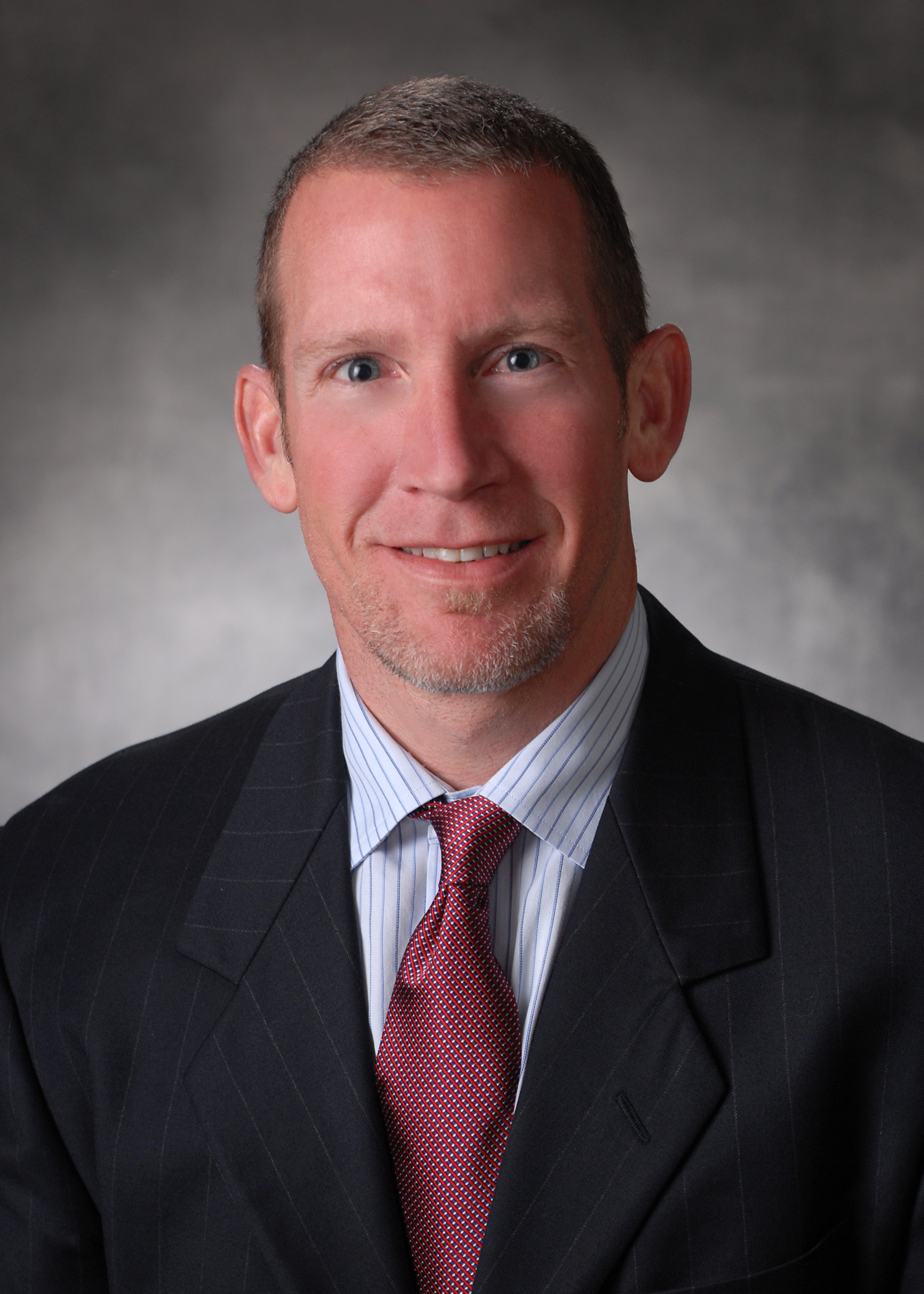

SSM Group, Inc. recently announced a corporate management restructure. Brian R. Kelly has been named President and Chief Executive Officer of the firm. Kelly, who formerly served as the company’s Executive Vice President with responsibility of running the firm’s operations, replaces J. Carlton Godlove, II, who has left the company to pursue other interests.
Kelly is one of four McCoy family members who assumed control and management of the firm in 1996. Kelly has an Associate Degree in Mechanical Engineering Technology from The Pennsylvania State University. Prior to joining the SSM management team, Kelly was employed at AT&T for more than 17 years in various roles. Kelly resides in Reading with his wife, Kay McCoy Kelly, who is a daughter of the company’s founder, Lewis J. McCoy, Sr. In a prepared statement, Kelly said, “I look forward to leading the company as we embark upon strategic growth and expansion. I am very proud of our exceptionally talented senior leadership team and all of our employees, and I am confident that, with their help and support, we will continue to grow the company and succeed at fulfilling our corporate mission – ‘Enhancing the quality of life for our clients, our employees, and all of the people touched by our work.’ Our work is so important because it touches this generation and future generations with a scope broader than we can imagine – and it leaves a legacy that will live far beyond us.”
“Approximately six months ago we appointed a team of independent professionals to work with us as members of an Advisory Board: Thomas A. Beaver, CPA, former managing partner at RKL; Patricia L. Langiotti, President of Creative Management Concepts; and Mike Shor, former executive with Carpenter. These Advisory Board members have played a key role in helping us plan for our future,” Kelly said.
Kelly also announced that shareholder, Patrick M. McCoy, PE, has been promoted to Executive Vice President. “Patrick will lead the company’s business development and sales and marketing efforts and he will be a strong right-hand man,” Kelly said. Patrick McCoy has been with the firm since 1996. He graduated from Drexel University, like his father, and holds Bachelor’s degrees in Civil Engineering and Architectural Engineering. McCoy formerly led the company’s Facilities and Site Engineering Division which provides services to worldwide companies such as IBM. Prior to joining SSM, he was with Ortega Consulting, Media, PA, and Gredell & Associates, Wilmington, DE.
Shareholder Lewis J. (Lou) McCoy, Jr. of Reading, who joined the firm in 1985, will continue in his role as Director of Human Resources.
Catherine (Kitty) Bell, who joined the firm in 2004, is being promoted to Divisional Vice President. Formerly the firm’s Vice President of Facility Engineering, she assumes an expanded role, with additional management responsibility for Site Engineering and Survey and Data Capture disciplines (formerly managed by Patrick McCoy). Bell resides in Reading, PA.
SSM Group, Inc. is an engineering and consulting firm founded by Lewis J. McCoy, Sr. in 1967. The company continues to be family owned and operated. Headquartered at 1047 North Park Road in Wyomissing with satellite offices in Harrisburg and the Lehigh Valley, SSM has just under 100 employees and provides services to various types of local, regional and national businesses that include commercial, industrial, manufacturing and telecommunications as well as healthcare and higher education institutions. The company also provides services to numerous local, regional, and county government entities. While the company’s primary market is a regional footprint including Berks County and the Lehigh Valley, SSM serves clients throughout PA and the Northeastern United States as well as to some international clients.
FOR MORE INFORMATION:
Brian Kelly, President and CEO
brian.kelly@ssmgroup.com | P: 610-621-2000
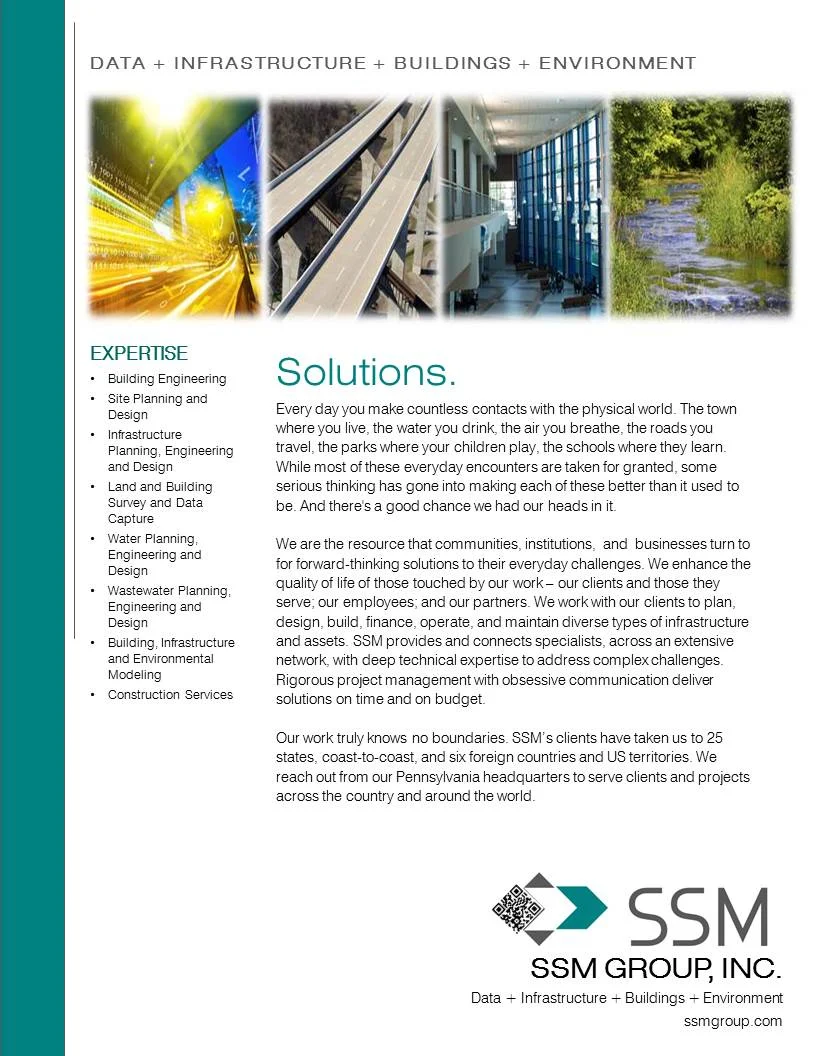
SSM Group Overview of Services
SSM Group Overview of Services
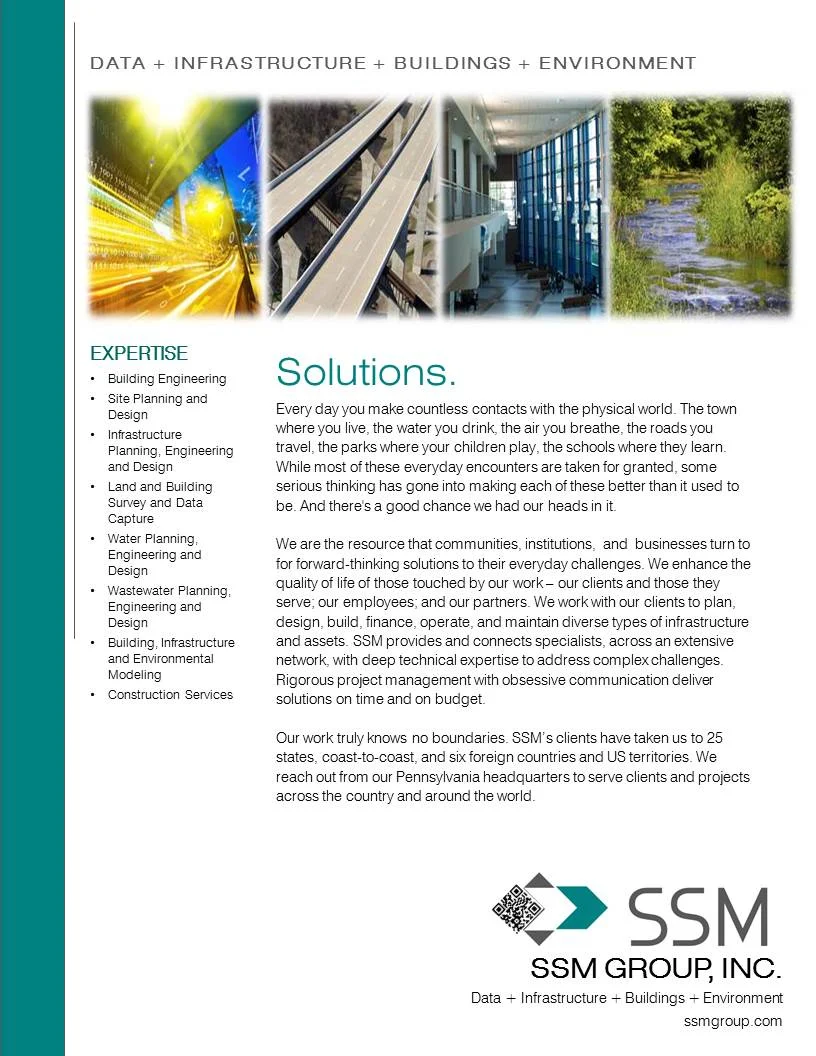
Solutions
We are the resource that communities, institutions, and businesses turn to for forward-thinking solutions to their everyday challenges. We enhance the quality of life of those touched by our work – our clients and those they serve; our employees; and our partners. We work with our clients to plan, design, build, finance, operate, and maintain diverse types of infrastructure and assets. SSM provides and connects specialists, across an extensive network, with deep technical expertise to address complex challenges. Rigorous project management with obsessive communication deliver solutions on time and on budget.
Our work truly knows no boundaries. SSM’s clients have taken us to 25 states, coast-to-coast, and six foreign countries and US territories. We reach out from our Pennsylvania headquarters to serve clients and projects across the country and around the world.

David Morgan, RLA Named Chair PA State Board of Landscape Architects
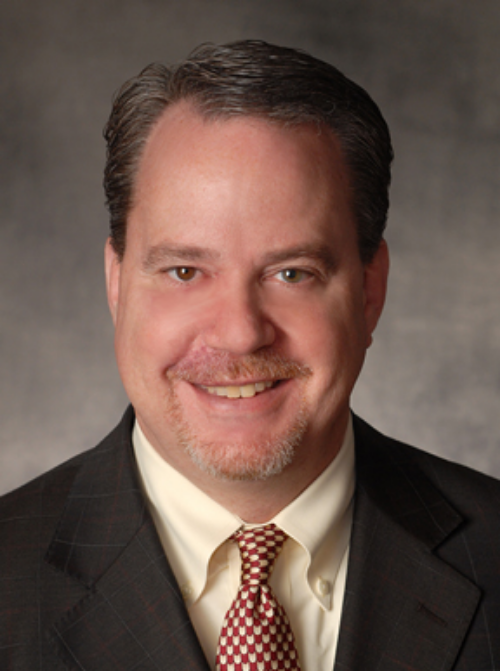
David Morgan, RLA, Regional Vice President for SSM Group, Inc. has been appointed chair of the Pennsylvania State Board of Landscape Architects.
“The balance of beautiful outdoor spaces and technically-sound designs depends on the expertise of Landscape Architects and the work of the licensing board is essential in maintaining the high quality of professionally-licensed Landscape Architects in the Commonwealth.”
David Morgan, RLA, Regional Vice President for SSM Group, Inc. has been appointed chair of the Pennsylvania State Board of Landscape Architects.
As a professional member of the State Board of Landscape Architects, Mr. Morgan will participate in regulating the licensure and registration of landscape architects in order to promote the general welfare and safeguard the life, health and property of citizens of the Commonwealth of Pennsylvania. Mr. Morgan was appointed to the board in 2012 by Tom Corbett, former Governor of Pennsylvania.
Mr. Morgan has over 26 years of landscape architecture and land development planning experience. In his current role, he serves as the Central Pennsylvania Regional Vice President for SSM Group, Inc., a multidiscipline consulting engineering and planning firm, headquartered in Reading, PA.
Mr. Morgan is responsible for the day-to-day business operations of the firm’s Harrisburg office along with managing all phases of landscape architecture and site design for the firm from conceptual design and master planning through production of construction documents and presentations to governmental agencies. His experience includes subdivision planning, storm water management, and land development planning; recreation facility planning; site design; grading; landscaping; soil erosion and sediment control; site construction inspections; NPDES/NOI permit preparation; review and commentary of engineering plans for local government agencies and municipalities; PENNDOT Highway Occupancy Permits; feasibility studies, cost estimates, and securing project approvals.
He holds an A.S. in Commercial Arts & Design from Antonelli Institute of Art & Design and is a Registered Landscape Architect in Pennsylvania.

Scott Carl, Sr., joins SSM Group
Mr. Carl will direct the water and wastewater services for the firm including all aspects of water and wastewater engineering services, municipality and authority representation, water and wastewater treatment operations, treatment plant design, construction phase engineering, and regulatory compliance assistance.

SSM Group, Inc., a multi-disciplined engineering and consulting firm welcomed Scott Carl, Sr. as the Vice President Water and Wastewater Services. Mr. Carl will direct the water and wastewater services for the firm including all aspects of water and wastewater engineering services, municipality and authority representation, water and wastewater treatment operations, treatment plant design, construction phase engineering, and regulatory compliance assistance.
Mr. Carl has more than 28 years of experience in the engineering and consulting industry; his experience includes project management and construction management for water and wastewater systems including treatment plants, pre-treatment facilities, source water facilities, pumping stations, residuals handling, water storage, transmission, distribution, and collection systems, SCADA and telemetry systems, automatic metering systems and operation and maintenance programs.
SSM Group, Inc. serves government, education, healthcare, industrial, and commercial clients in Pennsylvania, across the United States and in the Caribbean. SSM offers extraordinary experience in the planning, design, and construction management of wastewater and water systems, piping systems, pumping stations, and treatment plants. We offer solutions for tomorrow through far-sighted water and sewer infrastructure and environmental planning. When it comes to managing and protecting water resources, SSM is the authority that everyone turns to.