
SSM Group, Inc. Announces Management Changes - Brian Kelly named President and CEO

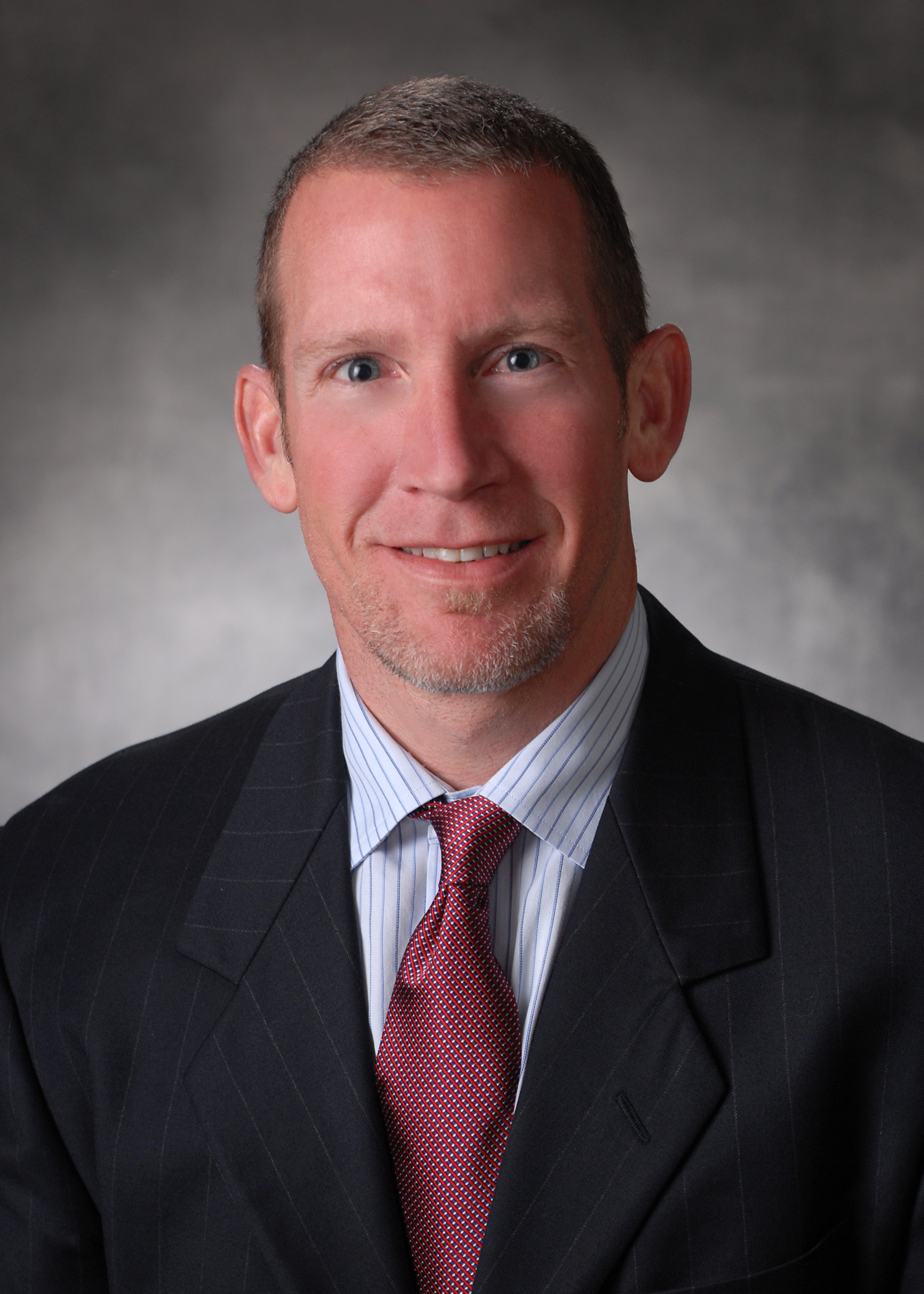

SSM Group, Inc. recently announced a corporate management restructure. Brian R. Kelly has been named President and Chief Executive Officer of the firm. Kelly, who formerly served as the company’s Executive Vice President with responsibility of running the firm’s operations, replaces J. Carlton Godlove, II, who has left the company to pursue other interests.
Kelly is one of four McCoy family members who assumed control and management of the firm in 1996. Kelly has an Associate Degree in Mechanical Engineering Technology from The Pennsylvania State University. Prior to joining the SSM management team, Kelly was employed at AT&T for more than 17 years in various roles. Kelly resides in Reading with his wife, Kay McCoy Kelly, who is a daughter of the company’s founder, Lewis J. McCoy, Sr. In a prepared statement, Kelly said, “I look forward to leading the company as we embark upon strategic growth and expansion. I am very proud of our exceptionally talented senior leadership team and all of our employees, and I am confident that, with their help and support, we will continue to grow the company and succeed at fulfilling our corporate mission – ‘Enhancing the quality of life for our clients, our employees, and all of the people touched by our work.’ Our work is so important because it touches this generation and future generations with a scope broader than we can imagine – and it leaves a legacy that will live far beyond us.”
“Approximately six months ago we appointed a team of independent professionals to work with us as members of an Advisory Board: Thomas A. Beaver, CPA, former managing partner at RKL; Patricia L. Langiotti, President of Creative Management Concepts; and Mike Shor, former executive with Carpenter. These Advisory Board members have played a key role in helping us plan for our future,” Kelly said.
Kelly also announced that shareholder, Patrick M. McCoy, PE, has been promoted to Executive Vice President. “Patrick will lead the company’s business development and sales and marketing efforts and he will be a strong right-hand man,” Kelly said. Patrick McCoy has been with the firm since 1996. He graduated from Drexel University, like his father, and holds Bachelor’s degrees in Civil Engineering and Architectural Engineering. McCoy formerly led the company’s Facilities and Site Engineering Division which provides services to worldwide companies such as IBM. Prior to joining SSM, he was with Ortega Consulting, Media, PA, and Gredell & Associates, Wilmington, DE.
Shareholder Lewis J. (Lou) McCoy, Jr. of Reading, who joined the firm in 1985, will continue in his role as Director of Human Resources.
Catherine (Kitty) Bell, who joined the firm in 2004, is being promoted to Divisional Vice President. Formerly the firm’s Vice President of Facility Engineering, she assumes an expanded role, with additional management responsibility for Site Engineering and Survey and Data Capture disciplines (formerly managed by Patrick McCoy). Bell resides in Reading, PA.
SSM Group, Inc. is an engineering and consulting firm founded by Lewis J. McCoy, Sr. in 1967. The company continues to be family owned and operated. Headquartered at 1047 North Park Road in Wyomissing with satellite offices in Harrisburg and the Lehigh Valley, SSM has just under 100 employees and provides services to various types of local, regional and national businesses that include commercial, industrial, manufacturing and telecommunications as well as healthcare and higher education institutions. The company also provides services to numerous local, regional, and county government entities. While the company’s primary market is a regional footprint including Berks County and the Lehigh Valley, SSM serves clients throughout PA and the Northeastern United States as well as to some international clients.
FOR MORE INFORMATION:
Brian Kelly, President and CEO
brian.kelly@ssmgroup.com | P: 610-621-2000
Quality Air Is Fundamental
It is vital to maintain a sterile environmental in health care facilities to prevent the spread of infection as well as the threat of exacerbating preexisting conditions. Poor indoor air quality only exacerbates the issue.

QUALITY AIR IS FUNDAMENTAL | ICRA
The majority of an individual’s day is typically spent indoors which makes maintaining good indoor air quality essential to a person’s overall health.
Fifty percent of all illnesses are either caused by, or aggravated by, polluted indoor air. Maintaining the highest levels of air quality is most important in healthcare facilities where occupants are most susceptible to irritants in the air. It is vital to maintain a sterile environmental in health care facilities to prevent the spread of infection as well as the threat of exacerbating preexisting conditions. Poor indoor air quality only exacerbates the issue.
Burn patients and patients with compromised immune systems are at the greatest risk for infection and demand the most stringent infection control measures combined with high indoor air quality. It is reported that 5% of all patients who go to hospitals for treatment will develop an infection while they are there (O'Neal C,2000) . The levels of some hazardous pollutants in indoor air at some places have been found to be up to 70 times greater than in outdoor air. Studies show that patients in controlled environments generally have more rapid physical improvement than do those in uncontrolled environment.
Special precautions must be taken into account especially during construction projects to prevent infections from spreading as well as dust and other irritants contaminating adjacent areas.
When undertaking a construction project in a healthcare facility it is highly recommended to contract an indoor air quality specialist to provide indoor air quality (IAQ) oversight during construction activities. It is important to support construction projects with IAQ oversight in all applications within a healthcare facility due to air systems communicating with the entire building. If construction projects are needed in areas such as burn units, operating rooms, or any area where sterilization is vital special precautions must be taken to assure the air quality is not compromised during the project. Infection control risk assessment (ICRA) measures must be taken and followed to varying degrees based on the sensitivity of the work area to maintain proper air quality and infection control. In areas of highest risk for infection such as burn units and operating rooms ICRA containments must be created and special work practices must be implemented.
ICRA Special Work Practices
- Isolate the HVAC system in the area where work is being done to prevent contamination of the duct system. Complete all critical barriers i.e. sheetrock, plywood, plastic, to seal area from non work areas or implement control a cube method (cart with plastic covering and sealed connection to work site with a HEPA vacuum for vacuuming prior to exit) before construction begins.
- Maintain negative air pressure within the work site utilizing HEPA equipped air filtration units. Seal holes, pipes, conduits, and punctures.
- Construct anteroom and require all personnel to pass through this room so they can be vacuumed using a HEPA vacuum cleaner before leaving work site or they can wear cloth or paper coveralls that are removed each time they leave work site.
- All personnel entering the work site are required to wear shoe covers. Shoe covers must be changed each time the worker exits the work area.
A thorough sampling protocol must be created by an indoor air quality specialist to provide data that the work areas were properly contained and all construction generated particulates were being contained. Upon completion of the work in a contained area an experienced industrial hygienists will perform a visual inspection and additional particulate sampling to confirm the area was suitable for re-occupancy. Through expert design of the sampling protocol and analysis of all data collected by the indoor air quality specialists it can be definitively shown that the air quality was not compromised during the construction project. As always, the goal is to establish the highest level of indoor air quality to promote a healthy working environment as well as maintaining a sterile environment for patients to heal.