
GIS Services
SSM provides professional GIS services to; from mapping support for infrastructure projects, to focused GIS and data capture projects

SSM provides professional GIS services from mapping support for infrastructure projects, to focused GIS and data capture projects. We utilize GIS to analyze, visualize, and interpret data to understand patterns, relationships, and trends. Through SSM’s extensive geographic data our clients benefit from faster project startups and the economies of readily available data.
We don’t just implement GIS for our clients; we use it throughout SSM, every day. We evaluate, design, and implement institutional data to improve decisions and streamline project workflow.
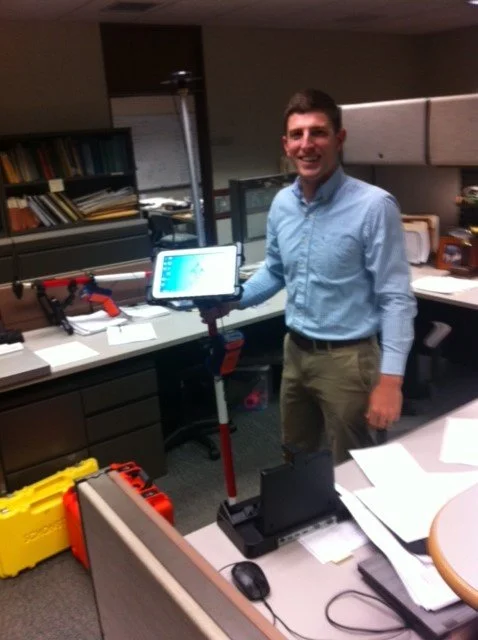
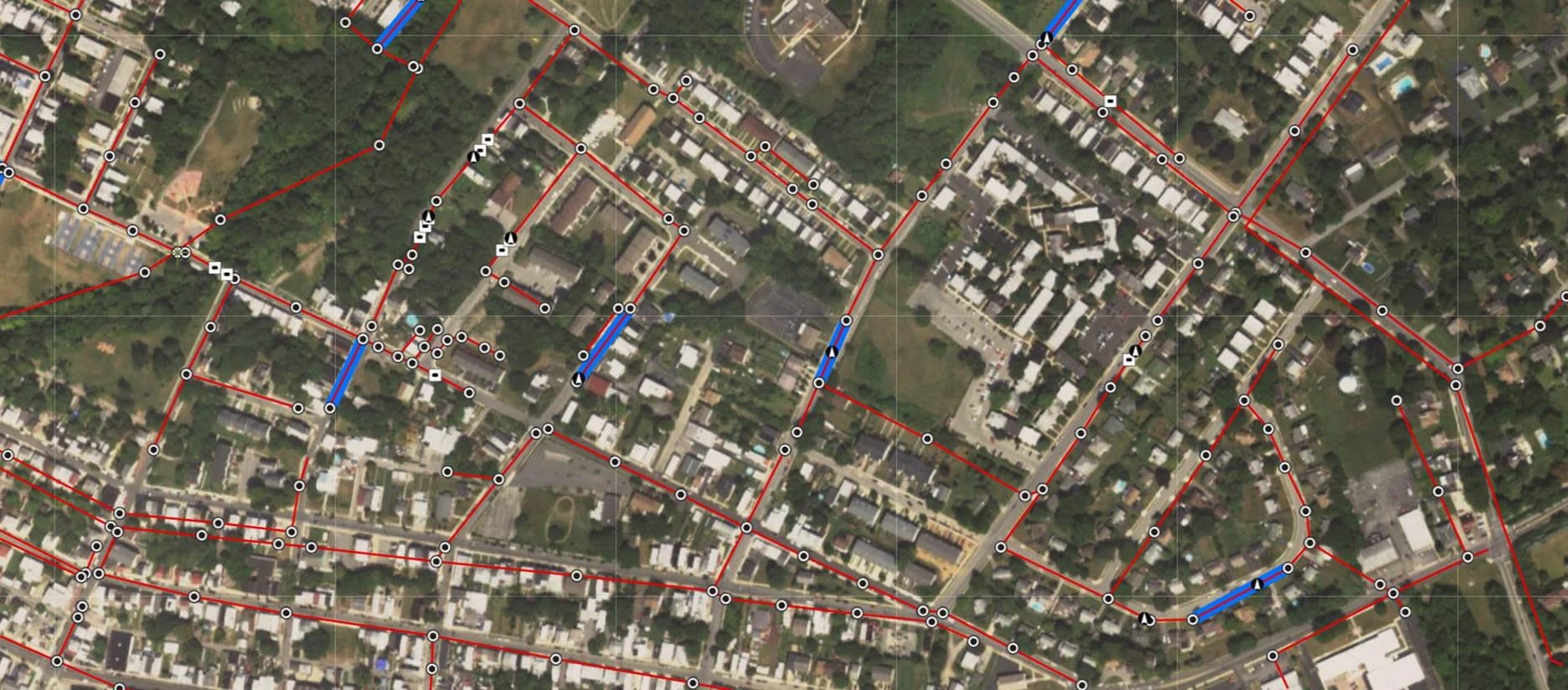
SSM’s GIS Asset Management approach helps municipalities to transform water, sewer, storm water, or transportation infrastructure data into an easy-to-use operations asset management system capturing vital infrastructure data points with survey-grade accuracy. The data is verified and compiled into a geo-spatial database. By creating customized mobile web applications, the field-critical data, such as material description, installation date, inspection reports and service history, is available at your finger-tips when you need it most.




GIS Data Management: Five things you need to know
With GIS technologies, information is no longer stored in multiple locations-maps, spreadsheets, notepads, clipboards, cell phones, email chains-but can now be stored in one spot. This helps you save time, improve processes, and get the information you need when you need it, wherever you are.
There is a data issue affecting facilities, municipalities, businesses, and organizations. Data is collected, sorted, resorted, and sorted again with little to no reward for the time and labor-consuming effort. Or worse- valuable data is left untouched, and unused.
With GIS technologies, you can make your data work for you. Information is no longer stored in multiple locations-maps, spreadsheets, notepads, clipboards, cell phones, email chains-but can now be stored in one spot.
With GIS, you can save time, improve processes, and get the information you need when you need it, wherever you are.
#1 - You use GIS every single day.

GIS technology connects the "where" with the "what". Geographic information combined with attributes, or "everything you need to know". Looking to buy or rent a home? Those phone apps are so convenient - open up the map, choose the location, and it shows all of the homes along with data about their price, their age, and more. Surprise! You just engaged with GIS. All the data ... one single spot.
What about when you are driving somewhere new? Do you utilize maps on your phone to locate the nearest gas station or coffee shop? You’re utilizing GIS! Have you noticed those roads turn red when there’s traffic? That’s all data, displaying in one interactive map. The help that comes if you are ever in an emergency? The responders depend on GIS. Google Earth- where you look up your own home for fun? GIS. GIS is something you use and benefit from every day, even if you are unaware of it.
#2 - It's nothing new. But it is constantly getting better.
At SSM, we've been providing clients with GIS Services for more than twenty years. When spatial databases were an idea of the future, we were there, signing our first GIS clients and leading the charge in making data meaningful.
With every new advancement in technology, we're finding new and better ways to help our clients raise efficiency. Finding new and easy ways to collect information, we're now building data analysis dashboards that trigger capital planning and infrastructure monitoring. Technological advances have propelled GIS into being not only a necessity for everyday use, but a strategic resource for industries all around the world.

#3 - Your data should be working for you.
Almost all data has a geographical component. By combining that with supporting attributes (i.e. photos, comments, service records) we're able to make your data mean more than it ever did before.
While flat maps and standard database systems offer you the surface, GIS technology takes what you know to a deeper level- showcasing relationships, patterns, and the connections between every piece of information you collect. GIS analysis uses location and attribution to solve complex problems. Questions like, "Where is...", "How long...", or "How many..." Because when data tells a story, you’re able to make smarter decisions in a shorter amount of time.
Paper plans and printed records are only good for the moment in which they were printed. GIS turns your static data into living, breathing, information. Information that's always available in one place and is always showing your most up-to-date information.
But it doesn’t stop there. Through GIS, we have also been able to streamline information collection. Throw away clipboards and paper forms. Instead, field team members simply need a mobile device. Customized data collection apps allow field teams to gather data and pictures with smart devices - and that information is directly populated into your GIS map. No filling out forms. No copying forms into spreadsheets, or rewriting information. One place to collect, one place to review.

#4 - It's meaningless if you can't access it.
The power of GIS lies in creating meaningful data that's there when you need it. Maintenance records, history, comments, and photos - wherever you are. Data is no good if you can't find what you need when you need it. How many projects were put on hold, or at least delayed, because someone, somewhere, had a paper that you couldn’t get to? How many emergencies were delayed because file hunting took longer than it should?
When your assets are in the cloud - when you utilize GIS for asset management - projects don’t stop. And emergencies? You’re ready for them too. GIS systems offer the convenience of accessing data from a desktop browser or mobile app. That means you access what you need whether you're in the office, in a meeting, or out in the field.
#5 - You can benefit from GIS, even if you you're not sure how.
Re-configuring your entire asset management system to GIS sounds intimidating. However, the benefit of GIS is its potential for growth. We’ve worked with municipalities that wanted to start small. All they wanted was pictures to be accessible in the field. So, instead of storing photos on hard drives- we connected them to a map. So when a crew arrives to repair an underground utility, they can quickly understand the configuration before they start digging. We’ve also worked with utility teams that went bigger- digitizing records for every single pipe, valve, and hydrant in their system. Everything they own including scans of hand-written plans accompanying their location.
GIS is here for what you need it for. For many, starting small and simple is a great first step. Consult with our GIS team to jumpstart your data collection and analysis.

Legislative and Regulatory Update - November 2, 2022
Legislative Update: Clean Streams Law - Spill Reporting, Creek and Stream Maintenance, Workers COmpensation and Worker Protection, Water and Wastewater Asset Management Plans, SB 597, Legionnaires’ Disease,
Regulatory Update: Final Fifth Drinking Water Contaminant Candidate List, Maximum Contaminant Level for PFAS, Water Quality Standard for Manganese, CFA Covid 19 American Rescue Plan Act Funding for PA Small Water and Sewer
Legislative and Regulatory Update
PA Section AWWA South Central/North Central Districts WWOAP Central Section
Fall Joint Conference
FOR MORE INFORMATION: Serena DiMagno


Legislative and Regulatory Update - October 2022
Legislative Update: Clean Streams Law - Spill Reporting; Creek & Stream Maintenance; Water and Wastewater Asset Management Plans; Legionnaires’ Disease
Regulatory Update: New or Revised Federal Drinking Water Regulations; Maximum Contaminant Level for PFAS; Water Quality Standard for Manganese; Technical Guidance - Notification Requirements for Spills, Discharges, and other Incidents; Technical Guidance - PA Public Water System Capability Enhancement Strategy; Drought Watch; TAC Board Meetings
Legislative and Regulatory Update
Fall Joint Conference
PA Section AWWA Southeast District & WWOAP Eastern Section
presented by: Serena A. DiMagno


Funding Opportunity: COVID-19 ARPA H20 PA - Water Suply, Sanitary Sewer and Storm Water Projects
The H2O PA Act was established by the General Assembly in July 2008. The Act provides for single-year or multi-year grants to municipalities or municipal authorities to assist with the construction of drinking water, sanitary sewer and storm water projects. Act 54 of 2022 appropriated $205.4 million of American Rescue Plan Act funds to the H2O PA – Water Supply, Sanitary Sewer and Storm Water Projects Program.
OVERVIEW
The H2O PA Act was established by the General Assembly in July 2008. The Act provides for single-year or multi-year grants to municipalities or municipal authorities to assist with the construction of drinking water, sanitary sewer and storm water projects. Act 54 of 2022 appropriated $205.4 million of American Rescue Plan Act funds to the H2O PA – Water Supply, Sanitary Sewer and Storm Water Projects Program.
USES
Activities to assist with the construction of drinking water, sanitary sewer and storm water projects.
ELIGIBILITY
Municipalities and Municipal Authorities
FUNDING
A minimum for $500,000 or more and a maximum of $20,000,000 for any project.
FOR MORE INFORMATION
WE’RE HERE TO HELP
Jamie Lorah, PE | jamie.lorah@ssmgroup.com


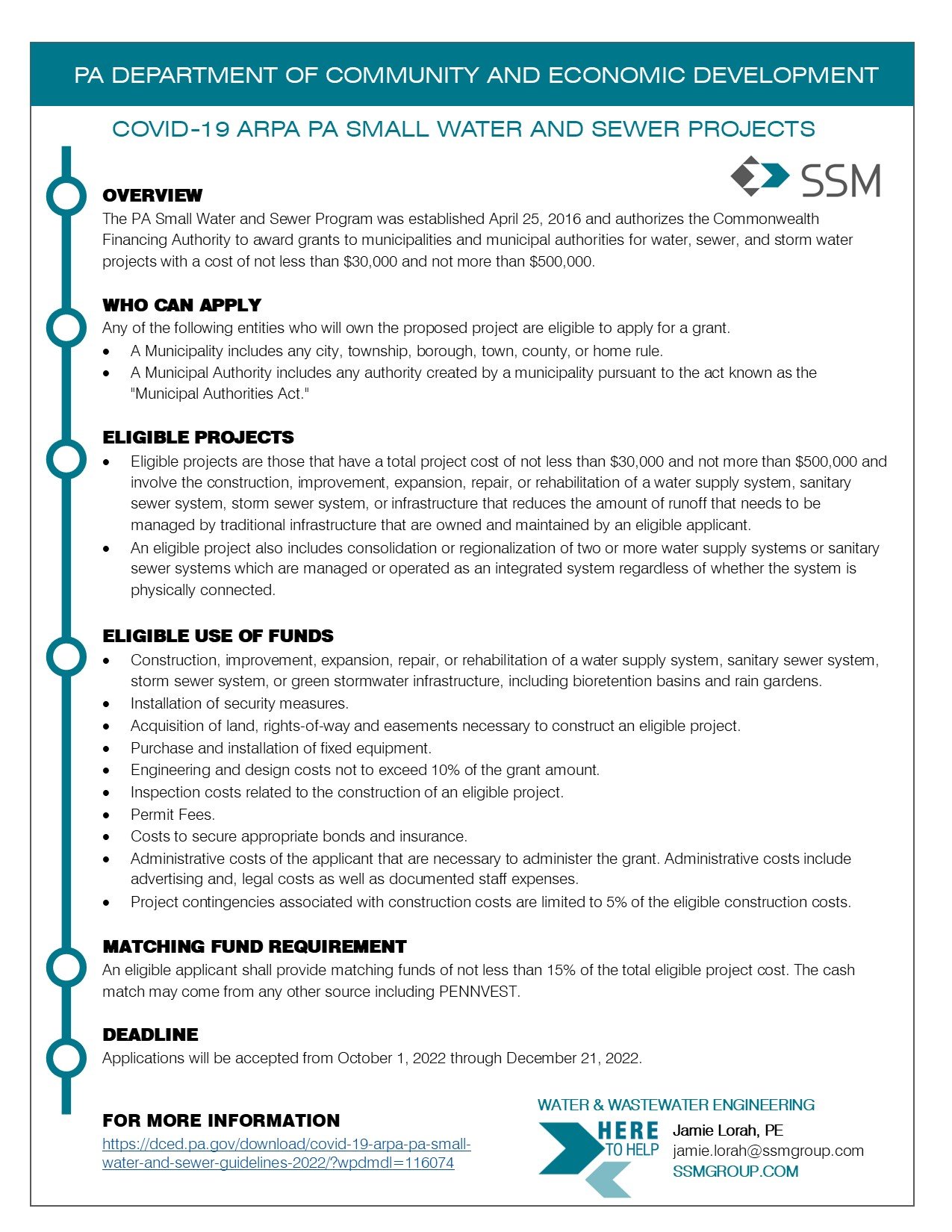
Funding Opportunity: COVID-19 ARPA PA Small Water and Sewer
Grants for small water, sewer, storm sewer, and flood control infrastructure projects. Pursuant to Article XVII-A, § 1774.1-A, of the Act of April 9, 1929, P.L. 343, as amended (The Fiscal Code) the sum of $40,000,000 was made available to the Commonwealth Financing Authority (the “Authority”) for eligible projects.
OVERVIEW
Grants for small water, sewer, and storm water infrastructure projects. Act 54 of 2022 appropriated $105.6 million of American Rescue Plan Act funds to the PA Small Water and Sewer Program.
USES
Activities to assist with the construction, improvement, expansion, or rehabilitation or repair of a water supply system, sanitary sewer system, storm sewer system, or flood control projects.
ELIGIBILITY
Municipalities and Municipal Authorities
FUNDING
Eligible projects are those which have a total project cost of not less than $30,000 and not more than $500,000.
FOR MORE INFORMATION:
PA Small Water and Sewer Program | Grant | DCED
WE’RE HERE TO HELP
Jamie Lorah, PE | jamie.lorah@ssmgroup.com
Solar Power Systems and Fire Fighter Access
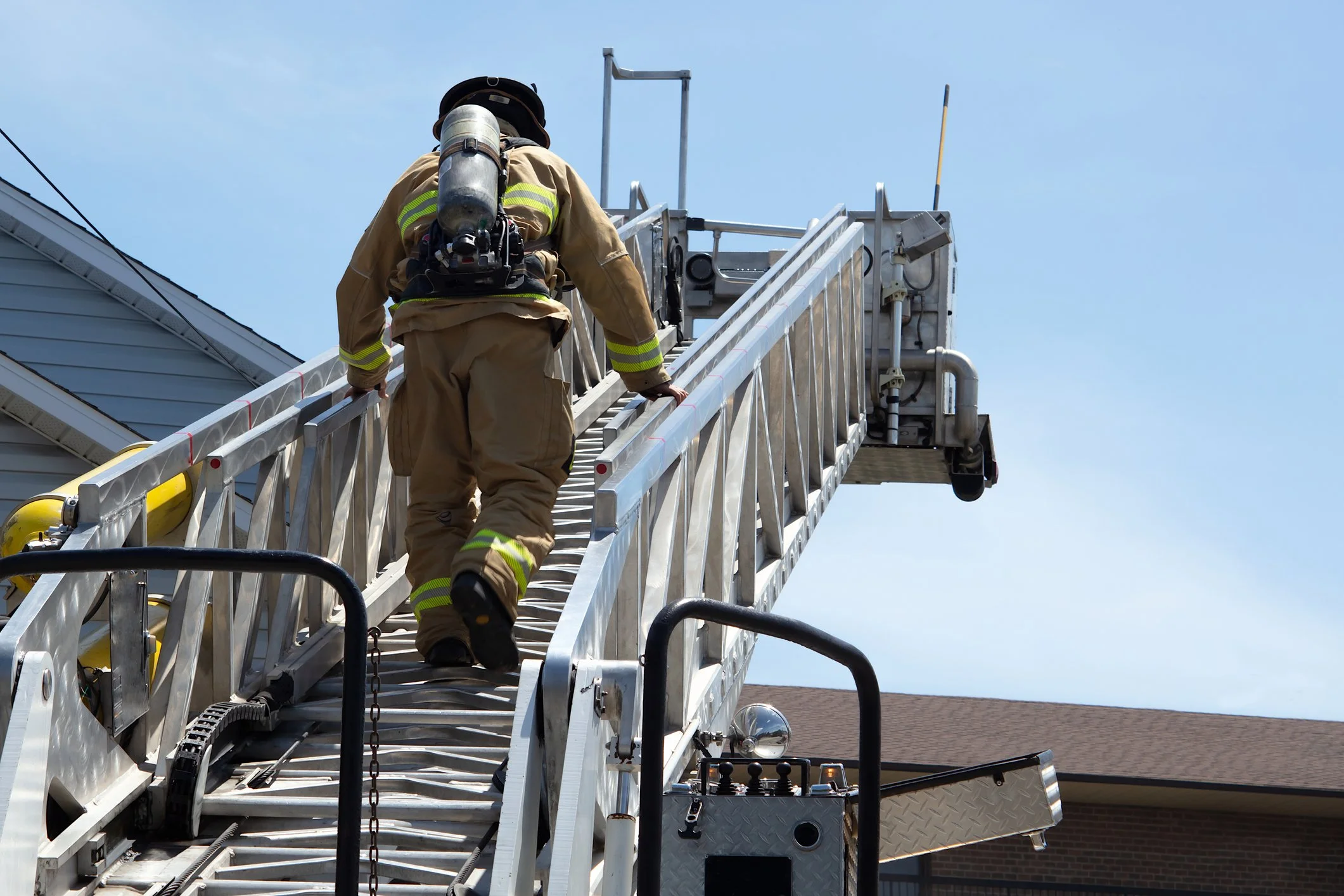
When photovoltaic (PV) power systems (solar panels) are under consideration for roof top installations, these systems on residential and commercial properties must be designed and installed so that firefighters have safe access to the roof.

Solar power is more affordable, accessible, and prevalent in the United States than ever before. The increased use of solar energy offers numerous benefits across the nation, including a clean energy source, economic growth, and job creation.
If you’re considering making the switch to solar, it’s important to ensure your system is designed by only the top experts, with every consideration in mind. Something many people don’t think about is the impact of solar systems on roof access by emergency responders. When photovoltaic (PV) power systems (solar panels) are under consideration for roof top installations, these systems on both residential and commercial properties must be designed and installed so that firefighters can have safe access to the roof.
Understanding the Issue
Access. Flat solar panels on the roof may hinder the firefighters’ ability to provide vertical ventilation if the solar panels are not arranged per building code requirements. In a structure fire, smoke and gases rise. Cutting a hole in the roof allows these gases and smoke to rise out of the building. Solar panels located and spaced with pathways allow the fire fighters access to open roof areas to provide this ventilation when needed.
DC and AC Circuits and Conduits. The solar panels continue to produce DC power as long as the sun is shining or even when bright lights are present, and the DC wiring in conduits from the PV panel arrays to the inverters will remain energized. The AC wiring in conduits from the inverters to the electrical distribution system will be de-energized by opening the main solar AC disconnect switch.

Addressing the Issues in Your System
During the design phase, follow NFPA guidelines for Photovoltaic Systems for Access, Main Disconnects, Circuit and Conduit Locations, Marking and Labelling; and in the National Electrical Code.
Make sure to install the solar panels with adequate space along edges, peaks and valleys, and pathways between the solar panel arrays for firefighters to gain access.
Limit the physical size of the solar panel arrays to the dimensions as required in the code.
Prominently locate and identify the Main System AC Disconnect Switch so that the disconnect may be readily accessible to d-energize the AC portion of the system.
Place conduits to avoid the pathways to reduce trip hazards and maintain open areas for ventilation.
After installation, diagram your system as installed specifically identifying the location and purpose of all disconnects and equipment. Review and provide a copy to your local fire department for their reference.
Label your systems clearly. The National Electrical Code (NEC) requires labeling to identify the system's operational characteristics, directs personnel to component locations, and acts as a reminder of PV systems on the premises.

Preventing an Arc-tastrophe
Arc flash. It’s just two words and it can happen in a only few rapid moments. But it can cause extensive harm, painful consequences, and irreplaceable damage. An arc flash is the result of an arcing fault between electrical conductor(s) and another electrical conductor(s) or ground with enough electrical energy.
Arc flash. It’s just two words and it can happen in a only few rapid moments. But it can cause extensive harm, painful consequences, and irreplaceable damage.
An arc flash is the result of an arcing fault between electrical conductor(s) and another electrical conductor(s) or ground with enough electrical energy. The fault gives off a rapid release of energy (light and heat). Air becomes the conductor. A massive amount of energy discharges during the arc flash or blast. This energy burns the conductors, vaporizing the copper and thus causing an explosive volumetric increase, the arc blast. This explosion propels deadly shrapnel and molten metal as it dissipates. This rapid release of energy can cause debilitating burns, other injuries and even death. But, It’s preventable. Spontaneous arc faults can stem from malfunctioning electrical equipment, improper precautions, negligent maintenance, or even unfitting electrical design.
Prevention: Hazard Analysis & Study

Employers and facility owners know that investing in the safety of their people, and their property is always worth it. A Hazard Analysis can identify areas in which preventative measures should be taken, where modifications should be made, and where risk factors become serious dangers. Among the hazard analysis and study include: Short Circuity Study, Protective Device Evaluation, and Protective Device Time Current Coordination Study.
Short Circuit Study:
The study calculates the maximum short circuit current the electrical power system may be subjected to at each equipment location through out the distribution network from the sources such as utilities, generators, and motors. The equipment includes substations, switchgear, motor control centers, and panels with their respective over current protective devices; generators; transforms; motors; and UPS equipment. The short circuit results determine the required ratings for electrical equipment to adequately sustain the fault current capacity of the system. If a short circuit occurs, the electrical power system’s available energy is directed to the point of the fault in amounts that greatly exceed the normal operating currents, and the equipment must have the ability to withstand and interrupt these large currents until the protective device opens to clear the faulted portion of the circuit.
Protective Device Evaluation:
This evaluation determines if the equipment ratings needed to sustain the fault currents calculated by the Short Circuit Study are adequate. Each circuit breaker, bus, etc., is reviewed in regards to the available short circuit to determine that the equipment can adequately withstand the fault current.
Protective Device Time Current Coordination Study:
The study reviews the relay and circuit breaker trip settings, fuses, and their operating time and current characteristics in order to properly coordinate these settings with upstream and downstream devices so that any faults are isolated to the location of the fault; hence, limiting the impact to the remaining portions of the system. The coordination study is used in an Arc Flash study to determine the length of time an arc would occur which is directly related to the incident energy associated with an arc flash event.
The Hazard Analysis will identify the locations which require PPE greater than Category 0. The review determines if there are possible arc flash mitigation recommendations that can be implemented to reduce the incident energy levels. Such recommendations might include device setting changes, replacement of molded case type circuit breakers with static trip type circuit breakers, changing fuse types, or installation of additional fused disconnects or circuit breakers. As a result of reducing the incident energy levels, the corresponding Category of PPE required to work on the equipment while energized is reduced.
Prevention: Take Action

In addition to addressing your hazard analysis, you should continue to make proper maintenance, training, and care a priority. Always complete regular maintenance on your equipment. Use proper signage and labeling where necessary. Provide your teams with proper safety equipment– like appropriate arc flash suits and fire resistant attire as well as PPE gear. And lastly, don’t forget to make arc flash training a part of your facility safety plan. It’s not enough just to have the information- make sure you do something with it too.
Know your codes:
The National Fire Protection Association Guidelines (NFPA 70E - Standard for Electrical Safety in the Workplace) provides direction to require facility owners to perform an arc flash risk assessment prior to allowing a worker or contractor to perform a task on energized equipment. The arc flash risk assessment identifies the presence and location of potential hazards and provides recommendations for PPE, boundaries for limited and restricted approaches, recommendations for flash protection, and safe work practices. NFPA 70E, ARTICLE 130.5 says an arc flash assessment must be completed to determine if an arc flash hazard exists, taking into consideration the design of the overcurrent protective device, its opening time, and its condition of maintenance. The assessment must be updated if a major modification or renovation takes place, and it must be reviewed periodically, at intervals not to exceed 5 years.
#ProblemSolved: Our Electrical Engineering team is here to help. Send an email to Seth Nace, PE, LC, LEED AP, Manager of Electrical Engineering at seth.nace@ssmgroup.com, or Emerick Martin, PE, Technical Manager of Electrical Engineering at emerick.martin@ssmgroup.com

WWOAP inducts Serena A. DiMagno into Hall of Fame
The Water Works Operators' Association of Pennsylvania recognized Serena A. DiMagno during their Annual Conference for her contributions to the water industry and her immeasurable value as an industry leader, instructor, mentor, and colleague. On October 4, 2022 she was inducted into the WWOAP’s prestigious Hall of Fame.

SERENA A. DIMAGNO
WWOAP HALL OF FAME
The Water Works Operators' Association of Pennsylvania recognized Serena A. DiMagno during their Annual Conference for her contributions to the water industry and her immeasurable value as an industry leader, instructor, mentor, and colleague. On October 4, 2022 she was inducted into the WWOAP’s prestigious Hall of Fame.
As its name implies, the Hall of Fame designation honors very select individuals who the organization deems worthy of membership based upon their dedication and contributions to the drinking water industry. In fact, DiMagno is only the 16th industry professional to receive Hall of Fame status since the WWOAP's inception 95 years ago.
October 4, 2022 - Today, we are very proud and honored to induct an extremely deserving individual into the Water Works Operators' Association of Pennsylvania's prestigious Hall of Fame. Serena earned a B.S in Biology/Chemistry from Chatham University before embarking on a more than 45-year career in water and wastewater system investigation, design, operations and treatment, management, regulatory negotiation, permitting and compliance. She has held leadership positions in both the private and public sectors including business development, client relationship management and marketing, in addition to having owned her own consulting firm, which she managed for 20 years. Although semi-retired, she is currently a Special Consultant for Spotts, Stevens and McCoy.
Serena is a Pennsylvania certified water and wastewater treatment plant operator. She has continued to serve the water industry, and representing WWOAP, as the Chair of the Pennsylvania Department of Environmental Protection Agency’s Small Systems Technical Advisory Committee (TAC Board).
In addition to her extensive service to WWOAP, she has served in several leadership roles in AWWA, is an active member of the Pennsylvania Water Utility Council and has chaired the Legislative and Regulatory Affairs Committee for the Water Works Operator’s Association of Pennsylvania since 1990.
Just as she has served in many roles for water industry associations, Serena has held many positions at several companies, including one of her own, over her illustrious career. She was the Service Area Director for Environmental Engineering and Air Quality with Rettew, Inc., which encompassed 11 offices in 4 states. She was also the Vice President of Environmental Regulatory Compliance and Assistant Vice President of Water and Wastewater Services with Spotts, Stevens McCoy, a multi-disciplinary engineering firm with 2 offices in PA. She was responsible for the technical and business functions of the Service Area Groups for both firms and lead their department’s efforts in business development, client relationship management and marketing.
She was President and owner of DiMagno Associates, Inc. At DA inc, Serena was responsible for project management encompassing a wide range of diverse environmental and engineering projects; permit preparation; design, operations, and maintenance evaluations; water quality evaluations; water quality investigations and laboratory studies, including process pilot plant studies; water treatment plant residual land application (both agricultural utilization and beneficial use) site evaluations, permit applications and permit management; and expert witness testimony for court proceedings and before public utility commissions, including document and exhibit preparations. She also prepared environmental and community impact statements and conducted feasibility studies.
Prior to establishing DAI, she was Superintendent of Production for Dauphin Consolidated Water Supply Company, General Waterworks Company in Harrisburg. She supervised all supply, pumping, and production operations including a 7.2 Million Gallon per day filter plant, a 2 MGD filter plant, a 1 MGD Zeolite Softening plant, a 1 MGD standby filter plant, three well systems, eight booster stations, and a 6.3 Million Gallon storage system of 10 standpipes and two reservoirs supplying three multi-municipal distribution systems serving 20,000 domestic, commercial, and industrial customers. She also participated in engineering studies, surveys, and designed statistical analyses, as well as supervised construction projects utilizing outside contractors.
She was Director of Water Quality for the City of Harrisburg, Public Works Department. She was responsible for quality control and regulatory compliance for the municipal wastewater treatment plant, and the water treatment plant and distribution system. These systems included a 30 MGD pure-oxygen activated sludge plant with on-site cryogenic oxygen generation, incorporating a residuals management facility with mechanical dewatering, drying and incineration capabilities. The water system included a 6 billion gallon impoundment reservoir and dam supplying 13 MGD. She directly supervised two laboratory operations that performed bacteriological, chemical and physical analyses of potable water, wastewater and industrial waste samples.
She has authored and presented numerous technical papers for various professional conferences, meetings, and workshops.
Serena is a Past President of the Water Works Operators Association of Pennsylvania and the recipient of the organization’s Harry J. Krum Award, the Ivan M. Glace Award, the Fred G. Eckardt Award, and the Elton D. Walker Award. She has also been recognized by PA-AWWA with the Special Recognition Award, the George Warren Fuller Award, and the Samuel S. Baxter Award.

SSM Welcomes Karl Leitner, PE
Spotts, Stevens and McCoy welcomes Karl Leitner, PE to the team as a Project Engineer in the Land Development Department.

Karl Leitner, PE | Project Engineer
Spotts, Stevens and McCoy, a family-owned and managed, regional engineering firm based in Reading PA welcomes Karl Leitner, PE to the team as a Project Engineer in the Land Development Department.
Mr. Leitner brings 10 years of experience in Land Development and Stormwater Management to the firm. His experience includes designing land development and stormwater plans and permits for projects ranging from 0.5 acres to 200 acres. At SSM, Karl will assume the title of Project Engineer, where his responsibilities include designing and permitting land development projects, providing third party reviews of plans on behalf of local municipalities, and provide design and other engineering services for local municipalities.
He is a graduate of The Pennsylvania State University with a BS in Civil Engineering and is a licensed Professional Engineer in the state of Pennsylvania.
About the Firm
Spotts, Stevens and McCoy, Inc. is a family-owned regional engineering, environmental and surveying firm headquartered in Reading PA with offices in Lancaster, West Chester and Lehigh Valley. We serve local and global clients from large, regional and national companies in the manufacturing, processing and high tech sectors to public municipalities and authorities. We engineer solutions for a better world by helping our clients plan, design, build, operate, and protect their infrastructure, assets, and resources. We keep our schools and community buildings safe from environmental hazards. We support our growing and expanding businesses and hospitals. We help municipalities to prepare and protect their infrastructure and resources. We keep water fresh and we keep air clean. We bring old buildings back to life with cutting-edge technology and leading-edge designs. We evaluate; we collaborate; we innovate.

SSM Welcomes Evo Andreatti to the Firm
Spotts, Stevens and McCoy, a family-owned and managed, regional engineering firm based in Reading PA welcomes Evo Andreatti III to the team as a Senior GIS Analyst in the Water Resources Department.

EVO ANDREATTI | SR. GIS ANALYST
Spotts, Stevens and McCoy, a family-owned and managed, regional engineering firm based in Reading PA welcomes Evo Andreatti III to the team as a Senior GIS Analyst in the Water Resources Department.
Mr. Andreatti has 17 years of experience using Geographic Information Systems (GIS) to solve complex geospatial issues and manage spatial data. His experience includes creation, modification, and design of GIS data sets and developing ArcGIS Online/Portal applications. He is experienced in creating, modifying, and designing GIS data sets, as well as developing ArcGIS Online/Portal applications for use with desktop computers and iPads. In addition he has developed models and other GIS applications to create efficiencies for common data collection tasks and trained teams on working with all GIS-developed tools. He holds a Bachelor of Arts in Applied Geography from Millersville University of Pennsylvania and received his Certificate in Geographic Information Systems from The Pennsylvania State University.
At SSM Evo will work closely across disciplines to design and implement GIS tools and related systems that meet the distinctive needs of SSM’s clients including creation of workflows and integration of databases. Applying geospatial technologies and analytic methodologies, he will interact with field staff to support GPS collection and migration to the production environment, work with our team to design and effectively deploy GIS solutions for multi-discipline projects, and provide QA/QC to developed GIS solutions including maps, data, reports, dashboards, and apps.
About the Firm
Spotts, Stevens and McCoy, Inc. is a family-owned regional engineering, environmental and surveying firm headquartered in Reading PA with offices in Lancaster, West Chester and Lehigh Valley. We serve local and global clients from large, regional and national companies in the manufacturing, processing and high tech sectors to public municipalities and authorities. We engineer solutions for a better world by helping our clients plan, design, build, operate, and protect their infrastructure, assets, and resources. We keep our schools and community buildings safe from environmental hazards. We support our growing and expanding businesses and hospitals. We help municipalities to prepare and protect their infrastructure and resources. We keep water fresh and we keep air clean. We bring old buildings back to life with cutting-edge technology and leading-edge designs. We evaluate; we collaborate; we innovate.



Summer Tips
If filling the pool is a daily routine, or an area of lawn next to the pool is unusually green when there’s been no rain, it may be time to check your pool for leaks.

Roof and Foundation Tip
Now is the time to check your gutters or roof drains to make sure that sudden high intensity rain event doesn’t cause problems.
Clogged gutters from spring time seed droppings can wreak havoc on the foundations of your home. Clogged roof drains can lead to ponding on flat roofs which can cause sagging of a flat roof structures.
Pool Owners

Now that your pool is open, keeping an eye out for leaks is important, particularly for those with in-ground pools. The damage caused by pool leaks is especially concerning because it's usually hidden from view and can take time to develop. Things such as settling pool deck slabs, shifting plumbing and, in some extreme cases, sinkhole development can put a damper on your favorite summer perk.
If filling the pool is a daily routine, or an area of lawn next to the pool is unusually green when there’s been no rain, it may be time to check your pool for leaks.
Myth or Fact: Utility Companies are Against Solar Power?

MYTH! Switching to solar is beneficial to both the environment and your local utility companies. Your switch can offer less stress on utilities’ infrastructure and contribute to less carbon emissions produced by the generation of electricity via power plants. Many utility companies actually offer incentives or discounts for witching to solar energy.
FOR MORE INFORMATION
Jeff Thoms, PE | Technical Manager, Structural Engineering
Berks County Water and Sewer Association Annual Conference
House Bill 527 - Amends Title 53 providing for public notice and public meeting requirements.
Clean Streams Law - Spill Reporting
Delaware River Basin Compact
Water and Wastewater Asset Management Plans
New or Revised Federal Drinking Water Regulations
Maximum Contaminant Level for PFAS
Technical Guidance - Notification Requirements for Spills, Discharges and Other Incidents that Threaten to cause Pollution of the waters of the Commonwealth
Legislative and Regulatory Update

presented by Serena DiMagno - serena.dimagno@ssmgroup.com
Discussion Topics
House Bill 527 - Amends Title 53 providing for public notice and public meeting requirements.
Clean Streams Law - Spill Reporting
Delaware River Basin Compact
Water and Wastewater Asset Management Plans
New or Revised Federal Drinking Water Regulations
Maximum Contaminant Level for PFAS
Technical Guidance - Notification Requirements for Spills, Discharges and Other Incidents that Threaten to cause Pollution of the waters of the Commonwealth
Chemical Safety in Water and Wastewater Treatment Facilities

presented by Dan Standish - dan.standish@ssmgroup.com
Discussion Topics
Common Chemical Use in Treatment Facilities
Preparation and Use of Safety Protocols
Regulatory Requirements Review
Safety Planning and Hazard Communication
Operations with Chemicals: In the Laboratory, Bulk Storage Operations, and Chemical Feed Systems

Air Conditioning 101
We asked our engineers: how does air conditioning work?

Summer Q & A.
We asked our engineers: how does air conditioning work?
Q: How do we begin to understand how a building is cooled?
A: When it comes to air conditioning, the first thing we want to talk about is the loads, or amount of heat that is going to be coming into these buildings. This is what we consider first when we start to design systems. After we know how much heat there is - then we can talk about how we remove that heat.
Q: If loads are what you consider first, what are they, and how do you measure them?
A: When we’re looking at loads to consider, we often break them down into external and internal. Externally, we have heat being transferred through walls, the roof, windows, etc. These come from the weather: sun and air in the form of infiltration through the building envelope. We also have internal loads. These include lighting that emits heat, any other equipment within the building, how many people will be in the space, and the activities they are expected to be doing in that space. We even consider the minutest details such as what the attire in the space will be. Once we are able to quantify all of the loads and the needs of the space we specify the equipment that will be put into place.

demonstration markup of a rooftop unit - depiction not to scale.
Q: The equipment gets installed, then how does it actually make the space cool?
A: Let’s use your local big-box retailer as an example. There are many different types of equipment to cool the air - We would expect to see a roof top unit for this type of space. First, all of that warm air is drawn out of the space into the air handling unit on the roof. Included in that unit there is also an outdoor air component because we always want fresh air to be drawn in as well. These two air streams (the return air from inside the building and the fresh air) will mix, and go through a filter for cleaning.
Next, is the refrigeration system where the air is cooled. The refrigeration circuit includes a compressor, condenser, thermal expansion valve, and evaporator coil. Here, the air is cooled down to roughly 55 degrees. And then that air is supplied back into the space.
Q: So air conditioning isn’t really making new air?
A: Air conditioning is really all about moving heat. The heat enters the building through those internal and external loads. Then the heat is transferred to the air. Ultimately, what we’re trying to do is get the heat into the refrigeration circuit and the heat is discharged back to the atmosphere at the condenser level. Air conditioning isn’t making new energy, or creating anything, we’re just moving the heat from the building back to the outside.

Q: What about other types of buildings, maybe ones where people aren’t?
A: At SSM we have extensive expertise with providing similar services to data centers. This type of space is a great example that it isn’t just people that need to stay cool. Data centers house large computer servers which are especially unique because they not only give off a lot of heat, but they thrive in a cool environment. For this reason, extra attention to moving that warm air is especially important.
Q: How would the setup of a data center look different from the retailer?
A: Different than the rooftop unit of the retailer example, computer room air handling units (CRAH) normally supply air below a raised floor. Server racks are often arranged like aisles in a store, facing each other. So, two fronts face each other and two backs face each other. Computer room air handling units supply air up between the server racks. The air is then returned to the unit and is basically recirculated. Computer room units are often cooled by chillers using chilled water.
Q: What exactly does SSM do in this process?
A: For our clients, SSM mechanical engineers specify the air conditioning equipment needed for a building. Whether it’s a retail space, a data center, or any other unique building - our team uses expertise to determine what performance capacity a unit needs to have, and the specifications needed for that unit. Our team uses several industry-based programs to calculate heat gains and cooling loads, airflow, air handling, and cooling capacity. Some of the considerations include weather data, solar functions, the building use, and more. Using all of this, we specify and design the best system for the building’s needs.

Summer storms are a growing problem.
Did you know that mold can grow in as little as 24-48 hours?

Did you know that mold can grow in as little as 24-48 hours? Mold can grow almost anywhere there is water , high humidity, or dampness. For mold to grow, it needs moisture or water, oxygen, and an organic source.
According to OSHA, concern about indoor exposure to mold has increased along with public awareness that exposure to mold can cause a variety of health effects and symptoms, including allergic reactions.
Although most types of molds that are routinely encountered are not hazardous to healthy individuals, overexposure can result in symptoms like cough, congestion, runny nose, eye irritation, and aggravation of asthma. Depending on the amount of exposure and a person’s individual vulnerability, more serious health effects such as fevers and breathing problems can occur.
Additionally, if not treated, mold can eventually cause structural damage to a wood-framed building, weakening floors and walls as it spreads.
What can you do to prevent indoor mold growth?
Keep the building’s humidity level below 70% and regularly inspect your building’s HVAC system.
Be aware of water damage. Walk through the workplace to identify any condensation or wet spots and repair plumbing problems immediately.
Ensure adequate drainage around your building sloping away from the foundation.
Here to help.
SSM offers a staff of industrial hygienists, indoor air quality specialists, and facilities engineers capable of performing the evaluations necessary to assess mold and the extent of mold contamination. We understand that immediate response is critical to identify and eliminate the source of moisture and to controlling mold and its growth. Our approach includes a detailed remediation work plan and specifications, provisions of oversight and final clearance testing.
FOR MORE INFORMATION
Kevin Conrad | Manager, Field Services

Cathlene Farnelli earns Professional Engineers License
Cathlene Farnelli, PE has earned her Professional Engineers license in Pennsylvania

CATHLENE FARNELLI, PE | Structural Engineer
Cathlene Farnelli, PE has earned her Professional Engineers license in Pennsylvania.
Farnelli is a Structural Engineer in the Facilities Engineering department at Spotts, Stevens and McCoy. She is a graduate of Drexel University with a BS in Architectural Engineering and MS in Civil Engineering. Her experience includes analysis and design of steel, concrete and masonry structures. Projects include industrial and commercial facilities, municipal facilities and multi-tenant housing structures.

Pennsylvania Water Funding Sources Overview & Discussion
On Wednesday, July 13, FEMA Region 3 and their federal and state partners are hosting a virtual event for Pennsylvania water and wastewater facility owners and operators to learn about various funding opportunities and participate in a discussion.
About the Event
On Wednesday, July 13, FEMA Region 3 and their federal and state partners are hosting a virtual event for Pennsylvania water and wastewater facility owners and operators to learn about various funding opportunities and participate in a discussion. Presentations will be provided by the Pennsylvania Infrastructure Investment Authority (PENNVEST), the Cybersecurity & Infrastructure Security Agency (CISA), and the Federal Emergency Management Agency (FEMA).
Representatives from the following agencies will discuss various programs and answer questions:
Pennsylvania Infrastructure Investment Authority (PENNVEST)
Clean Water State Revolving Fund
Department of Homeland Security’s Cybersecurity & Infrastructure Security Agency (CISA)
State and Local Cybersecurity Grant Program
Federal Emergency Management Agency (FEMA)
Hazard Mitigation Grant Program
REGISTRATION:
To register for this free event, visit: Pennsylvania Water Funding Sources Overview & Discussion


Consumer Confidence Reports: What to Know
SSM assists many of our clients to prepare their annual Consumer Confidence Report. The CCR is a general overview of the water quality delivered by community water systems to their customers. Here’s what you should know about it.

Water Quality Reporting
In 1996, Congress amended the Safe Drinking Water Act, adding a provision requiring that all community water systems deliver to their customers a brief water quality report annually.
What is a CCR and why do I get it?
A groundwater or surface water source may encounter many contaminants as it travels to a water treatment plant. While treatment systems will remove the majority of these pollutants, some level of contaminants are to be expected - whether they are minerals or bacteria naturally present in the environment, or potentially harmful substances resulting from human activity.
In light of the 1996 Safe Drinking Water Act, community water systems are required to provide their customers with a water quality report on an annual basis. This report is to inform customers about these contaminants in their drinking water, and provide information regarding levels of concern for the consumer. The Consumer Confidence Report (CCR) contains language pertaining to the system’s source of water, potential health effects of certain contaminants, and any regulatory violations that may have occurred over the year.
Here’s what the requirements for delivery are:
A copy of the Consumer Confidence Report (CCR) must be delivered, or made available to, each of the water system’s customers.
Water systems that serve over 100,000 people must post their CCR to a public website
If posting to a website, the supplier must provide a direct URL to customers to access the CCR
CCRs must also be certified with the PA Department of Environmental Protection (DEP) by June 30th each year
Annual CCRs must be delivered to customers by July 1 of each year
Throughout the year, community water systems collect and analyze samples within their water supply, and upload the results every month to the Drinking Water Electronic Lab Reporting (DWELR) system. The results are then processed through the Pennsylvania Drinking Water Information System (PADWIS) to ensure compliance with EPA and DEP regulations. Contaminants are assigned very stringent Maximum Contaminant Levels (MCLs), and must meet these, as an exceedance could pose a health risk to customers. If the MCL is exceeded, this results in a violation and the water system must take steps to resolve it. This may include issuing a Public Notification to consumers containing information on why the violation occurred and how to mitigate the effects of the exceedance, such as a Boil Water Advisory. Contaminants that are not yet regulated are reported to assist EPA with monitoring the occurrence of these contaminants, and to help determine whether future regulation is necessary.
Understanding the CCR
The CCR is a general overview of the water quality delivered by your community water system. The report lists the regulated contaminants detected in the treated water and the level at which they were found. The CCR intends to provide customers with information on what they are consuming, and whether or not they should be concerned about certain contaminants.
Included in the CCR are website links and contact numbers for consumers should they have questions, or want to find additional information regarding health effects of the less common contaminants.
Understanding potential health effects:
The CCR provides parameters such as Maximum Contaminant Level (MCL) which is the highest level of a contaminant that is allowed in drinking water.
To understand the possible health effects described for many regulated constituents, a person would have to drink 2 liters of water every day at the MCL level for a lifetime to have a one-in-a-million chance of having the described health effect.
Generally, if there are no MCL violations for the detected contaminants, a customer could know that they are drinking safe, clean water.
Making the most of information.
SSM assists many of our clients to prepare their annual Consumer Confidence Report. We collect the water system’s analytical data and analyze the data including calculating the average and maximum results of each detected contaminant. We are proud to assist our clients in putting together the information that consumers deserve to know. Remember, your Consumer Confidence Report provides you with important information about the quality of your drinking water. If you have a question about your water system’s report, or any of the terminology and what it means for you - always ask!

Ryan Leid Earns Certification as Drone Pilot
Ryan Leid, Survey Technician has received his certification as a FAA Certified Remote Pilot.

Ryan Leid, Survey Technician
Ryan Leid, Survey Technician has received his certification as a FAA Certified Remote Pilot. Leid is one of three certified pilots at SSM. He is a graduate of Shippensburg University with a BS in Geoenvironmental Studies.
We are using drone technology, HDS and BIM on our projects to enhance our collaborative relationships with outstanding results. We can measure things that couldn't be measured before, capture images of existing conditions for future reference, bring information to your fingertips as well as create reference points for future site considerations. Drones are a powerful solution for monitoring construction, documenting infrastructure on expansive sites, and capturing hard-to-reach details.
Construction Monitoring
Volumetric Computations
System Layout
Hot Spots/Heat Loss Detection
Litigation Support
Aerial Site / Rooftop Evaluation
