

Summer Tips
If filling the pool is a daily routine, or an area of lawn next to the pool is unusually green when there’s been no rain, it may be time to check your pool for leaks.

Roof and Foundation Tip
Now is the time to check your gutters or roof drains to make sure that sudden high intensity rain event doesn’t cause problems.
Clogged gutters from spring time seed droppings can wreak havoc on the foundations of your home. Clogged roof drains can lead to ponding on flat roofs which can cause sagging of a flat roof structures.
Pool Owners

Now that your pool is open, keeping an eye out for leaks is important, particularly for those with in-ground pools. The damage caused by pool leaks is especially concerning because it's usually hidden from view and can take time to develop. Things such as settling pool deck slabs, shifting plumbing and, in some extreme cases, sinkhole development can put a damper on your favorite summer perk.
If filling the pool is a daily routine, or an area of lawn next to the pool is unusually green when there’s been no rain, it may be time to check your pool for leaks.
Myth or Fact: Utility Companies are Against Solar Power?
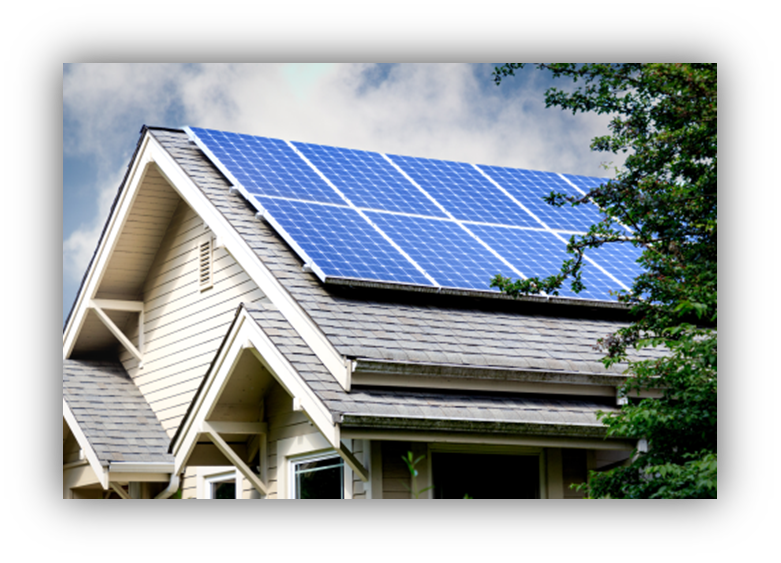
MYTH! Switching to solar is beneficial to both the environment and your local utility companies. Your switch can offer less stress on utilities’ infrastructure and contribute to less carbon emissions produced by the generation of electricity via power plants. Many utility companies actually offer incentives or discounts for witching to solar energy.
FOR MORE INFORMATION
Jeff Thoms, PE | Technical Manager, Structural Engineering

Air Conditioning 101
We asked our engineers: how does air conditioning work?

Summer Q & A.
We asked our engineers: how does air conditioning work?
Q: How do we begin to understand how a building is cooled?
A: When it comes to air conditioning, the first thing we want to talk about is the loads, or amount of heat that is going to be coming into these buildings. This is what we consider first when we start to design systems. After we know how much heat there is - then we can talk about how we remove that heat.
Q: If loads are what you consider first, what are they, and how do you measure them?
A: When we’re looking at loads to consider, we often break them down into external and internal. Externally, we have heat being transferred through walls, the roof, windows, etc. These come from the weather: sun and air in the form of infiltration through the building envelope. We also have internal loads. These include lighting that emits heat, any other equipment within the building, how many people will be in the space, and the activities they are expected to be doing in that space. We even consider the minutest details such as what the attire in the space will be. Once we are able to quantify all of the loads and the needs of the space we specify the equipment that will be put into place.

demonstration markup of a rooftop unit - depiction not to scale.
Q: The equipment gets installed, then how does it actually make the space cool?
A: Let’s use your local big-box retailer as an example. There are many different types of equipment to cool the air - We would expect to see a roof top unit for this type of space. First, all of that warm air is drawn out of the space into the air handling unit on the roof. Included in that unit there is also an outdoor air component because we always want fresh air to be drawn in as well. These two air streams (the return air from inside the building and the fresh air) will mix, and go through a filter for cleaning.
Next, is the refrigeration system where the air is cooled. The refrigeration circuit includes a compressor, condenser, thermal expansion valve, and evaporator coil. Here, the air is cooled down to roughly 55 degrees. And then that air is supplied back into the space.
Q: So air conditioning isn’t really making new air?
A: Air conditioning is really all about moving heat. The heat enters the building through those internal and external loads. Then the heat is transferred to the air. Ultimately, what we’re trying to do is get the heat into the refrigeration circuit and the heat is discharged back to the atmosphere at the condenser level. Air conditioning isn’t making new energy, or creating anything, we’re just moving the heat from the building back to the outside.

Q: What about other types of buildings, maybe ones where people aren’t?
A: At SSM we have extensive expertise with providing similar services to data centers. This type of space is a great example that it isn’t just people that need to stay cool. Data centers house large computer servers which are especially unique because they not only give off a lot of heat, but they thrive in a cool environment. For this reason, extra attention to moving that warm air is especially important.
Q: How would the setup of a data center look different from the retailer?
A: Different than the rooftop unit of the retailer example, computer room air handling units (CRAH) normally supply air below a raised floor. Server racks are often arranged like aisles in a store, facing each other. So, two fronts face each other and two backs face each other. Computer room air handling units supply air up between the server racks. The air is then returned to the unit and is basically recirculated. Computer room units are often cooled by chillers using chilled water.
Q: What exactly does SSM do in this process?
A: For our clients, SSM mechanical engineers specify the air conditioning equipment needed for a building. Whether it’s a retail space, a data center, or any other unique building - our team uses expertise to determine what performance capacity a unit needs to have, and the specifications needed for that unit. Our team uses several industry-based programs to calculate heat gains and cooling loads, airflow, air handling, and cooling capacity. Some of the considerations include weather data, solar functions, the building use, and more. Using all of this, we specify and design the best system for the building’s needs.

Summer storms are a growing problem.
Did you know that mold can grow in as little as 24-48 hours?

Did you know that mold can grow in as little as 24-48 hours? Mold can grow almost anywhere there is water , high humidity, or dampness. For mold to grow, it needs moisture or water, oxygen, and an organic source.
According to OSHA, concern about indoor exposure to mold has increased along with public awareness that exposure to mold can cause a variety of health effects and symptoms, including allergic reactions.
Although most types of molds that are routinely encountered are not hazardous to healthy individuals, overexposure can result in symptoms like cough, congestion, runny nose, eye irritation, and aggravation of asthma. Depending on the amount of exposure and a person’s individual vulnerability, more serious health effects such as fevers and breathing problems can occur.
Additionally, if not treated, mold can eventually cause structural damage to a wood-framed building, weakening floors and walls as it spreads.
What can you do to prevent indoor mold growth?
Keep the building’s humidity level below 70% and regularly inspect your building’s HVAC system.
Be aware of water damage. Walk through the workplace to identify any condensation or wet spots and repair plumbing problems immediately.
Ensure adequate drainage around your building sloping away from the foundation.
Here to help.
SSM offers a staff of industrial hygienists, indoor air quality specialists, and facilities engineers capable of performing the evaluations necessary to assess mold and the extent of mold contamination. We understand that immediate response is critical to identify and eliminate the source of moisture and to controlling mold and its growth. Our approach includes a detailed remediation work plan and specifications, provisions of oversight and final clearance testing.
FOR MORE INFORMATION
Kevin Conrad | Manager, Field Services

Pennsylvania Water Funding Sources Overview & Discussion
On Wednesday, July 13, FEMA Region 3 and their federal and state partners are hosting a virtual event for Pennsylvania water and wastewater facility owners and operators to learn about various funding opportunities and participate in a discussion.
About the Event
On Wednesday, July 13, FEMA Region 3 and their federal and state partners are hosting a virtual event for Pennsylvania water and wastewater facility owners and operators to learn about various funding opportunities and participate in a discussion. Presentations will be provided by the Pennsylvania Infrastructure Investment Authority (PENNVEST), the Cybersecurity & Infrastructure Security Agency (CISA), and the Federal Emergency Management Agency (FEMA).
Representatives from the following agencies will discuss various programs and answer questions:
Pennsylvania Infrastructure Investment Authority (PENNVEST)
Clean Water State Revolving Fund
Department of Homeland Security’s Cybersecurity & Infrastructure Security Agency (CISA)
State and Local Cybersecurity Grant Program
Federal Emergency Management Agency (FEMA)
Hazard Mitigation Grant Program
REGISTRATION:
To register for this free event, visit: Pennsylvania Water Funding Sources Overview & Discussion


Consumer Confidence Reports: What to Know
SSM assists many of our clients to prepare their annual Consumer Confidence Report. The CCR is a general overview of the water quality delivered by community water systems to their customers. Here’s what you should know about it.

Water Quality Reporting
In 1996, Congress amended the Safe Drinking Water Act, adding a provision requiring that all community water systems deliver to their customers a brief water quality report annually.
What is a CCR and why do I get it?
A groundwater or surface water source may encounter many contaminants as it travels to a water treatment plant. While treatment systems will remove the majority of these pollutants, some level of contaminants are to be expected - whether they are minerals or bacteria naturally present in the environment, or potentially harmful substances resulting from human activity.
In light of the 1996 Safe Drinking Water Act, community water systems are required to provide their customers with a water quality report on an annual basis. This report is to inform customers about these contaminants in their drinking water, and provide information regarding levels of concern for the consumer. The Consumer Confidence Report (CCR) contains language pertaining to the system’s source of water, potential health effects of certain contaminants, and any regulatory violations that may have occurred over the year.
Here’s what the requirements for delivery are:
A copy of the Consumer Confidence Report (CCR) must be delivered, or made available to, each of the water system’s customers.
Water systems that serve over 100,000 people must post their CCR to a public website
If posting to a website, the supplier must provide a direct URL to customers to access the CCR
CCRs must also be certified with the PA Department of Environmental Protection (DEP) by June 30th each year
Annual CCRs must be delivered to customers by July 1 of each year
Throughout the year, community water systems collect and analyze samples within their water supply, and upload the results every month to the Drinking Water Electronic Lab Reporting (DWELR) system. The results are then processed through the Pennsylvania Drinking Water Information System (PADWIS) to ensure compliance with EPA and DEP regulations. Contaminants are assigned very stringent Maximum Contaminant Levels (MCLs), and must meet these, as an exceedance could pose a health risk to customers. If the MCL is exceeded, this results in a violation and the water system must take steps to resolve it. This may include issuing a Public Notification to consumers containing information on why the violation occurred and how to mitigate the effects of the exceedance, such as a Boil Water Advisory. Contaminants that are not yet regulated are reported to assist EPA with monitoring the occurrence of these contaminants, and to help determine whether future regulation is necessary.
Understanding the CCR
The CCR is a general overview of the water quality delivered by your community water system. The report lists the regulated contaminants detected in the treated water and the level at which they were found. The CCR intends to provide customers with information on what they are consuming, and whether or not they should be concerned about certain contaminants.
Included in the CCR are website links and contact numbers for consumers should they have questions, or want to find additional information regarding health effects of the less common contaminants.
Understanding potential health effects:
The CCR provides parameters such as Maximum Contaminant Level (MCL) which is the highest level of a contaminant that is allowed in drinking water.
To understand the possible health effects described for many regulated constituents, a person would have to drink 2 liters of water every day at the MCL level for a lifetime to have a one-in-a-million chance of having the described health effect.
Generally, if there are no MCL violations for the detected contaminants, a customer could know that they are drinking safe, clean water.
Making the most of information.
SSM assists many of our clients to prepare their annual Consumer Confidence Report. We collect the water system’s analytical data and analyze the data including calculating the average and maximum results of each detected contaminant. We are proud to assist our clients in putting together the information that consumers deserve to know. Remember, your Consumer Confidence Report provides you with important information about the quality of your drinking water. If you have a question about your water system’s report, or any of the terminology and what it means for you - always ask!