
Leaders in Municipal Energy Services
More than ever before, community leaders are under increasing pressure to institute green practices, and sustainable operations. SSM’s Energy and Sustainability Services team is a recognized leader in the Municipal Energy Services arena. Some of the largest municipal entities in the region have used our services, as have some of the smallest. Our team is unmatched by many similar firms in the area. Not only for their expertise, but for their experience.
Our firm has a 90-year history of being at the front of what our clients need.
In 1967, Lewis J. McCoy opened an individual engineering practice because he believed “everyone deserves clean water.” 5 years later, the Clean Water Act was amended into law. We were ready.
In 1968, Charles Stevens became a partner in the firm, bringing 24 years of environmental and air pollution experience. 2 years later, the Clean Air Act took effect. We were ready.
Our municipal roots date back to Walter Spotts, who served as the Owner and President of an engineering and consulting firm based solely on providing services to municipalities. Today, municipal leaders are embarking on their newest undertaking: to lessen their environmental impact and increase their energy efficiency. We are ready.
Practical Energy Solutions, the Energy Team at SSM
Our Energy and Sustainability Team, Practical Energy Solutions, is not only a leader in the field, but a well-known and trusted advisor for some of the largest municipal entities in the region as well as some of the smallest.
To date, we have completed energy audits on more than 200 municipal facilities. And, more than half of our division’s work each year is for municipalities. Our current and past clients include The City of Philadelphia, The State of Delaware, Chester County, PA, The City of Coatesville, Tredyffrin Township, and more than 80 other municipalities.

Our team recognizes that local governments are setting ambitious energy efficiency and renewable energy goals while also prioritizing the needs of their community and stakeholders. More than ever before, community leaders are under increasing pressure to institute green practices, and sustainable operations. Whether navigating a commitment to reach 100% clean energy or managing implementation of aggressive clean energy goals – we pride ourselves on understanding how to help communities get there.
Our team outshines many similar firms in the area. Not only in expertise, but in experience. We have worked on programs supported by Pennsylvania DEP’s Energy Programs Office, we’ve served on planning commissions, volunteered with energy groups, and even supported advocacy initiatives related to energy policy.
Our work is often used as the template or case study for future energy initiatives both locally and regionally. It’s safe to say we’re the team that “wrote the book” on municipal energy best practices and implementation.
Our team’s capacity to combine both financing expertise with engineering expertise is an invaluable skillset. In short, we tell you what you need, but we also help you get it. From assistance with navigating the financial commitment to system design and modeling, and even coordination as a start-to-finish advisor - we always get the job done.

You Need to Know
There’s one thing we want municipal leaders to know about our energy services: Yes, it is for you.

There’s little argument to the benefits of addressing your building and community’s environmental impact. However, community leaders are often concerned about the fiscal and logistical resources needed to commit to these goals. The truth is, we’ve helped many of our clients discover that they’re actually expending more of those resources by not addressing the energy use in their buildings. And yes, this includes fiscal resources.
Adopting sustainable measures and auditing the energy efficiency of your buildings doesn’t necessarily mean depleting your funds to invest in new systems. We’ve helped clients identify ways to save thousands of dollars annually with simple system adjustments. Some that are no cost to implement.
And for those that would benefit further from a more adept system upgrade, we’ve aided those clients in acquiring the funding and financial incentives they need to make those changes happen. Our team has found hundreds of thousands of dollars over fifteen years of providing energy consulting and design services.
As a firm, we believe our purpose is to help you stick to yours. We like to say that what we do best is find seamless, and timely solutions – so that you get to focus on what it is that you do best. We have 90 years of helping our clients’ visions come true. Ninety years of assisting our clients in the planning, growth, and well-being of their communities. Ninety years of being ready.











Lead and Copper Rule Revisions: GIS for Service Line Inventory
EPA recently revised the Lead and Copper Rule, establishing compliance deadlines of October 2024. To jumpstart the road to compliance, water systems should consider deploying a GIS team to establish their service line inventory. Likewise, water systems should ensure they have an engineering team on board that is well-versed in providing engineering design and consulting services.
Understanding the Lead and Copper Rule Revisions
In 2021, the U.S. Environmental Protection Agency (EPA) issued revisions to the Lead and Copper Rule that was first enacted in 1991. The new revisions intend to better protect children and communities from the risks of lead exposure in water. The revisions focus on taking more robust steps to get lead out of drinking water, as well as better informing communities and protecting children at schools and childcare facilities.
Required lead testing in schools and childcare facilities
Establishment of a “trigger level” to enable earlier mitigation
Use of science-based testing protocols to identify more sources of lead
Driving more full replacements of lead service lines
Development and maintenance of a public inventory of water service lines
The revisions to the Lead and Copper rule establish one of the largest updates to water regulation in 30 years. The rule is also accompanied by significant federal dollars available to assist community water systems (CWSs) with their plans for ridding the risk of lead in drinking water. The regulatory compliance deadline for water systems to meet the rule revisions is October of 2024.
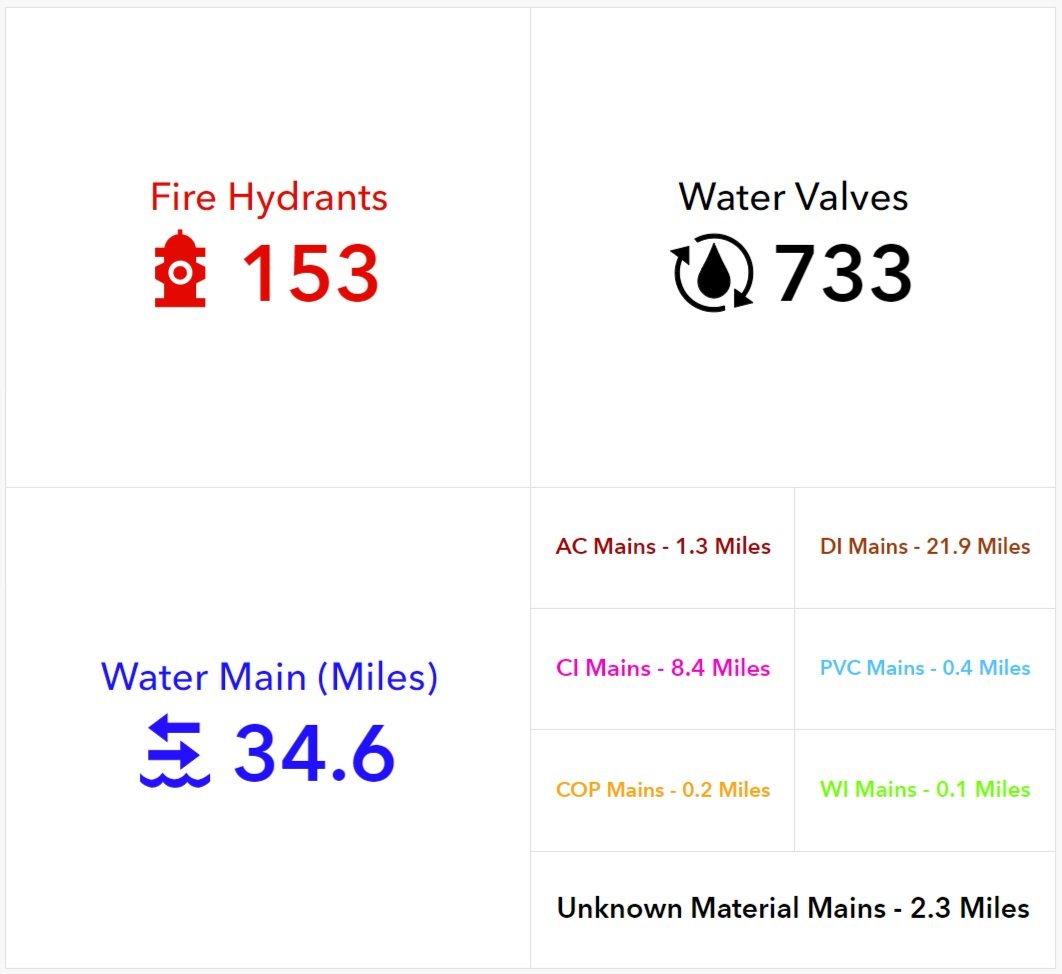
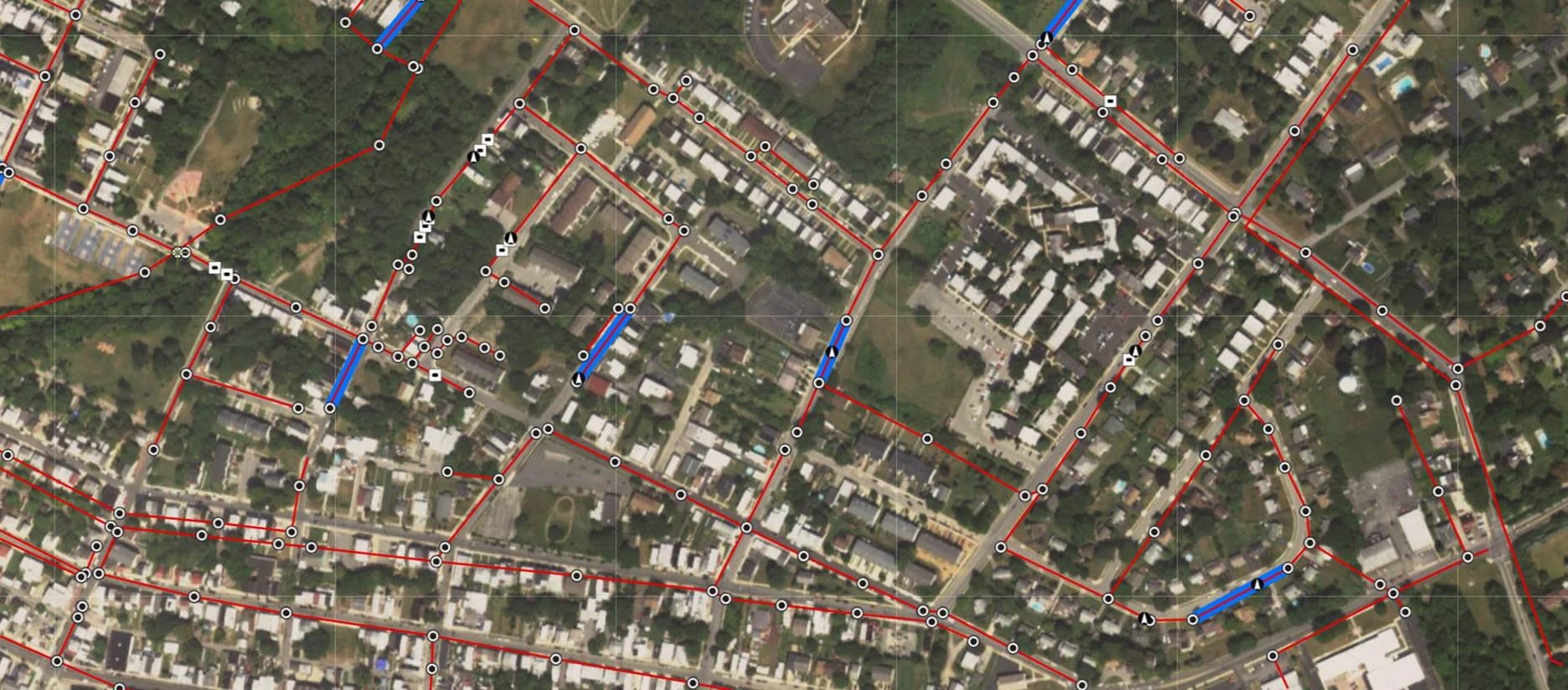
Sample of GIS data dashboard
Managing the Public Service Line Inventory with GIS
Among the revisions, EPA is requiring every water system provider to complete an inventory of their water service lines and report it. If done appropriately, this resource could aid in long-term planning and compliance including laying the groundwork for service line replacement plans as well as managing and tracking improvements and testing records.
A GIS dashboard, built around your water system means your data is always up to date and always accessible. In lieu of paper collection, management of assets can now be done through smart devices, in the field, with next to real-time updates. And accessing that information is easier than ever before. Your data can be built exactly the way that you need it - accompanying the location, analyzed alongside your capital planning, or summative looking at the whole picture.
Whether you're building your inventory from scratch or modifying your existing database - having a GIS team on board means that you data will start to work for you.
Our GIS team is well-versed in aiding our clients with the collection, documentation, and delivery of both private and public-facing dashboards as well as data analysis that ensures your data turns into an interactive, visual asset. This means all of that information becomes meaningful - saving you time and resources. The goal is not just to build a compliant service line industry. It’s to build one that is also valuable to you. To build an inventory that provides direction, meaning, and protection for you and your community.

The Right Time to Start your Service Line Inventory
The short answer to this common question is: now. While the deadline for compliance with the Lead and Copper Rule revisions isn’t until October 2024, it’s important to get your plan into action as soon as possible. A full inventory collection can be a time intensive process, particularly without deploying modern collection methods. It is recommended that the development of your inventory is as thorough as possible including the required historical records and assessment for replacement. Considering all of this, jumpstarting your inventory collection and database building now is crucial to compliance by 2024.
A great first step is to identify where you currently stand in the road to compliance. Then, assess the opportunities that a GIS team presents for preparing and managing your inventory moving forward.
SSM’s GIS Experience
For more than 20 years, we’ve provided professional GIS services to our clients; from mapping support for infrastructure projects, to focused GIS and data capture projects. We utilize GIS to analyze, visualize, and interpret data to understand patterns, relationships, and trends. Through SSM’s extensive geographic data our clients benefit from faster project startups and the economies of readily available data. SSM’s GIS Asset Management approach helps municipalities to transform water, sewer, storm water, or transportation infrastructure data into an easy-to-use operations asset management system capturing vital infrastructure data points with survey-grade accuracy. The data is verified and compiled into a geo-spatial database. Most of our water/wastewater clients have reaped the benefits of GIS in both their everyday use and long-term planning.
Compliance with Testing Protocols and Service Line Replacement
In addition to our GIS expertise, we have dedicated engineers with water system expertise. Our team of Process and Design Engineers have deep and long-standing experience providing water and wastewater engineering services. A significant number of our staff have more than 20 years of experience serving water and wastewater authorities. We combine professional engineers, professional land surveyors, environmental scientists, designers and drafters into teams to complete each assignment.
When it comes to managing and protecting water resources, SSM is the authority that everyone turns to. SSM offers extraordinary experience in the planning, design, and construction management of wastewater and water systems, piping systems, pumping stations, and treatment plants.
As you continue your planning for compliance with the Lead and Copper Rule Revisions, ensure your engineering team is ready and available to get you there not only with expertise, but with experience.


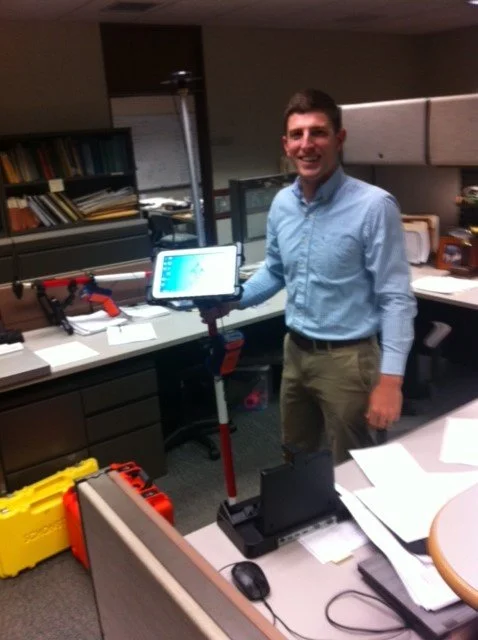


GIS Services
SSM provides professional GIS services to; from mapping support for infrastructure projects, to focused GIS and data capture projects

SSM provides professional GIS services from mapping support for infrastructure projects, to focused GIS and data capture projects. We utilize GIS to analyze, visualize, and interpret data to understand patterns, relationships, and trends. Through SSM’s extensive geographic data our clients benefit from faster project startups and the economies of readily available data.
We don’t just implement GIS for our clients; we use it throughout SSM, every day. We evaluate, design, and implement institutional data to improve decisions and streamline project workflow.
SSM’s GIS Asset Management approach helps municipalities to transform water, sewer, storm water, or transportation infrastructure data into an easy-to-use operations asset management system capturing vital infrastructure data points with survey-grade accuracy. The data is verified and compiled into a geo-spatial database. By creating customized mobile web applications, the field-critical data, such as material description, installation date, inspection reports and service history, is available at your finger-tips when you need it most.
GIS Data Management: Five things you need to know
With GIS technologies, information is no longer stored in multiple locations-maps, spreadsheets, notepads, clipboards, cell phones, email chains-but can now be stored in one spot. This helps you save time, improve processes, and get the information you need when you need it, wherever you are.
There is a data issue affecting facilities, municipalities, businesses, and organizations. Data is collected, sorted, resorted, and sorted again with little to no reward for the time and labor-consuming effort. Or worse- valuable data is left untouched, and unused.
With GIS technologies, you can make your data work for you. Information is no longer stored in multiple locations-maps, spreadsheets, notepads, clipboards, cell phones, email chains-but can now be stored in one spot.
With GIS, you can save time, improve processes, and get the information you need when you need it, wherever you are.
#1 - You use GIS every single day.

GIS technology connects the "where" with the "what". Geographic information combined with attributes, or "everything you need to know". Looking to buy or rent a home? Those phone apps are so convenient - open up the map, choose the location, and it shows all of the homes along with data about their price, their age, and more. Surprise! You just engaged with GIS. All the data ... one single spot.
What about when you are driving somewhere new? Do you utilize maps on your phone to locate the nearest gas station or coffee shop? You’re utilizing GIS! Have you noticed those roads turn red when there’s traffic? That’s all data, displaying in one interactive map. The help that comes if you are ever in an emergency? The responders depend on GIS. Google Earth- where you look up your own home for fun? GIS. GIS is something you use and benefit from every day, even if you are unaware of it.
#2 - It's nothing new. But it is constantly getting better.
At SSM, we've been providing clients with GIS Services for more than twenty years. When spatial databases were an idea of the future, we were there, signing our first GIS clients and leading the charge in making data meaningful.
With every new advancement in technology, we're finding new and better ways to help our clients raise efficiency. Finding new and easy ways to collect information, we're now building data analysis dashboards that trigger capital planning and infrastructure monitoring. Technological advances have propelled GIS into being not only a necessity for everyday use, but a strategic resource for industries all around the world.

#3 - Your data should be working for you.
Almost all data has a geographical component. By combining that with supporting attributes (i.e. photos, comments, service records) we're able to make your data mean more than it ever did before.
While flat maps and standard database systems offer you the surface, GIS technology takes what you know to a deeper level- showcasing relationships, patterns, and the connections between every piece of information you collect. GIS analysis uses location and attribution to solve complex problems. Questions like, "Where is...", "How long...", or "How many..." Because when data tells a story, you’re able to make smarter decisions in a shorter amount of time.
Paper plans and printed records are only good for the moment in which they were printed. GIS turns your static data into living, breathing, information. Information that's always available in one place and is always showing your most up-to-date information.
But it doesn’t stop there. Through GIS, we have also been able to streamline information collection. Throw away clipboards and paper forms. Instead, field team members simply need a mobile device. Customized data collection apps allow field teams to gather data and pictures with smart devices - and that information is directly populated into your GIS map. No filling out forms. No copying forms into spreadsheets, or rewriting information. One place to collect, one place to review.

#4 - It's meaningless if you can't access it.
The power of GIS lies in creating meaningful data that's there when you need it. Maintenance records, history, comments, and photos - wherever you are. Data is no good if you can't find what you need when you need it. How many projects were put on hold, or at least delayed, because someone, somewhere, had a paper that you couldn’t get to? How many emergencies were delayed because file hunting took longer than it should?
When your assets are in the cloud - when you utilize GIS for asset management - projects don’t stop. And emergencies? You’re ready for them too. GIS systems offer the convenience of accessing data from a desktop browser or mobile app. That means you access what you need whether you're in the office, in a meeting, or out in the field.
#5 - You can benefit from GIS, even if you you're not sure how.
Re-configuring your entire asset management system to GIS sounds intimidating. However, the benefit of GIS is its potential for growth. We’ve worked with municipalities that wanted to start small. All they wanted was pictures to be accessible in the field. So, instead of storing photos on hard drives- we connected them to a map. So when a crew arrives to repair an underground utility, they can quickly understand the configuration before they start digging. We’ve also worked with utility teams that went bigger- digitizing records for every single pipe, valve, and hydrant in their system. Everything they own including scans of hand-written plans accompanying their location.
GIS is here for what you need it for. For many, starting small and simple is a great first step. Consult with our GIS team to jumpstart your data collection and analysis.

Funding Opportunity: COVID-19 ARPA H20 PA - Water Suply, Sanitary Sewer and Storm Water Projects
The H2O PA Act was established by the General Assembly in July 2008. The Act provides for single-year or multi-year grants to municipalities or municipal authorities to assist with the construction of drinking water, sanitary sewer and storm water projects. Act 54 of 2022 appropriated $205.4 million of American Rescue Plan Act funds to the H2O PA – Water Supply, Sanitary Sewer and Storm Water Projects Program.
OVERVIEW
The H2O PA Act was established by the General Assembly in July 2008. The Act provides for single-year or multi-year grants to municipalities or municipal authorities to assist with the construction of drinking water, sanitary sewer and storm water projects. Act 54 of 2022 appropriated $205.4 million of American Rescue Plan Act funds to the H2O PA – Water Supply, Sanitary Sewer and Storm Water Projects Program.
USES
Activities to assist with the construction of drinking water, sanitary sewer and storm water projects.
ELIGIBILITY
Municipalities and Municipal Authorities
FUNDING
A minimum for $500,000 or more and a maximum of $20,000,000 for any project.
FOR MORE INFORMATION
WE’RE HERE TO HELP
Jamie Lorah, PE | jamie.lorah@ssmgroup.com


Funding Opportunity: COVID-19 ARPA PA Small Water and Sewer
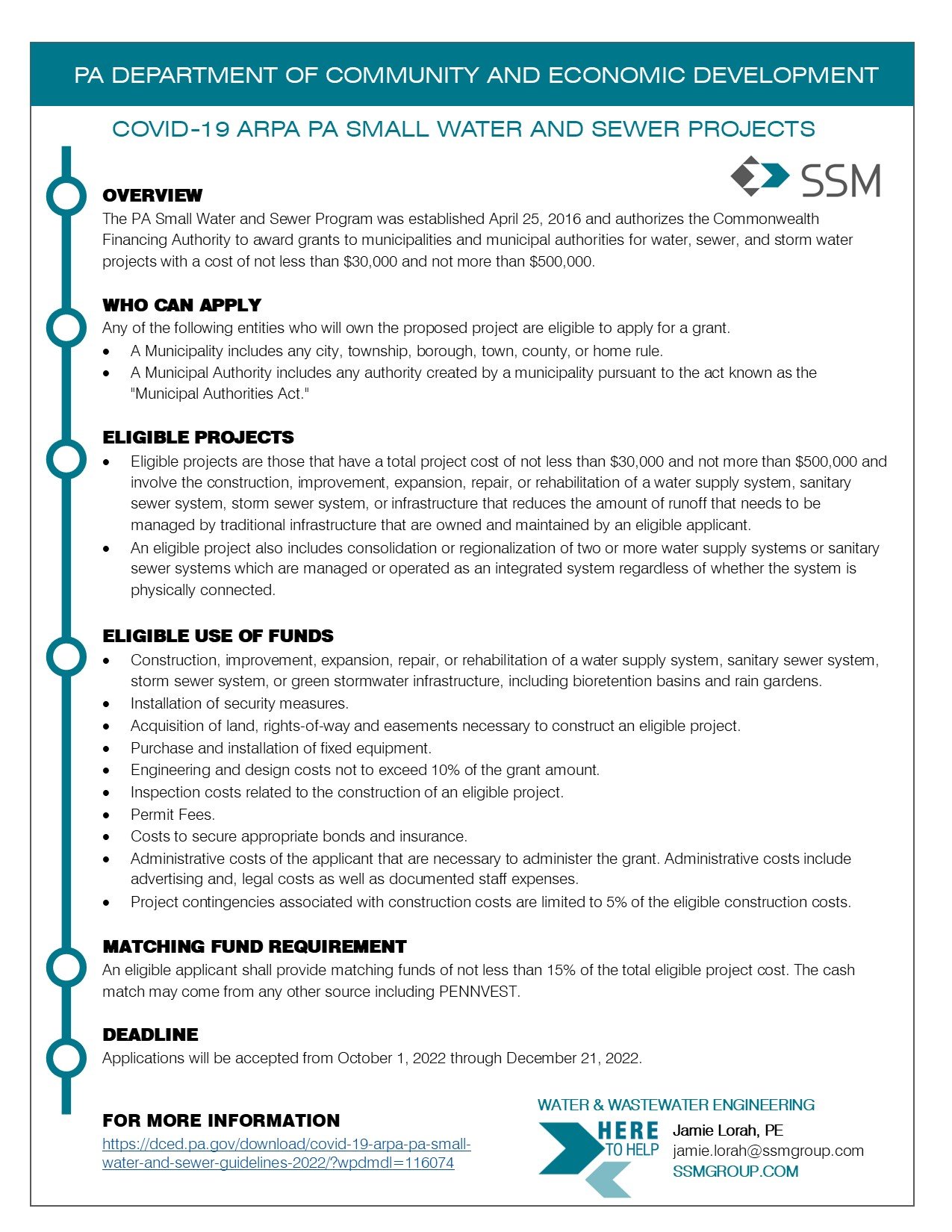
Grants for small water, sewer, storm sewer, and flood control infrastructure projects. Pursuant to Article XVII-A, § 1774.1-A, of the Act of April 9, 1929, P.L. 343, as amended (The Fiscal Code) the sum of $40,000,000 was made available to the Commonwealth Financing Authority (the “Authority”) for eligible projects.
OVERVIEW
Grants for small water, sewer, and storm water infrastructure projects. Act 54 of 2022 appropriated $105.6 million of American Rescue Plan Act funds to the PA Small Water and Sewer Program.
USES
Activities to assist with the construction, improvement, expansion, or rehabilitation or repair of a water supply system, sanitary sewer system, storm sewer system, or flood control projects.
ELIGIBILITY
Municipalities and Municipal Authorities
FUNDING
Eligible projects are those which have a total project cost of not less than $30,000 and not more than $500,000.
FOR MORE INFORMATION:
PA Small Water and Sewer Program | Grant | DCED
WE’RE HERE TO HELP
Jamie Lorah, PE | jamie.lorah@ssmgroup.com
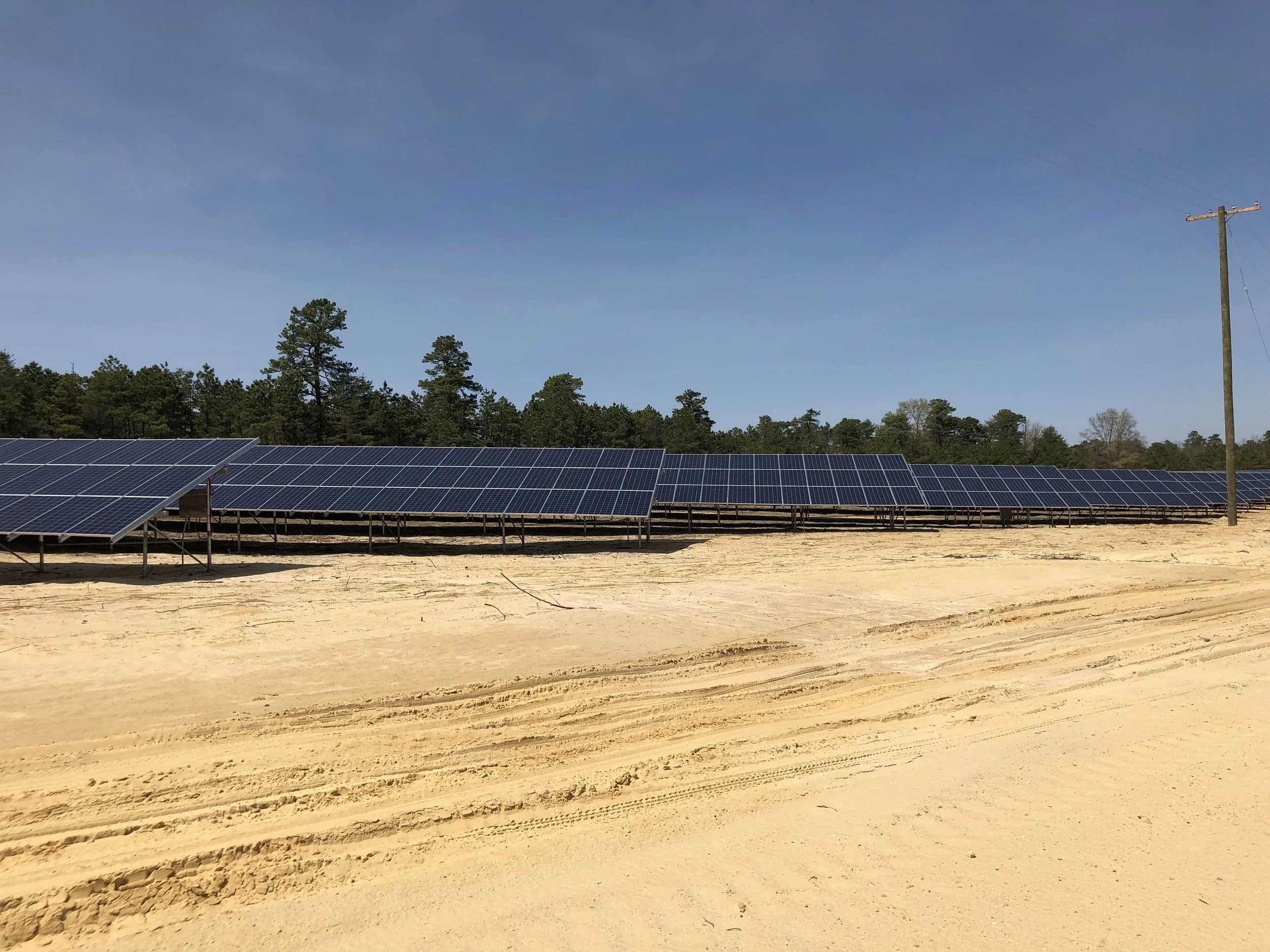
Solar system installation is more affordable than ever. Several financial opportunities including rebates, grants, and tax credits combined with expanding financing opportunities make the return on your investment faster and more attainable. Here’s a look at 3 key financial opportunities associated with solar system conversion.