

Final Opportunity Zone Regulations Released
It’s been two years since the federal government’s Opportunity Zone Program became law. The final round of regulations of the tax incentive program have now been released to the public.

It’s been two years since the federal government’s Opportunity Zone Program became law. The final round of regulations of the tax incentive program have now been released to the public.
The U. S. Treasury Department and the IRS issued the regulations in December with a number of substantial changes and additions from previous iterations. The regulations clarify which properties and businesses will qualify for the tax breaks by firming up guidelines for investors surrounding aggregation of developments on one property to meet the substantial improvement requirement. The regulations also address what happens to investments that are pulled out of opportunity zone funds before the 10-year hold period is over. Qualified Opportunity Zone Businesses, or QOBs are also covered, including a 5% maximum investment in "sin businesses" that would otherwise be disqualified from the tax break.
The regulations outline how quickly and how much funding investors must provide to get the tax benefits and gives some special leeway for those looking to improve brownfield sites and vacant properties. They also provide information about how companies can invest in opportunity zones.
One of the most significant parts of the final regulations is that qualified opportunity funds (QOF) can now be structured like most funds that invest in multiple businesses or properties. In previous guidelines, the entirety of a QOF had to be sold all at once to qualify for the maximum capital gains tax discount. This was seen as a deterrent to investment in Opportunity Zones. Now qualified opportunity zone funds can sell individual properties, rather than being forced to sell the entire QOF — which includes the LLCs a QOF creates in order to hold properties.
QOFs have so far raised over $4.5B in capital, but many in the investment community have said that several issues have kept investors from committing to development projects. Response from the real estate development industry has been positive so far and officials are hopeful that the clarity brought about in the final regulations will drive more capital into economically stressed communities.
The 2020 Census is Coming
The 2020 Census counts every person living in the 50 states, District of Columbia, and five U.S. territories. The count is mandated by the Constitution and conducted by the U.S. Census Bureau, a nonpartisan government agency.

The 2020 Census counts every person living in the 50 states, District of Columbia, and five U.S. territories. The count is mandated by the Constitution and conducted by the U.S. Census Bureau, a nonpartisan government agency.
Each home will receive an invitation to respond to a short questionnaire—online, by phone, or by mail. This will mark the first time that you will be able to respond to the census online.
The census provides critical data that lawmakers, business owners, teachers, and many others use to provide daily services, products, and support for you and your community. Every year, billions of dollars in federal funding go to hospitals, fire departments, schools, roads, and other resources based on census data. The results of the census also determine the number of seats each state will have in the U.S. House of Representatives, and they are used to draw congressional and state legislative districts.
It's also in the Constitution: Article 1, Section 2, mandates that the country conduct a count of its population once every 10 years. The 2020 Census will mark the 24th time that the country has counted its population since 1790.
Visit 2020census.gov to learn more. #2020Census
Spottlight on the Buildings Around Us
Have you noticed the buildings around you today? Really, have you stopped and noticed them? Have you thought about how and why the building stood through our weather changes? Have you questioned how the lighting fixtures are perfectly spaced to provide exactly enough light at every angle of the room you’re in? What about the plumbing? Do you have any idea how the piping might run through the building to maintain the perfect amount of water pressure at all times? Or how strategically the sprinklers are set up- making sure no tiny space is missed in the event of an emergency. Have you noticed it?

We’re at the time of year when we find ourselves in and out of shopping malls, staying for a few extra hours at work, visiting shopping centers, or enjoying holiday meals at large-scale restaurants. As you and your family embark on travelling, visiting, shopping, or whatever your holiday season may be filled with- we’d like to challenge you to take a closer look at the buildings around you.


The Buildings Around Us
Have you noticed the buildings around you today? Really, have you stopped and noticed them? Have you thought about how and why the building stood through our weather changes? Have you questioned how the lighting fixtures are perfectly spaced to provide exactly enough light at every angle of the room you’re in? What about the plumbing? Do you have any idea how the piping might run through the building to maintain the perfect amount of water pressure at all times? Or how strategically the sprinklers are set up- making sure no tiny space is missed in the event of an emergency. Have you noticed it?

Pride | Teamwork | Quality | Integrity
Have you noticed the buildings around you today? Really, have you stopped and noticed them? Have you thought about how and why the building stood through our weather changes? Have you questioned how the lighting fixtures are perfectly spaced to provide exactly enough light at every angle of the room you’re in? What about the plumbing? Do you have any idea how the piping might run through the building to maintain the perfect amount of water pressure at all times? Or how strategically the sprinklers are set up- making sure no tiny space is missed in the event of an emergency. Have you noticed it?
We’re at the time of year when we find ourselves in and out of shopping malls, staying for a few extra hours at work, visiting shopping centers, or enjoying holiday meals at large-scale restaurants. As you and your family embark on travelling, visiting, shopping, or whatever your holiday season may be filled with- we’d like to challenge you to take a closer look at the buildings around you. Take a moment and notice them.
We take pride in the success of our clients and the buildings around us. Whether it’s a specific mechanical or electrical project within an existing structure, or a dream and vision for a new building- we start by understanding the challenge. Owners, architects, agents, and process engineers- we do a lot of listening to appreciate the needs, the budgets, and the goals. We take pride in making those dreams a reality.
The buildings around us take teamwork. Our survey teams provide accurate and precise measurements- setting a framework for our engineers to produce great work. Our structural engineers work closely with our electrical and mechanical engineers- ensuring not only that the walls stand strong, but that the systems inside of them are just as solid. We are a team with our co-workers, and we are a team with our clients.
The quality of the work that goes into the buildings around us provides value outlasting just the time spent designing and developing. We work hard to make sure that you don’t have to worry- because roofing frames should just be strong, and boilers should just be installed safely. We work hard because you shouldn’t have to worry about structural irregularities, or effectively designed emergency systems. Because parking lots should be designed correctly, and plumbing systems shouldn’t overflow. We work hard to keep people safe. And we work hard to do it well.
We have integrity in the work that we provide. Because both your local small businesses and your large-scale companies deserve that respect. The buildings around us and the people that dream of them deserve trust and confidence in the team supporting them. We are honest and straightforward- because that’s the foundation our buildings need.
Our company core values- pride, teamwork, quality, and integrity. They are just the beginning of what goes into the buildings around us. Enjoy your holiday season and take comfort in the systems and the strength that allow you to stay safe and happy.
The Data Around Us
Online shopping. How does the information you type travel to the computer of the stores your shop? And then how does the confirmation travel back to your email inbox? And the shipping label- how does it generate through wires to print at a store somewhere and tell them what to pack in your box?

Online shopping. How does the information you type travel to the computer of the stores your shop? And then how does the confirmation travel back to your email inbox? And the shipping label- how does it generate through wires to print at a store somewhere and tell them what to pack in your box?
Servers. Servers are the way in which online and telecommunications data is stored and transmitted throughout our cyber world. Servers also do exactly what their name describes- serve. They serve information to other computers. They pass and deliver data as well as process requests. Servers are the hub of power and knowledge that make things happen. They are pretty important. Some companies have entire server rooms- devoted to the operating and functioning of their computer servers. Some entire companies are devoted just to effectively operating computer servers.
But what happens if server rooms become too hot? Think about your iPhone- what happens when it overheats? It moves slower. It doesn’t work as well. It doesn’t get the job done. Sometimes it even completely shuts down and tells you to try again when it’s cooler. The same is true for servers. Think about humidity- what do you think happens if computer servers are in a too-humid room? Remember, humidity = moisture. Moisture + electronics = bad.
We can’t control the weather. But we can control how we deal with it. Our mechanical engineers and designers work really hard to develop master plans, conduct studies, create designs, and troubleshoot solutions to navigate heating, ventilation, and air conditioning systems for the most important spaces.
We’re proud of our resume, we work with 2 Fortune 100 technology companies, supporting their sites and facilities that bring research and great ideas to life. Because when it comes to the data around us- it should just work.
SSM recently completed a Mission Critical Facility Master Plan Update outlining the steps and costs to bring a 300,000 sf office and level 3/3+ data center hotel from its present condition based on circa 2005 watt densities to newly established goals. Having performed the existing conditions assessment, the team evaluated and recommended approaches to achieve the company’s goals maintaining operation of the site and service to its tenants. The effort considered use of floor space, central utility capacities, infrastructure, equipment End of Life (EoL) replacement, and changes in requirements and guidelines for critical data centers. The deliverable provided a phased approach for upgrading the facility’s power distribution, emergency standby power, UPS power distribution, and expansion and upgrading of the central chilled water plant and distribution system. A timeline was established inter-relating the EoL replacement of equipment, increase in power source capacity and distribution, and central cooling capacity and distribution so that growth and modifications were undertaken in steps that were coordinated and manageable. A timeline was established inter-relating the EoL replacement of equipment, increase in power source capacity and distribution, and central cooling capacity and distribution so that growth and modifications were undertaken in steps that were coordinated and manageable.
Goals were established that reflected immediate (plans on the books), short term (full fitout at probable densities) and long term (densities thought reasonably achievable within 20 years). The conditions assessment information was used to define the modifications that would be necessary to support those projects to be constructed in the immediate future and develop the timeline and phasing to support the increased watt density and increasing occupancy of the facility established with the client. A long range plan was also developed outlining the steps necessary to support the 20 year vision.
SSM Staff in the News
Celebrating new faces at SSM.

Ralph Johnson, PE | Vice President, Water and Wastewater Engineering and Operations

Sydney Jernigan | Graduate Engineer, Water and Wastewater Engineering

Alex Nawotka, GIT | Environmental Scientist
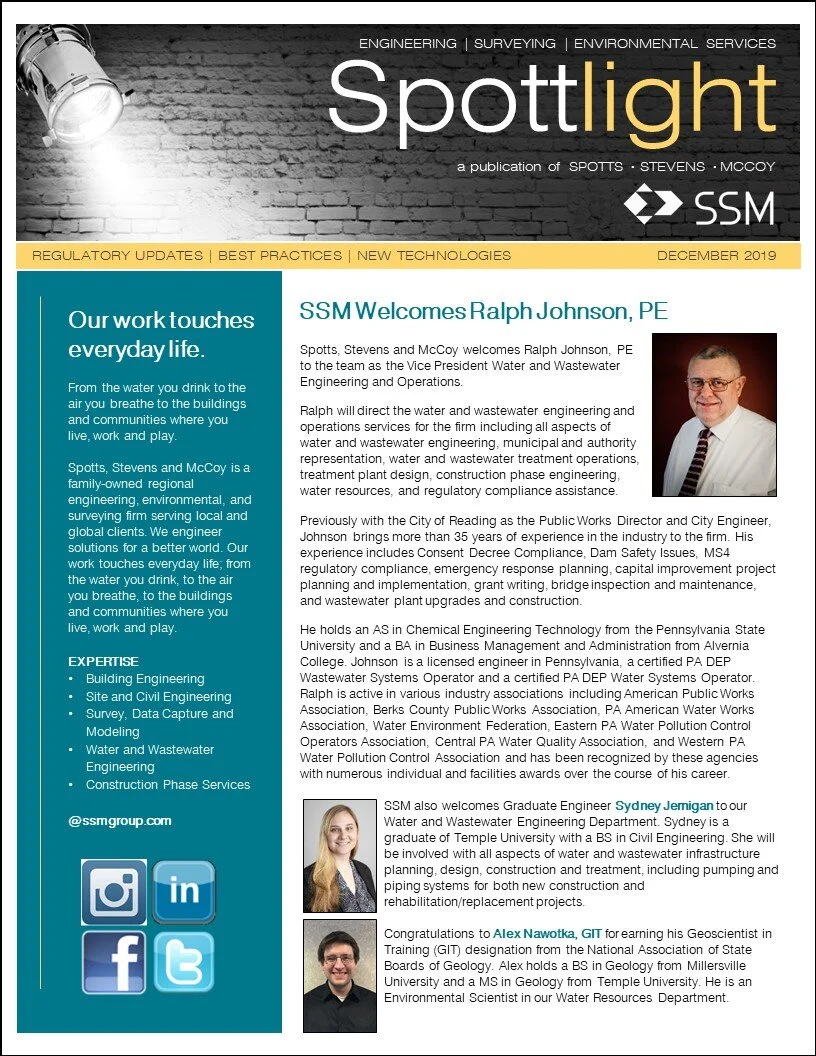
Spotts, Stevens and McCoy welcomes Ralph Johnson, PE to the team as the Vice President Water and Wastewater Engineering and Operations. Ralph will direct the water and wastewater engineering and operations services for the firm including all aspects of water and wastewater engineering, municipal and authority representation, water and wastewater treatment operations, treatment plant design, construction phase engineering, water resources, and regulatory compliance assistance.
Previously with the City of Reading as the Public Works Director and City Engineer, Johnson brings more than 35 years of experience in the industry to the firm. His experience includes Consent Decree Compliance, Dam Safety Issues, MS4 regulatory compliance, emergency response planning, capital improvement project planning and implementation, grant writing, bridge inspection and maintenance, and wastewater plant upgrades and construction.
He holds an AS in Chemical Engineering Technology from the Pennsylvania State University and a BA in Business Management and Administration from Alvernia College. Johnson is a licensed engineer in Pennsylvania, a certified PA DEP Wastewater Systems Operator and a certified PA DEP Water Systems Operator. Ralph is active in various industry associations including American Public Works Association, Berks County Public Works Association, PA American Water Works Association, Water Environment Federation, Eastern PA Water Pollution Control Operators Association, Central PA Water Quality Association, and Western PA Water Pollution Control Association and has been recognized by these agencies with numerous individual and facilities awards over the course of his career.
SSM also welcomes Graduate Engineer Sydney Jernigan to our Water and Wastewater Engineering Department. Sydney is a graduate of Temple University with a BS in Civil Engineering. She will be involved with all aspects of water and wastewater infrastructure planning, design, construction and treatment, including pumping and piping systems for both new construction and rehabilitation/replacement projects.
Congratulations to Alex Nawotka, GIT for earning his Geoscientist in Training (GIT) designation from the National Association of State Boards of Geology. Alex holds a BS in Geology from Millersville University and a MS in Geology from Temple University. He is an Environmental Scientist in our Water Resources Department.
Buildings and Data Around Us
We’re proud of our resume, we work with 2 Fortune 100 technology companies, supporting their sites and facilities that bring research and great ideas to life.
We’re proud of our resume, we work with 2 Fortune 100 technology companies, supporting their sites and facilities that bring research and great ideas to life.

Splitting Edge Axe Throwing
SSM was involved in a renovation project to structurally evaluate the existing roof structure for support of new units for heating and cooling the axe-throwing space. The roof structure is composed of wood framing supported on riveted steel trusses. The roof is original to the building and dates to the late 1800s, when steel was just becoming a common material for roof construction.
When the building owner opted to support the units along the centerline of the building, SSM developed the structural design drawings for a new steel frame to be supported on the existing steel trusses. SSM then verified that the existing trusses were capable of supporting the added weight.

Chiller Plant Study & Design Corporate Offices & Data Center
SSM developed a plan to convert a chilled water plant consisting of two independent chilled water systems comprised of 2 – 600 ton chillers (N+1) and associated pumps and 2 – 250 ton chillers (N+1) and associated pumps to a single system consisting of 3 – 400 ton chillers and associated pumps.
The project goal was to create a single central chilled water plant providing N+1 redundancy and development of a new sequence of operation allowing for automatic operation of the plant including automatic energizing of redundant equipment in the event of failure and rotation of equipment to equalize runtime.

Lincoln University
SSM provided structural engineering for an approximately 15,000 square foot addition to the Student Union and Services Building at Lincoln University. The project included significant upgrades to the existing building area. The existing two-story concrete framed building was expanded on three sides by the addition of a two-story steel framed structure. The upgrades included the addition or modification of a mailroom, bookstore, cinema viewing area, offices, game room, two-story atrium, storage and maintenance areas, and a multi-purpose area. The existing structure was analyzed and reinforced as required for new loads, including new rooftop mechanical equipment. The structural design included design of foundations, ground floor slab, retaining walls, elevated floor slabs, steel framing, and roof deck.
SSM performed construction phase services including structural shop drawing reviews, responding to contractor's Request for Information (RFI), and occasional site visits to review construction.
SSM performed a High Strength Wastes Review of the Lincoln University facilities and its Wastewater Treatment Plant which included a detailed review of potential discharges from disinfectants and cleaning chemicals and materials, boiler blowdown chemicals such as corrosion control inhibitors and Biocides, and other chemicals including the use of Quaternary Ammonia products and their effects and toxicity to the treatment plant biomass. SSM also performed treatment process troubleshooting and developed solutions for mitigating the effects from these harmful and toxic discharges.

Shark Finn Inn and Restaurant | C2 Architects | SSM engineers provided design of the mechanical, electrical, and plumbing systems for the conversion of a former furniture store into the 7,000 square foot restaurant and bar.
Fresh City Restaurant | C2 Architects | SSM engineers provided design of the mechanical, electrical, and plumbing systems for 4,200 square foot restaurant in the Livingston Town Center Mall.
Fitness Center | Olympus America Inc. | SSM assessed the existing HVAC systems capability to support the renovation of a portion of the first floor of Building D creating a fitness center. We reviewed the existing capacity of the HVAC system serving the area that may become a fitness center including expansion of the toilet room area into a toilet room and shower area and provided a letter summary of the evaluation including description of the work required to adapt the existing HVAC system to serve the fitness area and highlight potential areas of concern.
Performing Arts Center | SMG | Provided structural engineering services to perform an investigation to determine the cause of the mezzanine ceiling failure at the Sovereign Performing Arts Center. SSM services included analysis of a fly bridge over the stage and investigations of a mezzanine and masonry wall.
Structural Capacity | Tait Towers | SSM structural engineers provided services at this musical performance practice facility for large productions. Services included determining maximum hoist loads, studies to determine floor capacities for carts, and structural review analysis for building cranes and roof top units.
Pennsylvania Historic Museum Commission | Pennsylvania Military Museum | SSM provided engineering services to support the installation of two, 14-inch diameter, 53-foot-long gun barrels from the Battleship USS Pennsylvania (BB-38) on a concrete pedestal. Oversaw a geotechnical investigation and prepared structural designs to design pedestal that would approximate the manner in which the guns appeared on the ship, including a 28’ diameter disc that replaces the ship’s turret.
USS Pennsylvania (BB-38) was the lead ship of the Pennsylvania class of United States Navy super-dreadnought battleships. At the time of the Japanese attack on Pearl Harbor on 7 December 1941, Pennsylvania was in drydock in the Pearl Harbor Navy Yard. She was one of the first ships in the harbor to open fire as Japanese dive and torpedo bombers roared out of the high overcast. Repairs were made to enable Pennsylvania to steam to the Marshall Islands where she was used as a target ship in the Operation Crossroads atomic bomb tests at Bikini atoll during July 1946. She was then towed to Kwajalein Lagoon where she decommissioned on 29 August. She remained in Kwajalein Lagoon for radiological and structural studies until 10 February 1948, when she was sunk stern first off Kwajalein. She was struck from the Naval Vessel Register on 19 February. Two of her 14-inch guns are now kept outside the Pennsylvania Military Museum in Boalsburg, Pennsylvania The project also included reconfiguration of power supplies to the equipment to reduce single points of failure. The construction documents included instructions for phasing of construction to maintain operation of the existing plant while modifications and interconnection of the various subsystems was accomplished. The reconfiguration maximized the reuse of the existing piping network and power distribution.

Give Back Club Donates $10,000 to Community Initiatives
Spotts, Stevens and McCoy recently made donations totaling $10,000 as part of their 2019 Give Back initiative.

Members of the SSM Give Back Club (left to right: Chelsea Carl, Lyn O’Hare, Mike Donlan, Sydney Jernigan, Michelle Hohl, PE, Michele Eidle, and Kim Ernst) display checks representing the firm’s $10,000 donations.

Michele Eidle, SSM employee and Operation 143 volunteer accepted the donation during a Company Team Huddle in November.
Spotts, Stevens and McCoy recently made donations totaling $10,000 to organizations within in the firm’s geographic footprint as part of their 2019 Give Back initiative.
A group of SSM volunteers interviewed and surveyed their co-workers to develop an action plan for the giving. As a result the firm donated $5,000 to Operation143. The organization feeds students in nearby communities by providing backpacks full of food for the weekend. SSM’s donation will provide supplies for one weekend’s backpack event. The firm is hosting a food drive in their offices during the month of December to provide additional supplies.
SSM supported the Opportunity House mission, “changing lives by educating, housing, feeding and empowering people to stand on their own feet” with a $2,500 donation. The firm also supported the Tunnel to Towers Foundation with a $2,500 donation. The Stephen Siller Tunnel to Towers Foundation honors the sacrifice of firefighter Stephen Siller who laid down his life to save others on September 11, 2001 and honors our military and first responders who continue to make the supreme sacrifice of life and limb for our country.
Brian Kelly, President and CEO commented, “We are excited to continue our tradition for the SSM family to give back and support the communities where we live, work and play.”


SSM Welcomes New VP, Ralph Johnson, PE to the Firm
Spotts, Stevens and McCoy, a family-owned and managed, regional engineering firm based in Reading PA, welcomes Ralph Johnson, PE to the team as the Vice President Water and Wastewater Engineering and Operations.

Ralph Johnson, PE | Vice President, Water and Wastewater Engineering and Operations
Spotts, Stevens and McCoy, a family-owned and managed, regional engineering firm based in Reading PA, welcomes Ralph Johnson, PE to the team as the Vice President Water and Wastewater Engineering and Operations.
Ralph will direct the water and wastewater engineering and operations services for the firm including all aspects of water and wastewater engineering, municipal and authority representation, water and wastewater treatment operations, treatment plant design, construction phase engineering, water resources and regulatory compliance assistance. Previously with the City of Reading as the Public Works Director and City Engineer, Johnson brings more than 35 years of experience in the industry to the firm. His experience includes Consent Decree Compliance, Dam Safety Issues, MS4 regulatory compliance, emergency response planning, capital improvement project planning and implementation, grant writing, bridge inspection and maintenance, and wastewater plant upgrades and construction.
He holds an AS in Chemical Engineering Technology from the Pennsylvania State University and a BA in Business Management and Administration from Alvernia College. Johnson is a licensed engineer in Pennsylvania, a certified PA DEP Wastewater Systems Operator and a certified PA DEP Water Systems Operator. Ralph is active in various industry associations including American Public Works Association, Berks County Public Works Association, PA American Water Works Association, Water Environment Federation, Eastern PA Water Pollution Control Operators Association, Central PA Water Quality Association, and Western PA Water Pollution Control Association and has been recognized by these agencies with numerous individual and facilities awards over the course of his career.
Fall Joint Conference: Legislative and Regulatory Update
PA Section AWWA Southcentral & Northcentral District and WWOAP Central Section
Legislative and Regulatory Update
Presented by Serena DiMagno, Sr. Environmental Consultant
serena.dimagno@ssmgroup.com
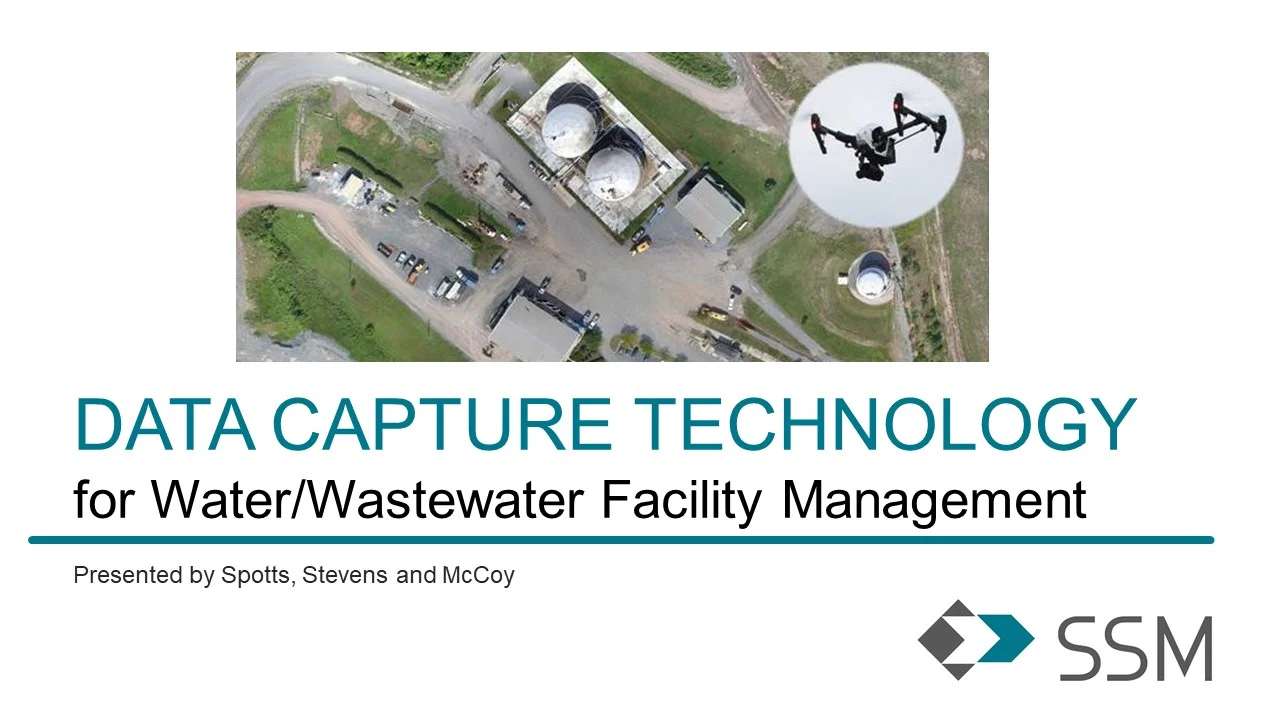
Fall Joint Conference: Data Capture Technology for Water/Wastewater Facility Management
Data Capture technology is quickly becoming a way for water and wastewater treatment plants to efficiently collect information, analyze the results, and optimize performance.
PA Section AWWA Southcentral & Northcentral District and WWOAP Central Section
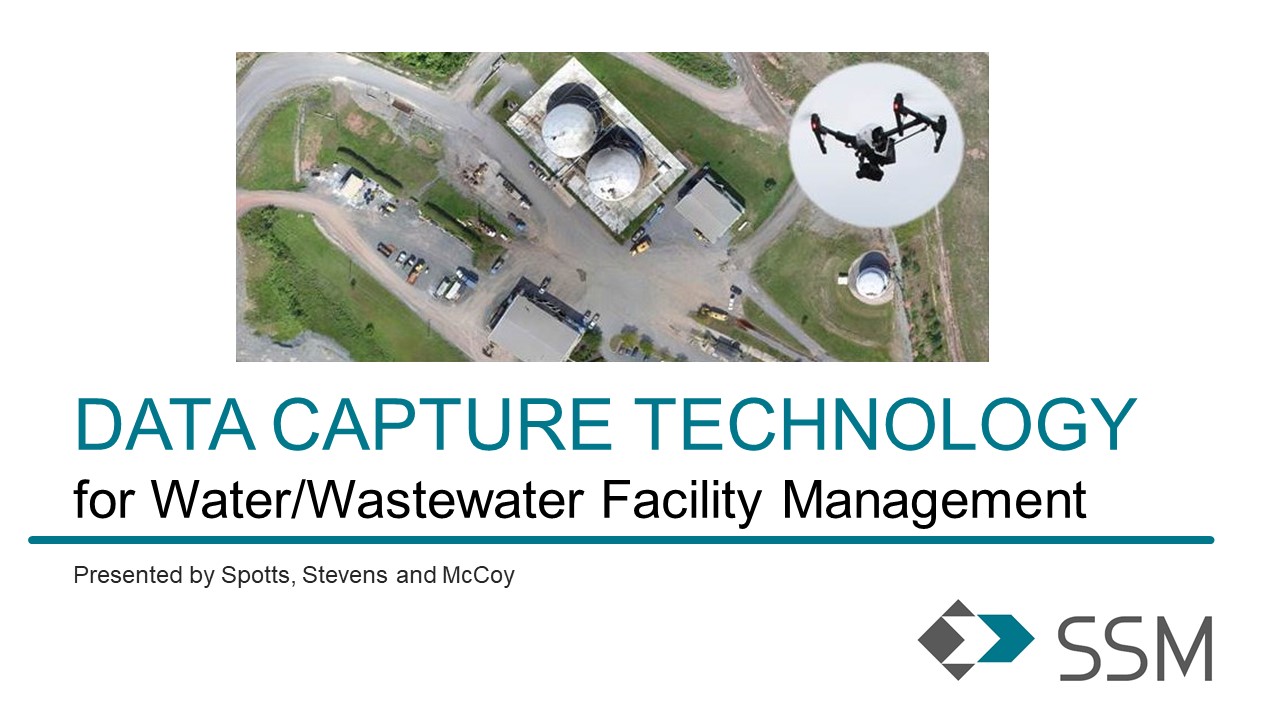
Data Capture Technology for Water/Wastewater Facility Management
Data Capture technology is quickly becoming a way for water and wastewater treatment plants to efficiently collect information, analyze the results, and optimize performance. There are several methods of capturing this information, eliminating complacency, and documenting equipment and project status in water and wastewater operations. This presentation describes Data Capture projects for Water and Wastewater systems, including ways to look at and manage data, what can be done with the data collected, and visual examples of various projects using drones, 3-D Models, and GIS.
Presented by Steve Smith, Sr. Project Manager, Survey and Data Capture
steve.smith@ssmgroup.com
Mr. Smith has over 30 years of experience in the surveying field and has been responsible for all aspects of Boundary and Topographical surveying, Aerial Mapping, Utility and Route surveys, ALTA/ASCM survey and all phases of construction stakeout. His technical skills include robotic instrumentation, High Definition Scanning, UAS Drone Flight operations, AUTOCAD and Microsoft operating systems.
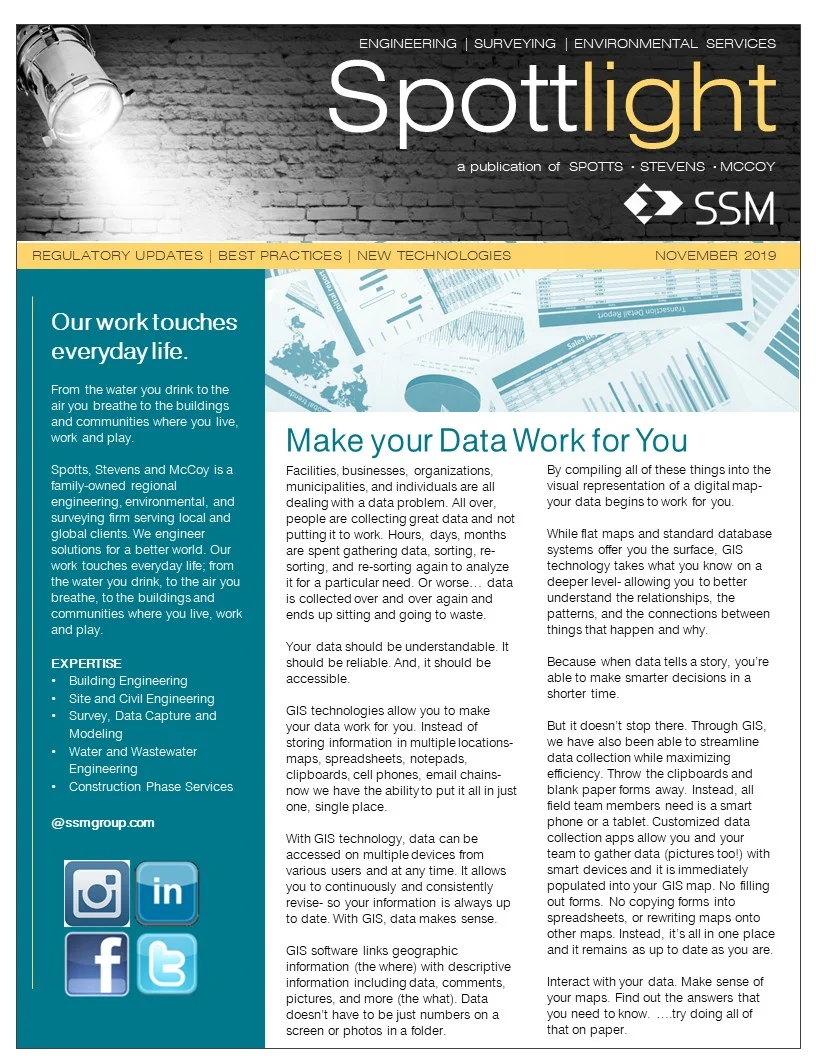
Spottlight on GIS
GIS technologies allow you to make your data work for you. Instead of storing information in multiple locations- maps, spreadsheets, notepads, clipboards, cell phones, email chains- now we have the ability to put it all in just one, single place.

Facilities, businesses, organizations, municipalities, and individuals are all dealing with a data problem. All over, people are collecting great data and not putting it to work. Hours, days, months are spent gathering data, sorting, re-sorting, and re-sorting again to analyze it for a particular need. Or worse… data is collected over and over again and ends up sitting and going to waste.
Your data should be understandable. It should be reliable. And, it should be accessible.
GIS technologies allow you to make your data work for you. Instead of storing information in multiple locations- maps, spreadsheets, notepads, clipboards, cell phones, email chains- now we have the ability to put it all in just one, single place.
IN THIS ISSUE


Make your Data Work for You
Your data should be understandable. It should be reliable. And, it should be accessible.

Facilities, businesses, organizations, municipalities, and individuals are all dealing with a data problem. All over, people are collecting great data and not putting it to work. Hours, days, months are spent gathering data, sorting, re-sorting, and re-sorting again to analyze it for a particular need. Or worse… data is collected over and over again and ends up sitting and going to waste.
Your data should be understandable. It should be reliable. And, it should be accessible.
GIS technologies allow you to make your data work for you. Instead of storing information in multiple locations- maps, spreadsheets, notepads, clipboards, cell phones, email chains- now we have the ability to put it all in just one, single place.
With GIS technology, data can be accessed on multiple devices from various users and at any time. It allows you to continuously and consistently revise- so your information is always up to date. With GIS, data makes sense.
GIS software links geographic information (the where) with descriptive information including data, comments, pictures, and more (the what). Data doesn’t have to be just numbers on a screen or photos in a folder.
By compiling all of these things into the visual representation of a digital map- your data begins to work for you.
While flat maps and standard database systems offer you the surface, GIS technology takes what you know on a deeper level- allowing you to better understand the relationships, the patterns, and the connections between things that happen and why.
Because when data tells a story, you’re able to make smarter decisions in a shorter time.
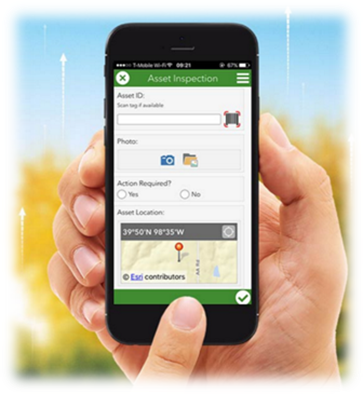
But it doesn’t stop there. Through GIS, we have also been able to streamline data collection while maximizing efficiency. Throw the clipboards and blank paper forms away. Instead, all field team members need is a smart phone or a tablet. Customized data collection apps allow you and your team to gather data (pictures too!) with smart devices and it is immediately populated into your GIS map. No filling out forms. No copying forms into spreadsheets, or rewriting maps onto other maps. Instead, it’s all in one place and it remains as up to date as you are.
Interact with your data. Make sense of your maps. Find out the answers that you need to know. ….try doing all of that on paper.
Beyond Maps
Go beyond maps, let data work for you.

We could amaze you with the endless ways that GIS solves problems in our world every single day.
Businesses and banks can and do use GIS to better understand their target markets, their financial risks and gains, and increase their profits. Facilities managers use GIS to manage their assets and plan for the future. Journalists and media outlets use GIS to tell great stories and research better information. Public health professionals use GIS to track disease spread and outbreak crises. Governments, education leaders, community planners, public safety specialists, transportation managers, archaeologists, geologists, scientists, and more- they all use GIS.
What we want you to know is that you could benefit from GIS, even if you don’t know how. And we’d love to help.
Sometimes, it’s a problem that tells you it’s time to come up with a better way. Other times, through streamlining processes and effectively corroborating data- a problem presents itself and prevention is the focus. In other cases- it just feels good to have everything in one spot.
Kickstart GIS into your world. Start out small- what data are you already collecting? Maybe you don’t even realize you’re collecting data! Look at what you have- start there. Then think about what data you wish you could collect.
Sometimes, use of GIS leads to further questions. So, start small. Consult the GIS experts that you know (we have a few). Input what you have now. As you work with the technology, you’ll begin to uncover more questions- the more questions you have, the more data to collect, the more answers to discover.
Go beyond maps, let data work for you.
Great Data is Meaningless if you Can’t Access It
Despite their map, despite their data, it took that water authority 8 hours to locate and turn off the water valve.

In 2013, a water main broke in the middle of winter. The water authority rushed into action. First step was to shut off the water at the valve to stop the water from endlessly shooting out the broken main. They got their map and headed out to the location indicated on the map. As it turned out, the location of the main was in the middle of a park. So, while normally a to-scale map offers landmarks and points of reference to quickly pin point the exact location- in this instance, that wasn’t quite the case. To make matters worse, everywhere the eye could see was covered with a foot of white snow. The only option was to guess and check. Despite their map, despite their data, it took that water authority 8 hours to locate and turn off the water valve.
Following that event, the authority decided they can never allow that situation to happen again. So, they set out to gather every critical water system asset – such as shut-off valves – and store it in one GIS map. Available through mobile applications, the online GIS data is accessible in the field. They can better assert and effectively confirm their location, allowing for quicker decision making and better problem solving.
Since 2013, SSM and other partners have worked with the water authority to collect every single water asset point in the authority’s geographic reach and input it into an interactive, up-to-date GIS mapping system. Now, when the water valve needs to be shut off at any location, in any weather conditions, the field team will take their smart devices and pinpoint their exact location alongside the exact precise location of the valve. Less time, less damage, more effective.
Make your Data Accessiblle
What if the team could actively interact with the map, seeing exactly what they’re looking for- exactly when they need it- and with exactly perfect accuracy?
With GIS technology, they can.

Picture this: A wildfire breaks out in northern Pennsylvania. Local firefighters are ready to act. They pull out their maps to pinpoint exactly where the fire is occurring. Next, it’s time to make a plan of action. How will we attack this? How will we fight it? How will we ensure the least possible damage?
First, determine the route to take- what are the local roads towards this forest and what’s going to be the fastest way to get there? The team cross references their road map with their forest map and settles on a good route to take. Next, assess if there are any priorities nearby to protect. Break out the database of land/home properties, break out the database of local schools and businesses, and break out the database of wildlife refuge centers. Cross reference all three with each other, and also compare them to the forest map and location of the fire at this exact moment in time. Lastly- assess the major threats, risks, and benefits for the team. Pull out another database and find out the nearest trash collection facility, pull out another database and figure out the nearest hazardous waste facility, and pull out one more database to locate the nearest gasoline station. Now that two maps and six databases have all been cross-referenced, it’s time to fight the fire. Just hope nothing’s changed since the last time those maps were printed.
We’re not sure about you- but that plan is just not good enough for us. What if all of this information was in one single spot? Imagine if it was in one spot that firefighters in 10 different trucks could all access at the same time while enroute to the forest fire? What if the team could actively interact with the map, seeing exactly what they’re looking for- exactly when they need it- and with exactly perfect accuracy?
With GIS technology, they can.
Take it one step further: GIS doesn’t just save us in the event of emergencies. Let’s take the wildfire one step further. What if the team reviewed the fire even after it was over? They tracked where it started, where it spread to, what the weather was, when the date was, what time it was, what propelled the fire and how long it lasted. (All in that one special GIS spot, of course). Let’s say the team did this with every single forest fire that occurs.
By inputting all of this data into an interactive and visual map- it’s no longer a generic record of natural disasters and their dates and details. Instead, it’s an opportunity to identify patterns, locate risks, and even distinguish connections to what happened and why- opening the door for effective prevention and preparation in the future.
The Everyday GIS User in You
You are probably using GIS technology in your everyday life, if not many times a day.

GIS technology isn’t just for the firefighters and the business owners. It also isn’t a new fancy technology. In fact, you are probably using GIS technology in your everyday life, if not many times a day. Don’t believe us? Here are just a few ways you’ve probably used it.
Looking to buy or rent a new home? Those phone apps are so convenient- you just open up the map, choose the specific location, and it shows all of the homes along with data about their prices right there in one visual spot. In some cases, it even color coordinates the icon for each home depending on if it is for sale, pending, or closed. Surprise! You just engaged with GIS. All the data, one spot. Easy and interactive.
What about when you are on vacation, or driving somewhere new? Do you ever utilize maps on your phone to locate the nearest gas station or coffee shop? You’re utilizing GIS! Here, the map goes beyond just a map. Instead, it offers extra information such as names of businesses, color coordinated by type of business. There’s also another layer- do you know how those roads turn red when there’s traffic? That’s all data, corroborated into one spot on one visual map. As vehicles (with smart phones) travel roads, data collection assesses how quickly the sets of cars are moving- establishing when there is a significant hold up on roads according to their speed limit. Which reminds us- when you’re using that GPS and it tells you the speed limit for that road? GIS.
The help that comes if you are ever in an emergency? They depend on GIS.
Google Earth- where you probably have looked up your own home on multiple occasions? GIS.
Are you a social media person? Do you find it amazing when you take a selfie and upload it to social media and it suggest your location? Be amazed no more- it’s GIS!
Marketing professionals use GIS as well. Do you ever feel like your internet knows exactly what you’re looking for or exactly what is happening around you? In some ways, they do. Marketing professionals use GIS to analyze data of potential consumers. By looking at purchasing data, location data, search data, and a lot more- they can establish what they should be putting out to you and when.
GIS is going beyond maps. It’s information. It’s data. It’s interactive. And, it’s meaningful. Information, correlated with geography- that’s GIS.
SCIENCE | TECHNOLOGY | ENGINEERING | MATHEMATICS
We are so grateful for all of the people and experiences that at one point inspired our employees to pursue their interests in Science, Technology, Engineering, Art and Math. And we are grateful for all of the people and experiences that will inspire our future employees for years to come. To celebrate #STEMSTEAMDay today, we’ve shared a few stories of how some of our people made their way to us.

Celebrating just a few of our employees and the people and experiences in their lives that inspired them.

Sydney Jernigan - Graduate Engineer

Katie Baltzley - GIS Specialist

David Kresley - IT Specialist

Alex Nawotka - Environmental Specialist
SYDNEY JERNIGAN | Graduate Engineer
I have always loved math. Even as a kid. I loved using formulas and critical thinking to come up with an answer. I remember in 5th grade we had these math workbooks. We were assigned a page every night to complete- about eight problems. My teacher would scold me for completing 10 pages at a time, because I was moving so far ahead of the class. In high school, when it was time to start thinking and talking about college, I knew I loved math and wanted to apply those skills. But, I had no idea what I wanted to do. My geometry teacher, Ms. Gallagher, first told me to consider engineering. I did some research and realized that was exactly what I was looking for. The idea of engineering is to use critical thinking to create solutions. This is what I’ve always loved growing up. (It was also a bonus that throughout college I was constantly doing math homework like in 5th grade). It’s thanks to Ms. Gallagher, my high school teacher, that I ended up where I am today. I can’t imagine having any other career now.
KATIE BALTZLEY | GIS Specialist
I had amazing parents growing up. My dad, an avid outdoorsman, always taught me about the importance of protecting wildlife and stream health. I have memories of spending summers playing in local creeks, and pulling over in the car to help box and snapping turtles cross the road. (I still do this, to this day!) My mom always encouraged me to look up to the sky. She would wake me up at 3 AM to catch a lunar eclipse. Or, we’d lay out blankets on the lawn so we could stay up late and watch meteor showers. My dad’s love for the beauty of nature and my mom’s enthusiasm for the world around us both led me to my future. I went on to major in Geography with a focus in Environmental Science and minor in Meteorology. Now, I get to create interactive maps that help educate others on source water protection and the wonderful world around them.
DAVID KRESLEY | IT Specialist
My love for technology began with my dad. One time, a computer that he used broke and he told me to “try to fix it” even though I was only in the 2nd grade and had no clue how to even begin. The inside of the computer reminded me of Legos. There were a bunch of important pieces that belong in their place, all serving their own purpose for one final result. In 5th grade I got a brand new computer that was setup right next to my dad. Here, I started to learn the parts of computer, and how to upgrade whole computers or individual components to make them more powerful. Every computer I’ve had since that first Dell tower has been built with my own hands. The idea that I can make a computer look how I want it to look and make it as powerful as I want it to be is still an idea that gives me a sense of wonder. From sitting next to me in my early memories to running Ethernet cable through our walls and attic- my dad helped to create my foundation of knowledge and understanding. Now, I’m an IT Specialist and do what I love every single day.
ALEX NAWOTKA | Environmental Specialist
There are so many moments in which I found my love for science. I remember finding awesome-looking stones at the edge of the forest when I was eight and taking them home with me. (I actually still have them.) I can remember really falling in love with my future career in middle school. My teacher set up a sand table experiment for us. You have sand and mud in a large, shallow crate, and you carve whatever stream shapes you like in the sand with your fingers, and add water. Through this experiment, you get to see a miniaturized version of erosion and channel meandering, and how sand moves with water versus how mud moves with it. I still remember thinking that was the coolest experiment we did all year! Years later when I had to choose a major in college, that sand table was one of the memories that helped me to make my decision.

STEM/STEAM Day
Today is #STEMSTEAMDay which inspires kids to explore and pursue their interests in Science, Technology, Engineering, Art and Math. Today we’re celebrating just a few of our employees and the people and experiences in their lives that brought them here.

Today is #STEMSTEAMDay which inspires kids to explore and pursue their interests in Science, Technology, Engineering, Art and Math. Today we’re celebrating just a few of our employees and the people and experiences in their lives that brought them here.

SYDNEY JERNIGAN | Graduate Engineer

KATIE BALTZLEY | GIS Specialist

DAVID KRESLEY | IT Specialist

ALEX NAWOTKA | Environmental Specialist
SYDNEY JERNIGAN | Graduate Engineer
I have always loved math. Even as a kid. I loved using formulas and critical thinking to come up with an answer. I remember in 5th grade we had these math workbooks. We were assigned a page every night to complete- about eight problems. My teacher would scold me for completing 10 pages at a time, because I was moving so far ahead of the class. In high school, when it was time to start thinking and talking about college, I knew I loved math and wanted to apply those skills. But, I had no idea what I wanted to do. My geometry teacher, Ms. Gallagher, first told me to consider engineering. I did some research and realized that was exactly what I was looking for. The idea of engineering is to use critical thinking to create solutions. This is what I’ve always loved growing up. (It was also a bonus that throughout college I was constantly doing math homework like in 5th grade). It’s thanks to Ms. Gallagher, my high school teacher, that I ended up where I am today. I can’t imagine having any other career now.
KATIE BALTZLEY | GIS Specialist
I had amazing parents growing up. My dad, an avid outdoorsman, always taught me about the importance of protecting wildlife and stream health. I have memories of spending summers playing in local creeks, and pulling over in the car to help box and snapping turtles cross the road. (I still do this, to this day!) My mom always encouraged me to look up to the sky. She would wake me up at 3 AM to catch a lunar eclipse. Or, we’d lay out blankets on the lawn so we could stay up late and watch meteor showers. My dad’s love for the beauty of nature and my mom’s enthusiasm for the world around us both led me to my future. I went on to major in Geography with a focus in Environmental Science and minor in Meteorology. Now, I get to create interactive maps that help educate others on source water protection and the wonderful world around them.
DAVID KRESLEY | IT Specialist
My love for technology began with my dad. One time, a computer that he used broke and he told me to “try to fix it” even though I was only in the 2nd grade and had no clue how to even begin. The inside of the computer reminded me of Legos. There were a bunch of important pieces that belong in their place, all serving their own purpose for one final result. In 5th grade I got a brand new computer that was setup right next to my dad. Here, I started to learn the parts of computer, and how to upgrade whole computers or individual components to make them more powerful. Every computer I’ve had since that first Dell tower has been built with my own hands. The idea that I can make a computer look how I want it to look and make it as powerful as I want it to be is still an idea that gives me a sense of wonder. From sitting next to me in my early memories to running Ethernet cable through our walls and attic- my dad helped to create my foundation of knowledge and understanding. Now, I’m an IT Specialist and do what I love every single day.
ALEX NAWOTKA | Environmental Specialist
There are so many moments in which I found my love for science. I remember finding awesome-looking stones at the edge of the forest when I was eight and taking them home with me. (I actually still have them.) I can remember really falling in love with my future career in middle school. My teacher set up a sand table experiment for us. You have sand and mud in a large, shallow crate, and you carve whatever stream shapes you like in the sand with your fingers, and add water. Through this experiment, you get to see a miniaturized version of erosion and channel meandering, and how sand moves with water versus how mud moves with it. I still remember thinking that was the coolest experiment we did all year! Years later when I had to choose a major in college, that sand table was one of the memories that helped me to make my decision.

The Power of the Checklist
Utilizing checklists from other experts allows you to focus on what you know best and feel relief from battling the unknown. What’s your expertise? You should be spending most of your time doing just that.
Think about your days at work. What would you describe as the “best feeling in the world”? What is it that gives you that giddy feeling of joy and calmness all in one?
Maybe for you it is the feeling of relief, knowing one more thing is off of your plate. There is one less thing to worry about, to stress over, to contemplate. Maybe instead of relief, that best feeling in the world is accomplishment, it’s completing the job, or the task, or the assignment, or even the challenge. Maybe the best feeling in the world to you is consistency, knowing everything is under control, everything’s all done the same, every time, you never have to worry about it.
Maybe you’re sitting here thinking, like many of us, the best feeling in the world, isn’t just one. It’s when all of those things: relief, accomplishment, and consistency all happen at once.
Checklists. The incredibly simple, incredibly powerful tool that can do just that.
Relief that it will get done. Studies have shown that retention rates are 10% better if we write something down. By writing it down, you’re significantly increasing the chance of it happening. Feel relief that as long as it’s there, on your checklist, it will get done. Have trust in yourself again; write it down.
But checklists also offer a second opportunity for relief. Utilizing checklists from other experts allows you to focus on what you know best and feel relief from battling the unknown. What’s your expertise? You should be spending most of your time doing just that. Don’t reinvent the wheel. By locating and utilizing checklists related to your area of work, you’re giving yourself relief of the constant fear that you aren’t doing the steps correctly - that you’re missing something. Stop wasting time worrying. Start spending your time doing what you do best.

Accomplishment that feeds your brain. There are neuroscience studies that have concluded that when we cross out tasks as completed, our brain actually releases dopamine. Have you ever caught yourself in your office doing a little celebration dance when you get a job done? There’s something magical about being on a roll, that feeling helps you to keep going and get what feels like a million more things done. That’s your dopamine working. Crossing tasks off of our list provides a sense of accomplishment that feeds the pleasure senses and neurotransmitters in your brain, making you feel happy. Although, this may not be news to you. We all already know the happy feeling of a really great, productive day at work. Did you know having a checklist could help you feel that way more often?
Consistently good results. Many businesses develop checklists for essential processes like onboarding new hires, processing payroll, or checking compliance to prevent errors. In this case, checklists make sure that things get done the way they should, every single time. A good checklist provides your team with guidance, ensuring the same results, no matter who is using it, or what the morning looked like.
It’s time to take the pressure off of you. Stop worrying about when things will get done, who will do them, and whether or not they will be done correctly. Feel relief knowing it’s all taken care of. Feel accomplishment in being on the right path and crossing it off your list. And feel the power of consistency, knowing it will always be done correctly.
It’s time for you to spend more of your time being creative, productive, and efficient. You’re the expert in your field. Do what you do best.
FOR MORE INFORMATION:
Want to read more about the power of a checklist? Check out two of our favorites:
https://podcasts.apple.com/us/podcast/the-checklist-manifesto/id433442266?i=1000093292503