
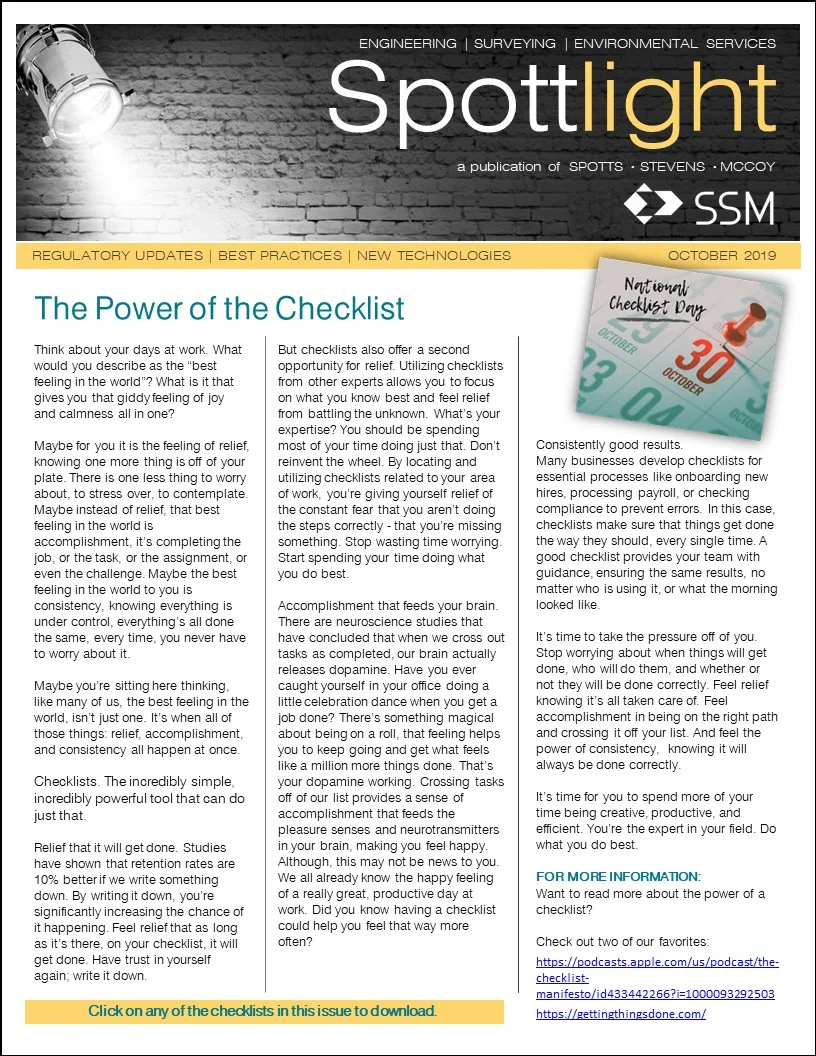
Spottlight: The Power of the Checklist
Checklists are an incredibly simple, incredibly powerful tool.


Think about your days at work. What would you describe as the “best feeling in the world”? What is it that gives you that giddy feeling of joy and calmness all in one?
Maybe for you it is the feeling of relief, knowing one more thing is off of your plate. There is one less thing to worry about, to stress over, to contemplate. Maybe instead of relief, that best feeling in the world is accomplishment, it’s completing the job, or the task, or the assignment, or even the challenge. Maybe the best feeling in the world to you is consistency, knowing everything is under control, everything’s all done the same, every time, you never have to worry about it.
Maybe you’re sitting here thinking, like many of us, the best feeling in the world, isn’t just one. It’s when all of those things: relief, accomplishment, and consistency all happen at once.
Checklists. The incredibly simple, incredibly powerful tool that can do just that.
Relief that it will get done. Studies have shown that retention rates are 10% better if we write something down. By writing it down, you’re significantly increasing the chance of it happening. Feel relief that as long as it’s there, on your checklist, it will get done. Have trust in yourself again; write it down.
But checklists also offer a second opportunity for relief. Utilizing checklists from other experts allows you to focus on what you know best and feel relief from battling the unknown. What’s your expertise? You should be spending most of your time doing just that. Don’t reinvent the wheel. By locating and utilizing checklists related to your area of work, you’re giving yourself relief of the constant fear that you aren’t doing the steps correctly - that you’re missing something. Stop wasting time worrying. Start spending your time doing what you do best.
Accomplishment that feeds your brain. There are neuroscience studies that have concluded that when we cross out tasks as completed, our brain actually releases dopamine. Have you ever caught yourself in your office doing a little celebration dance when you get a job done? There’s something magical about being on a roll, that feeling helps you to keep going and get what feels like a million more things done. That’s your dopamine working. Crossing tasks off of our list provides a sense of accomplishment that feeds the pleasure senses and neurotransmitters in your brain, making you feel happy. Although, this may not be news to you. We all already know the happy feeling of a really great, productive day at work. Did you know having a checklist could help you feel that way more often?
Consistently good results.Many businesses develop checklists for essential processes like onboarding new hires, processing payroll, or checking compliance to prevent errors. In this case, checklists make sure that things get done the way they should, every single time. A good checklist provides your team with guidance, ensuring the same results, no matter who is using it, or what the morning looked like.
It’s time to take the pressure off of you. Stop worrying about when things will get done, who will do them, and whether or not they will be done correctly. Feel relief knowing it’s all taken care of. Feel accomplishment in being on the right path and crossing it off your list. And feel the power of consistency, knowing it will always be done correctly.
It’s time for you to spend more of your time being creative, productive, and efficient. You’re the expert in your field. Do what you do best.
FOR MORE INFORMATION:
Want to read more about the power of a checklist? Check out two of our favorites:
https://podcasts.apple.com/us/podcast/the-checklist-manifesto/id433442266?i=1000093292503
https://gettingthingsdone.com/


Checklist: Mold Prevention - Winter Preparations
Mold is a growing problem in buildings – no matter the season. Now is the time to plan ahead to avoid problems like mold and legionella.

Mold is a growing problem in buildings – no matter the season. Now is the time to plan ahead to avoid problems like mold and legionella.
Leaks and Drainage.
Address roof leaks and poor drainage areas around the building.
Clean and repair roof gutters to avoid ice dams.
Make sure the ground around your building slopes away from the foundation so that water doesn’t pond.
Housekeeping Training.
Avoid environmental quality problems with indoor air and watery systems by training on effective and appropriate means and methods of maintenance and cleaning procedures.
Establish Routine Flushing Cycle.
If portions of your plumbing system are used infrequently, establish a routine flushing program to prevent bacterial growth in your water system.
Check the Seals.
Make sure all the seals on the windows and doors are not compromised and are in good working condition. Act quickly if condensation appears on windows, pipes or walls inside the building. Dry out the area and determine if the source of the condensation is from a leak or the result of high humidity.

Checklist: Preparing your Wastewater Treatment Plant for Winter
Preventative Maintenance is a priority as the weather starts to turn cold.
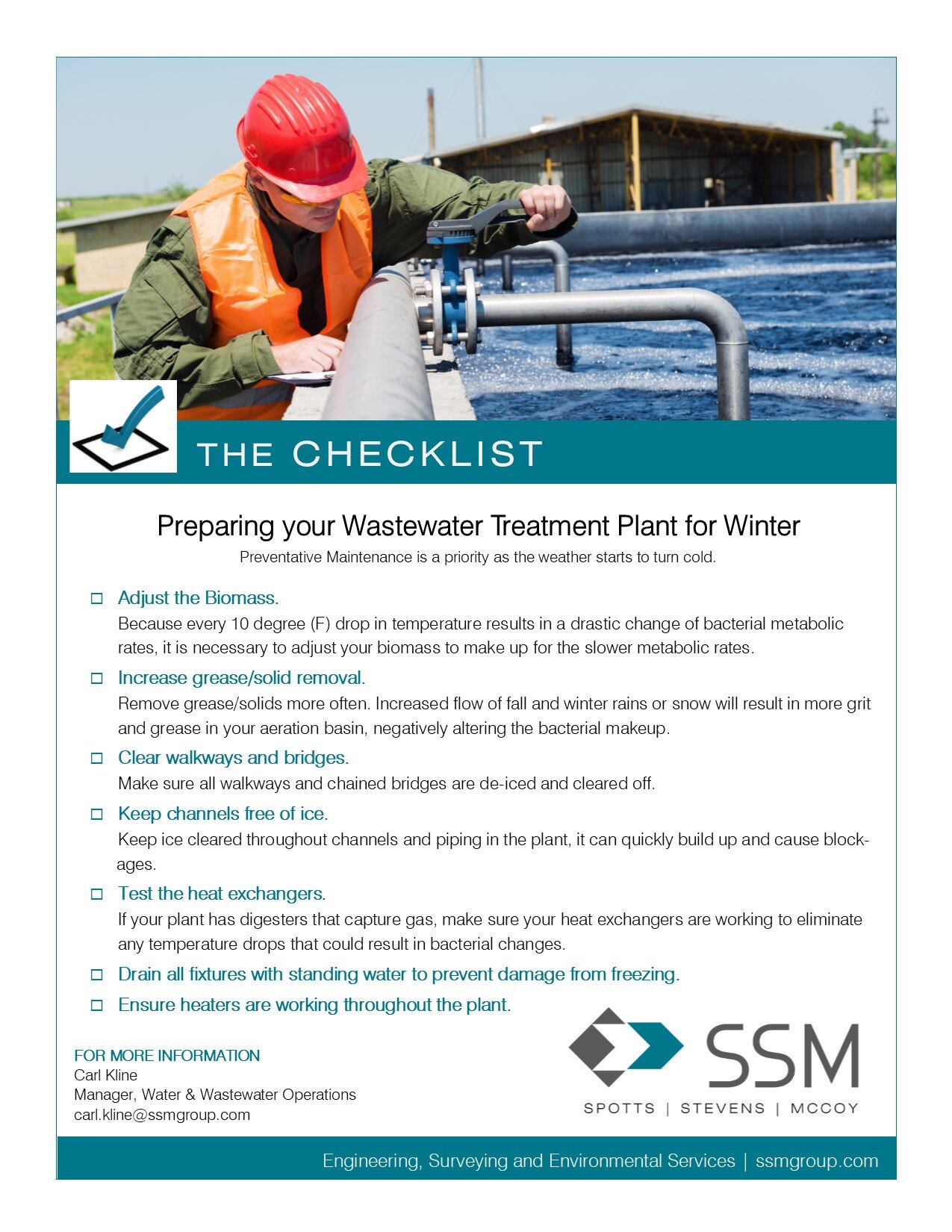
Preventative Maintenance is a priority as the weather starts to turn cold.
Adjust the Biomass. Because every 10 degree (F) drop in temperature results in a drastic change of bacterial metabolic rates, it is necessary to adjust your biomass to make up for the slower metabolic rates.
Increase grease/solid removal. Remove grease/solids more often. Increased flow of fall and winter rains or snow will result in more grit and grease in your aeration basin, negatively altering the bacterial makeup.
Clear walkways and bridges. Make sure all walkways and chained bridges are de-iced and cleared off.
Keep channels free of ice. Keep ice cleared throughout channels and piping in the plant, it can quickly build up and cause blockages.
Test the heat exchangers. If your plant has digesters that capture gas, make sure your heat exchangers are working to eliminate any temperature drops that could result in bacterial changes.
Drain all fixtures with standing water to prevent damage from freezing.
Ensure heaters are working throughout the plant.

Checklist: Mold Prevention - Summer Preparations
Minimize the potential for indoor air quality problems. As school lets out for summer — it’s the perfect time to begin preparing your buildings for the fall.

Minimize the potential for indoor air quality problems. As school lets out for summer — it’s the perfect time to begin preparing your buildings for the fall.
Work with teachers and staff to prepare classrooms for summer cleaning and maintenance.
Avoid environmental quality problems with indoor air and water systems by training staff on effective and appropriate means and methods for maintenance and cleaning procedures.
Maintain grounds and landscaping to avoid the introduction of contaminants to the indoor air environment.
Minimize conditions that lead to mold growth by operating building ventilation systems to maintain a constant temperature and humidity.
Eliminate the potential for growth of bacteria by maintaining appropriate procedures for your buildings water systems.
Check unoccupied areas frequently to avoid the propagation of mold.
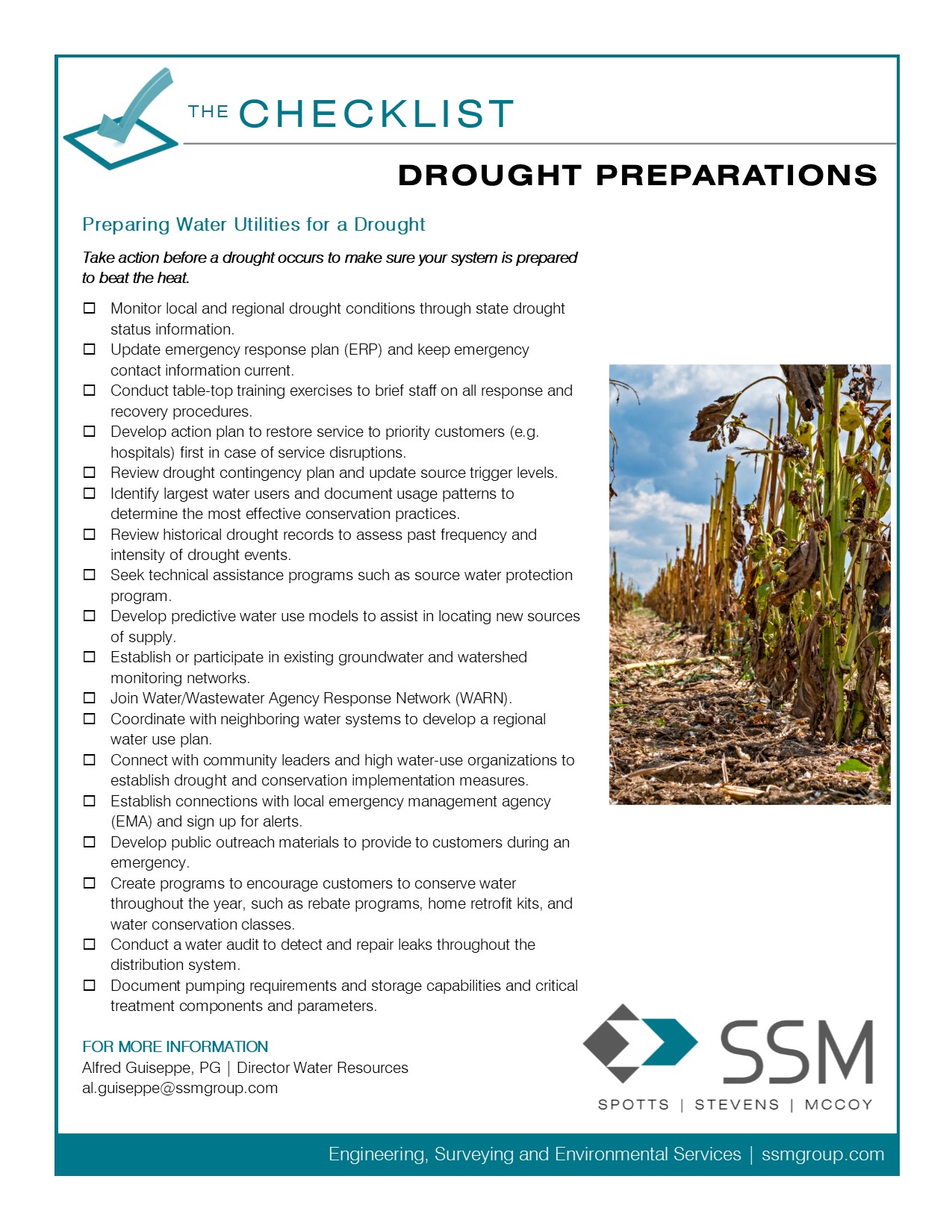
Checklist: Preparing Water Utilities for a Drought
Take action before a drought occurs to make sure your system is prepared to beat the heat.

DOWNLOAD THE CHECKLIST
Take action before a drought occurs to make sure your system is prepared to beat the heat.
Monitor local and regional drought conditions through state drought status information.
Update emergency response plan (ERP) and keep emergency contact information current.
Conduct table-top training exercises to brief staff on all response and recovery procedures.
Develop action plan to restore service to priority customers (e.g. hospitals) first in case of service disruptions.
Review drought contingency plan and update source trigger levels.
Identify largest water users and document usage patterns to determine the most effective conservation practices.
Review historical drought records to assess past frequency and intensity of drought events.
Seek technical assistance programs such as source water protection program.
Develop predictive water use models to assist in locating new sources of supply.
Establish or participate in existing groundwater and watershed monitoring networks.
Join Water/Wastewater Agency Response Network (WARN).
Coordinate with neighboring water systems to develop a regional water use plan.
Connect with community leaders and high water-use organizations to establish drought and conservation implementation measures.
Establish connections with local emergency management agency (EMA) and sign up for alerts.
Develop public outreach materials to provide to customers during an emergency.
Create programs to encourage customers to conserve water throughout the year, such as rebate programs, home retrofit kits, and water conservation classes.
Conduct a water audit to detect and repair leaks throughout the distribution system.
Document pumping requirements and storage capabilities and critical treatment components and parameters.

Checklist: Preparing Water and Wastewater Utilities for a Flood Event
Take action before flooding incident occurs to make sure your water or wastewater system is prepared to weather the storm.
Flooding is common throughout much of the United States and can be caused by heavy precipitation events, storm surge, levee or dam failures or inadequate drainage. These events often occur with little or no notice, and can cause extensive damage to drinking water and wastewater infrastructure.
Flooding impacts to utilities often include, but are not limited to:
Infrastructure damage, possibly resulting in service interruptions.
Pipe breaks due to washouts, which could result in sewage spills or low water pressure throughout the service area.
Debris blockage at an intake or unearthed water and wastewater lines due to falling trees.
Loss of power and communication lines.
Combined sewer overflows (CSOs).
Water quality changes to source waters and treated effluents, including increased turbidity, increased nutrients and other potential contaminants.
Restricted access to the facility due to debris, flood waters and damage to roadways from washouts and sinkholes.
Loss of water quality testing capability due to restricted facility and laboratory access and damage to utility equipment.

Take action before a flooding incident occurs to make sure your system is prepared to weather the storm.

Checklist: Fire Protection System Evaluation
Imagine the impact on your business or organization if a key production line were to go off-line for an extended period of time, if the runoff from a fire event were to cause an environmental impact, or if the assets in your building (from equipment to historical artefacts) were to be destroyed.
Fire Protection is Critical to Business Continuity
Fire protection systems are essential to the safety of your employees and protection of your property. But more than that, these systems are essential in helping you to manage the risks associated with business continuity. Imagine the impact on your business or organization if a key production line were to go off-line for an extended period of time, if the runoff from a fire event were to cause an environmental impact, or if the assets in your building (from equipment to historical artefacts) were to be destroyed.
An evaluation of your fire protection systems will identify potential risks within your facility or on your campus. The evaluation can address all potential threats from building and fire code compliance to safeguards like alarms, sprinklers, to inventorying the hazardous materials, to modeling the water flow to the hydrants.
Consider Your Facility/Campus
Are you in compliance with local fire codes? Is the fire suppression system in place aligned with the current function of your facility? We can help. Our team of mechanical, electrical and plumbing engineers are experienced in developing fire protection systems.
Emergency Water Supply is critical to Disaster Preparedness
Water supply interruption can be caused by several types of events such as natural disaster, a failure of the community water system, construction damage or even an act of terrorism. Because water supplies can and do fail, it is imperative to understand and address how your facility will be impacted.
PROJECT HIGHLIGHT: CARPENTER TECHNOLOGY CORPORATION
Emergency Water System Evaluation and Distribution System Mapping
SSM recently completed a Water System Analysis project that included preparation of drawings to depict the location of the various water supply mains, fire hydrants, and valves throughout the facility. As a follow-up to the Analysis, and using the data collected, SSM constructed a hydraulic model of the water supply system to simulate various demand and emergency supply scenarios.


Young Professionals in the Spotlight
Reading Eagle Young Professionals Profile Edition
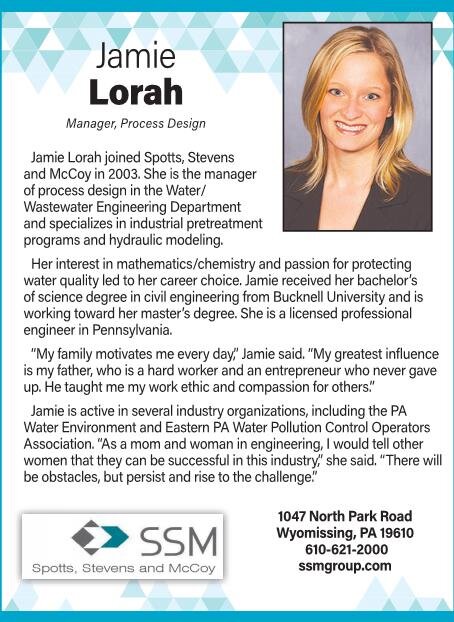
Jamie Lorah, PE - Manager, Process Design
Jamie joined SSM in 2003. She is the Manager of Process Design in the Water/Wastewater Engineering Department and specializes in Industrial Pretreatment Programs and hydraulic modeling. Her interest in mathematics/chemistry and passion for protecting water quality led to her career choice. Jamie received her BS in Civil Engineering from Bucknell University and is working toward her Master’s Degree. She is a licensed Professional Engineer in PA.
“My family motivates me every day. My greatest influence is my father, who is a hard worker and an entrepreneur who never gave up. He taught me my work ethic and compassion for others."
Jamie is active in several industry organizations including PA Water Environment and Eastern PA Water Pollution Control Operators Association.
“As a mom and woman in engineering, I would tell other women that they can be successful in this industry – there will be obstacles, but persist and rise to the challenge.”
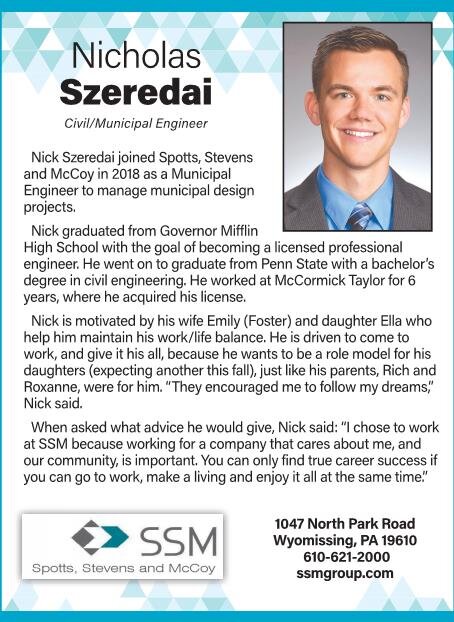
Nicholas Szeredai, PE - Civil/Municipal Engineer
Nick joined SSM in 2018 as a Municipal Engineer to manage municipal design projects. Nick graduated from Governor Mifflin with the goal of becoming a licensed Professional Engineer. He went on to graduate from Penn State with a BS in Civil Engineering. He worked at McCormick Taylor for 6 years where he acquired his license.
Nick is motivated by his wife Emily (Foster) and daughter Ella who help him maintain his work life balance. He is driven to come to work, and give it his all, because he wants to be a role model for his daughters (expecting another this fall), just like his parents, Rich and Roxanne, were for him. “They encouraged me to follow my dreams.”
When asked what advice he would give, Nick said, “I chose to work at SSM because working for a company that cares about me, and our community, is important. You can only find true career success if you can go to work, make a living, and enjoy it all at the same time.”
Andrew Wengerd, PE, LEED AP, CFPS
Andrew joined SSM in 2004. He is a Sr. Mechanical Engineer in the Facilities Engineering Division with experience designing heating, ventilating and air conditioning systems for industrial, commercial, educational, and semiconductor facilities.
Andrew earned his BS in Mechanical Engineering from Grove City College. He is a licensed Professional Engineer in PA, NY, CT and GA, a Certified Fire Protection Specialist and LEED Accredited Professional. He holds UCC Inspector Certifications in Mechanical, Plumbing, Fire and Energy Plans.
Andrew is a member of the American Society of Heating, Refrigerating, and Air Conditioning Engineers, Inc. where he is a Lehigh Valley Chapter Board Member. Andrew pursued mechanical engineering as a career because it offers unique challenges and a variety of career opportunities.
“As an engineer, it is important to continue learning and building from experiences to bring innovative solutions to our clients.”


Spottlight on Social Infrastructure
What we’re actually talking about is social infrastructure. These are spaces intentionally designed to support the formation of human connections and interactions. Social infrastructures are the places where human bonds are formed. They are the spots where relationships begin and where human interaction is created.

We’re living in a world where technology has challenged what we know about social connections. In some ways we fear our constant connection. In other ways, we fear our disconnect.
There will never be a replacement for face-to-face human connection. Here lies the power of developing social infrastructure.
Maintenance and improvements to social infrastructures requires the same care and attention as standard infrastructure systems. As attentive as we are to the streets you drive, so too are we attentive to the spaces that drive your relationships. From surveying to engineering to environmental planning and assessment - all of the hands on our deck support effective design and preservation of social infrastructures.
In This Issue


Infrastructure: the underlying foundation or basic framework (as of a system or organization)
There will never be a replacement for face-to-face human connection. Here lies the power of developing social infrastructure.
Where did you meet your last friend? Really, stop and think about it. Where exactly did you meet? What did you connect on? Think about the friends you spend Saturday nights with or the ones you invite to your Memorial Day picnic. Where did they come from? Your answer might be “she’s a mom friend - our kids go to daycare together”. Or maybe you met at church. Maybe it was a soccer game- or was it a yoga session in the park?
Think about it and then pause. How did you end up chatting with that other mom at daycare? What brought you to yoga in the park? How about the soccer game - did those bleachers encourage you to start talking to the guy next to you? We want to take a second to consider the infrastructures that allow these person-to-person connections to form.
Yes, we said infrastructures. No, we aren’t going to try to convince you that roads and rivers are the reason you have friends. What we’re actually talking about is social infrastructure. These are spaces intentionally designed to support the formation of human connections and interactions. Social infrastructures are the places where human bonds are formed. They are the spots where relationships begin and where human interaction is created.
Social infrastructure is the public library where you and another dad bond over ponytails and braids with your daughters. This space was designed to give you access - access to resources and access to relationships. Social infrastructure is the dog park where you and another dog mom compare notes on indestructible toys. This space was designed to help you relax and it was designed to help you relate. It is the amphitheater where you enjoy a summer concert, the coffee shop where you spend your day off, and the park where your kids finally run out of energy.
We’re living in a world where technology has challenged what we know about social connections. In some ways we fear our constant connection. In other ways, we fear our disconnect.
There will never be a replacement for face-to-face human connection. Here lies the power of developing social infrastructure.
Public libraries, athletic fields, dog parks, playgrounds, and even schools- these are where we make our friends. Community gardens and green spaces- they bring people into the public space. Sidewalks, courtyards, walking trails- they all invite people to come together. These are the places where we gather. These are the places where we form social bonds.
It’s about more than just donating to the local library. It’s also about being innovative. It’s about finding ways that we can create accessible opportunities for humans to interact. Plus, standard infrastructure systems no longer need to be just standard. Instead, we can build social infrastructure into these systems. Our bridges can incorporate walking trails. Our waterwalls can be built into exploration classrooms. Even planned open spaces- let’s create a community garden.
Social infrastructure is diverse in its nature. It varies to meet the needs of many populations. There are opportunities that offer brief social interactions- like chatting at a dog park or sitting next to someone on a subway. There are also deep connection opportunities- like programs at a public library or parent events at a daycare center. Regardless, what all of these offer is a sense of involvement, an opportunity for relationship, and a door open for human connection.
Enhancing and protecting social infrastructures allows us to no longer fear losing person-to-person interaction- but relish in the opportunities we have to build new, long-lasting relationships.
Technology
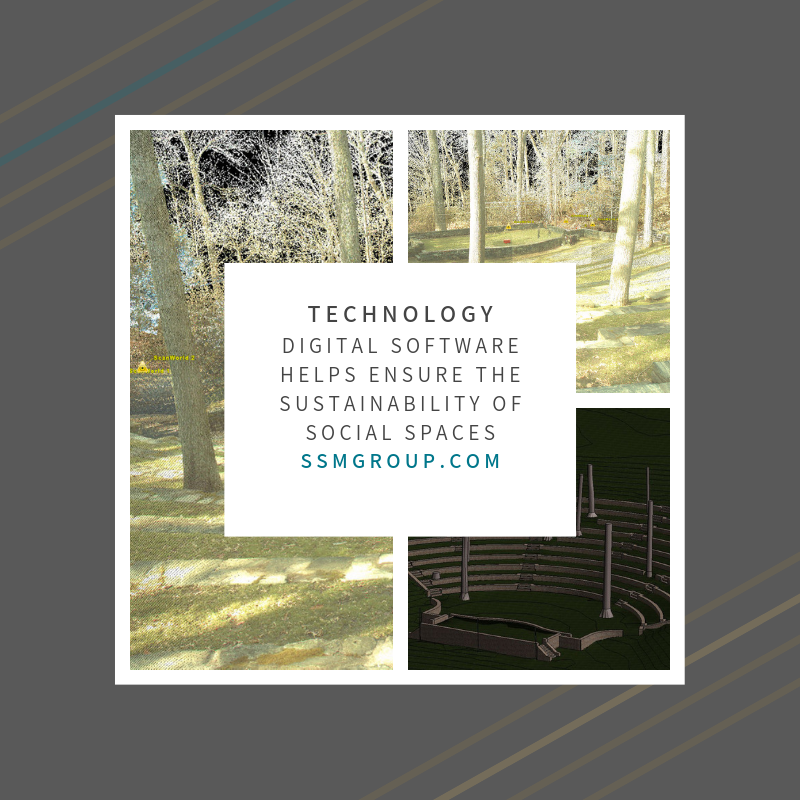
The Scott Outdoor Amphitheater is a free outdoor structure, offering a space for human connections to occur year-round. Like many amphitheaters, it is a space for people to come together, communicate, and connect. Events held in amphitheaters invite social interactions and establish personal relationships. Every year, rain or shine, the Swarthmore commencement is held in this very space.
Digital software helps ensure the sustainability of social spaces.
The Scott Outdoor Amphitheater of Swarthmore College
Technology is not a competitor of social infrastructure, but a partner. SSM used surveying technology to help Swarthmore College pursue improvements to their 50-year-old outdoor amphitheater. Using high-definition laser scanning software, SSM was able to capture the existing structure and landscape in a digital, 3-D version. This capture was then available for the project team to design potential renovations to the amphitheater and view the effects of their design on the existing landscapes.
The Scott Outdoor Amphitheater is a free outdoor structure, offering a space for human connections to occur year-round. Like many amphitheaters, it is a space for people to come together, communicate, and connect. Events held in amphitheaters invite social interactions and establish personal relationships. Every year, rain or shine, the Swarthmore commencement is held in this very space.

Intent
Spaces such as courtyards are free; they are accessible; they nurture human-to-human relationships. Use of inviting scenery and purposeful design enhance and promote the social opportunities that courtyards provide.
Being purposeful in decision making ensures all social spaces meet the need of the community.
Courtyard Marriott
There is intention integrated into all of our social spaces. Consider the Marriott Courtyard within Wyomissing Square. SSM assisted with construction document preparation for site design. SSM also assisted with the planting plan, construction details, locating utilities, as well as grading and drainage. The design decisions within even these small spaces matter.
This intentional design within Wyomissing Square invites guests to come together. Spaces such as courtyards are free; they are accessible; they nurture human-to-human relationships. Use of inviting scenery and purposeful design enhance and promote the social opportunities that courtyards provide.

Simplicity
Welcoming sidewalks and street spaces foster a sense of community and engagement within a public space. By enhancing their streetscapes, Oxford Borough invested in the social engagement of their residents and their visitors.

Design of simple spaces can hugely influence the relationships that are born there.
Oxford Borough
Simple spaces- such as the sidewalk outside of your home, or the grass knoll in the center of town- transcend the basic thought. SSM worked with Oxford Borough, in Chester County, to prepare preliminary and final design plans/specifications for streetscape enhancements. Enhancements included crosswalks, curb designs, pedestrian bump-outs, and design of sidewalks. Enhancements also included planters, benches, and street lights.
Welcoming sidewalks and street spaces foster a sense of community and engagement within a public space. By enhancing their streetscapes, Oxford Borough invested in the social engagement of their residents and their visitors. Making streetscapes accessible, safe, and welcoming invites positive social interactions to occur.
Attention
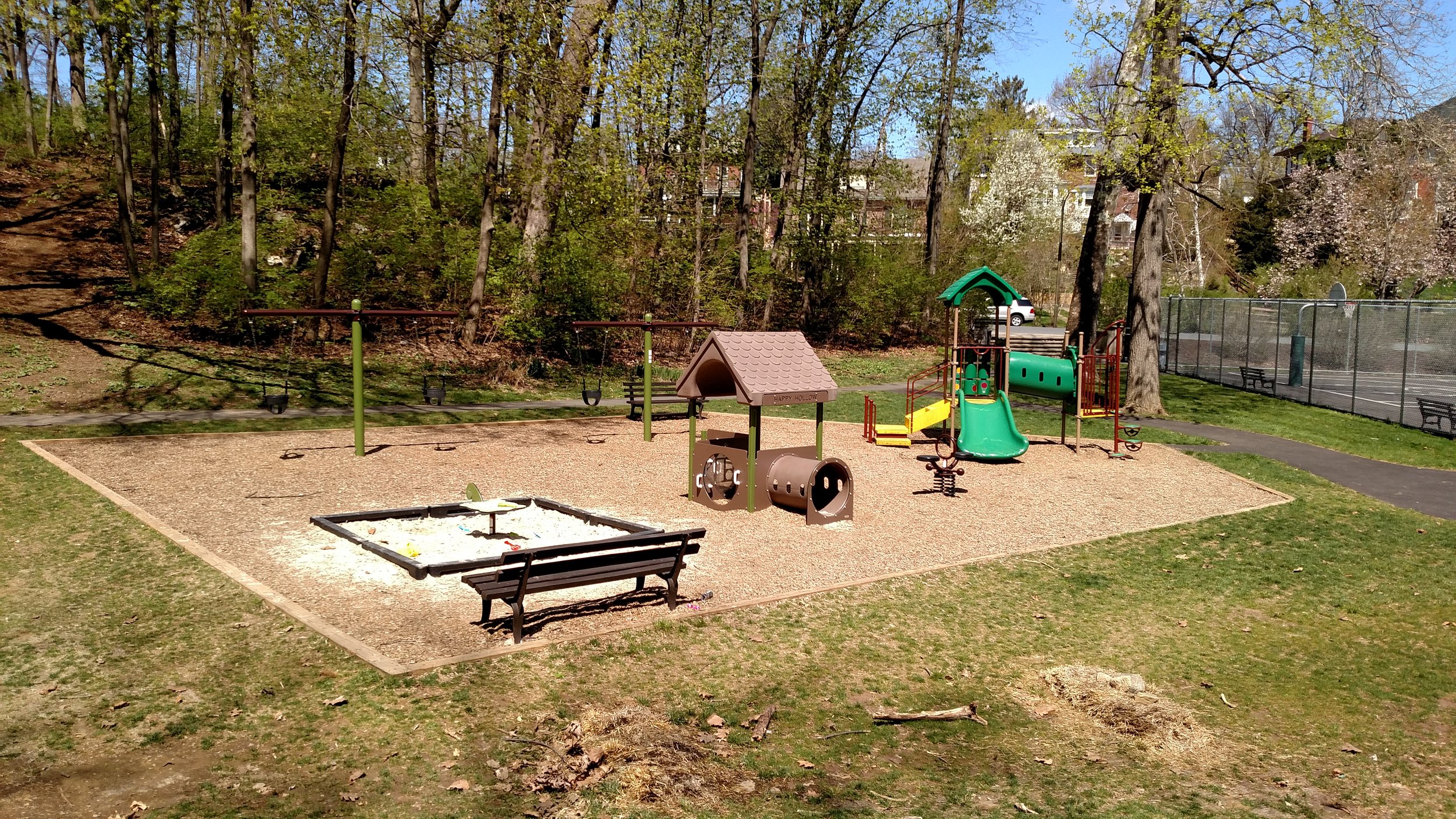
Community parks that offer many social spaces to enjoy create opportunities for many social relationships to form. Wyomissing Borough’s care and attention to all of the needs makes for a comforting and welcoming place for all to enjoy.
Providing care and commitment to the needs of many people opens the door for diverse human connections.
Wyomissing Borough
Attention to the needs and wants of communities is the crucial component of social infrastructure. SSM worked closely with the Wyomissing Borough to develop and implement Conceptual Master Plans for 4 public parks. With each plan, SSM worked to ensure the objectives of the borough met the results of each park. Whether it be the goal of maintaining an old time feel, or the need to update the most used playground spaces- the finished products contain modern facilities for a wide variety of users.
Community parks that offer many social spaces to enjoy create opportunities for many social relationships to form. Wyomissing Borough’s care and attention to all of the needs makes for a comforting and welcoming place for all to enjoy.
Beautiful Spaces - making us healthier and happier
Research demonstrates that beauty, more specifically beautiful spaces, produce a positive emotional experience in the observer, enhancing feelings of joy and well-being.
“When successful, architecture allows for participation in meaningful action, conveying to the participant an understanding of his or her place in the world…it opens up a clearing for the individual’s experience of purpose.”
- Alberto Perez-Gomez, Director of History and Theory of Architecture at McGill University
Research demonstrates that beauty, more specifically beautiful spaces, produce a positive emotional experience in the observer, enhancing feelings of joy and well-being. Taking the role of beauty into account when considering design and architecture is crucial to its success as an experienced space. Beautifully designed spaces open up the way for people to feel engaged, included, and in a space that’s conducive to their feelings of health and positive sense of community.
What exactly does beauty contribute to health? Research also shows that there is a relationship between the perception of beauty and the impact of design on human health, well-being, and even behavior. This is the study of neuroaesthetics, which examines the psychological effects of beauty and aesthetics from the perspective of neuroscience. The research demonstrates that design with deliberate intention to incorporate beauty is actually imperative to human psychological well-being and has positive effects on learning, social behavior and emotional wellness. This proves that beauty plays a significant role in the mental health of building occupants. It grounds us in our environments, which perpetuates a shared sense of community, and in turn, heightens our feelings of calmness and emotional well-being.
Creating spaces that incorporate beauty in the design are integral to perpetuating a work/play-place culture that enhances human health and wellness.
Because beauty is rather subjective, it is vital to define what beauty means in a design context.
“Beauty is not aesthetics alone. Instead, beauty is the melding of functionality and aesthetics in just the right proportions to achieve the desired result.”
This must involve being fluid and constantly adapting design to incorporate and reflect different populations or communities and their specific cultural values and contexts. For example, using design elements that represent regional perspectives helps honor the history of the local community.
The goal for architects/designers is to create beautiful environments that adapt to local contexts, meet user needs and positively impact occupants. A well-designed space is not just something that individuals move through, but rather a key influence on occupant health, happiness and overall sensory experience.

Spottlight on Water Quality
Water quality month reminds us to take a long, hard look at what our households, communities, and places of employment are doing to protect sources of water. But what does water quality mean?

Water quality month reminds us to take a long, hard look at what our households, communities, and places of employment are doing to protect sources of water. But what does water quality mean? Is it the water in our lakes? Is it the water coming out of our faucet? Is it the authorities that distribute our water? Is it the wells that provide water to homes? Actually, it’s all of those things, and then some more! How much do you know about water quality? Maybe it’s easier to answer how much you don’t know about water quality. The first step in advocating for keeping our water clean is learning the facts. So this month, we’re talking all things water in celebration of #WaterQualityMonth.
IN THIS ISSUE:


Safe Drinking Water Begins at the Source
Providing protection for water supplies. Source Water Protection has been a growing concern for many municipalities and community water systems. To help protect Pennsylvania’s drinking water, the Department of Environmental Protection created the Source Water Protection Technical Assistance Program (SWPTAP).

Providing protection for water supplies. Source Water Protection has been a growing concern for many municipalities and community water systems. To help protect Pennsylvania’s drinking water, the Department of Environmental Protection created the Source Water Protection Technical Assistance Program (SWPTAP). This program provides funding and expertise to develop a Source Water Protection Plan. Community water systems that participate receive free assistance in delineating protection zones, developing strategies for managing the protection areas, and planning for the future.
It is a voluntary program that benefits water systems with groundwater wells, springs, reservoirs, river intakes, or any combination of these water sources.
All types of community water systems are eligible to participate in SWPTAP including municipal, authority, water associations, and investor-owned (private) systems throughout the Commonwealth. With over 400 community water systems participating, this highly successful and effective program is entering its 13th year.
In conjunction with PADEP, SSM assists water systems in developing source water protection plans. Professional geologists and environmental specialists delineate protective zones around each well or surface water intake to show the areas that contribute to the drinking water supply. We engage water supplier and community representatives to identify ways of protecting these areas. Our team identifies potential sources of contamination, develops protective management strategies, plans for emergencies, and identifies new water supply options. Our ultimate goal is to protect the source for future generations.
Speak like a Water Resource Specialist
Now that you’re an expert on the value of water quality - it’s time you sound like one too! Which words do you remember learning in science class?
Aquifer - An aquifer is a layer of rock with openings that allow liquids and gases to pass through. This is how wells work - the openings allow the water to enter into drilled wells underground.
Best Management Practices (BMP) - These are practices that help to decrease negative impacts on water quality. We want everyone to be utilizing BMPs!
Evapotranspiration - This is when moisture is transferred from the earth to the atmosphere through two avenues - evaporation and transpiration.
Infiltration - This activity is when the water that falls saturates into plants and vegetation. As development continues to increase, we need to be more intentional about allowing infiltration to occur.
Potential Sources Of Contamination (PSOC) - This frequently refers to areas in which pose risks to contamination of water sources. Having a database of PSOCs allows water authorities and other relevant parties to have contingency plans in place and to develop barriers and systems to defend against these potential contaminants.
Stormwater Control Measure (SCM) - These are those special defenses against contaminants. SCMs are designed to remove pollutants and control stormwater runoff.
Watershed - A watershed is the entire area of land that feeds one specific body of water. So - any land that goes into the Schuylkill River is that watershed. Why does that matter? Remember how important it is to understand what contaminants are reaching water sources, and how those contaminants are getting there. We use watersheds to do that.
Clean Drinking Water: It’s not as simple as turning on the faucet.
Where does drinking water come from? The quick and easy answer to this question is - either a body of water or an underground water source. What does that mean? An underground source, like a well, fills with groundwater (that’s what we call water in the ground). When groundwater like rain or snow soaks into the ground, it creates an “aquifer”- allowing the well to fill. Bodies of water, on the other hand, include streams, rivers, and lakes. Unlike underground sources that rely on groundwater, these water body sources are reliant on air, rain, and water that flows down to the source.

Where does drinking water come from?
The quick and easy answer to this question is - either a body of water or an underground water source. What does that mean? An underground source, like a well, fills with groundwater (that’s what we call water in the ground). When groundwater like rain or snow soaks into the ground, it creates an “aquifer”- allowing the well to fill. Bodies of water, on the other hand, include streams, rivers, and lakes. Unlike underground sources that rely on groundwater, these water body sources are reliant on air, rain, and water that flows down to the source.
Remember… we said that was the quick and easy answer. So, what about everything else? The truth is a lot goes into making sure you get that refreshing and clean glass of water. We have to make sure to protect those underground aquifers and those above ground bodies of water. This means doing our part to eliminate contaminants - a job for all of us!
The issue of contaminants - the obvious and the not so obvious.
Think about that rain we mentioned - it’s what flows to our bodies of waters and also soaks into the ground. That’s right, rain and stormwater has a direct path into your drinking water. So, you want to do everything you can to keep that water as pure and clean as possible. (Think: eliminating health risks. Think: saving money on water treatment.) When rain falls onto homes and buildings it “runs off” the buildings instead of infiltrating into the ground and vegetation. It runs off the buildings and begins to make its way to our bodies of water - taking any pollutants and contaminants it finds along the way. (Think - pet waste, cigarette butts, fertilizers, oil, sediment, and so much more.) Rain that falls on undeveloped properties typically “infiltrates” straight into the soil or “evapotranspires” back into the atmosphere.
Developing neighborhoods and communities isn’t all bad news though. But being aware of the impact it has on water quality is an important piece of it all. As members of neighborhoods and communities - and (newly appointed) experts in water quality - you have an opportunity to take a role in preventing stormwater runoff from accruing too many pollutants before it makes it to our water sources. More on that later (See page 2: Protecting Water Quality: There’s a lot You Can Do to Help). Remember, even if you cannot see a body of water, your stormwater still carries pollutants through the storm drains!
There’s also a “big picture” issue of contaminants as well. This is where we usually come in. Using GIS technology, we work with water authorities to locate potential sources of contamination near and around water sources. (Think - oil tank storage sites or farms with regular animal waste.) Locating these potential sources of contamination as well as managing them through databases and calculating their risks all allow the water system to flow effectively and efficiently. An oil leak is not as scary when we are prepared and aware. In many cases, the community you live in, shop in, or work in have all been designed with management of stormwater in mind.

Protecting Water Quality: There’s a lot You Can Do to Help.
There are many reasons to take a role in protecting water quality and there are many ways to do it.
1. Think - less is more. Try to limit your use of fertilizers and pesticides. Remember, yard waste swept into storm drains or the street will all be collected by stormwater runoff and will make its way into our water sources.
2. Consider different ways for your rain to be collected. Instead of your rain gutter going into the road or driveway where it can easily pick up pollutants, adjust your gutter to the grass - allowing a direct opportunity for that water to infiltrate into the soil. Or - you can even consider a rain barrel or DIY rain garden. A quick search online will show you some tips!
3. The most important thing you can do is stay informed and stay conscious! Be mindful of your impact on the world and take the small steps you can to help protect our water sources. Do it for the animals who need high water quality to survive. Do it for the money - because the less treatment required means more money in your pocket. Do it for the future - because protecting water resources will preserve our ecosystem and improve the quality of life for future generations. Whatever your reason may be - just make sure you do it!
What’s the To-Do with Dog Poo?
When you leave your pet waste on the grass or sidewalk, or when you improperly dispose of pet waste through storm or street drains - you could be contributing to low water quality and water pollution.

When you leave your pet waste on the grass or sidewalk, or when you improperly dispose of pet waste through storm or street drains - you could be contributing to low water quality and water pollution.
Remember everything you’ve learned about stormwater? Let’s think about that next to pet waste. When we leave our pet’s waste in the yard, on sidewalks, or even dump it down the storm drain - we’re offering it an almost direct path to our sacred water sources.
Once it’s in the water, pet waste can do a number of damaging things to our water quality and to our aquatic life! The decaying process uses up a lot of oxygen in lakes or streams. (Remember - oxygen is what those underwater animals need to live!)
Pet waste can also cause some of those waters to become quite gross looking. With excess pet waste comes excess weed and algae growth. You know what that
means - cloudy and green water.
We also know that pet waste carries an awful lot of diseases and bacteria. Many that we don’t want in our water, and certainly not in our bodies.
Keeping our water bodies clean and free of toxic materials allows us to continue to stay safe from public health risks, large water bills, and mucky boating trips. What will you do it for?
Ready to pick-up and protect our water quality? Click here or email ‘Send me a Pet Bag Dispenser!’ with your name/address to information@ssmgroup.com
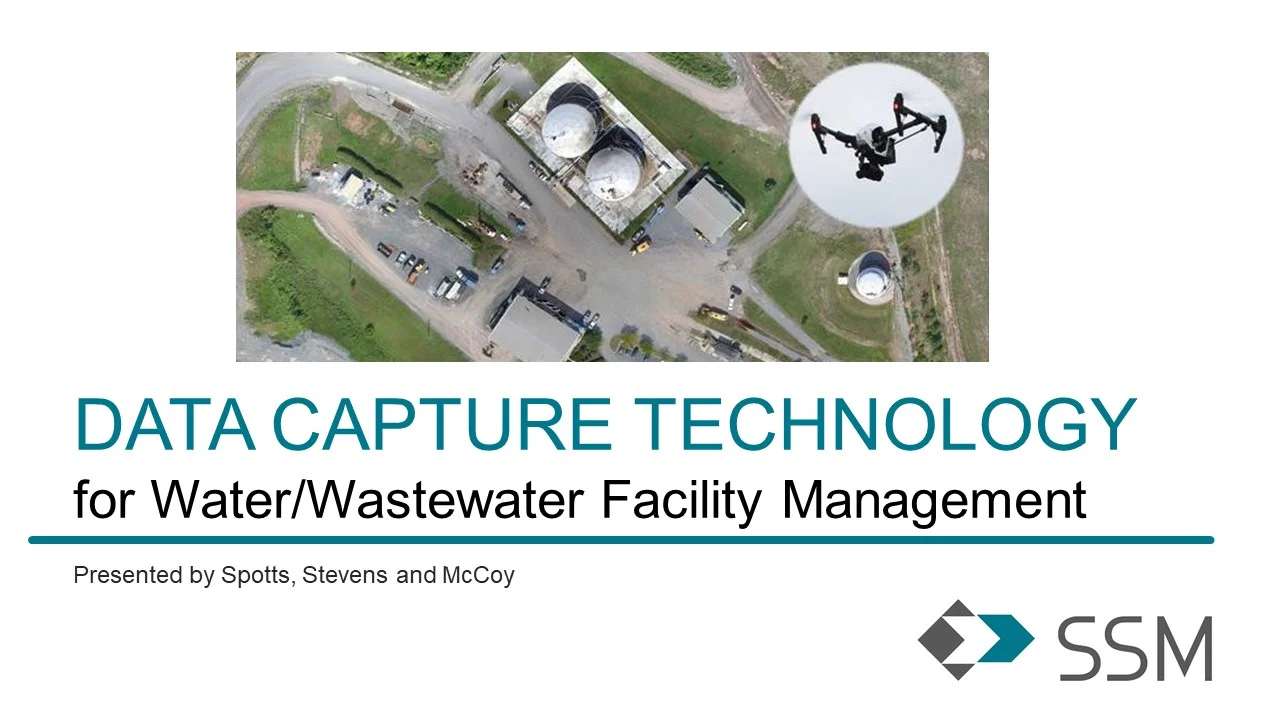
2019 BCWSA Data Capture Technology for Water/Wastewater Facility Management
Data Capture technology is quickly becoming a way for water and wastewater treatment plants to efficiently collect information, analyze the results, and optimize performance.
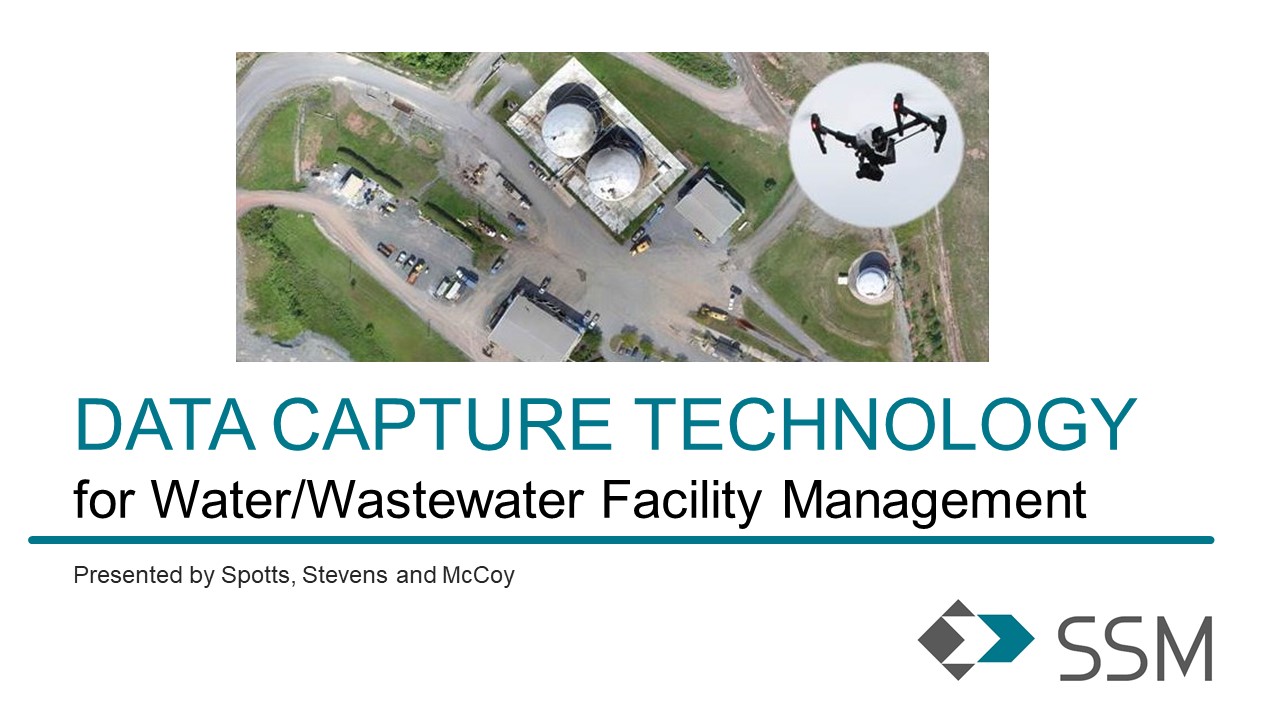
Data Capture Technology for Water/Wastewater Facility Management
Data Capture technology is quickly becoming a way for water and wastewater treatment plants to efficiently collect information, analyze the results, and optimize performance. There are several methods of capturing this information, eliminating complacency, and documenting equipment and project status in water and wastewater operations. This course provides an overview of merits and concerns with using new technology for various projects typical with water and wastewater treatment systems. Section 1 reviews legal and regulatory Issues related to Data Capture and Data Use, such as current FAA rules for drone operators, possible nuisance and trespass concerns when investigating problems, and privacy considerations and rights for utilities without easements. Section 2 describes Data Capture projects for Water and Wastewater systems, including ways to look at and manage data, what can be done with the data collected, and visual examples of various projects using drones, 3-D Models, and GIS.
Presented by Steve Smith, Sr. Project Manager, Survey and Data Capture
steve.smith@ssmgroup.com