

Enhancing Piping System Longevity: The Role of Nitrogen in Fire Sprinkler Systems
Fire sprinkler systems play a crucial role in safeguarding facilities from the devastating effects of fires. For building owners who rely on dry pipe or pre-action sprinkler systems, a strategic switch from compressed air to nitrogen proves to be a functional solution for maximizing the lifespan of their piping systems.
Fire sprinkler systems play a crucial role in safeguarding facilities from the devastating effects of fires. For building owners who rely on dry pipe or pre-action sprinkler systems, a strategic switch from compressed air to nitrogen proves to be a functional solution for maximizing the lifespan of their piping systems. This article delves into the benefits of this transition, highlighting the vulnerabilities to corrosion, and the positive impact nitrogen generators can have on extending system life.
Understanding your Fire Protection
Sprinkler systems are a critical part of your fire protection system. The CDC states that between 2015-2019 sprinkler systems were 97% effective in preventing fires. According to the National Fire Protection Association (NFPA), compared to reported fires in properties with no automatic extinguishing systems, when sprinklers were present, the civilian fire death and injury rates per fire were 89 percent and 27 percent lower, respectively. The rate of firefighter injuries per fire was 60 percent lower. Additionally, the average loss to a building with sprinklers is 34-68 percent lower than buildings without AES.
The most common systems are wet systems which are connected to high-pressure water distributed by a steel piping system. These systems use a heat sensor to detect extreme heat (above 165 degrees Fahrenheit), triggering the glass bulb to break and release water and extinguish a fire in its early stages. However, the wet system, while often the least costly, is not conducive to all environments. There are in fact four different types of sprinkler systems that the NFPA permits: wet, dry, pre-action and deluge.
Dry Pipe and Pre-Action Sprinkler Systems
Dry pipe systems are often deployed in spaces susceptible to freezing temperatures, such as unheated warehouses, commercial freezers, and outside loading docks. A dry system functions similarly to a wet system, however, the water is not filled in the pipes. Here, the water is held away from the sprinkler behind a dry pipe valve. When the glass bulb is broken, air is released and pressure in the pipes drops which ultimately breaks the valve, releasing the water.
Pre-action systems, on the other hand, find application in data centers, museums, and archive spaces where an added layer or supervision is necessary to prevent unwarranted water discharge. Here, the system is interlocked with a fire detection system so that two events are needed before water is discharged. The heat detection will send an alarm or alert first. Then, as temperature increases, the glass bulb will break, and water will be released in a similar manner as in the dry system. This added step allows for extra protection from unwanted water flow.
Corrosion Challenges
Corrosion occurs when there is water, oxygen, and metal present. In a sprinkler system, corrosion is a serious concern as it can lead to pipe leaks, reduced water flow, or even render the system completely unusable.
While most think that wet systems are the only ones at risk for corrosion, in fact dry and pre-action systems that lean on compressed air also hold the same risk. Both dry pipe and pre-action systems have historically relied on compressed air for operation. However, using small air compressors without additional treatment results in wet air inside of the piping. This water vapor will condense in freezing temperatures, leaving water in the metal piping and subjecting pipes to corrosion.
The absence of or limited exposure to any of the three elements of corrosion (water, oxygen, metal) will slow down or prevent the process from occurring.
Nitrogen as a Corrosion Mitigator
To combat corrosion in dry and pre-action systems, the fire protection industry has turned to nitrogen generators to fill the system with a dry inert gas. Nitrogen, typically dry with a dew point below zero-degree Fahrenheit, eliminates water vapor condensation within the piping. Additionally, nitrogen has minimal oxygen content, further reducing corrosion-promoting elements. This dual action significantly lowers the potential for corrosion, ultimately extending the life of the piping system.
Switching from compressed air to nitrogen in dry pipe and pre-action sprinkler systems provides several advantages. The absence of water vapor and reduced oxygen content substantially mitigates corrosion, enhances the overall longevity, and increases the lifespan of this lifesaving piping system. The decision not only addresses corrosion concerns but also aligns with industry best practices for fire protection. As the fire protection landscape evolves, this strategic shift ensures that building occupants can rely on the systems for extended period, fostering a safer and more secure environment.
For additional information contact us:
Andrew Wengerd, PE, CFPS, LEED AP | andrew.wengerd@ssmgroup.com

Corrosion: The Hidden Risk in Your Sprinkler System
It’s important to invest in and maintain your sprinkler system regularly to ensure that if an emergency ever occurs, your system has the capacity and the ability to do the job you need it to. One major area of concern is minimizing corrosion.
Often times sprinkler systems are installed and all but forgotten. We rely on our systems to exist with next to no keep, but be ready to work in an emergency. But the truth is, you should be investing and maintaining your sprinkler system regularly to ensure that if an emergency ever occurs, your system has the capacity and the ability to do the job you need it to.
A major concern to consider in your sprinkler system’s functioning is corrosion among the piping.
Many automatic sprinkler systems have been installed using steel piping. Steel piping is susceptible to corrosion over time which may cause leaks or failures in these piping systems. Corrosion in the piping system involves the reaction between ferrous metal piping and its environment. In this case, water and oxygen in the steel piping system will cause corrosion inside the pipe over time. Corrosion in fire sprinkler systems can obstruct the flow of water to your sprinkler heads. That means the water isn’t there when you need it to be.
By minimizing one of the variables, the rate of corrosion will be slowed. Slowing the rate of corrosion means extending the life of your system.
A great way to minimize one of these variables is by decreasing the oxygen supply that contributes to the corrosion. Most sprinkler systems do not have high point air vents, which allows trapped air to remain in the piping system. The trapped air supplies the oxygen needed for corrosion to occur. The 2016 Edition of NFPA 13 has recommended the use of air vents to purge air from the piping system, minimizing this corrosion-causing variable. Although the 2016 Edition of NFPA 13 is not yet enforced in Pennsylvania, it can be beneficial to implement this recommendation to your system. After all, the costs of corrosion related repairs later would likely be more expensive than installing high point air vents into your sprinkler piping systems now.
In addition to considering air vents, we recommend monitoring stations and regular condition inspections.
There are corrosion monitoring stations that can be installed into new systems or that can be retrofit into existing systems. These, as well as air vents, should be UL listed for fire protection systems and FM compliant.
Similarly, NFPA 25 recommends that an internal pipe condition inspection be performed on a regular basis. While the frequency of inspection can vary between buildings and locations, the recommended inspection frequency is 5 years. This is unless there is further risk analysis and/or a recommendation for increased or extended frequency.
After 25 years of a sprinkler system being in operation, there is concern that roughly 1/3rd of sprinkler systems will have corrosion issues. Neglect of your sprinkler system can lead not only to damages, but expensive repairs in the future.
If you are a facility owner or manager and you’re unsure of the impact of installing air vents, or the best approach to maintaining your system’s life- we encourage you to follow up with the building insurer, or reach out to us as your consulting engineer. We’re always here to help!
#ProblemSolved: Our Mechanical Engineering team is here to help. Send an email to Andrew Wengerd, PE, CFPS, LEED AP, Senior Engineer at andrew.wengerd@ssmgroup.com or give a call to 610-898-3074

COVID-Proofing Your Air
We are hearing from so many people that they are seeking basic tips and guidance on making their buildings safer/healthier in light of COVID-19. But it just isn’t that simple. Unfortunately, over-simplification of the measures to be taken can give building owners and occupants a false sense of security.
Call it “Murphy’s law”, “sod’s law” or just an unintended consequence, but making seemingly appropriate adjustments to building operations in the time of COVID-19 should be taken with caution and advice from technical experts.
We are hearing from so many people that they are seeking basic tips and guidance on making their buildings safer/healthier in light of COVID-19.
But it just isn’t that simple. Unfortunately, over-simplification of the measures to be taken can give building owners and occupants a false sense of security.
For example, a broad directive to increase outdoor air as a means of increasing air flow can lead to mold growth in your facility. The hope is it would be in a place that you can recognize it. The reality is it very well won’t be.
As we see a focus on mitigating the airborne spread of COVID-19, we also see an increase in over-generalized guidance that neglects the details that accompany these recommendations.
For example, implementation of HEPA filtration could reduce airflow or require costly system modifications. Or, increasing outdoor air could mean increasing cooling and heating capability. On the other hand, “local” attempts with supplemental equipment may prove challenging or ineffective depending on the structure and organization of your space. (Think about all of the obstructions in your space to fully circulating your air.)
Amid all of the recommendations currently circulating, the best and foremost recommendation we can provide is to seek advice from technical experts in the decision making process of your building’s modifications.
Remember that guidance is only intended to guide discussion as it relates to your unique facility. We say unique because there is no specific solution that meets the need of every building. Instead, modification and operations should be specifically tailored to the demands of your facility, the capacity of your system, and the health and wellbeing of your people and operations.
Neglecting to consult a technical expert can lead to many unintended consequences, the likes of which negate your intentions to keep your people, your building, and your operations safe and well. We are thrilled to see operations and facility managers taking an invested interest in the air quality of their spaces. But, modification should not be made without expert knowledge.
If you need a team, our mechanical engineers are here, ready to help, and utilizing guidelines distributed by the Centers for Disease Control (CDC) and the American Society of Heating, Refrigerating and Air-Conditioning Engineers (ASHRAE).
#ProblemSolved: Our Mechanical Engineering team is here to help. If you have questions, send an email to Bruce Bell, PE at bruce.bell@ssmgroup.com or give a call to 610-898-3079
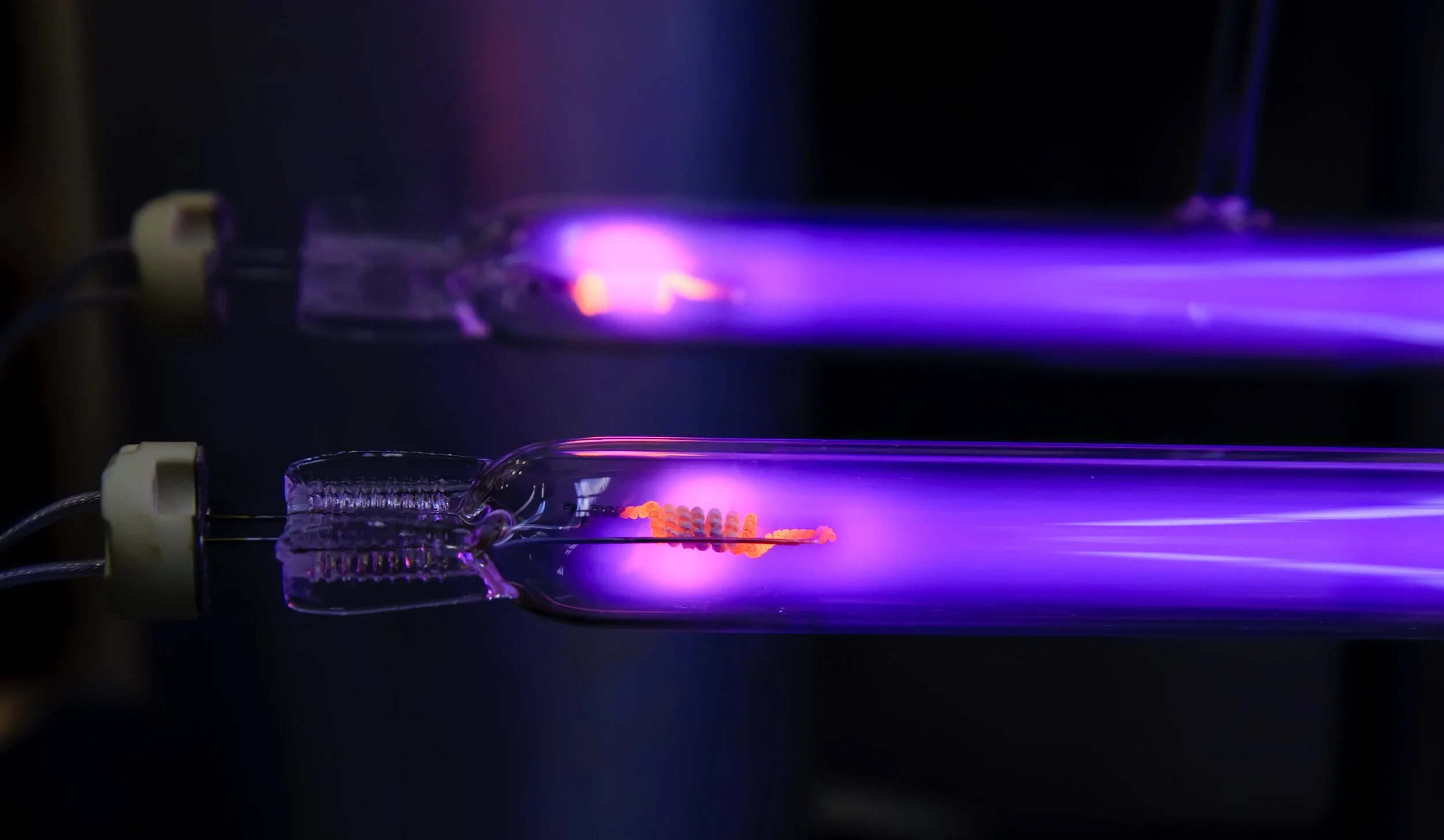
Implementing UV Filtration & Reconfiguring Your Space
When bringing operations and employees back to the facility, air quality is of the highest priority. Ultra-Violet (UV) filtration is an additional area in which we see options for facility managers to use their HVAC system to improve air quality and decrease contaminants and toxins.
Implementing UV Filtration
When bringing operations and employees back to the facility, air quality is of the highest priority.
Ultra-Violet (UV) filtration is an additional area in which we see options for facility managers to use their HVAC system to improve air quality and decrease contaminants and toxins. While UV has become a popular conversation for facility and operations managers, make sure that you are working with a team that can implement it appropriately and effectively for the needs of your specific organization.
UV filtrations are a common offering and can be added to almost any air handler. Adding UV filtration is also an easy adjustment to your system in the sense that it does not require much reconfiguration to implement. While the addition of UV treatment does require some additional electric power, typically a few amps at 120 V, it is a very low pressure drop add to the fan system meaning a change to the air handler fan motor is highly unlikely and the additional cost of operation miniscule.
We know that UV is very effective for eliminating mold and viruses. We’ve actually helped get some of these systems up and running in water treatment plants.
But an important factor is making sure your employees are not exposed to the UV light. This can cause many issues and risks. Our suggestions are to first and foremost, run UV filtration through duct work.
If you are using a recirculating UV system located within the occupied space, we recommend using it when space is unoccupied. An easy tip is to create a “cleaning” schedule for spaces so that UV can work while other parts of the building are being used, or when the building is closed.
A great decision is walking through your options and finding the best fit for your facilities, employees, and budget. Moving forward with mindful and meaningful changes means creating a healthy place for people to work. This isn’t one size fits all- it’s about you, your people, your place- and doing what works for you.
Reconfiguring the Workplace
Don’t forget: reconfiguring your workspace may have a significant impact on your HVAC system.
You may be planning to reconfigure your partitioned office space, or any workspace within your facility. Keep in mind that this will change the airflow of the workspace which not only has an impact on your HVAC system and comfortability, but also the health of your employees. Consider this a priority when re-evaluating how your space will function. We’d be happy to talk through what the reimaged airflow looks like, and how you can best utilize your space.
New ventilation requirements for HVAC systems might also impact the current equipment you have, as for many the current equipment won’t be able to handle the load. Designing a more sophisticated system that uses a higher level of design and more outdoor air, might be a good option. While this is not always as energy efficient as we’ve seen in the past, we can still design the new standards to be as efficient as possible and healthy for employees.
The priority is to remember HVAC’s role in the health and functioning of your facility. Too often, HVAC becomes an invisible thing that we forget needs to be cared for, upgraded, and utilized to the best of its capacity. Think forward to what you can do to best take care of your people, and your building.
#ProblemSolved: Our Mechanical Engineering Team is here to help. If you have questions, send an email to Bruce Bell, Director at bruce.bell@ssmgroup.com or give a call to 610-898-3079