

Funding Opportunity: 2026 Statewide LSA Grant
Overview: The PA Department of Community & Economic Develpment(DCED), through the Commonwealth Financing Authority (CFA), is now accepting applications for its Statewide Local Share Account (LSA) funded by gaming revenue under Act 71 to support projects in the public interest within the Commonwealth of PA.
DOWNLOAD the 2026 LSA Program Guidelines
The Commonwealth Financing Authority (CFA) has announced the 2026 Statewide Local Share Account (LSA) Grant application period, providing funding opportunities for projects that serve the public interest and improve quality of life in communities across Pennsylvania.
Applications will be accepted September 1 through November 30, 2026.
Eligible Applicants
Eligible applicants include:
Pennsylvania counties
Municipalities
Municipal authorities
Economic development agencies
Redevelopment authorities
Land banks
Councils of governments
Eligible projects must serve the public interest and improve the quality of life of citizens within the community. Projects must be owned and maintained by an eligible applicant or nonprofit organization.
Eligible Uses of Funds
LSA grant funding may be used for:
Acquisition
Construction, including renovation and rehabilitation
Demolition
Infrastructure
Purchase of vehicles, machinery and/or equipment
Planning, consulting and design costs related to planning projects
Engineering, design and inspection, including permitting fees
Contingency costs of up to 5% of documented construction and infrastructure costs
Funding Details
Grants are available for projects with total eligible project costs of $25,000 or more, with grant requests of up to $1,000,000 per project.
Each application must focus on a cohesive, singular project, although multiple phases of the same project may be included. Applicants may also submit multiple applications.
Application Deadline: November 30, 2026
How SSM Can Help
SSM has extensive experience helping public entities identify funding opportunities and prepare competitive grant applications for community infrastructure and improvement projects.
Our team can assist with:
Grant application preparation and submission
Project scope development
Cost estimates
Engineering and design considerations
Supporting application documentation
If your municipality, authority, or organization has an upcoming project that may qualify for LSA funding, now is the time to begin preparing your application.
Contact SSM to discuss your project and how our team can assist with the application process.
Jamie Lorah, PE | Technical Director | jamie.lorah@ssmgroup.com
20 Years of Energy Performance and Resilient Solutions
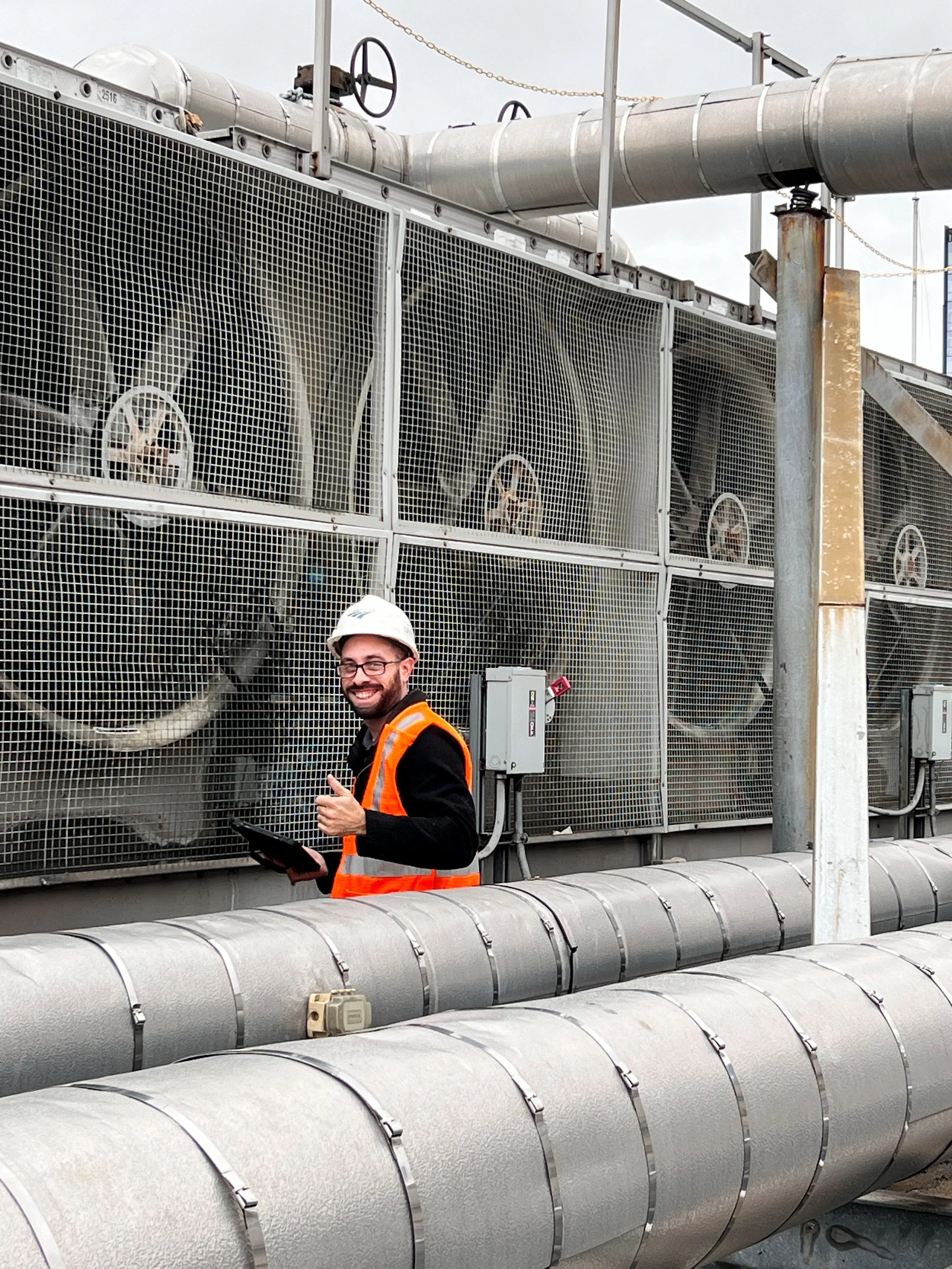
Twenty years after the founding of Practical Energy Solutions, the expertise behind that work continues within Spotts, Stevens and McCoy. As energy systems grow more complex and infrastructure continues to age, organizations need practical, performance-driven solutions. Our integrated team helps clients navigate evolving energy challenges while improving facility performance, efficiency, and long-term resilience.
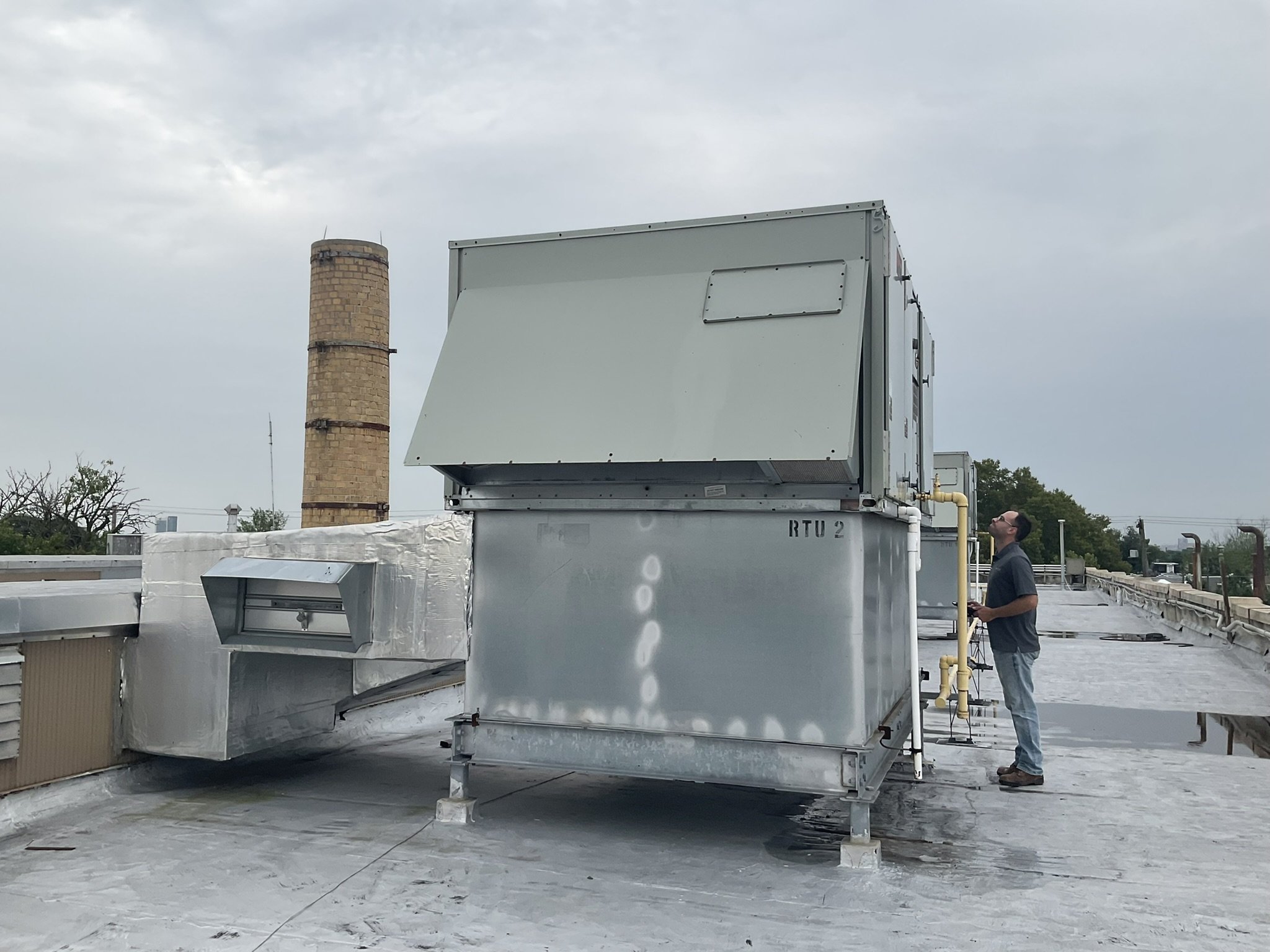
SSM engineer reviewing rooftop mechanical systems as part of ongoing efforts to improve facility performance and energy efficiency.
Founded in 2006 by Paul Spiegel, Practical Energy Solutions built a strong reputation for improving building efficiency, reliability, and long-term value. Over two decades, the team has supported clients across healthcare, higher education, municipal, and industrial markets, from campus-wide energy strategies to targeted facility-level performance improvements.
For the past five years, that expertise has been an integral part of Spotts, Stevens and McCoy. Today, our integrated approach allows energy strategies to align with broader engineering, infrastructure, and capital planning decisions delivering energy and operational solutions through the depth and scale of a multidisciplinary firm. This is how we work: collaboratively, strategically, and with a focus on measurable impact for our clients.
At the center of our work is a clear focus: helping clients create efficient, resilient, high-performing facilities. The people, expertise, and relationships behind this work remain the same now strengthened by the resources and reach of SSM.
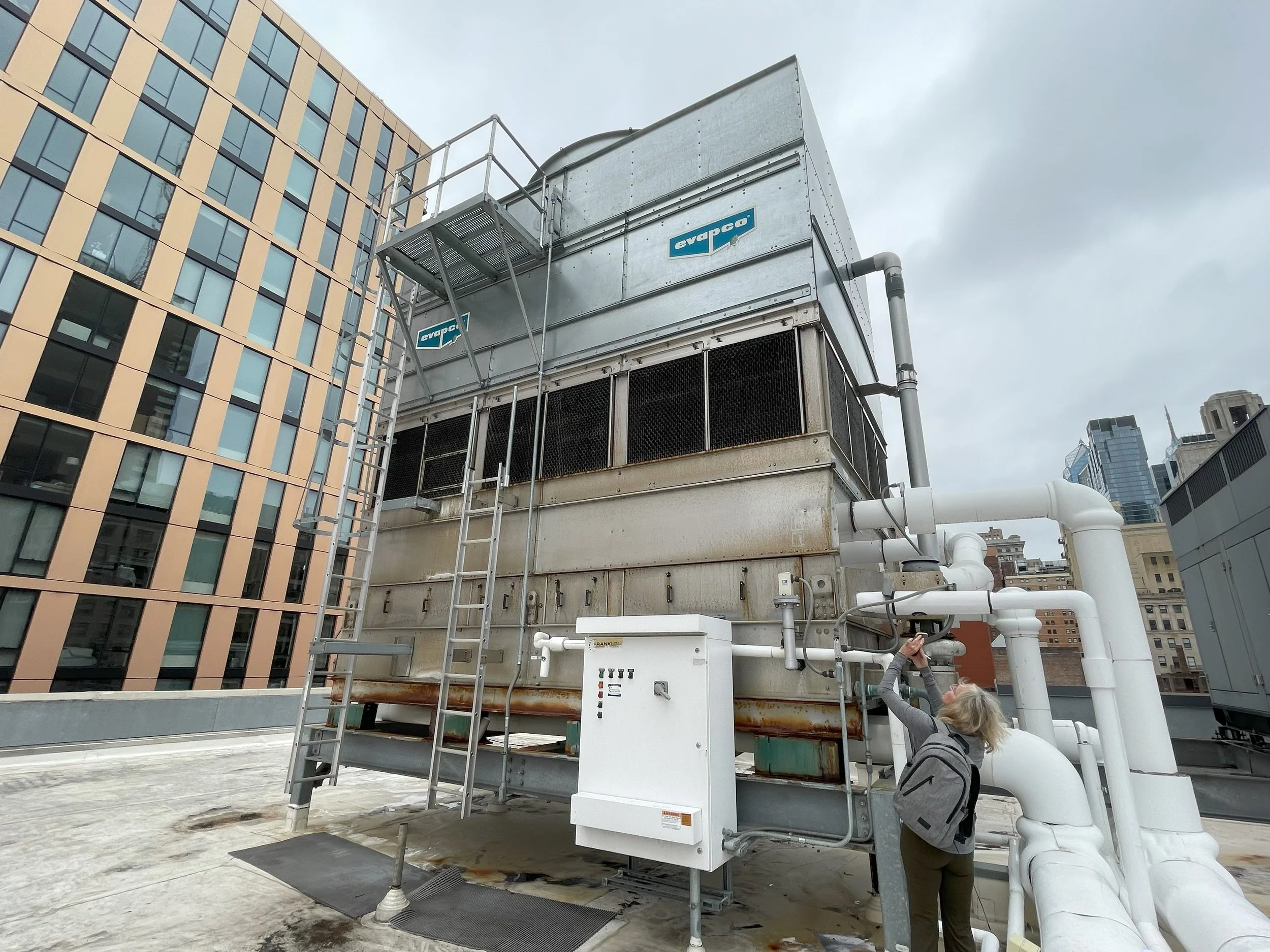
As the energy landscape continues to shift, the demands on facilities are evolving as well. Aging infrastructure, rising energy costs, grid reliability concerns, and changing regulatory requirements are reshaping how organizations plan and invest.
With two decades of experience and the strength of an integrated engineering firm behind us, we help clients move forward with confidence — aligning energy strategy, operational performance, and long-term resilience.

Spotts, Stevens and McCoy Announces Leadership Promotions and Organizational Advancements
Spotts, Stevens and McCoy (SSM) has announced a series of leadership promotions and an enhanced organizational structure designed to strengthen collaboration, elevate technical and operational excellence, and position the firm for long-term growth.
PATRICK McCOY, PE
Executive Vice President

ANDREW SHAMBACH
Vice President, Operations and Business Development

SETH NACE, PE, LC, LEED AP
Director, Facility Engineering

Andrew Wengerd, PE, LEED AP, CFPS
Technical Director, Facility Engineering
Spotts, Stevens and McCoy (SSM) has announced a series of leadership promotions and an enhanced organizational structure designed to strengthen collaboration, elevate technical and operational excellence, and position the firm for long-term growth.
The refined structure reflects SSM’s evolution as a multidiscipline engineering firm and aligns operational and technical leadership across all divisions, ensuring the firm continues to deliver high-quality, integrated solutions to its clients while fostering the development of its people.
“These changes represent the next step in SSM’s long-term growth strategy,” said Brian R. Kelly, President and Chief Executive Officer. “They reinforce our commitment to excellence and create a framework that will sustain the company’s success for many years to come.”
As part of this evolution, SSM announced the following key promotions:
Patrick McCoy, PE – Executive Vice President
Patrick’s role centers on strategic account leadership, ensuring consistency and continuity for SSM’s largest and most complex clients.
Andrew Shambach – Vice President, Operations and Business Development
Andrew leads operations across all divisions while continuing to guide business development and growth initiatives that align with the firm’s long-term strategy.
Facilities Engineering
Seth Nace PE, LC, LEED AP – Director, Facilities Engineering
Seth provides operational leadership across SSM’s mechanical, electrical, structural, and energy/sustainability disciplines, overseeing project delivery, resource coordination, and staff development.Andrew Wengerd, PE, LEED AP, CFPS – Technical Director, Facilities Engineering
Promoted to Technical Director, Andrew continues to lead SSM’s Mechanical Engineering discipline while guiding technical quality and mentorship across all Facilities Engineering disciplines — ensuring consistency, innovation, and best practices in building systems design.
Environmental Engineering
Jason Newhard, CCM, LO – Director, Environmental Engineering
Jason leads the Environmental Engineering Division, overseeing Field Services and Water Resources operations while promoting cross-department collaboration and project alignment.
Civil Engineering
Scott Miller, RLA – Director, Civil Engineering
Scott oversees SSM’s Civil Engineering Division, coordinating Land Development and Municipal Engineering operations and ensuring efficient project delivery.Nick Szeredai, PE – Manager, Municipal Engineering
Nick manages the Municipal Engineering team, focusing on project execution, staff coordination, and client service for SSM’s municipal clients.
SSM’s updated structure underscores the firm’s commitment to operational excellence, technical innovation, and employee growth. Together, these leaders represent the strength, continuity, and collaborative spirit that define SSM — ensuring the company remains well-positioned to serve clients and communities for decades to come.
About Spotts, Stevens and McCoy
Spotts, Stevens and McCoy (SSM) is a family-owned engineering, surveying, and environmental consulting firm headquartered in Wyomissing, with offices in Lehigh Valley, Lititz, and West Chester, Pennsylvania. Founded in 1967, SSM provides integrated solutions that enhance the quality of life for clients, employees, and the communities they serve. The firm’s multidisciplinary expertise includes facility engineering, civil engineering, environmental services, water and wastewater engineering, surveying, and related technical disciplines.
At SSM, our people bring together diverse expertise and a shared purpose, delivering practical solutions that improve everyday life. The firm’s culture is built on collaboration, technical excellence, and long-standing relationships with the communities it serves, a workplace where integrity, teamwork, and steady leadership guide every project.

JASON Newhard, CCM, LO
Director, Environmental Engineering

Scott Miller
Director, Civil Engineering

NICK Szeredai, PE
Manager, Municipal Engineering
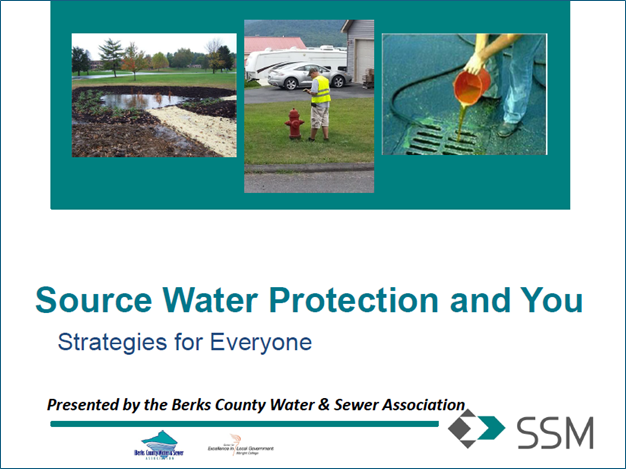
Berks County Water and Sewer Associtation Annual Conference - 2025
Discussion Topics:
What is Source Water Protection?
Where to find protection zone information
Concerns with potential contamination issues and follow-up information
Managing Risks
Resources for education of customers and residents
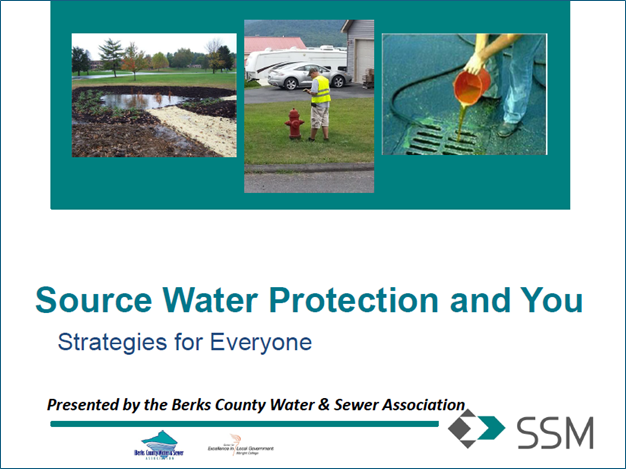
Source Water Protection and You: Strategies for Everyone
presented by: Carolyn S. Rodino, PMP
Overview of Presentation
What is Source Water Protection?
Where to find protection zone information
Concerns with potential contamination issues and follow-up information
Managing Risks
Resources for education of customers and residents

About the Speaker: Ms. Rodino provides leadership to the Water Resources department within the Environmental Engineering Division. The Water Resources team is comprised of Environmental Specialists, Geologists, and GIS staff that deliver assistance in Source Water Protection plan development, well drilling, permitting, and other watershed and regulatory services for drinking water clients. As a Project Manager, she also focuses on the execution of multi-discipline projects in the Water/Wastewater and Facilities divisions. As an advocate of clean drinking water, Ms. Rodino led the Agricultural Workgroup for the Schuylkill Action Network (SAN) from 2003-2020 and has participated on SAN’s Planning Committee. She was a director for the Berks County Water & Sewer Association and currently serves on the Education and Source Water Protection Committees. She was a member of the American Water Works Association’s Pennsylvania Water Resources Committee and also participated in the PA Natural Resources Leadership Institute through Penn State University. Her credentials include: The Pennsylvania State University, College of Human Development; American Water Works Association, Utility Risk and Resiliency Certificate Program; Cornell University, and Certificate in Project Management, Project Management Professional. Ms. Rodino is active in various professional organization including Project Management Institute, Schuylkill Action Network, Berks County Local Emergency Planning Committee, and Berks County Water & Sewer Association.
FOR MORE INFORMATION
Carolyn Rodino, PMP | lyn.rodino@ssmgroup.com
Statewide Local Share Account Grants Are Open
Overview: The PA Department of Community & Economic Develpment(DCED), through the Commonwealth Financing Authority (CFA), is now accepting applications for its Statewide Local Share Account (LSA) funded by gaming revenue under Act 71 to support projects in the public interest within the Commonwealth of PA.
Statewide Local Share Account ()LSA) grants are now open!
Overview: The PA Department of Community & Economic Develpment(DCED), through the Commonwealth Financing Authority (CFA), is now accepting applications for its Statewide Local Share Account (LSA) funded by gaming revenue under Act 71 to support projects in the public interest within the Commonwealth of PA.
Eligible Applicants:
PA Counties
Municipalities
Municipal Authorities
Economic Development Agencies
Redevelopment Authorities
Land Banks
Councils of Government
Eligible Projects: Projects in the public interest. Projects that improve the quality of life of citizens in the community. Eligible projects must be owned and maintained by an eligible applicant or a nonprofit organization.
Eligible Uses of Funds:
Acquisition
Construction to include renovation and rehabilitation
Demolition
Infrastructure
Purchase of vehicles, machinery and/or equipment
Planning, consulting and design costs related to planning projects
Engineering, design and inspection, to include permitting fees
Contingency costs not to exceed 5% of documented construction and infrastructure costs
Funding Details:
Grants are available for projects with a total eligible project cost of $25,000 or more
Grant requests shall not exceed $1,000,000 for any project
Applications and Scope:
To apply for funding, submission must be made via the online Department of Community & Economic Development (DCED) Single Application for Assistance located at dced.pa.gov
Applications will be received from September 1, 2025 to November 30, 2025. The CFA charges a $100 non-refundable application fee for the Local Share Account applications.
Each application must include a cohesive project scope based on a singular project. This may include multiple phases of the same project. Applicants may submit multiple applications.
Grant Submission Assistance: The SSM team has acquired nearly $3,000,000 in the last few years in project funding from this exact loan distribution. We’re well-versed in assisting our clients with acquiring grant funds for their projects. Our grant services include preparation and submission on behalf of the entity. We also assist with cost estimates and scope of work definition and description.
For assistance with grant support, contact us:
Jamie Lorah | Technical Director, Process and Design Engineering
jamie.lorah@ssmgroup.com

Benjamin Pressman, PE named Senior Technical Engineer, Energy and Sustainability Services
Spotts, Stevens and McCoy is pleased to announce the promotion of Benjamin Pressman, PE, to the role of Senior Technical Engineer within the Energy Services department. With 16 years of experience in mechanical and energy engineering, Ben brings a wealth of technical expertise and leadership to this position. In this role, he will be responsible for leading complex project design efforts, ensuring technical quality across deliverables, and mentoring junior staff.
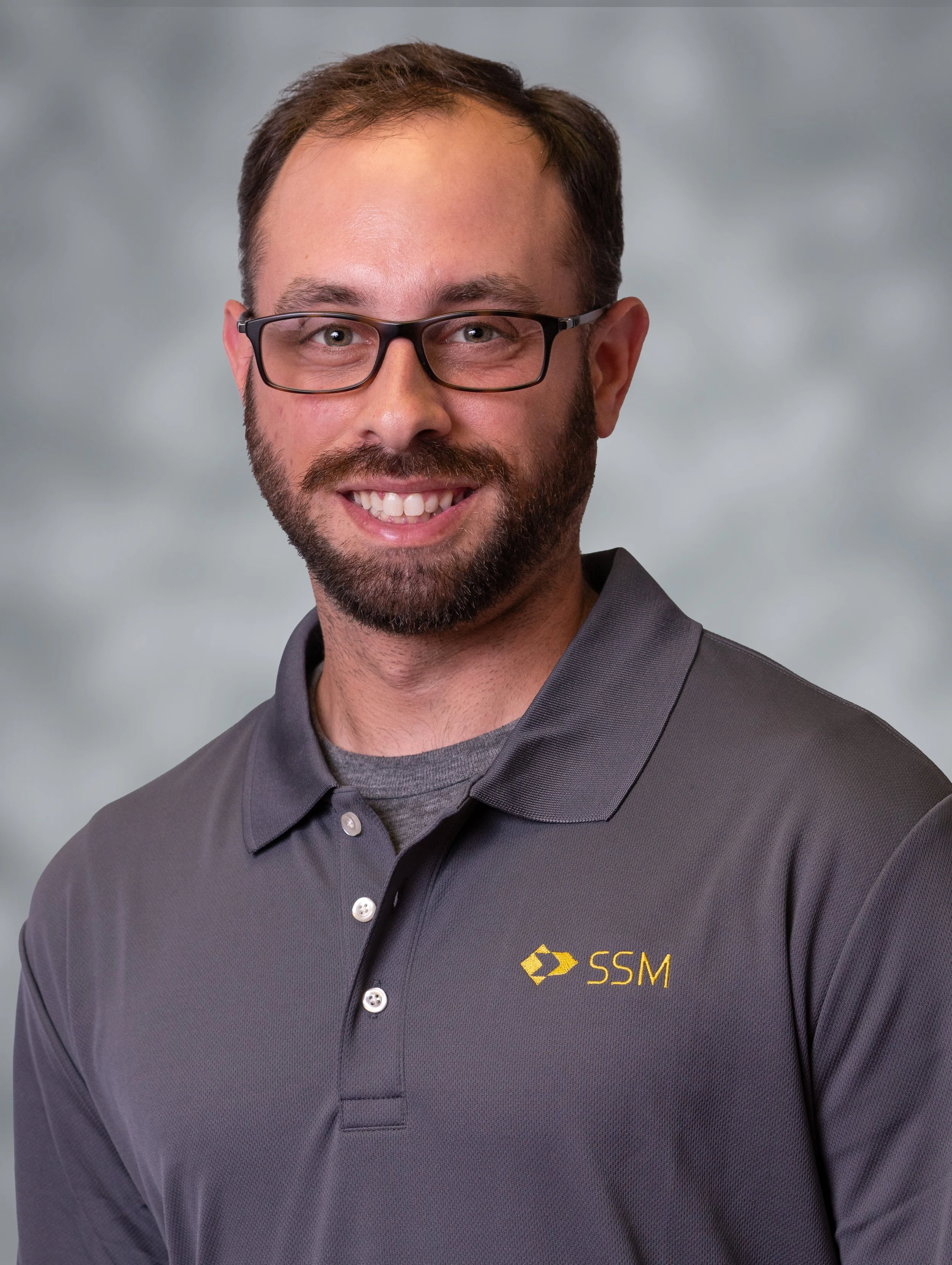
BENJAMIN PRESSMAN, PE
SR. TECHNICAL ENGINEERR
Spotts, Stevens and McCoy is pleased to announce the promotion of Benjamin Pressman, PE, to the role of Senior Technical Engineer within the Energy Services department. With 16 years of experience in mechanical and energy engineering, Ben brings a wealth of technical expertise and leadership to this position. In this role, he will be responsible for leading complex project design efforts, ensuring technical quality across deliverables, and mentoring junior staff.
Throughout his career, Ben has led a wide range of building energy assessments, as well as developed and managed hourly energy simulations for both schematic designs and accreditation programs such as LEED and New Jersey's Clean Energy Program’s Pay for Performance. His work has also included mechanical system design and implementation for energy-efficient renovations of commercial and municipal buildings.
Ben has a deep expertise in building modeling software, energy auditing techniques, and the development of long-term sustainability strategies. He has helped municipalities and commercial clients alike advance their renewable energy goals and reduce dependence on fossil fuels through strategic mechanical system upgrades.
Ben earned both his B.S. and MSE in Mechanical Engineering from Johns Hopkins University. He is a licensed Professional Engineer in the state of Pennsylvania and a Qualified Tune-Up Specialist in the City of Philadelphia.
About the Firm: Spotts, Stevens and McCoy, Inc. is a family-owned regional engineering, environmental and surveying firm headquartered in Wyomissing PA with satellite offices in Lancaster, West Chester and Lehigh Valley. SSM provides services to various types of local, regional and national businesses that include commercial, industrial, manufacturing and telecommunications as well as healthcare and higher education institutions.

The Longest Day of the Year - and the Brightest Opportunity for Solar Power
The longest day of the year means more sunlight—and more power!
Find out how the summer solstice supercharges solar energy, why it’s the future of clean power, and how you can benefit today. Don’t miss the bright side of solar!
The sun is the most abundant energy source on the planet — and it isn’t going away!
The sun produces 173,000 terawatts of solar energy per second, which is 10,000 more than the electricity produced worldwide. With the summer solstice finally here, there’s even more chances to catch some rays.
The June solstice, which typically takes place on June 20, 21, or 22 every year, occurs when the sun is directly over the Tropic of Cancer in the Northern Hemisphere. On this day, the northern regions experience longer daylight hours, while the southern regions see shorter days. This is due to the tilt of the Earth’s axis and its orbital cycle around the sun.
The farther north of the equator one is, the more sunlight they will see on this day. In our area, the sun is expected to be out for 15 hours and 6 minutes. However, in more north regions like New York City, the daylight can last for more than 16 hours!

While the sunlight and long summer days offer many enjoyable opportunities for all, it also offers benefits when it comes to solar energy. With more sun available for solar panels to soak up, comes more solar energy that can be produced.
By the end of 2023, nearly 7% of global electricity generation was produced by solar PV, a major leap from 3% in 2020. Along with solar panels’ growing use, they are growing in efficiency, with more than 20% of the sunlight that gets absorbed by them being converted to energy in good-functioning, modern panels.
With their increased efficiency and their ability to last for 40+ years, solar power is becoming more and more widespread. Furthermore, their safer environmental impact — as opposed to the burning of fossil fuels — is also driving people to use them.
At SSM, we take solar power seriously! We provide surveying, civil engineering, electrical and structural engineering, and landscape architecture for the installation of solar PV arrays. We prepare site plans and supporting documents needed for land development approval, as well as create single- and three-line drawings required for utility company interconnection applications. Our team performs technical reviews of roof mounted solar PV systems and roof surveys to draft plans for rooftop installations.
Our work is focused around interconnecting the solar PV array design into the existing power distribution systems.
While solar energy offers a more reliable, environmentally friendly, and efficient source of energy, that’s not all they’re good for. There are so many more benefits that solar power has to offer! Here are more reasons to go solar this summer solstice:
Solar slows climate change- With no toxic gases being produced, solar electricity production doesn’t cause a greenhouse effect.
No pollution- With no byproducts being released into the atmosphere, there’s no waste accumulating.
Reduced carbon footprint- Solar energy is clean, efficient, and sustainable, and has no emissions, causing it to leave no footprint behind.
Saves water- Regular electricity production requires lots of water in the production process, but not in solar conversion.
Less energy lost in transmission- Regular electricity is supplied to substations, then the consumer, allowing for energy to be lost in transmission. Solar energy, however, goes directly to the consumer.
FOR MORE INFORMATION
Seth Nace, PE | Manager, Eleectrical Engineering | seth.nace@ssmgroup.com
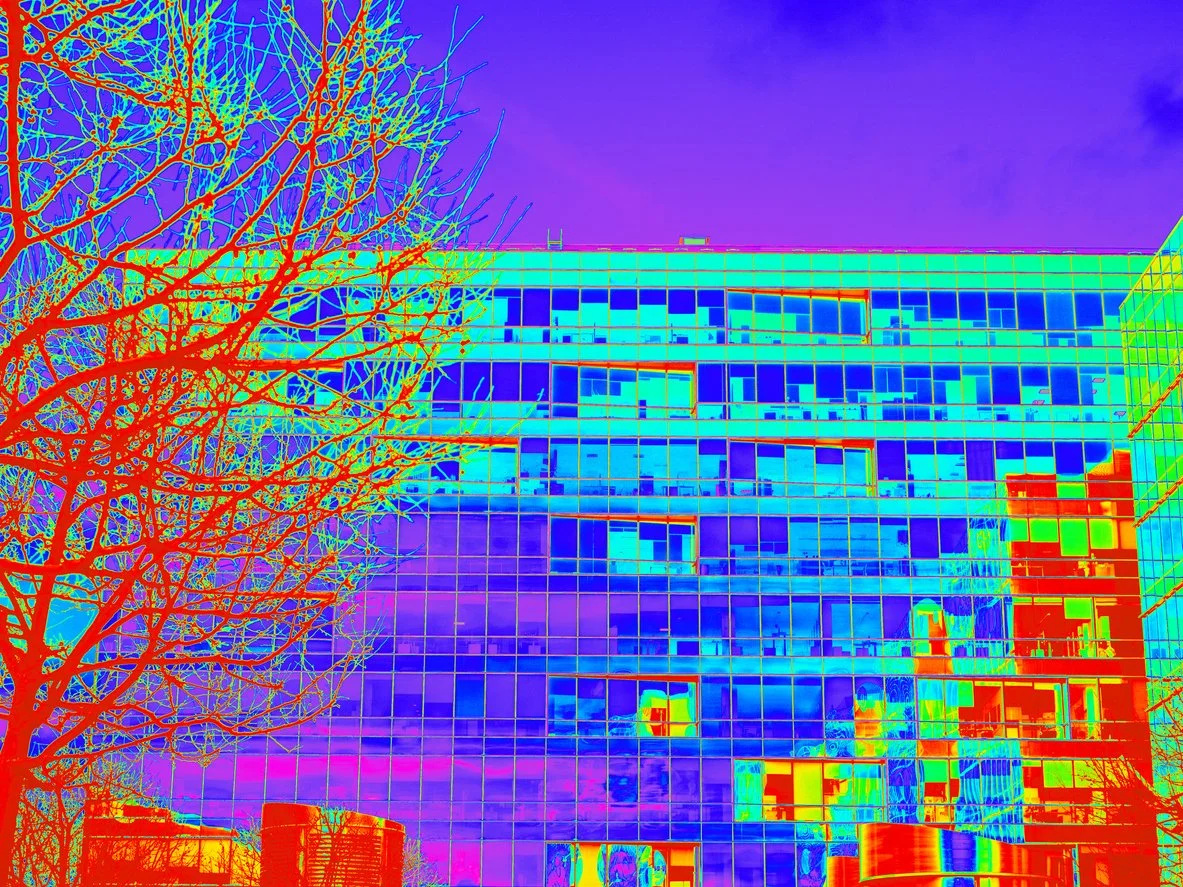
Rising Electricity Costs in the PJM Region
Rising electricity costs across the PJM region are creating financial pressure for commercial and municipal energy users, with a major price surge expected starting June 1, 2025. Understanding the drivers and preparing with smart energy strategies now is critical to managing future costs and avoiding budget shocks.
What You Need to Know and How to Prepare
Electricity prices across the PJM Interconnection are steadily rising, with a significant jump expected in June. PJM is one of the largest electricity grids in the U.S., serving 13 states and Washington, D.C.
Several factors are driving this increase. These factors include aging grid infrastructure, volatile fuel costs (particularly natural gas), retirement of older uneconomical generation facilities, rising energy demand due to the significant energy needed to power servers for AI (artificial intelligence) and Bitcoin. Regulatory shifts and the length of time to get new generation plants approved and built are adding further pressure.
While these changes are crucial for a sustainable future, they are creating immediate cost pressures that affect every energy user on the grid.
These issues will unfortunately contribute to a perfect storm, effectively reducing the peak load capacity in the electric grid while there is exponential growth in the need for capacity. The scarcity of new resources has impacted the electricity futures markets and will lead to significantly increased prices even if you have a fixed long-term contract. Large commercial users that are on direct high tension (HT) rates (peak demand over 500 kW, with their own step-down transformers) may be impacted slightly less than General service users (monthly peak demand less than 500 kW.
Here is what we expect to happen throughout Pennsylvania:
Starting June 1, 2025, a new surcharge for peak load contribution will be charged to all commercial customers. It will likely be based on the average of the 5 days with the highest demand from the prior year, summer of 2024, and though it will be a kW charge, it will be rolled into the kWh Generation charge, even if you have a fixed price contract for generation/supply.
The impact will be especially critical for commercial building owners, municipal governments, and educational institutions, particularly K–12 schools, who are already managing higher energy prices and tighter operating budgets. With summer peak demand season already here, utility bills are set to spike.
How much can you expect your cost to go up on June 1? The consensus appears to be 15% or more.
Beat the Energy Hike — Take Charge of Your Power Costs
Is there anything you can do to minimize the energy cost impact? There is, but you need to implement some strategies before the first hot and humid days this summer. Why? Because you will be setting your kW peak in summer 2025 (June 1 through September 30), and this will serve as a basis for your next generation charge that you will be billed starting October 1. While many of these strategies are lower cost operational changes, you need to pay attention and actively manage your building(s) as a first step, especially on hot humid days.
There are also capital investments that you can make to reduce both peak demand and consumption, and equipment that can help you shift load from daily peak load period to off-hours when more capacity is available on the grid.
On the bright side, if you can call it that, with energy bills rising, the return on investment that can be realized by investing in the energy performance of your buildings will make energy projects significantly more cost effective with shorter payback periods.
Control Energy Costs Before They Control Your Bottom Line
Your best first step is to quantify the energy cost increases you’ve already seen in the past 6 months and review your June and July electricity bills with your energy consultant, to get a handle on how the price increases have already impacted you, and to lay out a path to reducing energy costs.
Don’t wait for your rates to rise before acting!
FOR MORE INFORMATION
Marika Selzler Williams | Manager, Energy and Sustainability Services | marika.selzler@ssmgroup.com

Microgrids Explained: Benefits, Challenges, and the Path Forward
Microgrids are becoming increasingly more popular and important when it comes to supplying power.
Microgrids are local power grids that operate independently from the main (usually larger) power grid. They are integrated energy systems consisting of interconnected loads and distributed energy resources (DERs). They can operate as a singular entity or work in tandem with a grid, generating and storing their energy by way of renewable sources such as wind turbines, solar panels, batteries, and water.
Microgrids are becoming increasingly more popular and important when it comes to supplying power.
Microgrids are local power grids that operate independently from the main (usually larger) power grid. They are integrated energy systems consisting of interconnected loads and distributed energy resources (DERs). They can operate as a singular entity or work in tandem with a grid, generating and storing their energy by way of renewable sources such as wind turbines, solar panels, batteries, and water.
Several different types of microgrids exist.
A networked (or “grid-tied”) microgrid is always connected to the main utility grid.
A grid-connected (or “island-able) microgrid is connected to the main grid but can switch off from it and work independently if a power supply issue occurs.
A remote (or “off-grid) microgrid operates independently from the main grid.
Microgrids offer many benefits, the most prominent of which are their reduction of greenhouse gas emissions and their ability to provide power security when the traditional grid goes down. Other benefits include: their energy efficient design that reduces waste and lowers cost for consumers, ability to provide power to remote areas, contribution to a sustainable energy future, and their ability to provide energy closer to its consumption location, lowering transmission losses.
While they offer many benefits, there are a few challenges surrounding microgrids. The upfront cost of building and installing a microgrid can be significant — cost may vary based on size, location, and amount of energy needed. They are also complex to design, build, and operate because of their energy flow adaptability. Further, updated and limited regulations can cause legal restrictions when implementing and operating microgrids.
Fortunately, there are ways to overcome these challenges. Improvements to renewable energy technology makes microgrids more efficient to implement. Developing new management systems and technologies makes microgrids easier to operate and manage as well. When it comes to cost, businesses and investors can help by providing funding.
Many who use microgrids use them because of their resilience, cost optimization, sustainability, and expansion. In the case of storms, wildfires, power quality issues, and more, microgrids provide power when the main grid can’t. They offer an alternative to combat the increasing cost of electricity and high demands from peak power usage. Microgrids also help businesses and governments meet sustainability targets and comply with government mandates. On top of this, adding electric chargers, converting systems from gas to electric, and adding new equipment to increase capacity helps expand microgrids to more regions.
At SSM, we provide surveying, civil engineering, electrical and structural engineering, and landscape architecture for the installation of solar PV arrays. PV arrays are one of the many DERs that provide microgrids power. We perform code reviews, utility coordination, preparation of permit and construction documents, and construction administration. We prepare site plans and supporting documents needed for land development approval, as well as create single and three line drawings. Our work is focused around interconnecting the solar PV array design into the existing power distribution systems.
As technology continues to evolve, the use of microgrids is becoming more and more widespread. But not all microgrids are the same. Because microgrids are so diverse, it’s important to make sure your microgrid fits your requirements and demands!
FOR MORE INFORMATION
Seth Nace, PE | Manager, Eleectrical Engineering | seth.nace@ssmgroup.com

Arc Flash Incidents Don't Give Second Chances
With arc flashes being one of the most dangerous events in electrical systems, it’s important to know what you can do to prevent them from happening. The workplace is meant to be a safe environment. Arc flash assessments, which identify hazards and calculate risks, are the key to this safety. An arc flash assessment is conducted to determine the arc flash boundary. In turn, this boundary determines the PPE category needed to keep a worker safe when dealing with electrical hazards to reduce the risk of injury in case of an arc flash or shock. There are four categories of PPE. The farther from the electrical hazard you can be to sustain second-degree burns, the higher PPE category must be selected. The selected PPE must meet or exceed the potential incident energy level determined by the assessment.
With arc flashes being one of the most dangerous events in electrical systems, it’s important to know what you can do to prevent them from happening.
The workplace is meant to be a safe environment. Arc flash assessments, which identify hazards and calculate risks, are the key to this safety.
An arc flash assessment is conducted to determine the arc flash boundary. In turn, this boundary determines the PPE category needed to keep a worker safe when dealing with electrical hazards to reduce the risk of injury in case of an arc flash or shock. There are four categories of PPE. The farther from the electrical hazard you can be to sustain second-degree burns, the higher PPE category must be selected. The selected PPE must meet or exceed the potential incident energy level determined by the assessment.
The PPE categories follow the NFPA 70E guidelines, which are a set of guidelines put in place to ensure workers wear the appropriate attire when working with electrical hazards.
At SSM, we perform site surveys, model and analyze updates to new and existing electrical systems, and submit official reports stating conclusions and recommendations to clients in accordance with NFPA 70E standards. We perform Short Circuit Analysis and Device Coordination Review to identify locations with high incident energy and notify clients of areas that require a PPE category 1 or higher.
SSM updates incident energy levels in existing models to reflect system revisions and prepares labels for installation on equipment. We design and implement safety systems to eliminate hazards—so you can focus on your work, worry-free. We don’t just design systems, we design infrastructure for a safer tomorrow.
This electrical safety month, we want to remind you not only of arc flash safety, but of the overall importance of electrical safety. While arch flash is a big electrical safety risk, it’s not the only one. Faulty wiring, overloaded circuits, and neglected maintenance can all lead to risks such as fires, power outages, and costly repairs.
To help you maintain an all-around electrically safe workplace, here’s a list of things you can do to make sure your space is less at risk of accidents!
Schedule regular electrical inspections.
Ensure proper grounding of electrical systems.
Comply with electrical codes and regulations.
Prevent overloaded circuits.
Invest in surge protection.
Work with a trusted electrician.
Make a checklist of updates and maintenance that needs to be done.
Don’t be shocked when an incident happens, be informed and prepared!
FOR MORE INFORMATION
Seth Nace, PE | Manager, Electrical Engineering | seth.nace@ssmgroup.com

New Round of State Grants Opens for Water, Sewer, and Stormwater Systems
A new round of funding for the PA Small Water and Sewer Program is open for applications through April 30, 2025, to assist with the construction, improvement, expansion, rehabilitation, or repair of water supply systems, sanitary sewer systems, and stormwater systems projects. The SSM team has acquired nearly $3,000,000 in the last few years in project funding from this exact loan distribution. We’re well-versed in assisting our clients with acquiring grant funds for their projects.
A new round of funding for the PA Small Water and Sewer Program is open for applications through April 30, 2025, to assist with the construction, improvement, expansion, rehabilitation, or repair of water supply systems, sanitary sewer systems, and stormwater systems projects. Grants are available for projects that cost between $30,000 and $500,000, and a 15% match is required. Eligible projects include construction or repair of water facilities, installation of security measures, acquisition of land, purchase and installation of equipment, and engineering, design, and inspection costs. You can view the program guidelines on DCED’s website.
Grant Submission Assistance: The SSM team has acquired nearly $3,000,000 in the last few years in project funding from this exact loan distribution. We’re well-versed in assisting our clients with acquiring grant funds for their projects. Our grant services include preparation and submission on behalf of the entity. We also assist with cost estimates and scope of work definition and description.
For assistance with grant support, contact us:
Jamie Lorah | Technical Director, Process and Design Engineering |jamie.lorah@ssmgroup.com

Ensure Compliance with BEPP and Avoid Penalties
If you are a commercial building owner in the City of Philadelphia, you may be required to comply with a recent regulation called the Building Energy Performance Program (§9-3404Building Energy Performance Policy). This ordinance mandates that owners of buildings larger than 50,000 square feet complete a “Building Tune-Up” every five years. The deadline for compliance has passed. If you have not yet addressed this requirement, now is the time to act! Non-compliance may result in violation notices and monthly fines from the Department of Licenses and Inspections (L&I).
The Building Energy Performance Program, created through Building Energy Performance Policy aims to achieve efficient energy and water use in the largest non-residential buildings in Philadelphia.
Like cars, buildings need occasional tune-ups to keep them running smoothly and efficiently. A building tune-up requires a review of energy systems and controls and minor tweaks to bring them up to a good state of performance. On average, these tweaks result in 10–15% annual energy savings for a building. They also provide a more comfortable space for tenants. This policy is projected cut carbon pollution in Philadelphia by nearly 200,000 metric tons. This reduction is equivalent to taking 40,000 automobiles off our roads.
Who is impacted?
Owners of any commercial, non-residential building with indoor floor space of at least 50,000 square feet of indoor floor space must comply with the policy.
Who is not included?
- Residence halls, dormitories, and other non-transient large lodging places
- Parking lots and parking garages, or the portions of otherwise covered buildings used for parking
How do I comply?
Buildings must comply every 5 years from their compliance date.
Buildings have three options for compliance.
- Conduct a “tune-up” of existing building systems
- Certify high performance
- Receive an exemption

Example of what you will receive from the City of Philadelphia L&I for non-compliance
Qualified tune-up specialists:
If conducting tune-ups, building owners must hire approved tune-up specialists to lead their building system assessments and sign off on tune-up reports. In-house or contracted service providers may complete the corrective actions, however, the final tune-up report must be verified and signed by the qualified tune-up specialist.
Spotts, Stevens and McCoy has five certified tune-up specialists on our staff, ready and able to assist in compliance with this regulation.
What is a building tune-up?
The Building Tune-Up is an assessment of existing base building systems and corrective actions to bring the systems up to a state of good repair. The assessment includes all systems of the building that use energy or impact energy consumption.
- HVAC Operations and Controls
- Lighting System Assessment
- Building System Maintenance and Repairs
- Domestic Hot Water and Water Usage
- Building Envelope
The tune-up includes:
- Billing analysis.
- Assessment of Elements: HVAC Operations and Controls, Lighting System Assessment, Building System Maintenance and Repairs, Domestic Hot Water and Water Usage, and Building Envelope
- Determination and Implementation of Corrective Actions
- Post implementation assessment
- Final Tune-up Report
Here to Help:
Marika Selzler Williams, EIT, ENV SP, CEM | Manager, Energy and Sustainability Services
Energy and Sustainability Services | marika.selzler@ssmgroup.com

Marika Selzler Williams, EIT, ENV SP, CEM named Manager, Energy and Sustainability Services
Marika Selzler, EIT, ENV SP, CEM has been promoted to the role of Department Manager. Marika has been a part of the Energy team since 2021, most recently as a Senior Energy Analyst. As the Department Manager, Marika will be responsible for daily operations of the Energy and Sustainability department and execution of the department’s strategic assignments.

Marika Selzler, EIT, ENV SP, CEM | Manager
Marika Selzler, EIT, ENV SP, CEM has been promoted to the role of Department Manager. Marika has been a part of the Energy team since 2021, most recently as a Senior Energy Analyst. As the Department Manager, Marika will be responsible for daily operations of the Energy and Sustainability department and execution of the department’s strategic assignments.
Her experience includes energy benchmarking, load profiling, and trend analysis of and energy planning for commercial facilities, industrial plants, and vehicle fleets; renewable energy analysis and design; calculating and evaluating emissions of existing systems, buildings, campuses, and fleets, and improvements from conservation, efficiency, and fuel-switching projects; preparation of energy audits and reports; and BAS-based continuous commissioning and Analytics-as-a-Service of commercial buildings.
Marika is a graduate of Villanova University, B.S. Chemical Engineering. She is a Certified Energy Manager, a Qualified Tune-Up Specialist for the City of Philadelphia Building Energy Performance Program (BEPP). She is professionally affiliated with Society of Women Engineers, Association of Energy Engineers, and Institute for Sustainable Infrastructure.

Reducing the use of Fossil Fuels
Celebrating Zero Emissions Day: a day focused on encouraging the reduction of the use of fossil fuels in daily life and promoting the use of renewable energy.
Since its inception in 2008, Zero Emissions Day has grown into a global movement encouraging individuals to minimize fossil fuel usage. This day aims to raise awareness about the impact of carbon emissions on climate change and air quality.
Ways to Observe Zero Emissions Day:
Walk, Bike, or Carpool: These alternatives help reduce emissions.
Conserve Energy: Turn off lights and computers when not in use.
Utilize Fresh Air: Use windows and economizers to cool buildings at night, decreasing reliance on air conditioning during the day.
On a larger scale, the day encourages organizations and corporations to reduce the use of fossil fuels in daily life and to promote the use of renewable energy.
In June, the Department of Energy released a definition of zero emissions buildings to advance public and private sector efforts to decarbonize the buildings sector. The definition provides industry guidance to support new and existing commercial and residential buildings to move towards zero emissions across the entire sector and help achieve climate goals, while cutting home and business energy costs. This initiative is expected to help advance next-generation clean energy solutions, drive innovation and tackle the climate crisis, while supporting workforce development.
According to DOE, with nearly 130 million buildings in the U.S. costing over $400 billion annually in energy, and an expected 40 million new homes plus 60 billion square feet of commercial space by 2050, the push for zero emissions is crucial.
To achieve zero operational emissions a building must meet the following minimum criteria:
Energy Efficient: The building uses the most efficient technologies and is built to reduce losses.
No On-Site Emissions: The building’s direct greenhouse gas emissions from energy use equal zero.
Powered by Clean Energy: All the energy used by the building, produced both on-site and off-site, is from clean energy sources.
Check out these resources for more information:
U.S. Department of Energy
National Definition of a Zero Emissions Building - Web
National Definition of a Zero Emissions Building - PDF
If you’re curious about solar potential for your business’s roof or parking lot, contact us for assistance! Our team offers comprehensive support, from feasibility studies to design and construction, ensuring a smooth transition to solar power.
FOR MORE INFORMATION
Marika Selzler, EIT, ENV SP, CEM | Manager, Energy and Sustainability Services
marika.selzer@ssmgroup.com

Did you know that with 5,000 square feet of open roof or parking area, the average 3-floor commercial building can produce 67% of its electricity consumption with on-site, emission-free solar energy. This can save over $1,000 every month on energy costs!
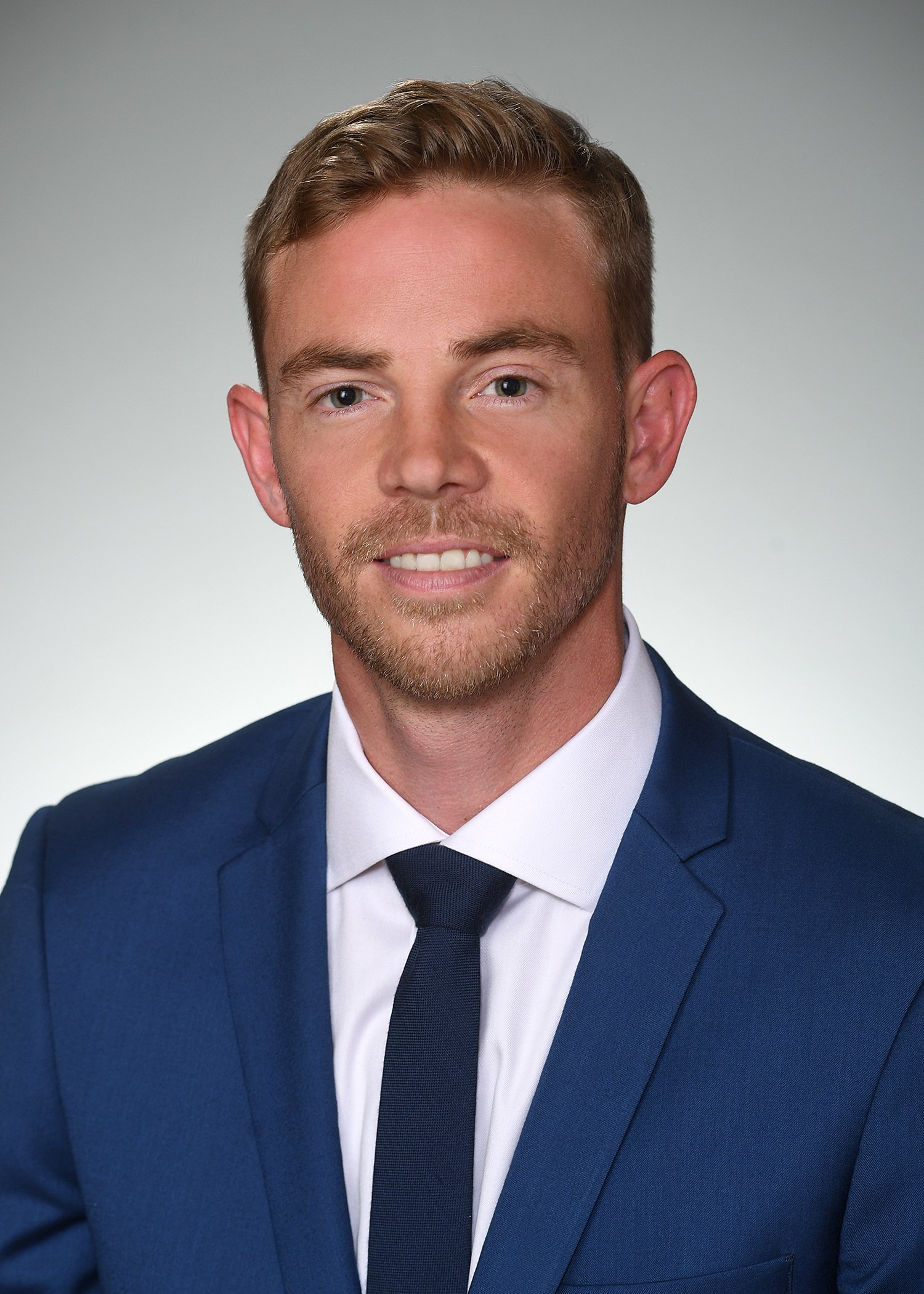
Daniel McBrien, CEM named Tune-Up Specialist for City of Philadelphia
Daniel McBrien, CEM has been approved as a Tune-Up Specialist by the City of Philadelphia’s Office of Sustainability.
Daniel McBrien, CEM has been approved as a Tune-Up Specialist by the City of Philadelphia’s Office of Sustainability.
The City of Philadelphia’s Building Energy Performance Program (BEEP) requires a “tune-up specialist” lead all tune-up assessments and sign-off on all tune-up reports submitted to the City’s Office of Sustainability (OOS). Individuals must be a Professional Engineer (PE) license or Certified Energy Manager (CEM) certification and have at least 7 years of combined educational and professional experience with commercial building operations and/or building energy management.
Dan is a member of the Energy and Sustainability Services Team. With Bachelor's degrees in Energy, Business and Finance, as well as Economics, both from Pennsylvania State University, his experience includes financial analysis on building systems to determine options for improving energy performance, high efficiency retrofits and addition of renewable energy supply.
TUNE-UP SPECIALISTS:
Paul Spiegel, PE, LEED AP | Director, Energy and Sustainability Services
Benjamin Pressman, PE | Senior Mechanical Engineer
Marika Selzler, EIT, ENV AP, CEM | Senior Energy Analyst
Dianne Herrin, CEM, LEED AP | Project Manager
Daniel McBrien, CEM | Senior Energy Analyst

LSA Grant Open for Public Entities with Public Interest Projects
The PA Race Horse Development and Gaming Act provides for the distribution of gaming revenues through the Commonwealth Financing Authority (CFA) to support projects in the public interest within the Commonwealth of Pennsylvania. Applications will be received from September 1, 2024 to November 30, 2024.
Local Share Account (LSA) – Statewide
Overview: The PA Race Horse Development and Gaming Act provides for the distribution of gaming revenues through the Commonwealth Financing Authority (CFA) to support projects in the public interest within the Commonwealth of Pennsylvania.
Eligible Applicants:
PA Counties
Municipalities
Municipal Authorities
Economic Development Agencies
Redevelopment Authorities
Land Banks
Councils of Government
Eligible Projects: Projects in the public interest. Projects that improve the quality of life of citizens in the community. Eligible projects must be owned and maintained by an eligible applicant or a nonprofit organization.
Eligible Uses of Funds:
Acquisition
Construction to include renovation and rehabilitation
Demolition
Infrastructure
Purchase of vehicles, machinery and/or equipment
Planning, consulting and design costs related to planning projects
Engineering, design and inspection, to include permitting fees
Contingency costs not to exceed 5% of documented construction and infrastructure costs
Funding Details:
Grants are available for projects with a total eligible project cost of $25,000 or more
Grant requests shall not exceed $1,000,000 for any project
Applications and Scope:
To apply for funding, submission must be made via the online Department of Community & Economic Development (DCED) Single Application for Assistance located at dced.pa.gov/singleapp
Applications will be received from September 1, 2024 to November 30, 2024. The CFA charges a $100 non-refundable application fee for the Local Share Account applications.
Each application must include a cohesive project scope based on a singular project. This may include multiple phases of the same project. Applicants may submit multiple applications.
Grant Submission Assistance: The SSM team has acquired nearly $3,000,000 in the last few years in project funding from this exact loan distribution. We’re well-versed in assisting our clients with acquiring grant funds for their projects. Our grant services include preparation and submission on behalf of the entity. We also assist with cost estimates and scope of work definition and description.
For assistance with grant support, contact us:
Jamie Lorah | Technical Director, Process and Design Engineering |jamie.lorah@ssmgroup.com

SSM Welcomes New Team Members
Spotts, Stevens and McCoy, a family-owned and managed, regional engineering firm based in Reading, PA welcomes Daniel McBrien, CEM and Brooklyne Wiley to the team.
Spotts, Stevens and McCoy, a family-owned and managed, regional engineering firm based in Reading, PA welcomes Daniel McBrien, CEM and Brooklyne Wiley to the team.
DANIEL McBRIEN, CEM | Sr. ENERGY ANALYST

BROOKLYNE WILEY | Graduate Engineer
Daniel McBrien, CEM joined the Energy and Sustainability Services Department as a Senior Energy Analyst. He brings diverse expertise to the team, including financial analysis on building systems to determine options for improving energy performance, high efficiency retrofits and addition of renewable energy supply. In this role, Daniel will perform utility analysis and benchmarking, energy audits, building operational assessments and tune-ups, solar feasibility studies and energy modeling. He will also engage in strategic energy planning, energy education programs, rebate and grant support and HVAC assessment and design support. He holds Bachelor's degrees in Energy, Business and Finance, as well as Economics, both from Pennsylvania State University.
Brooklyne Wiley joined the Process and Design Engineering Department as a Graduate Engineer. In this role, Brooklyne will be involved with all aspects of water and wastewater infrastructure planning, design, construction and treatment, including pumping and piping systems for both new construction and rehabilitation/replacement projects. Brooklyne has a Bachelor’s degree in Civil and Environmental Engineering from Elizabethtown College.
ABOUT THE FIRM
Spotts, Stevens and McCoy, Inc. is a family-owned regional engineering, environmental and surveying firm headquartered in Reading PA with offices in Lancaster, West Chester and Lehigh Valley. We serve local and global clients from large, regional and national companies in the manufacturing, processing and high tech sectors to public municipalities and authorities. We engineer solutions for a better world by helping our clients plan, design, build, operate, and protect their infrastructure, assets, and resources. We keep our schools and community buildings safe from environmental hazards. We support our growing and expanding businesses and hospitals. We help municipalities to prepare and protect their infrastructure and resources. We keep water fresh and we keep air clean. We bring old buildings back to life with cutting-edge technology and leading-edge designs. We evaluate; we collaborate; we innovate.

New PADEP NPDES General Permit Requirements
If you currently have coverage under PAG-02 General Permit, your permit coverage for discharge of stormwater associated with construction activities will expire on December 7, 2024.
If you currently have coverage under PAG-02 General Permit, your permit coverage for discharge of stormwater associated with construction activities will expire on December 7, 2024.
On August 31, 2024, the Pennsylvania Department of Environmental Protection (PADEP) will publish a final, reissued NPDES PAG-02 General Permit for Discharge of Stormwater Associated with Construction Activities for a new 5-year term.
As a result, existing permits will need to be either renewed or terminated by that date to remain in compliance. If the construction of the project is complete and disturbed areas are stabilized the permit can be closed out through Notice of Termination. The NOT must be approved by the December 7th deadline. Otherwise, the General Permit will need to be renewed.
PAG-02 General Permit Changes will have significant impact including:
Construction Dewatering Standards
Site Inspections
Co-Permittees
Instrument Recording
SCM Construction Certification Form
Confirmation Testing for Infiltration SCMs
New Property Owner Notification Form
We can help. Whether you need assistance for renewal of your existing NPDES General Permit or submission of a Notice of Termination, our design and engineering teams are available to provide guidance and assist with submission requirements.
FOR MORE INFORMATION
Scott Miller, RLA | Manager, Land Development Services | scott.miller@ssmgroup.com

School District of Philadelphia receives Renew America's Schools Prize
SSM's Energy and Sustainability Services Department (Practical Energy Solutions) helped lead a second, successful application to the Department of Energy’s (DOE) Renew America’s Schools Prize and Grant Program.
SSM's Energy and Sustainability Services Department (Practical Energy Solutions) helped lead a second, successful application to the Department of Energy’s (DOE) Renew America’s Schools Prize and Grant Program.
After taking the lead role in preparing an application for the William Penn School District in 2023, which resulted in a $7.2 million grant award, SSM’s Energy Team partnered with the School District of Philadelphia and Philadelphia Energy Authority to apply for Round 2.
DOE named 21 winners of this overwhelmingly high-demand program and selected the School District of Philadelphia to receive an unrestricted $300,000 cash prize to further its sustainability planning efforts.
Read DOE’s announcement about our partnership here.
SSM’s Energy Team prepared the basis of this application by proposing a “kick-start” project for the district’s youngest students. This would involve upgrading 20 elementary school HVAC systems with high-performance, high-efficiency heat pump systems that create a foundation for electrified, net-zero schools and enable hands-on, clean energy, STEM-based learning.
This project proposes to add high-performance cooling and high-efficiency heating along with significant energy and greenhouse gas savings to some of the district’s most underserved elementary schools. It was drawn from the findings of three years of District-wide energy assessments performed by SSM’s Energy Team in its role managing the District’s compliance with the City of Philadelphia’s Building Energy Performance Program. SSM’s Energy Team has generated a database of energy systems and conditions across nearly 90 schools in the School District of Philadelphia. This database is now informing the development of cost-effective, low-carbon energy upgrade models that can be replicated District-wide while improving indoor air quality and learning conditions for students and teachers.
SSM’s Energy Team continues to serve the School District of Philadelphia in this role, as well as through grant support, strategic energy planning and hands-on energy education programs – including implementation of the Renew America’s Schools prize.

Understanding the Land Development Process
Whether you’re adding a new building, expanding an existing footprint, changing the use of the facility or increasing the amount of impervious surface on your site, you may need a Land Development plan. Regardless of size, projects with some level of earth disturbance may require a site plan with a minimum set of requirements to move forward.
When is a Land Development Plan Required?
Whether you’re adding a new building, expanding an existing footprint, changing the use of the facility or increasing the amount of impervious surface on your site, you may need a Land Development plan. Regardless of size, projects with some level of earth disturbance may require a site plan with a minimum set of requirements to move forward.
Land development is a term that encompasses the design and approval process necessary for a site development project. Its scope includes the design and engineering of the site features along with coordinating the necessary state, local and federal permits and approvals.
The land development process timeline can range from a few months up to a year, depending on the scope of the project and approval agencies involved. Typically, a Land Development project includes coordination between a minimum of six different agencies, including the local municipality. Engaging a land development team early and involving them in all stages of the project is crucial for a comprehensive overall process. They can assist in many phases of the project, including zoning relief, site grading, any earth-moving activities or utility coordination. Early involvement ensures that all necessary plans and permits are identified and obtained in a timely manner.
Key Plans and Permits
The project starts with a sketch plan or concept plan. Depending on the project scope, your site plan might require:
Layout Plan
Landscape Plan
Erosion & Sedimentation Control Plan (E&SC Plan)
Stormwater Management Plan - Post Construction Stormwater Management Plan (PCSM)
Grading Plan
Utility Plan
Other elements that may be required include zoning relief, National Pollutant Discharge Elimination System Permits (NPDES), other state and federal agency approvals and Department of Environmental Protection (DEP) or Department of Transportation (DOT) Permits.
Factors Influencing Plan Requirements
Municipal Regulations - Each municipality has its own design standards for approval procedures and submission requirements, often outlined in their ordinances. Most regulations are available online, but it's always smart to contact the municipality directly to confirm the current information.
Project Scope - The nature and extent of the work will drive the necessary approval procedures and requirements. Projects that might impact state roads and environmentally sensitive areas may require additional permits from state or federal agencies.
Size of the Project - E&SC Plan requirements vary based on the disturbance limits. In Pennsylvania counties, projects disturbing up to 0.95 acres generally only need an E&SC plan with Conservation District approvals, except in Berks County, where the limit is 5,000 square feet. Projects exceeding the one-acre threshold requires a PA DEP NPDES permit.
Location of the Project - The location determines drainage areas and adjacent watercourses, wetlands or endangered species habitat with the DEP classifying watercourses differently based on their characteristics. These location elements should be field surveyed to capture accurate locations.
Land Development Sequence and Timeline
The approval process typically spans three months to a year, operating on a monthly cycle of submissions, meetings and resubmissions. Accurate site and building plans are essential, and providing detailed information early in the process can expedite approvals.
Earth Disturbance Considerations
Any earth disturbance activity as part of the project requires careful planning and documentation. E&SC plans must clearly designate the full limit of disturbance on drawings to ensure compliance and approval.
Preparing for the Unexpected
Be prepared for variations in the approval timeline. While the usual timeframe for approval is four to six months, projects requiring federal permits can take up to a year. Costs also vary significantly, based on the project scope, location, permits and municipal requirements.
SSM provides comprehensive services to support land development projects, including:
Land and Feasibility Site Planning
Landscape Architecture Design Services
Field Survey
Stormwater Engineering and Grading
Erosion & Sediment Control and Permit Preparation
Highway Occupancy Permits
Navigating the land development process requires careful planning, timely engagement with a Land Development team and an understanding of the various regulatory requirements. Each project is unique and being prepared for potential challenges can make the process more efficient and successful. A discussion with the SSM Land Development Team will provide better insight into the necessary steps, requirements and approvals.
FOR MORE INFORMATION
Scott Miller, RLA | Manager, Land Development Services | scott.miller@ssmgroup.com