

Funding Opportunity: 2026 Statewide LSA Grant
Overview: The PA Department of Community & Economic Develpment(DCED), through the Commonwealth Financing Authority (CFA), is now accepting applications for its Statewide Local Share Account (LSA) funded by gaming revenue under Act 71 to support projects in the public interest within the Commonwealth of PA.
DOWNLOAD the 2026 LSA Program Guidelines
The Commonwealth Financing Authority (CFA) has announced the 2026 Statewide Local Share Account (LSA) Grant application period, providing funding opportunities for projects that serve the public interest and improve quality of life in communities across Pennsylvania.
Applications will be accepted September 1 through November 30, 2026.
Eligible Applicants
Eligible applicants include:
Pennsylvania counties
Municipalities
Municipal authorities
Economic development agencies
Redevelopment authorities
Land banks
Councils of governments
Eligible projects must serve the public interest and improve the quality of life of citizens within the community. Projects must be owned and maintained by an eligible applicant or nonprofit organization.
Eligible Uses of Funds
LSA grant funding may be used for:
Acquisition
Construction, including renovation and rehabilitation
Demolition
Infrastructure
Purchase of vehicles, machinery and/or equipment
Planning, consulting and design costs related to planning projects
Engineering, design and inspection, including permitting fees
Contingency costs of up to 5% of documented construction and infrastructure costs
Funding Details
Grants are available for projects with total eligible project costs of $25,000 or more, with grant requests of up to $1,000,000 per project.
Each application must focus on a cohesive, singular project, although multiple phases of the same project may be included. Applicants may also submit multiple applications.
Application Deadline: November 30, 2026
How SSM Can Help
SSM has extensive experience helping public entities identify funding opportunities and prepare competitive grant applications for community infrastructure and improvement projects.
Our team can assist with:
Grant application preparation and submission
Project scope development
Cost estimates
Engineering and design considerations
Supporting application documentation
If your municipality, authority, or organization has an upcoming project that may qualify for LSA funding, now is the time to begin preparing your application.
Contact SSM to discuss your project and how our team can assist with the application process.
Jamie Lorah, PE | Technical Director | jamie.lorah@ssmgroup.com
Statewide Local Share Account Grants Are Open
Overview: The PA Department of Community & Economic Develpment(DCED), through the Commonwealth Financing Authority (CFA), is now accepting applications for its Statewide Local Share Account (LSA) funded by gaming revenue under Act 71 to support projects in the public interest within the Commonwealth of PA.
Statewide Local Share Account ()LSA) grants are now open!
Overview: The PA Department of Community & Economic Develpment(DCED), through the Commonwealth Financing Authority (CFA), is now accepting applications for its Statewide Local Share Account (LSA) funded by gaming revenue under Act 71 to support projects in the public interest within the Commonwealth of PA.
Eligible Applicants:
PA Counties
Municipalities
Municipal Authorities
Economic Development Agencies
Redevelopment Authorities
Land Banks
Councils of Government
Eligible Projects: Projects in the public interest. Projects that improve the quality of life of citizens in the community. Eligible projects must be owned and maintained by an eligible applicant or a nonprofit organization.
Eligible Uses of Funds:
Acquisition
Construction to include renovation and rehabilitation
Demolition
Infrastructure
Purchase of vehicles, machinery and/or equipment
Planning, consulting and design costs related to planning projects
Engineering, design and inspection, to include permitting fees
Contingency costs not to exceed 5% of documented construction and infrastructure costs
Funding Details:
Grants are available for projects with a total eligible project cost of $25,000 or more
Grant requests shall not exceed $1,000,000 for any project
Applications and Scope:
To apply for funding, submission must be made via the online Department of Community & Economic Development (DCED) Single Application for Assistance located at dced.pa.gov
Applications will be received from September 1, 2025 to November 30, 2025. The CFA charges a $100 non-refundable application fee for the Local Share Account applications.
Each application must include a cohesive project scope based on a singular project. This may include multiple phases of the same project. Applicants may submit multiple applications.
Grant Submission Assistance: The SSM team has acquired nearly $3,000,000 in the last few years in project funding from this exact loan distribution. We’re well-versed in assisting our clients with acquiring grant funds for their projects. Our grant services include preparation and submission on behalf of the entity. We also assist with cost estimates and scope of work definition and description.
For assistance with grant support, contact us:
Jamie Lorah | Technical Director, Process and Design Engineering
jamie.lorah@ssmgroup.com

The Longest Day of the Year - and the Brightest Opportunity for Solar Power
The longest day of the year means more sunlight—and more power!
Find out how the summer solstice supercharges solar energy, why it’s the future of clean power, and how you can benefit today. Don’t miss the bright side of solar!
The sun is the most abundant energy source on the planet — and it isn’t going away!
The sun produces 173,000 terawatts of solar energy per second, which is 10,000 more than the electricity produced worldwide. With the summer solstice finally here, there’s even more chances to catch some rays.
The June solstice, which typically takes place on June 20, 21, or 22 every year, occurs when the sun is directly over the Tropic of Cancer in the Northern Hemisphere. On this day, the northern regions experience longer daylight hours, while the southern regions see shorter days. This is due to the tilt of the Earth’s axis and its orbital cycle around the sun.
The farther north of the equator one is, the more sunlight they will see on this day. In our area, the sun is expected to be out for 15 hours and 6 minutes. However, in more north regions like New York City, the daylight can last for more than 16 hours!
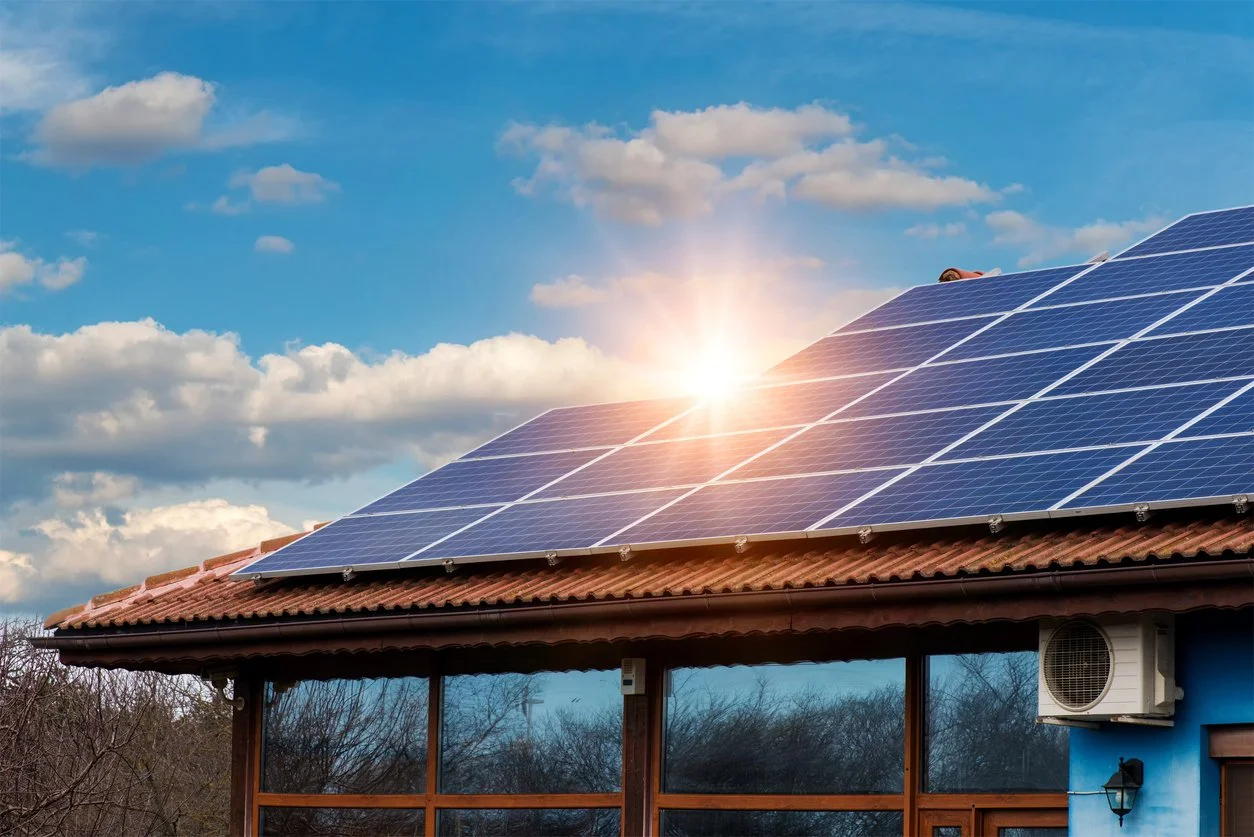
While the sunlight and long summer days offer many enjoyable opportunities for all, it also offers benefits when it comes to solar energy. With more sun available for solar panels to soak up, comes more solar energy that can be produced.
By the end of 2023, nearly 7% of global electricity generation was produced by solar PV, a major leap from 3% in 2020. Along with solar panels’ growing use, they are growing in efficiency, with more than 20% of the sunlight that gets absorbed by them being converted to energy in good-functioning, modern panels.
With their increased efficiency and their ability to last for 40+ years, solar power is becoming more and more widespread. Furthermore, their safer environmental impact — as opposed to the burning of fossil fuels — is also driving people to use them.
At SSM, we take solar power seriously! We provide surveying, civil engineering, electrical and structural engineering, and landscape architecture for the installation of solar PV arrays. We prepare site plans and supporting documents needed for land development approval, as well as create single- and three-line drawings required for utility company interconnection applications. Our team performs technical reviews of roof mounted solar PV systems and roof surveys to draft plans for rooftop installations.
Our work is focused around interconnecting the solar PV array design into the existing power distribution systems.
While solar energy offers a more reliable, environmentally friendly, and efficient source of energy, that’s not all they’re good for. There are so many more benefits that solar power has to offer! Here are more reasons to go solar this summer solstice:
Solar slows climate change- With no toxic gases being produced, solar electricity production doesn’t cause a greenhouse effect.
No pollution- With no byproducts being released into the atmosphere, there’s no waste accumulating.
Reduced carbon footprint- Solar energy is clean, efficient, and sustainable, and has no emissions, causing it to leave no footprint behind.
Saves water- Regular electricity production requires lots of water in the production process, but not in solar conversion.
Less energy lost in transmission- Regular electricity is supplied to substations, then the consumer, allowing for energy to be lost in transmission. Solar energy, however, goes directly to the consumer.
FOR MORE INFORMATION
Seth Nace, PE | Manager, Eleectrical Engineering | seth.nace@ssmgroup.com

Microgrids Explained: Benefits, Challenges, and the Path Forward
Microgrids are becoming increasingly more popular and important when it comes to supplying power.
Microgrids are local power grids that operate independently from the main (usually larger) power grid. They are integrated energy systems consisting of interconnected loads and distributed energy resources (DERs). They can operate as a singular entity or work in tandem with a grid, generating and storing their energy by way of renewable sources such as wind turbines, solar panels, batteries, and water.
Microgrids are becoming increasingly more popular and important when it comes to supplying power.
Microgrids are local power grids that operate independently from the main (usually larger) power grid. They are integrated energy systems consisting of interconnected loads and distributed energy resources (DERs). They can operate as a singular entity or work in tandem with a grid, generating and storing their energy by way of renewable sources such as wind turbines, solar panels, batteries, and water.
Several different types of microgrids exist.
A networked (or “grid-tied”) microgrid is always connected to the main utility grid.
A grid-connected (or “island-able) microgrid is connected to the main grid but can switch off from it and work independently if a power supply issue occurs.
A remote (or “off-grid) microgrid operates independently from the main grid.
Microgrids offer many benefits, the most prominent of which are their reduction of greenhouse gas emissions and their ability to provide power security when the traditional grid goes down. Other benefits include: their energy efficient design that reduces waste and lowers cost for consumers, ability to provide power to remote areas, contribution to a sustainable energy future, and their ability to provide energy closer to its consumption location, lowering transmission losses.
While they offer many benefits, there are a few challenges surrounding microgrids. The upfront cost of building and installing a microgrid can be significant — cost may vary based on size, location, and amount of energy needed. They are also complex to design, build, and operate because of their energy flow adaptability. Further, updated and limited regulations can cause legal restrictions when implementing and operating microgrids.
Fortunately, there are ways to overcome these challenges. Improvements to renewable energy technology makes microgrids more efficient to implement. Developing new management systems and technologies makes microgrids easier to operate and manage as well. When it comes to cost, businesses and investors can help by providing funding.
Many who use microgrids use them because of their resilience, cost optimization, sustainability, and expansion. In the case of storms, wildfires, power quality issues, and more, microgrids provide power when the main grid can’t. They offer an alternative to combat the increasing cost of electricity and high demands from peak power usage. Microgrids also help businesses and governments meet sustainability targets and comply with government mandates. On top of this, adding electric chargers, converting systems from gas to electric, and adding new equipment to increase capacity helps expand microgrids to more regions.
At SSM, we provide surveying, civil engineering, electrical and structural engineering, and landscape architecture for the installation of solar PV arrays. PV arrays are one of the many DERs that provide microgrids power. We perform code reviews, utility coordination, preparation of permit and construction documents, and construction administration. We prepare site plans and supporting documents needed for land development approval, as well as create single and three line drawings. Our work is focused around interconnecting the solar PV array design into the existing power distribution systems.
As technology continues to evolve, the use of microgrids is becoming more and more widespread. But not all microgrids are the same. Because microgrids are so diverse, it’s important to make sure your microgrid fits your requirements and demands!
FOR MORE INFORMATION
Seth Nace, PE | Manager, Eleectrical Engineering | seth.nace@ssmgroup.com

Arc Flash Incidents Don't Give Second Chances
With arc flashes being one of the most dangerous events in electrical systems, it’s important to know what you can do to prevent them from happening. The workplace is meant to be a safe environment. Arc flash assessments, which identify hazards and calculate risks, are the key to this safety. An arc flash assessment is conducted to determine the arc flash boundary. In turn, this boundary determines the PPE category needed to keep a worker safe when dealing with electrical hazards to reduce the risk of injury in case of an arc flash or shock. There are four categories of PPE. The farther from the electrical hazard you can be to sustain second-degree burns, the higher PPE category must be selected. The selected PPE must meet or exceed the potential incident energy level determined by the assessment.
With arc flashes being one of the most dangerous events in electrical systems, it’s important to know what you can do to prevent them from happening.
The workplace is meant to be a safe environment. Arc flash assessments, which identify hazards and calculate risks, are the key to this safety.
An arc flash assessment is conducted to determine the arc flash boundary. In turn, this boundary determines the PPE category needed to keep a worker safe when dealing with electrical hazards to reduce the risk of injury in case of an arc flash or shock. There are four categories of PPE. The farther from the electrical hazard you can be to sustain second-degree burns, the higher PPE category must be selected. The selected PPE must meet or exceed the potential incident energy level determined by the assessment.
The PPE categories follow the NFPA 70E guidelines, which are a set of guidelines put in place to ensure workers wear the appropriate attire when working with electrical hazards.
At SSM, we perform site surveys, model and analyze updates to new and existing electrical systems, and submit official reports stating conclusions and recommendations to clients in accordance with NFPA 70E standards. We perform Short Circuit Analysis and Device Coordination Review to identify locations with high incident energy and notify clients of areas that require a PPE category 1 or higher.
SSM updates incident energy levels in existing models to reflect system revisions and prepares labels for installation on equipment. We design and implement safety systems to eliminate hazards—so you can focus on your work, worry-free. We don’t just design systems, we design infrastructure for a safer tomorrow.
This electrical safety month, we want to remind you not only of arc flash safety, but of the overall importance of electrical safety. While arch flash is a big electrical safety risk, it’s not the only one. Faulty wiring, overloaded circuits, and neglected maintenance can all lead to risks such as fires, power outages, and costly repairs.
To help you maintain an all-around electrically safe workplace, here’s a list of things you can do to make sure your space is less at risk of accidents!
Schedule regular electrical inspections.
Ensure proper grounding of electrical systems.
Comply with electrical codes and regulations.
Prevent overloaded circuits.
Invest in surge protection.
Work with a trusted electrician.
Make a checklist of updates and maintenance that needs to be done.
Don’t be shocked when an incident happens, be informed and prepared!
FOR MORE INFORMATION
Seth Nace, PE | Manager, Electrical Engineering | seth.nace@ssmgroup.com

New Round of State Grants Opens for Water, Sewer, and Stormwater Systems
A new round of funding for the PA Small Water and Sewer Program is open for applications through April 30, 2025, to assist with the construction, improvement, expansion, rehabilitation, or repair of water supply systems, sanitary sewer systems, and stormwater systems projects. The SSM team has acquired nearly $3,000,000 in the last few years in project funding from this exact loan distribution. We’re well-versed in assisting our clients with acquiring grant funds for their projects.
A new round of funding for the PA Small Water and Sewer Program is open for applications through April 30, 2025, to assist with the construction, improvement, expansion, rehabilitation, or repair of water supply systems, sanitary sewer systems, and stormwater systems projects. Grants are available for projects that cost between $30,000 and $500,000, and a 15% match is required. Eligible projects include construction or repair of water facilities, installation of security measures, acquisition of land, purchase and installation of equipment, and engineering, design, and inspection costs. You can view the program guidelines on DCED’s website.
Grant Submission Assistance: The SSM team has acquired nearly $3,000,000 in the last few years in project funding from this exact loan distribution. We’re well-versed in assisting our clients with acquiring grant funds for their projects. Our grant services include preparation and submission on behalf of the entity. We also assist with cost estimates and scope of work definition and description.
For assistance with grant support, contact us:
Jamie Lorah | Technical Director, Process and Design Engineering |jamie.lorah@ssmgroup.com