

REAP Grants Available from the USDA
The USDA is offering grants or grant/loan combination for renewable energy projects or energy efficiency projects for small businesses and agricultural farmers. This is a great opportunity to offset the capital costs for projects lowering the energy and carbon footprint.
Grant Funding available through the Rural Energy for America Program (REAP) from the USDA.
The USDA is offering grants or grant/loan combination for renewable energy projects or energy efficiency projects for small businesses and agricultural farmers. This is a great opportunity to offset the capital costs for projects lowering the energy and carbon footprint.
The application process is not too tedious, and there are regional USDA offices providing local support depending on the location of the projects. Included within the application process is financial information as well as information on the project scope fo work, environmental impact, and financing.
Currently, the program is actively accepting applications with the following deadlines:
Grants of $20,000 or less: November 2, 2020
Loan/Grants of $20,000 or less: March 31, 2021
Grants or Loan/Grants greater than $20,000: March 31, 2021
Eligible applicants must be in good economic standing and include the following
Agricultural producers with greater than 50% of gross income from agricultural operations (these are not required to be in the considered “eligible area”
Small businesses in the “eligible areas”. Take a look at the database to determine eligible area here.
A great factsheet found here provides some more information and questions answered!
#ProblemSolved: Our Energy and Sustainability Team is here to help. Send an email to Patrick McCoy, PE, LEED AP, CSDP at patrick.mccoy@ssmgroup.com or give a call to 610-898-3008
Sierra Club: Efficiency First

Sierra Club: Efficiency First
What is an energy focus and why is it important? A focus on where to start including energy benchmarking, energy audits and evaluations, energy management, strategic planning, and evaluating your progress.
presented by Paul Spiegel, PE, LEED AP
Director Energy and Sustainability Services
paul.spiegel@ssmgroup.com

Spottlight on Changing Seasons
For businesses, organizations, facilities, municipalities, and everywhere in between- the change of seasons means preparations, challenges, and opportunities. From falling leaves, changes in temperature, and shorter days, to preparing facilities for the Winter - whatever the item on your list, now is a great time to get started.

Pumpkin spice is here! Even if you’re not a pumpkin fan, it’s unavoidable that the Fall season has arrived, The leaves are beginning to crunch when you walk on the sidewalk, and the breeze is beginning to blow a bit cooler than it did before.
For some the beginning of a new season means redecorating the mantle, preparing plans for holidays and special events, and maybe reorganizing the closet to prepare for temperature changes. For others it means the start of a new sports season or new recreational activities.
But for businesses, organizations, facilities, municipalities, and everywhere in between- the change of seasons means preparations, challenges, and opportunities. From falling leaves, changes in temperature, and shorter days, to preparing facilities for the Winter - whatever the item on your list, now is a great time to get started.
And a New Year is Just Around the Corner
Just as winter may feel a world away, for many municipalities, the end of the MS4 permit term may also feel like it’s a long way off. However, we encourage municipal leaders to begin the process sooner, rather than later. As budgets are being developed, consider your stormwater management plans. Identify the priority projects in relation to your fiscal year.
SSM is always here to help! Whether you need guidance on your MS4 requirements, or you want to jumpstart some of your priority projects- give us a call!
IN THIS ISSUE:


Preparing Your Facility for Winter
Fall is the best time to prepare for the Winter. Don’t let your facility, or your people be caught off guard or unprepared for the first snowstorm or freezing weather. Making preparations in advance, and evaluating your facility's vulnerability will ensure that Winter is a breeze.
Winter, snowstorms, blizzards, warm hot chocolate, shoveling, sledding, snow days. They all feel like a world away. But believe it or not, Fall is the best time to prepare for the Winter. Don’t let your facility, or your people be caught off guard or unprepared for the first snowstorm or freezing weather. Making preparations in advance, and evaluating your facility's vulnerability will ensure that Winter is a breeze. (Pun intended).
Take some time to identify how winter usually hits your area, or the location of your building. Is your area typically hit hard in the winter? What types of things cause the most damage, stress, or concern through the winter months? Have you ever noticed or identified specific areas of winter-concern? These could include pronounced icicle formation, excess roof snow accumulation, doors not closing with temperature changes, areas of shade that ice for longer. Does your manufacturing process generate heat within the building? How have your existing systems functioned for you in the past few years?
Roof collapse is one of the most catastrophic losses during winter. In the recent past, this has had more impact on pre-engineered steel buildings, but it can also have an impact on stepped roofs where snow drifts can accumulate. In pre-engineered steel buildings, owners should monitor the displacement of the roof should a heavy snow storm affect the area, and have an action plan in place for snow removal. For buildings with flat or stepped roofs, ensure that roof drains are not blocked and are functioning properly. Finally, for older buildings, be on alert for combined snow and rain loads, as earlier buildings’ codes did not fully acknowledge this condition as a possible roof loading.
Possibly a less anticipated form of damage during winter occurs during extended periods of sub-freezing temperatures. This most often will affect manufacturing or process facilities that have operations shut down during the holidays, but this can also affect any area of a building with piping in close proximity to exterior walls. Of utmost importance during these cold snaps is to ensure that someone familiar with building operations is aware of the coming temperature swings.
Preparations should be in place for addressing damage to equipment or piping, especially fire protection systems. Finally, always maintain a consistent and reliable source of heat within the building during operation shut downs.
It is also important to observe the effects of sub-freezing temperatures on the building to build the base of knowledge for future remediation. If you notice significant or concentrated icicle formations, this is usually a sign of a poorly insulated roof, or possibly ineffective roof drains. This is a condition that warrants review so that more significant damage within the building envelope can be prevented. If you notice doors not closing properly or interior walls that crack during a cold snap only to close once temperatures rebound, this is likely a lack of perimeter frost protection. This is a condition that should be corrected so that voids in the soil below do not cause more significant damage to the building.
Good planning and a keen eye means you can be well prepared for even the worst of winter.
#ProblemSolved: Our Facilities Team is here to help. Send an email to Patrick McCoy, PE, LEED AP, CSDP at patrick.mccoy@ssmgroup.com or give a call to 610-898-3008
Surveying in the Fall
Fall is a great time for surveying. The weather is more temperate than Summer or Winter, and it is not quite as wet as Springtime. But there’s one other key to the season that makes Fall a great time for surveying: falling leaves.
For many, the Fall season brings great joy. The crunch of leaves, the extra breeze, and yes, the smell of pumpkin flavoring and warm apple cider.
For surveyors, whose days are spent almost fully outdoors, the start to Fall is a welcome change in climate. Most of our surveying team considers Fall the best time to survey. The weather is more temperate than Summer or Winter, and it is not quite as wet as Springtime. But there’s one other key to the season that makes surveying in the Fall better, stronger, and more efficient: falling leaves.
As the leaves fall off the trees, you should make a point to get your data collected! Performing surveying and data collection at this time of the year is actually less difficult. Because measured spaces need to be visible, as leaves fall- more data is able to be captured in a simpler, and often faster, fashion. Aerial imagery from a vertical position becomes clearer. And the same can be said for horizontal measurements. Without large shrubs and leaves on the trees, our surveyors are able to survey faster and more accurately. This is especially true in wooded areas because more measurements can be taken from less setups. That means more data, less time.
A common term for this idea is leaf-off imagery. This is as opposed to leaf-on imagery. As expected, leaf-on refers to foliage on trees or thriving shrubs. Leaf-off means no foliage or a decreased amount of shrubs.
Leaf-off imagery is particularly essential when mapping with contours and ground elevations form aerial imagery. When capturing leaf-on imagery, large portions of an area cannot be mapped accurately due to tree coverage. On the other hand, with leaf-off imagery, the photogrammetry processing is able to determine elevations more accurately through the gaps in tree branches that are not visible when the leaves are on.
As we embrace the season, we also embrace the opportunities that Autumn presents for serving our clients in an even better, an even more efficient, and an even more precise manner.
#ProblemSolved: Our Surveying Team is here to help. Send an email to Sam Zook, PLS at sam.zook@ssmgroup.com or give a call to 484-388-5989


SSM Welcomes Sr. Electrical Engineer, Seth Nace, PE, LC, LEED AP
Spotts, Stevens and McCoy welcomes Seth A. Nace, PE, LC, LEED AP to the team as a Senior Electrical Engineer in the Facilities Engineering Department.
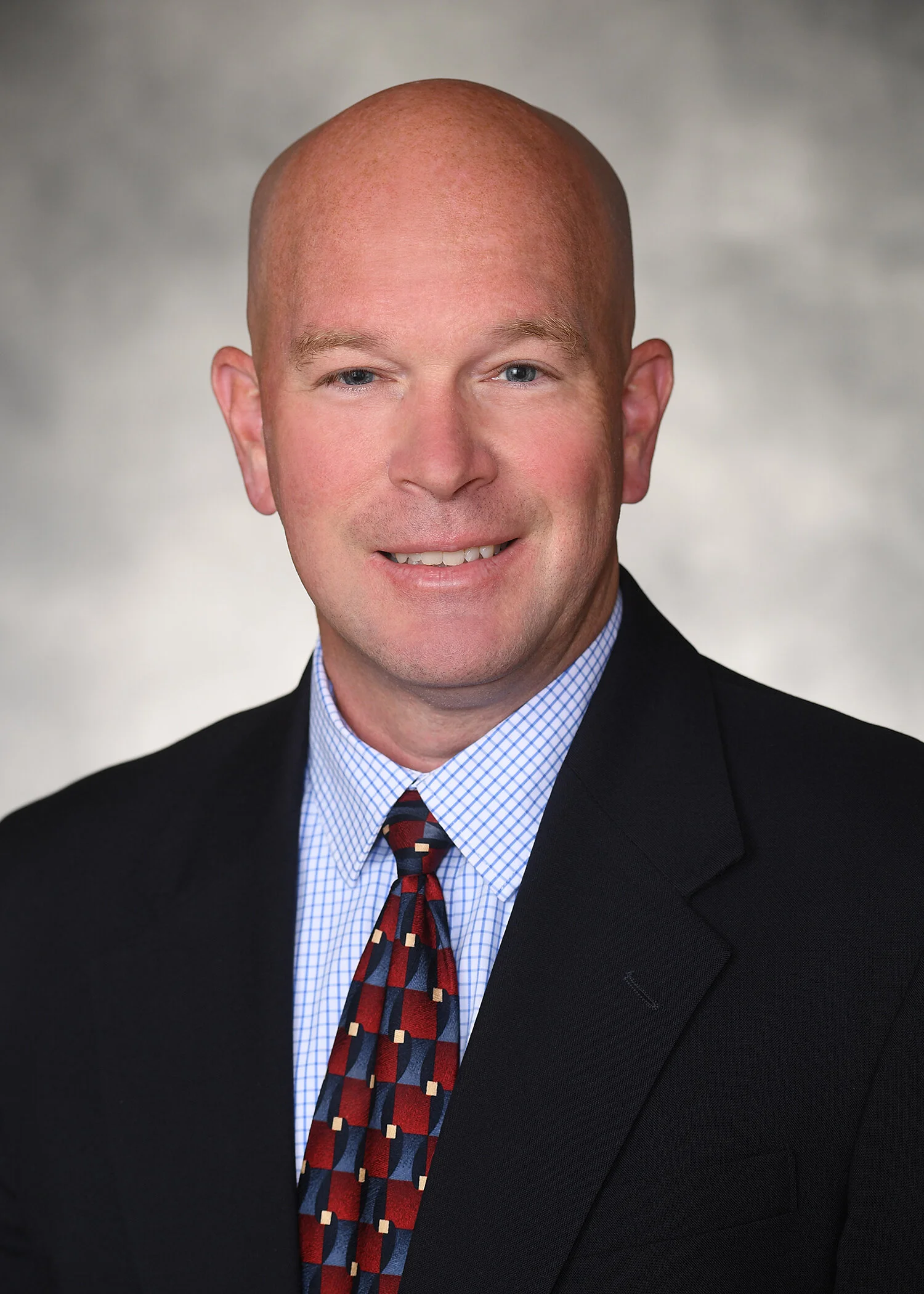
Seth A. Nace, PE, LC, LEED AP
Spotts, Stevens and McCoy, a family-owned and managed, regional engineering firm based in Reading PA welcomes Seth A. Nace, PE, LC, LEED AP to the team as a Senior Electrical Engineer in the Facilities Engineering Department.
Mr. Nace has more than 23 years of electrical engineering and project management experience including design of high, medium, and low voltage power distribution systems and substations, motor control, lighting and lighting controls, and auxiliary systems including photovoltaic, emergency/standby power generation systems, uninterruptible power systems (UPS), fire alarm, security and access control, signaling and suppression systems, and telecommunication systems for various facilities. In addition, he has performed specialized studies and investigations of existing conditions and systems resulting in building assessment, evaluations, and recommendations reports, as well as cost opinions for code compliance, economic cost evaluations, and scheduling.
Nace has performed electrical studies, including short circuit, time current coordination, and arc flash with the development of arc flash labels. His project work has included the analysis, design, and specification during project development from conceptual and preliminary through final design and all construction phase services such as review of shop drawings, change orders, responding to contractor requests for information, field inspections, and commissioning of systems.
He holds a BS degree in Architectural Engineering from The Pennsylvania State University and is a Registered Professional in Pennsylvania, Arizona, California, District of Columbia, Delaware, Florida, Hawaii, Illinois, Iowa, Maryland, Minnesota, Nebraska, New Mexico, Nevada, New Jersey, Rhode Island, Oregon, Texas, Utah, Vermont, Virginia. Additional credentials include National Council on Qualifications for the Lighting Professions (NCQLP) Certification, National Council of Examiners for Engineering and Surveying (NCEES) Certification, and Leadership in Energy and Environmental Design Accredited Professional.

Spottlight on Water Quality
August is Water Quality Month. And so this month we challenge you to take a little bit of extra time to think about that refreshing glass of water. Or, that clean shower stream. Or, the water bodies you might enjoy for recreation.
Enjoy your water this month! It’s been sourced with you in mind.

A refreshing glass of water. On the surface, it's filled with nothing but H20. Thinking deeper, you'll see that a lot more has gone into it. Such as protecting the purity of reservoirs, aquifers, wellheads, and springs. Rehabilitating abandoned wells. Using hydrogeologic modeling to calculate the impact of proposed development on source water and surrounding terrain. Using GIS to manage complex and voluminous environmental databases. Tailoring solutions for municipalities and water suppliers, and getting clean water to communities, buildings and faucets. Into every refreshing glass of water goes a lot of deep thinking.
At SSM, we believe in protecting, developing, and managing water resources for future generations. Our Water Resources team takes great pride in making water happen, protecting water resources, and providing the greatest care to our supply sources every single day.
August is Water Quality Month. And so this month we challenge you to take a little bit of extra time to think about that refreshing glass of water. Or, that clean shower stream. Or, the water bodies you might enjoy for recreation.
Enjoy your water this month! It’s been sourced with you in mind.
IN THIS ISSUE


PENNVEST Funding Opportunities
Water Infrastructure Funding Transfer Act (WIFTA) expands the Clean Water and Drinking Water State Revolving Fund transfer authority to address lead remediation in drinking water. Approximately $93 million in funding is available. The application period is now open.
WIFTA PENNVEST Lead Line Replacement Initiative
The Water Infrastructure Funding Transfer Act (WIFTA) was signed into law on October 4, 2019, temporarily expanding the Clean Water to Drinking Water State Revolving Fund (SRF) transfer authority specifically to address lead-related threats to public health in drinking water. PENNVEST anticipates approximately $93 million may be subject to the SRF transfer and available in the form of principal forgiveness loans to address remediation of lead in drinking water in the Commonwealth.
Eligibility
Drinking water system or facility owners or operators are eligible to apply, provided they are otherwise authorized to make application under the PENNVEST Act. The system or facility may be privately or publically owned or operated.
Drinking water projects otherwise eligible under the PENNVEST Act with adequately mapped and designated lead line replacement areas are eligible. The replacement must be a full line replacement for both the public and private sides of laterals ending at the homeowner’s foundation to be eligible.
The deadline for this initiative will be February 3, 2021.
For more information about the program: https://www.pennvest.pa.gov/Information/Funding-Programs/Pages/Lead-Line-Replacement.aspx
PENNVEST Announces Small Project Initiative (SPI) Funding Program
The Pennsylvania Infrastructure Investment Authority (PENNVEST) board of directors recently approved a new funding opportunity for lower-cost water quality projects, allowing for accelerated funding approval. The Small Project Initiative (SPI) is available statewide and is designed to efficiently support repairs, short-term construction for water, wastewater, non-point source and stormwater improvements.
SPI funding is available for public or private entities with a maximum award amount of $500,000 in low-interest loan funding. Projects must address a service area of less than 12,000 people or incorporate less than 1,000 system hook-ups. The program allows PENNVEST staff to perform appropriate reviews and render a decision targeted at two weeks, rather than requiring approval at a quarterly board of directors meeting.
A more detailed explanation of the Small Project Initiative can be found at https://www.pennvest.pa.gov/Information/Funding-Programs/Pages/Small-Projects.aspx.
Helping Clients Acquire Funding!
SSM assisted several municipal and municipal authority clients in completing grant submission requirements and obtaining grant funding through both the PA Small Water and Sewer Program as well as the H2O PA Program.
The Pennsylvania Department of Community and Economic Development (DCED) announced this month the approval of grant funding for both water and sewer projects as well as new water infrastructure improvement projects through the Commonwealth Financing Authority (CFA).
SSM assisted several municipal and municipal authority clients in completing grant submission requirements and obtaining grant funding through both the PA Small Water and Sewer Program as well as the H2O PA Program.
This round, we are pleased to have assisted the following authorities in receiving a total of $1,708,865 in project funding.
Muhlenberg Township Authority: Interceptor Replacement
SSM helped the Muhlenberg Township Authority secure a $100,000 H2O Grant for replacement of a gravity sewer interceptor. Replacement of the interceptor will reduce levels of inflow and infiltration and will allow the authority to maintain the capacity of sewage conveyance. This upgrade will also allow for increased service connections and future development of this area, having a positive economic impact to the entire Muhlenberg Township Authority sewer system.
Manheim Area Water and Sewer Authority: Sanitary Sewer Rehabilitation Project
SSM helped Manheim Area Water and Sewer Authority with grant preparations and submission, securing $422,865 in Small Water and Sewer grant funds. For this project, the authority will continue rehabilitating a 30” diameter interceptor pipe. Rehabilitation and repair is expected to significantly reduce the amount of inflow and infiltration that enters the system during wet weather. This will allow the capacity of the collection system and the wastewater treatment plant to be maintained to serve future commercial, residential and industrial development. This reduction in infiltration/inflow will also save money and help to maintain the capacities of the treatment plant and sewer system- providing opportunities for future development and economic benefit.
North Coventry Municipal Authority: Sewer Replacement and Sewer Repairs Project
North Coventry Municipal Authority secured a Small Water and Sewer grant for $325,000 with the assistance of SSM in grant submission. This funding will be utilized to support replacement of a deteriorating sewer pipeline as well as repairs to a sewer pumping station. These improvements are expected to eliminate blockages from invasive tree roots, eliminate groundwater infiltration, reduce pumping costs and reduce treatment costs. These improvements will address identified areas of concern within the system. It will also allow the authority to provide more efficient service to existing and future customers, and provide additional treatment capacity for future connections.
North Coventry Water Authority : Water Main Replacement
SSM helped North Coventry Water Authority obtain $175,000 in funds for improvements to its water system. Among these improvements include continuation of efforts to reduce leakage from its water distribution system; elimination of lead pipe, joints and services in the system; and enhancement of the reliability of service to customers. All of these improvements are primarily centralized to the older, original part of the distribution system. By investing in these improvements, there will be a positive economic impact in a variety of ways, including enhanced service to commercial properties as well as decrease in future maintenance costs.
Oley Township Municipal Authority: Wastewater Treatment Plant Headworks Upgrade Project
SSM aided the Oley Township Municipal Authority in securing $250,000 in H2O Grant funding for a WWTP Headworks Upgrade Project. The modifications and upgrades to the wastewater treatment plant will improve the treatment process. The benefits of this project include, but are not limited to, better management of peak flows, more accurate sampling results, elimination of pump-clogging, and improved removal of non-biodegradable rags and debris.
Oley Township Municipal Authority: Sewer Collection System Televising and Manhole Rehabilitation Project
Oley Township Municipal Authority also secured $100,000 in Small Water and Sewer Grant funding with the assistance of SSM for ongoing inflow and infiltration work to reduce flows and hydraulic constraints within the sewer collection system. This project will include televising the sewer system to determine areas of the collection system that need rehabilitation. Additional improvements planned include rehabilitation of sanitary sewer manholes, as well as installation of manhole cover inserts (or rainguards). All of these improvements will reduce inflow and infiltration concerns within the collection system.
Perkiomen Township Municipal Authority: Sanitary Sewer Rehabilitation and Replacement Project
The Perkiomen Township Municipal Authority was granted $236,000 for assistance in funding the Authority’s proposed sanitary sewer rehabilitation and replacement project. SSM assisted in preparation and submission of the PA Small Water and Sewer Grant application materials. The project is expected to include over 4,000 linear feet of sanitary sewer cured-in-place pipe lining as well as the replacement of two manholes and one sanitary sewer line. All of this is expected to save the authority considerably in terms of transportation and treatment costs, allowing customers to avoid an increase in sanitary sewer rates. This project is also expected to create a long-term solution to existing systems nearing the end of their useful life.
Birdsboro Municipal Authority: Hay Creek Raw Water Pump Station Improvements Project
The Birdsboro Municipal Authority was granted $100,000 in Small Water and Sewer Grant funding for the replacement of two (2) pumps conveying raw water from the Hay Creek water source, purchase of an emergency generator for the Hay Creek Pump Station, structural improvements to mitigate flood damage during high flow event, and SCADA and security updates to the Pump Station. This project will create opportunity for future development and will provide a reliable back-up source of water for Birdsboro while the Indian Run Reservoir Dam is out of commission.
#ProblemSolved: Our Environmental Division is here to help. If you’d like to know more about our grant assistance services, send an email to Jamie Lorah, PE at jamie.lorah@ssmgroup.com or give a call to 610-898-3044
COVID-Proofing Your Air
We are hearing from so many people that they are seeking basic tips and guidance on making their buildings safer/healthier in light of COVID-19. But it just isn’t that simple. Unfortunately, over-simplification of the measures to be taken can give building owners and occupants a false sense of security.
Call it “Murphy’s law”, “sod’s law” or just an unintended consequence, but making seemingly appropriate adjustments to building operations in the time of COVID-19 should be taken with caution and advice from technical experts.
We are hearing from so many people that they are seeking basic tips and guidance on making their buildings safer/healthier in light of COVID-19.
But it just isn’t that simple. Unfortunately, over-simplification of the measures to be taken can give building owners and occupants a false sense of security.
For example, a broad directive to increase outdoor air as a means of increasing air flow can lead to mold growth in your facility. The hope is it would be in a place that you can recognize it. The reality is it very well won’t be.
As we see a focus on mitigating the airborne spread of COVID-19, we also see an increase in over-generalized guidance that neglects the details that accompany these recommendations.
For example, implementation of HEPA filtration could reduce airflow or require costly system modifications. Or, increasing outdoor air could mean increasing cooling and heating capability. On the other hand, “local” attempts with supplemental equipment may prove challenging or ineffective depending on the structure and organization of your space. (Think about all of the obstructions in your space to fully circulating your air.)
Amid all of the recommendations currently circulating, the best and foremost recommendation we can provide is to seek advice from technical experts in the decision making process of your building’s modifications.
Remember that guidance is only intended to guide discussion as it relates to your unique facility. We say unique because there is no specific solution that meets the need of every building. Instead, modification and operations should be specifically tailored to the demands of your facility, the capacity of your system, and the health and wellbeing of your people and operations.
Neglecting to consult a technical expert can lead to many unintended consequences, the likes of which negate your intentions to keep your people, your building, and your operations safe and well. We are thrilled to see operations and facility managers taking an invested interest in the air quality of their spaces. But, modification should not be made without expert knowledge.
If you need a team, our mechanical engineers are here, ready to help, and utilizing guidelines distributed by the Centers for Disease Control (CDC) and the American Society of Heating, Refrigerating and Air-Conditioning Engineers (ASHRAE).
#ProblemSolved: Our Mechanical Engineering team is here to help. If you have questions, send an email to Bruce Bell, PE at bruce.bell@ssmgroup.com or give a call to 610-898-3079
Got Water? Making Water Supply a Before Thought
It’s not uncommon to think of water supply like one would think of electricity or other utilities. Build the building, design the space, and connect the water- right? Wrong. Not thinking of your water supply first or in the earliest stages can threaten the entire project.
Water supply can derail a project. That’s the blunt point we’re here to make. At SSM, we’ve seen development plans be entirely transformed, due solely to the lack of pre-planning water supply needs.
It’s not uncommon to think of water supply like one would think of electricity or other utilities. Build the building, design the space, and connect the water- right? Wrong. Not thinking of your water supply first or in the earliest stages can threaten the entire project.
Your number one question in your earliest stages of development should be: “Where is the water coming from?”.
Here are a few priorities that outline why consideration of your water supply from the very beginning is absolutely essential. You’ll see that the process of making water happen in your space can not only be a very long one, but could be very impactful to your initial project goals. If we, your water resources team, come in late our options become limited and our hands are increasingly tied. Getting a hydrogeologist in early, before breaking ground even happens, means that your project results in the way you envision it, on a timeline that works for you, and with your end goals at the forefront.
Source of Supply
The first key to identify is whether your operations will utilize public water supply or your own self-supply. While a public supply might be the easiest to access and the timeliest option, it often comes with many other considerations. For example, depending on your intended usage you might be facing high tapping fees. This comes in when your usage capacity requires the public supply system to charge you for over and above the cost of just the water. For example, if your capacity requires the system to get a more robust infrastructure set up- you will pay for that improvement. We have seen organizations ill-prepared for this cost of implementation and wishing they had considered a self-supply instead. While a public system might be the fastest way- just setting up a tap- it might not be the most effective or best option for you.

A self-supply, on the other hand, may be a better option as it eliminates these tapping fees. However, establishing a self-supply is a project in and of itself that extends over a long period of time. So, identifying your plan before even breaking ground on your project is essential.
Your Needs
An initial consideration in finding a water source is establishing and articulating what your specific needs are. Not only will this be key to identifying a public- or self- source, but it will also be a critical first step in the development of your self-supply.
Identifying your needs provides a baseline, answering questions such as “How much water will the site need on a daily, monthly, and annual basis? What is the typical production yield from a single groundwater well in this area? Will one well meet the site’s needs, or will multiple wells be required” Questions such as these can be addressed by consulting with a professional hydrogeologist. Getting a handle on these issues early ensure development happens correctly and you’re not left to deal with expensive problems down the line.
Siting & Feasibility
The next goal of establishing a self-supply is finding the optimal location. Our experts will help with this- don’t worry. Site exploration and feasibility studies ensure that sites are prime, optimal, and can produce what you need to produce.

Along with this process will require some exploratory drilling. Here is where the water supply begins to unfold. This is considered exploratory because while we’re confident in our experts’ skills and capacity to identify a prime location- no expert completely knows until we see exactly what’s going on underground. So, we use all of the data, the science, and the technical expertise we have to identify our most confident and precise location. Then, exploratory drilling will confirm or identify a better location for your supply to exist.
Testing & Regulations
For a self-supply to be legitimately utilized, it must then go through an extensive route of testing and permitting to comply with environmental regulations.
Water from the source must be tested multiple times over an extended period of time to ensure adequate water quality. Completion of this is required before you may begin to use this water supply for your operations. While the identification of the supply location may be over, this is the period where timelines can extend as very specific intervals between testing is required.
Ownership of a self-supply also comes with other specific regulations that must be considered. Here’s an example: if your water supply is used strictly for industrial processes, versus consumed by people (break rooms, bathrooms, etc), your permits and who and what you need to operate will differ. The same is true for whether or not the people using your water are considered transient (infrequent water users, like restaurant customers) or non-transient (year-round employees). Depending on the size of your system you might also be required to have a licensed operator on your site to run and manage your water system.

Thinking Ahead
Having your own water supply can prove to be a great asset to your operations. Often times we think of water as just something that’s always there. And if it’s not right there, that’s okay we’ll just dig a well and get it. But, it just isn’t that simple. Always make sure to think of this from the very beginning of your planning stages. This way, you are able to have the most effective system in place when you need it.
It’s the best decision to bring in your water resources team from the very beginning of your development process, so that you can get everything you need and in the fashion you need it.
We love water, and we love making water happen. But, we hate seeing organizations or projects disrupted because water supply wasn’t a before thought, but rather an afterthought.
#ProblemSolved: Our Water Resources Team is here to help. If you have questions, send an email to Al Guiseppe, PG at al.guiseppe@ssmgroup.com or give a call to 610-898-3049

FREE Guide to Opening Your Doors
This resource is perfect for facilities and operations managers who are preparing to bring employees back on site.
We are giving away the FREE Guide to Opening Doors
This resources is perfect for facilities and operations managers who are preparing to bring employees back on site.
Our team of expert engineers thoroughly considered each element of buildings and operations.
Fill out the form and we’ll send it to you!

Spottlight on Energy and Sustainability
It’s this mission that drives the services and goals of the new division: transforming buildings into comfortable, efficient, healthy spaces to live and work.

Now introducing . . .
Energy and Sustainability Services
Spotts, Stevens and McCoy (SSM) is thrilled to announce an expansion to our regional engineering, environmental, and surveying firm. SSM created a new Energy and Sustainability Services division, to be led by its new director, Paul Spiegel, PE, LEED AP. Spiegel formerly served as President of Practical Energy Solutions (PES), the West Chester-based energy consulting firm. This expansion extends the scope of the three existing divisions under the SSM umbrella: Facility Engineering, Environmental Engineering, and Civil Engineering.
Every day at SSM we look for new ways to grow our footprint, expand our services, increase our capacity, and escalate our opportunities to make an impact on the world. We believe in improving the quality of life for our clients, our employees, and for all of the people touched by the work that we do. It’s this mission that drives the services and goals of the new division: transforming buildings into comfortable, efficient, healthy spaces to live and work.
IN THIS ISSUE

Energy and Sustainability Services
Spotts, Stevens and McCoy (SSM) is thrilled to announce an expansion to our regional engineering, environmental, and surveying firm. SSM created a new Energy and Sustainability Services division, to be led by its new director, Paul Spiegel, PE, LEED AP.
Now Introducing: Energy and Sustainability Services
Spotts, Stevens and McCoy (SSM) is thrilled to announce an expansion to our regional engineering, environmental, and surveying firm. SSM created a new Energy and Sustainability Services division, to be led by its new director, Paul Spiegel, PE, LEED AP. Spiegel formerly served as President of Practical Energy Solutions (PES), the West Chester-based energy consulting firm. This expansion extends the scope of the three existing divisions under the SSM umbrella: Facility Engineering, Environmental Engineering, and Civil Engineering.
PES and SSM have worked together for years, serving similar clients in complementary ways, and even more recently, sharing an office building. But it is the synergy and overlap of values and services that made this an opportune time to expand and introduce this new division.
Every day at SSM we look for new ways to grow our footprint, expand our services, increase our capacity, and escalate our opportunities to make an impact on the world. We believe in improving the quality of life for our clients, our employees, and for all of the people touched by the work that we do. It’s this mission that drives the services and goals of the new division: transforming buildings into comfortable, efficient, healthy spaces to live and work.
“Environmental responsibility and creating a sustainable future have always been initiatives that guide the work that we do. It’s only right to bring on a team that will stand with us in leaving the world a better place”, says Eileen Kaley, SSM Vice President and Chief Strategy Officer.
Several other members of the professional staff of PES will also be joining the team under the division, establishing a deep-seeded expertise in providing clients practical and creative energy management, consulting, education, and technical advisement.
Brian Kelly, SSM’s President and Chief Executive Officer, commented, “This is incredibly exciting news for all of our clients, and especially for the communities that we serve. Combining our expertise is going to change the game for the services we offer and bring a new depth to the solutions we provide.”
Energy and Sustainability Services: What it means for our Educational/Institutional Clients
Many institutions such as higher education, k-12, museums, and not-for-profit organizations were early adopters of strategic sustainability and energy conservation initiatives, and continue to provide leadership.
Many institutions such as higher education, k-12, museums, and not-for-profit organizations were early adopters of strategic sustainability and energy conservation initiatives, and continue to provide leadership.
SSM has provided environmental and engineering solutions to institutions for over 40 years, and continue to fulfill our mission to help our clients’ pursue their success by offering the expertise of the new Energy and Sustainability Services division. Having guided numerous institutions to identify, plan and execute sustainability goals, future generations will benefit from the strategic thinking of today’s leaders:
Energy Auditing and benchmarking
Re-tuning HVAC and Central Utility Plant Operations
Strategic Energy Planning
Educational Programs that Engage Students and Staff, and Involve the School Community
ROI/Feasibility Studies for Capital and Renewable Energy Projects
Energy Grant and Utility Rebate Management
Carbon Inventories
Tracking of Energy Performance
CASE STUDY
Energy Model Justifies High-Performance School Design
Built in 1954, the 274,000 sf Quakertown High School was recently slated for new additions and extensive renovations — including a high-performance building envelope and new mechanical and lighting systems. The A/E client intended to pursue a LEED for Schools 2007 certificate and initially requested an energy building simulation model to obtain LEED points.
Since the A/E team anticipated critical questioning from stakeholders, the model was used to independently verify the cost-effectiveness of the design. The team used DOE-approved eQuest software to simulate utility consumption and costs of the base bid high-efficiency design, as well as multiple design scenarios with various deduct alternates removed.
The model, once created, allowed easy manipulation of the alternates and offered the A/E team multiple cost-benefit design scenarios to choose from.
RESULTS:
After reviewing the model-based cost-benefit analysis, the A/E team and the school district decided to pursue the base bid, while removing just one component (advanced daylighting controls).
This saved approximately $400,000 in construction costs and allowed the team to reserve budget for LED lighting throughout the school, which will provide annual utility savings.

SUMMARY:
The eQuest modeling service supports LEED certification, informs value engineering decisions, and independently justifies the value of high-performance building designs.
By quantifying long-term costs and benefits of the deduct alternates for this project, the model-supported cost-benefit analysis helped the construction team cut costs while leaving budget for LED lighting.
This project is 44% better than ASHRAE 90.0-2007 and is expected to get 19 points toward LEED certification due to energy-saving measures.
Energy and Sustainability Services: What it means for our Commercial and Industrial Clients
The independent expertise and project experience of our new Energy and Sustainability Services division will help our clients plan and execute meaningful, long term goals for climate accountability and cost reduction. And when your community sets aggressive goals to move towards using renewable energy throughout your municipality, we are there to help you develop a plan, engage the community, and break down the barriers to implementation of your long-term energy plan.
Saving money and reducing energy uncertainty is good business.
Our customary services for site and building infrastructure touch nearly every aspect of a company’s carbon footprint, including water and waste management; comfort and process cooling, heating, and ventilation; electric supply, distribution, lighting and backup.
The independent expertise and project experience of our new Energy and Sustainability Services division will help our clients plan and execute meaningful, long term goals for climate accountability and cost reduction. And when your community sets aggressive goals to move towards using renewable energy throughout your municipality, we are there to help you develop a plan, engage the community, and break down the barriers to implementation of your long-term energy plan.
Energy Auditing and Benchmarking
Energy Modeling- for existing buildings or design support for new buildings
Re-tuning HVAC and Central Utility Plant Operations
Strategic Energy Planning, including long-term renewable energy plans
ROI / Feasibility Studies for Capital and Renewable Energy Projects
Energy Grant and Utility Rebate Management
Carbon and GHG Inventories and Reduction Planning for Vendor Sustainability Programs
Financing for Energy Projects
Monthly, Quarterly, or Annual Tracking of Energy Performance
CASE STUDY
Corporate Campus Improves Energy Performance, Receives ENERGY STAR™ Building Certifications
Operational Assessments
Monthly monitoring and adjustment of HVAC control sequences in 2006-2007 cut energy use more than 10%. Total cost savings were over $65,000 and the firm avoided more than 1 million pounds of CO2 emissions.
Energy Auditing
Performed campus-wide energy audits and provided clear justification for HVAC system re-tuning and certain capital investments. Identified additional annual savings of more than $40,000.
Implementation Support
Provided independent financial and lifecycle analyses of lighting and heat pump upgrade proposals for 4 buildings, to ensure the best project choice, maximize ROI, and assure long-term operational efficiency. To date, lighting upgrades have been performed in 4 buildings, and heat pump upgrades have been completed in 2 buildings.
Ongoing Measurement + Verification
Benchmark and track monthly energy performance and savings by building, to assure client expectations are met or exceeded. Annual electricity (kWh) savings for the last 12 months ending January 2013 ranged from 20% to 42% per building.
ENERGY STAR Certification
Due to significant improvements in energy performance, 2 of the 4 buildings with retrofits qualified for the ENERGY STAR label in 2012. Validated the buildings’ energy performance scores and managed the certification process.
Carbon Footprint
Most recently, performed a campus-wide carbon footprint, which captures these energy savings and provides a tangible measure of progress. This offers significant opportunities to demonstrate the firm’s commitment to its employees, community and customers.
SERVICES PROVIDED:
Operational Assessments
Energy Auditing
Implementation Support
Ongoing Measurement + Verification
ENERGY STAR Certification
RESULTS:
Total cost savings were over $65,000 and the firm avoided more than 1 million pounds of CO2 emissions.
Energy and Sustainability Services: What it means for our Municipal Clients
When a County government with more than half a million residents and 49 geographically diverse municipalities received a $3.7-million federal Energy Efficiency + Conservation Block Grant, they turned to multiple contractors for renewable energy installations, transit programs, and other support.
Our work touches everyday life in the communities we serve.
We are reinforcing our mission to make the world a better place today and for future generations by helping clients plan, design, build, operate, and protect their infrastructure, assets, and resources with the expertise and experience to help communities searching for answers to become more sustainable, resilient and adaptable to challenges:
Energy Audits and Benchmarking
Strategic Energy Planning
Community Education and Outreach
Energy Grant Management
Utility Rebate Program Custom Applications
Municipal Specification/Bidding Packages and Contractor Selection
Carbon Footprinting and Reporting
Carbon Reduction Planning
Renewable Energy Feasibility Studies
CASE STUDY
County Government Gets a Triple Win with 3 Practical, Actionable Energy Projects
When a County government with more than half a million residents and 49 geographically diverse municipalities received a $3.7-million federal Energy Efficiency + Conservation Block Grant, they turned to multiple contractors for renewable energy installations, transit programs, and other support.
Our new team members provided 3 key services:
Master Facilities Plan
Provided a master energy plan for 2 of the county’s 3 primary campus operations. The plan included in-depth demonstration projects that focused on HVAC re-tuning, refining of BAS-controlled lighting schedules, justifying central plant HVAC deferred maintenance projects, maximizing fleet management efficiency, reducing laundry facility energy use, and conducting an employee Energy Conservation + Awareness Program. These projects alone will produce energy savings of up to 20% ($480,000), even though the County recently participated in a large scale capital ESCO project, and sets the County on a cost-effective and energy-efficient trajectory for the years ahead.
Energy Efficiency Grant Program
Created, implemented and managed a $700,000 municipal energy efficiency grant program that produced annual energy savings >$150,000 in 33 small municipalities. Nearly two-thirds of the projects were interior/exterior lighting upgrades with average paybacks of 2 years without grant funds. Annual CO2 savings total over 1.5 million pounds. The program illustrated the multiple benefits of energy efficiency projects for municipalities with budgetary constraints. Services included municipal energy consultations, grant program creation/management, contractor support, and federal Davis-Bacon/Buy American enforcement.
Multiple Energy Management Toolbox
Created a practical, actionable Municipal Energy Management Toolbox containing targeted and proven actions that small local municipal governments can take to reduce energy use and create more sustainable communities. The Toolbox contains a menu of 50 building, transportation, infrastructure, water treatment/processing, and renewable energy initiatives tailored to this County, with clear guidance for implementation — including case studies, sample policies, model programs from other local governments across the country, and code reviews/recommendations.
SERVICES PROVIDED:
Master Facilities / Fleet Energy Plan
M + V / Energy Tracking
HVAC / BAS Re-tuning
Municipal Energy Efficiency Grant Program Creation/ Management
Municipal Energy Management Toolbox
RESULTS:
This client was provided with a strong foundation of energy efficiency and conservation — a critical, cost-effective, and often overlooked aspect of any smart energy vision.
Energy and Sustainability Services: Meet the Team
Energy consulting, evaluations, education, and strategic and technical advising - Meet the Team

Paul Spiegel, PE, LEED AP
Paul Spiegel, PE, LEED AP | Director, Energy and Sustainability Services
Paul has over 29 years of experience in building design, construction, and evaluation in the Philadelphia metropolitan region. His experience includes development and implementation of energy strategic master plans and comprehensive energy assessments for more than 150 educational, municipal, and commercial facilities. he is an adjunct professor of Engineering at Temple University.
"I believe in the power of people to make a difference. I believe in real, honest value. I believe in creative solutions to even the most challenging problems. I'm thrilled to bring my expertise, my experience, and my passions to supporting more communities and more clients."
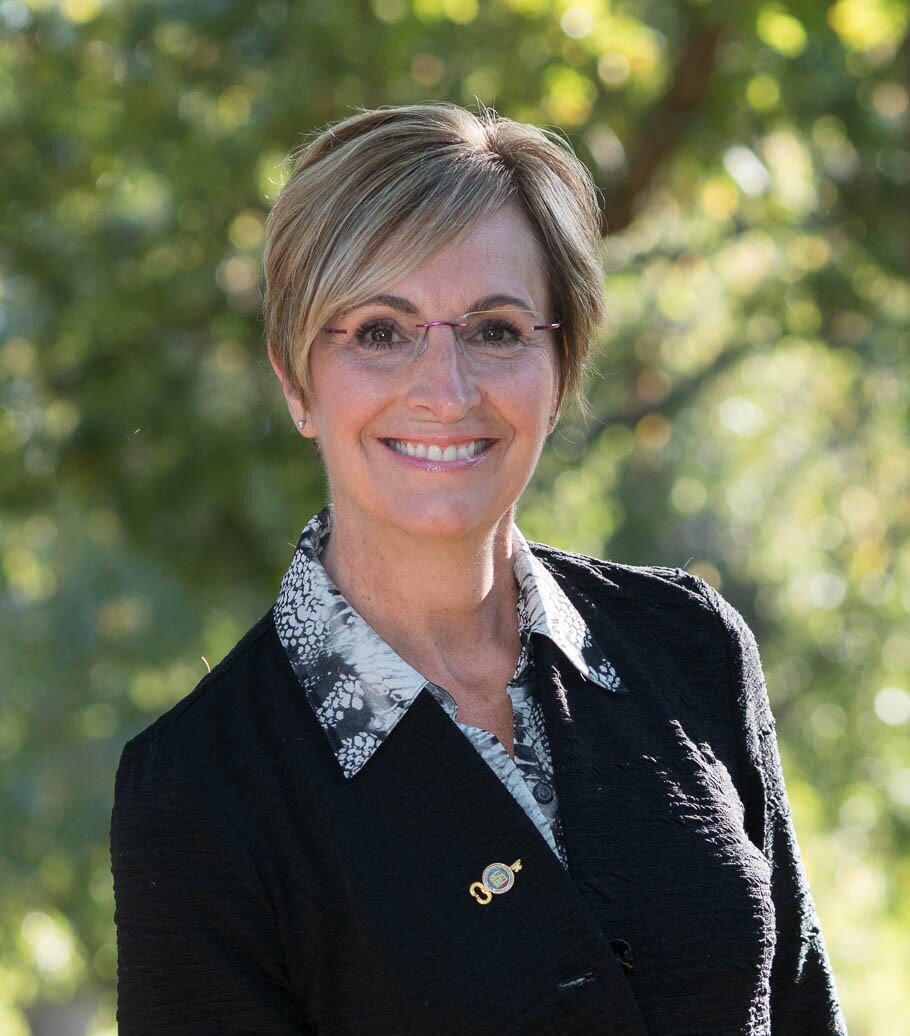
Dianne Herrin, CEM, LEED AP
Dianne Herrin, CEM, LEED AP | Senior Program Manager
Dianne has more than 13 years of experience providing technical research and strategic communications services as well as 10 years of municipal work in energy conservation, energy efficiency and sustainability. She authored the nation's first ENERGY STAR ordinance for new commercial construction. She led the Borough of West Chester through the first municipal, community-wide greenhouse gas inventory in Chester County and created/implemented the Borough's successful Climate Action Plan. Dianne is also the Mayor of West Chester Borough.
"My passion has always been protecting the environment. I love helping clients see their potential to save money and energy, while improving comfort and indoor air quality. I also enjoy communicating with stakeholders about the many ways they can achieve their sustainability goals."

Benjamin Pressman, PE BESM
Benjamin Pressman, PE BESM | Project Mechanical Engineer
Ben is a Certified Building Energy Simulation Analyst and has a deep understanding of building modeling software and methodology, energy auditing techniques, and HVAC systems operation. Ben holds an MSE in mechanical engineering from Johns Hopkins University.
"I knew in college that I wanted a career in energy and sustainability. I love being able to have a direct impact on making buildings in our community comfortable, healthy and efficient. As a mechanical engineer, my focus is on environmental and energy sustainability and applying that to projects."

Lindsey Walaski, LEEP AP
Lindsey Walaski, LEED AP | Project Mechanical Engineer
With a Bachelor's Degree in Mechanical Engineering and a Master's Degree in Sustainable Engineering, and a year working in the Sustainability Coordinator's Office at Villanova, Lindsey brings a broad range of experience to the team. She provides services from energy audits and modeling to curricular presentations in the classroom.
"I love to use my technical degree towards environmental protection and urban sustainability. My focus is finding opportunities for energy savings in buildings and designing educational programs to increase awareness of energy and sustainability. I enjoy using my experience in the energy sector to advocate for green building and renewable energy legislation."

Kate Lyons
Kate Lyons | Graduate Geologist
Kate will be graduating from Temple University in August of this year. She will be coming on board initially as an intern and then transitioning to full time designation after graduation.
"I have always been interested in how people interact with the environment. I enjoy working in the public service setting, and I have a passion for urban sustainability. Also, did I mention that I love data and working with GIS?"
Berks County Water & Sewer Association: Do you have your Assets in the Cloud?

Berks County Water & Sewer Association Virtual Conference: Do you have your Assets in the Cloud
Are your organization’s asset formatted in a secure method so you are prepared to react to new work place requirements as a result of an emergency? Has your infrastructure been planned and designed to modify how work was performed when your staff can no longer work from traditional brick and mortar offices? SSM will share how their advanced planning paid off for them and share ideas for your implementation. What are the Issues with planning and implementing Capital Construction projects as a pandemic hit? Do you postpone, cancel or just charge ahead?
presented by Al Guiseppe, PG
Director Water Resources
al.guiseppe@ssmgroup.com

Berks County Water & Sewer Association: Covid and Sanitary Sewers
We know now that COVID-19 does not survive in public water but it thrives in waste water. What are the exposures and what can you do to manage these pandemic and future ones.

Berks County Water & Sewer Association Virtual Conference: Covid and Sanitary Sewers
We know now that COVID-19 does not survive in public water but it thrives in wastewater. What are the exposures and what can you do to manage these pandemic and future ones.
presented by Ralph Johnson, PE,
Vice President Environmental Engineering
ralph.johnson@ssmgroup.com
Many institutions such as higher education, k-12, museums, and not-for-profit organizations were early adopters of strategic sustainability and energy conservation initiatives, and continue to provide leadership.