

Berks County Water & Sewer Association: Case Study of Construction during COVID-19
Case Study of Construction during COVID-19: The challenges and solutions of the City of Reading wastewater treatment plant project and the WBWA raw water line project.

Berks County Water & Sewer Association Virtual Conference: Case Study of Construction during COVID-19
Case Study of Construction during COVID-19: The challenges and solutions of the City of Reading wastewater treatment plant project and the WBWA raw water line project.
presented by Ralph Johnson, PE
Vice President Environmental Engineering
ralph.john@ssmgroup.com

Berks County Water & Sewer Association: Crisis Management Toolbox
Emergency Response Plan Updates, Critical Pandemic Preparedness Plan elements, Exit and re-entry planning - critical positions, maintaining the facility, Protecting the Operators: What needs to change? What if they get sick?

Berks County Water & Sewer Association Virtual Conference: Crisis Management Toolbox
Emergency Response Plan Updates, Critical Pandemic Preparedness Plan elements, Exit and re-entry planning - critical positions, maintaining the facility, Protecting the Operators: What needs to change? What if they get sick?
presented by Ralph Johnson, PE, Vice President Environmental Engineering
ralph.johnson@ssmgroup.com

Berks County Water & Sewer Association: Legislative and Regulation Update
EPA and DEP Legislative and Regulatory Update
Berks County Water & Sewer Association Virtual Conference: Legislative and Regulation Update
EPA and DEP Legislative and Regulatory Update
presented by Serena DiMagno
Senior Environmental Consultant
serena.dimagno@ssmgroup.com
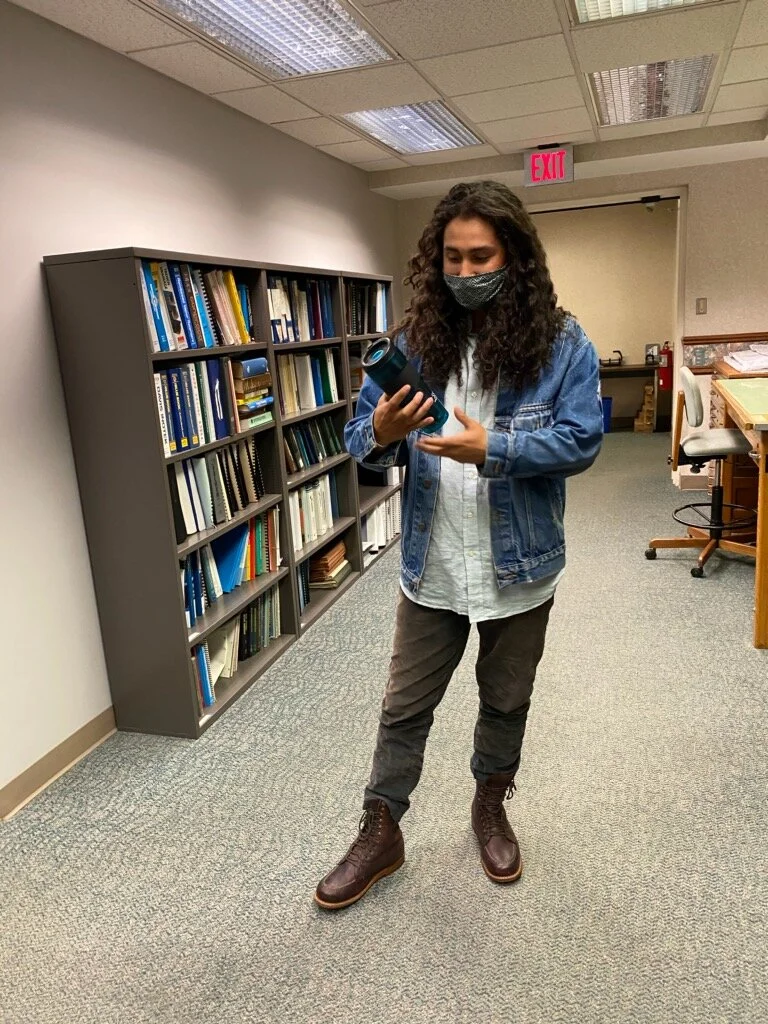
Welcome Aboard Austyn Diaz
Welcome Aboard Austyn Diaz!
SSM is excited to welcome Austyn Diaz to the firm as a GIS Specialist in our Water Resources Department. Austyn is a graduate of Indiana University of Pennsylvania with a BA in Geography/ GIS Technologies.

Spotts Stevens and McCoy Announces Expansion to Firm
Spotts, Stevens and McCoy (SSM) announced today an expansion to the firm: creation of a new Energy and Sustainability Services division, to be led by its new director, Paul Spiegel, PE, LEED AP.

Spotts, Stevens and McCoy (SSM) is thrilled to announce an expansion to our regional engineering, environmental, and surveying firm. SSM created a new Energy and Sustainability Services division, to be led by its new director, Paul Spiegel, PE, LEED AP. Spiegel formerly served as President of Practical Energy Solutions (PES), the West Chester-based energy consulting firm. This expansion extends the scope of the three existing divisions under the SSM umbrella: Facility Engineering, Environmental Engineering, and Civil Engineering.
PES and SSM have worked together for years, serving similar clients in complementary ways, and even more recently, sharing an office building. But it is the synergy and overlap of values and services that made this an opportune time to expand and introduce this new division.
We are a firm that believes in improving the quality of life for our clients, our employees, and for all of the people touched by the work that we do. It’s this mission that drives the services and goals of the new division: transforming buildings into comfortable, efficient, healthy spaces to live and work.

“Environmental responsibility and creating a sustainable future have always been initiatives that guide the work that we do. It’s only right to bring on a team that will stand with us in leaving the world a better place”, says Eileen Kaley, SSM Vice President and Chief Strategy Officer.
Several other members of the professional staff of PES will also be joining the team under the division, establishing a deep-seeded expertise in providing clients practical and creative energy management, consulting, education, and technical advisement.
Brian Kelly, SSM’s President and Chief Executive Officer, commented, “This is incredibly exciting news for all of our clients, and especially for the communities that we serve. Combining our expertise is going to change the game for the services we offer and bring a new depth to the solutions we provide.”
Spotts, Stevens and McCoy, Inc. is a family-owned regional engineering, environmental and surveying firm headquartered in Wyomissing PA with satellite offices in Lancaster, West Chester and Lehigh Valley. SSM provides services to various types of local, regional and national businesses that include commercial, industrial, manufacturing and telecommunications as well as healthcare and higher education institutions. For more information about the firm go to: www.ssmgroup.com.

Spottlight on Forward Thinking
Over the years, organizations like yours and like ours have navigated game-changing decisions, world-changing events, life-changing innovations. We’re here again. We’re on the crux of great changes ready, for new normals, reporting on big decisions, and embracing game-changers. From innovative ways of approaching common projects to lessons learned in preparing for the future- our focus this month is on forward-thinking. This month, we look to the lessons learned over the past few months, the challenges that were identified, and the questions that seek answers as many approach “big months” and game-changing adjustments.

Over the years, organizations like yours and like ours have navigated game-changing decisions, world-changing events, life-changing innovations. We’re here again. We’re on the crux of great changes ready, for new normals, reporting on big decisions, and embracing game-changers. From innovative ways of approaching common projects to lessons learned in preparing for the future- our focus this month is on forward-thinking. This month, we look to the lessons learned over the past few months, the challenges that were identified, and the questions that seek answers as many approach “big months” and game-changing adjustments.
IN THIS ISSUE:
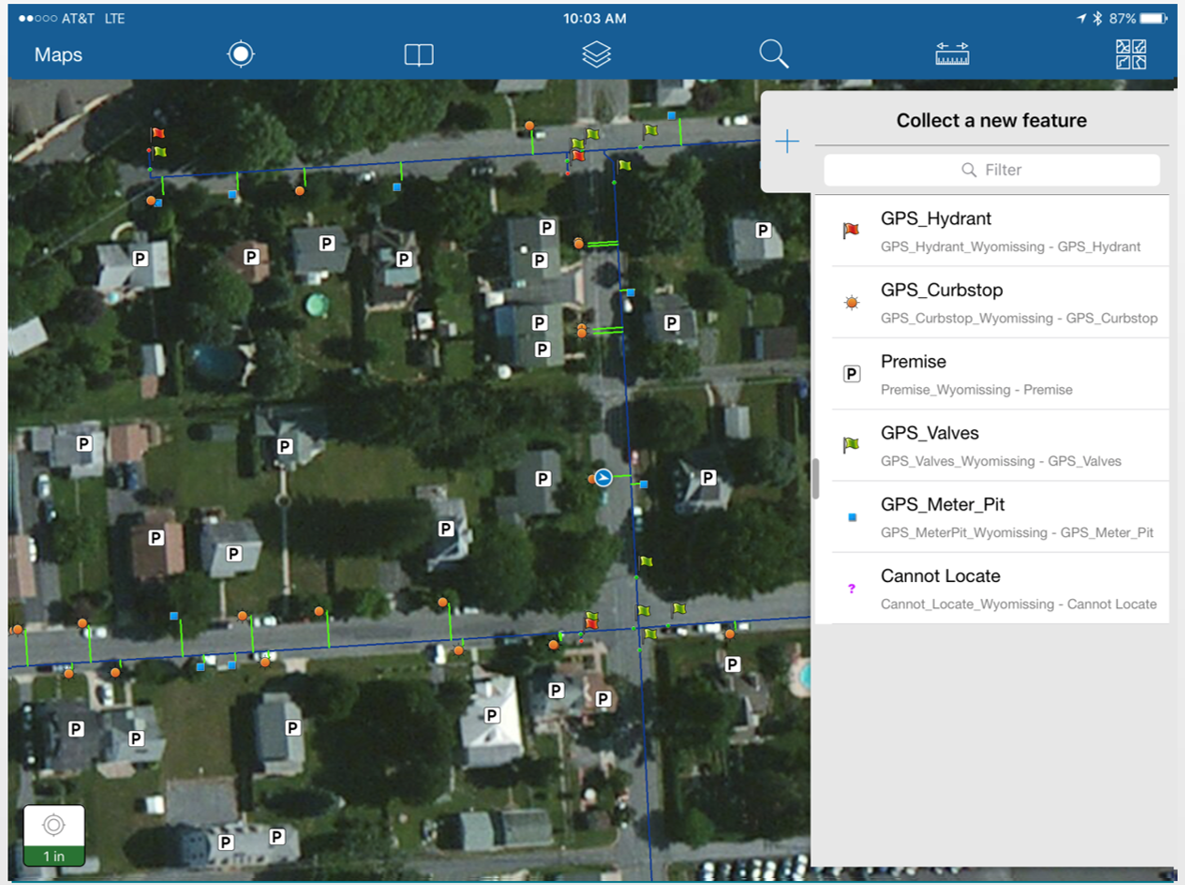



Get your Assets in the Cloud: Utilizing GIS for Asset Management
The urgency of going remote quickly identified gaps in existing systems. Many have been forced to use tools that have always been at their disposal- but often overlooked. GIS has always been an advantageous opportunity for asset management. But, recent events have proven that getting assets into the cloud is absolutely critical, and should be a priority.

GPS Data Capture
So many people rushed out of their facility with urgency- with no idea what the restrictions would be on returning; or, no concept that they’d be gone for quite so long. For some, simple things as lunch boxes were accidentally left behind. For others, plans and documents that help things move forward- are still sitting exactly where they were left.
For years, organizations have identified ways to stop relying so heavily on paper. Overfull filing cabinets, messy desks, and printing costs are all contributors to this goal. But, being forced to work remotely has proven to be the catalyst that many need to, finally, stop relying on paper.
For asset management, in particular, having consistent and constant access to the most up-to-date information is crucial to maintaining operations effectively.
But the need to have asset information accessible is not new. For years, asset management has been a point of contention for many. What is the most efficient, the most effective, the most valuable… the best way to manage assets?
Cloud-based infrastructure through GIS has always been an advantageous opportunity for asset management. But, recent events have proven that getting assets into the cloud through GIS is absolutely critical, and should be a priority.
Here are 5 reasons that GIS is a game-changer for asset management.
1. Always at your fingertips
“Let me look through my files” is a thing of the past. What happens when you’re in an emergency? What happens when your paper files aren’t accessible? When it comes to asset management, the most important and crucial question is, “Can you find it when you need it?”
For many, going digital began long before this. You see- going digital, using the cloud, creating apps to collect data, none of this is unique to GIS. It’s the incorporation of geographic location and maps that changes the game.
You might already store digital photos of all of your assets. Or scan important updates that relate to construction or modifications to the systems you manage. But- what good are those folders and files- if you can’t find what you need when you need it?

GIS to Document Field Photos
Because in an emergency, you might not just need a picture of any water valve. You need a picture of the exact water valve that resides exactly where your crew is standing.
With GIS, the information you need is always there when you need it. The connection of asset information to location makes asset management easier, and more forward-thinking than ever before.
Here, there, anywhere, your information is accessible. Smart phones, computers, tablets, the digital list is endless. It’s where you need it, when you need it.
Most reports are showing that organizations across the globe have been moved to reconsider what work looks like. This includes remote work becoming a “new normal”. Being forward-thinking means being prepared for the future. Having your assets managed for the future, means having information at your fingertips- no matter where you are or when you need it.
2. Always up to date
One of the most valuable capabilities of GIS is its ability to be constantly updated. Paper plans are only good for the moment in which they are printed. Any changes force plans out of date, and in many cases, out of use.
Consider construction of a utility as a great example. An engineer designs a utility plan. The design plan (paper) gets passed on to construction. During construction, changes are, inevitably, made to the original design plan. These markups are often written on the design plan, forming the basis for the final record “as built” plan.
Sounds like a decent workflow, right? But, what if the design plan wasn’t on paper? What if it was accessed through a tablet? And, during construction, a tablet could be used to make markups. Our GIS team updates the map, and now the plans that you- or anyone- have in their hands at any time are always the right plans, always the most up to date plans, and always they plans they need.
3. Always moving
Let’s think back to the last example- the workflow of passing and updating and editing paper plans. How many projects were put on hold, or at least delayed, because someone, somewhere, had a paper that you couldn’t get to?
This point- GIS keeps things moving- is perhaps one of the key points that organizations learned over the past few months.
When your assets are in the cloud, when you utilize GIS for asset management- projects don’t stop. And emergencies? You’re ready for them too. You shouldn’t be spending time looking through your files, coordinating “get that paper to you” time, or even having to deal with the aftermath of an emergency that was poorly prepared for. Find it, use it, have it- all when you need it.
4. Always together
GIS for asset management also means that everything lives together in one spot. Project notes, locations, pictures, data, it is all embedded together, associated with the geographic point.
What this means is no longer trying to squeeze 3 sentences of notes into the small margin of a paper plan. What this means is no longer having post it notes and scrap paper circulating everywhere. What this means is everything stays together. Everything has a spot. Everything, is where it should be.
Even the simplest maps might have extensive comments that make the map meaningful. Instead of printing and writing- embed a note on a digital map. Now, it’s accessible for many and meaningful to all.
5. Always able to grow
Re-configuring your entire asset management system to GIS sounds intimidating. We get that. But what we love about GIS is its growth opportunity.
We’ve worked with municipalities that only wanted to start small. All they wanted was for field pictures to be accessible in the field. So, instead of taking millions of pictures and storing them in folders on their hard drive- they connected these to a GIS map. So when a field crew arrives to repair an underground utility, they can look at a photo of the installation and understand the configuration before digging it up.
Just pictures. Pictures attached to location create valuable information. Just pictures then expands to more- description of the project, notes about issues or concerns, maintenance records. It’s a simple start of implementation, with the power to grow into a hugely dynamic resource.
We’ve also worked with utility teams that go much bigger- digitizing records for every pipe, valve, and hydrant, everything they own including scans of hand-written plans.

GIS as a Record Management System
We’ve even done projects that extend further. One municipality is utilizing GIS as a records management system, not just assets. Original invoices, information on who installed pieces, everything they could ever need to know- digital, at their fingertips, up to date, all in one place.
The point is, that GIS is here for what you need it for. For many, starting small and simple is a great first step. Then, add something else. Then, add some more. The more you use it, the more excited you’ll be for all of the ways it can grow.
The urgency of going remote quickly identified gaps in existing systems. Many have been forced to use tools that have always been at their disposal- but often overlooked. Across the board, lessons have been learned about how organizations have functioned in the past, and should look to function in the future. GIS for asset management? That’s forward thinking.
#ProblemSolved: Our GIS Team is here to help. If you have questions, send an email to Al Guiseppe, PG at al.guiseppe@ssmgroup.com or give a call to 610-898-3049
Preparing Your Outdoor Space
Maximizing outdoor space has become an urgent priority for facilities and operations managers. Implementation of structures that provide shade and some degree of covering are a critical consideration when planning outdoor space. We encourage you to ask yourself 4 questions before you start the process.
Maximizing outdoor space has become an urgent priority for facilities and operations managers. All varieties of organizations are seeking innovative ways to boost outdoor use. This desire isn’t unique to restaurants- opening outdoor seating. Organizations from large-scale manufacturing to small family-owned businesses are all considering ways to extend what would typically occur inside- to the outside.
While for some, making outdoor space happen was an overnight move of furniture to a parking lot- an urgent shift in operations. But for others, the opportunity for a more viable space that is better suited for conditions is a much better investment option.
Implementation of structures that provide shade and some degree of covering are a critical consideration when planning outdoor space.
As organizations lean to installing these shade structures or coverings, we encourage you to ask yourself these questions to make sure you’re on an efficient path to ensuring what you need happens.
Why are you pursuing this option?
Articulate why you are seeking a structure to ensure the project is going to meet your needs. Some things to consider- how temporary will this structure be? Is this just for one event, a season, or year-long? How will the space be utilized- what types of things will happen in this space? Who is it for- employees, customers, visitors, equipment? Identifying these questions and solidifying your interest in a structure can greatly impact not only the product, but the process.
What do you want to get out of it?
Further specify your goals for the structure- identify what you’d like the structure to do. Is it strictly for offering shade? Or, do you intend for the structure to offer rain shelter? Furthermore- are you seeking a space that sustains in winter, or just warm weather? These types of questions determine whether things like ventilation or heating should be considered. Similarly, if open air is opportune, or additional covering would be of interest. Having a clear understanding of how your organization will use your space and what you’d like it to offer you is imperative to beginning the process.
What type of lighting and electrical needs will you have?
This is a great question to ask yourself from the beginning. Have you considered how daylight may impact your use of the space? Manufacturers, for example, might be looking to extend their break rooms to an outdoor space. But, depending on work shifts- adding lighting could be a priority. You may also want to consider WiFi access and convenience outlets for staff or customers to stay connected. There are a number of options to incorporate electrical and lighting needs into an outdoor shade structure- but consideration should be made early to ensure no delays in project timelines. Answering this question from the beginning, and identifying all of your needs will be a huge benefit when beginning the project process.
Do you have an engineering team?
There are a number of engineering design components that go into creating a sustainable outdoor shade structure or covering. For example, anchorage of tents should be worked on to avoid damage to existing patio structures. Similarly, designing a structure- temporary or permanent- should be specific to the needs of your organization, and the structural things that you have going on. You want a planning and engineering team that can make sure your goals are being met in a safe, accurate, and precise way.
Permitting and codes are another distinct reason to work with an engineering team that can help guide you through the process. A temporary structure can only be erected for a period of time (usually 180 days) to be considered temporary. After that, your structure is subject to building codes. Similarly, temporary structures are all subject to fire code, mandatory construction documents, permits, and egress requirements. While you may feel an urgency to get something up and get people out- working with a team that can help you do it correctly is well worth it.
Consider these questions as your first step to moving towards getting a suitable outdoor space set up for your facility. Then, we encourage you to get a virtual consulting call on your calendar to begin the process.
#ProblemSolved: Our Facilities Engineering Team is here to help. If you have questions, send an email to Kitty Bell, Vice President at kitty.bell@ssmgroup.com or give a call to 610-898-3066
Implementing UV Filtration & Reconfiguring Your Space
When bringing operations and employees back to the facility, air quality is of the highest priority. Ultra-Violet (UV) filtration is an additional area in which we see options for facility managers to use their HVAC system to improve air quality and decrease contaminants and toxins.
Implementing UV Filtration
When bringing operations and employees back to the facility, air quality is of the highest priority.
Ultra-Violet (UV) filtration is an additional area in which we see options for facility managers to use their HVAC system to improve air quality and decrease contaminants and toxins. While UV has become a popular conversation for facility and operations managers, make sure that you are working with a team that can implement it appropriately and effectively for the needs of your specific organization.
UV filtrations are a common offering and can be added to almost any air handler. Adding UV filtration is also an easy adjustment to your system in the sense that it does not require much reconfiguration to implement. While the addition of UV treatment does require some additional electric power, typically a few amps at 120 V, it is a very low pressure drop add to the fan system meaning a change to the air handler fan motor is highly unlikely and the additional cost of operation miniscule.
We know that UV is very effective for eliminating mold and viruses. We’ve actually helped get some of these systems up and running in water treatment plants.
But an important factor is making sure your employees are not exposed to the UV light. This can cause many issues and risks. Our suggestions are to first and foremost, run UV filtration through duct work.
If you are using a recirculating UV system located within the occupied space, we recommend using it when space is unoccupied. An easy tip is to create a “cleaning” schedule for spaces so that UV can work while other parts of the building are being used, or when the building is closed.
A great decision is walking through your options and finding the best fit for your facilities, employees, and budget. Moving forward with mindful and meaningful changes means creating a healthy place for people to work. This isn’t one size fits all- it’s about you, your people, your place- and doing what works for you.
Reconfiguring the Workplace
Don’t forget: reconfiguring your workspace may have a significant impact on your HVAC system.
You may be planning to reconfigure your partitioned office space, or any workspace within your facility. Keep in mind that this will change the airflow of the workspace which not only has an impact on your HVAC system and comfortability, but also the health of your employees. Consider this a priority when re-evaluating how your space will function. We’d be happy to talk through what the reimaged airflow looks like, and how you can best utilize your space.
New ventilation requirements for HVAC systems might also impact the current equipment you have, as for many the current equipment won’t be able to handle the load. Designing a more sophisticated system that uses a higher level of design and more outdoor air, might be a good option. While this is not always as energy efficient as we’ve seen in the past, we can still design the new standards to be as efficient as possible and healthy for employees.
The priority is to remember HVAC’s role in the health and functioning of your facility. Too often, HVAC becomes an invisible thing that we forget needs to be cared for, upgraded, and utilized to the best of its capacity. Think forward to what you can do to best take care of your people, and your building.
#ProblemSolved: Our Mechanical Engineering Team is here to help. If you have questions, send an email to Bruce Bell, Director at bruce.bell@ssmgroup.com or give a call to 610-898-3079
5 Keys to a Victorious Virtual Meeting
Today, the most pervasive new way to communicate is via video meetings. But, unfortunately, many people do it poorly. Here are five keys to a virtual meeting so you can own the “room” like never before!
Today, the most pervasive new way to communicate is via video meetings. But, unfortunately, many people do it poorly. Someone who doesn’t know how to navigate their video calls properly is the virtual equivalent to that person you meet at a networking event with their tie askew and their collar flipped over. Practice these five keys to a virtual meeting and own the “room” like never before!
1. Proper Preparation
After nearly three months of practice, the expectation is growing that everyone should be proficient in the use of video tools. While each video tool has a different layout and different settings, it could be a good practice to download each and do some rehearsals. Some key things to know are how to turn your video on and off, how to mute yourself, and how to effectively share your screen.
The most common tools to practice on include: Microsoft Teams, Zoom, Google Meet, WebEx, and GoToMeeting. If nothing else, if you’re scheduled to go on a call with a tool you aren’t comfortable with, do yourself a favor and practice using it for 15 minutes the day before. This will ensure that the tools works on your computer and you are familiar before video meeting with others. Oftentimes, people show up late for meetings because they failed to download or update the software ahead of time. Make sure to be proactive so this doesn’t happen to you.
Internet Connectivity:
Poor internet connection can wreak havoc on a video call. Whether you’re calling in from home or the office, ensure you have fast and capable internet connection. If you have a history of slow internet at home, consider an upgrade. Some companies are investing in this on behalf of their employees and subsidizing their monthly expenditure on connectivity. You can test your internet speed here.
2. Plan Ahead
Just like in-person, meetings need to be well run in order to be worthwhile and effective. A few simple steps can make sure your virtual meetings are run well.
Who’s in charge here?
Designate one single person to be in charge. Having one individual unequivocally running the meeting will save time, energy, and confusion. This is especially true when you pick the right person. The facilitator of meeting means they’re in charge of start and end times. Virtual, and in-person, meetings should start on time and end on time. The meeting runner also ensures attendees adhere to the meeting expectations and agenda. They also do the difficult job of ensuring everyone has time to speak as well as calls on people when they “raise” their hands. Facilitators should also make sure to closely monitor the chat for any side questions that may be raised during large group virtual meetings.
While being the meeting runner might not sound exciting, it is certainly a role that saves the meeting from dysfunction and the attendees from frustration.
What’s on the agenda?
Establish a clearly defined meeting objective. Your agenda makes sure that objective is reached.
For example, if you’re holding a virtual sales presentation your objective might be, “We’re here to determine whether our product is a fit for your business.” On the other hand, an internal management objective might be, “This meeting is to ensure management is aware of current projects by providing updates form key internal departments.”
It might be a good idea to include time limits on your agenda for sub items, or speakers when appropriate. This specific outline will ensure that everything you want to cover, gets covered. (Pro tip: don’t forget to include time for question and answer if it fits with your meeting type).
An agenda should be sent out 24 hours before the meeting so that attendees have a chance to review and prepare.
3. Comprehensive Calendars
If it isn’t on the calendar, it isn’t going to happen. A common (and simple) mistake that people make when it comes to virtual meetings and events is not properly and effectively using calendars.
First off, make sure that everyone who should be at the meeting is invited to it beforehand.
If you’re sharing an event with people outside of your organization, they may be using a different calendar tool. For example, you might be on Outlook, they might use Google Calendar. These various tools don’t always talk to each other very well. So, take the time to follow-up with meeting invitees to ensure they have the information they need ahead of time and can access all of the associated video links.
Meeting notes on calendar invitations can serve as a great space for details. Use it! Include the agenda in the meeting notes, links to join the meeting, and any other reference information that might be useful to attendees. This helps prevent searching tirelessly through email inboxes- it’s all included right on the calendar!
Event Promotion:
Now is a great time for many to be actively involved in virtual events. Even if the event doesn’t look that great, people will probably show up for it. Let’s be honest here, many people are LOOKING for things to do! Plus, signing on to a virtual event is far less of a commitment than driving to one. So, you have an opportunity to engage a lot more people that normally might be hesitant. So, make sure you’re promoting your event well. Poor virtual attendance is a symptom of poor promotion. If people aren’t showing up to your event, it’s likely because they aren’t hearing about it.
There are plenty of online resources to help you promote your event. LinkedIn Events table for Company pages is an incredibly powerful way to invite people to an event. You could also use Eventbrite, Facebook, your local Chamber of Commerce, partnerships, your email list, and good old fashioned press releases. Here’s a great resource for hosting your own virtual event. (https://blog.hootsuite.com/virtual-events/)
Remember to give people enough time to get it on their calendars. Two to three weeks in advance is a sweet spot for events. If you’re posting only five days before the event, there is more than likely a conflict for more people.
4. Microphone Mastery
Know how to mute and unmute yourself. This is a BIG ONE. There are mistakes, and then there are big mistakes. A mistake is forgetting to mute your microphone. A big mistake is forgetting to mute your microphone and then going to the bathroom while on a call. Yes, it happens.
Background noise ruins meetings. If the person speaking is the only one that is unmuted, then meetings will not get microphone feedback or interruptions from background noise.
Pro tip: keep your cursor over the microphone button for the vast majority of the meeting. So, all you have to do is click!
When you’re about to speak, click to unmute.
When you’re done speaking, click to mute.
It’s that simple.
Always enter meetings on mute. There is typically a conversation happening when you first log in that you don’t want to interrupt. Unmute yourself and say hi once people have said hello.
Meeting facilitators should take on the role of monitoring when others are unmuted and causing a disruption. Don’t be afraid to ask attendees to mute themselves. If your virtual conferencing tool offers a hand-raise feature, encourage use of it and have your meeting facilitator monitor when hands are raised. This is a great tool for encouraging engagement, without running the risk of meeting disruptions.
5. Vivacious Video
The key to looking good on video chats is to… make the effort to look good. While working remotely presents the opportunity for lackadaisical grooming and dress- it also says something about your personal brand, and how seriously you take your work.
Wear something nice. Shower before a meeting. Shave. Comb your hair.
Remember that the impressions you would normally leave in person are narrowed in video calls. So things like how you shake hands or the way you smell are all narrowed down to how you look and the voice they hear. That’s it. So, control what’s in your control and you’ll make a great impression.
Captivating Camera:
Your camera placement can play a huge role in how you portray yourself.
Put your camera at eyelevel. That way, when people see you on their screen, it looks as though you are looking at them in the eye. It’s a simple little hack that makes people feel more human and connected.
Invest in great technology. If your camera gives a poor quality, upgrade it. If you look fuzzy on the screen, consider making a change.
Beautiful Background:
Control your background area by ensuring your back is to a wall. This way, you won’t get housemates walking back and forth in the background.
Make sure to keep your area clean. A simple way to ensure your background looks good is to have a bookshelf behind you. As an added bonus- pick out books and décor for your bookshelf based on who you are talking with. You’d be surprised how many people notice what you have behind you.
Many video conferencing tools allow you to change your video background to some other picture, design, or location. These can certainly be used for humorous purposes, but be prudent in who you show off your Martian planet background to. Not used in an appropriate setting, and these background end up looking chest and unprofessional.
Own your space:
If you really want to rock virtual meetings, take them from the same place every time. This way, you can perfect your lighting, background, and camera placement. You’ll be comfortable knowing that you look terrific each time you log on. This also eliminates variables, ensuring your housemates or office mates give you your space when you need it.
Lovely lighting:
Getting lighting right can be the difference between looking dashing, and looking like a DC comic villain. But getting the lighting right is also simple.
Make sure you do not have your back to a window or some other light source. The light should come from in front of you, illuminating your face.
But be careful, too much light will wash you out.
You can easily find the balance of too much light and not enough when you practice ahead of time. A great idea if to put a small, adjustable desk lamp near you, so you can change its angle to manipulate how much light goes on your face.
You’ve got this!
It doesn’t take much to look, feel, and display yourself as incredible, just a few minutes of preparation and thoughtfulness. Elevate your brand and implement the five key steps to virtual meetings. You’ll be so glad you did.
#ProblemSolved: Need more tips on virtually communicating? Our marketing team would be happy to help. Send us an email at information@ssmgroup.com
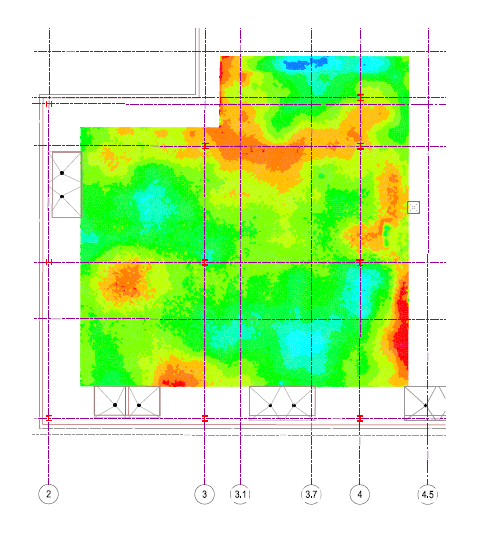
High-Definition Laser Scanning to Measure Floor Flatness
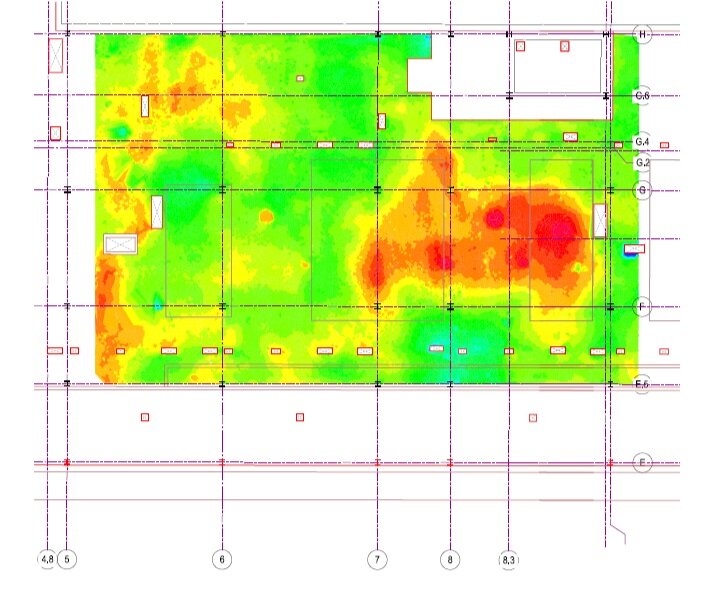
High definition laser scanning offers the best precision, efficiency, and accuracy to the process of measuring floor flatness. With speed unlike manual measurement, and collection of millions of points, digital scans identify and distinguish exactly where floors stand- competitively outshining historical practices.
Getting to the Bottom of It

Construction supervisors, contractors, architects, building developers, facility managers, inspectors, engineers, and other key stakeholders in facility and building construction all know well the critical concern that is floor flatness. Exact flatness in concrete floors is critical to efficient facility functioning, maximum floor tolerance, maintaining operations, and successful architectural design.
Down to minute measurements, 1/16th of an inch, floors that are not exceptionally flat cause major disruptions to existing facilities, or halt construction of new ones.
For industrial facilities- machinery, forklifts, handling equipment, and vertical storage all require precise concrete floor flatness. Lack thereof can increase chance of injury, loss of product, and damage to large equipment. Although rarely noticeable to an untrained eye, the impacts of a floor that is not flat are impossible to ignore.
For architects as well, modern designs require a similar preciseness. For example, glass walls and other popular design elements are all at the mercy of the flatness of the floor they will be placed on.
Rehabilitating and revitalizing existing structures also have a need for measuring floor flatness. Of primary concern among these are the settling of concrete over time. To successfully redevelop an existing facility, identifying the floor’s flatness is critical to successful tolerance and utility.
It is clear that measuring the precise flatness of a floor is of utmost priority to building development teams. But the priority is not new. Experienced teams are well-versed in the role and impact this priority has on timeline and long-term successfulness of building projects.
Although a historical concern, innovative teams are frequently searching for a better way. These teams are privy to the role that precision, efficiency, and accuracy all play in bringing construction projects to fruition. Because just measuring the floor’s flatness isn’t enough. The measurements should be precise. They should be done efficiently. And, the results should be accurate.
High definition laser scanning offers the best precision, efficiency, and accuracy to the process of measuring floor flatness. With speed unlike manual measurement, and collection of millions of points, digital scans identify and distinguish exactly where floors stand- competitively outshining historical practices.
Cutting-Edge Practices and Technology
Throughout the years, measuring to calculate F numbers (flatness) has taken a variety of methods. It wasn’t too long ago that technicians would lay a 10-foot straightedge on finished floor, identifying gaps and using these to calculate flatness. More recently, crews are deployed to walk slabs of concrete, take a variety of measurements, and generate a resulting calculation.
Both of these avenues leave great room for human error. In some instances, the straightedge method even presents discrepancies from technician to technician. In a similar regard, both of these tactics offer extensive manual labor, inhibiting work timelines.
In construction, time and value are often seen as contradicting. Developers are frequently forced to accept that accurate, precise results go hand in hand with extended timelines. In considering the value of precise floor measurements, it would be assumed that the process must be long to be accurate. But with 3D scanning, neither time nor accuracy must be sacrificed.
Laser scanning for floor flatness dramatically improves the three core areas of concern: precision, efficiency, and accuracy.
Here’s how it works:
Our survey and data collection technicians deploy cutting-edge scanners to the construction site. In just a few minutes, the floor space is scanned, collecting over thousands of single points that together form a digital rendition of the space at precise measurements.
This is repeated a number of times, each time utilizing the same control or benchmark within the space. Multiple scans of the same space is a practice that increases accuracy. Utilizing the benchmark ensures precision among each scan. The scans are transferred to digital format, creating a 3D point cloud- all of the multiple scans, millions of individual points, layered on top of one another, and anchored by the control.
Digital scans of a space offer elevation information- identifying clearly the floor’s flatness. But scanning technology also offers the capability to calculate F numbers just as manual labor aims to do. Therefore, the technology reaches the desired conclusion in a better way, a faster way, and a more effective way.
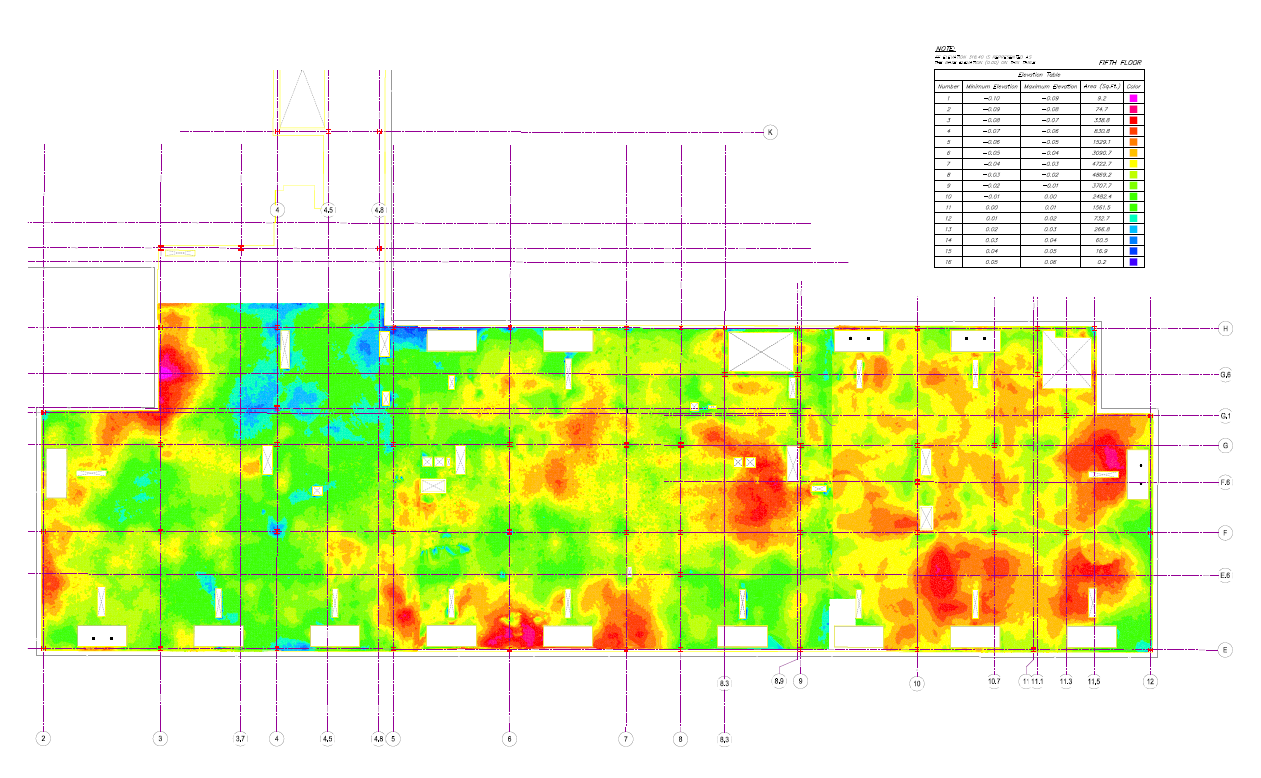
Precision. Efficiency. Accuracy.

By collecting millions of points in minimal periods of time, laser scanning outshines manual labor and calculations. Technological advances decrease the opportunity for human error, and decrease the amount of time it takes to collect more information. And, this technology means not only more data, but more capabilities with that data.
21st century facilities shouldn’t be built with last century tactics.
We know that investing in cutting-edge technology and implementing cutting-edge practices changes the game for our clients. The outcome is evident- high definition laser scanning is the best way to measure floor flatness with precision, efficiency, and accuracy.
Looking to talk more about using scanning to measure floor flatness? Our Survey team would be happy to help. Send us an email at information@ssmgroup.com
#ProblemSolved: Read more about Survey and Data Capture.


Spottlight on Showing Up
There’s so much that we could say right now. But instead, this month, we want to show up.
At SSM, we knew from the day that the COVID-19 pandemic began to pose a serious threat to impacting our communities- that our number one job was to show up. This month, this Spottlight, we want to show up for you in one of the best ways we know how- sharing what we know. We’ve deployed our divisions to help us talk about some of the things we know are on your mind. From environmental to facility- take what you need.

There is so much that we could say right now. There is so much that so many are saying right now. From the emails to the news we join you in all of the feelings of being overwhelmed. We join you in the constant states of trying to understand, trying to learn, trying to find answers, and sometimes- just trying to make some sense of things.
There’s so much that we could say right now. But instead, this month, we want to show up.
Across the world, across the nation, across our communities and across our relationships- people are finding that when push comes to shove, when trial comes to tribulation, and when scary days meet stressful nights- what we need to do for each other is show up.
We’ve seen car parades and video-chat birthdays. We’ve seen wedding drive-ins and cul-de-sac happy hours. We’ve seen math lessons through windows and husbands in bucket trucks just to make a visit. We’ve seen piles and piles of donations and we’ve seen bags and bags of handmade masks. What we’ve seen is that when we feel far apart, we show up bigger, better, and bolder than ever before.
At SSM, we knew from the day that the COVID-19 pandemic began to pose a serious threat to impacting our communities- that our number one job was to show up.
From the well-being of our employees, to the passions of our clients, and to every single project and every single person in between- we are showing up. We’re here. We’re working. We’re ready.
We’re showing up for your projects. With technology- cloud-based infrastructure and single-number reach prevent any possible delay in getting the job done. We’re showing up for our clients. Virtual coffee breaks, happy hours, and just regular phone calls- all because you matter. And we’re showing up for our people- check-ins, work-from-home challenges, and even the occasional pizza delivery. We’re showing up because in many ways, things are different. But we know that in some of the best ways, things will always be the same.
This month, this Spottlight, we want to show up for you in one of the best ways we know how- sharing what we know. We’ve deployed our divisions to help us talk about some of the things we know are on your mind. From environmental to facility- take what you need.
Remember that we’re here. Tell us how we can help you. We’re working. Our projects and our team members are all moving and continuing to thrive in a variety of ways. And, we’re ready. We’ve got the tools. We’ve got the expertise. We’ve got it covered.

Having the Right Conversations at Your Municipality
For many during this time, considerations are being taken for what communities will look like in the future. Local governments are facing concerns over declining tax revenue, parks and recreation facilitators are wondering how things will happen if they can’t really happen, local leaders and community members are all looking to answer the question, what’s next? When the only thing we can be sure of is change.
For many during this time, considerations are being taken for what communities will look like in the future. Local governments are facing concerns over declining tax revenue, parks and recreation facilitators are wondering how things will happen if they can’t really happen, local leaders and community members are all looking to answer the question, what’s next? When the only thing we can be sure of is change.
While we encourage municipal leaders to be proactive in their pursuits to address changes and needs in the community, we recommend they not rush into making drastic, long-term changes to zoning or major adjustments to spaces until the future is more clear. An internal taskforce may be a great option for municipalities looking to assess the current situation and future needs.
We recommend these priorities:
Compile and utilize the resources and pieces of information available to you through organizations. Use them to further enhance your planning processes
Engage in capital planning for next year. Take stock of your assets and start to prioritize the infrastructure projects that would take priority for next year’s budget. Don’t forget your MS4 Pollution Reduction Plan BMPs. This is always a good practice; but it’s a priority considering the potential impact of the current pandemic.
Address your municipality’s digital role. Digital applications and submissions have surfaced as a viable and necessary option. Land development applications serve as a prime example. Secure your municipality’s stance on what is public and what is not and how these digital adjustments will make an impact.
Dust off planning commission rules and municipal planning code for affected projects. Items such as typical 90-day application clocks may be examined by the recent changes in operations. We recommend identifying and solidifying your municipality’s expectations in preparation and response to these types of requests.
Establish a plan for your municipality transitioning into Red, Yellow, and Green zones. Consider how each will impact your community and establish specific plans regarding transitional periods.
Prioritize your ability to interface with the public and your community. Consider virtual office hours for borough staff to touch base. Technology investments and trainings will allow you to manage your communication with the public, as well as make remote communication an effective and on-going practice.
Acknowledge what you have learned. What do you wish you would have had in place? Maybe having your assets in the cloud would have allowed productivity to function more effectively. Maybe a more robust digital infrastructure would have made for an easier transition. Where have you found gaps, and what can be done to fill them in case there is ever a next time?
Talk to your consultants. Learn about best practices taking place in other municipalities and how you can implement similar actions.
We want you to feel supported. So remember that we’re here to help. As a taskforce, navigate what you feel comfortable with and then reach out to us and your other resources with the things that overwhelm you.
Communication Station: Staying in Touch with Your Municipality
Your constituents live in the Amazon world, where they expect products and information immediately. Every township, borough, and city can utilize free or cost-effective resources to give their community the information they need.
Must haves: website, social media presence, email newsletter, and easy access to forms, documents, and information.
Some of our favorite free tools:
Facebook- to connect with most constituents. (Tip: schedule your posts ahead of time to save effort!)
LinkedIn- to connect with your local professional community
Google My Business Listing: easy to use resource to make it easier to find you online
Google Meet- for virtual meetings
Google Sites- if you don’t already have a website
MailChimp- email marketing, free for lists of less than 2,000 emails
Need more tips on communicating with your community? Our marketing team would be happy to help. Send us an email at information@ssmgroup.com
#ProblemSolved: Read more about municipal engineering.
Are you ready to open your doors?
We’re sharing with you a FREE guide to preparing your facility for returning to the workplace.

What Do We Do Now?
Changing your way of life was quick. It was urgent. It was immediate. And, it wasn’t optional. So many across our country, across our world were faced with immediate decisions about day-to-day operations. And now as we being to transition back to what once was normal, the question becomes- now what?
What happens now?
Facilities, operations teams, organizations, all are asking the same question.
Changing your way of life was quick. It was urgent. It was immediate. And, it wasn’t optional. So many across our country, across our world were faced with immediate decisions about day-to-day operations. And now as we being to transition back to what once was normal, the question becomes- now what?
How do organizations deal with what they left? How do teams reassess how they work together? How do we go back to a normal that, well, doesn’t feel so normal anymore? How do we capitalize on those immediate decisions we had to make? How do we take advantage of all that we’ve learned during this time.
A new normal is here. It is urgent to be ready for it.
Continuing Remote Work- Considering your People
For many, focus has been on returning to the workplace as soon as possible. But expectations are that remote work will now play a large part in the functioning and operations of many teams. For a number of teams, remote work has proven to be a viable, and effective, option.
But maintaining and enhancing these remote opportunities shouldn’t mean a decreased investment in employee retention, engagement, and overall well-being. Instead, organizations must establish new, innovative ways to engage employees, foster a team environment, and take care of needs for effective working environments.
Investment
As your organization begins to address remote work’s long-term role, remember to invest in this type of work just as you would on-site work. Laptop stands, webcams, as well as microphones are a few examples of priorities you may have for supporting employees’ at-home spaces. At SSM, we recently invested in new laptops and correlating monitors to make working both at home and in the office an even more fluid practice.
Engagement
Being out of the office doesn’t take away the value of employee engagement and collaboration. Continue with regular meetings as you would in person. Encourage “keep in touch” conversations, and find new ways to engage your people. Employee engagement shouldn’t stop when everyone’s away and it shouldn’t disappear if only some continue to work remotely. Some things we’ve done at SSM are at-home challenges- like “Let’s see your furry work friends”, virtual competitions like "crossword puzzles and bingo, daily updates to keep communication flowing, and team and company meetings to keep interaction at a high.
Remember- employee happiness plays a vital role in company productivity. Prioritize the things you do for your people and they’ll prioritize the things they do for your organization.
The Workplace- Considering the Return
As you continue to navigate work from home practices, and approach conversations about returning to the workplace, here are a number of considerations to think about before bringing people and operations back to your facility. Changing work conditions are a real priority in establishing what will be your organization’s “new normal.”
How will work, work? After being forced to uproot what was your organization’s day-to-day operations, in returning t’s imperative to reassess the way in which work will now occur. Encourage your Human Resources and Operations departments to collaborate on a plan of action for the next few phases of moving forward. These conversations should include maintaining and enhancing virtual work opportunities, establishing phasing-in plans, communicating policies and decisions, and addressing the things you wish you would have had in place before all of this occurred.
How will your people come to work? Consider staggering work times, days at the workplace, and even lunch or other scheduled breaks. All of these can help to reduce the number of employees in your facility at one given time. We recommend considering occupancy sensors to better control your lights, temperature, and ventilation systems in accordance with your new working arrangements.
How will things be at work? Creating an environment that is social distance friendly is of high priority for your space. From individual offices to large common places, you should begin to develop a plan for how your environment will meet guidelines and recommendations. Ensure that all areas of your space provide an effective opportunity for people to socially distance themselves. You will also want to consider establishing new practices and initiatives that encourage healthy practices. For example, clean desk policies might enable your cleaning crew to better and more efficiently sanitize desk spaces.
Returning- Considering your Building
There’s a lot to remember before bringing every one and every thing back- employee safety, building condition, CDC and local guidelines are all priorities.
We’ve put together a comprehensive guide to make sure your facility is ready for your return. You can download it at the bottom of this page, just click the big teal box.
But, we want to do more than just that. We’re always here to help, and we’ve made ourselves available and ready to be a resource during this time. From your facility to digital assets, and just about everything in between- we’d be happy to talk. Give us a call, ask us your questions. Your job is to stick to what you’re good at. Let us help you do that.
Are you ready to open your doors?
We’re sharing with you a FREE comprehensive guide to preparing your facility for returning to the workplace.

Water and Wastewater: Emergency Preparedness
For water and wastewater treatment plants, keeping your operators healthy and protected is the priority. Make sure your operators are equipped to continue operating your plant in a safe and healthy way. Of similar priority, be prepared for the worst case scenario. Make sure you have everything in place to easily transition should someone at your plant get sick.
For water and wastewater treatment plants, keeping your operators healthy and protected is the priority. Make sure your operators are equipped with the right personal protective equipment and support that they need to continue operating your plant in a safe and healthy way.
Of similar priority, be prepared for the worst case scenario. Make sure you have everything in place to easily transition should someone at your plant get sick. An important first step to take in being prepared is ensuring you have up-to-date operating procedures and guidelines that are readily available.
We hope you aren’t faced with this situation. But if you are, we’re here to help.
Support Options for Water and Wastewater Treatment Operations
In the event that you experience staffing challenges due to the coronavirus pandemic, SSM has qualified, experienced, and certified water and wastewater management, operations and maintenance personnel to assist and/or backup your personnel.
Review, update or prepare Standard Operating Procedures and Guidelines
Conduct a vulnerability assessment and prioritize risk points
Provide certified operators
Perform sampling and laboratory procedures
Provide management services
Provide administrative services
Operate treatment plants or provide shift operators
Operations management and oversight
Operate dewatering equipment
Perform maintenance procedures
Troubleshoot process issues
Troubleshoot machinery or equipment issues
Call SSM today at 610-621-2000 or send us an email at information@ssmgroup.com for help determining how to best prepare for a potential crisis at your facility.


Crisis as a Motivator: Having What You Need When You Need It
There are many reasons we delay executing on matters, particularly some important ones that as company leaders we have strategically identified and prioritized. The crisis forced many to finally, and quickly, execute an important strategic objective that they’ve been considering for a long time. What other important strategic objectives linger for your facilities management and operations staff to navigate the next storm?
There are many reasons we delay executing on matters, particularly some important ones that as company leaders we have strategically identified and prioritized. Remote working, for instance, is one that had been on the radar long before the COVID-19 pandemic. Many have taken steps to gradually institute technology upgrades, make policy changes, and encourage a few people to use it. And then, in less than 2 weeks, around the world organizations migrated to a completely remote workforce.
The crisis forced many to finally, and quickly, execute an important strategic objective that they’ve been considering for a long time.
What other important strategic objectives linger for your facilities management and operations staff to navigate the next storm?
Has archival storage and electronic retrieval of building site, infrastructure, plans and equipment information been on your list?
For many, SSM has been collecting design phase building information for existing facilities utilizing 3D scan equipment, Revit Modeling and GIS tools. In other cases, the complete, accurate collection of all existing building and site information was identified as a strategic objective for the following reasons:
Capability to remotely access accurate building plans for emergencies like power outages or unexpected shutdowns
Remote Facilities Management in conjunction with BMS or SCADA tools
Collaboration tool to provide continuity of essential facilities operations/upgrades
What we’ve discovered as a result of the recent crisis, is that the foresight of the important archiving of existing building information also fostered a great collaboration tool for owners, architects, engineers and contractors to all work through design without the need to physically access buildings.
I recently asked a client for whom we developed a comprehensive site and building model whether the investment provided unforeseen benefits in light of the COVID-19 crisis.
“Our engineering tasks are required to be done remotely. This is the most likely benefit to having the facility fully scanned, to continue with design and construction tasks required by our engineers. I know my engineers are using screenshots to communicate certain field tasks that would otherwise have required them to be on-site. (…) My engineers are also using 2D exports to develop RFQs and getting solid project estimates so we can work through the more time-consuming, administrative, procurement process now. These are all tasks that allow progress when otherwise companies would be at a standstill.”
Internally, SSM’s design workflow has also benefitted greatly from moving to scan collection in a majority of our projects. One of our senior mechanical engineers shared,
“Our client added some additional scope to our project that was to evaluate and design a new gutter system inside their chiller building. The gutter and associated piping is visible in the scan data, so I was able to add that right in to the REVIT model. If we were just relying on traditional field work, we would never have had that info because it was not part of the original scope of work. Having a scan of the project can be a big time saver and reduce the number of on-site trips needed. Plus- it reduces human error.”
Crisis doesn’t have to be your only motivator. But, it certainly can be good one. Now that many organizations are progressing out of the urgency phase of dealing with the COVID-19 pandemic, we are beginning to have conversations about what we have learned, and what we will better prepare for the future.
Taking steps now to finally collect and archive accurate 3D building information and infrastructure through GIS is easier and faster than you may imagine. Executing this objective will offer many-fold benefits for daily operations and crisis management.
For more information: Executive Vice President Patrick McCoy, PE, LEED AP, CSDP
610-898- 3008 | patrick.mccoy@ssmgroup.com
#ProblemSolved: Read more about our Surveying and Data Capture Department
Are you ready to open your doors?
We’re sharing with you a FREE guide to preparing your facility for returning to the workplace.

Your Building: Air Quality
Depending on how you left your building, mold growth is a real possibility when you return. The problem with leaving a building unoccupied and controls shut down is that indoor humidity levels increase. Walk throughs and consulting are options to consider if your building is faced with mold growth.
Depending on how you left your building, mold growth is a real possibility when you return.
Commercial buildings are designed to maintain a consistent interior temperature. The problem with leaving a building unoccupied and controls shut down is that indoor humidity levels increase. The moisture settles in the walls and carpeting, feeding any mold spores that were present.
Similarly, roof leaks or landscaping/gutters may be a culprit for directing water toward or under your building. Before moving forward with re-occupying your building, make sure to do a walk-through, looking (and smelling) for any changes in the environment.
If you think your building may have encountered mold growth, contact your Environmental Consultant for a mold investigation.
#ProblemSolved: Read more about Mold Consulting
Are you ready to open your doors?
We’re sharing with you a FREE guide to preparing your facility for returning to the workplace.

HVAC’s Role in Mitigating Virus Contaminants
In light of the COID-19 pandemic, The American Society of Heating, Refrigerating, and Air-Conditioning Engineers (ASHRAE) has assessed the role HVAC systems have in the propagation and mitigation of airborne contaminants. ASHRAE, and other similar organizations, have recently released papers discussing the subject. As an engineering company that delivers HVAC design services, SSM is providing a summary of the findings for consideration.

By Bruce Bell, PE- Director, Mechanical, Electrical and Plumbing Engineering
Summary of ASHRAE findings on HVAC’s role in propagation and mitigation of airborne contaminants.
In light of the COVID-19 pandemic, The American Society of Heating, Refrigerating, and Air-Conditioning Engineers (ASHRAE) has assessed the role HVAC systems have in the propagation and mitigation of airborne contaminants. ASHRAE, and other similar organizations, have recently released papers discussing the subject. As an engineering company that delivers HVAC design services, SSM is providing a summary of the findings for consideration.
In discussing the potential for airborne spread of viruses, the ASHRAE position document states, “HVAC systems may contribute far more both to transmission of disease and, potentially, to reduction of transmission risk.”
The role of HVAC systems in transmission of disease is obvious. The system circulates all of the air that we breathe. This includes the contents of the air that we exhale.
HVAC Design
Typical HVAC design (for all but medical, R&D facilities, and manufacturing with environmental requirements) meets the code-mandated fresh air requirements and provides standard air filtration which captures some airborne contaminants.
This typical design is intended to meet the minimum requirements. Exceeding those requirements adds cost to construction and operation of the system. Similarly, we usually design systems to provide an occupied space with temperature and humidity that complies with the ASHRAE 55 guidelines.
Fresh Air Ventilation
In specific regard to reducing transmission of disease, the first and most obvious approach is to increase the amount of fresh air introduce for occupants.
Historically, guidelines and codes have varied necessary quantities from lows of 5 cubic feet per minutes (cfm) per person, to 20 cfm per person. It is anticipated that reviewing these guidelines will again be a primary consideration of governing bodies moving forward, in light of the COVID-19 pandemic.
The ASHRAE position document states,
“Ventilation represents a primary infectious disease control strategy through dilution of room air around a source and removal of infectious agents (CDC 2005) [(…) However, it remains unclear by how much infectious particle loads must be reduced to achieve a measurable reduction in disease transmissions and whether the efficiencies warrant the cost of using these controls. Energy-conserving strategies that reduce annualized ventilation rates, such as demand-controlled
ventilation, should be used with caution, especially during mild outdoor conditions when the additional ventilation has low cost. Greater use of air economizers has a positive impact both on energy conservation and annualized dilution ventilation.”
It is evident that ventilation is a primary focus in reducing transmission of disease. Increasing ventilation should be reviewed with consideration for effectiveness as well as energy conservation and cost.
Air Filtration
A second area with the potential for great impact is filtration. Use of HEPA filters and those with even higher filtration capabilities can be employed as well as Enzymic Bactericidal filters and Ultra-Violet treatment of the airstream.
Utilizing enhanced filtration with efficient filters presents itself to be a viable, and energy-conscious option, as well as UV disinfection systems. As noted with ventilation, consideration should be given to effectiveness, capacity, energy consumption, and costs.
Temperature and Humidity
Recent studies are also focusing on the effect of temperature and humidity and their impacts on disease.
On April 2, 2020 FacilitiesNet reported,
“Yale researchers have been able to pinpoint the three ways relative humidity levels between 40 and 60 percent helps to improve resistance to respiratory infection. First of all, the dryer the air the clearer the path is for airborne viral particles, say researchers. Secondly, the function of cilia, which sweep out viral particles from the lining of the airway, improves with a higher relative humidity. And the immune system response is also boosted with higher humidity.”
ASHRAE’s position report also references one study that found influenza infectivity to be higher (71% to 77%) among low relative humidity (23%). Similarly, the reference points to inactivation (infectivity of 16% to 22%) at higher relative humidity (43%) rapidly after coughing.
Forbes magazine featured an article in 2019 noting a study by Harvard Medical School lecturer, Pediatric Oncologist and molecular biologist Dr. Stephanie Taylor. Dr. Taylor and her colleagues studied close to 400 hospital patients, trying to narrow down the root cause of their hospital infections. They looked at everything from the number of visitors to hand hygiene.
After a second analysis, one factor stood out: when indoor air was dry, as it tends to be in the winter, infection rates went up. Dr. Taylor's research found the ideal humidity levels for indoor air range between 40 and 60 percent relative humidity. Dr. Taylor also points to a study at the Mayo Clinic involving a preschool where half of the school was given humidifiers in the winter, and half were not. They specifically were tracking flu rates and found that in the humidified half of the school, the absenteeism rate dropped by about 66 percent.
Note that ASHRAE “does not make a broad recommendation on indoor temperature and humidity for the purpose of controlling infectious disease.”
It is our recommendation for building owners to utilize existing systems with humidification capacities, or to add humidification to existing systems. This is an upgrade that can be done that does not require an increase to the unit capacity for cooling/heating.
Overall Conclusions
The ASHRAE position document makes several recommendations of which we present one below:
Building designers, owners, and operators should give high priority to enhancing well-designed, installed, commissioned, and maintained HVAC systems with supplemental filtration, UVGI, and, in some cases, additional or more effective ventilation to the breathing zone. Filtration and UVGI can be applied in new buildings at moderate additional cost and can be applied quickly in existing building systems to decrease the severity of acute disease outbreaks. Indoor Air Quality Guide (ASHRAE 2009) contains information about the benefits of and techniques for accomplishing these enhancements.
We understand that each of these approaches has an associated construction cost. Additionally, the cost of operation of the HVAC equipment will increase as improved filtration with higher pressure drops necessitates more fan horsepower, treatment of larger amounts of fresh air increases the load on HVAC equipment, on top of addition of humidification systems. SSM can assist in the evaluation of your existing HVAC systems, including their capability for employing air treatment strategies and providing the design for implementation of those strategies.
Are you ready to open your doors?
We’re sharing with you a FREE guide to preparing your facility for returning to the workplace.

Celebrate What’s Around You
This week, we celebrate the Earth. April 22nd, 2020 is not only Earth Day, but Earth Day’s 50th Anniversary. That makes fifty years of the world coming together to defend our environment, to mobilize volunteers, to advocate, to educate, and to appreciate the treasure that is our planet Earth.

This week, we celebrate the Earth. April 22nd, 2020 is not only Earth Day, but Earth Day’s 50th Anniversary. That makes fifty years of the world coming together to defend our environment, to mobilize volunteers, to advocate, to educate, and to appreciate the treasure that is our planet Earth.
We wish we had the words to make our world feel normal right now. We wish we had the answers, or the keys, or the secret solutions to unravel all of the things that have knotted in our stomachs, in our heads, and in our hearts. Concerns, worries, the unknown, and just plain feelings of overwhelmed exhaustion- we know that all of these are consuming.
At a time that often feels more disappointing than exciting; through events that look more different now than they did before; at places that dispel different experiences than they ever have; through relationships that have changed in ways unimaginable; and through grit that works just when we all need it to.
Through all of these things- we think that finding a way to celebrate the world around us is just what we all need right now.
We are proud to be a firm that believes in promoting best environmental practices, contributing to the sustainability of our planet, and celebrating Earth’s great treasures. Because one day a year is just not enough. Our work touches everyday life; from the water you drink, to the air you breathe, to the buildings and communities where you live, work, and play.
Today, and everyday, we’re celebrating Earth’s great treasures. From the large bodies of water that go as far as the eye can see- reminding us of the grandness of Earth’s power and presence. To each tiny granular of sand- reminding us of the impact and significance of every small decision in building the world around us.
We encourage you to join us today, this week, this month, and all of those to come, in seeing, enjoying, and celebrating these treasures.

Trees Matter: 4 reasons that you might not have known before
Why do we save trees? What’s the big deal about them anyways?
We bet you’re screaming at us now saying “BECAUSE THEY GIVE US OXYGEN!!”
We hear you! Trees are one of Earth’s great treasures because of their role in the carbon cycle. Flashback to high school biology! Animals and humans breathe in oxygen and exhale CO2 while trees, and other plants, do the opposite.
“Save a tree!” Have you heard that one before? It’s the classic line we say every time one of our coworkers prints too much- or when we put our misprints in a pile and assert that we’ll definitely use them as scrap paper.
Why do we save trees? What’s the big deal about them anyways? We bet you’re screaming at us now saying “BECAUSE THEY GIVE US OXYGEN!!” We hear you! Trees are one of Earth’s great treasures because of their role in the carbon cycle. Flashback to high school biology! Animals and humans breathe in oxygen and exhale CO2 while trees, and other plants, do the opposite.
But you knew that already, right? What we want to talk about are a few other ways that trees are one of earth’s great treasures. Because, knowing why it matters makes protecting and cherishing them so much easier.
Trees help us to have better health and better air quality. They actually act as a buffer to toxins. They absorb and trap dust and other air pollutants, preventing them from impacting you! Not to mention, trees offer shade and reduce noise.
Trees and stormwater are friends. That’s right, trees help to eliminate stormwater runoff. That’s when stormwater carries pollutants to our bodies of water. Trees intercept (like in football- for those of you missing sports right now) the rainfall and allow it to infiltrate into the ground below, eliminating some runoff. Plus, by absorbing all of this stormwater- trees help prevent flooding and soil erosion!
Trees make the world a better place. It’s not all about nature. There’s a lot that these great treasures do in your everyday life. Studies show that neighborhoods with trees and other greenery have lesser incidences of violence. Trees and green spaces also support feelings of community and offer educational experiences. They also boost the economy- research shows that people will pay more for homes that are near trees!
Trees provide great gifts to our world. The truth is, trees create a lot more than just paper. Think about the park bench you sit on, or the wood that you knock on. Trees are all around us in various forms. Parts of trees are even used for some products you wouldn’t think of- sponges, latex, rubber, car wax, and even chewing gum. They all depend on trees.
Think about your tree consumption.
What can you be doing to help conserve this treasure? You may be surprised- there’s a lot more you can do than just sprinting to the printer when you realize you made a misprint. And no, we aren’t going to ask you to start writing on your hands instead of using paper.
Here are just a few simple changes you can make in your everyday life that will help protect and conserve.
Join a library or switch to digital. Books take up a lot of paper! Use your resources- instead of purchasing books, share with your community. Or- consider digital books which really save on paper!
Go paperless. Your banks and credit card companies have probably been offering paperless bills for a long time. It’s a quick and easy change that can make a big difference!
Use the scrap paper. There is a lot of paper that we dispose of- junk mail, misprints, old documents, and more. Next time you have to write a grocery store list- grab your nearest misprint and use it to your advantage!
Remember- the little things go a long way. Make small changes today and see big changes in the future.