
PROFILE | Sewage Treatment Plant Repairs
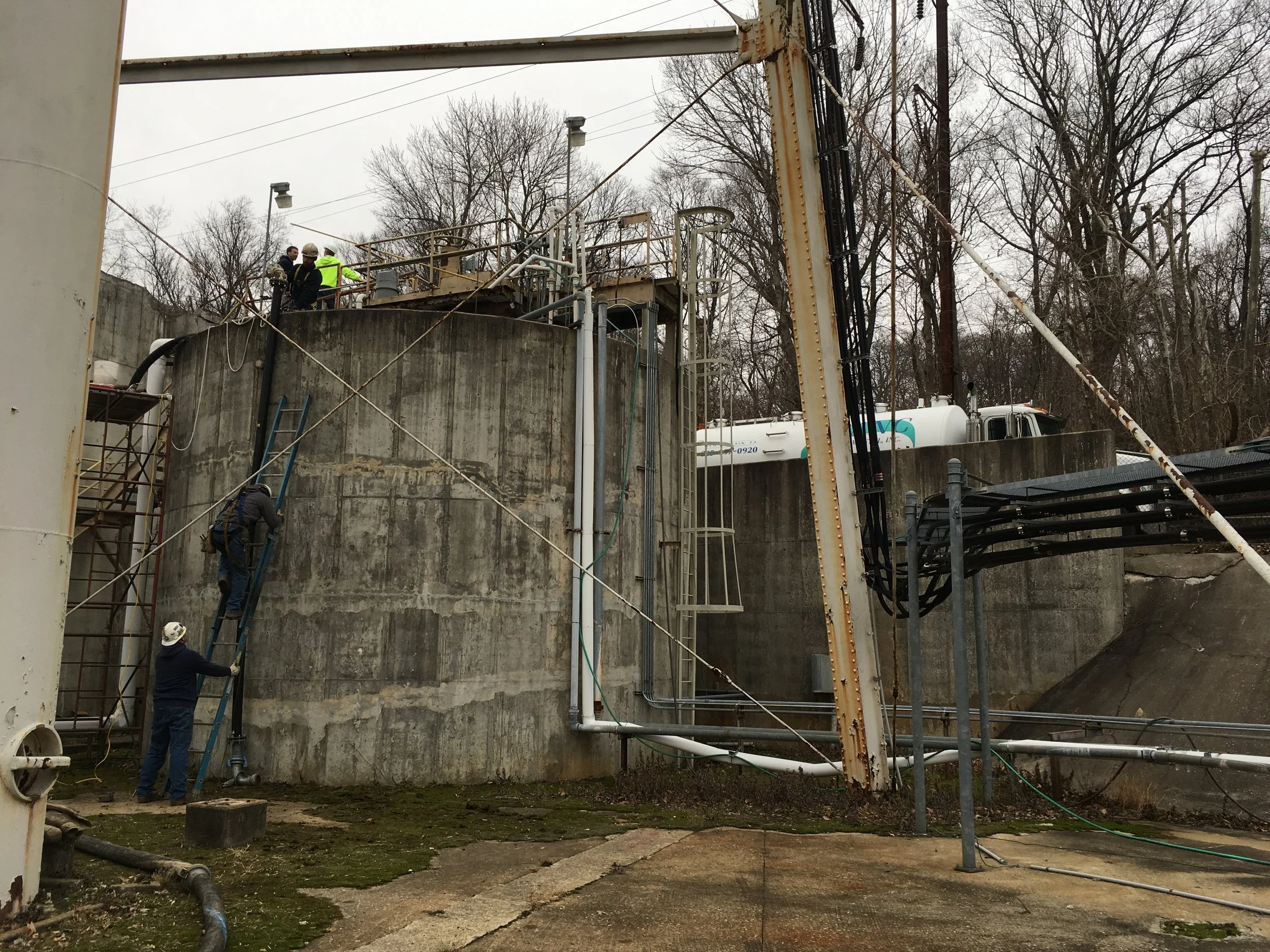
SSM was the Engineer, Contractor, and Construction Manager in the Design-Build project for the analysis, repair, and rehabilitation of the River Park Sewage Treatment Plant.

Buccini Pollin Group, Inc.
River Park Sewage Treatment Plant Tank Repairs and Design-Build Project
BACKGROUND
The River Park Sewage Treatment Plant of Montgomery County, Pennsylvania, is a 15,000 gallon-per-day treatment system which was constructed to serve a multi-tenant office complex with over 800 employees. In addition, the complex also encompassed a 430-student private school for Grades 1 through 12 including teachers and staff, as well as an All-Campus Community Center with a full gymnasium and stage.
CHALLENGE
The treatment system, which includes a concrete, conical-shaped vessel with steel partition walls separating the various treatment processes, experienced a failure of a steel partition wall within the treatment tank. The wall, which separated the aerobic digester and aeration compartments, became dislocated for unknown reasons. Upon SSM’s full structural analysis after draining the tank one section at a time, it was discovered that the other partition walls were leaking and also slowly dislocating from the outer walls. Contributing to the urgency, the rehab of the tank had to be coordinated and completed in the short window of time during the school’s holiday break in order to limit flows to the treatment plant.
SOLUTION
SSM was the Engineer, Contractor, and Construction Manager in the Design-Build project for the analysis, repair, and rehabilitation of the River Park Sewage Treatment Plant. After draining the tank, it was determined that the steel partition was dislocated due to uneven loadings to the wall and the continuous filling and emptying of the treatment tank in the area of damage. Due to the other walls starting to fail, it was concluded that it would be necessary to incorporate new, stronger walls and leak-proofing to all sections of the treatment unit. Moving forward, SSM would provide the structural design, plans, specifications and repairs for the proposed tank rehabilitation and replacement of the steel divider wall and all other tank repairs. Imperative to the project was a construction cost opinion, Issuing contracts to several sub-contractors to ensure efficiency of the project, and coordinating the draining of the tank and construction. SSM arranged for the rental of frac trucks and necessary diversion of incoming wastewater, as well as measures to prevent freezing during the 3-week window in January, including insulated blankets and installing heat tracing. SSM successfully accomplished the structural repairs and leak-proofing on the River Park Sewage Treatment Plant. The project was completed in less than four (4) weeks, and the plant was back in full operation with the promise of structural stability and longevity for years to come.


PROFILE | Chiller Plant Study and Design
SSM developed a plan to convert a chilled water plant consisting of two independent chilled water systems comprised of 2 – 600 ton chillers (N+1) and associated pumps and 2 – 250 ton chillers (N+1) and associated pumps to a single system consisting of 3 – 400 ton chillers and associated pumps.

Confidential Client
Corporate Offices and Data Center. SSM developed a plan to convert a chilled water plant consisting of two independent chilled water systems comprised of 2 – 600 ton chillers (N+1) and associated pumps and 2 – 250 ton chillers (N+1) and associated pumps to a single system consisting of 3 – 400 ton chillers and associated pumps. The project goal was to create a single central chilled water plant providing N+1 redundancy and development of a new sequence of operation allowing for automatic operation of the plant including automatic energizing of redundant equipment in the event of failure and rotation of equipment to equalize runtime. The project also included reconfiguration of power supplies to the equipment to reduce single points of failure.
The construction documents included instructions for phasing of construction to maintain operation of the existing plant while modifications and interconnection of the various subsystems was accomplished. The reconfiguration maximized the reuse of the existing piping network and power distribution.

PROFILE | Energy Audit and Systems Design
SSM conducted a survey and performed an energy audit of the existing facility in 2010 and suggested several no cost and low cost strategies for saving energy as well as some capital improvement project that would have an impact on energy efficiency.

Children’s Beach House
The Children’s Beach House is an approximate 20,000 sf two story facility that holds summer and weekend camps for children with communicative disabilities and other special needs.
SSM conducted a survey and performed an energy audit of the existing facility in 2010 and suggested several no cost and low cost strategies for saving energy as well as some capital improvement project that would have an impact on energy efficiency. In 2011 SSM expanded the energy audit to further investigate other energy saving strategies such as converting the existing heat pump system to a geothermal heat pump system, installing a wind turbine power generator, and installing a PV solar array.
After implementation of several energy conservation measures, SSM again was asked to evaluate more energy saving strategies for the facility with the consideration that the existing mechanical equipment was reaching the end of its useful life. SSM performed a life cycle cost analysis of the HVAC systems to compare replacement in kind with a geothermal heat pump system and a variable refrigerant system (VRF). The VRF system offered the lowest overall lifecycle cost and was recommended to the client. SSM is assisting the Children’s Beach house in completion of grant applications to fund the project and will design the HVAC renovation.

PROFILE: Site and Utility Updates
SSM prepared preliminary and final design plans and specifications for the site and utility improvements associated with the Bingaman House Recreational Center located at Lake Antietam Park, Lower Alsace Township, Berks County, Pennsylvania.

County of Berks
SSM prepared preliminary and final design plans and specifications for the site and utility improvements associated with the Bingaman House Recreational Center located at Lake Antietam Park, Lower Alsace Township, Berks County, Pennsylvania.
Designers worked with County staff to develop concept and preliminary plans which included ADA compliant parking and access to the existing Recreation center and design and permitting for an on-lot sanitary sewer holding tank system. Construction was completed in 2017.

SSM receives McKenna Award
Spotts, Stevens and McCoy was recognized by the Eastern Pennsylvania Water Pollution Control Association (EPWPCOA) receiving the Joseph McKenna Award for technical and financial contributions to the EPWPCOA.

Scott Carl (center) and Jamie Lorah, PE (right) receive the Award for SSM.
Spotts, Stevens and McCoy was recognized by the Eastern Pennsylvania Water Pollution Control Association (EPWPCOA) receiving the Joseph McKenna Award for technical and financial contributions to the EPWPCOA.
Spotts, Stevens and McCoy is a family-owned regional engineering, environmental, and surveying firm serving local and global clients. We engineer solutions for a better world. Our work touches everyday life; from the water you drink, to the air you breathe, to the buildings and communities where you live, work and play. We have been serving municipal and authority clients in the water and wastewater industry since 1967. As such we value our relationship and are committed to EPWPCOA as an organization, providing technical and financial support. We participate in many committees including the Mid-Summer Expo, Constitution and Bylaws, and Young Professionals as well as providing support for events in the form of sponsorship, signage, prizes, and volunteers. and committee participation.
Spottlight on GIS
Every map has a story. Discover the amazing stories that GIS can help you tell.

Celebrating GIS Day: November 14, 2018
Every map has a story. Discover the amazing stories that GIS can help you tell.
In This Issue


SSM welcomes Nicholas Szeredai, PE to the Team
SSM welcomes Civil/Municipal Project Engineer Nicholas A. Szeradai, PE to the firm’s Municipal Engineering and Planning Department.

SSM welcomes Civil/Municipal Project Engineer Nicholas A. Szeradai, PE to the firm’s Municipal Engineering and Planning Department. In this role, Mr. Szeredai serves as the primary contact and advocate for municipalities. He is responsible for the project management of the engineering design and reviews associated with stormwater management, municipal planning, zoning and subdivision and land development, traffic services, and construction management.
Mr. Szeredai is also regularly responsible for MS4 Planning and Reporting as well as Project Management of Municipal Annual Roadway Maintenance Programs.
He is a graduate of The Pennsylvania State University with a B.S. in Civil Engineering and is a licensed Professional Engineer in Pennsylvania.
SINKHOLES: Are you at Risk?
Sinkholes can be dangerous in many ways. They can cause damage to the foundation of a building as well as buried services like water and electrical lines, because they serve as conduits for surficial contaminants to reach groundwater. Knowing the risk of sinkhole formation is key to minimizing possible damages.

Sinkholes can be dangerous in many ways. They can cause damage to the foundation of a building as well as buried services like water and electrical lines, because they serve as conduits for surficial contaminants to reach groundwater. Knowing the risk of sinkhole formation is key to minimizing possible damages. Since the amount of karst features in an area can be related to the occurrence of sinkholes, SSM created an interactive sinkhole risk map using the density of karst features within a geologic formation. The Interactive Sinkhole Risk Map provides the public access to searchable and interactive information such as karst density and geologic formations which contain carbonate rocks within Pennsylvania.
The information used to develop the map was derived from Department of Conservation and Natural Resources’ (DCNR) data. Both the karst features information and geologic formations used in the making of this map were provided by DCNR. The map displays only geologic formations in which the geologic unit contains carbonate rocks. There is the possibility of sinkholes forming in non-carbonate environments, but those situations were not considered in the making of the map.
Cataloging Sewer Inspection Videos through GIS
Through routine sanitary sewer inspections, sewer systems will amass a library of inspection videos. Cataloging these records for future reference has always been a challenge.
PROJECT PROFILE

Through routine sanitary sewer inspections, sewer systems will amass a library of inspection videos. Cataloging these records for future reference has always been a challenge.
To help utilities retrieve the valuable information collected through the inspection, SSM creates asset management programs through GIS. The program is built upon a comprehensive GIS geodatabase that locates and inventories every manhole and cleanout in a sanitary sewer system through as-built records and GPS data capture. Video inspection footage is then integrated into the GIS framework of sanitary lines, creating a quick reference to video files for the surveyed lines. Online maps are built through ArcGIS online accounts to provide staff and consultants with the access to data. When a sewer line is selected in the map, a pop-up window displays a reference index to locate the inspection video, such as the date of the inspection, media reference label (“DVD II,” or “Tape 03”), and video index (“Chapter 16,” or “3:14”). For further quick reference, screen shots of problem areas are embedded directly into the GIS data. The GIS-based asset management program is designed to deliver field-critical information at decision-makers fingertips.
Say Goodbye to Clipboards . . . and Hello to GIS Mobile Apps
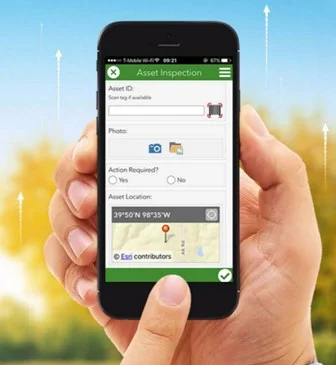
SSM’s GIS department created and is now implementing customized field data collection apps for your mobile device that allow easy and accurate field data collection.

SSM’s GIS department created and is now implementing customized field data collection apps for your mobile device that allow easy and accurate field data collection. We are in the process of replacing unreliable paper-based data collection with a digital solution that fits the needs of field personnel in diverse environments. The customized app guides the user through a series of questions where answers range from yes/no or multiple choice to free-form responses. The data collected, including site photos, are tagged with geographic coordinates to create automatically generated maps, tabulated reports, and real-time analytics. These applications also work well for simply taking field notes (through voice-to-text) and capturing site photos.
Where is the High Water Mark?
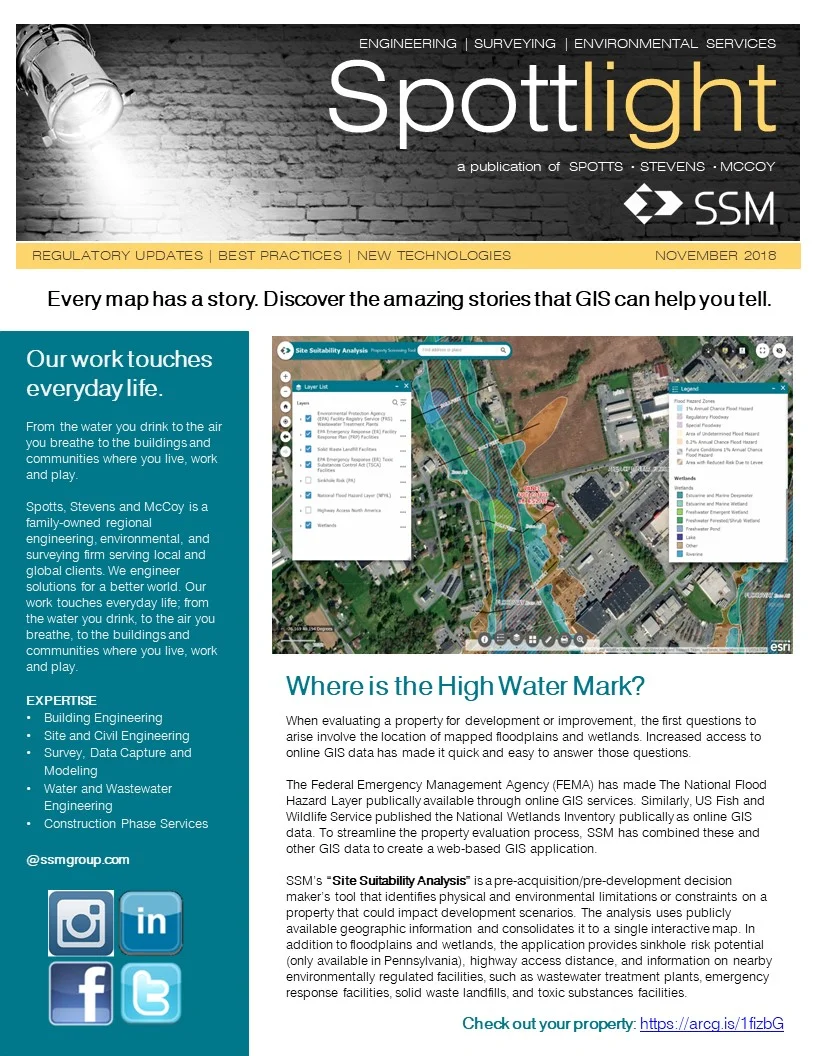
When evaluating a property for development or improvement, the first questions to arise involve the location of mapped floodplains and wetlands. Increased access to online GIS data has made it quick and easy to answer those questions.

When evaluating a property for development or improvement, the first questions to arise involve the location of mapped floodplains and wetlands. Increased access to online GIS data has made it quick and easy to answer those questions.
The Federal Emergency Management Agency (FEMA) has made The National Flood Hazard Layer publically available through online GIS services. Similarly, US Fish and Wildlife Service published the National Wetlands Inventory publically as online GIS data. To streamline the property evaluation process, SSM has combined these and other GIS data to create a web-based GIS application.
SSM’s “Site Suitability Analysis” is a pre-acquisition/pre-development decision maker’s tool that identifies physical and environmental limitations or constraints on a property that could impact development scenarios. The analysis uses publicly available geographic information and consolidates it to a single interactive map. In addition to floodplains and wetlands, the application provides sinkhole risk potential (only available in Pennsylvania), highway access distance, and information on nearby environmentally regulated facilities, such as wastewater treatment plants, emergency response facilities, solid waste landfills, and toxic substances facilities.
Utilizing GIS for MS4 Reporting
A GIS-based infrastructure asset management program can be used to document all MS4 activities, including outfall inspections, basin assessments, public outreach activities, employee training, and BMP installation and maintenance. In addition to functioning as a records management database, the program can be used to generate required compliance reports electronically.
A GIS-based infrastructure asset management program can be used to document all MS4 activities, including outfall inspections, basin assessments, public outreach activities, employee training, and BMP installation and maintenance. In addition to functioning as a records management database, the program can be used to generate required compliance reports electronically.
In 2003, the Environmental Protection Agency developed federal regulations that require a stormwater permit program for some communities based on size. This regulation is called the National Pollutant Discharge Elimination System (NPDES) Phase II Storm Water Program. Under the current Phase II Final Rule regulation, all owners of Municipal Separate Storm Sewer Systems (MS4) in Urbanized Areas must obtain a Phase II MS4 Storm Water permit, which affects communities with population of <100,000 people. In order to comply with the regulation, the PA Department of Environmental Protection (DEP) has developed the Phase II MS4 Stormwater Program which meets the Environmental Protection Agency’s goal to reduce pollutants associated with stormwater runoff in communities of a certain size. There are currently 953 MS4 communities in Pennsylvania that are subject to this regulation.
MS4 Permit holders are required to prepare and submit Annual MS4 Status Reports to DEP for review by September 30th. As part of the annual report, the permittee is required to document detailed information for each Minimum Control Measure (MCM) listed in the permit. If the permittee is required to implement a Pollutant Reduction Plan (PRP) and/or Total Maximum Daily Load (TMDL) plan, detailed information on all new structural Best Management Practices (BMPs) installed and ongoing nonstructural BMPS implemented during the reporting period must be documented in the annual report. Permittees are required to submit MS4 Outfall Field Screening Report detailing the results of the outfall inspection program as stipulated in the permit conditions.
With all these new compliance reporting requirements, the burden of paperwork has fallen on already over-tasked municipal employees. After the first year of the reporting cycle, municipalities are seeking to implement an easy-to-use records management and reporting system. Instead of purchasing new software to accomplish this task, some municipalities have turned to their existing GIS program for records management. Mapping of the municipal-owned storm sewer infrastructure was a required component of the recent permit renewal process. In most cases, the level of GIS mapping conducted for the permit consisted of infrastructural locations coupled with identification of ownership (public or private). By adding attribute data to the GIS data, the existing framework can form the basis of a robust informational database that can be used to house the documentation required for permit reporting.
A GIS-based infrastructure asset management program is capable of documenting all activities associated with the MS4 permit including public outreach activities, outfall inspections, construction, employee training, basin assessments, and BMP inspection and maintenance. Through the use of mobile applications, inspections are conducted on a hand-held mobile device, eliminating the need for paper field reports. The data collected in the field, including field photos, are transmitted directly to the GIS asset management program, creating a comprehensive document database. The information stored in the database is then used to generate the required annual reporting forms and tables electronically.
Riparian Buffers Increase Environmental Value
In a study finalized in August 2018, riparian buffers planted along streams provided an economic value to the environment! What exactly is a riparian buffer? This Best Management Practice is a vegetated strip of land along waterways that help protect the water from earth-disturbing activities that may impact water quality and other ecological issues. Planting trees, shrubs, flowering plants, and grasses provide a natural filtering system that can remove sediment, and create a better habitat for insects and wildlife.
The PA Department of Environmental Protection has endorsed restoration of riparian buffers as a key to reduce stormwater containing pollutants from entering these streams, rivers, lakes, ponds, and wetlands. The minimum recommended width of an effective buffer is 35 feet, but any buffer can help with reduction of erosion.
This new study, conducted by ECONorthwest, (ECONorthwest, "The Economic Value of Riparian Buffers in the Delaware River Basin," Delaware Riverkeeper Network, 2018.) discovered that nearly half of riparian forests in the Delaware River Basin have been cleared, and remaining areas are negatively impacted by suburban development. This study assessed the loss of ecosystem services, such as drinking water quality, property values, recreational opportunities, and other services, and compared them to the benefits of an effective riparian buffer. A monetary value was then assigned to the benefits of the ecosystems provided by the buffered areas.
Based on this collected data, the study found that riparian buffers can positively affect air quality, flood mitigation, recreation, wildlife habitats, and other areas.

Sweet Treats
SSM assisted our clients in obtaining $650,000 in CFA Grant funding this year.
PA Small Water and Sewer Grants
SSM assisted our clients in obtaining $650,000 in CFA Grant funding this year.
The Commonwealth Financing Authority (CFA) was established in 2004 as an independent agency of the Department of Community and Economic Development (DCED) to administer Pennsylvania's economic stimulus packages. The PA Small Water and Sewer Grants are for small projects to improve public water supply and sanitary sewer systems. Eligible projects were those with a total project cost between $30,000 and $500,000 that involved the construction, improvement, expansion, repair, or rehabilitation of a water supply or sanitary sewer system (including water and wastewater treatment facilities and pump stations) which is owned and maintained by an eligible applicant. Also eligible were projects that included consolidation or regionalization of two or more water supply systems or sanitary sewer systems which are managed or operated as an integrated system regardless of whether the system is physically connected.
Western Berks Water Authority | Mohrsville Water District Arsenic Removal System
SSM helped the Western Berks Water Authority to secure a $125,000 grant from the Commonwealth Financing Authority PA Small Water and Sewer Program for an upgraded arsenic removal system. This new addition improves the water quality for Wernersville, Sinking Spring and the surrounding Greater Reading area.
Walnutport Water & Sewer Authority | South Canal Street Water Main Crossing
SSM aided the Walnutport Authority of Northampton County in obtaining a $200,000 grant from the Commonwealth Financing Authority PA Small Water and Sewer Program. The funds were used for a project to replace an aging water main under the Lehigh Canal which serves drinking water to existing Lehigh customers. SSM provided the location maps and zoning designations of the service areas, as well as prepared and submitted a complete grant package for the Lehigh Valley Planning Commission (LVPC) and the Department of Community and Economic Development (DCED) to get funding consistent with Northampton County’s Comprehensive Plan.
Coplay-Whitehall Sewer Authority | Prospect Street Sanitary Sewer Construction Project
SSM successfully prepared and submitted a $100,000 grant package for the Coplay-Whitehall Sewer Authority for a project under the Commonwealth Financing Authority PA Small Water and Sewer Grant Program. The project involved constructing new sanitary sewers to provide service to residents on Prospect Street, located in Whitehall Township of Lehigh County, PA. The funds were used to provide upgraded reliable sewer infrastructure and adjoining an existing residential zoning area where public sewer service was already provided. This ultimately eliminates groundwater pollution and provides the county’s customers with the best water quality.
Reading Area Water Authority | Filter Replacement Project
The Reading Area Water Authority (RAWA) was granted $125,000 by the Commonwealth Financing Authority (CFA) to finance the replacement and rehabilitation of four deteriorating filters and surrounding piping at the Maidencreek Filter Plant. SSM provided the CFA grant package, including preparation and submission of written materials, as well as coordination with all parties involved. The upgrade of the treatment plant’s filters positively benefit over 125,000 drinking water customers of the City of Reading and surrounding areas. With the upgrades obtained from the funding, RAWA can ensure more efficient disinfection, filtration, and treatment of The City’s drinking water and overall better water quality.
Mariner East 2 Pipeline Grants
The Department of Environmental Protection (DEP) created a new water quality project grant program funded by the penalty assessed against the Mariner East 2 (MEII) Pipeline. Grants were awarded for projects that reduced or minimized pollution and protected clean water in the 85 municipalities along the length of the pipeline corridor.
Birdsboro Municipal Authority Robeson Township Indian Run Dam Rehabilitation
Birdsboro Municipal Authority received the largest Mariner II East Pipeline Grant. The $750,000 grant was awarded for the rehabilitation of the Indian Run dam, which provides drinking water to the surrounding area’s customers. SSM prepared and submitted all materials of the grant package that secured the funds to improve the Robeson Township’s water quality.
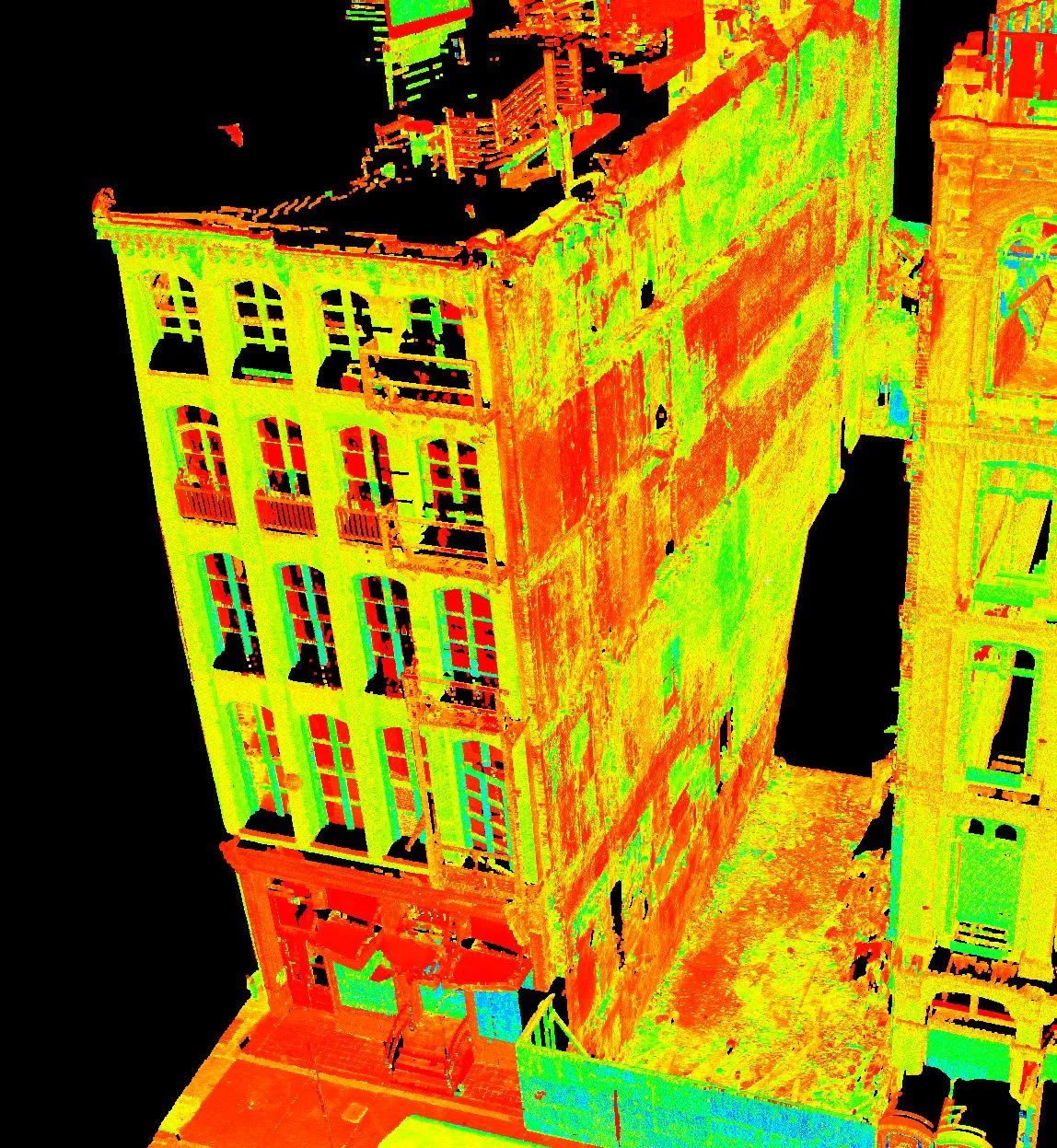
Capturing heights in dangerous conditions.
SSM’s scanning team provided Seiler + Drury Architecture with high definition scanning services of the exposed face of the eastern side of 241 Chestnut Street, Philadelphia PA.

SSM’s scanning team provided Seiler + Drury Architecture with high definition scanning services of the exposed face of the eastern side of 241 Chestnut Street, Philadelphia PA.
The scan covered an 85’ X 105’ area and captured surface data of the building face. This information was used to generate cross-sectional data that supported the structural analysis of the exposed building face. The adjacent building had recently been destroyed in a fire. The scan data would provide necessary dimensions and data points for renovation plans. High Definition Scanning was by far the most efficient and comprehensive way to capture the required data for this project.


Spottlight: Trick or Treat
Whether it’s a steep and rocky site, contaminated building, hard-to-reach location, regulatory requirement, creaky old boiler or flickering lights . . . there’s no need to be scared! Our solutions are as unique as your problems.

Whether it’s a steep and rocky site, contaminated building, hard-to-reach location, regulatory requirement, creaky old boiler or flickering lights . . . there’s no need to be scared! Our solutions are as unique as your problems.

Wall of Fame Recognition - Darryl A. Jenkins, PE
Darryl Jenkins, PE added to Center for Excellence in Local Government Wall of Fame
Darryl A. Jenkins, PE, Vice President of Civil and Environmental Engineering was recognized by the Center for Excellence in Local Government at Albright College as a Wall of Fame recipient. Jenkins received recognition during the CELG Open House Program. Wall of Fame recipients must have 20+ years of service to a municipality or authority, and foster intergovernmental cooperation.
Darryl Jenkins has over 30 years of municipal engineering experience, focused primarily in the planning and operation of water distribution and treatment systems, and wastewater collection and treatment systems. In his role as an Authority Engineer he has successfully assisted Authorities in bridging the municipal barriers that are crossed by Authority systems. in his engineer role, Darryl has used his personality and engineering skills to foster intergovernmental cooperation and to help municipalities become partners with the Authorities he serves.
Helping local government leaders meet the changing needs of their communities. The Center for Excellence in Local Government was established by Albright College in September, 1994, and is a unique partnership among the academic, public, and private sectors of the community. Oversight of the Center is provided by the Community Advisory Board which is comprised of representatives from all three sectors. Program guidance is provided by the Local Government Advisory Council which consists of approximately 20 local officials. Financial support is provided by Albright College, municipal sponsors, and sponsors from the private sector.

Spotts, Stevens and McCoy Expands to Lancaster County!
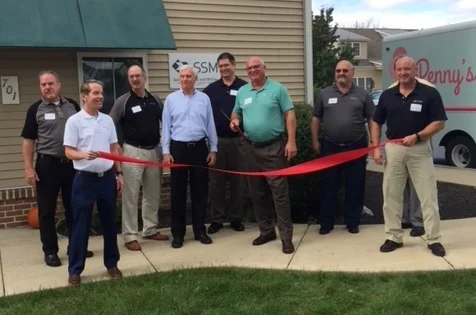
We are excited to announce a new regional office located at 701 Creekside Lane in Lititz, PA.


We are excited to announce a new regional office located at 701 Creekside Lane in Lititz, PA. The office will offer a full range of engineering, surveying, and environmental services to our friends and clients in the Lancaster region.
You're invited to come and celebrate the grand opening with us! We are hosting a Ribbon Cutting ceremony on October 10, 2018 from 12:00 p.m.to 2:00 pm. Stop by for lunch, meet our team and check out our new space.


Spotts, Stevens and McCoy Celebrates New Space
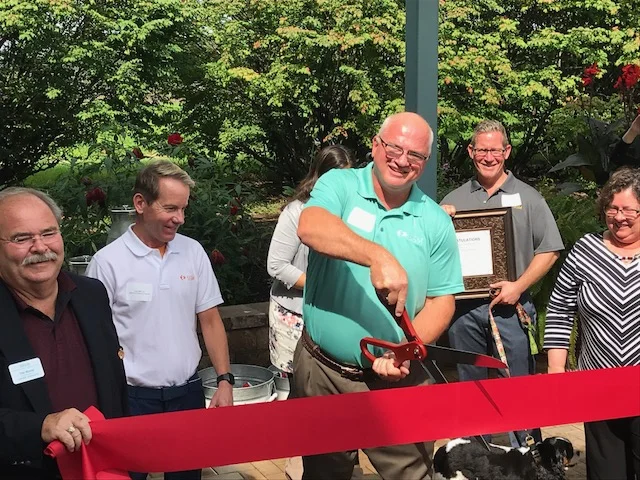
SSM recently completed the reconfiguration of our headquarters office at 1047 North Park Road and is hosting a Ribbon Cutting Ceremony on September 26, 2018 from 12:00 pm to 2:00 pm to commemorate the newly-renovated office space and entranceway.

Eighteen months ago a relationship blossomed between the First Presbyterian Church of Reading and Spotts, Stevens and McCoy (SSM). The result was a mutually advantageous sale of the firm’s Wyomissing facility allowing First Presbyterian to build a suburban presence, and SSM to reinvest resources into growing the business and addressing facility needs for a diverse and mobile staff. An expanded geographic footprint in the Southeastern and Central PA, Lehigh Valley communities where SSM serves a growing client base and implementation of workplace strategies that encourage flexible work arrangements, mobility, and integration of technology are just a few of the results from the sale of the building.
SSM recently completed the reconfiguration of our headquarters office at 1047 North Park Road and is hosting a Ribbon Cutting Ceremony on September 26, 2018 from 12:00 pm to 2:00 pm to commemorate the newly-renovated office space and entranceway. Brian R. Kelly, President and CEO, will be leading the ceremony at 12:30 pm. Lunch and refreshments will be served featuring locally-known Berks Hot Dogs as well as a build-your-own sundae bar for dessert by the Sweet Ride ice cream truck.
Check out the transformation!


Spottlight on Shopping
Lately, the average time spent shopping is under an hour. In an effort to perpetuate prosperity, shopping malls have been morphing into what researchers call “lifestyle centers”.

Video killed the Radio Star . . .
but what killed the Shopping Mall?
With less than one thousand shopping malls left in the United States, it’s fair to ask, who, or what, killed shopping malls? Lately, the average time spent shopping is under an hour. In an effort to perpetuate prosperity, shopping malls have been morphing into what researchers call “lifestyle centers”.
So, what brought about this titanic shift in how and where we shop; and what brought on the demise of the traditional shopping mall?
IN THIS ISSUE


Dining - Gathering Spaces - Offices - Fitness Areas and Locker Rooms - Auditoriums and Performance Areas