
Water Quality Reporting - Consumer Confidence Reports
SSM assists many of our clients to prepare their annual Consumer Confidence Report. The CCR is a general overview of the water quality delivered by community water systems to their customers. Here’s what you should know about it.

Water Quality Reporting
In 1996, Congress amended the Safe Drinking Water Act, adding a provision requiring that all community water systems deliver to their customers a brief water quality report annually.
What is a CCR and why do I get it?
A groundwater or surface water source may encounter many contaminants as it travels to a water treatment plant. While treatment systems will remove the majority of these pollutants, some level of contaminants are to be expected - whether they are minerals or bacteria naturally present in the environment, or potentially harmful substances resulting from human activity.
In light of the 1996 Safe Drinking Water Act, community water systems are required to provide their customers with a water quality report on an annual basis. This report is to inform customers about these contaminants in their drinking water, and provide information regarding levels of concern for the consumer. The Consumer Confidence Report (CCR) contains language pertaining to the system’s source of water, potential health effects of certain contaminants, and any regulatory violations that may have occurred over the year.
Here’s what the requirements for delivery are:
A copy of the Consumer Confidence Report (CCR) must be delivered, or made available to, each of the water system’s customers.
Water systems that serve over 100,000 people must post their CCR to a public website
If posting to a website, the supplier must provide a direct URL to customers to access the CCR
CCRs must also be certified with the PA Department of Environmental Protection (DEP) within 3 months after distribution of the CCR to customers, or by October 1st each year.
Annual CCRs must be delivered to customers by July 1 of each year
Throughout the year, community water systems collect and analyze samples within their water supply, and upload the results every month to the Drinking Water Electronic Lab Reporting (DWELR) system. The results are then processed through the Pennsylvania Drinking Water Information System (PADWIS) to ensure compliance with EPA and DEP regulations. Contaminants are assigned very stringent Maximum Contaminant Levels (MCLs), and must meet these, as an exceedance could pose a health risk to customers. If the MCL is exceeded, this results in a violation and the water system must take steps to resolve it. This may include issuing a Public Notification to consumers containing information on why the violation occurred and how to mitigate the effects of the exceedance, such as a Boil Water Advisory. Contaminants that are not yet regulated are reported to assist EPA with monitoring the occurrence of these contaminants, and to help determine whether future regulation is necessary.
Understanding the CCR
The CCR is a general overview of the water quality delivered by your community water system. The report lists the regulated contaminants detected in the treated water and the level at which they were found. The CCR intends to provide customers with information on what they are consuming, and whether or not they should be concerned about certain contaminants.
Included in the CCR are website links and contact numbers for consumers should they have questions, or want to find additional information regarding health effects of the less common contaminants.
Understanding potential health effects:
The CCR provides parameters such as Maximum Contaminant Level (MCL) which is the highest level of a contaminant that is allowed in drinking water.
To understand the possible health effects described for many regulated constituents, a person would have to drink 2 liters of water every day at the MCL level for a lifetime to have a one-in-a-million chance of having the described health effect.
Generally, if there are no MCL violations for the detected contaminants, a customer could know that they are drinking safe, clean water.
Making the most of information.
SSM assists many of our clients to prepare their annual Consumer Confidence Report. We collect the water system’s analytical data and analyze the data including calculating the average and maximum results of each detected contaminant. We are proud to assist our clients in putting together the information that consumers deserve to know. Remember, your Consumer Confidence Report provides you with important information about the quality of your drinking water. If you have a question about your water system’s report, or any of the terminology and what it means for you - always ask!

Lead and Copper Rule Revisions: GIS for Service Line Inventory
EPA recently revised the Lead and Copper Rule, establishing compliance deadlines of October 2024. To jumpstart the road to compliance, water systems should consider deploying a GIS team to establish their service line inventory. Likewise, water systems should ensure they have an engineering team on board that is well-versed in providing engineering design and consulting services.
Understanding the Lead and Copper Rule Revisions
In 2021, the U.S. Environmental Protection Agency (EPA) issued revisions to the Lead and Copper Rule that was first enacted in 1991. The new revisions intend to better protect children and communities from the risks of lead exposure in water. The revisions focus on taking more robust steps to get lead out of drinking water, as well as better informing communities and protecting children at schools and childcare facilities.
Required lead testing in schools and childcare facilities
Establishment of a “trigger level” to enable earlier mitigation
Use of science-based testing protocols to identify more sources of lead
Driving more full replacements of lead service lines
Development and maintenance of a public inventory of water service lines
The revisions to the Lead and Copper rule establish one of the largest updates to water regulation in 30 years. The rule is also accompanied by significant federal dollars available to assist community water systems (CWSs) with their plans for ridding the risk of lead in drinking water. The regulatory compliance deadline for water systems to meet the rule revisions is October of 2024.
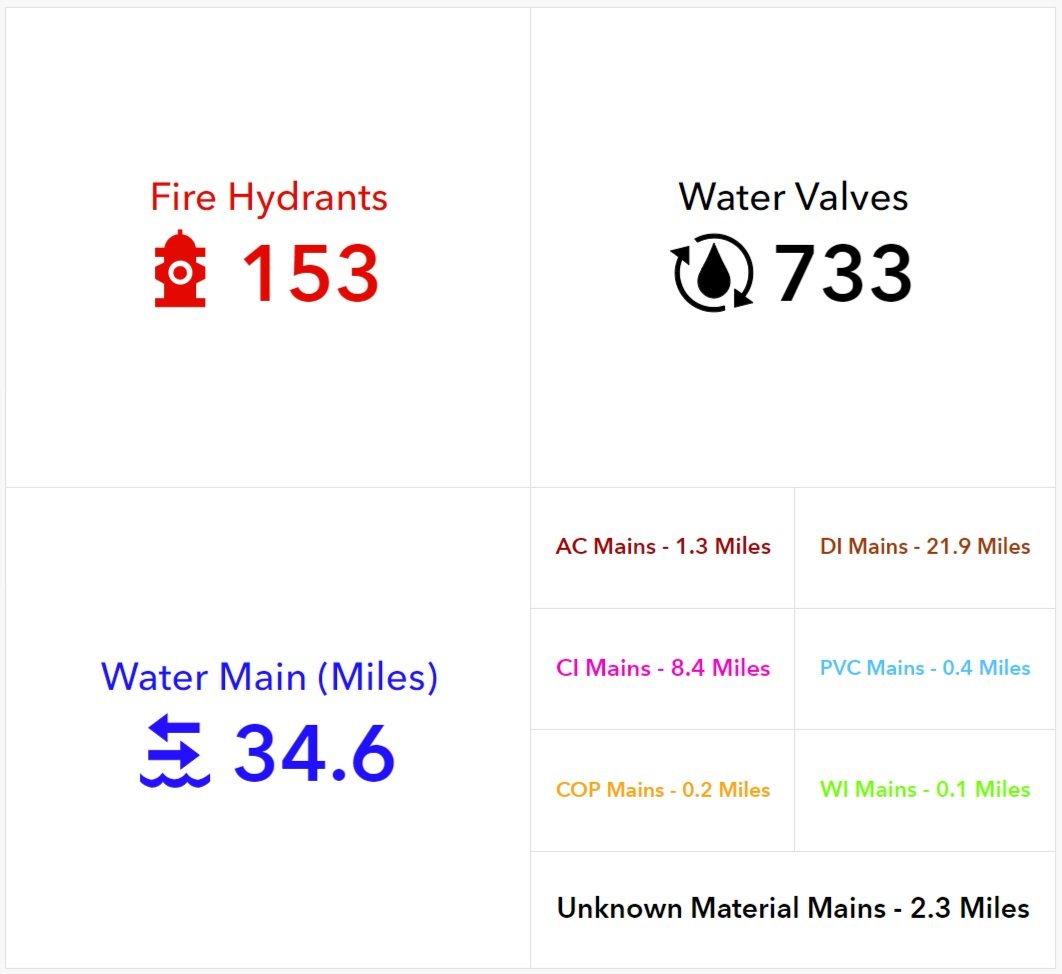
Sample of GIS data dashboard
Managing the Public Service Line Inventory with GIS
Among the revisions, EPA is requiring every water system provider to complete an inventory of their water service lines and report it. If done appropriately, this resource could aid in long-term planning and compliance including laying the groundwork for service line replacement plans as well as managing and tracking improvements and testing records.
A GIS dashboard, built around your water system means your data is always up to date and always accessible. In lieu of paper collection, management of assets can now be done through smart devices, in the field, with next to real-time updates. And accessing that information is easier than ever before. Your data can be built exactly the way that you need it - accompanying the location, analyzed alongside your capital planning, or summative looking at the whole picture.
Whether you're building your inventory from scratch or modifying your existing database - having a GIS team on board means that you data will start to work for you.
Our GIS team is well-versed in aiding our clients with the collection, documentation, and delivery of both private and public-facing dashboards as well as data analysis that ensures your data turns into an interactive, visual asset. This means all of that information becomes meaningful - saving you time and resources. The goal is not just to build a compliant service line industry. It’s to build one that is also valuable to you. To build an inventory that provides direction, meaning, and protection for you and your community.

The Right Time to Start your Service Line Inventory
The short answer to this common question is: now. While the deadline for compliance with the Lead and Copper Rule revisions isn’t until October 2024, it’s important to get your plan into action as soon as possible. A full inventory collection can be a time intensive process, particularly without deploying modern collection methods. It is recommended that the development of your inventory is as thorough as possible including the required historical records and assessment for replacement. Considering all of this, jumpstarting your inventory collection and database building now is crucial to compliance by 2024.
A great first step is to identify where you currently stand in the road to compliance. Then, assess the opportunities that a GIS team presents for preparing and managing your inventory moving forward.
SSM’s GIS Experience
For more than 20 years, we’ve provided professional GIS services to our clients; from mapping support for infrastructure projects, to focused GIS and data capture projects. We utilize GIS to analyze, visualize, and interpret data to understand patterns, relationships, and trends. Through SSM’s extensive geographic data our clients benefit from faster project startups and the economies of readily available data. SSM’s GIS Asset Management approach helps municipalities to transform water, sewer, storm water, or transportation infrastructure data into an easy-to-use operations asset management system capturing vital infrastructure data points with survey-grade accuracy. The data is verified and compiled into a geo-spatial database. Most of our water/wastewater clients have reaped the benefits of GIS in both their everyday use and long-term planning.
Compliance with Testing Protocols and Service Line Replacement
In addition to our GIS expertise, we have dedicated engineers with water system expertise. Our team of Process and Design Engineers have deep and long-standing experience providing water and wastewater engineering services. A significant number of our staff have more than 20 years of experience serving water and wastewater authorities. We combine professional engineers, professional land surveyors, environmental scientists, designers and drafters into teams to complete each assignment.
When it comes to managing and protecting water resources, SSM is the authority that everyone turns to. SSM offers extraordinary experience in the planning, design, and construction management of wastewater and water systems, piping systems, pumping stations, and treatment plants.
As you continue your planning for compliance with the Lead and Copper Rule Revisions, ensure your engineering team is ready and available to get you there not only with expertise, but with experience.



Lead and Copper Rule Revisions: GIS for Service Line Inventory
EPA recently revised the Lead and Copper Rule, establishing compliance deadlines of October 2024. To jumpstart the road to compliance, water systems should consider deploying a GIS team to establish their service line inventory. Likewise, water systems should ensure they have an engineering team on board that is well-versed in providing engineering design and consulting services.
Understanding the Lead and Copper Rule Revisions
In 2021, the U.S. Environmental Protection Agency (EPA) issued revisions to the Lead and Copper Rule that was first enacted in 1991. The new revisions intend to better protect children and communities from the risks of lead exposure in water. The revisions focus on taking more robust steps to get lead out of drinking water, as well as better informing communities and protecting children at schools and childcare facilities.
Required lead testing in schools and childcare facilities
Establishment of a “trigger level” to enable earlier mitigation
Use of science-based testing protocols to identify more sources of lead
Driving more full replacements of lead service lines
Development and maintenance of a public inventory of water service lines
The revisions to the Lead and Copper rule establish one of the largest updates to water regulation in 30 years. The rule is also accompanied by significant federal dollars available to assist community water systems (CWSs) with their plans for ridding the risk of lead in drinking water. The regulatory compliance deadline for water systems to meet the rule revisions is October of 2024.
Sample of GIS data dashboard
Managing the Public Service Line Inventory with GIS
Among the revisions, EPA is requiring every water system provider to complete an inventory of their water service lines and report it. If done appropriately, this resource could aid in long-term planning and compliance including laying the groundwork for service line replacement plans as well as managing and tracking improvements and testing records.
A GIS dashboard, built around your water system means your data is always up to date and always accessible. In lieu of paper collection, management of assets can now be done through smart devices, in the field, with next to real-time updates. And accessing that information is easier than ever before. Your data can be built exactly the way that you need it - accompanying the location, analyzed alongside your capital planning, or summative looking at the whole picture.
Whether you're building your inventory from scratch or modifying your existing database - having a GIS team on board means that you data will start to work for you.
Our GIS team is well-versed in aiding our clients with the collection, documentation, and delivery of both private and public-facing dashboards as well as data analysis that ensures your data turns into an interactive, visual asset. This means all of that information becomes meaningful - saving you time and resources. The goal is not just to build a compliant service line industry. It’s to build one that is also valuable to you. To build an inventory that provides direction, meaning, and protection for you and your community.
The Right Time to Start your Service Line Inventory
The short answer to this common question is: now. While the deadline for compliance with the Lead and Copper Rule revisions isn’t until October 2024, it’s important to get your plan into action as soon as possible. A full inventory collection can be a time intensive process, particularly without deploying modern collection methods. It is recommended that the development of your inventory is as thorough as possible including the required historical records and assessment for replacement. Considering all of this, jumpstarting your inventory collection and database building now is crucial to compliance by 2024.
A great first step is to identify where you currently stand in the road to compliance. Then, assess the opportunities that a GIS team presents for preparing and managing your inventory moving forward.
SSM’s GIS Experience
For more than 20 years, we’ve provided professional GIS services to our clients; from mapping support for infrastructure projects, to focused GIS and data capture projects. We utilize GIS to analyze, visualize, and interpret data to understand patterns, relationships, and trends. Through SSM’s extensive geographic data our clients benefit from faster project startups and the economies of readily available data. SSM’s GIS Asset Management approach helps municipalities to transform water, sewer, storm water, or transportation infrastructure data into an easy-to-use operations asset management system capturing vital infrastructure data points with survey-grade accuracy. The data is verified and compiled into a geo-spatial database. Most of our water/wastewater clients have reaped the benefits of GIS in both their everyday use and long-term planning.
Compliance with Testing Protocols and Service Line Replacement
In addition to our GIS expertise, we have dedicated engineers with water system expertise. Our team of Process and Design Engineers have deep and long-standing experience providing water and wastewater engineering services. A significant number of our staff have more than 20 years of experience serving water and wastewater authorities. We combine professional engineers, professional land surveyors, environmental scientists, designers and drafters into teams to complete each assignment.
When it comes to managing and protecting water resources, SSM is the authority that everyone turns to. SSM offers extraordinary experience in the planning, design, and construction management of wastewater and water systems, piping systems, pumping stations, and treatment plants.
As you continue your planning for compliance with the Lead and Copper Rule Revisions, ensure your engineering team is ready and available to get you there not only with expertise, but with experience.

GIS Services
SSM provides professional GIS services to; from mapping support for infrastructure projects, to focused GIS and data capture projects

SSM provides professional GIS services from mapping support for infrastructure projects, to focused GIS and data capture projects. We utilize GIS to analyze, visualize, and interpret data to understand patterns, relationships, and trends. Through SSM’s extensive geographic data our clients benefit from faster project startups and the economies of readily available data.
We don’t just implement GIS for our clients; we use it throughout SSM, every day. We evaluate, design, and implement institutional data to improve decisions and streamline project workflow.
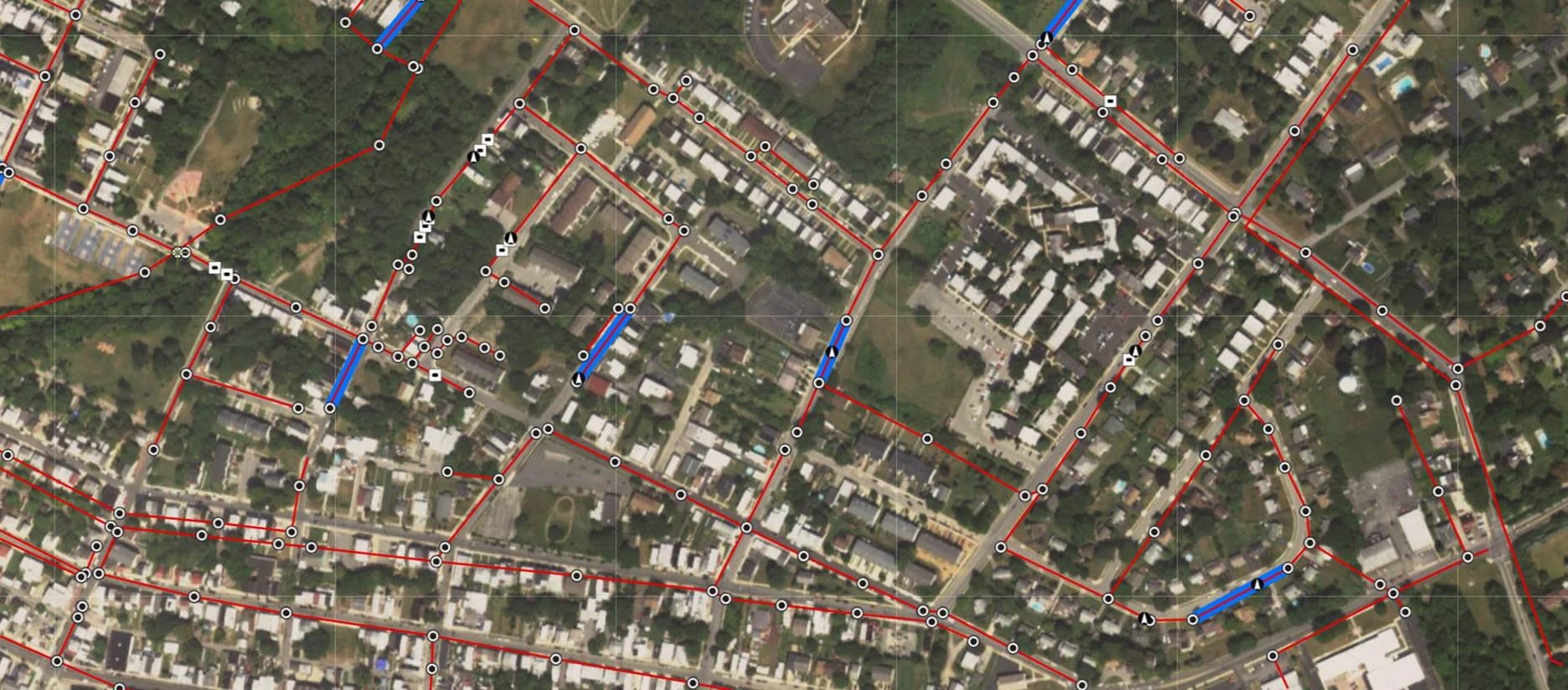
SSM’s GIS Asset Management approach helps municipalities to transform water, sewer, storm water, or transportation infrastructure data into an easy-to-use operations asset management system capturing vital infrastructure data points with survey-grade accuracy. The data is verified and compiled into a geo-spatial database. By creating customized mobile web applications, the field-critical data, such as material description, installation date, inspection reports and service history, is available at your finger-tips when you need it most.
GIS Data Management: Five things you need to know
With GIS technologies, information is no longer stored in multiple locations-maps, spreadsheets, notepads, clipboards, cell phones, email chains-but can now be stored in one spot. This helps you save time, improve processes, and get the information you need when you need it, wherever you are.
There is a data issue affecting facilities, municipalities, businesses, and organizations. Data is collected, sorted, resorted, and sorted again with little to no reward for the time and labor-consuming effort. Or worse- valuable data is left untouched, and unused.
With GIS technologies, you can make your data work for you. Information is no longer stored in multiple locations-maps, spreadsheets, notepads, clipboards, cell phones, email chains-but can now be stored in one spot.
With GIS, you can save time, improve processes, and get the information you need when you need it, wherever you are.
#1 - You use GIS every single day.

GIS technology connects the "where" with the "what". Geographic information combined with attributes, or "everything you need to know". Looking to buy or rent a home? Those phone apps are so convenient - open up the map, choose the location, and it shows all of the homes along with data about their price, their age, and more. Surprise! You just engaged with GIS. All the data ... one single spot.
What about when you are driving somewhere new? Do you utilize maps on your phone to locate the nearest gas station or coffee shop? You’re utilizing GIS! Have you noticed those roads turn red when there’s traffic? That’s all data, displaying in one interactive map. The help that comes if you are ever in an emergency? The responders depend on GIS. Google Earth- where you look up your own home for fun? GIS. GIS is something you use and benefit from every day, even if you are unaware of it.
#2 - It's nothing new. But it is constantly getting better.
At SSM, we've been providing clients with GIS Services for more than twenty years. When spatial databases were an idea of the future, we were there, signing our first GIS clients and leading the charge in making data meaningful.
With every new advancement in technology, we're finding new and better ways to help our clients raise efficiency. Finding new and easy ways to collect information, we're now building data analysis dashboards that trigger capital planning and infrastructure monitoring. Technological advances have propelled GIS into being not only a necessity for everyday use, but a strategic resource for industries all around the world.

#3 - Your data should be working for you.
Almost all data has a geographical component. By combining that with supporting attributes (i.e. photos, comments, service records) we're able to make your data mean more than it ever did before.
While flat maps and standard database systems offer you the surface, GIS technology takes what you know to a deeper level- showcasing relationships, patterns, and the connections between every piece of information you collect. GIS analysis uses location and attribution to solve complex problems. Questions like, "Where is...", "How long...", or "How many..." Because when data tells a story, you’re able to make smarter decisions in a shorter amount of time.
Paper plans and printed records are only good for the moment in which they were printed. GIS turns your static data into living, breathing, information. Information that's always available in one place and is always showing your most up-to-date information.
But it doesn’t stop there. Through GIS, we have also been able to streamline information collection. Throw away clipboards and paper forms. Instead, field team members simply need a mobile device. Customized data collection apps allow field teams to gather data and pictures with smart devices - and that information is directly populated into your GIS map. No filling out forms. No copying forms into spreadsheets, or rewriting information. One place to collect, one place to review.

#4 - It's meaningless if you can't access it.
The power of GIS lies in creating meaningful data that's there when you need it. Maintenance records, history, comments, and photos - wherever you are. Data is no good if you can't find what you need when you need it. How many projects were put on hold, or at least delayed, because someone, somewhere, had a paper that you couldn’t get to? How many emergencies were delayed because file hunting took longer than it should?
When your assets are in the cloud - when you utilize GIS for asset management - projects don’t stop. And emergencies? You’re ready for them too. GIS systems offer the convenience of accessing data from a desktop browser or mobile app. That means you access what you need whether you're in the office, in a meeting, or out in the field.
#5 - You can benefit from GIS, even if you you're not sure how.
Re-configuring your entire asset management system to GIS sounds intimidating. However, the benefit of GIS is its potential for growth. We’ve worked with municipalities that wanted to start small. All they wanted was pictures to be accessible in the field. So, instead of storing photos on hard drives- we connected them to a map. So when a crew arrives to repair an underground utility, they can quickly understand the configuration before they start digging. We’ve also worked with utility teams that went bigger- digitizing records for every single pipe, valve, and hydrant in their system. Everything they own including scans of hand-written plans accompanying their location.
GIS is here for what you need it for. For many, starting small and simple is a great first step. Consult with our GIS team to jumpstart your data collection and analysis.

DCED Accepting Applications for Act 13 Grants
The state Department of Community and Economic Development (DCED) is now accepting applications for Act 13 programs. Eligibility includes municipalities, authorized organizations, higher education institutions, watershed organizations, and for-profit businesses.
Act 13 of 2012 established the Marcellus Legacy Fund and allocates funds to the Commonwealth Financing Authority for statewide initiatives that include abandoned mine drainage abatement; abandoned well plugging; sewage treatment; greenways, trails and recreation; baseline water quality data; watershed restoration; and flood control.
The state Department of Community and Economic Development (DCED) is now accepting applications for Act 13 programs.
Application deadline: May 31, 2021
Eligibility:
Municipalities
Councils of Governments
Authorized Organizations
Institutions of Higher Education
Watershed Organization
For-Profit Businesses
Current Act 13 Grant Opportunities:
Abandoned Mine Drainage (AMD) Abatement & Treatment Program
Eligibility: Abandoned mine drainage, abatement, and treatment with the Abandoned Mine Drainage Abatement and Treatment Program (AMDATP).
Opportunity: Projects which involve the reclamation of Abandoned Mine Well(s), construction of a new AMD site, remediation and repair of existing AMD project sites, operation and maintenance maintaining current AMD remediation sites, establishment of trust fund to ensure ongoing maintenance is achieved, and monitoring of water quality to track or continue to trace non-point source load reductions resulting from AMD remediation projects.
Funding: Grants shall be awarded to eligible applicants for projects that do not exceed $1,000,000. The grant requires a least a 15% match of the total project cost.
Baseline Water Quality Data Program
Eligibility: Initiatives to establish baseline water quality data on private water supplies using the Baseline Water Quality Data Program (BWQDP).
Opportunity: Projects which involve practices for water sample collection and analysis to document existing groundwater quality conditions on private water supplies.
Funding: Grants shall be awarded to eligible applicants for projects that do not exceed $250,000. The grant requires at least 15% match of the total project cost.
Flood Mitigation Program
Eligibility: Projects authorized by a flood protection authority, the Department of Environmental Protection (PaDEP), the U.S. Army Corps of Engineers (USACOE) or the U.S. Department of Agriculture’s Natural Resources Conservation Service (NRCS) or identified by a local government, for flood mitigation.
Opportunity: This could be a good funding source to address localized stream flooding due to siltation and debris deposits over time, for which few funding sources exist.
Funding: Grants shall not exceed $500,000 for any project. A 15% match of the total project cost is required.
Greenways, Trails, and Recreation Program
Eligibility: Programs for planning, acquisition, development, rehabilitation and repair of greenways, recreational trails, open space, parks and beautification projects using the Greenways, Trails and Recreation Program (GTRP). Projects which involve development, rehabilitation and improvements to public parks, recreation areas, greenways, trails and river conservation.
Opportunity: This could be a good way to leverage recreation funds that already exist within municipal budgets.
Funding: Grants shall not exceed $250,000 for any project. A 15% match of the total project cost is required.
Orphan or Abandoned Well Plugging Program
Eligibility: Funding orphan or abandoned well plugging projects using the Orphan or Abandoned Well Plugging Program (OAWP).
Uses: Projects which involve the cleaning out and plugging of abandoned and orphan oil and gas wells; stray gas mitigation systems; and well venting projects.
Funding: There is a maximum of $1,000,000 for any project.
Sewage Facilities Program
Eligibility: Initiatives for complying with the Act of January 24, 1966 (1965 P. L. 1535, No. 537), known as the Pennsylvania Sewage Facilities Act.
Opportunity: Costs associated with the planning work required under Act 537.
Funding: Grants shall be awarded to eligible applicants up to $100,000. A 50% match of the total project cost is required.
Watershed Restoration and Protection Program
Eligibility: Projects which involve the construction, improvement, expansion, repair, maintenance or rehabilitation of new or existing watershed protection Best Management Practices (BMPs).
Opportunity: The overall goal of this program is to restore and/or maintain reaches of streams impaired by non-point source pollution. As such this grant could be used to implement NPDES MS4 Pollution Reduction Plans.
Funding: There is a maximum of $300,000 for any project. A 15% match of the total project cost is required.
Here to Help: Did you know that our teams can help you to acquire grant funding? Contact Andrew at andrew.shambach@ssmgroup.com

Helping Clients Acquire Funding!
SSM assisted several municipal and municipal authority clients in completing grant submission requirements and obtaining grant funding through both the PA Small Water and Sewer Program as well as the H2O PA Program.
The Pennsylvania Department of Community and Economic Development (DCED) announced this month the approval of grant funding for both water and sewer projects as well as new water infrastructure improvement projects through the Commonwealth Financing Authority (CFA).
SSM assisted several municipal and municipal authority clients in completing grant submission requirements and obtaining grant funding through both the PA Small Water and Sewer Program as well as the H2O PA Program.
This round, we are pleased to have assisted the following authorities in receiving a total of $1,708,865 in project funding.
Muhlenberg Township Authority: Interceptor Replacement
SSM helped the Muhlenberg Township Authority secure a $100,000 H2O Grant for replacement of a gravity sewer interceptor. Replacement of the interceptor will reduce levels of inflow and infiltration and will allow the authority to maintain the capacity of sewage conveyance. This upgrade will also allow for increased service connections and future development of this area, having a positive economic impact to the entire Muhlenberg Township Authority sewer system.
Manheim Area Water and Sewer Authority: Sanitary Sewer Rehabilitation Project
SSM helped Manheim Area Water and Sewer Authority with grant preparations and submission, securing $422,865 in Small Water and Sewer grant funds. For this project, the authority will continue rehabilitating a 30” diameter interceptor pipe. Rehabilitation and repair is expected to significantly reduce the amount of inflow and infiltration that enters the system during wet weather. This will allow the capacity of the collection system and the wastewater treatment plant to be maintained to serve future commercial, residential and industrial development. This reduction in infiltration/inflow will also save money and help to maintain the capacities of the treatment plant and sewer system- providing opportunities for future development and economic benefit.
North Coventry Municipal Authority: Sewer Replacement and Sewer Repairs Project
North Coventry Municipal Authority secured a Small Water and Sewer grant for $325,000 with the assistance of SSM in grant submission. This funding will be utilized to support replacement of a deteriorating sewer pipeline as well as repairs to a sewer pumping station. These improvements are expected to eliminate blockages from invasive tree roots, eliminate groundwater infiltration, reduce pumping costs and reduce treatment costs. These improvements will address identified areas of concern within the system. It will also allow the authority to provide more efficient service to existing and future customers, and provide additional treatment capacity for future connections.
North Coventry Water Authority : Water Main Replacement
SSM helped North Coventry Water Authority obtain $175,000 in funds for improvements to its water system. Among these improvements include continuation of efforts to reduce leakage from its water distribution system; elimination of lead pipe, joints and services in the system; and enhancement of the reliability of service to customers. All of these improvements are primarily centralized to the older, original part of the distribution system. By investing in these improvements, there will be a positive economic impact in a variety of ways, including enhanced service to commercial properties as well as decrease in future maintenance costs.
Oley Township Municipal Authority: Wastewater Treatment Plant Headworks Upgrade Project
SSM aided the Oley Township Municipal Authority in securing $250,000 in H2O Grant funding for a WWTP Headworks Upgrade Project. The modifications and upgrades to the wastewater treatment plant will improve the treatment process. The benefits of this project include, but are not limited to, better management of peak flows, more accurate sampling results, elimination of pump-clogging, and improved removal of non-biodegradable rags and debris.
Oley Township Municipal Authority: Sewer Collection System Televising and Manhole Rehabilitation Project
Oley Township Municipal Authority also secured $100,000 in Small Water and Sewer Grant funding with the assistance of SSM for ongoing inflow and infiltration work to reduce flows and hydraulic constraints within the sewer collection system. This project will include televising the sewer system to determine areas of the collection system that need rehabilitation. Additional improvements planned include rehabilitation of sanitary sewer manholes, as well as installation of manhole cover inserts (or rainguards). All of these improvements will reduce inflow and infiltration concerns within the collection system.
Perkiomen Township Municipal Authority: Sanitary Sewer Rehabilitation and Replacement Project
The Perkiomen Township Municipal Authority was granted $236,000 for assistance in funding the Authority’s proposed sanitary sewer rehabilitation and replacement project. SSM assisted in preparation and submission of the PA Small Water and Sewer Grant application materials. The project is expected to include over 4,000 linear feet of sanitary sewer cured-in-place pipe lining as well as the replacement of two manholes and one sanitary sewer line. All of this is expected to save the authority considerably in terms of transportation and treatment costs, allowing customers to avoid an increase in sanitary sewer rates. This project is also expected to create a long-term solution to existing systems nearing the end of their useful life.
Birdsboro Municipal Authority: Hay Creek Raw Water Pump Station Improvements Project
The Birdsboro Municipal Authority was granted $100,000 in Small Water and Sewer Grant funding for the replacement of two (2) pumps conveying raw water from the Hay Creek water source, purchase of an emergency generator for the Hay Creek Pump Station, structural improvements to mitigate flood damage during high flow event, and SCADA and security updates to the Pump Station. This project will create opportunity for future development and will provide a reliable back-up source of water for Birdsboro while the Indian Run Reservoir Dam is out of commission.
#ProblemSolved: Our Environmental Division is here to help. If you’d like to know more about our grant assistance services, send an email to Jamie Lorah, PE at jamie.lorah@ssmgroup.com or give a call to 610-898-3044

Water and Wastewater: Emergency Preparedness
For water and wastewater treatment plants, keeping your operators healthy and protected is the priority. Make sure your operators are equipped to continue operating your plant in a safe and healthy way. Of similar priority, be prepared for the worst case scenario. Make sure you have everything in place to easily transition should someone at your plant get sick.
For water and wastewater treatment plants, keeping your operators healthy and protected is the priority. Make sure your operators are equipped with the right personal protective equipment and support that they need to continue operating your plant in a safe and healthy way.
Of similar priority, be prepared for the worst case scenario. Make sure you have everything in place to easily transition should someone at your plant get sick. An important first step to take in being prepared is ensuring you have up-to-date operating procedures and guidelines that are readily available.
We hope you aren’t faced with this situation. But if you are, we’re here to help.
Support Options for Water and Wastewater Treatment Operations
In the event that you experience staffing challenges due to the coronavirus pandemic, SSM has qualified, experienced, and certified water and wastewater management, operations and maintenance personnel to assist and/or backup your personnel.
Review, update or prepare Standard Operating Procedures and Guidelines
Conduct a vulnerability assessment and prioritize risk points
Provide certified operators
Perform sampling and laboratory procedures
Provide management services
Provide administrative services
Operate treatment plants or provide shift operators
Operations management and oversight
Operate dewatering equipment
Perform maintenance procedures
Troubleshoot process issues
Troubleshoot machinery or equipment issues
Call SSM today at 610-621-2000 or send us an email at information@ssmgroup.com for help determining how to best prepare for a potential crisis at your facility.

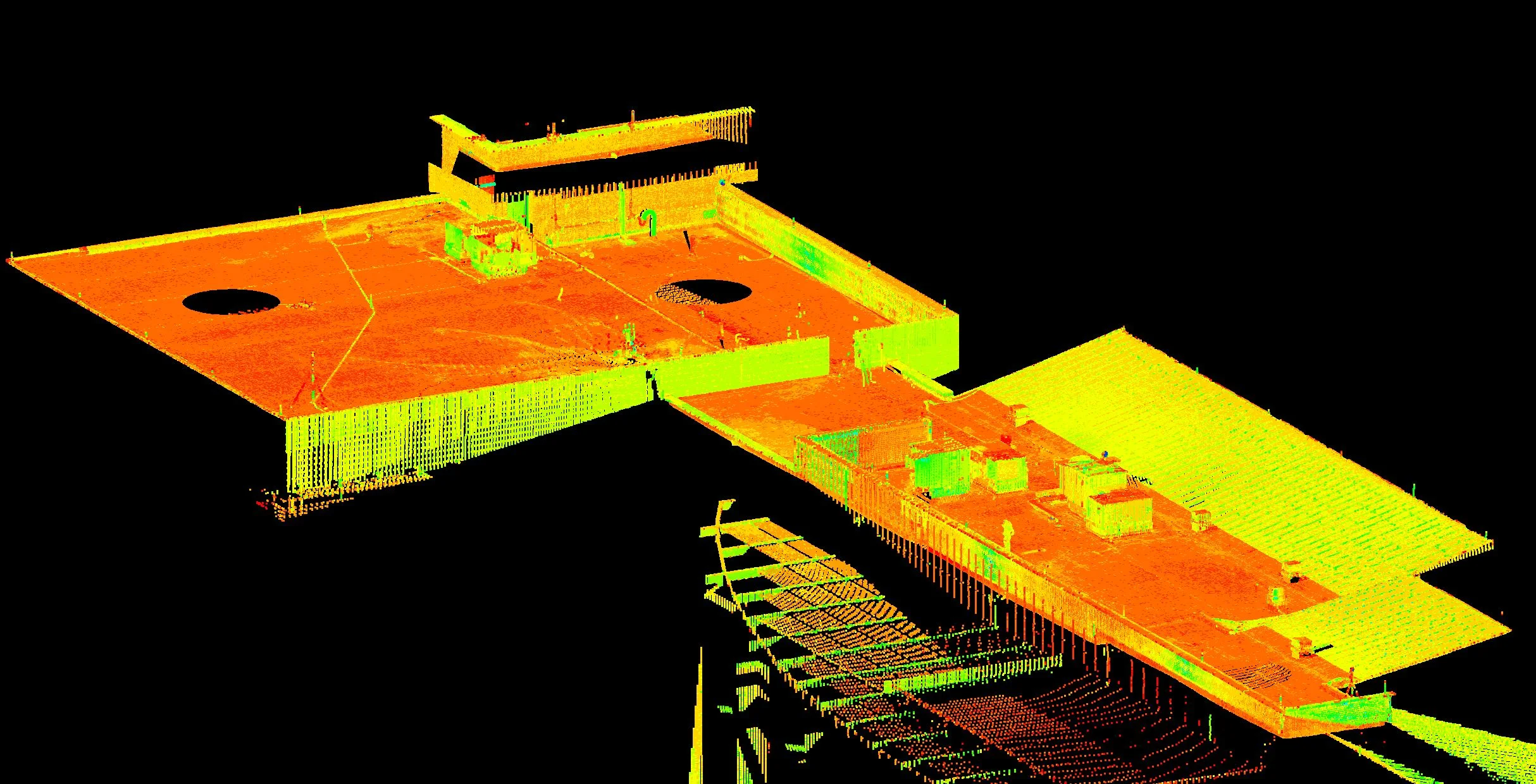
Small Imperfections Matter
From high-speed racetracks to concrete floors measuring and modeling large surfaces can highlight small imperfections.
For complex surfaces or large areas of surfaces that require high levels of flatness or levelness, using a high definition laser scanner offers millions of coordinate data points for verification or detection of anomalies that cannot otherwise easily or quickly be acquired. From offices to high density storage facilities, synthetic surface playing fields, to high-speed race tracks, the ability to rapidly and accurately measure and model large surfaces can highlight the small imperfections that can make a big difference.

In West Whiteland Township, post-construction high definition surveying was utilized over 12,000 square feet of concrete floor to identify irregularities in placement that prohibited the installation of finishes, equipment and furnishings. Contour plans with color banding and spot elevations to demonstrate where problem areas were located, with 1/8-inch accuracy aided the client and contractors to swiftly repair and to rule out structural deficiencies. A similar analysis was performed for the roof to identify slope and stormwater drain placement.
FOR MORE INFORMATION: Patrick McCoy, PE, LEED AP, CSDP

Three Small Things that Can Make a BIG Difference in the Bottom Line
There are three areas that can provide big savings in WWTP Operations: energy usage, chemical addition, and sludge generation and disposal
Inefficiencies in Municipal Wastewater Treatment Plants
Many Wastewater Treatment Plants (WWTP) were built at a time when budgets were not so tight and engineers erred on the side of caution to ensure that the plant met the design criteria. Many WWTP operators only have experience at one WWTP where they learned the trade from the previous operator. Those operators may have learned how to run the plant from the engineer who designed the facility and never changed their operations approach to adapt with the times.
What some call the municipal approach, “if a little is good, more must be better”, is often seen at smaller plants. This can lead to many unseen expenses. There are three areas that can provide big savings: energy usage, chemical addition, and sludge generation and disposal
The largest typical waste of energy in a WWTP is over aerating. The specific amount of air needed for a well running plant varies with the type of treatment process and the control capabilities. Activated sludge plants require a specific volume of air for BOD removal and nitrification. Online dissolved oxygen monitoring equipment can lead to a very efficient system if the associated controls are installed at the blowers. If these controls are not available, the operator has to select blower settings that allow for the plant to operate within the desired dissolved oxygen levels for the longest period of time possible. Dissolved oxygen will vary with changes of temperatures meaning that spring and fall are the most difficult seasons to maintain consistent dissolved oxygen levels.
Chemical addition is an area where waste often occurs. The ideal way to determine appropriate dosage is to perform jar tests. You add various dosages of chemicals to equal volumes of sample to determine which dosage provides the best flocculation and settlings to achieve desired treatment results. Overdosing of chemicals can lead to excess floc formation, sludge generation, and inhibit settling. If a facility doesn’t have the ability to perform jar tests, a chemical representative will typically give you a starting dosage and adjustments can be made by using visual analysis and laboratory data.
Sludge generation can be impacted by multiple operations approaches. Overdosing chemicals can lead to excess sludge generation and disposal requirements. Excess wasting can also generate increased levels of sludge. Each biological process requires sufficient biomass to treat the level of contaminants in the waste stream. Proper monitoring and control of the biomass will lead to optimum levels of sludge generation.
Multiple options are available to achieve cost effective disposal of the sludge generated from the treatment process. The majority of plants contract to have sludge hauled off-site. The volume of sludge to be hauled can be managed through various thickening processes selected by considering cost of the thickening equipment vs. actual hauling costs. Disposal options range from the least expensive, agricultural land application, to mine reclamation and landfill disposal, which is typically the most expensive disposal method. Some facilities have reed beds which have no annual disposal costs, but require a large capital outlay when they need to be cleaned out. A few facilities have incinerators which are labor intensive and come with high operating and maintenance costs.
The bottom line is that small changes in the treatment process can have a significant impact on the cost of operations. SSM can provide assistance to optimize operating costs for municipal facilities searching for budget dollars.
FOR MORE INFORMATION: Carl Kline, LO
SSM is assisting The Walnutport Authority with modernizing their operational support model by moving from paper sources to Geographic Information Systems (GIS).
SSM has developed a versatile tool and process for gathering data, and tracking and presenting progress on compliance with the City of Philadelphia’s Building Energy Performance Program (BEPP).