
Funding your next Capital Project
C-PACE Financing offers a viable funding option for capital building upgrades. It continues to gain momentum in Pennsylvania as a great tool to finance energy efficient building improvements.
C-PACE Financing offers a viable funding option for capital building upgrades. It continues to gain momentum in Pennsylvania as a great tool to finance energy efficient building improvements.
Our Energy and Sustainability Team is here to help. From the necessary assessment and modeling pre-requisites, to the project establishment and application process all the way to the technical components of taking your improvement project to completion- we’ve got you covered.
To help you get started in uncovering your opportunity for financing, we turned to the financing administrators to provide you with all the simple and sweet details you need to know.
What is C-PACE Financing?
Commercial Property Assessed Clean Energy (C-PACE) is an innovative financial tool for property owners to obtain low-cost, long-term financing for projects. C-PACE can provide up to 100% funding of total project costs by placing a special voluntary assessment on the property that repays the costs of the upgrades including equipment, labor and soft costs. Because C-PACE is attached to a property assessment, it is a very secure form of financing.
Who’s Eligible?
Commercial properties, tax-exempt organizations, commercial portions of mixed-use buildings, and new construction projects.
What are Eligible Projects?


Energy Efficiency: This includes HVAC upgrades, building controls, LED lighting, green roofs, geothermal energy, heat recovery, and high efficiency equipment such as chillers and heat pumps
Water Conservation: This includes any project that will demonstrate water savings including high-efficiency equipment, condensate water reuse, low-flow fixtures and more
Renewable Energy: This includes improvements such as solar power, wind power, fuel cell, solar thermal and methane gas from landfills and anaerobic digestion, and more.
What are Key Requirements?
Project must be approved by your county’s Program Administrator.
$100,000 minimum financing amount and 95% lien-to-value limit
Financing term cannot exceed the weighted average expected useful life of the installed measures (max. 30 years)
For More Information: https://pennsylvaniacpace.org/
Does this information speak to you?
Let’s get you started on acquiring your funding. Give us a call.
Paul Spiegel, PE, LEED AP | Director Energy and Sustainability Services | paul.spiegel@ssmgroup.com

Beating the Heat in the Dog Days of Summer
We know you’re dealing with rising temperatures and humidity and trying to stay cool ...we’re here to help.
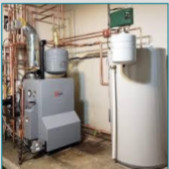
Dormitory HVAC Conversion | Marymount University

CHALLENGE | Existing dorm rooms in each building were served by fan coil units supplied by a two-pipe heating and cooling system. The scope of the project was to replace the existing fan coil units, greater than 270 individual units, and upgrade the existing two-pipe system to a four-pipe system in each building. The conversion was accentuated by the existing units being located in extremely tight spaces above the ceilings.
SERVICE | Mechanical Engineering and Construction Phase Services
SOLUTION | SSM provided detailed coordination with existing architecture and other utilities to successfully field survey and design the conversion. In addition, one of the Hall’s conversions also included replacement of the existing air-cooled chiller with two new 35 ton water-cooled heat recovery chillers and the addition of a dry cooler. The existing boilers were replaced with a new 600 MBH boiler, and new pumps were provided for the heating system as well as the cooling system. SSM also worked closely with the owner and the contractor to facilitate completion of the project during the construction phase.
Ironton Rail: Rails to Trails | North Whitehall Township

CHALLENGE | Half mile rails to trails project along the former Ironton Railroad right-of-way. The project extended the existing Ironton Rail Trail from its terminus to the North Whitehall Township Building/Park Property.
SERVICE | Civil engineering design, permitting, bid and construction phase services
SOLUTION | SSM prepared construction drawings for the half mile project as well as prepared documentation to obtain a Joint Permit from the PaDEP for the construction of gabion walls within the floodway and of trail sections within the floodplain of the Coplay Creek. The trail was improved with compacted gravel and included a 40’ span pedestrian bridge that crossed a tributary to the Coplay Creek.
Energy Audit & Systems Design | Children’s Beach House

CHALLENGE | Identify energy conservation opportunities to an approximate 20,000 square foot, two story facility that holds summer and weekend camps for children with communicative disabilities and other special needs. Energy audits and evaluations extend for multiple years and with consideration that the existing mechanical equipment was reaching the end of its useful life.
SERVICE | Energy audit
SOLUTION | SSM conducted multiple surveys and energy audits of the existing facility over the course of a number of years. In accordance with these audits, SSM recommended several no cost and low cost strategies for saving energy as well as some capital improvement projects that would impact energy efficiency. SSM performed a life cycle cost analysis of the HVAC systems to compare replacement in kind with a geothermal heat pump system and a variable refrigerant system (VRF), determining the VRF system offered the lowest overall lifecycle. SSM further assisted in completion of grant applications to fund the project and design of the HVAC renovation

Understanding the Annual Consumer Confidence Report
SSM assists many of our clients to prepare their annual Consumer Confidence Report. We collect the water system’s analytical data and analyze the data including calculating the average and maximum results of each detected contaminant.

Water Quality Reporting
In 1996, Congress amended the Safe Drinking Water Act, adding a provision requiring that all community water systems deliver to their customers a brief water quality report annually.
Each year, community water systems are required to prepare a water quality report, or a Consumer Confidence Report (CCR), and deliver a copy to each of their customers. Water systems that serve over 100,000 people must post their CCR to a public website. If posting to a website, the supplier must provide a direct URL to customers to access the CCR. These CCRs must also be certified with the PA Department of Environmental Protection (DEP) by June 30th each year. The annual CCR must be delivered to consumers by July 1 of each year.
A groundwater or surface water source may encounter many contaminants as it travels to a water treatment plant. While treatment systems will remove the majority of these pollutants, some level of contaminants are to be expected – whether they are minerals or bacteria naturally present in the environment, or potentially harmful substances resulting from human activity. The purpose of a CCR is to inform customers about these contaminants in their drinking water, and provide information regarding levels of concern. The Report contains language pertaining to the system’s source of water, potential health effects of certain contaminants, and any regulatory violations that may have occurred over the year.
Throughout the year, community water systems collect and analyze samples within their water supply, and upload the results every month to the Drinking Water Electronic Lab Reporting (DWELR) system. The results are then processed through the Pennsylvania Drinking Water Information System (PADWIS) to ensure compliance with EPA and DEP regulations. Contaminants are assigned very stringent Maximum Contaminant Levels (MCLs), and must meet these, as an exceedance could pose a health risk to customers. If the MCL is exceeded, this results in a violation and the water system must take steps to resolve it. This may include issuing a Public Notification to consumers containing information on why the violation occurred and how to mitigate the effects of the exceedance, such as a Boil Water Advisory. Contaminants that are not yet regulated are reported to assist EPA with monitoring the occurrence of these contaminants, and to help determine whether future regulation is necessary.
Understanding the CCR
The CCR is a general overview of the water quality delivered by your community water system. The report lists the regulated contaminants detected in the treated water and the level at which they were found. The CCR intends to provide customers with information on what they are consuming, and whether or not they should be concerned about certain contaminants. Included in the CCR are website links and contact numbers for consumers should they have questions, or want to find additional information regarding health effects of the less common contaminants.
The CCR provides parameters such as Maximum Contaminant Level (MCL) which is the highest level of a contaminant that is allowed in drinking water. To understand the possible health effects described for many regulated constituents, a person would have to drink 2 liters of water every day at the MCL level for a lifetime to have a one-in-a-million chance of having the described health effect. Generally, if there are no MCL violations for the detected contaminants, a customer could know that they are drinking safe, clean water.
We can help.
SSM assists many of our clients to prepare their annual Consumer Confidence Report. We collect the water system’s analytical data and analyze the data including calculating the average and maximum results of each detected contaminant.