

Welcome Aboard - Robert Conte

Robert Conte joined the firm as a Senior Designer in the Water and Wastewater Engineering Department. Bob has an AS in Mechanical Engineering Technology from Harrisburg Area Community College.

Welcome Aboard - Joe Cherinko, EIT

Joseph Cherinko, EIT joined the firm as a Graduate Engineer in our Water and Wastewater Engineering Department. Joe has a BS in Environmental Engineering from Wilkes University.
A thirst for clean water flowing from Berks County
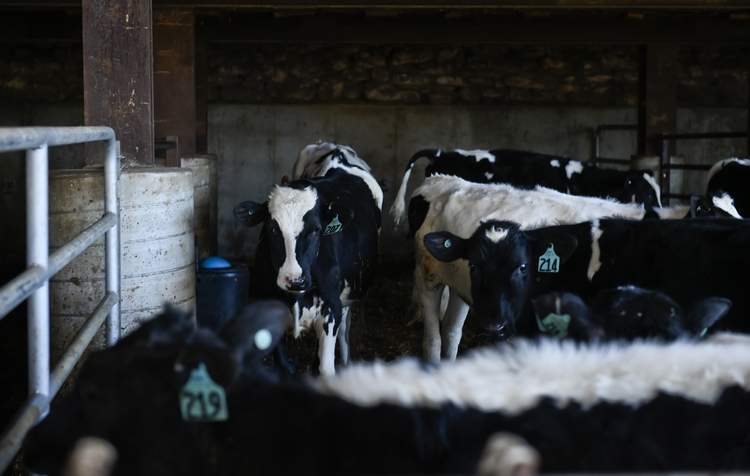
Manure from the cows at Furnace Stream Farm, Windsor Township, is prevented from leaching into the Furnace Creek under efforts that are part of the Delaware River Watershed Initiative.

Furnace Stream flows into Maiden Creek which flows into Ontelaunee Lake which is the drinking water supply for the City of Reading in Windsor Township. Streams are a key part for nitrogen wastes from land to be filtered and changed into harmless nitrogen gas.
Berks Nature and Stroud Water Research Center and other groups are working with farmers in the region to protect water resources and reducing pollutants on farms.

Manure from the cows at Furnace Stream Farm, Windsor Township, is prevented from leaching into the Furnace Creek under efforts that are part of the Delaware River Watershed Initiative.

The newly engineered cattle path at Furnace Stream Farm in Windsor Township protect their water resources. Berks Nature and Stroud Water Research Center and other groups are working with farmers in the region to protect water resources and reducing pollutants on farms.
Reprinted with permission of Reading Eagle Company
Written By:Monica von Dobeneck
Conservation groups join forces with farmers to protect waterways that are part of the vast Delaware River Basin.
Furnace Stream Farms sits at the foot of deeply forested Kittatinny Ridge. Furnace Creek runs through the farm's pastures, still clean and pure after its descent from its headwaters.
At least eight organizations, as well as the dairy farm's owners, are striving to keep it that way.
The farm is one of dozens in Berks County that is getting help from Berks Nature, Stroud Water Research Center, Partnership for the Delaware Estuary and their partners in protecting its waters. It is part of a wider effort throughout the Delaware River Basin called the Delaware River Watershed Initiative, a collaboration of 65 nongovernmental organizations working together to protect the Delaware River and its tributaries, which provide drinking water for 15 million people in four states.
"Small streams like this are 90 percent of all stream miles," said Lamonte Garber, watershed coordinator for Stroud Water Research Center, as he looked over Furnace Creek on a farm in Windsor Township belonging to siblings Doris Long and David Kaufman. "It's the best place to get water quality.“
Furnace Creek runs through wetlands on the farm, which act to purify water.
"If we can preserve streams like this, we have a natural water treatment system," Garber said.
Furnace Creek flows into the Maiden Creek and from there to Ontelaunee Lake, which provides drinking water to 125,000 people in Reading and nearby municipalities. From there it continues to the Schuylkill River and eventually the Delaware.
It is also close to the farm's 40 head of cattle, which were milling about in the faded red, 1885 barn on a recent spring day.
Kim Murphy, president of Berks Nature, said the organization has been doing this kind of work for 20 years, but just finished its fourth year as part of the Delaware River Watershed Initiative. Berks Nature and its partners have installed best management practices on 37 farms in Berks County covering 2,013 acres in the past year alone, focusing on the Middle Schuylkill area.
The work on each farm can cost $50,000 to $500,000, depending on its size and needs, she said.
Berks Nature has contributed $750,000 in grants directly, and uses that money to leverage hundreds of thousands more.
The money comes from federal, state and private sources. The William Penn Foundation recently announced $42 million in funding for the Delaware River initiative, a huge boost in the ability to continue the work.
The U.S. Department of Agriculture provides money through the Natural Resource Conservation Service. The Berks County Conservation District has offered staff expertise and volunteer muscle.
The National Fish and Wildlife Foundation is a funding source. The Reading Area Water Authority assists in planting trees. The state Conservation Reserve Enhancement Program pays rent to farmers for preserving stream buffers.
The farmers themselves contribute labor and maintenance. Kauffman and his son are excavators who lend their machinery.
Unlike the Chesapeake Bay Watershed, the Delaware initiative is thus far voluntary for the farmers who choose to participate.
"We prefer it that way," said senior ecologist Larry Lloyd with Berks Nature. "We can proactively work on getting farms environmentally compliant. These are the folks who are feeding us. We owe them help to stay in business.”
Murphy said it works well when professionals and volunteers come together and use data-driven science "to preserve such an identifying industry in Berks County.”
Harmful Algal Blooms (HABs) in Drinking Water
Freshwater harmful algal blooms (HABs), most notably Cyanobacteria blooms, were formerly known as blue-green algae blooms, and are found in lakes, rivers, ponds and other surface waters.
What are HABs?
Freshwater harmful algal blooms (HABs), most notably Cyanobacteria blooms, were formerly known as blue-green algae blooms, and are found in lakes, rivers, ponds and other surface waters. Cyanobacteria are common in freshwater and are an important part of aquatic life. Excessive growth of Cyanobacteria producing HABs have become a growing concern in the United States and worldwide. HABs can produce toxins referred to as cyanotoxins that pose health risks to humans, animals, fish and shellfish. HABs can also create taste and odor problems in drinking water sources, producing earthy and musty smells and off-putting taste. The impacts of HABs have increased significantly over the past several years with blooms affecting the drinking water supplies in numerous communities in multiple states.
Cyanobacteria have the capability to synthesize metabolites known as cyanotoxins during their exponential growth. Not all strains of Cyanobacteria possess the genes necessary to produce cyanotoxins. Simply possessing the necessary genes does not ensure expression of those genes. Cyanotoxins are classified into three categories by chemical structure: cyclic peptides, alkaloids and lipopolysaccharides. The most commonly occurring are cyclic peptides, of which microcystins are the most common in freshwater. Microcystin-LR is the most toxic of the known variants of microcystin.
What are the Health Impacts of HABs?
In 2015, The U.S. Environmental Protection Agency (EPA) issued 10-day Health Advisories for two cyanotoxins: Microcystin and Cylindrospermopsin. If these cyanotoxins occur in drinking water over the EPA national 10-day Health Advisory level (see Table below), people are at risk for various adverse health effects including headache, incoherent speech, drowsiness, loss of coordination, abdominal pain, upset stomach, vomiting and diarrhea, as well as liver and kidney damage. The Health Advisories (Do Not Drink) provide guidance for the cyanotoxin levels in drinking water at which adverse human health impacts are likely to occur when exposed to these levels over a 10-day time period. Health Advisories are not enforceable safe drinking water standards.
10-day Health Advisories Level

The risk of adverse health impacts from cyanotoxins are higher for infants, young children under the age of six, and other vulnerable populations including: pregnant women, nursing mothers, those with pre-existing liver conditions, those receiving dialysis treatment, the elderly, and sensitive populations.
What causes HABs?
Though all the factors that directly perpetuate HABs are not fully understood, increasing nutrient pollution and climate change are believed to be linked to the increase of occurrence and locations. Freshwater HABs occur most often where there are high levels of nutrients such as nitrogen and phosphorus present in warm, still waters such as reservoirs, lakes, and ponds. HABs can also occur in rivers, particularly in summer months. The sources of excess nutrients can be fertilizers from agricultural activities, sewage and industrial discharges, and stormwater. Climate change is also believed to be a contributor to the increased occurrence of HABs due to warming water temperatures, more frequent droughts, and increased flooding creating more polluted runoff into freshwater bodies. In recent years, Lake Erie algal blooms have lasted into December and January. Similarly, during California’s recent drought period higher incidences of HABs were experienced.
How do HABs Impact Drinking Water?
Cyanobacteria blooms are a significant concern to drinking water suppliers utilizing surface water sources. HABs can be difficult to identify. The shape, size, location, color and cyanotoxin production can vary from bloom to bloom. Seasonal and year-to-year fluctuations can make predicting the occurrence of HABs extremely difficult. While conventional water treatment facilities providing coagulation, sedimentation, filtration and disinfection can generally remove the cyanobacteria cells and very low levels of toxins, during a severe HAB event, when high levels of cyanobacteria and cyanotoxin occur, they can disrupt the treatment processes (floc formation, filtration and chlorination) and require considerable intervention to produce drinking water below the cyanotoxin health advisory levels. Some cyanobacteria may also produce color, unpleasant taste and odor, and may increase the production of potentially harmful disinfectant byproducts (DBPs) precursors. Each HAB event is unique and proper treatment measures need to be considered on a case by case basis. Control measures must be selected carefully, as applying the wrong treatment process could rupture the cyanobacteria cells and result in the release of cyanotoxins rather than the removal of cyanotoxins.
How to protect drinking water from HABs?
Be prepared! Drinking water suppliers need to evaluate and understand their surface water sources and the conditions that could produce HABs including high nutrient levels, water temperature, flow, and pH. HABs can be transported to drinking water intakes by wind or water currents. Water suppliers should evaluate the ability to vary raw water withdrawals from different levels within the raw water source to reduce or eliminate drawing a HAB into the water treatment plant. Depending on the HAB potential for any public water supply source, water suppliers should consider evaluating alternative sources of supply unaffected by HABs. Water suppliers should also effectively monitor for cyanobacteria and cyanotoxin in the raw water source, as well as evaluate methods to treat the raw water source. Additionally, suppliers should evaluate the ability of the treatment plant processes to effectively remove cyanobacteria and cyanotoxin and consider additional treatment technologies or processes to address HABs dependent on the HAB occurrence risk.
How are HABs regulated in Drinking Water?
There are currently no Clean Water Act regulations for cyanobacteria in surface waters or Safe Drinking Water Act enforceable standards or limits for cyanotoxins, although cyanotoxins are currently on EPA’s priority list of drinking water contaminants of potential concern. The EPA Health Advisories for the two cyanobacteria toxins which were issued in 2015 and discussed herein are not enforceable, but provide the technical guidelines needed to assist public water suppliers in protecting their consumers.
FOR MORE INFORMATION | Serena DiMagno, Sr. Environmental Consultant

Water Modeling: A Valuable Tool to Ensure the Sustainability of your Water Distribution System
By providing real-world ongoing simulation of your municipality’s hydraulic and water quality behavior, our modeling services visualize every variable and interrelation within a water distribution network.
With the help of water modeling software such as WaterCAD and EPANET, SSM can analyze and improve your municipality’s current water infrastructure while helping you plan for changes and expansions to your distribution system in the future.
By providing real-world ongoing simulation of your municipality’s hydraulic and water quality behavior, our modeling services visualize every variable and interrelation within a water distribution network. With various applications, water modeling provides solutions to everything from determining fire hydrant flow pressure in a given area, to determining the correct modifications needed in tank filling and emptying schedules to reduce water age.
After working closely with a client to determine the exact problems at hand, we proceed by acquiring the data from the given water distribution network. This means we must create; then, we must calibrate! We begin with utilizing our GIS data technology services to create a map of your current distribution network, including the locations of all pumps, pipes, valves, water mains, storage tanks, and interconnection points. Other helpful information includes dates of installation, water usage information, meter data, tank flows, etc.
Next, it is essential to calibrate the model. This involves conducting hydro flow tests to refine and update the existing model so that it better represents the detailed conditions to-date. Once calibration is completed, the model can be used to identify areas of concern and evaluate potential solutions. Models can be utilized to determine if adequate pressure and fire flow can be provided to new developments or service areas as well as evaluating the effects of different pumps, valves and pipe diameters on flow and pressure. Water modeling can help both urban and rural areas plan and improve their water system’s hydraulic performance.
In addition to illustrating where performance issues originate, water modeling can also identify which areas of a water network are susceptible to, or already have water main deterioration. Other SSM water quality modeling applications include helping our clients address concerns related to high water age, poor water quality, high concentrations of disinfectant products, disinfectant loss and byproduct formation, and chlorine residual concentrations. Modeling is also a useful tool in vulnerability and energy minimization studies conducted to improve the overall quality and operation of a distribution system.
The potential of water modeling services to help clients gain insight into the state of their service area’s water quality and network is vital to its’ ultimate sustainability. Modeling has proven to be a valuable tool in both identifying solutions to current issues at hand, as well as preventing those that may be unforeseen.