

Heavy Rain Can Contribute to Sinkhole Formation
A sinkhole is a depression formed as the underlying bedrock is dissolved by groundwater (usually limestone). Sometimes, surface water entering a crevice in the bedrock may be the cause.

What is a Sinkhole?
A sinkhole is a depression formed as the underlying bedrock is dissolved by groundwater (usually limestone). Sometimes, surface water entering a crevice in the bedrock may be the cause. Thus, sinkholes may form in low-lying areas where water is ponding. A hole will form, at the top of the underground cavern that is dissolved, and the earth above the hole will collapse into the hole.
What’s the Risk?
Sinkholes can be dangerous to the foundations of the building. Sinkholes are conduits for surficial contaminants to reach groundwater. They may cause damages to buried services (water lines and electrical conduits).
How are sinkholes repaired?
A sinkhole is best repaired by excavating to rock then building an aggregate filter in the hole.
We can help. In many instances, SSM can limit our client’s risk by documenting pre-failure site conditions.

Preparing for MS4 Regulations
Under the new Municipal Separate Storm Sewer Systems (MS4) regulations that will take effect in 2018, new permittees will need to comply with additional obligations to meet the revised general stormwater permit requirements under PAG-13.

Under the new Municipal Separate Storm Sewer Systems (MS4) regulations that will take effect in 2018, new permittees will need to comply with additional obligations to meet the revised general stormwater permit requirements under PAG-13.
Municipal employees, engineers, and contractors can prepare by reviewing the updated Minimum Control Measures (MCMs), and organizing current practices and training to determine possible gaps that fall short of their permit conditions.
Minimum Control Measures
There are 6 areas of stormwater pollution concerns that will be addressed through these MCMs.
- Public Education- Provide education to the public about stormwater pollution and reduction.
- Public Involvement - Involve the public in developing and implementing the municipality’s MS4 stormwater program.
- llicit Discharge Detection & Elimination - Identify and remove unpermitted discharges to municipality’s storm system.
- Construction- Reduce or eliminate stormwater runoff from construction sites in the municipality.
- Post-Construction - Reduce or eliminate stormwater from site where construction has been completed.
- Pollution Prevention/Good Housekeeping- Reducing or eliminating runoff from municipal services and activities.

MS4 Preparations: Explore Mapping Options
If your system isn’t captured in Geographic Information Systems (GIS), now is the time to contemplate upgrading your mapping. Consider capturing all the components of your MS4 conveyance system, which includes pipes, swales, catch basins, roads, and inlets.
Transform your water, sewer, storm water, or transportation infrastructure data into an easy-to-use operations asset management system. SSM’s GIS Asset Management approach captures vital infrastructure data points with your system with survey-grade accuracy.
The data is verified and compiled into a geo-spatial database. By creating customized mobile web applications, the data is accessible to you in the office, or in the field. Field-critical data, such as material description, installation date, inspection reports and service history, available at your finger-tips when you need it most.
Liberate your GIS Data - VIEW A LIVE DEMO
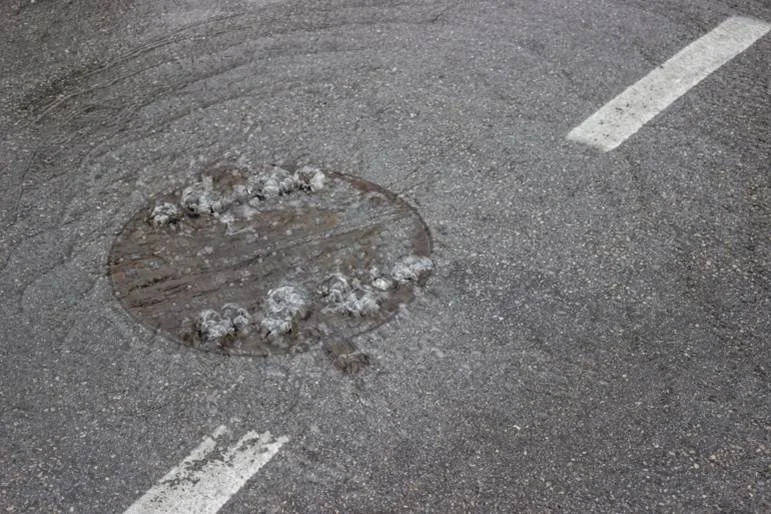
How to Prevent Sewer Overflow
Excessive infiltration/inflow may cause sanitary sewer overflows during wet weather.
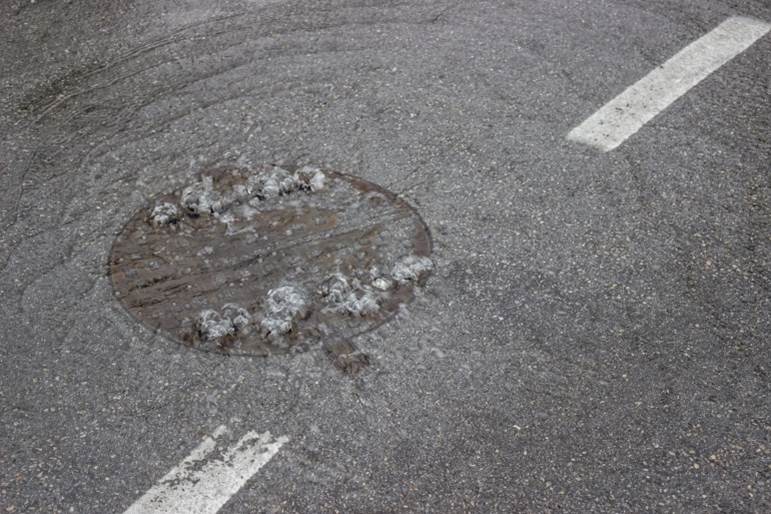
Excessive infiltration may cause sanitary sewer overflows during wet weather
Inflow and Infiltration is caused by storm water or groundwater entering the sanitary sewer collection system. Inflow is caused by rainfall entering a collection system through direct connections such as roof leaders, basement and yard drains, sump pumps, manholes and cross connections with storm water lines. Infiltration is caused by groundwater entering a collection system through defects in the sewer mains or laterals and manholes.
Inflow and Infiltration can impact a sanitary sewer system in several ways including:
- Causes sanitary sewer overflows
- Reduces the ability of collection system and treatment plants to transport and treat sewage
- Increases costs at the treatment plants, which in turn increases the rates to the customers
A good preventative maintenance program is key to identifying problems within the collection system and keeping the sanitary sewer system in good working order. This can help to reduce the chances of a sanitary sewer overflows and increase capacity in both the collection system and treatment plant. A proactive approach to maintaining a collection system can save money and help to protect the environment.
Helping our Clients Face the Rain
St. Lawrence Borough | SSM assisted the Borough in completing sanitary sewer rehabilitation projects for the past 40 years. We completed a sewer rehabilitation project that included lining of over 1,500 LF of sanitary sewer main, several point repairs to the sewer main and rehabilitation of a leaking manhole. This project eliminated approximately 20 gpm of infiltration into the Borough sanitary sewer collection system.

Investing in Clean Water
Spotts, Stevens and McCoy works in all aspects of Water Resources. Investing in clean water is a good business decision.

Spotts, Stevens and McCoy works in all aspects of Water Resources. Investing in clean water is a good business decision.
In the headwaters of the Schuylkill River, the opening day of Trout Season is becoming a cherished family tradition. This is new for the region, since decades of low pH and heavy metals from Abandoned Mine Drainage (AMD) did not allow for either natural reproduction or trout-stocking. Through the efforts of organizations like the Schuylkill Headwaters Association, AMD is being effectively treated. As a result, the water quality of the Schuylkill River headwaters are rebounding and able to support trout.
After the headwaters, the Schuylkill River flows south through Berks County and faces additional challenges from agricultural runoff. Organizations such as the Schuylkill Action Network and community water providers are working directly with farmers to reduce the volume of nutrient and sediment contaminants in the watersheds. Best Management Practices (BMPs) such as manure storage units are helping to decrease close to 300,000 pounds of nitrogen-nitrate from the Maiden Creek Watershed, alone. As a result, nitrates in the groundwater are steadily declining, the community is taking notice.
As the Schuylkill River flows toward Philadelphia, more watershed restoration efforts are underway. Based on population density, federal regulations require communities to monitor and reduce contaminants from entering waterways from stormwater runoff. Known as the Municipal Separate Storm Sewer System (MS4) Program, Pennsylvania has close to 1,000 MS4 communities. Many are located in the lower Schuylkill River Watershed. These regulated communities are working on long-term BMPs to improve the quality of stormwater discharge.
The AMD remediation, agriculture BMPs and MS4 stormwater controls are just a few of the restoration activities underway in the Schuylkill River Watershed. Some of the watershed restoration efforts are voluntary like Source Water Protection Program where community water suppliers are investing in protecting drinking water. Other cleanup activities are mandatory like the MS4 Program. Whatever the reason, investing in clean water is paying dividends. All you need is to watch the pure joy on the face of a seven year old catching his first trout in the headwaters of the Schuylkill River
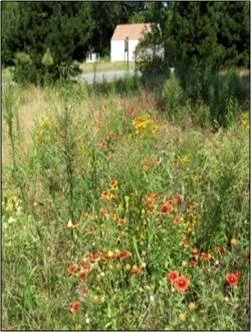
Site Development and Retrofit Methods to Reduce Stormwater Costs
Managing the water that falls on the land is a complex issue, and has evolved beyond just installing pipes to carry away runoff from a very small area.

Managing the water that falls on the land is a complex issue, and has evolved beyond just installing pipes to carry away runoff from a very small area.
In recent years, stormwater management has received renewed attention from municipalities, regulators, developers, and environmental protection advocates. The stormwater paradigm has shifted, so that communities not only view stormwater as a force of nature that requires careful management but as a resource.
Stormwater impact fees are poised to become a common vehicle for municipalities to address the cost of mitigating impacts of pollutants such as fertilizers, chemicals, oils, and pesticides on waterways due to discharge of stormwater to their stormwater systems (MS4’s). Site retrofits for existing landscapes, and Low Impact Development (LID) techniques for new development can reduce these fees and protect water quality through infiltration, filtering, storage and evaporation, and mimicking site-specific hydrology.
Reducing impervious surfaces, replacing pipes with grassed swales, green roofs, rain gardens, trees, pervious surface alternatives, and bioretention are some of the cost effective and attractive ways to benefit the bottom line, and the environment.

What's Causing the Rain Damage?
A strong rain storm can leave a path of destruction in its wake with many business and commercial buildings suffering damage from high winds, heavy rain, fallen trees, or flying debris. Assessing the structural and environmental integrity of your facility is crucial in the aftermath of a significant storm.
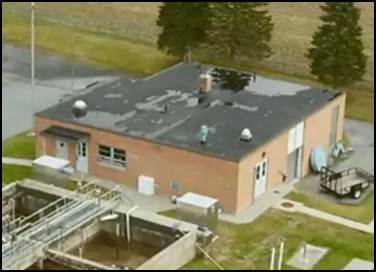
DRONE APPLICATION: Our pilots can quickly capture details and document current conditions in hard-to-reach places.
A strong rain storm can leave a path of destruction in its wake with many business and commercial buildings suffering damage from high winds, heavy rain, fallen trees, or flying debris. Assessing the structural and environmental integrity of your facility is crucial in the aftermath of a significant storm.
What are common causes?
- Poor Drainage - If you have a flat roof and it’s not draining properly, you run the risk of ponding water. And the weight of this accumulated water can cause structural issues for the building.
- Aging System - Over the years, wear and tear on your roof may result in damage to the flashing or roof membrane cover. Wind, debris, or extreme temperatures may cause the flashing to become loose or the membrane to puncture or tear. This damage provides the water and moisture a place to go – resulting in leaks and mold in the building.
- Poor Seals - There are intentional holes in the roof membrane cover for such necessities as HVAC units, drains, or vents. If the wraps, rain collars, or pitch pans at these areas are not water-tight rain water and moisture enter the building.
Although the damage may appear to be minimal, water intrusion caused by the storm or structural damage to the building may not be readily visible; but if it’s not addressed promptly, could result in further property damage, mold growth, or other biological issues.
Did you know that mold can grow in as little as 12 hours?
Mold is one of the leading Indoor Air Quality problems, often causing significant allergies and health problems for occupants. Mold can grow almost anywhere there is water damage, high humidity, or dampness. If such conditions exist in your building, you most likely have a mold problem.
SSM’s structural engineers and Indoor Environmental Quality Specialists can evaluate the existing conditions, determine the extent of the damage or water intrusion and recommend corrective actions before conditions effect occupant health.