

Chiller Plant Study and Design
SSM developed a plan to convert a chilled water plant consisting of two independent chilled water systems comprised of 2 – 600 ton chillers (N+1) and associated pumps and 2 – 250 ton chillers (N+1) and associated pumps to a single system consisting of 3 – 400 ton chillers and associated pumps.

Confidential Client - Corporate Offices and Data Center
New York
SSM developed a plan to convert a chilled water plant consisting of two independent chilled water systems comprised of 2 – 600 ton chillers (N+1) and associated pumps and 2 – 250 ton chillers (N+1) and associated pumps to a single system consisting of 3 – 400 ton chillers and associated pumps. The project goal was to create a single central chilled water plant providing N+1 redundancy and development of a new sequence of operation allowing for automatic operation of the plant including automatic energizing of redundant equipment in the event of failure and rotation of equipment to equalize runtime. The project also included reconfiguration of power supplies to the equipment to reduce single points of failure.
The construction documents included instructions for phasing of construction to maintain operation of the existing plant while modifications and interconnection of the various subsystems was accomplished. The reconfiguration maximized the reuse of the existing piping network and power distribution.

Boiler Replacement Design
SSM prepared construction documents for the installation of a dual fuel 1,200 HP boiler to replace a 67 year old water tube boiler.

Confidential Client - Data Center
New York
SSM prepared construction documents for the installation of a dual fuel 1,200 HP boiler to replace a 67 year old water tube boiler. The new boiler will provide a better energy efficiency and turndown ratio for off-peak conditions. The project included replacement of two 75,000 lb/hr deaerators with custom deaerators that could be modified to fit the available space.
SSM utilized high definition laser scanning to document existing conditions in the 3 level boiler building. SSM mechanical engineers prepared a detailed flow diagram of existing piping and instrumentation.
The structural scope included design of a boiler access platform, roof modifications for the new stack, and structural support of the economizer located on the third floor. The existing steel was detailed using 3D laser scanning and field measurements to identify scope of removal and replacement of deaerators located on the third floor.
The electrical design included power, instrumentation, and controls. SSM electrical engineers provided a short circuit analysis and breaker coordination study for replacement power systems. The instrumentation and controls was designed to integrate with owners legacy building management system while maintaining owners preferred boiler combustion controls, boiler water level controller, valves, and sensors.

Energy Audit and Systems Design
SSM conducted a survey and performed an energy audit of the existing facility in 2010 and suggested several no cost and low cost strategies for saving energy as well as some capital improvement project that would have an impact on energy efficiency.

Children’s Beach House
Delaware
The Children’s Beach House is an approximate 20,000 square foot, two story facility that holds summer and weekend camps for children with communicative disabilities and other special needs.
SSM conducted a survey and performed an energy audit of the existing facility in 2010 and suggested several no cost and low cost strategies for saving energy as well as some capital improvement project that would have an impact on energy efficiency. In 2011 SSM expanded the energy audit to further investigate other energy saving strategies such as converting the existing heat pump system to a geothermal heat pump system, installing a wind turbine power generator, and installing a PV solar array.
After implementation of several energy conservation measures, SSM again was asked to evaluate more energy saving strategies for the facility with the consideration that the existing mechanical equipment was reaching the end of its useful life. SSM performed a life cycle cost analysis of the HVAC systems to compare replacement in kind with a geothermal heat pump system and a variable refrigerant system (VRF). The VRF system offered the lowest overall lifecycle cost and was recommended to the client. SSM is assisting the Children’s Beach house in completion of grant applications to fund the project and will design the HVAC renovation.
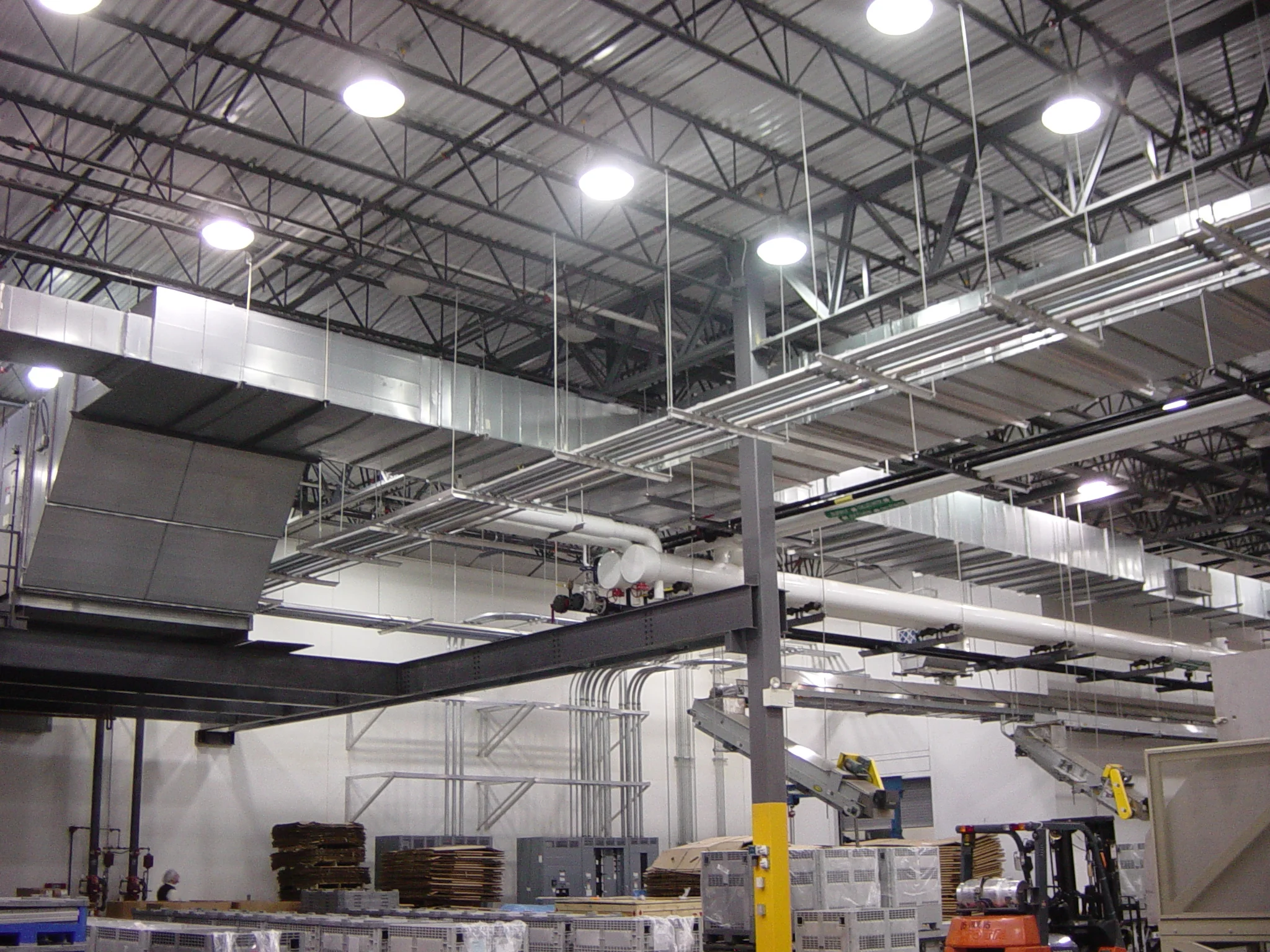
Ventilation Studies
Our services to NWNA have included providing ventilation studies at these three facilities to evaluate airflow, contaminant migration, and temperature control.

NESTLE WATERS NORTH AMERICA
Nestle Waters North America
Poland Springs ME, Breinigsville PA, Zephyr Hills Florida
NWNA is a business unit of Nestlé Nestle Waters North America (NWNA) S.A. The Nestlé Waters business represents 10% of Nestlé, S.A. global sales and holds the number one leadership position for bottled water brands in the world. Nestlé Waters North America represented 36.4% ($)of the bottled water market in 2010 producing water under the brand names of Perrier, Aqua Panna, S. Pellegrino, Deer Park, Arrowhead, Ice Mountain, Ozarka, Zephyrhills, Poland Spring, re-source, and Nestle Pure Life. SSM has worked with NWNA at several sites throughout the United States including Poland Springs ME, Breinigsville PA, and Zephyr Hills FL.
Our services have included providing ventilation studies at these three facilities to evaluate airflow, contaminant migration, and temperature control.
A key element and driver of the study at two of the facilities involved area carbon monoxide levels above the OSHA guideline. SSM performed both spot and time-history testing of carbon monoxide levels as well as space temperature and observed operating procedures within the facility. The studies provided recommendations for modifications and additions to the ventilation systems including recommendations for ventilation control systems to achieve the desired results while minimizing energy consumption.
Subsequent projects included the design of those ventilation systems and the design of the ventilation control systems including heat recovery.
Other projects have included the design of new ammonia chiller cooling systems, HVAC design for clean manufacturing areas, ventilation system validation, and arc flash studies and training.