
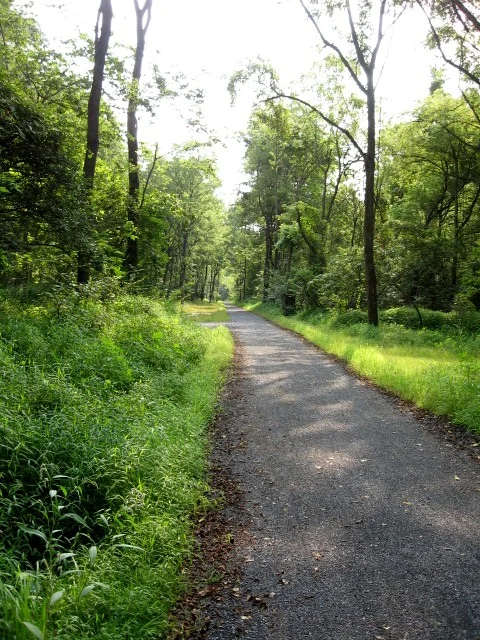
Is Your Community Connected?
A greenway, open space and trail network connects people to nature, each other, village and town centers, parks, historic sites, and the other resources found in your community.

A greenway, open space and trail network connects people to nature, each other, village and town centers, parks, historic sites, and the other resources found in your community. It also helps connect us to ourselves by providing opportunities for quiet time and reflection.
Individual health is promoted by providing opportunities for walking, bicycling and jogging; but providing green infrastructure also promotes community health by increasing the quality of life, contributing to economic development, providing an alternative means of transportation, protecting landscapes, and protecting wildlife habitats.
Planning a greenway, open space and trail network provides opportunities for your residents and visitors to stretch their legs, but is also vital to protecting natural resources and can contribute to economic revitalization, and encourage tourism. Such planning can be done as a component of a comprehensive plan or as a stand-alone plan.
A greenway is a corridor of open space, and can take the form of a conservation greenway, recreational greenway, riparian buffer, landscape corridor, or greenbelt around a developed area. Ideally, there will be a continuous system of greenways planned throughout the community.
The network plan itself includes an inventory of existing resources, a vision, mapping of the network and destinations, and an action program to realize the vision. The action program is critical to implementing the plan, and typically includes recommendations for zoning and subdivision and land development ordinance amendments to protect open space and facilitate completion of the trail system, official mapping of target open areas, recreational facilities, and trails, and other greenway preservation and trail construction strategies.
SSM can help you keep your community connected.

For an Energetic and Strong Community: Let SSM be your Personal Trainer
Let SSM be your personal trainer. Take advantage of our experience to build a strong and healthy community park system.
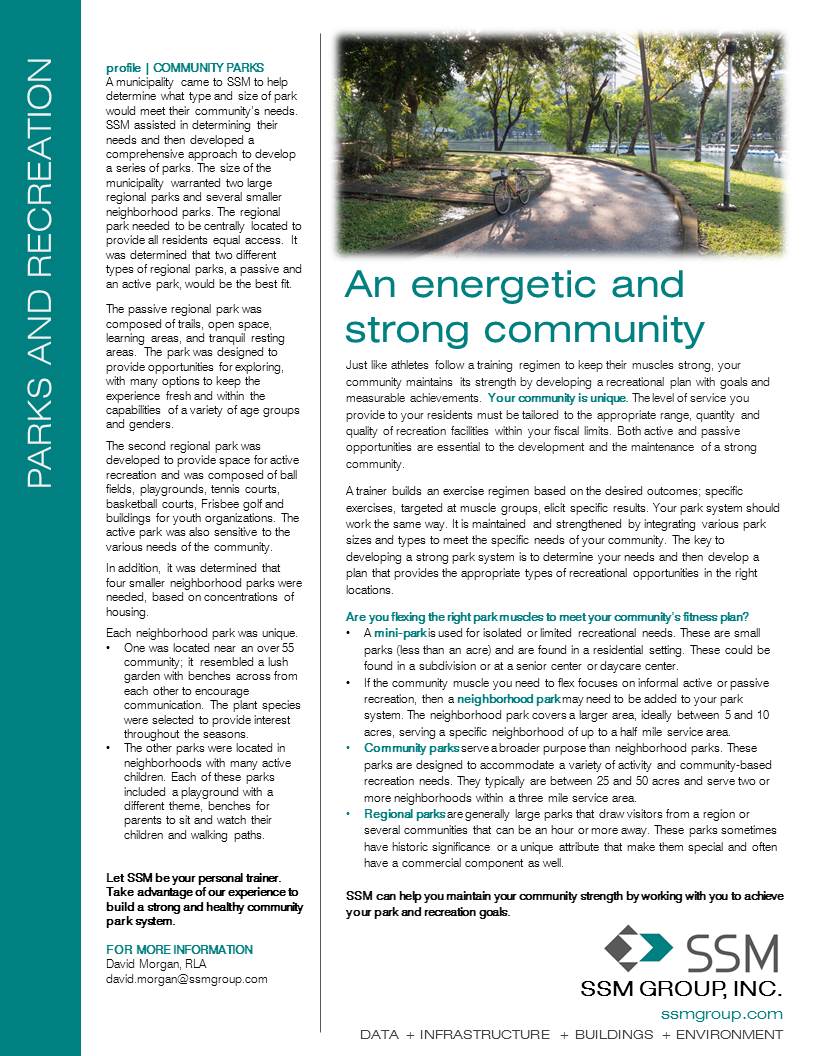
Let us be your personal trainer. Take advantage of our experience to build a strong and healthy community park system.
Just like athletes follow a training regimen to keep their muscles strong, your community maintains its strength by developing a recreational plan with goals and measurable achievements. Your community is unique. The level of service you provide to your residents must be tailored to the appropriate range, quantity and quality of recreation facilities within your fiscal limits. Both active and passive opportunities are essential to the development and the maintenance of a strong community.
A trainer builds an exercise regimen based on the desired outcomes; specific exercises, targeted at muscle groups, elicit specific results. Your park system should work the same way. It is maintained and strengthened by integrating various park sizes and types to meet the specific needs of your community. The key to developing a strong park system is to determine your needs and then develop a plan that provides the appropriate types of recreational opportunities in the right locations.
Are you flexing the right park muscles to meet your community’s fitness plan?
- A mini-park is used for isolated or limited recreational needs. These are small parks (less than an acre) and are found in a residential setting. These could be found in a subdivision or at a senior center or daycare center.
- If the community muscle you need to flex focuses on informal active or passive recreation, then a neighborhood park may need to be added to your park system. The neighborhood park covers a larger area, ideally between 5 and 10 acres, serving a specific neighborhood of up to a half mile service area.
- Community parks serve a broader purpose than neighborhood parks. These parks are designed to accommodate a variety of activity and community-based recreation needs. They typically are between 25 and 50 acres and serve two or more neighborhoods within a three mile service area.
- Regional parks are generally large parks that draw visitors from a region or several communities that can be an hour or more away. These parks sometimes have historic significance or a unique attribute that make them special and often have a commercial component as well.
SSM can help you maintain your community strength by working with you to achieve your park and recreation goals.
Celebrating National Parks Week
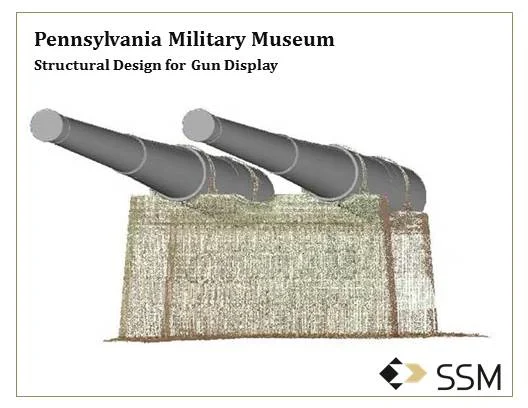
Structural Design for Gun Display

Pennsylvania Military Museum
Pennsylvania Military Museum
Structural Design for Gun Display
- Provided engineering services to support the installation of two, 14-inch diameter, 53-foot-long gun barrels from the Battleship USS Pennsylvania (BB-38) on a concrete pedestal.
- Oversaw a geotechnical investigation and prepared structural designs to design pedestal that would approximate the manner in which the guns appeared on the ship, including a 28’diameter disc that replaces the ship’s turret.
Celebrating National Parks Week
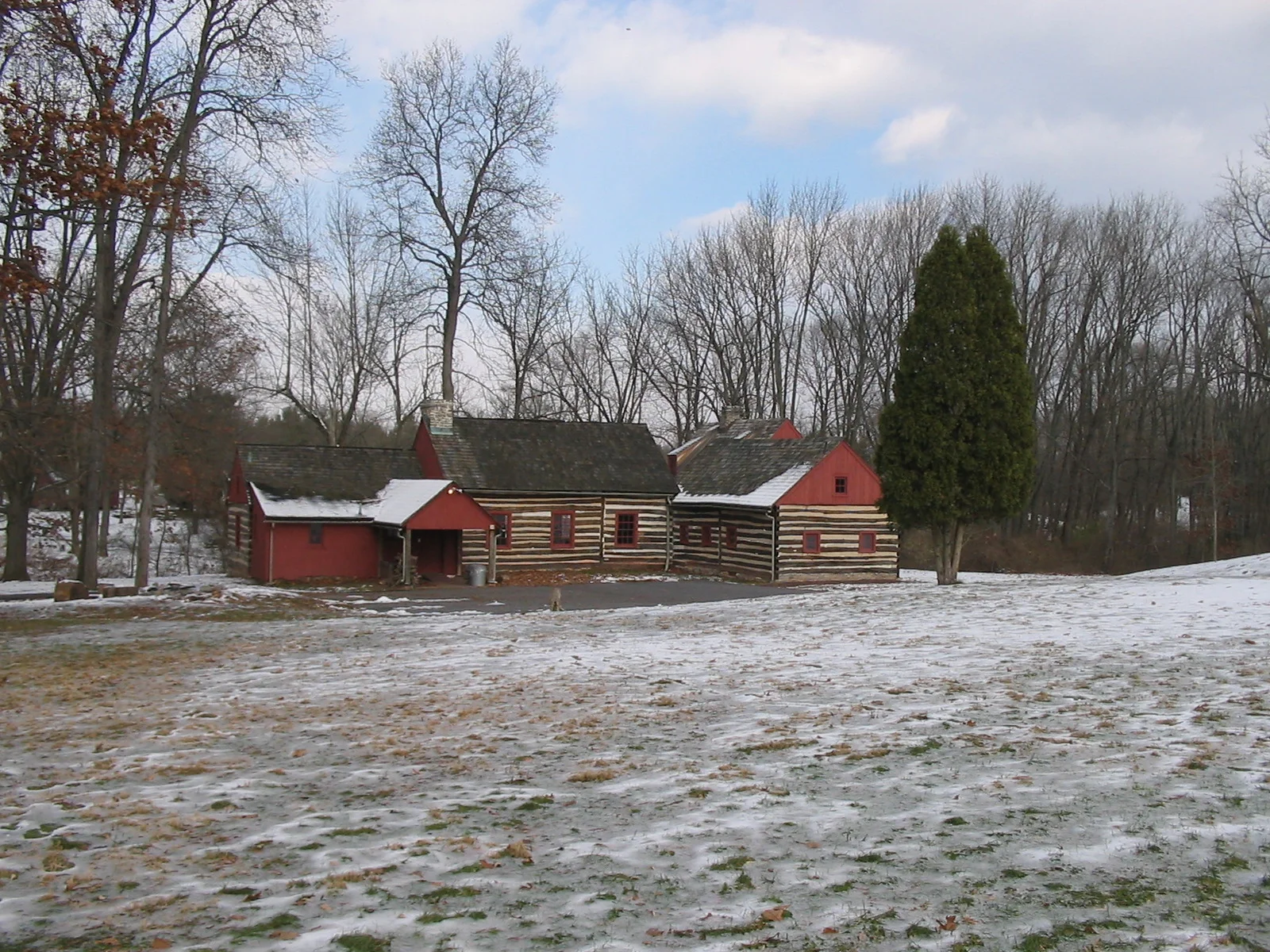
Wastewater Treatment Plant Emergency Assessment

Daniel Boone Homestead
Daniel Boone Homestead
Wastewater Treatment Plant Emergency Assessment
- Conducted site investigations and evaluated appropriate technology and the feasibility of planned improvements to method of proceeding to develop an environmentally sound and technically feasible solution for wastewater collection and treatment.
- Developed preliminary sizing, design requirements, costs, permitting, and regulatory requirements.
FOR MORE INFORMATION
Patrick McCoy, PE, LEED AP, Division Vice President, Facilities and Site Engineering